
The elevator opens at 200 metres and Berlin just appears. Brandenburg Gate sits to your west, the spiraling glass roof of Hauptbahnhof catches light to the north, the Spree winds through Mitte below, and the Reichstag dome floats below the horizon line like a small glass marble. Forty seconds ago you were standing in a queue at Alexanderplatz. Now you can see across Tempelhof and almost out to the Brandenburg countryside.
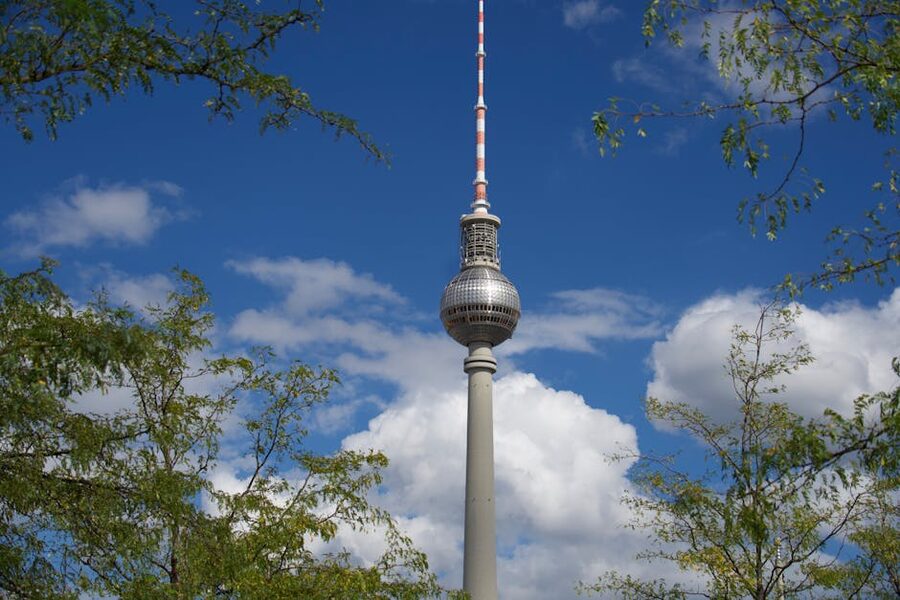
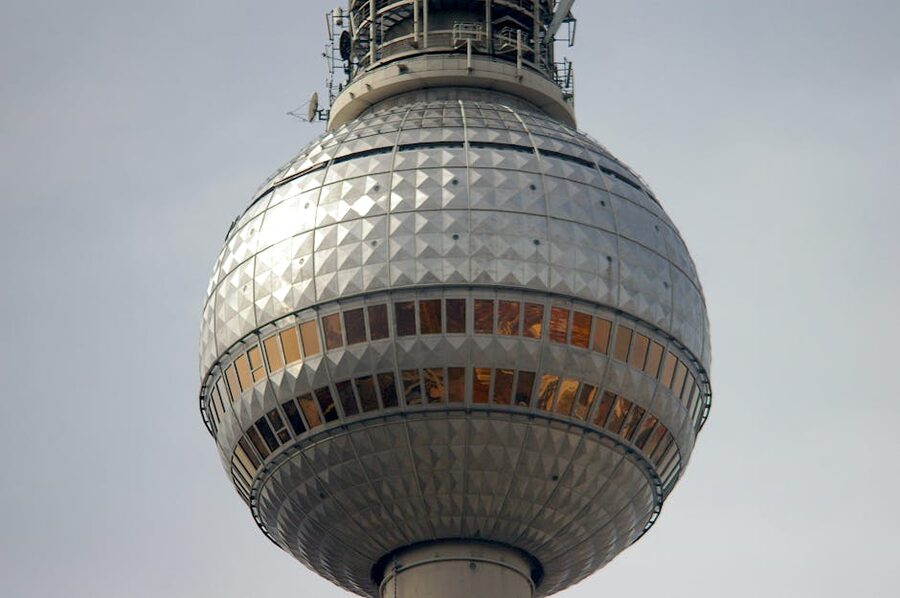
This guide covers how to actually book a TV Tower visit, what each ticket type gets you, what the Sphere Restaurant is like at altitude, and whether the VR add-on is worth the extra euros. I’ve also pulled together everything I wish I’d known the first time I went up.
Short on time? Here’s what to book:
Standard fast-track: Berlin TV Tower Standard Entrance Ticket, $33. Skip the queue at Alexanderplatz, take the 40-second elevator to the 200m observation sphere. The default pick for almost everyone.
Add VR history layer: TV Tower Entrance and VR Experience, $43. Same observation sphere, plus a virtual-reality overlay showing Berlin’s history through the tower-view glass.
Eat at altitude: Sphere Restaurant Tim Raue Entry Ticket, $33. Reserved table at the 207m revolving restaurant by Michelin chef Tim Raue. One full rotation per hour.
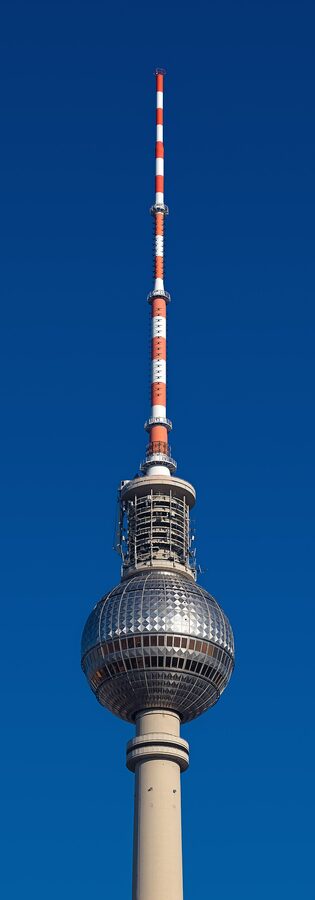
- What’s Actually Up There
- The Three Tickets That Matter
- 1. TV Tower Standard Fast-Track Entry:
- 2. TV Tower Entrance + VR History Experience:
- 3. Sphere Restaurant Tim Raue Entry:
- Why It’s Tall: A Cold War Story
- The Pope’s Revenge
- How to Get There and the Best Time to Go
- When to Go Up
- What You Can See From the Top
- The Sphere Restaurant in Detail
- Getting the Tower Itself in Photos
- Practical Things People Always Ask
- What’s Around the Tower After You Come Down
- How It Compares to Other European Observation Decks
- Honest Verdict and What I’d Skip
- If You Want More Berlin and Beyond
What’s Actually Up There
Two visitor levels matter, and they sit four metres apart.
The lower one, at 203 metres, is the observation deck. It’s a ring with floor-to-ceiling windows, brass plates labelling what you’re looking at in each direction (Brandenburg Gate, Charlottenburg, Tempelhof, Müggelsee), and a small bar called Bar 203. You can stay as long as you want once you’re up.
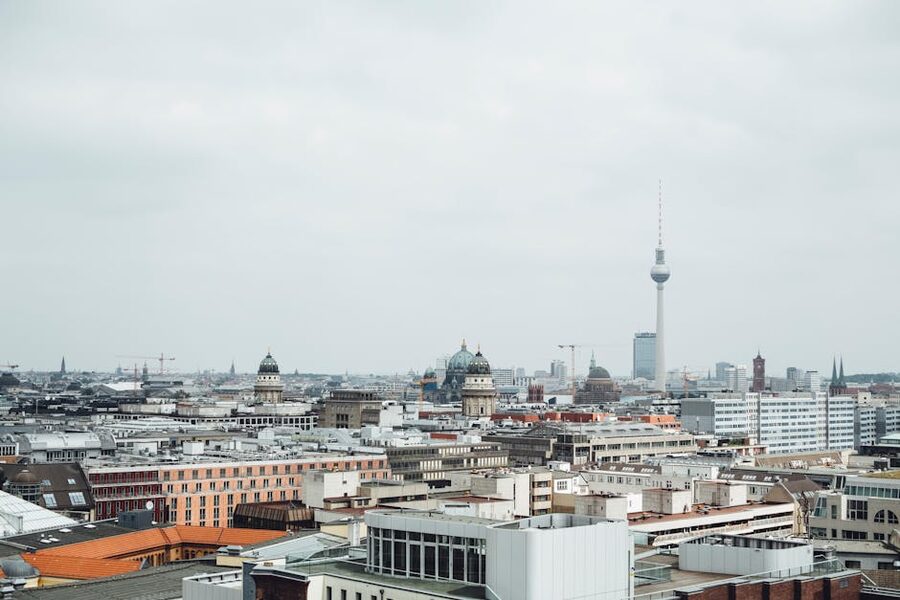
The upper level, at 207 metres, is the Sphere Restaurant. The whole floor rotates once per hour. You don’t notice it moving when you sit down. Twenty minutes later you look up and the angle of the city has shifted. It’s strange the first time.
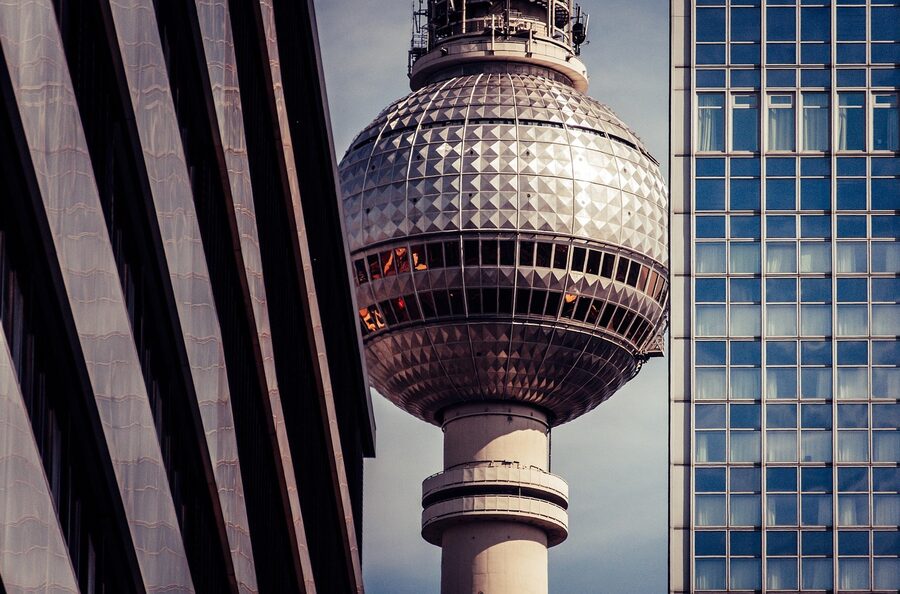
Above the restaurant level you’ve got transmitter equipment and the antenna mast. That’s not visitor-accessible. The 200-207m range is where you spend your time.
One thing the booking pages don’t always make clear: you don’t have to ride up and immediately come down. Once you’re on the deck you can move freely between Bar 203 and the windows for as long as you want, even if you booked a 30-minute slot. The slot only controls when you go up.
The Three Tickets That Matter
The TV Tower has a pricing structure that looks more confusing than it is. There are really three options worth considering, and I’d skip the rest.
1. TV Tower Standard Fast-Track Entry: $33
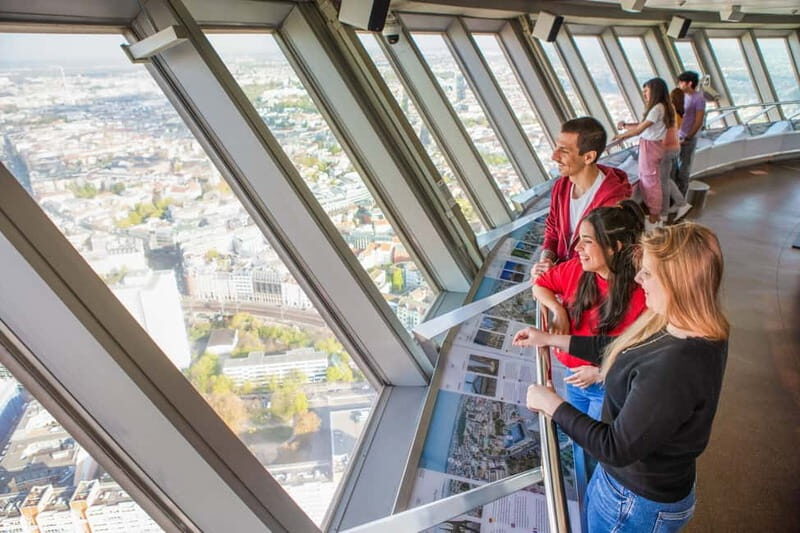
This is what 90% of visitors want. You pick a 30-minute time window, show up, walk past the queue, take the 40-second elevator to 203m. Our full review covers timing, what the deck looks like in each season, and the photo angles to actually grab. The price has held at $33 for a while now.
One small thing the booking page doesn’t make clear: you can stay on the deck for as long as you want. The 45-minute “duration” refers to your entry slot, not your time at the top. I usually plan an hour up there. The light shifts a lot in 60 minutes if you go around sunset.
Skip this one only if you’ve already decided you want the VR layer or the Sphere Restaurant. Otherwise it’s the right call.
2. TV Tower Entrance + VR History Experience: $43
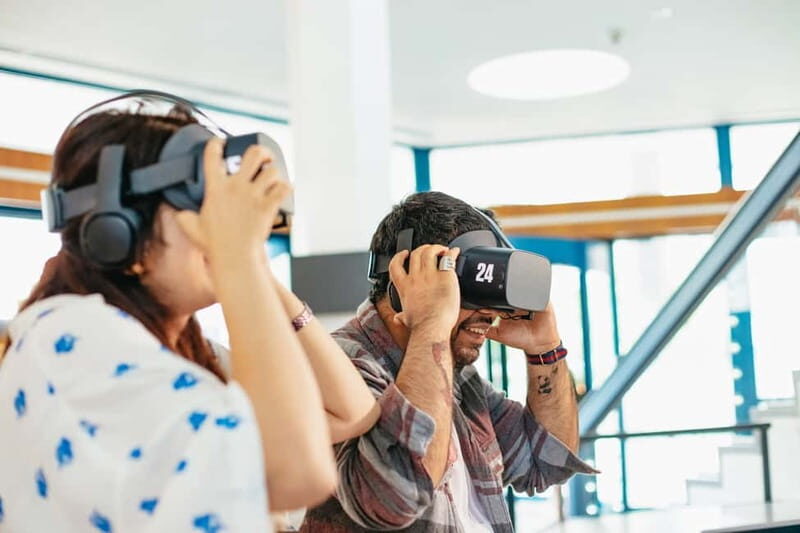
Same observation deck, plus a 15-minute VR session before or after where you put on a headset and watch Berlin’s last 100 years overlay onto the city you can see through the windows. The Wall going up. The Wall coming down. Bombing in 1945. Reconstruction in the 1950s. Our review breaks down what the VR actually shows and whether the extra ten dollars is worth it.
I think it works for two specific groups. People on their first Berlin trip who haven’t yet absorbed all the layers of city history. And anyone who likes their landmarks with context. If you’ve already done the Topography of Terror or one of the dedicated Third Reich walking tours, you’ll find the VR a little thin.
Skip the VR if you’re a confident Berlin returner. The basic ticket gives you the same view.
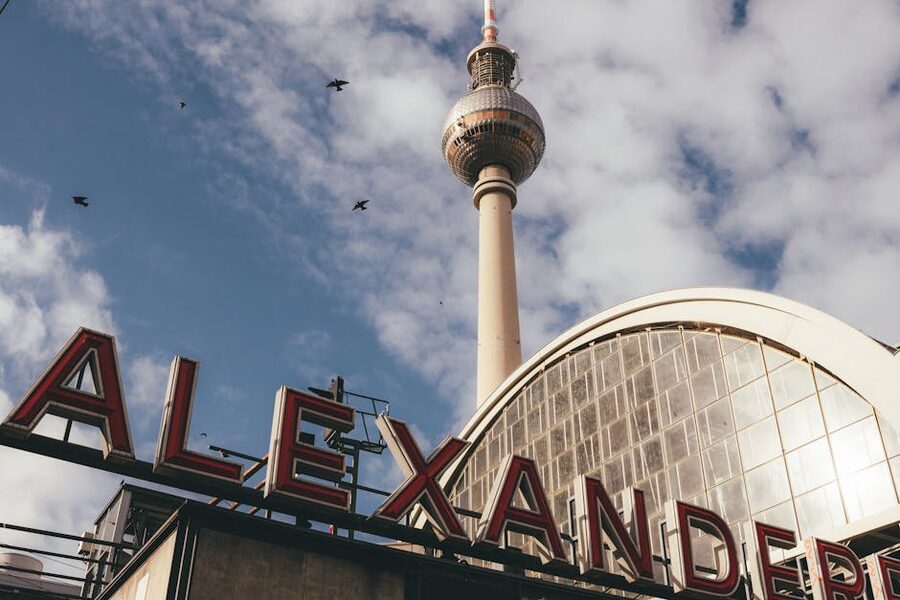
3. Sphere Restaurant Tim Raue Entry: $33
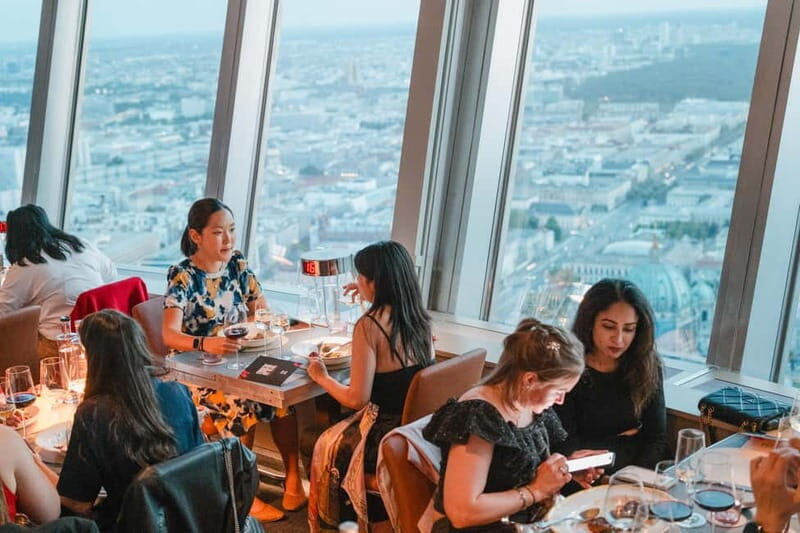
This is the booking I’d think hardest about. The $33 ticket gets you the entry and a guaranteed window-seat reservation. Food is à la carte on top, and a typical two-course lunch sits around 50 to 70 euros per head. Our review walks through the menu pricing and what to actually order. Lunch is the smarter slot than dinner, since daylight makes the rotating view work better.
I’ll be honest. The food is good but not extraordinary. The reason to book this is the experience, not the meal. You’re paying for the rotating room with a Michelin chef’s name on the kitchen, not for transcendent cooking. If you want Tim Raue’s actual best work, eat at Tim Raue in Kreuzberg.
That said, for a date night or a special-occasion lunch with a guaranteed window seat, this delivers. Just go in with the right expectation.
Why It’s Tall: A Cold War Story
The Fernsehturm wasn’t built for tourists. It was built to win an argument.
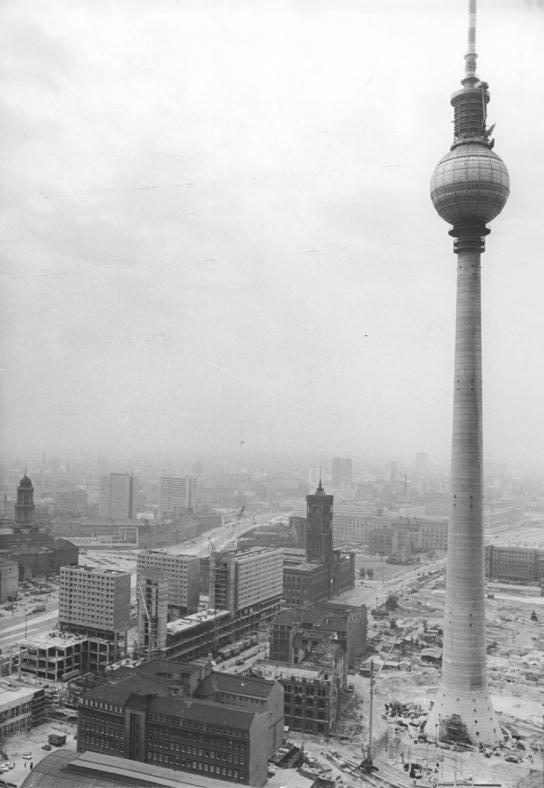
By the early 1960s East Germany needed to broadcast TV across the country, and they needed to be seen doing it. The original site was supposed to be Müggelberge in southeastern Berlin. That got vetoed because Schönefeld Airport’s flight paths would have been a problem. So they moved the tower to the centre of East Berlin instead, right next to Alexanderplatz.
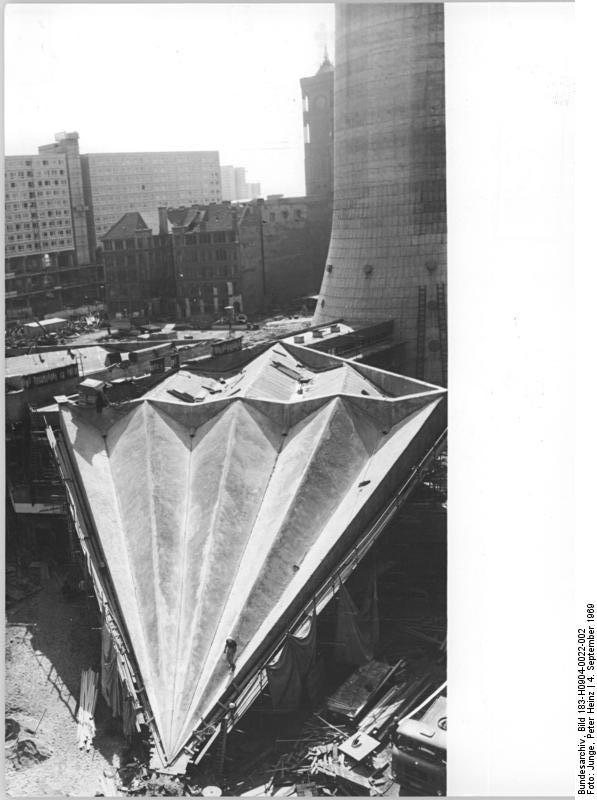
Construction started in 1965. Soviet and East German engineers designed it. The reinforced concrete shaft went up in stages over four years. The sphere itself, 140 stainless steel facets assembled in pieces at ground level, was lifted up section by section in 1969.
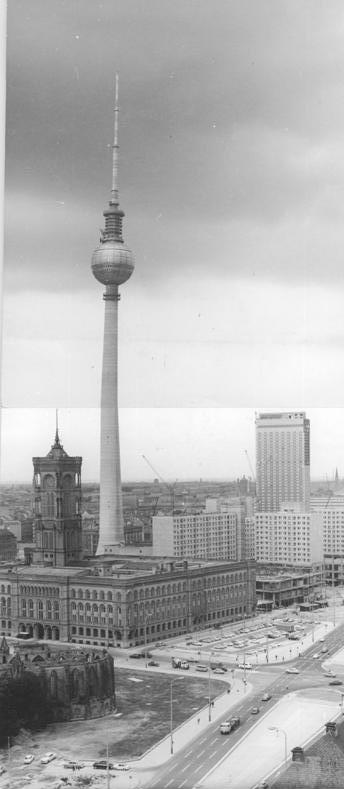
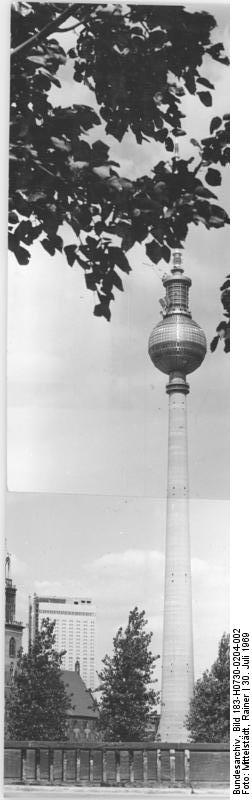
It opened on 3 October 1969, deliberately timed for the 20th anniversary of East Germany. At 365 metres (368 with the later antenna extension), it was the second-tallest free-standing structure in Europe and the tallest in either German state. That was the entire point.
And then came the cross.
The Pope’s Revenge
When the sun hits the sphere from the southwest, the panels reflect light in the shape of a cross. A clear cross. A very visible cross, on the showcase tower of an officially atheist socialist state. The East German regime was, to put it mildly, not pleased.
They tried matt paint to dull the reflection. They tried different metal coatings. None of it worked because the cross is a geometric consequence of how the panels are arranged, not a function of how shiny they are. West Berliners called it Rachepapstes, the Pope’s Revenge. East Berliners pretended not to see it.
It’s still there. Catch the tower on a sunny afternoon and look at the sphere from the right angle. The cross shows up. It’s been showing up for 56 years.
How to Get There and the Best Time to Go
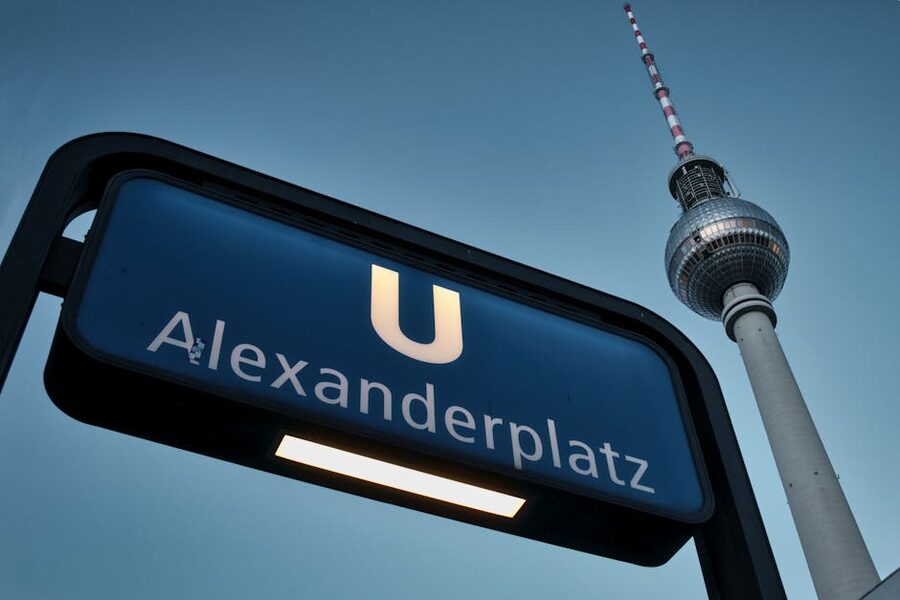
The address is Panoramastraße 1A, 10178 Berlin. Alexanderplatz station is the obvious arrival point and there’s no real alternative. You’ll be walking through Alexanderplatz one way or another.
U-Bahn lines U2, U5, and U8 all stop at Alexanderplatz. So do S-Bahn lines S3, S5, S7, and S9. Trams M4, M5, and M6 all pass through. From the station it’s about a three-minute walk to the tower entrance, well-signposted.
Opening hours run from 9am to 11pm in summer (April to October) and 10am to 10pm in winter (November to March). The tower closes for two days each year for maintenance. Check the official site if you’re booking close to the date.
When to Go Up
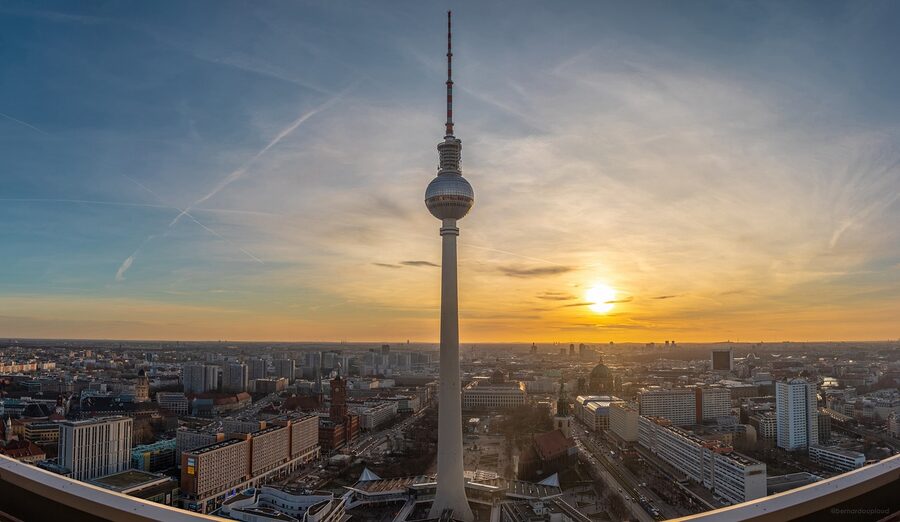
I’d push hard for late afternoon, ideally 90 minutes before sunset. You get the city in daylight, watch it transition, and stay for the lights coming on. Sunset times vary wildly with the season, so check before you book. In June sunset is around 9.30pm. In December it’s around 4pm.
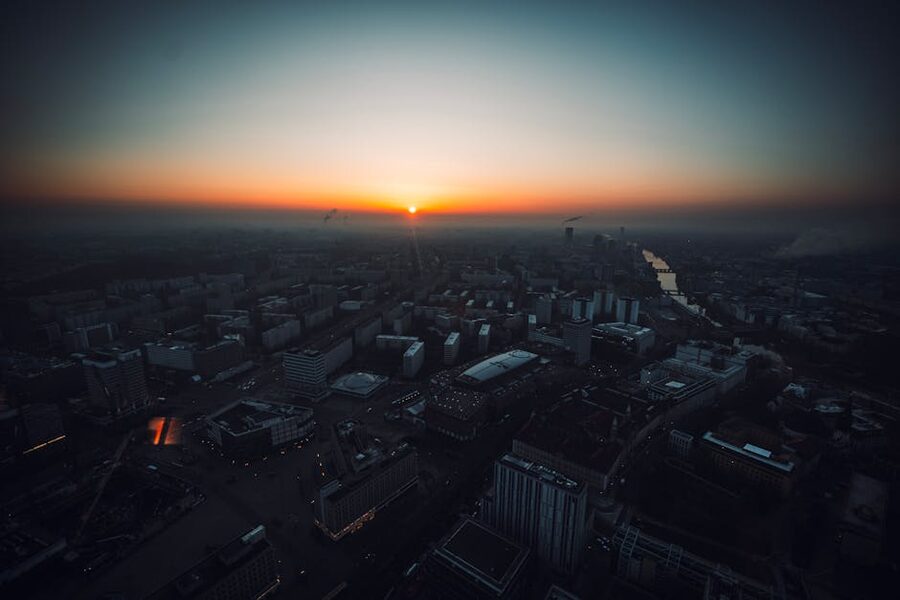
Avoid weekend afternoons in summer if you can. The deck gets crowded and the photo windows fill up. Weekday mornings are quietest. Tuesday or Wednesday at 11am is a good answer if you want space at the windows.
Cloudy days are not the disaster they look like. Berlin in low cloud actually photographs well. The sky becomes a soft grey backdrop and the buildings stand out. What you don’t want is fog, which kills the visibility entirely.
What You Can See From the Top
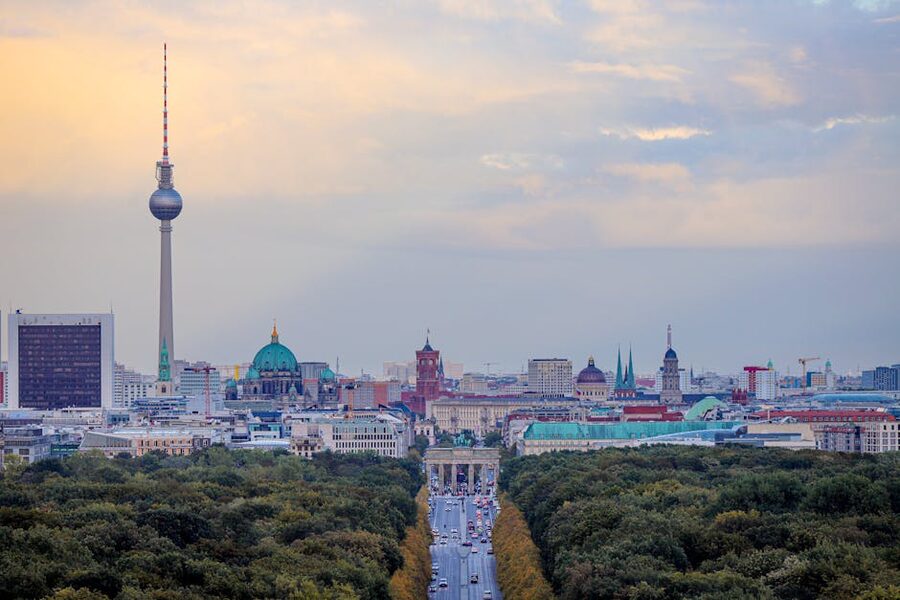
From the deck you’ve got a 360-degree view, so I’ll go round it.
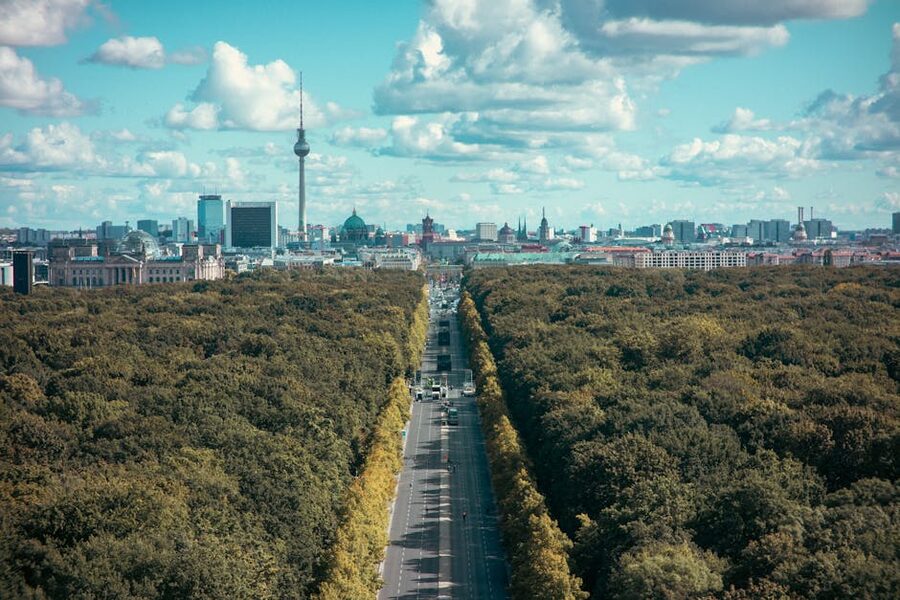
West. Brandenburg Gate, the Reichstag dome, the Tiergarten as a green rectangle, and beyond that the radio tower at Charlottenburg. On clear days you can pick out Olympiastadion. If you’re planning to visit the Reichstag dome too, book early. See our guide on how to book a Reichstag dome tour, since timed slots sell out four to six weeks ahead in summer.
North. Hauptbahnhof’s spiraling glass roof catches your eye first. Beyond that you can see the Spree winding through Mitte, and on a really clear day, the Tegel area where the old airport was.
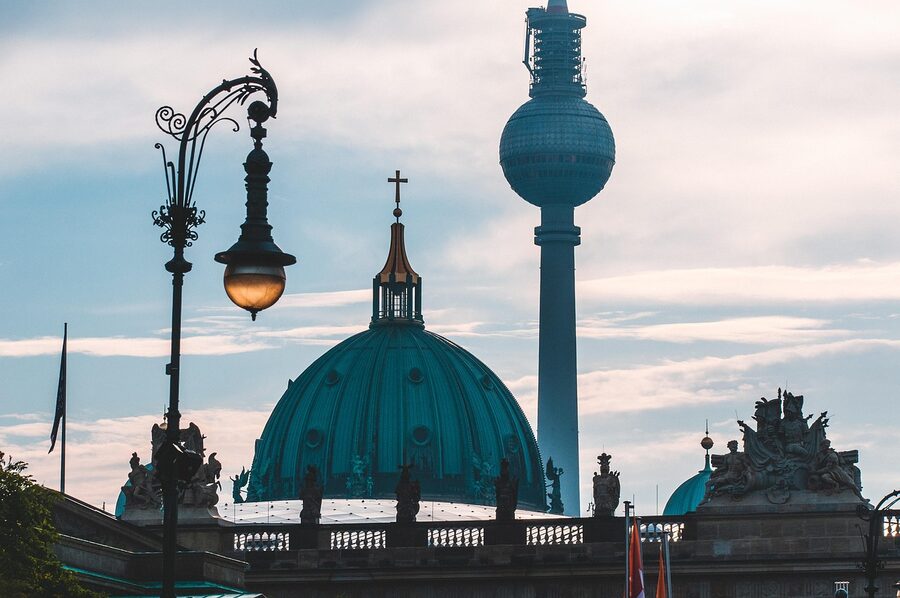
South. Museum Island below you, the Berliner Dom dome, the Humboldt Forum, the Holocaust Memorial as a grey field, and Tempelhofer Feld as the giant flat oval where the airport used to be. Tempelhof is the easiest landmark to spot because there’s nothing else flat that big in central Berlin. The grey rectangle of the Holocaust Memorial is hard to read from this height, so plan ground-level time at sites like the Jewish Museum if you want serious context for what you’re seeing down there.
East. Karl-Marx-Allee, the wide Stalin-era boulevard running out to Frankfurter Tor. Beyond that, residential Friedrichshain, then Lichtenberg. On the clearest days you can see all the way out to Müggelsee, Berlin’s biggest lake.
The Sphere Restaurant in Detail
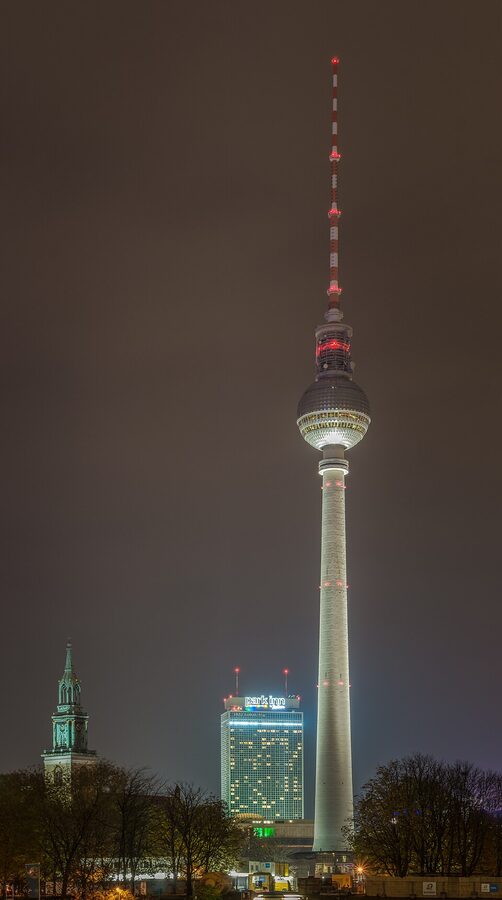
The Sphere is the rotating restaurant at 207 metres. Tim Raue, the German chef who holds two Michelin stars at his Kreuzberg restaurant, runs the kitchen here. The booking system is separate from the standard observation ticket. You can’t just walk up from the deck and ask for a table.
The room rotates once per hour, very slowly. Coffee cups stay still. You don’t notice it moving when you’re sitting down. You notice it when you look up and the building you were facing is now somewhere else.
What’s on the menu: small German plates with the kind of presentation that takes longer than the rotation. There’s usually a beef tartare, something with venison in autumn, a vegetarian option that changes monthly. Two courses at lunch will run you 50 to 70 euros per person on top of the entry ticket. Add wine and you’re at 100 plus. Dinner is more.
I’d book lunch over dinner. Daylight makes the rotation work, since you actually see the city changing. At night the rotation is just dark windows turning, which is less remarkable. Lunch slots are also easier to get last-minute.
One booking note: you reserve the entry through GetYourGuide, but for the table itself the Sphere will sometimes call to confirm a few days before. Have a phone number on the booking that you can actually answer.
Getting the Tower Itself in Photos
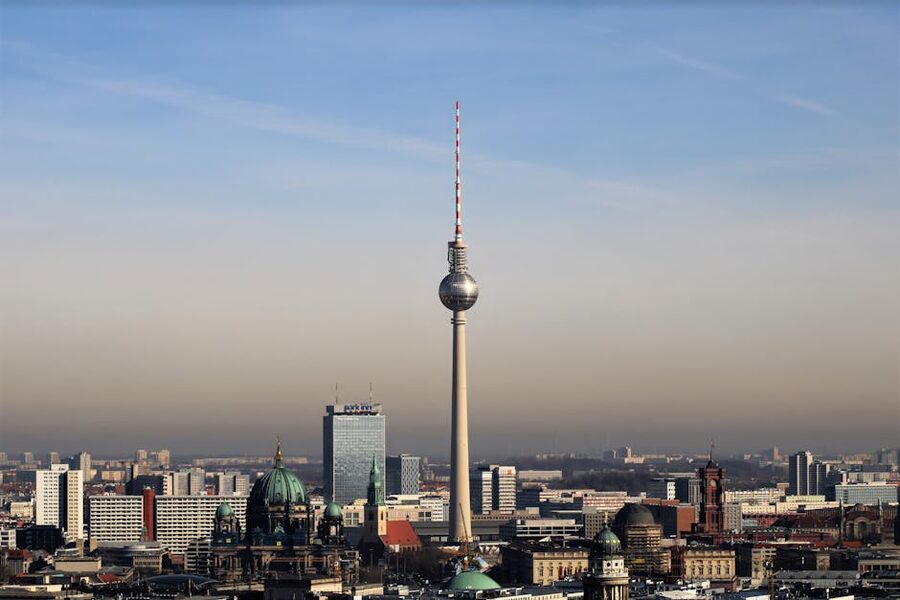
You can’t photograph the TV Tower from inside the TV Tower. So if you want the iconic shot, sphere against the sky, you need to know where to stand.
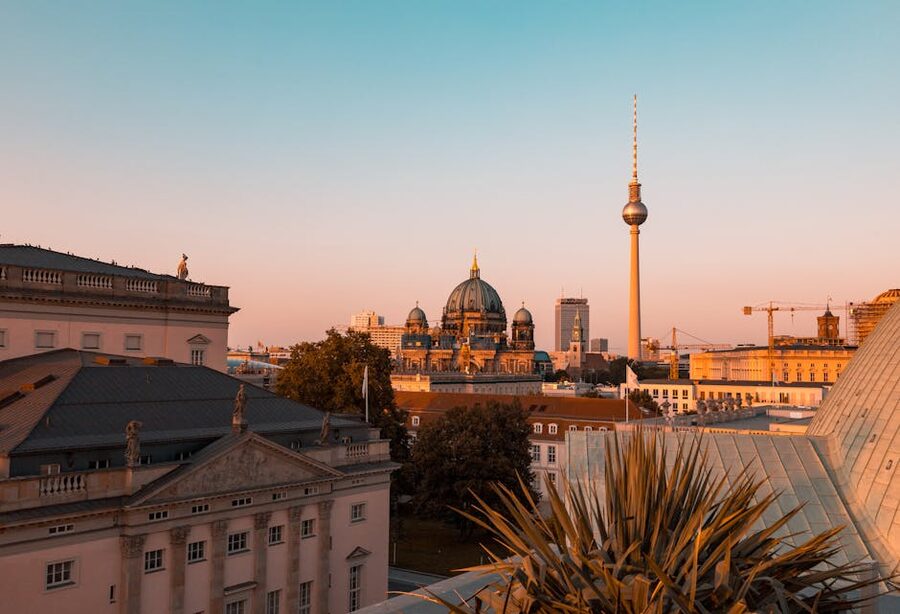
Lustgarten in front of Berliner Dom. The Cathedral stands in the foreground and the tower rises behind. Walk to the west edge of the lawn for the cleanest line.
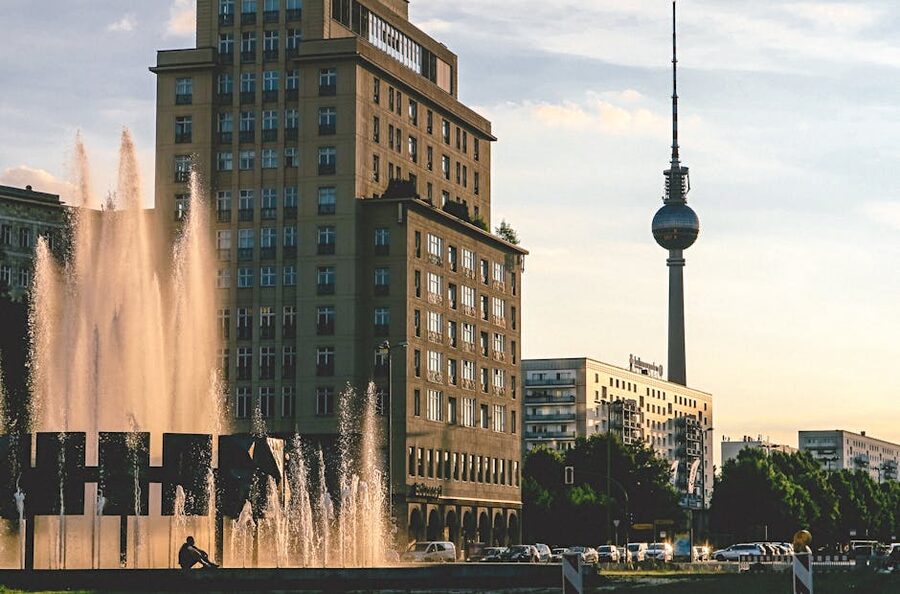
Frankfurter Tor. Look down Karl-Marx-Allee and the tower sits at the end of the boulevard, framed by the twin Stalin-era towers of the Tor itself. This is the photo that makes Berlin look like Berlin and nowhere else.
Park Inn observation deck. The hotel right next to the tower has its own viewing platform on the 35th floor (you climb four floors of stairs from there to reach the very top). This gives you the tower at eye-level, with the city behind it. It’s about 7 euros and almost nobody knows it exists.
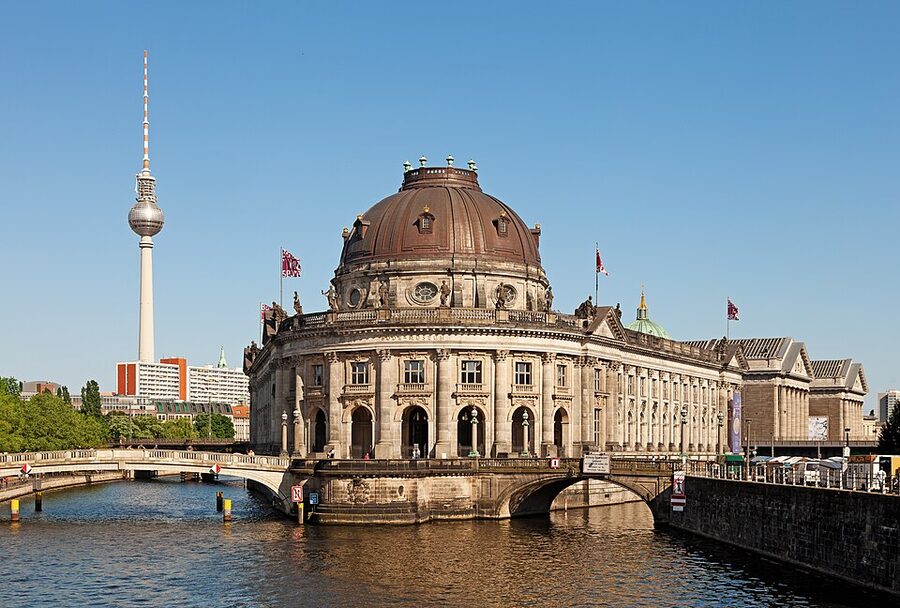
The Spree riverside near Schlossplatz. Walk along the south bank around dusk. You get the tower reflected in the river when the water’s calm. This is my favourite ground-level angle, and it’s one most tourists miss.
Practical Things People Always Ask
How long do you need? Plan an hour for just the deck. Two hours minimum if you’re eating at the Sphere. The actual elevator-up to elevator-down can be 45 minutes if you don’t dawdle, but the whole point is to dawdle.
Is it accessible? Sadly, no. The tower was built in the 1960s and the elevator design doesn’t accommodate wheelchairs or strollers. There’s no easy retrofit. Coat check at the base will hold strollers and large bags while you go up.
Bags and security? No large bags or suitcases on the deck. Coat check is free at the entrance. Cameras are fine. Tripods are technically allowed but get awkward in crowded windows.
How much without skip-the-line? The standard adult ticket at the door is 24.50 euros. Skip-the-line takes that to about $33 (roughly 30 euros). The 5-euro premium pays for itself the first time you walk past a 200-person queue.
Capacity? The deck and restaurant together hold about 350 people maximum. Once they’re full, new visitors wait downstairs. Booking online guarantees you get the slot you picked.
Is it dog-friendly? Service animals only. Pet dogs cannot go up.
Will I see Mount Brocken? Probably not. Most online claims about visibility are optimistic. On the clearest days you can see 70-80km, which is enough for the Brandenburg countryside, but not enough for the Harz mountains 200km away.
What’s Around the Tower After You Come Down
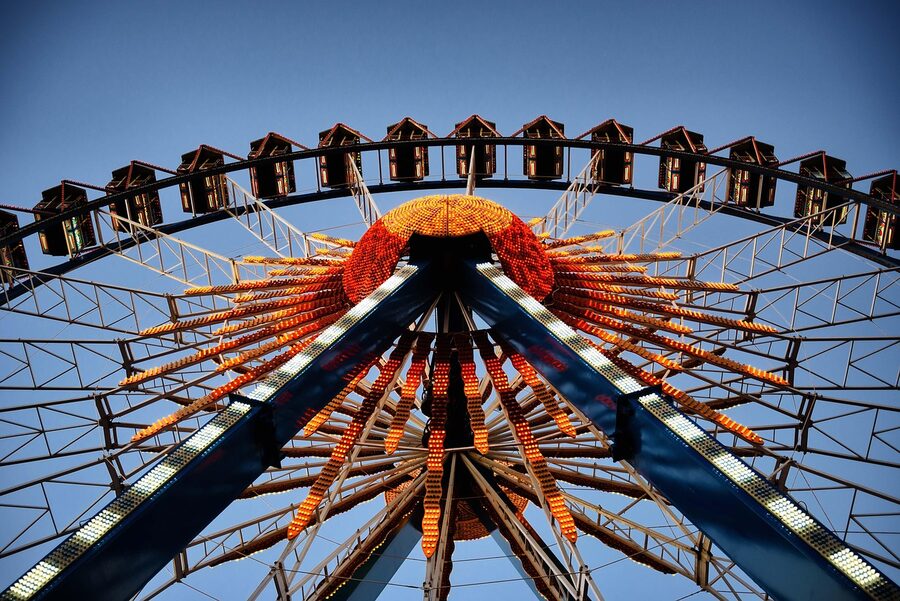
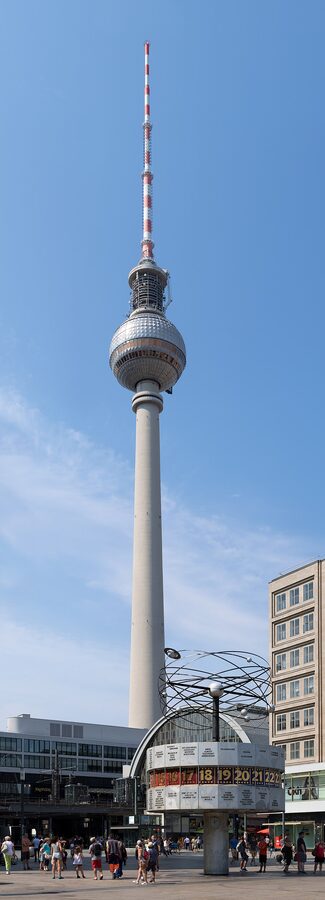
Alexanderplatz itself is functional rather than charming. It’s a hub for getting elsewhere. The World Clock (Weltzeituhr) is worth a quick look. The giant rotating clock built in 1969 still shows time zones around the world.
From the tower base you’re a 10-minute walk to Museum Island (Pergamon, Neues Museum, Alte Nationalgalerie). Twenty minutes to the Berliner Dom. Twenty-five minutes to the Holocaust Memorial, which you can also see from the deck.
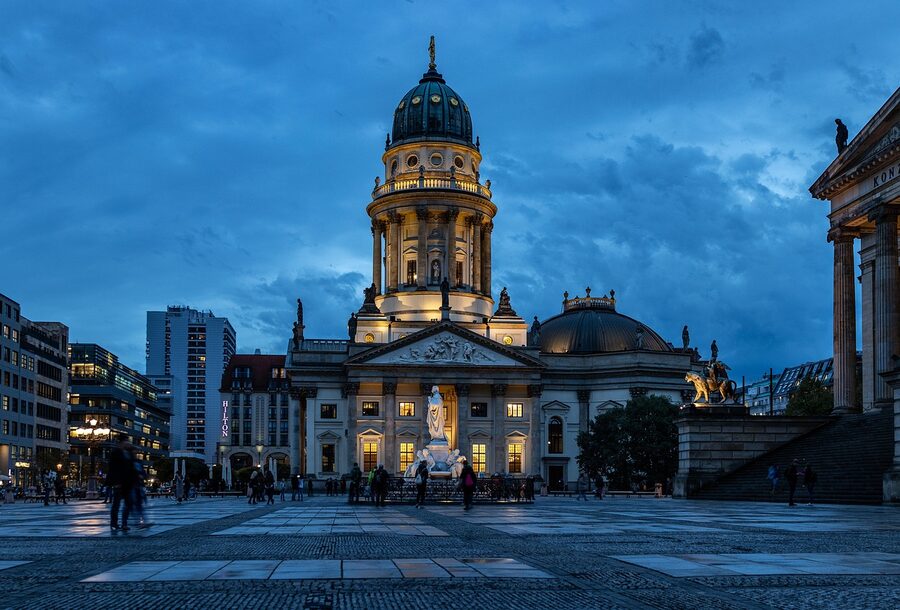
If you want to fit the tower into a longer Berlin day, my usual route is: morning at the Reichstag dome (book ahead, see our Reichstag dome booking guide), Brandenburg Gate and Holocaust Memorial mid-morning, lunch around Hackescher Markt, afternoon at the TV Tower (around 4pm), then walk to Berliner Dom and Museum Island. That puts you at the tower for golden hour and back at street level for dinner.
How It Compares to Other European Observation Decks
If you’ve already done the London Shard, the Fernsehturm feels different. The Shard is glass-and-engineering, polished, with a bar and carefully picked viewpoints. The Fernsehturm is concrete-and-steel, functional, with a slightly worn-in feel that matches the city. Different vibe entirely.
Compared to Paris Montparnasse, the Fernsehturm goes higher (200m vs 196m) and the views are less obstructed by other tall buildings, since Berlin doesn’t have many. Montparnasse gives you a better look at one specific monument (the Eiffel) while Berlin’s skyline is more evenly textured.
And against the London Eye, the Fernsehturm wins on height and scale but loses on the moving-pod gimmick. The Eye is a slow ride. The Tower is a place you stand. Both work; they’re not the same product.
Honest Verdict and What I’d Skip
The standard ticket is the right call for almost everyone. Book it. Take it at sunset. Stay an hour. You’ll be glad you went.
The VR experience adds 10 dollars and is worth it if it’s your first Berlin trip and you want a primer on the city’s history while you’re up there. Otherwise it’s optional.
The Sphere Restaurant is worth the booking for a special-occasion meal where the experience matters more than the cooking. Lunch over dinner. Don’t expect the food to blow you away. Expect a rotating room with a Michelin chef’s name on the kitchen and a view that justifies the bill.
What I’d skip: the various combo packages with boat tours, beer tastings, and bus passes. They’re rarely better value than booking the components separately. Stick to the three tickets above.
If You Want More Berlin and Beyond
If you’re stitching together a Berlin trip, the natural pairings are the Reichstag dome for the other big city view (free but timed), a serious half-day on heavy history with a Third Reich and Cold War walking tour, and the deeply layered Jewish Museum. Outside Germany, observation-deck cousins like the Shard, Paris Montparnasse, and even the London Eye are the closest things in Europe to what the Fernsehturm offers, just with very different cities below.