
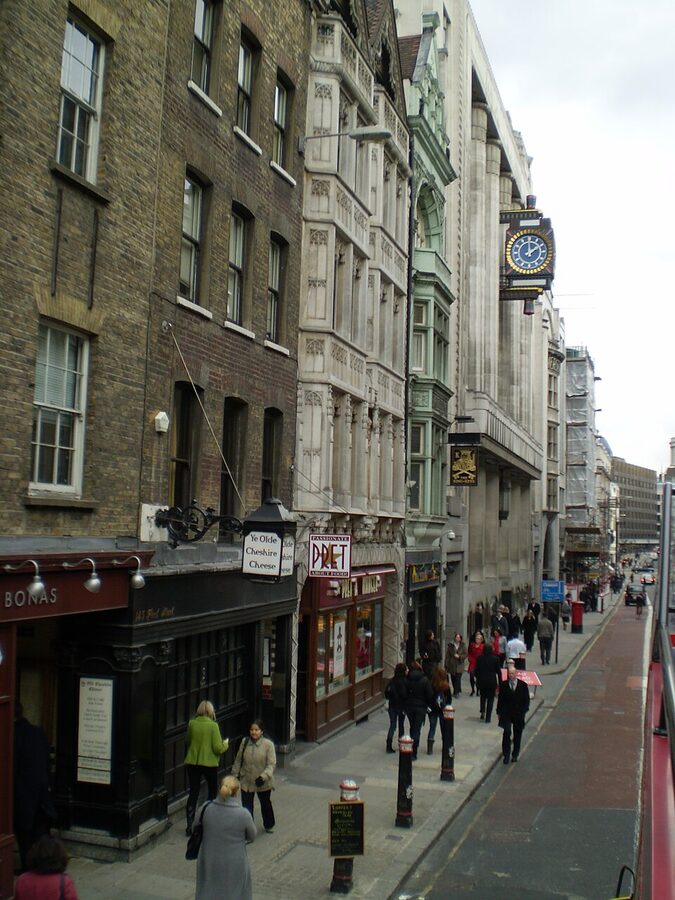
You are sitting in the cellar bar of Ye Olde Cheshire Cheese, the oak beams about a foot above your head, the air thick with that mix of wood polish and spilled ale that pubs only get when they have been a pub for three and a half centuries. The guide is mid-sentence: Dickens drank here, Yeats drank here, the building dates to 1667, rebuilt the year after the Great Fire because the original burned with everything else on Fleet Street. You raise the pint, look at the low ceiling, and accept that you are going to like the next two hours.
That is what a historic pubs walking tour in London actually does. It strings together four or five buildings that survived the Blitz, the Great Fire, and a century of property developers, and a guide who knows the difference between a Victorian gin palace and a Georgian alehouse explains what you are looking at. Most routes run two and a half hours. Most include drinks. This is the booking guide for the walk, and how to pick the version that suits you.
- In a hurry? My three picks
- What the walk actually is (and what it isn’t)
- The pubs you’ll most likely visit
- Ye Olde Cheshire Cheese (1667, Fleet Street)
- Lamb & Flag (17th century, Covent Garden)
- The Lamb (Victorian, Bloomsbury)
- Black Friar (Art Nouveau, Blackfriars)
- Cittie of Yorke (Holborn)
- The variants worth knowing about
- Soho music pubs
- Royal-warrant pubs
- How drinks work on the tour
- Booking practicalities
- Best time of day to book
- What to wear and bring
- How long is the walk between pubs?
- How it compares to other London experiences
- The picks, ranked
- 1. Drink London Historical Walking Pub Tour:
- 2. London West End Historic Pub Experience:
- 3. London Royal Historic Pubs Walking Tour:
- Private group option
- The pub-and-something-else combinations
- The food question
- What about doing it on your own?
- Practical timing across the day
- Group dynamics and how to make the tour work
- Cancellations and refund policies
- Where the walk lands you afterwards
- Other London walks worth your afternoon
In a hurry? My three picks
The flagship walk (the easy default): the Drink London historical walking pub tour. Most-booked historic pubs walk in the city, four pubs in three and a half hours, drinks at three of them included. Around $39.
The Soho music variant (if you care about rock and pop): the West End historic pub experience. Same drinking, but the route swings through Soho and the West End past the pubs The Beatles, Bowie, and Hendrix actually drank in. Two and a half hours, around $39.
The royal-warrant version (for the history-and-monarchy crowd): the London Royal Historic Pubs walking tour. Pubs on or near the Royal Mile route, two and a half hours, ends near Buckingham Palace. Around $39.
What the walk actually is (and what it isn’t)
The thing that confuses people is the price. A pint in central London costs around seven pounds. Four pints would be twenty-eight. The flagship tour costs about thirty quid total and includes drinks at three of the four pubs. So you are paying around two pounds for a guide on top of what you would pay for the beer anyway. That is the actual maths of why these tours work.
What you get is the bit that you would not get from walking in alone. Where the original 1667 fireplace is. Why the Cittie of Yorke has those wine vats above the bar. What the painted figures on the Black Friar mean. Which corner of the Lamb & Flag was the prize-fighting pit. The buildings are still there, anybody can walk in, but you do not learn the stories without the guide.
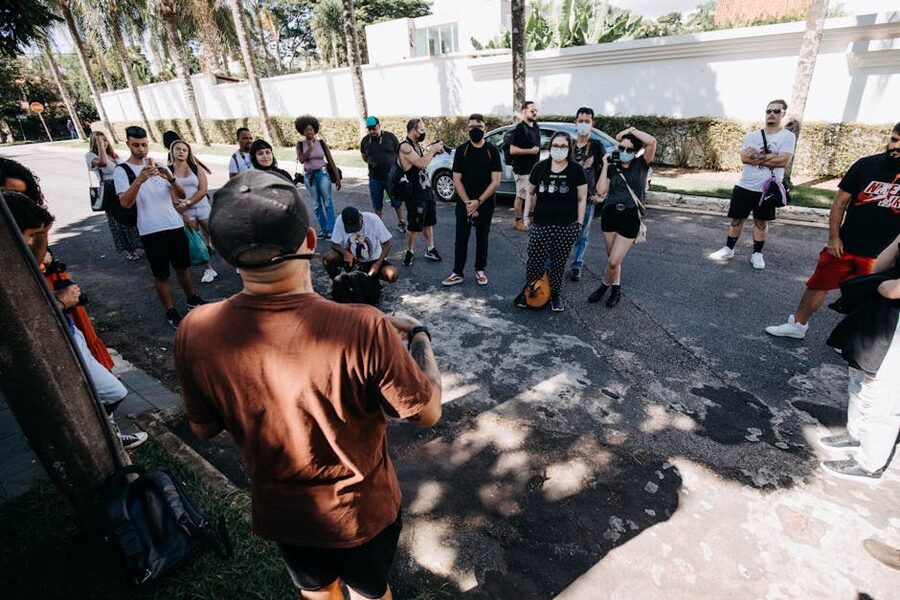
It is also a sit-down tour. This is not the same as a walking-only history tour where you stand in the street for two hours. You walk between pubs, then you sit, drink, and listen for fifteen to twenty minutes inside each. If your group has anyone with knee issues, this is the easiest London walking tour to do. Total walking time across the route is rarely over forty minutes.
The pubs you’ll most likely visit
Different operators run slightly different routes, but the same five or six pubs come up again and again because they are the genuinely old ones in central London. Here is what to expect at each.
Ye Olde Cheshire Cheese (1667, Fleet Street)
The most-visited pub on the walk and the one that justifies booking the tour over wandering in solo. The current building dates to 1667 and was rebuilt the year after the Great Fire of London consumed the original. There has been a tavern on the site since 1538. Charles Dickens sat here often enough that the table he used has a brass plaque, W.B. Yeats and the Rhymers’ Club met upstairs in the 1890s, and the cellar bar where most tour groups sit is below the level of the medieval foundations.
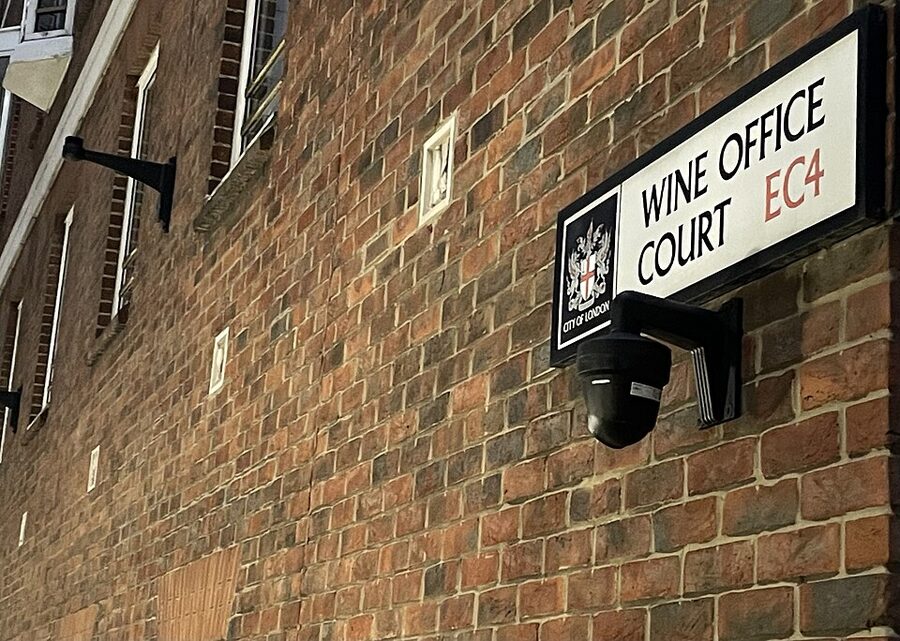
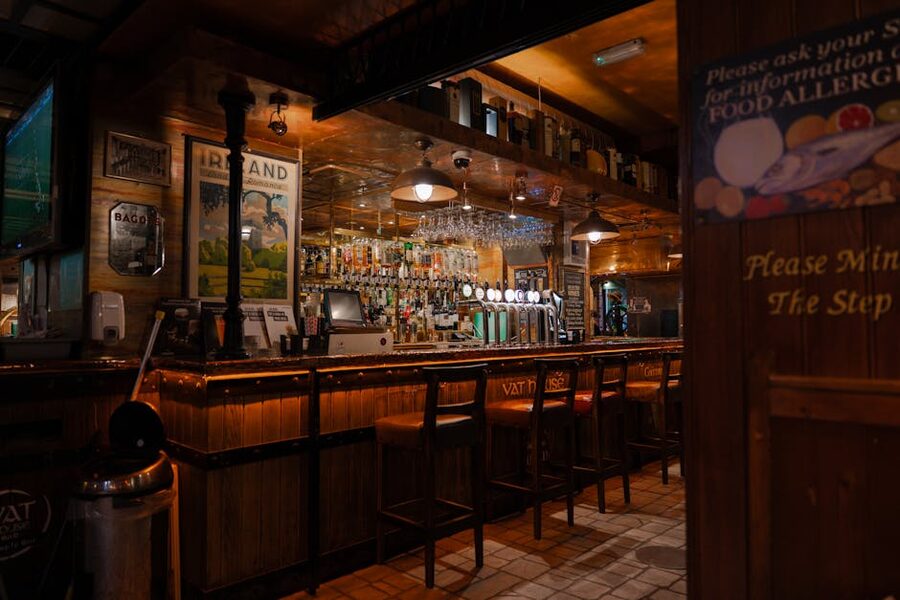
Practical tip: order at the bar on the ground floor before you go down. The cellar gets full quickly, and even with a tour booking you might be on stools or standing if you are last in. The food is decent pub food, the pints are cheaper than the surrounding Fleet Street venues, and they still serve cask ale on hand-pump.
Lamb & Flag (17th century, Covent Garden)
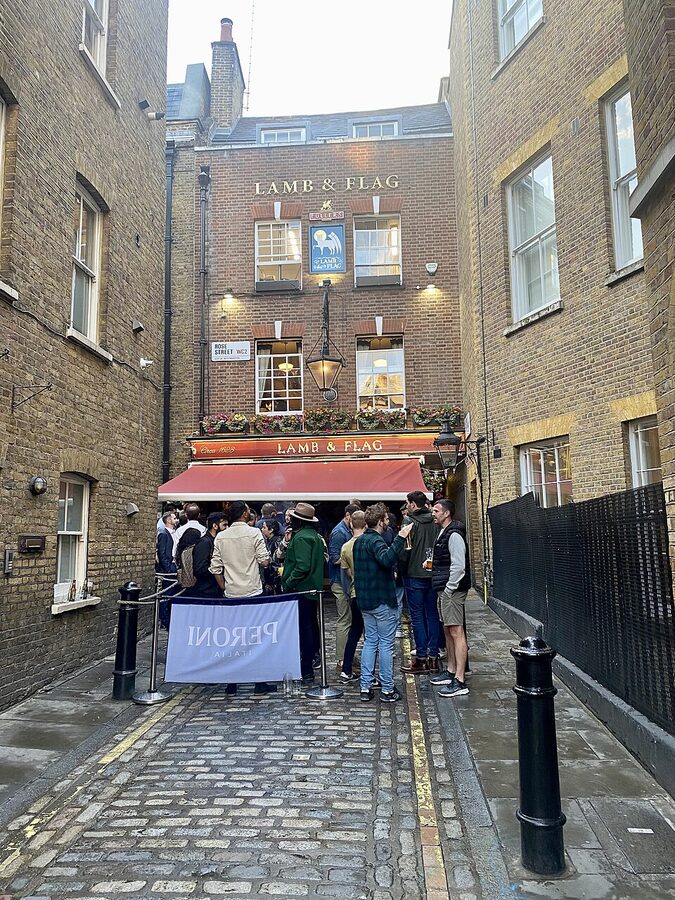
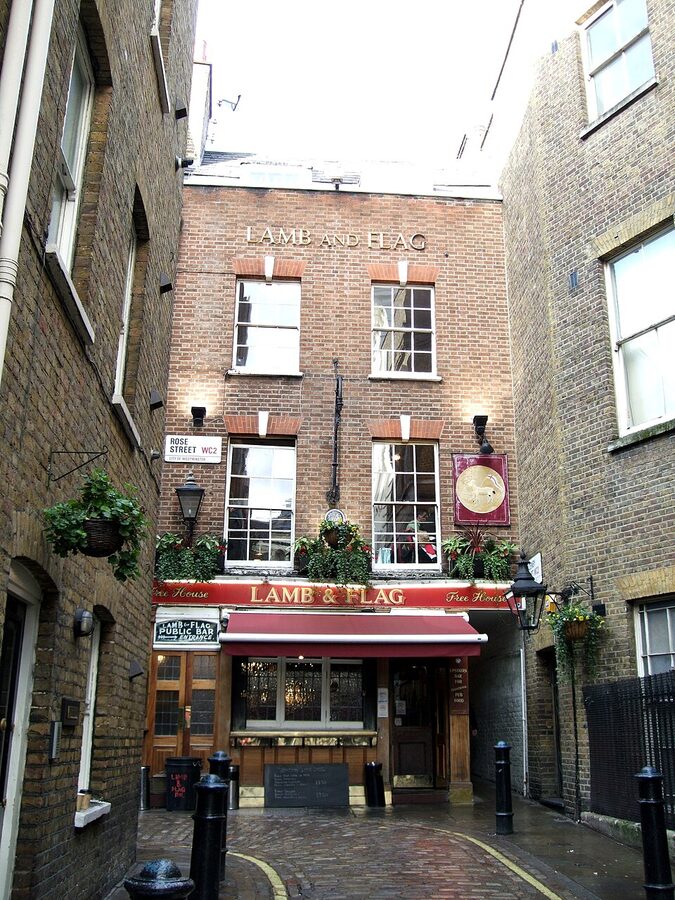
You reach it by pushing through Lamb & Flag Passage, a narrow alley off Garrick Street that you would walk past without noticing. The pub itself is in a building that has been a tavern since the 17th century, though the current name is from 1872. The nickname people use for it is “Bucket of Blood,” from the prize-fights staged in the upstairs room in the early 19th century where bare-knuckle boxers earned a guinea per round and the floor needed mopping at the end.
The Lamb (Victorian, Bloomsbury)
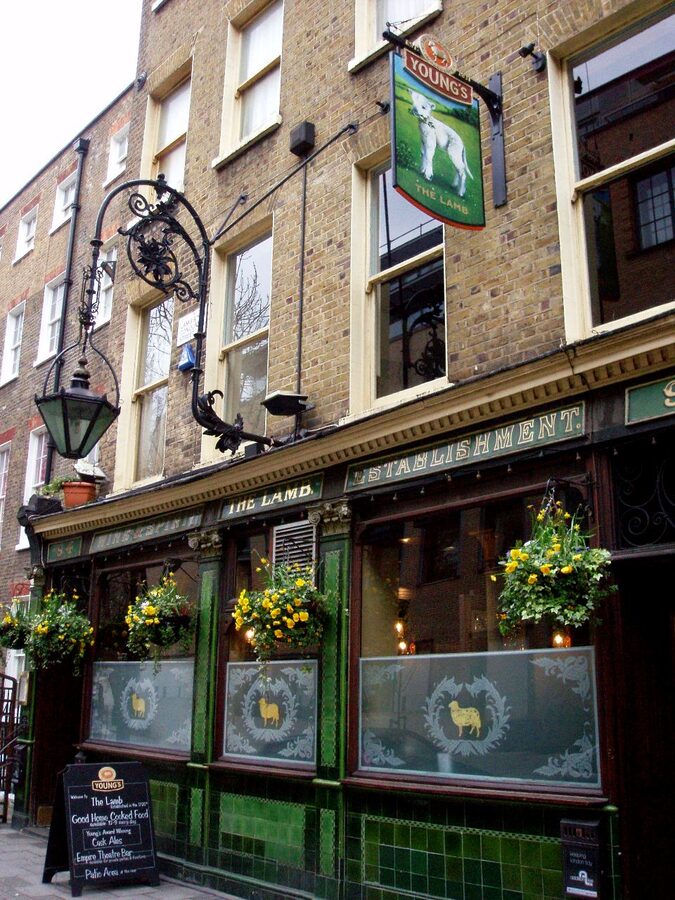
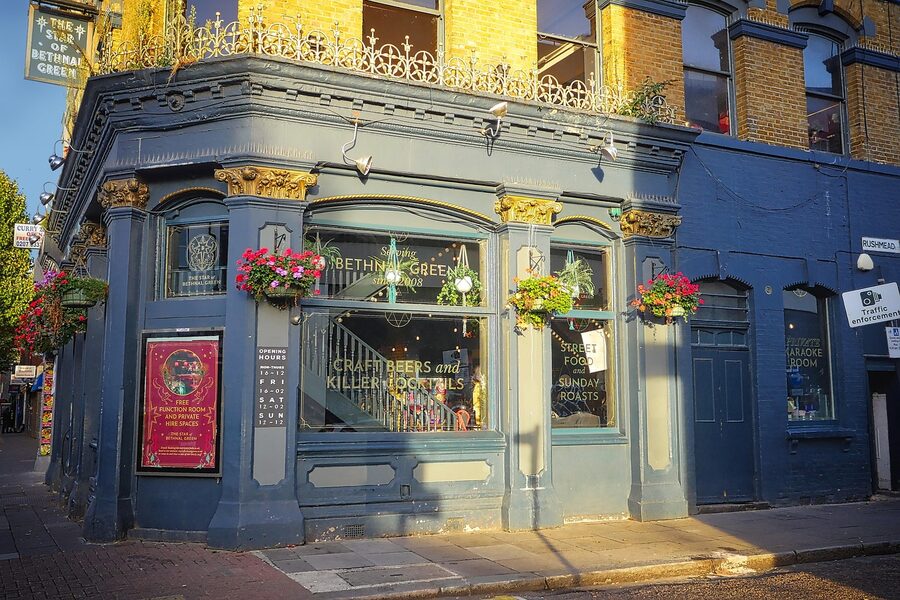
Confusingly, there is a second Lamb on the route on most tours. This one is on Lamb’s Conduit Street in Bloomsbury, named after the conduit, not the pub. The current building is mostly Victorian, with the original etched-glass screens behind the bar still in place. Charles Dickens lived a few streets away on Doughty Street and is one of the writers who drank here. Sylvia Plath and Ted Hughes came in too, in the 1950s when they had a flat in the area.
Bloomsbury is a quieter stretch of central London than Covent Garden or Fleet Street, and the Lamb is one of the things that makes it feel that way. It is not on a tourist route. You will probably be drinking next to people who actually live in the postcode.
Black Friar (Art Nouveau, Blackfriars)
This is the visual showpiece of any pubs walk. The Black Friar is a wedge-shaped building between New Bridge Street and Queen Victoria Street, just opposite Blackfriars station, and from outside it looks like a small Edwardian temple. The interior is the actual reason you stop there. It is one of the only complete Arts and Crafts pub interiors left in London. The whole back room is covered in mosaic, marble, brass, and inlaid wood, all designed around scenes of monks doing pub-related things. Eating, drinking, fishing, getting up to no good.
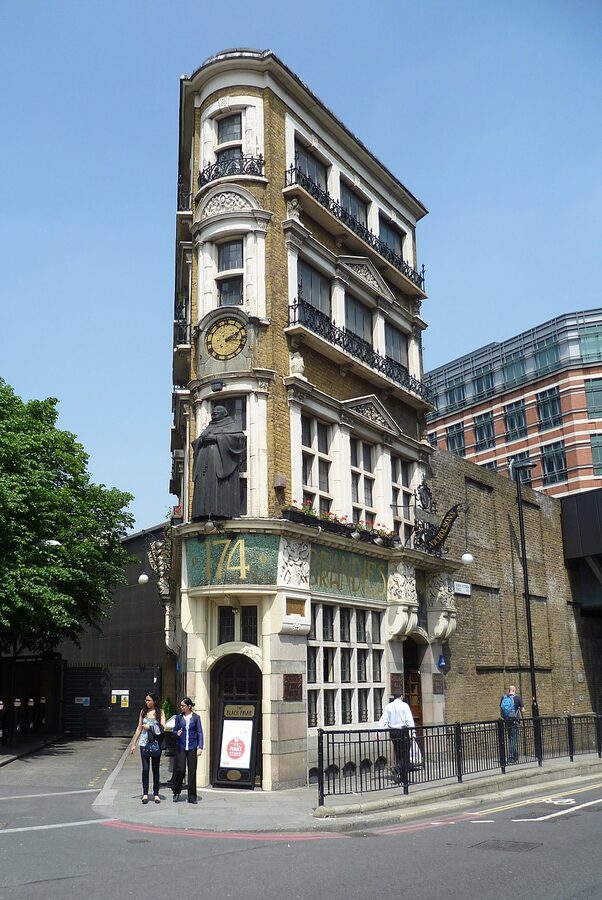
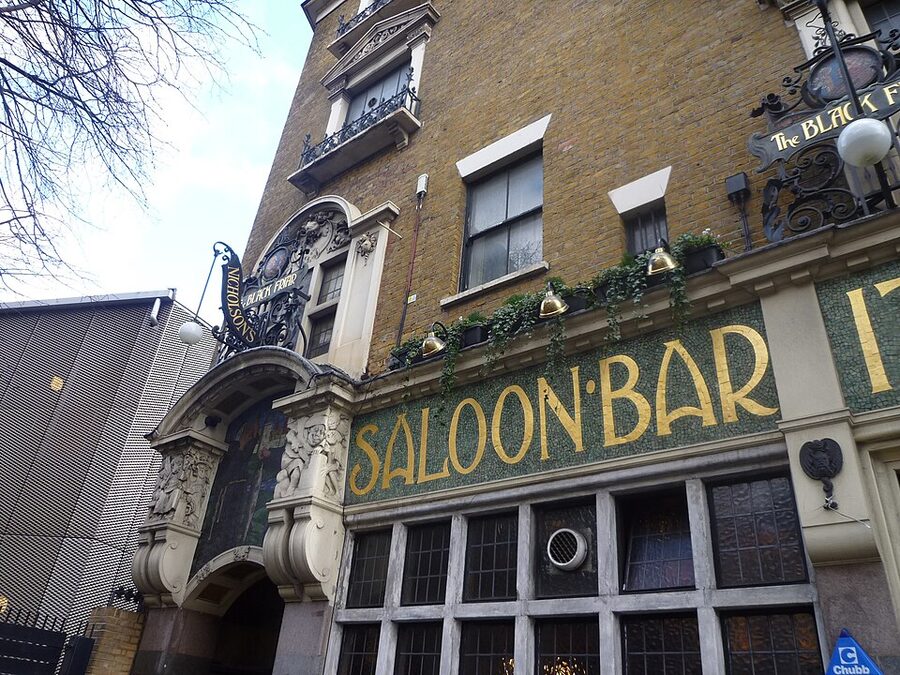
If you only get one photograph from the whole walk, take it inside the Black Friar’s back room. The crowd thins around 4pm on weekdays. Saturday evening is shoulder-to-shoulder.
Cittie of Yorke (Holborn)
The Cittie of Yorke is a strange one because the building is not as old as it looks. There has been a pub on the site since 1430, but the current Tudor-revival interior was built in the 1920s. It still works because the architects copied a real medieval hall and the ceiling height is genuine. There are huge wine vats up over the bar, originally functional, now decorative, and the row of small wooden cubicles down the side were used by lawyers from the nearby Inns of Court for client meetings, on the assumption that judges and barristers do not want to be seen drinking with each other in public.
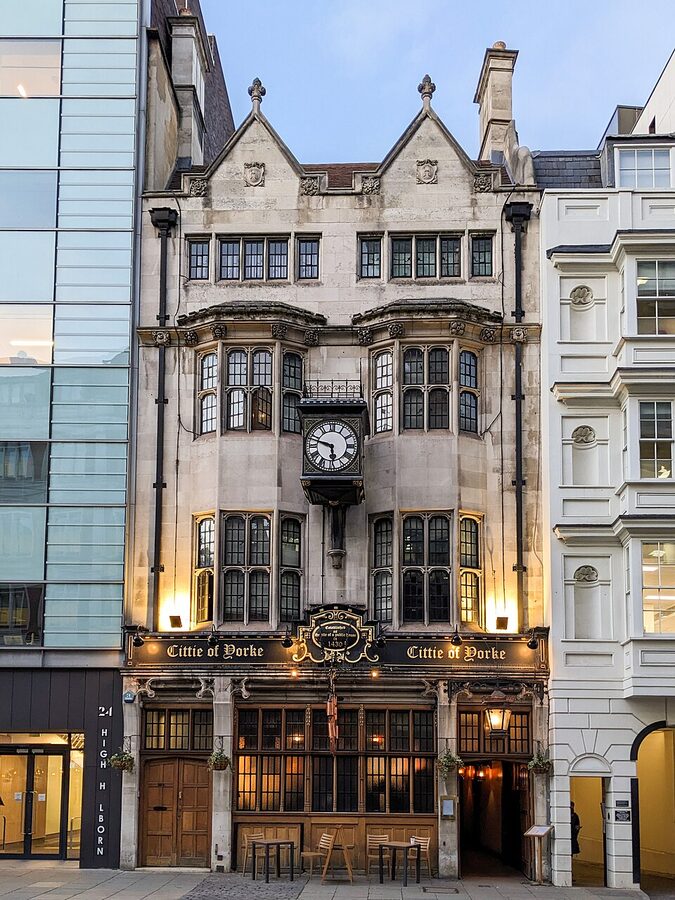
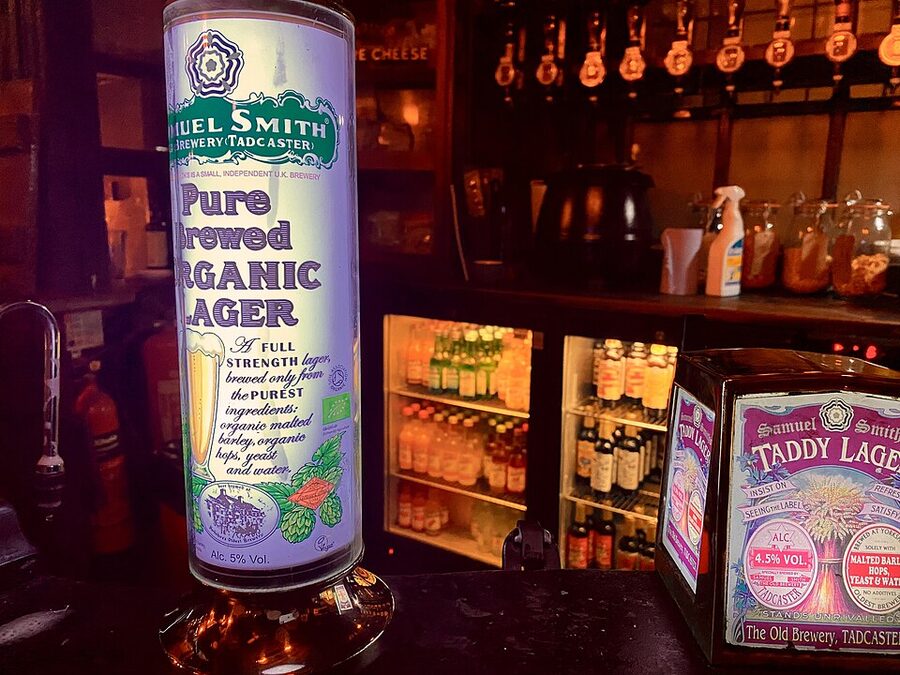
It is run by Sam Smith’s, the Yorkshire brewery, which means three things. The beer is cheap, the brewery’s own ales are the only ones on tap, and there is no music or screens. Sam Smith’s has a strict no-music policy across all its pubs. You will hear conversations and the till.
The variants worth knowing about
The basic four-pub walk is the default, but there are two specialised versions that change the route entirely. Pick by what you actually want to drink and what you want to hear about.
Soho music pubs
The Soho music variant of the tour swaps the Fleet Street pubs for ones around Wardour Street, Old Compton Street, and Denmark Street. The pubs themselves are mostly Victorian rather than 17th-century, but the stories are 20th-century music history. The Ship on Wardour Street where The Who played in the 1960s. The Coach & Horses on Greek Street where Jeffrey Bernard drank himself into legend. The Marquee Club’s neighbours where The Rolling Stones did the early gigs that lost them money.
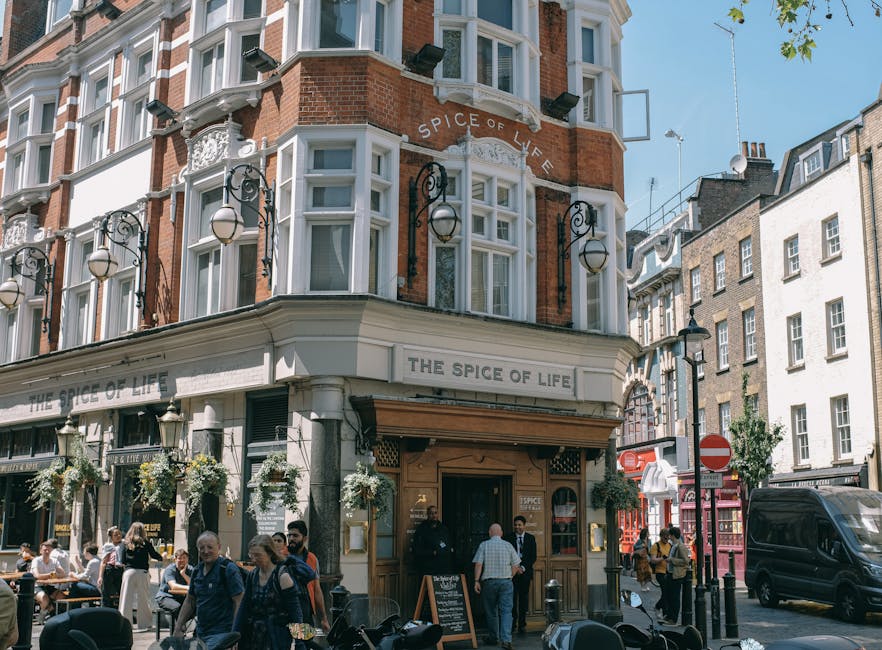
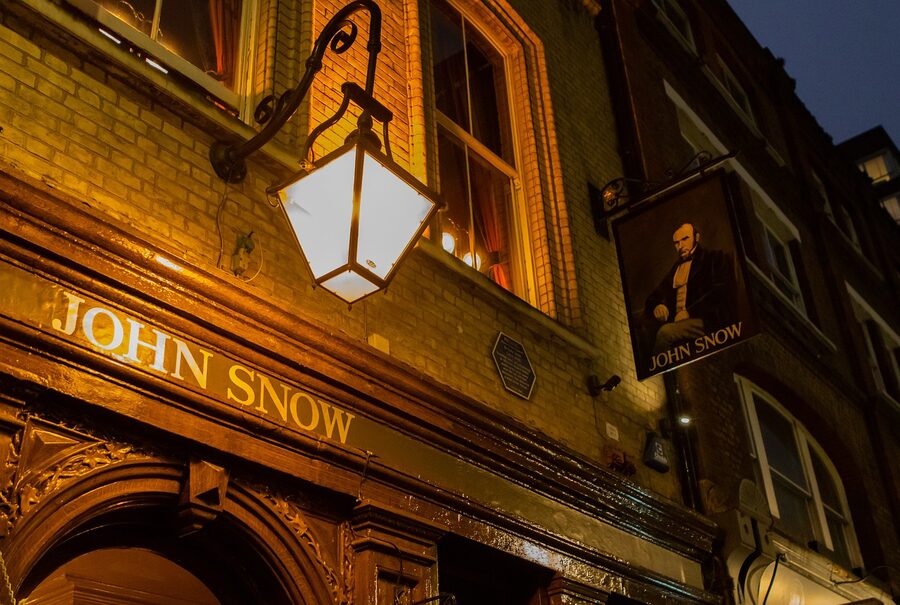
This version is shorter, two and a half hours instead of three and a half, and the pubs are closer together so the walking element is less. If your group cares more about Bowie and the Stones than about Dickens and Yeats, do this one. The same supplier runs both, so you get the same standard of guide.
Royal-warrant pubs
The royal-warrant variant runs through Westminster, St James’s, and Mayfair. The pubs are a mix of 18th and 19th century, and the connecting story is the British monarchy rather than London literary or drinking life. Pubs on the route around Buckingham Palace and the parade routes the King uses for state occasions. There is overlap here with the route covered in the Buckingham Palace State Rooms tickets guide if you want to make a day of it.
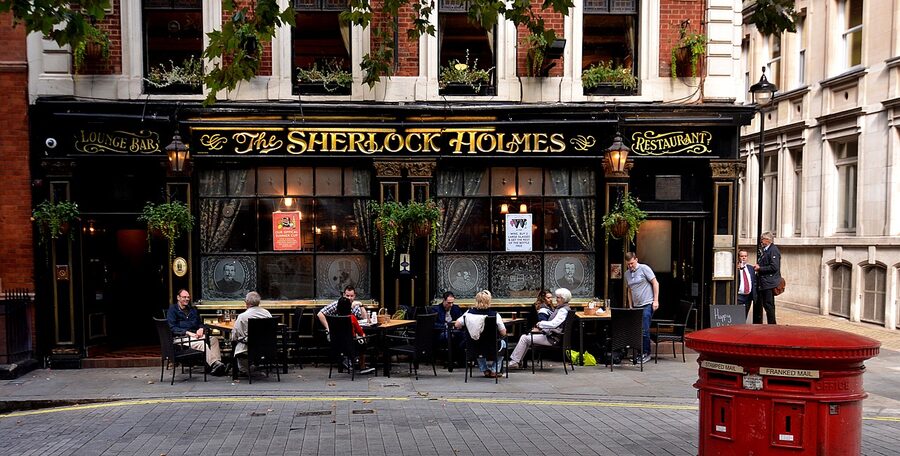
The royal version is the most overtly tourist-friendly of the three. If your group includes anyone who came to London specifically to see the monarchy stuff, this is the version that fits. The other two assume you already know what the Tower of London is.
How drinks work on the tour
This is the question I get asked most, and it depends on which booking you pick. The flagship Drink London walk includes a half-pint at three of the four pubs. The Soho music walk includes a full pint at two of the pubs and a soft-drink option at all of them. The royal walk includes a half-pint at three. None of them include food, though all of them stop somewhere with food on the menu, and you can order a plate alongside your included drink.
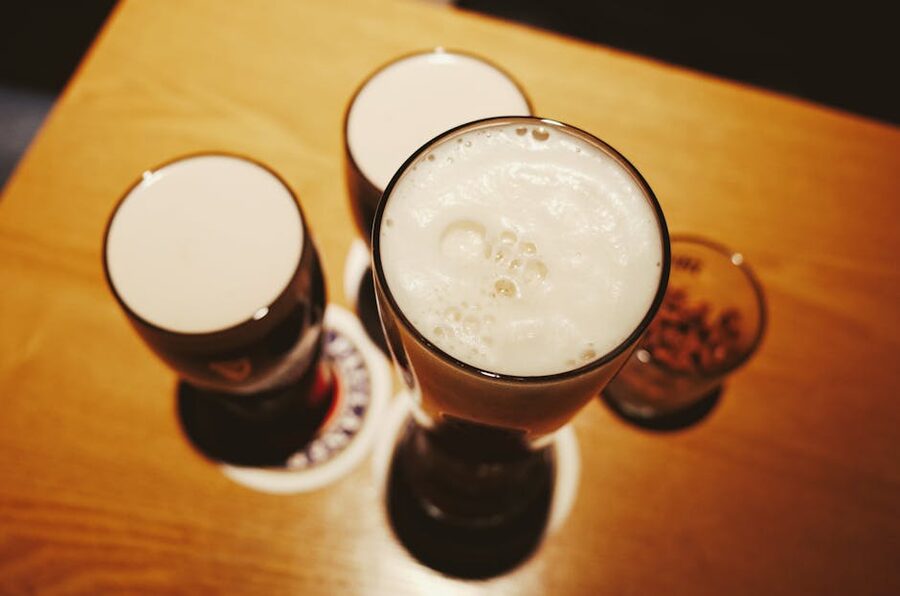
What is not always clear from the booking page: if you have someone on the tour who does not drink at all, every operator does a soft-drink alternative. Tea, coffee, lemonade. They will not refuse to seat a non-drinker. Just flag it on the booking notes and the guide will sort it out at each stop.
Booking practicalities
Most pub tours run daily. The flagship walks Wednesday to Sunday, the Soho variant Thursday to Sunday, the royal one Wednesday to Sunday with a Saturday lunchtime slot that is usually the easiest one to get on. Group sizes range from two to about twenty-five, but the average for the flagship is twelve. You book online, get a confirmation with the meeting point, and turn up.
The default meeting points: Drink London meets at Holborn station exit 3, the Soho version meets outside Tottenham Court Road station, the royal version meets outside Westminster station. All three are tube stations, all three are unmistakable, and the guide carries a clipboard or holds up a sign. Show up ten minutes early; once the group walks off, the guide does not come back for stragglers.
Best time of day to book
Mid-afternoon is the sweet spot. The 2pm or 3pm slot gets you into pubs after the lunch rush has cleared and before the after-work drinkers turn up. Friday evening tours start at 5pm and the pubs are already heaving by stop two. If you are travelling with anyone older or anyone who will hate elbow-to-elbow drinking, do a weekday afternoon.
Saturday lunchtime works for the royal version because the area around St James’s is quiet on weekend mornings. Most City workers are not in the office. The Cheshire Cheese on a Saturday lunchtime is the easiest time to get a seat in the cellar. Sunday tours run, but with reduced opening hours at some pubs; verify the booking confirmation lists all four stops, because Sunday closures can shrink the route to three.
What to wear and bring
Layers. Most of the historic pubs are small and get warm fast once a tour group of twelve is in there. You also walk between pubs in central London, which can be cold and wet in autumn and winter. A jumper plus a waterproof shell is the right answer for nine months of the year.
Cash for tips. Tour guides earn a chunk of their income from tips, and the convention in London is a fiver per person at the end of a good walk, ten if you really enjoyed it. Some operators add it on as a recommended top-up at the booking stage; if it is included, ignore the cash bit. If it isn’t, factor it in.
You do not need to drink to enjoy the tour. I have done a pubs walk in late autumn with a friend who was on antibiotics and could not drink at all, and the soft-drink swaps worked fine. The point is the buildings and the stories, not the alcohol.
How long is the walk between pubs?
Short. The flagship route is roughly Holborn, Fleet Street, Blackfriars, then back up to Holborn. About a mile and a half of total walking, broken into legs of five to ten minutes between pubs. The Soho variant is even tighter; you barely walk for more than three minutes between stops because Soho is dense.
If you have stamina concerns, this is one of the few central London walking activities that genuinely accommodates them. The pubs are the rests. You sit for fifteen minutes, drink, listen, then walk five minutes, then sit again. There is no equivalent of the long Embankment slog you get on a Jack the Ripper walking tour, where you cover three or four miles standing in streets.
How it compares to other London experiences
If you have done one of the other central London walks already, the pubs walk is the natural pair. The Jack the Ripper walk covers the East End at night and ends with a pint at one Whitechapel pub. The Harry Potter magical walk is morning, no drinking, more about film locations and J.K. Rowling’s London. The pubs walk is afternoon-into-evening, sit-down between stops, and the actual subject is the buildings.
If you are doing a heavy tourist-itinerary day already, do not bolt the pubs walk onto a long sightseeing morning. You will be tired before the Cheshire Cheese, and that is the wrong order to drink in. Save it for a day when the morning is light. A mid-morning look at the Tower of London followed by a mid-afternoon pubs walk is a workable combination, but a full Westminster Abbey visit plus a pub crawl in the same day will leave you ruined.
The picks, ranked
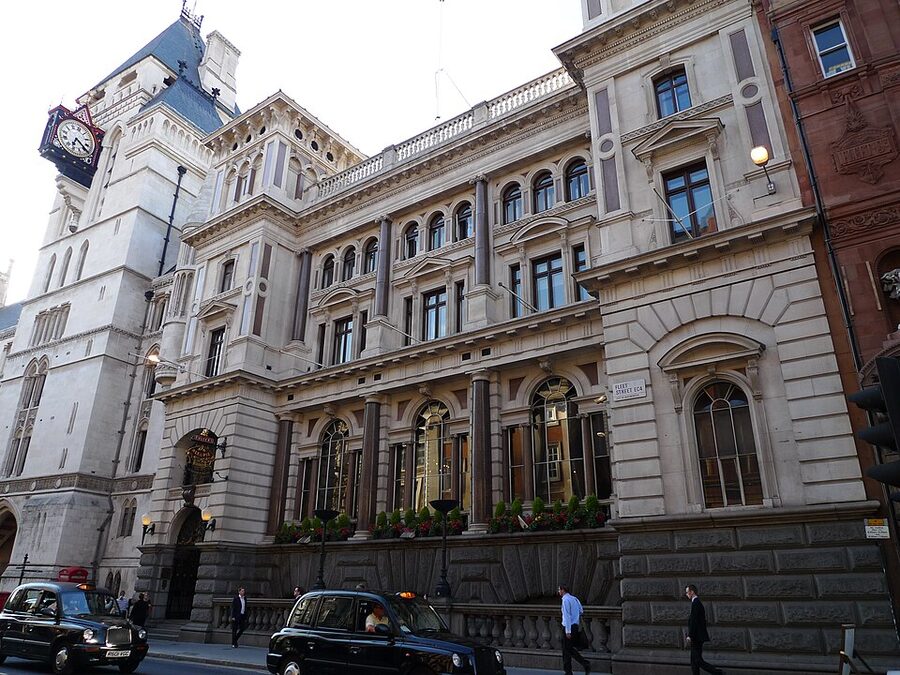
Three tours, three different uses. The flagship is the easiest first pick. The Soho variant is for music and 20th-century history fans. The royal version is for groups already on a monarchy-themed London trip. All three are run by guides I would book again.
1. Drink London Historical Walking Pub Tour: $39
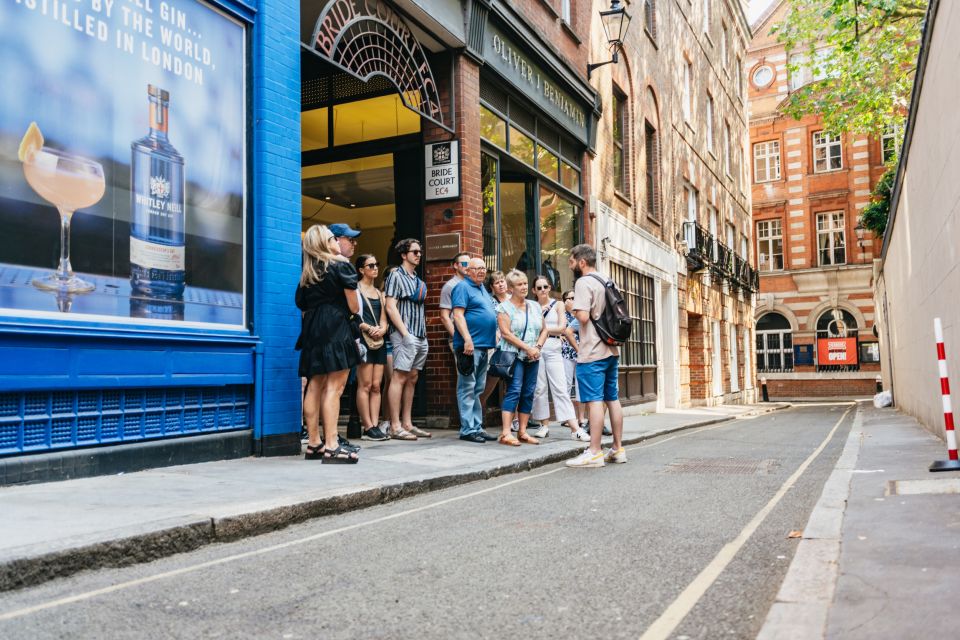
This is the tour I’d book first. By a wide margin the most-booked historic pubs walk in London, $39 a head, three and a half hours, drinks included at three pubs. Our full review of the Drink London walk covers the route variants and which guide style works for which kind of pub crowd. If you only do one historic pubs walk, this is it.
2. London West End Historic Pub Experience: $39
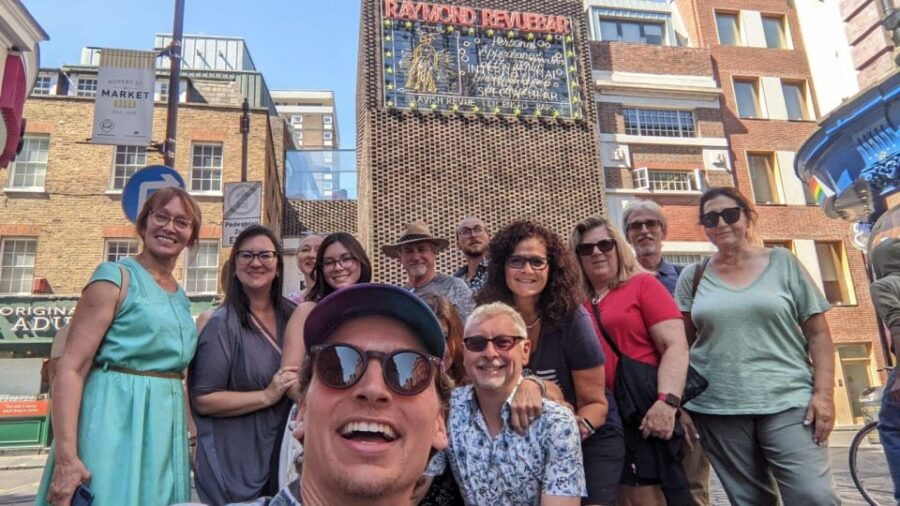
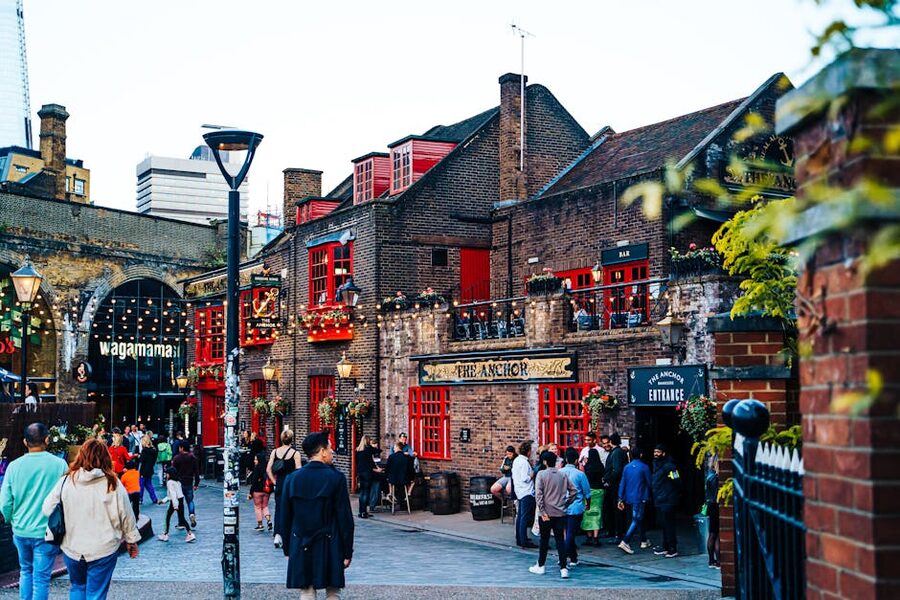
If your party cares more about The Beatles, Bowie, and the early Stones than about Dickens and Yeats, this is the version to pick. Our review of the Soho music and historic pubs walking tour goes into the specific bands attached to each stop. Same price as the flagship, shorter walk, more pop-culture density.
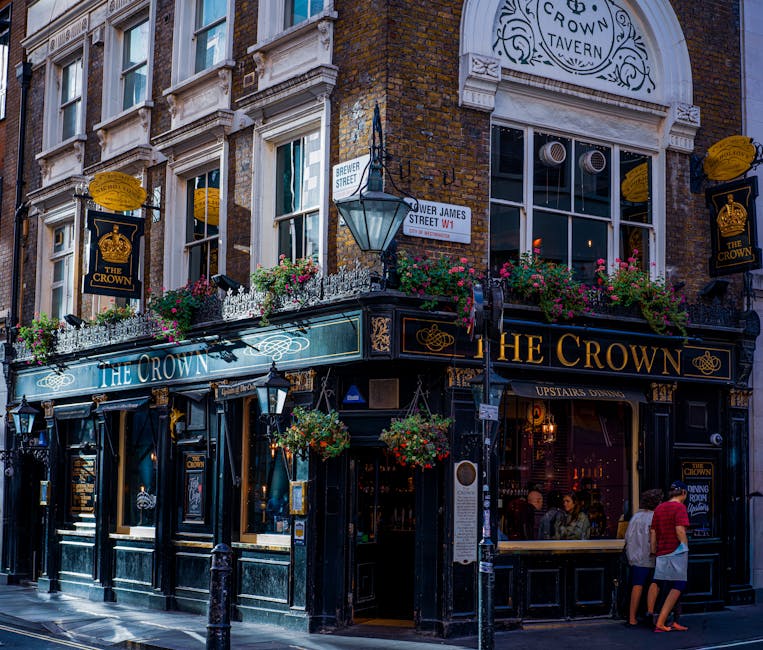
3. London Royal Historic Pubs Walking Tour: $39

Pick this one if your group already has Buckingham Palace, Westminster Abbey, or the State Rooms on their itinerary. Our review of the Royal Historic Pubs walking tour notes which two of the stops carry royal warrants and which are simply on the route. The walk fits well with a morning of standard royal-London sightseeing.
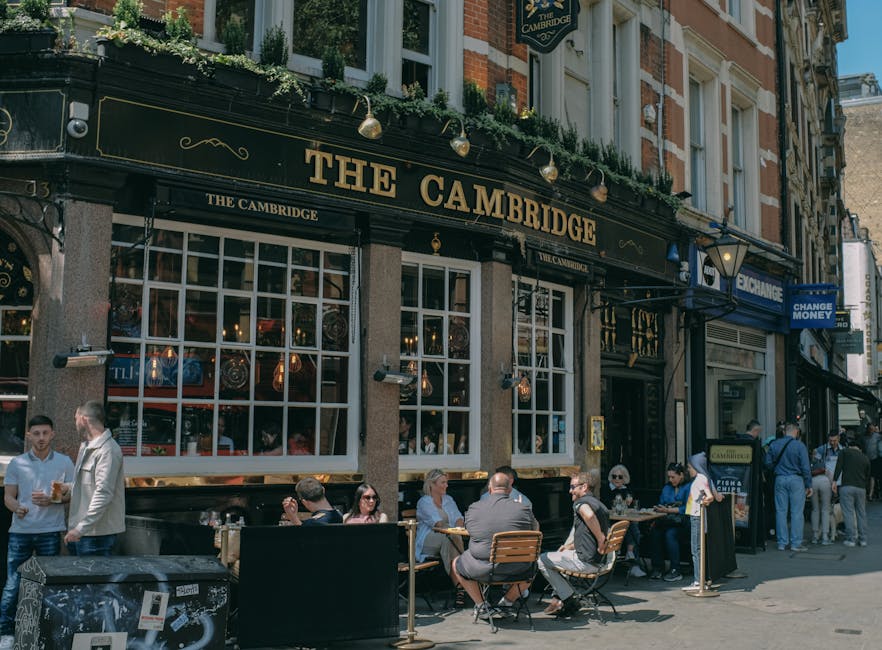
Private group option
If your group is six or more, the per-head price on a private booking gets close to the standard tour. The private group historical pub walking tour takes a custom group of up to twelve, picks the route based on what your party wants to see, and runs at any time of day. It is the right answer for a stag-do, a family birthday, or a corporate-team thing where you want the guide focused on you. Around $173 a head for two, drops to $40 a head once you hit eight people, which is the sweet spot.
The pub-and-something-else combinations
Two cross-over tours are worth knowing about. The first is the London bike-ride landmarks and historic pub tour, which covers more ground than a walking tour by replacing the legs with cycling. You see street-art and graffiti as well, and the pub stops are East-London focused rather than central. Three and a half hours, $104, smaller groups.
The second is the Jack the Ripper walk with pub stops, where the standard Ripper route is broken up by sit-downs in two East-End pubs that were on the actual victims’ last-known-locations. Useful if your group cannot stand for two hours straight. About $40, two and a half hours.
The food question
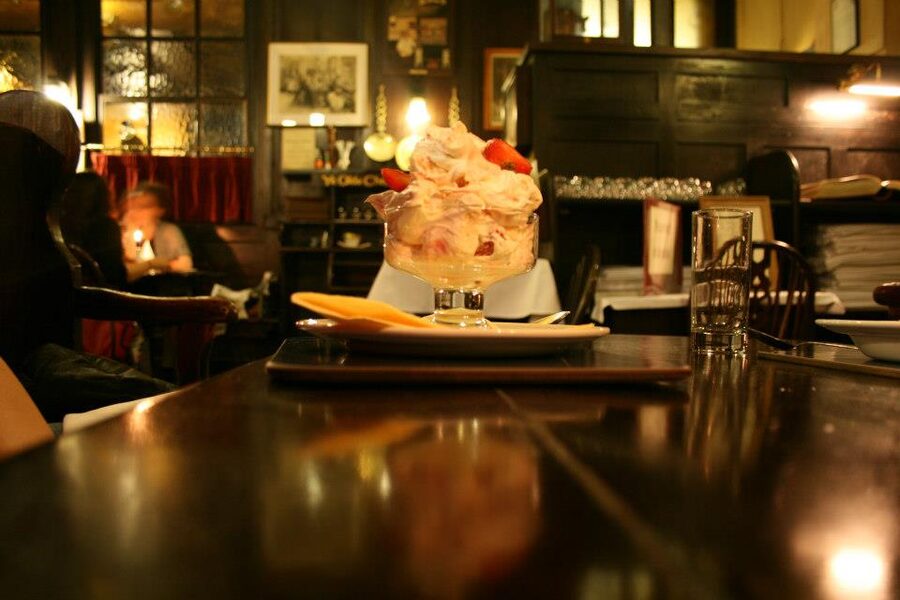
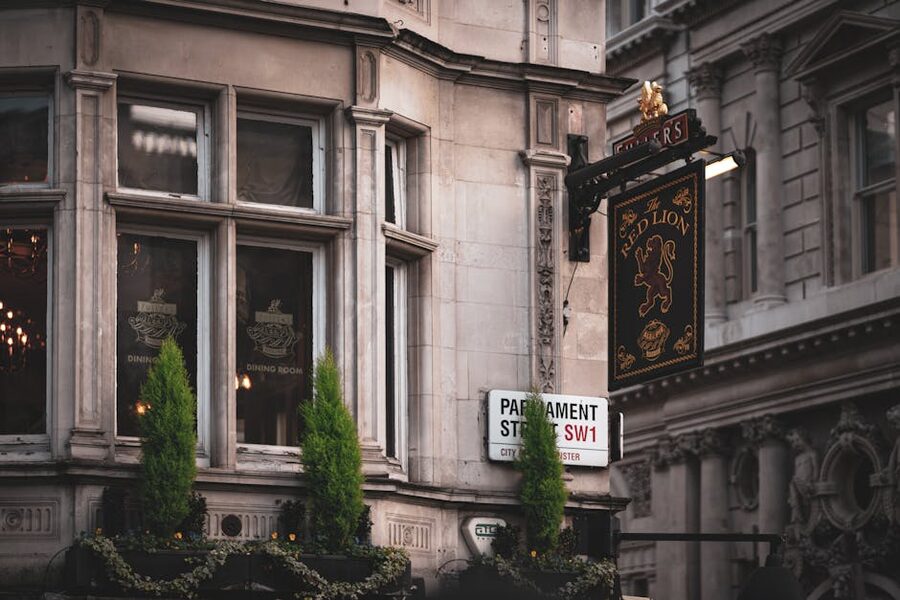
None of the standard pub tours include food, but most stop at a pub with a kitchen open. If you want a meal, the Cheshire Cheese does a steak-and-kidney pudding that has been on the menu more or less unchanged since 1900. The Cittie of Yorke does fish and chips and pies, and the Sam Smith’s pricing keeps a main course under fifteen quid. The Lamb in Bloomsbury does a small but good Sunday roast.
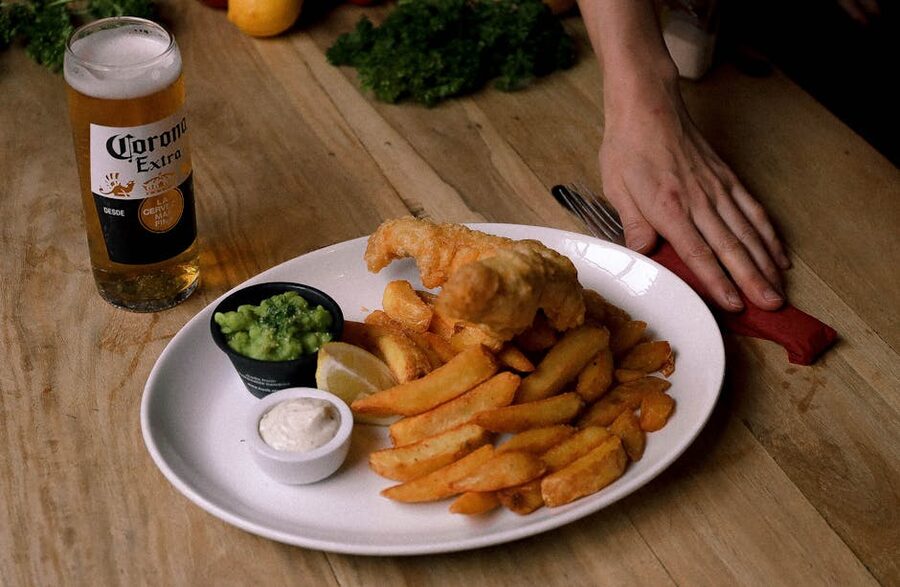
If you want food, eat before the tour starts or after it finishes, not during. The pubs run a fast turnover at peak times and the kitchen will not always honour a tour-group order, especially on weekends. Eat a late lunch at 1pm, then start the 3pm tour, and you will be in the right state for four pints. If you want a tour structured the other way around, food first then drinks woven in, the format that does it best is the walking food tour. The Athens Greek food walking tour is the European version that maps closest to a London pubs walk in tone.
What about doing it on your own?
You can, technically. All five flagship pubs are open to the public, none charge an entry fee, and you can sit and drink in any of them at any time their doors are open. What you lose is the 90 percent of the story that you only learn if a guide tells you. The first time I tried to do this self-guided I sat in the Cheshire Cheese cellar bar and assumed the chairs were just chairs. They are 18th-century, original to the 1761 fittings, and they have small brass plates on the back of each one. I missed all of them.
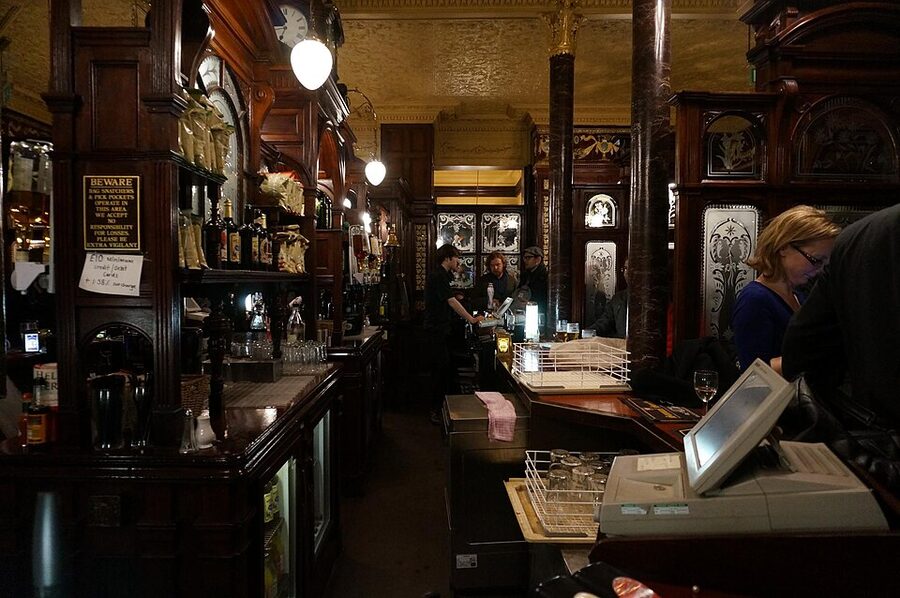
Self-guided is fine if you have already been on one of these tours and are now revisiting your favourite pub. For a first run, take the guide. The price-to-information ratio is genuinely good, and the included drinks roughly cover the cost of the guide bit.
Practical timing across the day
If you are pinning a pubs walk into a London itinerary, the right order is sightseeing in the morning, late lunch, pubs walk in the afternoon. A typical day: open the day at the Tower Bridge exhibition, walk along the river, lunch at one of the Borough Market traders, then do a 3pm flagship pubs walk that finishes at the Cittie of Yorke around 6:30pm. Dinner near Holborn or Fitzrovia. Bed.
For a longer trip, do the pubs walk on a non-headline day. Save the day when you visit Buckingham Palace or the Shard for clear-headed mornings. The pubs are more forgiving when you are not building toward a big landmark afterwards. The pubs walk pairs well with an evening you have already kept loose, like a theatre booking that starts late or a dinner after eight.
Group dynamics and how to make the tour work
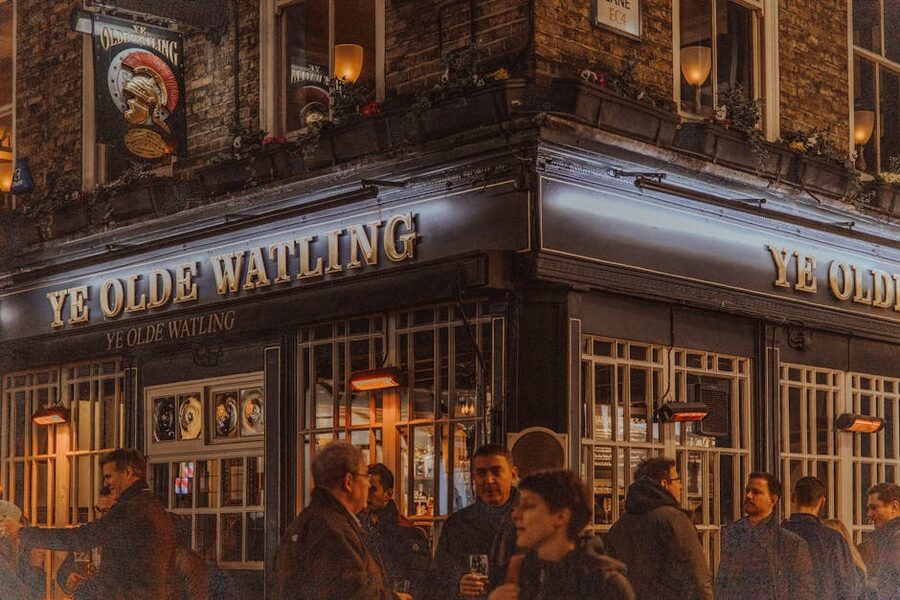
The thing nobody tells you about a pubs walk is that it is half a tour and half a group activity. You are sitting in a small space with eight to twelve strangers for two and a half hours. Some groups gel and the conversation between stops is half the experience. Others are quiet and you mostly listen to the guide. There is no telling in advance which you will get.
What you can do: be the friendly one at the start. Say hello to the others while the guide is checking the booking list. By stop two, the group will have sorted itself into who is here for the drinking and who is here for the history. The guide pitches to both, but the conversation between you and the rest of the group will be one or the other.
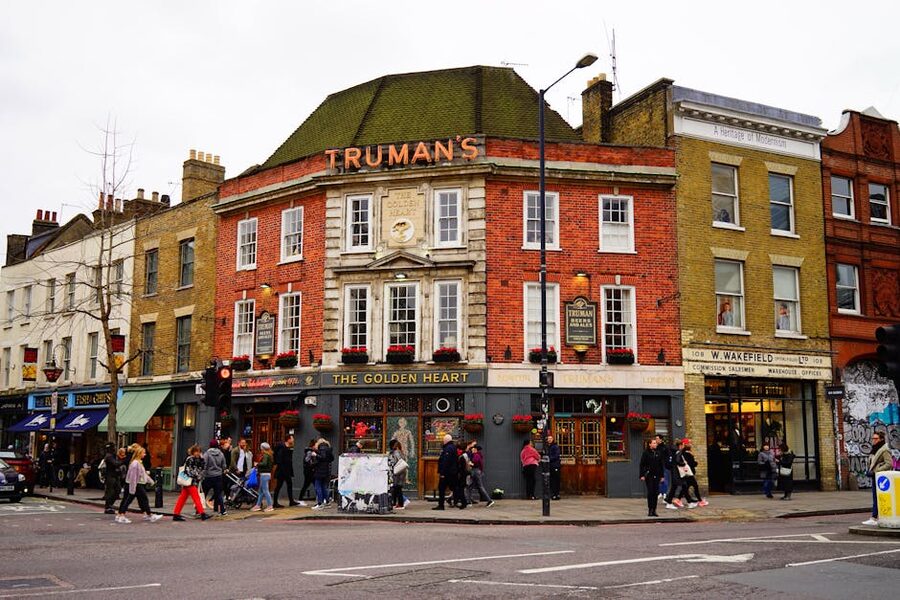
Solo travellers are common on these walks. Couples slightly less so. Three or four large groups occasionally turn up together and the dynamic shifts; if you can pick a tour that caps at twelve rather than twenty-five, you will have a better walk.
Cancellations and refund policies
Most tours are free cancellation up to 24 hours before. The flagship and the royal version both run rain or shine, because the bulk of the time is indoors. The Soho variant is the only one that gets occasionally moved indoors-only on a heavy weather day; the route normally walks past several outdoor music landmarks that lose their point in lashing rain.
If you book and the booking platform says weather-dependent, that is unusual for these tours. Read the fine print. Standard practice is full refund for cancellation up to 24 hours, partial refund for same-day cancellation if you have a documented illness, no refund for no-show.
Where the walk lands you afterwards
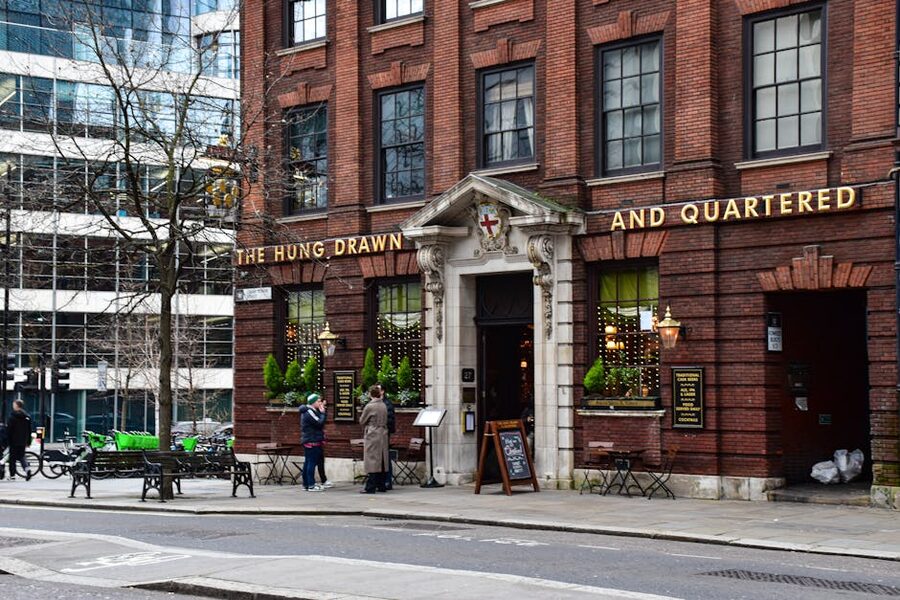
This matters more than you’d think. The flagship walk finishes near the Cittie of Yorke, which is a five-minute walk to Holborn or Chancery Lane tube. You can be on the Central line within ten minutes of the tour ending. The Soho variant finishes at Tottenham Court Road, which is a major hub. The royal variant finishes near Trafalgar Square or Piccadilly Circus, which are tourist-heavy but easy to leave.
If your hotel is in Bayswater or Paddington, the flagship walk leaves you the wrong side of central London for a quick taxi. The royal walk finishes in better territory. If you are over near Kensington Palace or south of Hyde Park, factor a fifteen-minute taxi or twenty-minute tube ride into your evening planning.
Other London walks worth your afternoon
If the pubs walk gets you in the mood for more guided central London, the natural follow-up is the London by night sightseeing bus for a lit-up city overview that pairs cleanly with an early-evening pub stop. For a darker variant on the same evening-out theme, head into the East End on a Jack the Ripper walk. And if you want food rather than drink, the European cousins of this format that I keep coming back to are the Lisbon food tour and the Barcelona tapas walking tour: same walking-and-tasting structure, different drink, different storytelling tradition.