A Kyoto tea ceremony is less about having a quick cup and more about learning the small gestures that give the moment its shape: how the host prepares the bowl, how you turn it, and how you take your first sip. At this Gion experience, you watch a full demonstration, then prepare and taste matcha yourself.
I like the hands-on lesson, which turns etiquette into something you can actually practise, and the option to add a kimono rental for a more festive outing. One consideration: the tea session is only an hour, and kimono guests need to arrive an hour early. Arrive late and you may lose the dressing portion, or, if 30 minutes late, the tea ceremony too.
- You make your own matcha: Follow the teacher’s instructions as you prepare and whisk tea, then taste it with a Japanese sweet.
- The etiquette is practical: Learn how to hold and rotate the bowl, not just watch a ceremony from the sidelines.
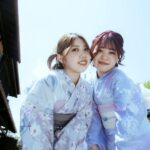
- Kimono is an add-on: Several packages are available, including men’s, women’s, children’s and larger-size options.
- The experience is in Gion: The meeting point is Ouka Kimono Rental at 169 Tokiwacho, a short walk from Keihan Gion-Shijo Station Exit 9.
- Plan for quiet and seated time: The room calls for soft voices, and parts of the ceremony involve kneeling. A small seiza stool or cushions can be requested.
- It has firm age and timing rules: Children aged 0 to 9 cannot join; the activity is not offered to pregnant women.
- A Gion tea lesson built around doing, not just watching
- Arrive early if you have chosen a kimono
- Start with the room, the utensils and the story
- Whisk your own matcha and taste it with wagashi
- Add the kimono for a longer Kyoto outing
- Sitting comfortably and respecting the tea room
- Is one hour worth the starting price?
- Who should book this Kyoto tea ceremony?
- FAQ
- How long does the tea ceremony take?
- Where is the meeting point?
- What languages are used during the tea ceremony?
- Can I book the tea ceremony without a kimono?
- Can children participate?
- What happens if I arrive late?
- The Best Of Kyoto!
- More Food & Drink Experiences in Kyoto
- More Tours in Kyoto
- More Tour Reviews in Kyoto
- Not for you? Here's more nearby things to do in Kyoto we have reviewed
A Gion tea lesson built around doing, not just watching
 1 / 8
 2 / 8
 3 / 8
 4 / 8
 5 / 8
 6 / 8
 7 / 8
 8 / 8
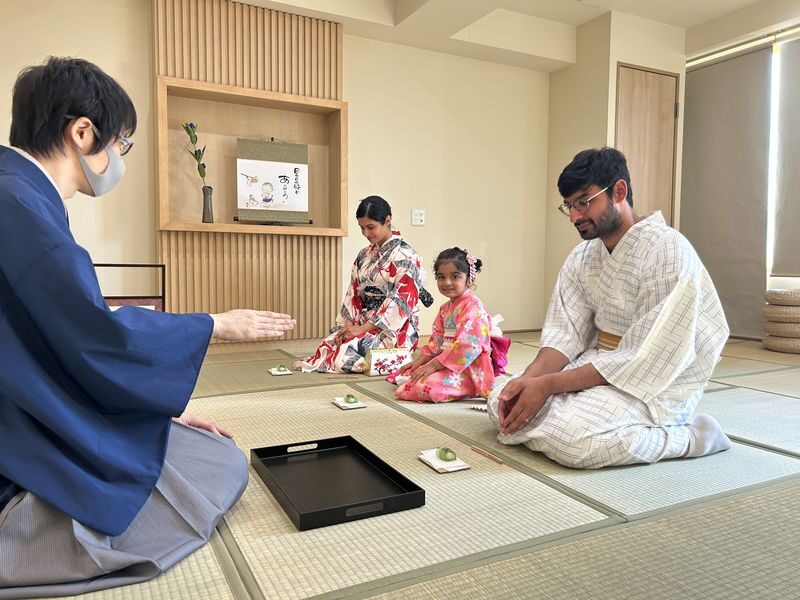
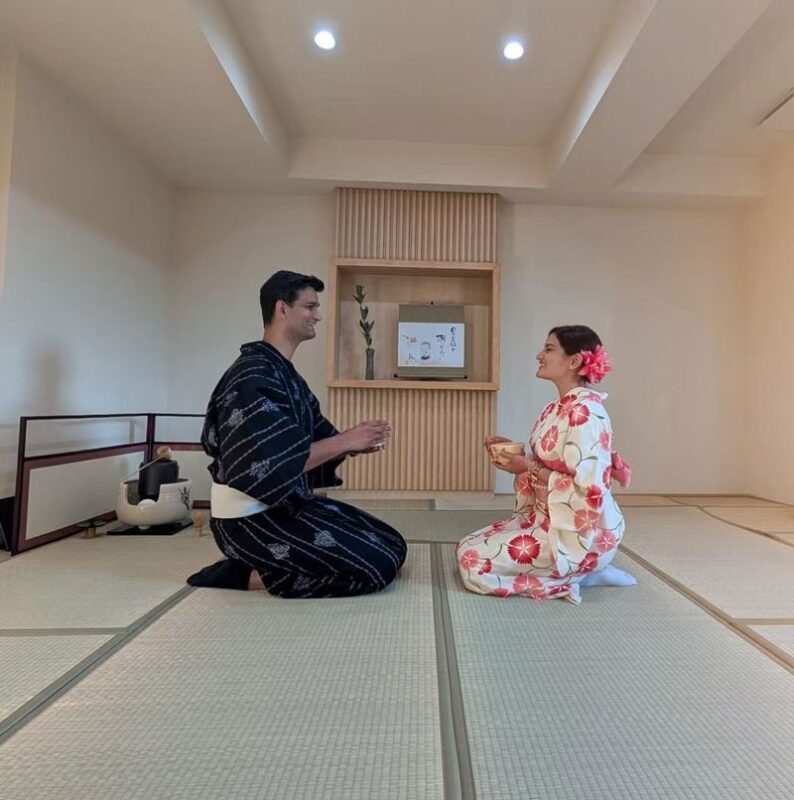
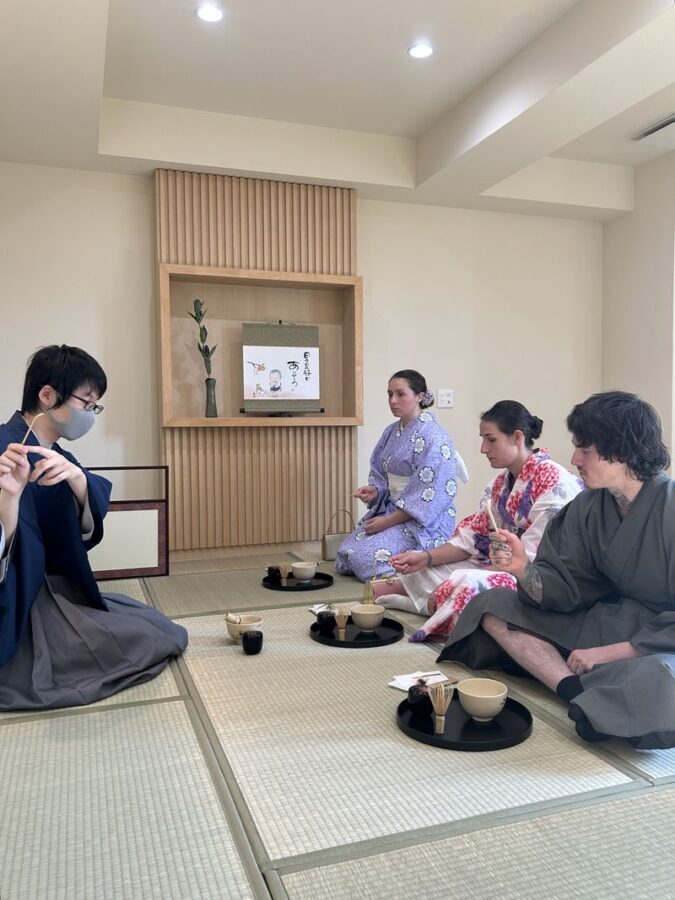
This one-hour Kyoto tea ceremony gives you a clear introduction to matcha and the customs around serving it. The teacher begins with the room, the utensils and the meaning behind the ceremony, then demonstrates the sequence before guiding you through your own bowl.
That balance matters. A demonstration can look graceful while leaving you unsure what any gesture means. Here, you get to try the movements yourself, including how to handle and turn the bowl. The lesson is designed for first-timers, and the staff explain the process in English or Japanese.
The session takes place at Ouka Kimono Rental in Gion. You can book the tea ceremony on its own or choose a package that includes kimono dressing. The tea-only option is listed from $35.55, while kimono packages cost more. The exact add-on price depends on the package you select, so check the total before booking.
The experience is focused and compact, rather than a long formal study of tea. If you want a thoughtful cultural activity that fits between Kyoto sightseeing stops, that can be a good use of an hour. If you hope to spend a long time practising or learn advanced tea ceremony forms, this introductory session is not that.

👉 See our pick of the 25 Best Workshops And Classes In Kyoto
Arrive early if you have chosen a kimono
The meeting point is Ouka Kimono Rental, Sakura Kimono, at 169 Tokiwacho in Higashiyama Ward. Keihan Gion-Shijo Station Exit 9 is the stated route reference. The tea starts at the time you selected, with available departures listed as 11:30, 13:00, 14:30 and 16:00.
For a kimono package, arrive one hour before the tea start time. That gives you time to choose your outfit, get dressed and have your hair done. For an 11:30 ceremony, for instance, the shop asks you to arrive by 10:30. The early arrival is not spare time built into the tea lesson; it is for dressing.
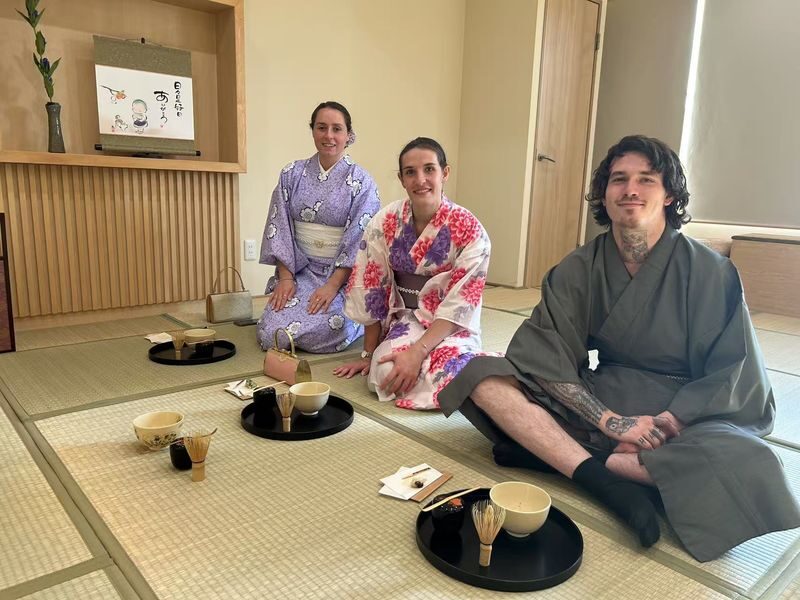
The kimono selection includes basic and traditional women’s styles, men’s styles, children’s options, lace designs and larger sizes. Some people have also been able to wear their outfit outside after the ceremony, but this depends on the package and arrangement. Confirm the terms for your booking rather than assuming you can take the kimono for a walk around Gion.
Timing is strict. If you arrive late, the shop may not be able to dress you, and the kimono fee will not be refunded. You may still join the tea session if you arrive in time, but 30 minutes late means you cannot enter the tea room. Set a route buffer, especially if you are unfamiliar with the area.
You can also read our reviews of more food & drink experiences in Kyoto



Start with the room, the utensils and the story
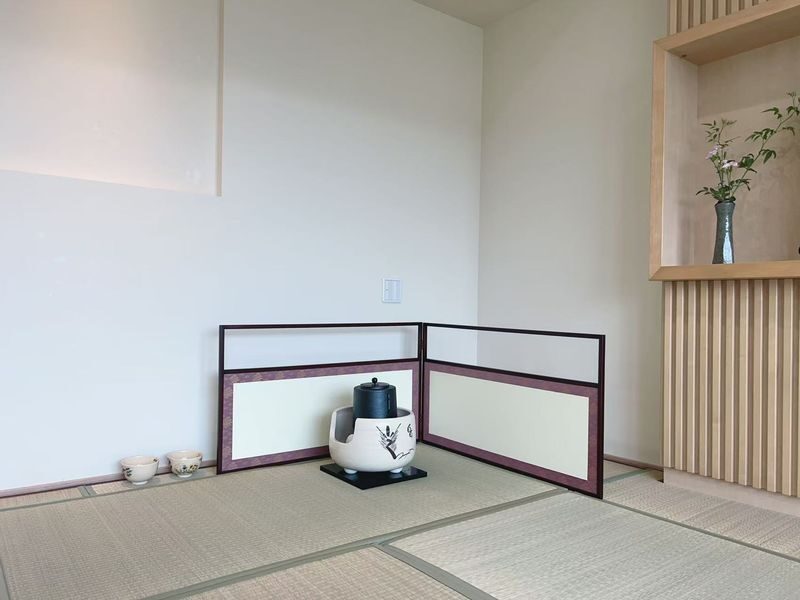
The teacher opens with the origins and cultural meaning of Japanese tea ceremony, along with basic etiquette. You are introduced to the tea room layout and the utensils used during the ceremony. This context helps you see that the activity is not simply a recipe for making matcha. The order of actions, the care given to the objects and the calm pace are part of the lesson.
The explanation is currently available in English and Japanese. That language limit is useful to know if you were hoping for instruction in another language. The staff can communicate in English or Japanese, but the ceremony itself asks for quiet attention, so it is best to save your questions for the appropriate moments.
The teacher then performs a complete demonstration. You see the water heated, bowls warmed, matcha prepared, tea brewed and whisked. The exact actions are easier to understand once you have watched the sequence, and the teacher explains what you are seeing rather than leaving you to guess.
This is a welcoming introduction, not a test of perfect manners. You are there to learn the basic movements and show care for the tea and utensils. The spirit described for the experience is harmony, respect, purity and tranquility. Even a small gesture, such as turning the bowl the right way, gives you a feel for how etiquette shapes the ceremony.
Whisk your own matcha and taste it with wagashi
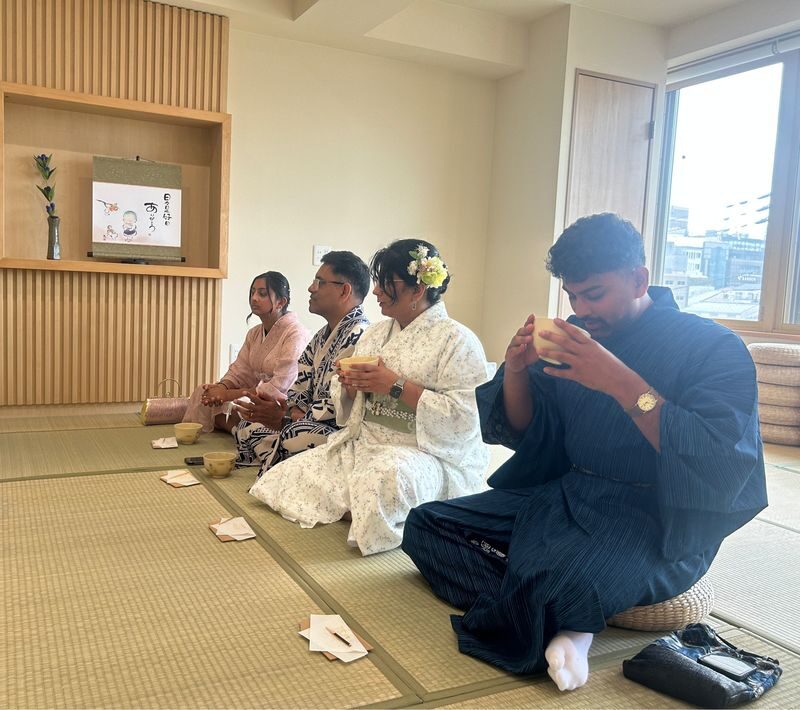
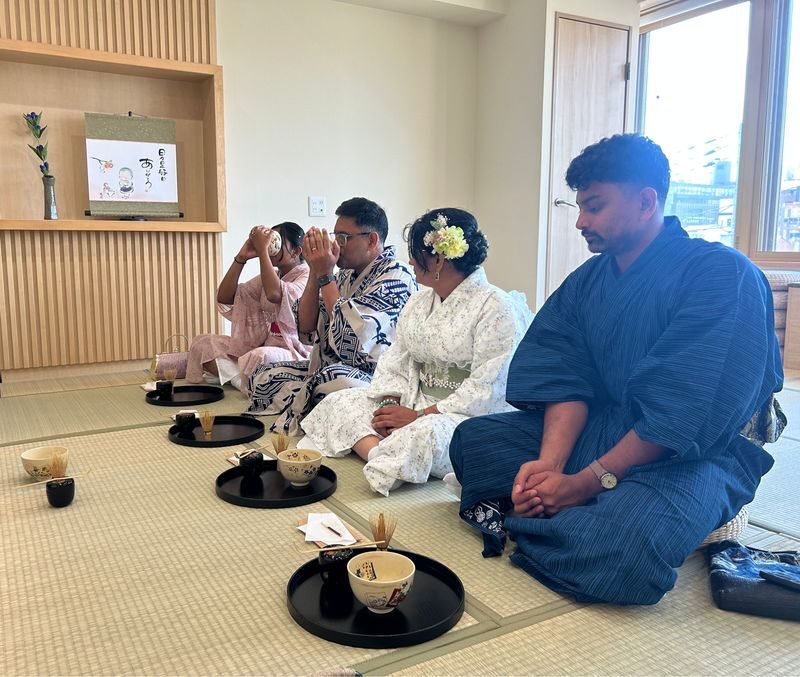
After the demonstration, the hands-on part begins. Under the teacher’s guidance, you prepare tea, including working with matcha powder and whisking it into a fine foam. The process gives you a practical sense of how much technique sits behind a bowl that may look simple at first glance.
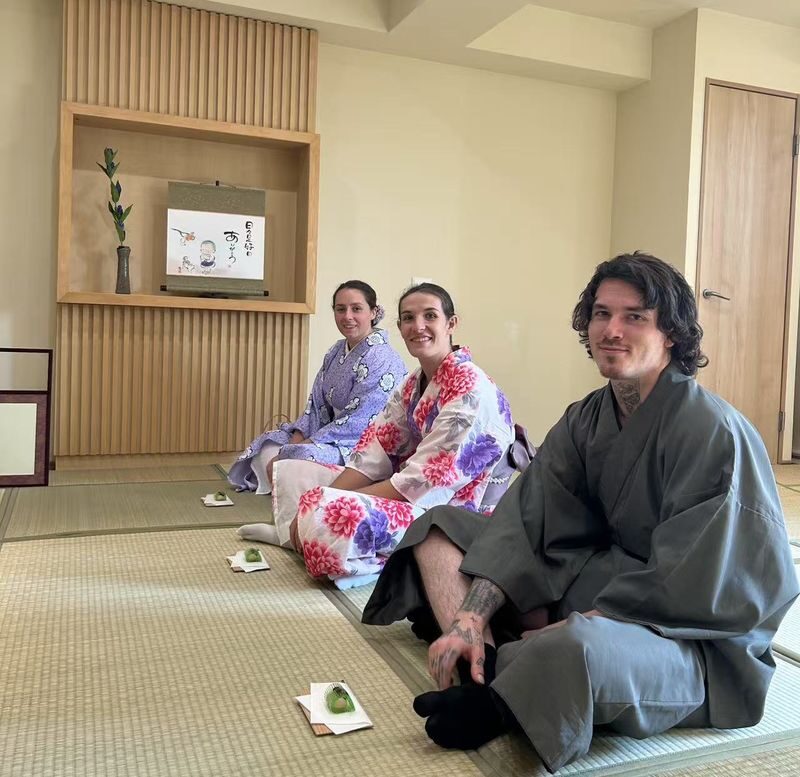
Then you taste the matcha you have made, paired with wagashi, a Japanese sweet. The pairing gives the tasting a little more context: the sweet is not an afterthought, but part of how the tea is enjoyed. If you have never tried matcha, this is a low-pressure way to meet its grassy, slightly bitter flavour with guidance nearby.
You can ask questions and exchange impressions with the teacher and other participants. Some sessions may feel personal, especially when only a few people attend, but group size is not specified and should not be assumed. The consistent strength of the format is the chance to ask questions while the steps are fresh in your mind.
One small practical point: if you have dietary restrictions or feel unwell, tell the staff in advance. The activity includes a sweet, but no specific ingredients or substitutions are confirmed.
Add the kimono for a longer Kyoto outing
A kimono package changes the experience from a one-hour cultural activity into a larger part of your day. You choose an outfit at the shop, get dressed with staff help and may have your hair styled. People who choose this option often value the selection and the care given during dressing as much as the ceremony itself.
The convenience is the location. You are already in Gion, so wearing a kimono can make the outing feel connected to the surrounding neighbourhood. Some bookings have allowed people to take photos outside or continue wearing the outfit after tea, sometimes until 5 p.m. But those arrangements are not guaranteed for every package. Check the precise rental terms before treating the kimono as an all-day rental.
The tea-only booking is the sensible choice if you mainly want to learn about matcha and ceremony etiquette, or if the added cost and extra preparation do not appeal. The kimono option is better if dressing up and taking photos are part of what you want from your Kyoto day. Think of it as a separate experience bundled with the tea, not a minor detail.
For photography, ask the staff whether pictures or video are allowed in the tea room. If you do take photos, keep the ceremony in mind and avoid interrupting the demonstration. The quiet atmosphere is part of what makes the lesson work.
Sitting comfortably and respecting the tea room
The ceremony includes kneeling, and you are asked to sit upright. If sitting seiza style is uncomfortable, you can bring knee pads or foot cushions, or request a small seiza stool. This is worth sorting out before the session rather than trying to endure discomfort in silence.
The room is meant to stay calm. Set your phone to silent and speak softly. Handle the tea utensils gently, and do not pick up items that are not presented for use. If you need the restroom, take care with your clothing so the kimono stays tidy.
Pregnant women cannot take part in the kimono dressing or tea ceremony because the clothing can restrict the abdomen and the ceremony involves extended kneeling. Children aged 0 to 9 are not currently eligible. Children aged 10 to 12 should be booked under the children’s plan, while those aged 12 and older are charged at the adult rate, according to the stated age rules.





Is one hour worth the starting price?
At a starting price of $35.55, the tea-only session is not the cheapest way to taste matcha in Kyoto. You are paying for guided instruction, a full demonstration, your chance to prepare tea and the cultural context around the gestures. If you want a quick drink, this is more than you need. If you want to understand what makes a tea ceremony different from simply whisking powder into water, the lesson offers a clearer return.
The kimono packages can add a lot to the day, but they also raise the cost and require an early arrival. Since package prices vary, compare the full amount rather than judging by the base price. The one-hour duration applies to the tea ceremony itself, not the time needed to dress.
The format’s strongest points are the warm staff, clear explanations and the chance to make your own matcha. The occasional drawback is that kimono dressing can feel rushed, particularly if you arrive late or have not left enough time. Arriving an hour early is not just a rule to obey; it helps protect the part of the experience you paid extra for.
Free cancellation is available with at least 48 hours’ notice, based on local time. Late arrivals and no-shows are not eligible for refunds or changes. The voucher is valid only for the date and time selected, so check your confirmation email and keep the booking time handy.
Who should book this Kyoto tea ceremony?
I would choose this experience if you want a compact, hands-on introduction to Japanese tea ceremony rather than a lecture or a simple tasting. It suits first-time matcha drinkers, couples, solo visitors and families with eligible children. The teacher explains the procedure, and you get to practise the key steps instead of only watching.
Book a kimono package if dressing up and having time for photos are important to you, and you can arrive early without rushing. Choose tea only if you care more about the ceremony than the outfit, or want to keep the price down. Skip it if kneeling is not workable for you, you need instruction in a language other than English or Japanese, or your schedule cannot absorb the strict arrival rules.
For a short cultural stop in Gion, this is a worthwhile way to learn the etiquette behind the bowl as well as taste the tea. Just book the package that matches your priorities, and give yourself enough time to get there.
Kyoto Traditional Japanese Tea Ceremony Culture & Matcha Tasting Experience
“Had a great time, very enjoyable experience!”
FAQ
How long does the tea ceremony take?
The tea ceremony experience lasts one hour. If you book a kimono package, arrive at the shop one hour before your selected tea start time for dressing and hair styling.
Where is the meeting point?
Meet at Ouka Kimono Rental, Sakura Kimono, 169 Tokiwacho, Higashiyama Ward, Kyoto. The stated route reference is Keihan Railway Gion-Shijo Station Exit 9.
What languages are used during the tea ceremony?
The ceremony explanation is available in English and Japanese. English-speaking and Japanese-speaking staff are included.
Can I book the tea ceremony without a kimono?
Yes. A tea-only package is available, alongside several kimono-and-tea options.
Can children participate?
Children aged 0 to 9 cannot participate. Children aged 10 to 12 should use the children’s plan, and children aged 12 and older are charged at the adult rate.
What happens if I arrive late?
If you are late, kimono dressing may not be possible, and the kimono fee will not be refunded. If you arrive 30 minutes or more late, you cannot enter the tea ceremony room.