Kintsugi turns a chip or break into part of a pot’s story. In this central Kyoto workshop, you learn about the Japanese practice of repairing pottery, then try it yourself with an instructor nearby to guide each step. It’s a thoughtful change of pace from temple visits and city streets.
I like two things in particular: you get to make something with your hands, and the idea behind the craft gives the activity more meaning than a standard souvenir stop. Beginners are welcome, and the instructors are known for patient, friendly help. One point to plan around: the advertised price starts at $5.95, but a plate or bowl may cost extra, and the stated schedule varies between one hour and 90 minutes.
- What to know before you book
- Making a crack part of the story
- A compact workshop, with room to take your time
- What happens at the table
- Pottery choices and the real cost
- A thoughtful break from Kyoto sightseeing
- Booking details worth checking
- Should you book the Kintsugi workshop?
- FAQ
- How long does the Kintsugi experience take?
- What are the available session times?
- Is the workshop suitable for beginners?
- Is an English-speaking guide included?
- Can I bring my own broken pottery?
- Does the starting price include a plate or bowl?
- What is the cancellation policy?
- The Best Of Kyoto!
- More Tours in Kyoto
- More Tour Reviews in Kyoto
- Not for you? Here's more nearby things to do in Kyoto we have reviewed
What to know before you book
 1 / 4
 2 / 4
 3 / 4
 4 / 4
- You make a pottery piece of your own. The activity is hands-on, and you can take your repaired work home as a personal reminder of Kyoto.
- Kintsugi is about more than mending. The workshop introduces an approach that treats cracks and chips as part of a piece’s character.
- English-speaking guidance is included. Instructors have included Carla, Jeff, Luna, Alice, Sophia, and Ryu, though your teacher will depend on the session.
- There may be extra charges for pottery. Some participants choose upgraded plates or bowls, with prices reported from about ¥2,000 to ¥8,000.
- Allow some time beyond the advertised hour. The schedule describes a 90-minute outing, and one participant took close to two hours without being hurried.
- Check the exact meeting point. The activity information gives more than one building name, so confirm the map pin and address for your booked time.

👉 See our pick of the 25 Best Workshops And Classes In Kyoto
Making a crack part of the story
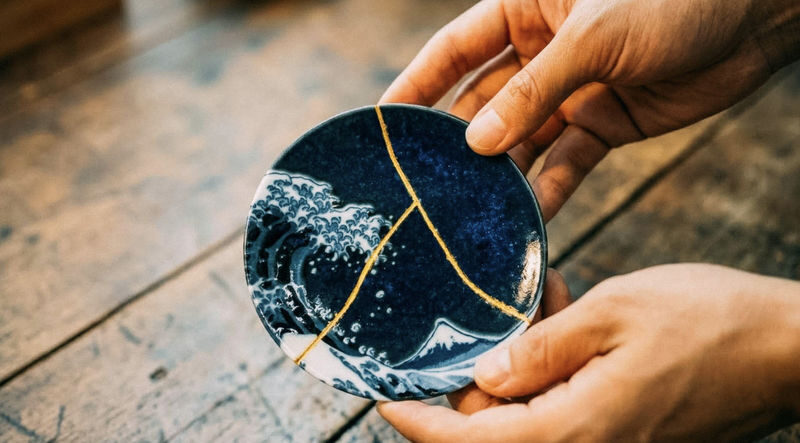
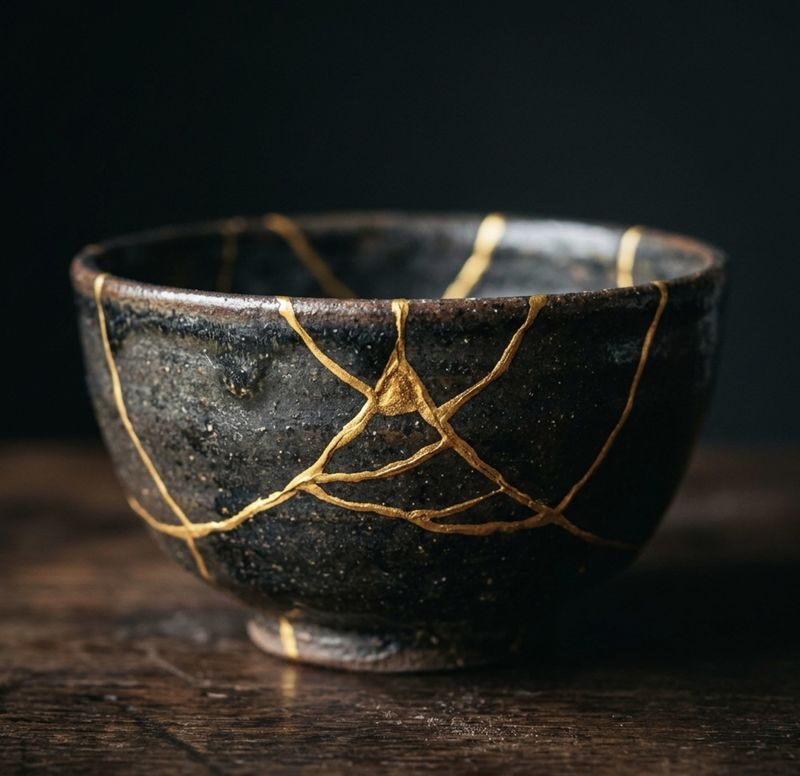
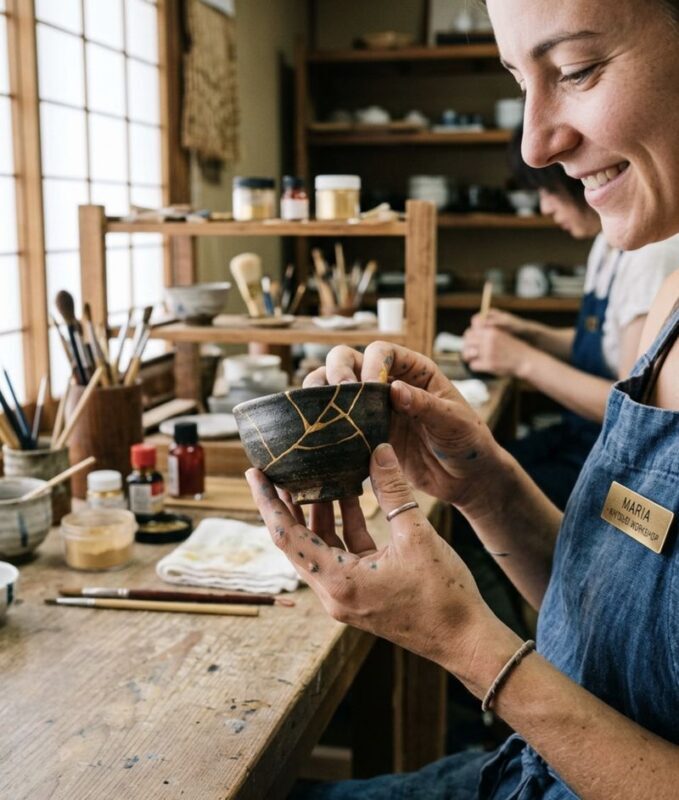
Kintsugi is a repair craft with a simple, memorable idea: a damaged pot need not be treated as ruined. Its scratches and chips can become part of its identity. That makes this workshop a good fit if you want to do more than look at Kyoto’s traditional arts from behind a barrier.
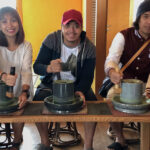
The activity combines a short introduction to Kintsugi’s background with a practical repair session. You don’t need a craft background to take part. Instructors provide step-by-step support, and the finished piece is yours to take home.
There is a quiet pleasure in concentrating on one small object. Kyoto can fill a day with sights, crowds, and navigation. Here, you get to sit down, focus on the work in front of you, and consider the Japanese idea of wabi-sabi, finding beauty in imperfection and age.
The experience is especially appealing if you enjoy handmade objects or want a personal souvenir. Rather than choosing another item from a shop, you leave with something you helped make. Just keep in mind that the basic price and any pottery upgrades are separate considerations.
You can also read our reviews of more tours and experiences in Kyoto.



A compact workshop, with room to take your time
The experience is listed as one hour, while the schedule describes a 90-minute itinerary. That difference is worth noting when you plan the rest of your day. Most sessions appear to fit into a short activity, but the time at the table can vary. One participant said the work took nearly two hours and the staff did not rush them.
If you are booking a meal, train, or another timed activity afterward, leave a buffer. The workshop is not a good place to watch the clock while trying to make careful repairs. For a rainy afternoon or a quieter stretch between sightseeing stops, a little extra time may be welcome.
The sessions have set departure choices at 10:00, 12:00, 14:00, 16:00, and 18:00. Your return time depends on the slot you choose. The listed return options run from 11:30 to 19:30, with availability tied to the departure time and activity duration. The voucher is valid only for the date and time booked, so arrive for the correct session.
This is a meet-up activity, not a hotel pickup. The supplied location details name Takatsuji Mihara Building, Nippo Kyoto Building 2, and the En-Chopsticks making workshop in Gion. The street address given for the workshop is 302 Nippo Kyoto 2nd Building, Senshojicho, Shimogyo Ward, Kyoto 600-8076. Since the place names do not line up neatly, check the map pin and meeting instructions after booking rather than relying on a typed address alone.
What happens at the table
The workshop starts with an introduction to Kintsugi and its history. That context helps explain why the process is valued: the aim is not simply to hide damage, but to make repair part of the object’s appearance and story.
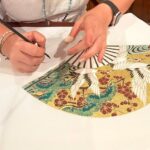
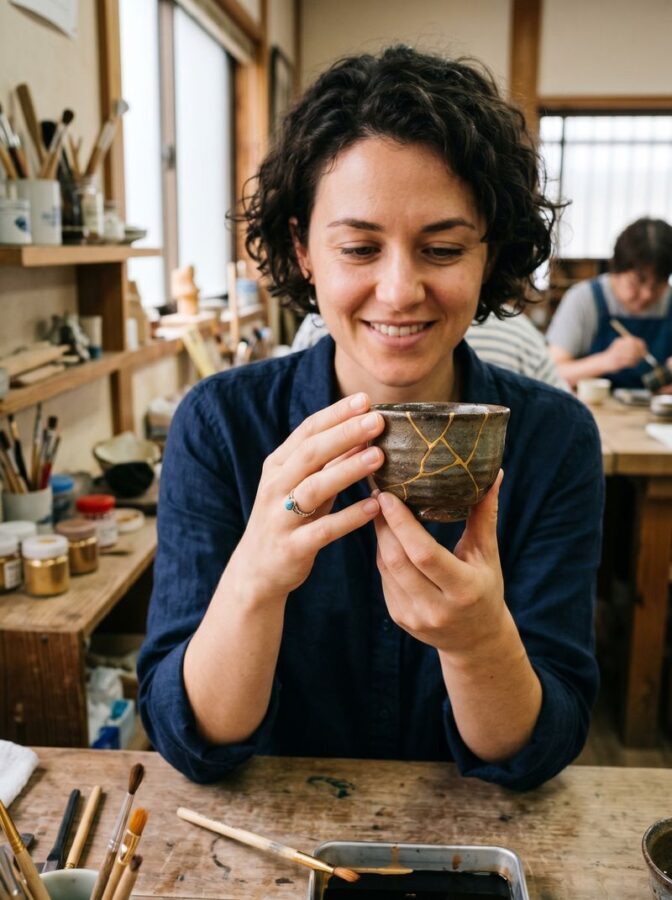
Then you work on your pottery. The instructor explains what to do and offers help as you go. The activity is designed for beginners, and the care given to individual participants is one of its strengths. Instructors named in past sessions include Carla, Jeff, Luna, Alice, Sophia, Ryu, Mei, and others. The instructor for your time may differ, but the format is guided rather than do-it-yourself.
Some participants have used their own broken bowls, while others chose pottery offered at the workshop. If you are hoping to bring a piece from home, ask the operator in advance whether it can be used in your session. The activity information does not promise that every personal item will be suitable.
The hands-on work is the main event, and it can keep you occupied. One participant described being absorbed in the process, while others appreciated that the teacher checked in regularly and offered practical advice. You should expect a focused craft session, not a fast demonstration followed by a quick photo.
At the end, you take home the piece you repaired. That is a real advantage over activities where the finished work stays behind or needs to be shipped later. Treat it as a keepsake unless the instructor confirms how it should be used; the provided details do not specify whether every repaired item is suitable for food or daily use.
Pottery choices and the real cost
The listed starting price is $5.95, which makes the workshop look like an easy addition to a Kyoto itinerary. But it is important to check what the selected package includes and what pottery choices cost before you book. The basic package is called Kintsugi experience, while upgraded pieces can add to the total.
Participants have described paying roughly ¥2,000 to ¥3,000 for a small plate or bowl, while another family found some ceramics priced from ¥3,000 to ¥8,000. Those are meaningful differences, especially if you are booking for several people. If you want to keep the cost low, confirm what is included in your chosen package and ask about the price of any extra pottery before you start.
The value depends on what you want from the hour. If your goal is the lowest-cost activity in Kyoto, add-on pottery could make this less of a bargain than the entry price suggests. If you value the instruction, cultural context, and a handmade object to take home, the extra cost may feel worthwhile.
There is also the simple value of doing something together. Families have used the class as a shared activity, and children have enjoyed the chance to work with pottery. One parent found that the prospect of breaking a plate helped win over a reluctant child. The activity has no stated age limit, but adults should still weigh their child’s interest and patience for a seated craft session.
A thoughtful break from Kyoto sightseeing
This workshop works well as a change of pace. It is indoors, and one family found the air-conditioned room pleasant. A rainy-day booking can be especially useful when outdoor plans are less appealing. The setting is described as comfortable and calm, though a room full of people working at once may be a little noisy.
You will get more from the class if you are curious about the cultural idea behind the craft, not only the finished object. The activity gives you time to consider the value of keeping and repairing things, and to see how an imperfection can become a distinctive feature.
It also suits couples, families, and solo visitors who enjoy trying a local craft. You do not need to arrive with artistic skill. The instructors’ patient approach makes the activity approachable, and English-speaking guidance is included. Some participants have also noted instructors who can communicate in more than one language, but the confirmed inclusion is an English-speaking guide.
If you have a packed schedule, think carefully about the timing. The activity is short in principle, but the workshop may take longer than an hour. If you want a souvenir you can use immediately, ask the staff about the finished piece’s care and use. The details provided promise a piece to take home, not specific instructions about washing, curing, or food safety.



Booking details worth checking
You can book for the same day, and confirmation is normally issued within minutes. The voucher is mobile, and you need to present it at the activity. The booking is changeable up to 24 hours before the activity, subject to exclusions, and a full refund is available if you cancel at least 24 hours before the activity date in local time.
The operator may cancel in extreme weather or other unforeseen circumstances. In that case, you can reschedule or request a full refund. The activity is valid only for the date and time on your voucher, so double-check both before setting out.
The listed last admission is 18:00. Since the available session times include an 18:00 departure, confirm the exact instructions for that slot when you book. Personal expenses and tips are not included.
Should you book the Kintsugi workshop?
Book it if you want a hands-on Kyoto activity with a cultural idea at its heart, and you like the thought of bringing home something you made. It is particularly well suited to craft lovers, couples, families, and anyone who wants a quieter pause between major sights. The instructors’ patient guidance makes it accessible even if you have never tried pottery work.
Think twice if you are choosing solely on the $5.95 starting price, since pottery upgrades can raise the cost. Also avoid scheduling a tight connection afterward: the experience is listed at different lengths, and some participants have taken close to two hours. Confirm the meeting point, package inclusions, and any extra pottery cost before you go. If those details work for you, this is a memorable way to connect Kyoto’s craft tradition with a personal keepsake.
Kintsugi Art Experience in Central Kyoto
“Super fun and memorable experience! Our instructor was really nice and helpful throughout the entire process. We picked an upgraded small plate and…”
FAQ
How long does the Kintsugi experience take?
The activity is described as one hour, while the itinerary gives a total duration of 90 minutes. Allow extra time if your schedule is tight, as one participant took nearly two hours to finish.
What are the available session times?
The listed departure choices are 10:00, 12:00, 14:00, 16:00, and 18:00. Return times depend on the departure slot and duration.
Is the workshop suitable for beginners?
Yes. The activity is designed for beginners, with instructors providing step-by-step help. No age limit is stated.
Is an English-speaking guide included?
Yes. An English-speaking guide is included. Instructors have included Carla, Jeff, Luna, Alice, Sophia, Ryu, and Mei, but your instructor may vary.
Can I bring my own broken pottery?
Some participants have used their own broken bowls. The activity details do not guarantee that every personal piece can be used, so check with the operator before bringing one.
Does the starting price include a plate or bowl?
The starting price is from $5.95, but extra pottery may cost more. Small plates and bowls have been reported at about ¥2,000 to ¥3,000, with other ceramics listed at ¥3,000 to ¥8,000.
What is the cancellation policy?
You can receive a full refund if you cancel at least 24 hours before the activity date, using destination local time. Changes are allowed until 24 hours before the start, subject to stated booking exclusions.