Kyoto’s temple lanes are a fine place to begin, but the real surprise of this 13-day trip is how far the route carries you from Japan’s familiar city scenes. You’ll pedal past rice fields and old farmhouses, follow Toyama Bay, cross by ferry to Sado Island, then roll into Tokyo by bullet train.
I like two things in particular: the contrast between cycling and local transport, which keeps the trip varied, and the time on Sado, where fishing villages, gold-mining sites and coastal roads give you a more rural view of Japan. The guide also handles the practical details, leaving you free to focus on the ride and the places along it.
The main consideration is the effort. Some days cover 60 to 72 kilometres, and the Sado gold-mine ride includes steep sections and a substantial climb. You’ll want a sound level of cycling fitness, and you should check carefully whether an e-bike is available for your departure.
- The trip in brief
- From Kyoto’s temples to the open road
- Kanazawa’s garden, then a village of steep thatched roofs
- Rice country, old craft and the Toyama coast
- Sado Island: boats, old houses and gold
- Tokyo, with room to choose your own day
- What the price includes, and what it doesn’t
- Is this the right Japan cycling tour for you?
- FAQ
- How long is the Cycle Japan tour?
- What is the group size?
- How difficult is the cycling?
- Are e-bikes available?
- Does the route include the Noto Peninsula?
- What meals are included?
- Do all hotels have private bathrooms?
- What kind of accommodation should I expect?
- Are international flights included?
- Which airports can I use?
- The Best Of Kyoto!
- More Cycling Tours in Kyoto
- More Tours in Kyoto
- More Tour Reviews in Kyoto
- Not for you? Here's more nearby things to do in Kyoto we have reviewed
The trip in brief
 1 / 8
 2 / 8
 3 / 8
 4 / 8
 5 / 8
 6 / 8
 7 / 8
 8 / 8
- Kyoto by bike: Visit Heian Jingu Shrine, follow the Philosopher’s Path and stop at Ginkaku-ji and Sanjusangendo.
- A village built for snow: Walk among Shirakawa-go’s steep-roofed Gassho-zukuri houses before cycling toward Tonami.
- Toyama Bay by road and rail: Ride the coast, then take a scenic local train to Itoigawa.
- Sado Island’s local traditions: Try a tarai tub boat, visit the historic village of Shukunegi and explore a gold mine.
- A real range of rides: Daily routes vary from 8 kilometres to 72 kilometres, with some long days, hills and tunnels.
- Tokyo at your own pace: The tour ends with a free day in the city and a Shinkansen ride from Niigata.
👉 See our pick of the 25 Best Workshops And Classes In Kyoto
From Kyoto’s temples to the open road
You meet your group in Kyoto on the first evening, with no scheduled sightseeing that day. That’s useful if your flight arrives late, but if you have time, you can make a first stop at Toji Temple or Nishi-Honganji. Arashiyama is another option for mountain views and river activities, though it takes more time to reach.
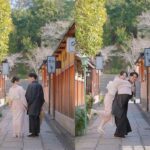
On day two, a local-style bike is your ticket to a string of Kyoto sights. The 17-kilometre ride visits Heian Jingu Shrine, the Philosopher’s Path, Eikando and Ginkaku-ji, then follows the Kamo River toward Tofukuji and Sanjusangendo. The route is mostly gentle, with about 60 metres of climbing, and the day’s cycling is as much about moving between sights as covering ground.
That first ride is a practical introduction to the trip’s rhythm: pedal, stop, look around, then get back in the saddle. There is no support vehicle, so you’ll need to be comfortable riding the full route. The evening is free, which gives you time to explore Kyoto’s food and temple districts independently.
You can also read our reviews of more cycling tours in Kyoto


Kanazawa’s garden, then a village of steep thatched roofs
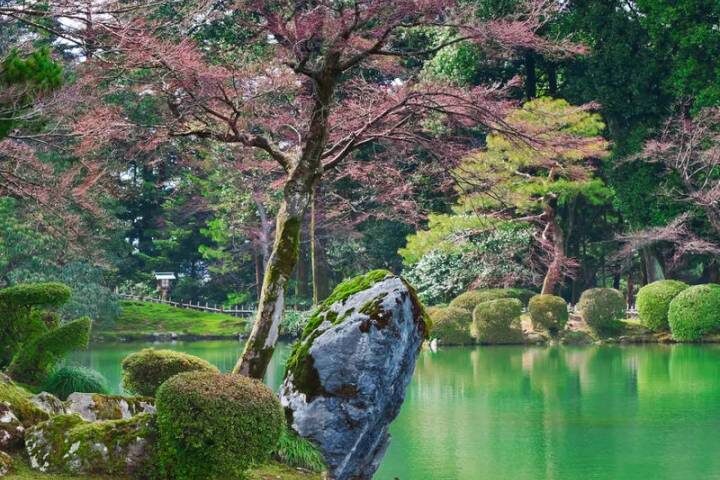
A train journey of just over two hours takes you to Kanazawa on day three. You’ll cycle about 8 kilometres, visit Kenrokuen Garden and stop at Imcho Fish Market. Kenrokuen was developed over nearly two centuries and covers more than 11 hectares. It is a worthwhile change of pace after Kyoto’s temples: here, the pleasure is in the carefully arranged paths, water and plantings.
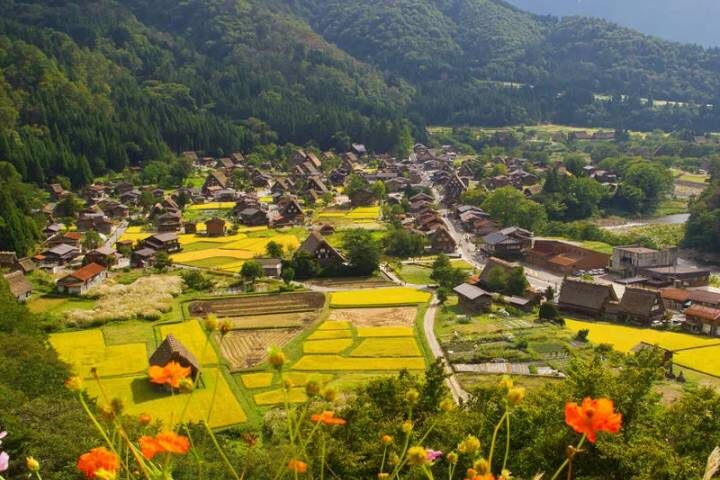
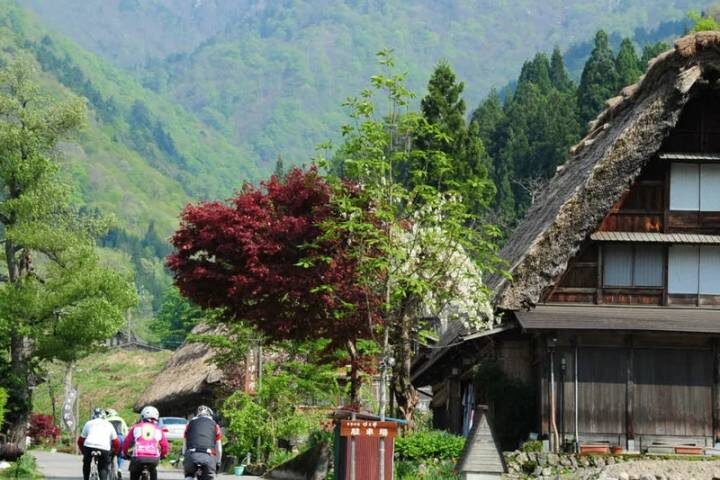
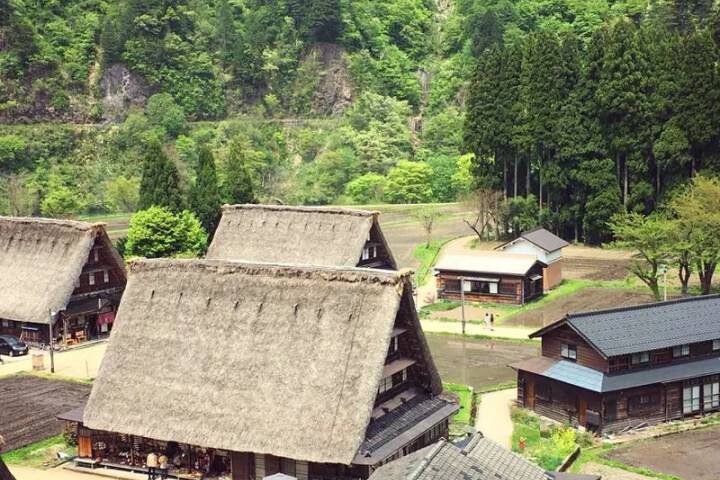
The next day brings one of the trip’s most memorable shifts. A public bus carries you into the countryside to Shirakawa-go, a UNESCO World Heritage village known for Gassho-zukuri farmhouses. Their steep thatched roofs were designed to cope with heavy winter snow, and their shape is said to resemble hands held together in prayer. You get time to walk around before starting a 60-kilometre ride toward Tonami.
The ride includes a stop at the Gassho Ohashi observation point and at a roadside rest stop that features regional produce. There is also an optional visit to the Iwase family house. Expect a substantial day: the route gains about 600 metres, loses considerably more, and passes through several tunnels. Take your time, follow the leader’s instructions, and don’t let the downhill figures distract you from the work involved.
Rice country, old craft and the Toyama coast
Day five links countryside and town. You’ll begin at an observation point overlooking the Tonami plain, where rice paddies, scattered settlements and distant mountains set the scene for the ride north. In Takaoka, Zuiryuji Temple offers a quiet pause, with a meditation hall and gardens. Then you’ll walk along Kanayamachi Street, where latticed merchant houses reflect the town’s history as a centre for copper casting.
The day ends in Imizu by Toyama Bay after about 30 kilometres of mostly easy cycling. The route is a good example of the tour’s appeal: it doesn’t race past towns on the way to a headline sight. Instead, it gives you time to notice working places and local craft.
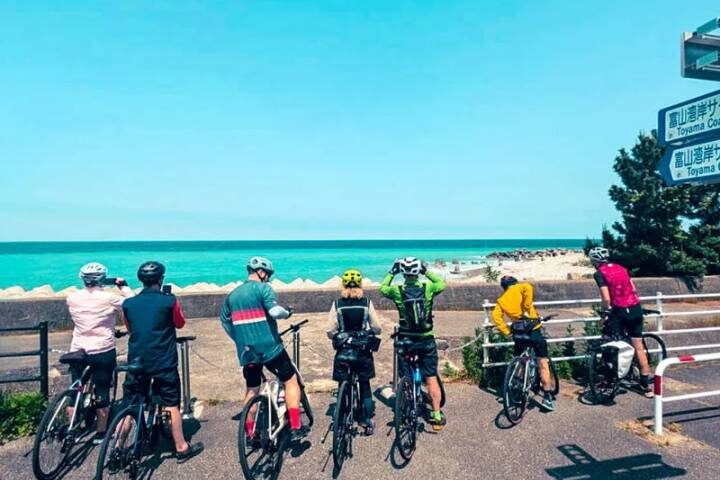
On day six, you follow the Toyama Bay Cycling Route for about 72 kilometres, with little climbing. The sea views and coastal air make this one of the longer but less hilly days. At Etchu-Miyazaki Station, you board a local train for the short ride to Itoigawa, with views of the coast and mountains along the way.
That night, the hotel’s Japanese-style rooms have tatami flooring and futons. Toilets are private, but the baths are communal, with separate facilities for women and men. If you’ve never used a Japanese public bath, ask your leader about local etiquette before you go. A hot soak can feel especially welcome after a full day on the bike.
Sado Island: boats, old houses and gold
Day seven follows the coast from Itoigawa toward Joetsu on the Kubiki Bicycle and Walker Road, a paved route built along an old railway line. Several illuminated tunnels are part of the ride. You’ll have time for lunch in Joetsu before a ferry of a little over two and a half hours takes you to Sado Island, followed by a short ride to Ogi.
Sado gives the trip its most distinctive stretch of rural Japan. The island’s position on old sea routes, its mining past and its long history as a place of exile all helped shape its culture. You’ll spend four nights here, giving the group time to explore beyond a quick look from the ferry terminal.
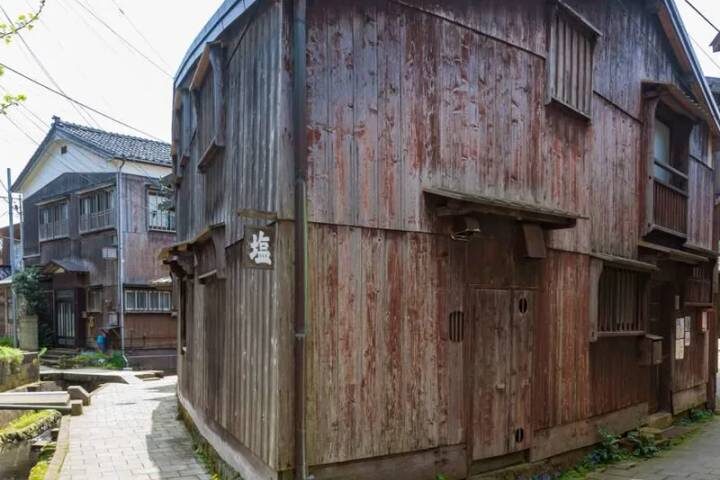
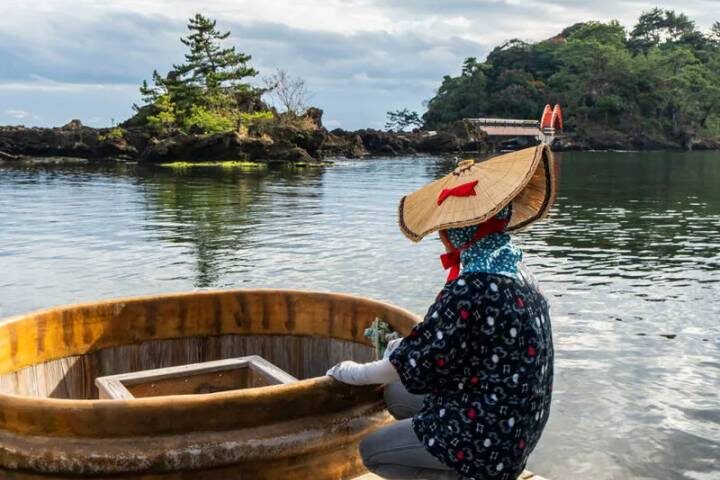
On day eight, the tarai tub boat offers a close-up of a local fishing tradition. These half-barrel boats were used where rocky shorelines made it difficult for larger vessels to reach the coast. You’ll also visit the Ogi Folk Museum and walk through Shukunegi with a local guide. The village’s narrow streets and wooden houses, some made from old boats, are a strong reminder that coastal life here grew from the sea. The ride continues toward Yahata and Sado City, covering about 43 kilometres with roughly 610 metres of climbing.
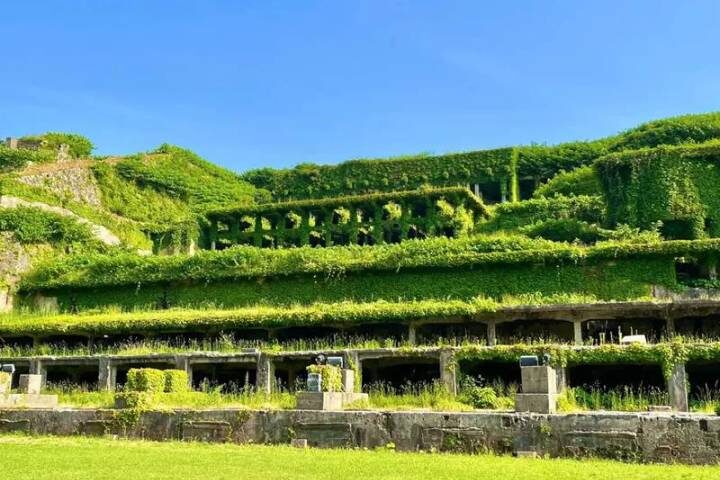
Day nine is the toughest cycling day: about 70 kilometres and 1,335 metres of ascent. The climb toward Sado Gold Rush Mountain has sections of 8 to 10 percent. At the mine, you can walk through Edo-period tunnels and see the remains of old refining works. The ride continues through Aikawa, once the centre of the island’s gold-mining activity, and ends at Futatsugame on the northern coast.
This is where a little preparation pays off. A good base of cycling fitness matters more than speed, and an e-bike may make the day more manageable if you can secure one. Accommodation at Futatsugame varies by departure: some dates use a traditional ryokan with futons and shared facilities, while others use a western-style hotel. Check the details for your date before booking.
Day ten is a 59-kilometre ride back toward Sado City, with much less climbing than the previous day. The coastal route passes quieter parts of the island, and a stop at the Toki Ibis Preservation Centre explains efforts to bring the crested ibis back to the wild. The bird was once locally extinct; a reintroduction programme, supported by China, has helped establish a wild population on Sado.
The final island ride, on day eleven, covers about 25 kilometres and includes a stop at Kunizo Gama pottery studio. From Ryotsu Port, you’ll take the ferry to Niigata and then the Shinkansen to Tokyo. The day combines a last ride, a sea crossing and a fast train journey, so it is more of a travel day than a leisurely finish. Still, arriving in Tokyo by bullet train makes a fitting transition from island roads to city streets.
Tokyo, with room to choose your own day
Day twelve is free for your own plans. You can explore Asakusa and Sensoji Temple, rent a bike, or join an optional city tour that may include a river cruise to Hama-rikyu Gardens, Meiji Shrine and a view from the Shinjuku Government Building. The hotel is in the Asakusa area, a useful base for the temple and the older side of the city.
The final morning is free after breakfast. If your flight leaves later, luggage storage is available at the hotel. The tour ends in Tokyo, so arrange your own onward plans and allow enough time to reach Haneda or Narita Airport.

What the price includes, and what it doesn’t
The advertised price starts at $6,770, though the final cost depends on your date and room choice. The tour includes 12 breakfasts, 8 dinners, accommodation, scheduled activities, transport shown in the programme and an English-speaking tour leader. Some lunches are included on the route, while other meals are left open so you can choose local restaurants.
That structure has real value. The group leader manages the connections between bikes, buses, trains and ferries, while you still get chances to choose what to eat. A small group of 7 to 16 people is large enough to share the experience but small enough for the daily logistics to remain manageable.
Accommodation ranges from standard three-star hotels to simpler Japanese-style stays and ryokan. Not every room has a private bathroom, and the communal baths are part of the traditional experience. International flights, travel insurance, tips, visa costs and spending money are not included. E-bike rental is usually around £290, subject to availability and confirmation.
One detail is worth clearing up before you book: the route does not include the Noto Peninsula, despite that destination appearing in some promotional wording. The tour does include coastal cycling elsewhere, including Toyama Bay and Sado Island, but don’t book expecting a Noto ride.
Is this the right Japan cycling tour for you?
Book this trip if you want to see Japan beyond its major cities and are comfortable spending many hours on a bike. It suits riders who enjoy a mix of cultural stops and real road mileage, and who don’t mind simple rooms or shared baths for a night or two.
Think twice if you want a relaxed sightseeing tour with short rides every day. The 72-kilometre coastal day, the 60-kilometre ride from Shirakawa-go and the steep Sado climb require stamina. For a strong rider who wants temples, small towns, local food, island roads and a memorable train finish, this route offers a broad and rewarding view of Japan.
Cycle Japan by Explore! – 13-Day Kyoto to Tokyo Tour
“Sado Island, cycle path along the mainland coast,”
FAQ
How long is the Cycle Japan tour?
The tour lasts 13 days. It starts in Kyoto and ends in Tokyo.
What is the group size?
Groups range from 7 to 16 people. The tour is guided in English and is for ages 16 and older.
How difficult is the cycling?
The tour is rated medium intensity, but some days are demanding. Distances range from about 8 to 72 kilometres, and the Sado Gold Rush Mountain ride includes steep sections and about 1,335 metres of climbing.
Are e-bikes available?
E-bikes may be available for an additional cost, usually around £290. Availability is limited and should be confirmed when booking.
Does the route include the Noto Peninsula?
No. The itinerary includes cycling on the coast and on Sado Island, but not the Noto Peninsula.
What meals are included?
The tour includes 12 breakfasts and 8 dinners. Other meals are included where shown in the daily programme, and some lunches are left free for you to choose locally.
Do all hotels have private bathrooms?
No. Comfortable hotel rooms generally have private facilities, while simple accommodation may have shared facilities. At the Japanese-style hotel in Itoigawa, toilets are private but baths are communal.
What kind of accommodation should I expect?
You’ll stay in a mix of standard hotels, simple hotels and ryokan. Some Japanese-style rooms have tatami mats and futons, and the ryokan may have shared baths and toilets.
Are international flights included?
No. International flights and travel insurance are not included in the tour price.
Which airports can I use?
For arrival in Kyoto, the listed airports are Kansai International Airport and Osaka International Airport. The tour ends in Tokyo, with Haneda and Narita listed as departure airports.