A notebook here is more than a souvenir: you make it yourself, using Hanji paper and a traditional binding method, then finish it with silk, colorful thread, and a norigae knot. The workshop is in Seoul’s Mapo-gu district, a short walk from Daeheung Station.
I like two things in particular: you get to choose the colors and details, so the finished book feels personal, and instructor Jinhee guides you step by step without requiring craft experience. One consideration: this is a scheduled class, not a drop-in activity. Arrive on time, since late arrivals of 10 minutes or more cannot join or receive a refund.
- Hanji at the center: Make a notebook with traditional Korean paper associated with the records of the Joseon Dynasty.
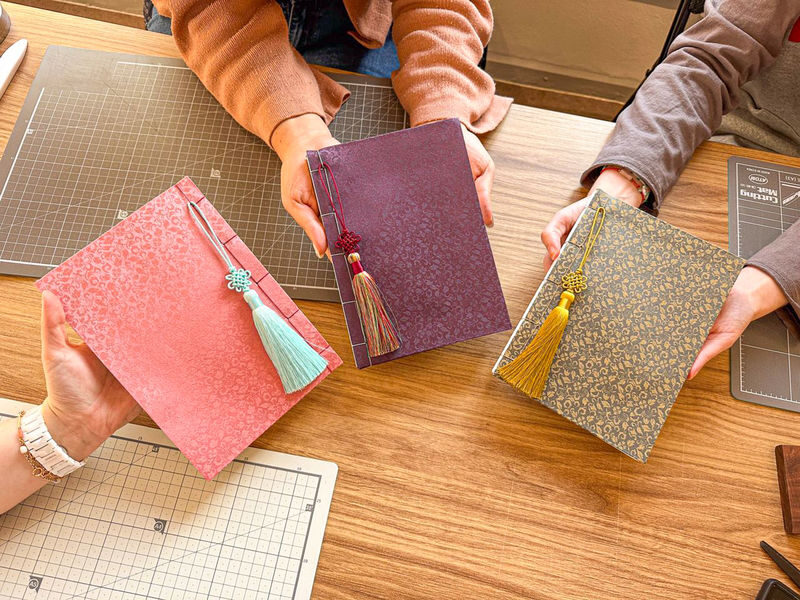
- A personal finish: Pick from patterned silk covers, colorful threads, and norigae ornaments.
- Beginner-friendly instruction: Jinhee explains each stage and helps when you need it.
- A useful take-home keepsake: Finish your notebook in class and take it home the same day.
- Easy subway access: The studio is on the third floor at 100 Daeheung-ro, about three minutes from Exit 2 of Daeheung Station.
- A hands-on way to meet Korean book arts
- Choosing your paper, silk, and thread
- Learning the binding one step at a time
- A small studio near Daeheung Station
- What your finished notebook is worth
- Who will enjoy this Seoul workshop
- Booking details worth knowing
- Should you book the notebook class?
- FAQ
- How old do I need to be to join?
- Where is the workshop?
- How do I get to the studio by subway?
- What will I make, and what materials are used?
- Can I take the notebook home after class?
- How early should I arrive?
- The Best Of Seoul!
- More Tours in Seoul
- More Tour Reviews in Seoul
- Not for you? Here's more nearby things to do in Seoul we have reviewed
A hands-on way to meet Korean book arts
 1 / 8
 2 / 8
 3 / 8
 4 / 8
 5 / 8
 6 / 8
 7 / 8
 8 / 8
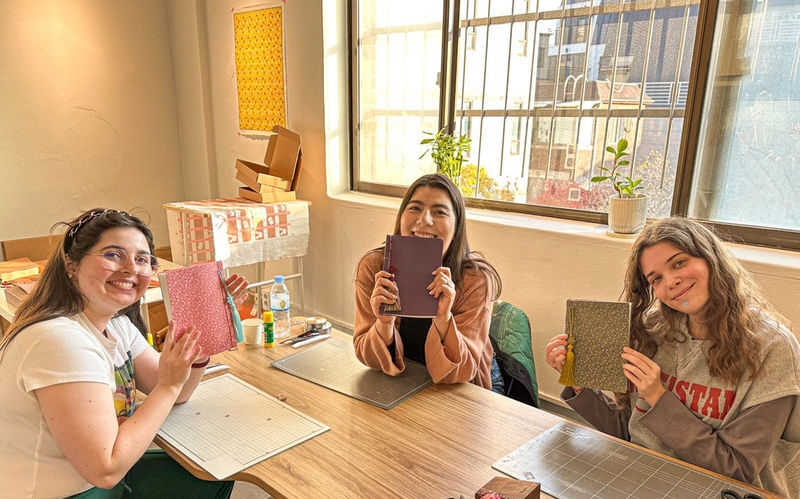
Seoul offers plenty of ways to shop for a souvenir. This workshop takes a slower route: you learn about a traditional object by making one. Over roughly two hours, you follow the stages of Korean bookbinding and turn paper, cloth, and thread into a notebook you can use or give away.
The focus is Hanji, Korea’s traditional paper. It was used for writing and note-taking by members of the Joseon royal family and by Confucian scholars and intellectuals. Hanji was also used for the Annals of the Joseon Dynasty, which are listed on UNESCO’s Memory of the World register. That context gives the material a purpose beyond its attractive texture: you are working with paper connected to Korea’s record-keeping traditions.
The class is not a lecture with a craft tacked on at the end. The historical background helps explain the notebook’s form, but most of your time is spent making it. If you like learning by doing, that balance is the point.
👉 See our pick of the 25 Best Guided Tours In Seoul
Choosing your paper, silk, and thread
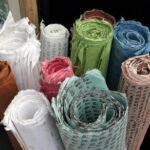
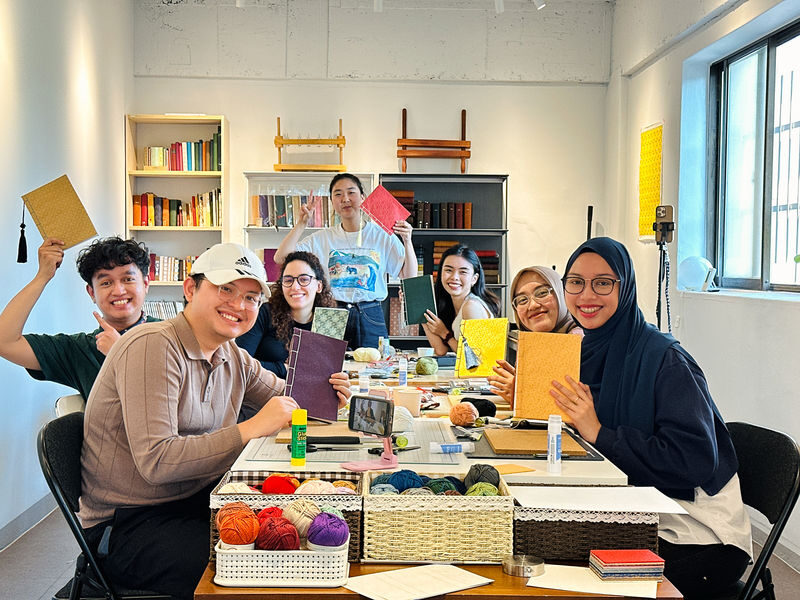
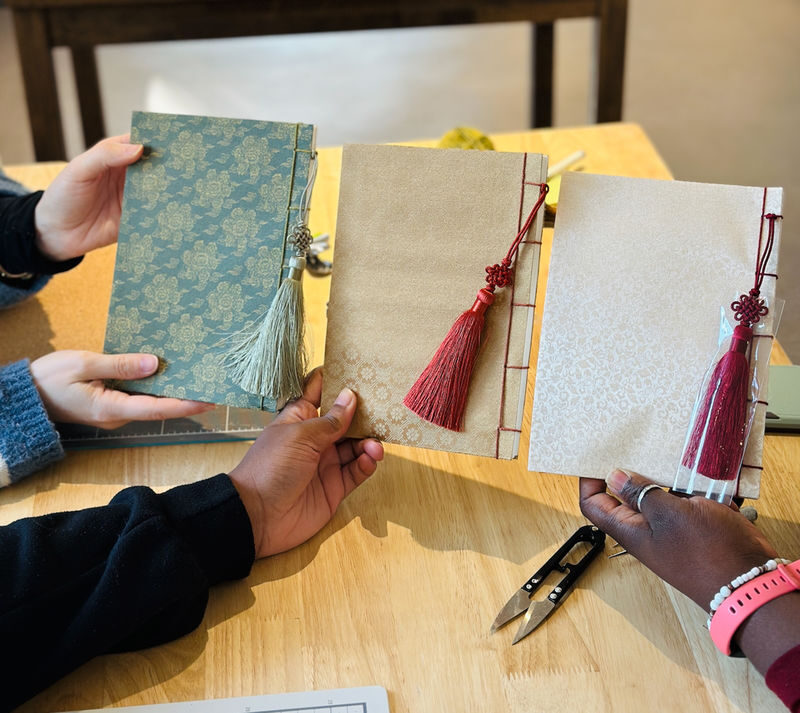
The most personal part begins with choosing materials. You use Hanji for the notebook, while the cover is made from silk woven with a Korean traditional pattern. A selection of colors and designs lets you shape the look of the finished book before you start binding.
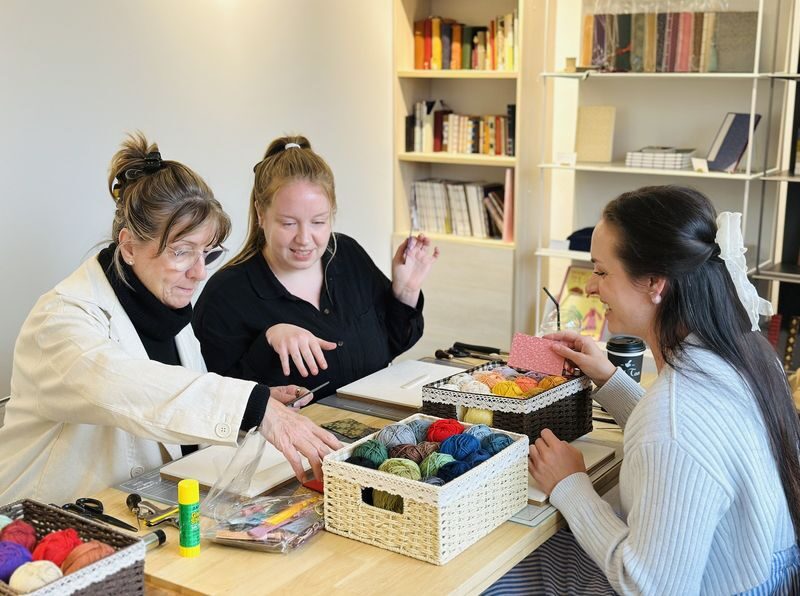
Then come the threads. The range of colors means you can coordinate them with the cover or choose a sharper contrast. The final detail is a norigae, a traditional Korean ornament knot tied onto the notebook. It adds a decorative finish and gives the book a distinctly Korean look.
These choices matter because the result is not a factory-made object with your name added. The materials and colors you select stay visible in the finished piece. If you are making a gift, you can choose a palette for someone else. If you plan to keep it, pick a design you will enjoy seeing on a desk or carrying in a bag.
There is enough choice to make the process fun, but you do not need to arrive with a design plan. Jinhee can suggest combinations if you are unsure. That help is especially useful when several pretty options compete for your attention.
You can also read our reviews of more tours and experiences in Seoul.



Learning the binding one step at a time
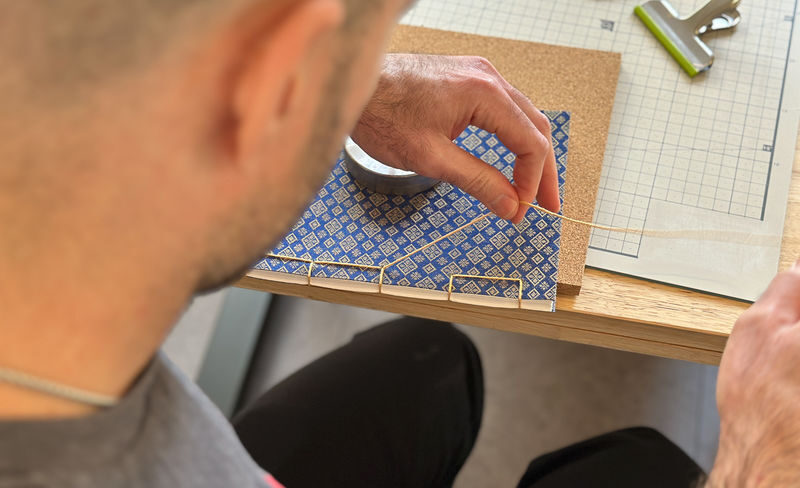
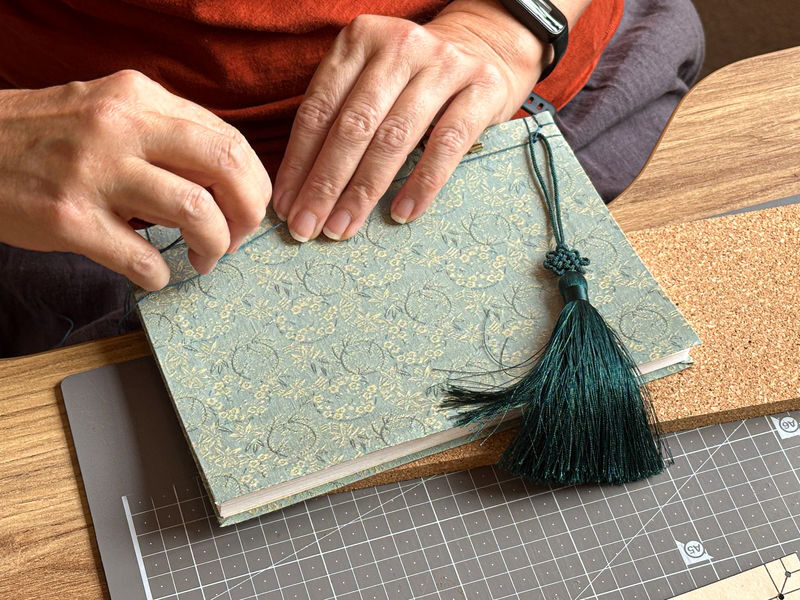
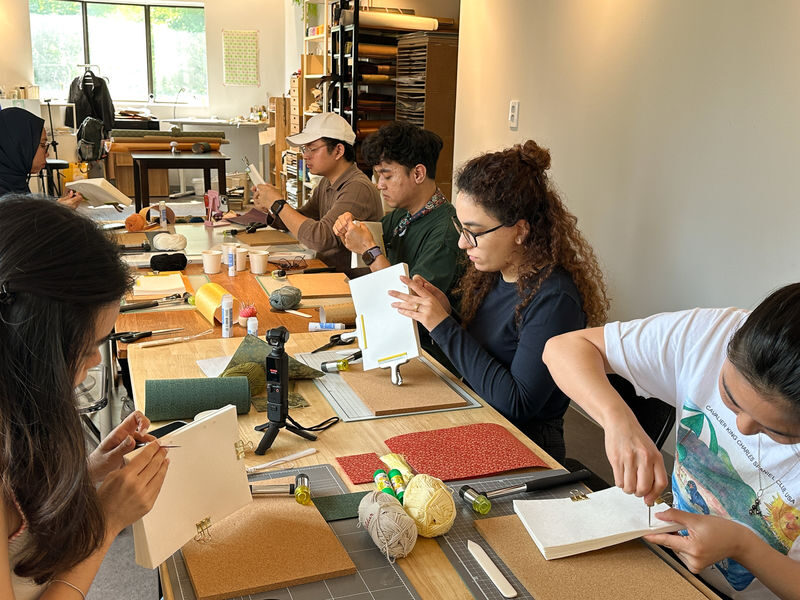
Once you have settled on the materials, Jinhee leads you through the binding process. The class is suitable for beginners, and you do not need previous experience with bookmaking or handcrafts. Instructions are given one stage at a time, with help available if you need a demonstration or a second explanation.
The pace is meant to leave room for different working speeds. Some people like to move carefully; others get into a rhythm and finish sooner. The instructor’s individual guidance helps keep the process manageable rather than turning it into a race. Accounts of the class describe groups of up to six participants, though the exact group size may vary.
You will learn one binding style during the session. There may also be an opportunity to see another method, but the main aim is to complete your own notebook, not to cover every form of Korean binding in one sitting. Think of this as a practical introduction, not an advanced course.
Allow about two hours for the class. The hands-on making itself may take around an hour and a half, with the rest of the time used for explanation, choices, and finishing. The pace and discussion can make the session feel relaxed, but the class has a fixed start time, so plan your subway trip with a little margin.
A small studio near Daeheung Station
The workshop takes place at Danchoodan, on the third floor of 100 Daeheung-ro in Mapo-gu. It is about a three-minute walk from Exit 2 of Daeheung Station, making it an easy activity to fit into a day in Seoul without a long trip across the city.
Look for the building at number 100 and the Danchoodan sign. The studio is upstairs, and you may need to use the intercom at the entrance for access. If you rely on navigation apps, one useful tip is to use Naver Map for subway directions. Have the address saved in Korean as well as English: 서울특별시 마포구 대흥로 100 (대흥동), 3층.
The studio is described as bright, comfortable, and arranged for the class. That matters for a hands-on activity: you want enough room to focus on small steps and materials without feeling crowded. The workshop is also a welcome change of pace if your Seoul days have been heavy on shopping, walking, and sightseeing.
Only people who have made reservations can enter the studio, and you may arrive up to 15 minutes before class begins. Do not cut the timing close. The instructor cannot admit anyone who arrives more than 10 minutes after the start, and late arrivals are not eligible for a refund. If you need help finding the studio, familiarize yourself with the route beforehand. In-person assistance is available only until 10:30 a.m.; after that, the instructor needs to focus on the class.
What your finished notebook is worth
The displayed price starts at about US$49, while the experience is also listed from US$53.90. Check the final amount for your date before booking, since the price shown can vary. For that cost, you get instruction, materials, the notebook-making class, and a finished piece to take home.
The value is strongest if you want more than a purchased keepsake. You spend time learning a process, make choices that affect the final design, and leave with an object tied to the activity itself. If you enjoy crafts, books, or cultural workshops, that combination can make the price feel worthwhile. If you only want a low-cost souvenir, buying a notebook may be cheaper and quicker.
The finished notebook is also a practical souvenir. You can write in it, give it as a gift, or keep it as a reminder of your time in Seoul. Some people may find it almost too lovely to use, but a notebook does not need to stay blank to be special. The instructor also provides protective packaging, so you can carry it home with more confidence.
Who will enjoy this Seoul workshop
This class suits solo visitors, couples, and small groups who like making things with their hands. It can be a particularly good choice for a solo afternoon or morning: the relaxed format gives you something to focus on, and the small-group setting can make conversation easy without requiring you to be especially outgoing.
You do not need to speak Korean to follow the class. The instructor explains the steps in English, and the instructions are designed to be clear for beginners. The experience is open to participants aged 17 and older, so it is not an activity for younger children.
It is also a good fit if you are interested in Korean culture but would rather learn through an object than spend another hour in a museum. You will leave with a little historical context and a notebook made by your own hands. That is a more grounded souvenir than another item picked up in a shop.
The class may be less appealing if you want a long, intensive course in bookbinding or prefer a fast-paced sightseeing activity. You learn one binding style, and the workshop takes roughly two hours. Go for the careful process and personal keepsake, not for a full-day craft program.






Booking details worth knowing
The activity is valid only on the date and time you select, and confirmation is sent within 24 hours. If no confirmation email arrives, contact customer support. Book only for the people who will attend, since access to the studio is limited to the number of people with reservations.
You can cancel for a full refund if you do so at least 24 hours before the activity date, using Seoul local time. Arriving 10 minutes or more after the start time means you cannot take part and will not receive a refund. Those rules make punctuality more than a courtesy, so check the route the day before and leave time to find the entrance.
Should you book the notebook class?
Book it if you want a calm, hands-on Seoul activity with a clear result to take home. The combination of Hanji, patterned silk, thread, and a norigae gives you room to make the notebook your own, while Jinhee’s step-by-step teaching makes the process approachable even if you have never tried bookbinding.
Skip it if your schedule is too tight to arrive on time, or if you are looking for an advanced course rather than a beginner session. For everyone else, this is a thoughtful way to spend about two hours and make a keepsake that carries more meaning than a quick purchase.
Crafting Korean Traditional Bookbinding Notebook
“It was enriching and interesting. The guide was very pleasant, patient and professional. We really enjoyed a piece of Korean history.”
FAQ
How old do I need to be to join?
Participants must be 17 or older.
Where is the workshop?
It is on the third floor of 100 Daeheung-ro in Mapo-gu, Seoul. The address in Korean is 서울특별시 마포구 대흥로 100 (대흥동), 3층.
How do I get to the studio by subway?
The studio is about a three-minute walk from Exit 2 of Daeheung Station.
What will I make, and what materials are used?
You will make a traditional-style notebook using Hanji paper, a patterned silk cover, colored thread, and a norigae ornament knot.
Can I take the notebook home after class?
Yes. You can take your finished notebook home the same day.
How early should I arrive?
You may enter the studio 15 minutes before the class starts. Arrivals more than 10 minutes late cannot join the class and are not eligible for a refund.