Mangwon Market is more than a quick stop on the way to a cooking lesson. You’ll walk its food stalls with a local host, learn what ingredients go into Korean dishes, and sample a few bites before heading to a home kitchen to cook and eat a full meal.
I like two things in particular: the market tour gives the recipes a local context, and the class is hands-on, with clear steps for making dishes you can try again at home. I also like that the meal includes more than 10 side dishes, so you get a taste of the variety behind a Korean table.
One practical caveat: the class takes place in a home reached by several flights of stairs, with no elevator noted. The market walk is also a brisk introduction, not a long, free-roaming visit, so leave extra time if you want to explore Mangwon Market on your own.
At a glance
- Start at Mangwon Market: Meet near Mangwon Station Exit 2, then follow your host through local food stalls.
- Taste as you go: Market samples can include snacks such as gimbap and donuts, alongside explanations of Korean ingredients.
- Cook four dishes: The morning session includes three main dishes and a stew, with menus varying by class.
- Eat a Hanjeongsik meal: Your cooking becomes part of a generous meal with rice, more than 10 side dishes, and a rice wine tasting.
- Small group, practical pace: The class is capped at 10 people, and recipes, photos, and videos are sent by email afterward.
👉 See our pick of the 25 Best Guided Tours In Seoul
- At a glance
- A market walk that puts the food in context
- Welcome tea, a few Korean words, and a home kitchen
- Cooking several dishes, not just one signature recipe
- The Hanjeongsik meal is the payoff
- Timing, group size, and what the price covers
- Who will get the most from this class
- Should you book the Mangwon Market cooking class?
- FAQ
- How long does the morning class last?
- Where is the meeting point?
- What food do you cook?
- Is a meal included?
- Can dietary requests be accommodated?
- Is transportation included?
- The Best Of Seoul!
- More Shopping Tours in Seoul
- More Tours in Seoul
- More Tour Reviews in Seoul
- Not for you? Here's more nearby things to do in Seoul we have reviewed
A market walk that puts the food in context
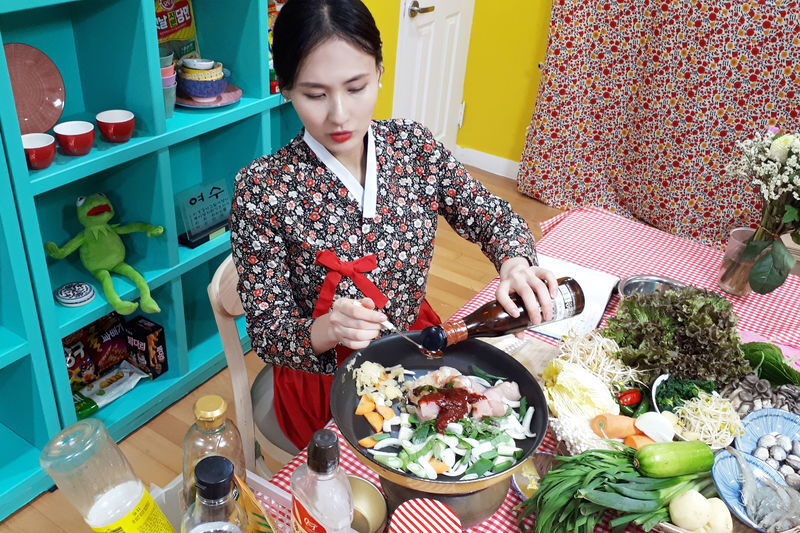
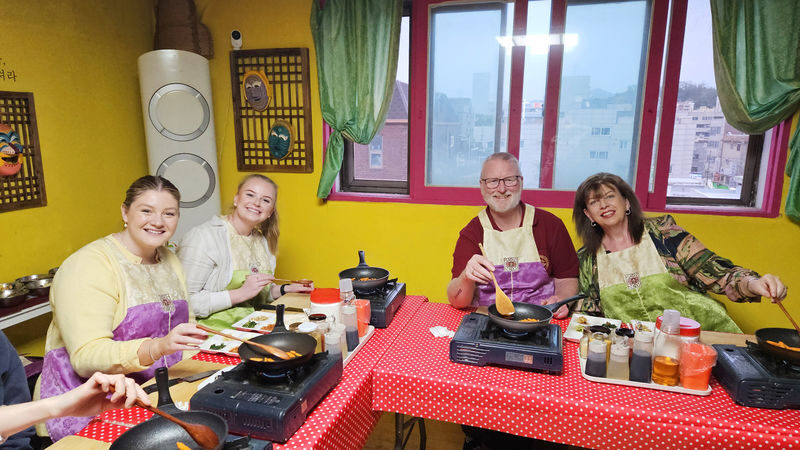
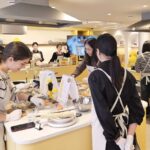
The morning session begins at 10:30 near Mangwon Station Exit 2. The host meets the group and leads a short walk through Mangwon Market, a neighborhood market where ingredients for Korean home cooking sit alongside ready-to-eat snacks.
That first stop matters. It gives you a chance to see vegetables, meats, and other foods in the setting where locals buy them, rather than meeting every ingredient for the first time on a cutting board. Your host explains what you’re looking at and may pick up some of the ingredients needed for the class as you go.
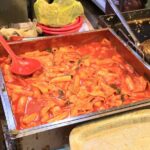
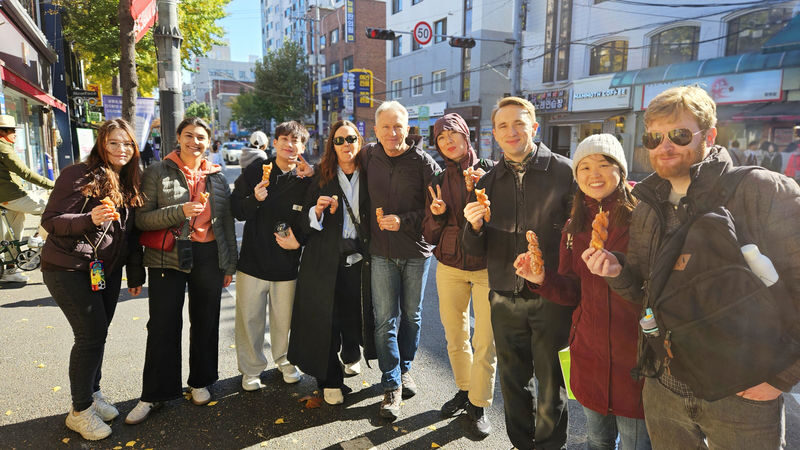
There are tastings along the way, too. Past menu combinations have included gimbap, donuts, and other market snacks, though the exact samples can vary. Don’t expect a full market food tour: the walk is relatively short, and the class schedule keeps things moving. If Mangwon Market interests you beyond the class, plan to return afterward and browse at your own pace.
The market visit is a particularly useful part of this Seoul Korean cooking class if you’re new to Korean food. You can ask what ingredients are used for and get a quick introduction to local food customs before cooking with them yourself.
You can also read our reviews of more shopping tours in Seoul


Welcome tea, a few Korean words, and a home kitchen
After the market, the group heads to the host’s home for the lesson. The class starts with a welcome drink and a brief introduction to Korean language. It’s a small touch, but it helps set a friendly tone and gives you a few basic words to take into the rest of your trip.
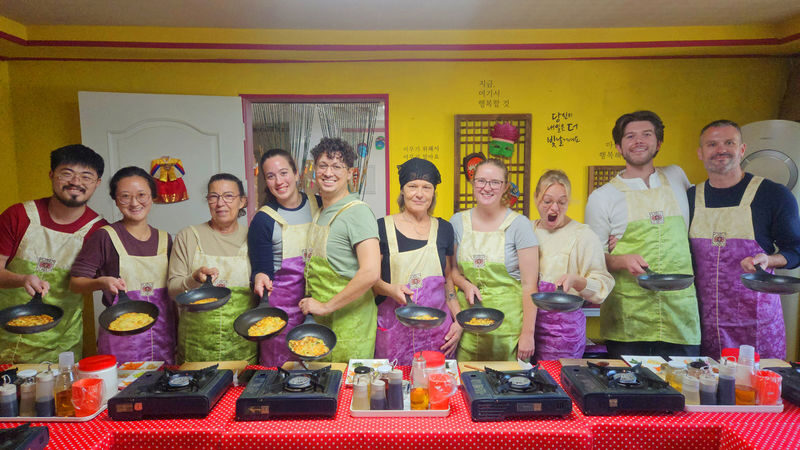
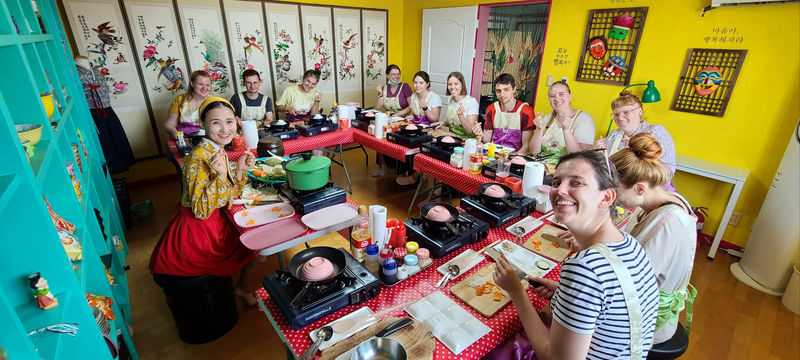
The kitchen is described as cozy, air-conditioned, and heated, so weather is less likely to affect the cooking portion. Groups are limited to 10, which gives the host room to explain techniques and help people at their stations. Instructors are fluent in English and Korean. Hosts named in class descriptions and participant accounts include Junghee and Sarah, with the name also written as Sara in some accounts.
This isn’t a demonstration where you sit back and watch someone else do all the work. The class is designed to be hands-on, from preparing fresh ingredients to finishing the dishes. That makes it a good fit if you want more than a restaurant meal, but you don’t need to arrive with cooking experience. The instruction is described as clear and easy to follow, with hosts keeping the mood relaxed and lively.
One detail to plan for: the home has been described as several flights of stairs up, with no elevator. If stairs are a concern for you, check with the operator before booking rather than assuming the venue is step-free.
Cooking several dishes, not just one signature recipe
The morning session is scheduled to start cooking at 11:30 and includes three main dishes and one stew. The dishes can change, but examples from classes include bibimbap, chicken bulgogi or dak galbi, tofu stew, and Korean pancakes, sometimes with seafood. The precise menu is not guaranteed, so treat those as examples rather than a fixed promise.
Making several dishes gives you a better sense of how a Korean meal comes together. Instead of focusing on one recipe in isolation, you handle different preparations and learn how a main dish, stew, rice, and sides can form a shared meal. The host explains the steps as you work, and practical techniques are part of the lesson.
You’ll use the ingredients gathered for the class and prepare the food yourself. That hands-on format is useful if you want recipes you can repeat at home, not just a cooking souvenir. The class also supplies all cooking materials and ingredients, so you don’t need to shop beforehand or bring equipment.
Dietary requests are welcome, including vegetarian, vegan, halal, and gluten-free needs. If you have a specific requirement, contact the provider when booking so the class can plan suitable options. The meal has been customized for vegetarian and gluten-free participants, but it’s sensible to confirm what can be accommodated for your own needs.
The Hanjeongsik meal is the payoff
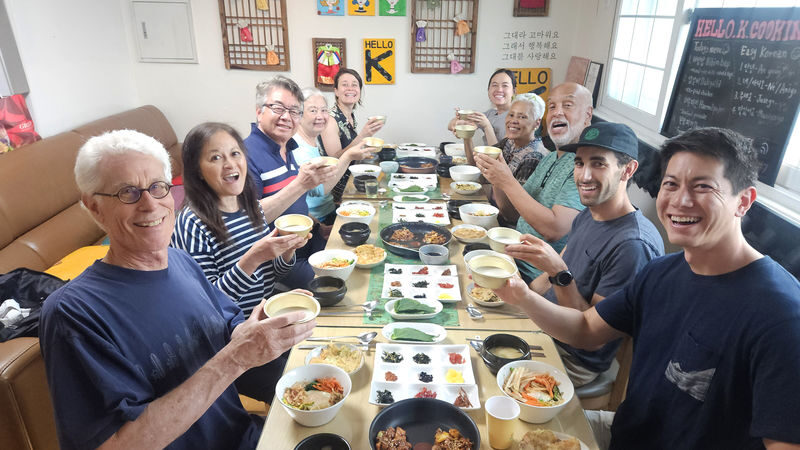
At about 13:30, you sit down to eat what the group has prepared. The meal is presented as a Hanjeongsik, a Korean-style full-course spread, with your dishes, rice, more than 10 kinds of side dishes, and a rice wine tasting.
The sides are a key part of the experience. They let you compare flavors and textures alongside the main dishes, and help explain why a Korean meal is often about the table as a whole rather than one large plate. You’ll also have a chance to try the foods you just made in a proper meal setting.
Rice wine is included for tasting. One class combination that has been especially popular is seafood pancake with makgeolli, a Korean rice wine. If you don’t drink alcohol, ask the host about the tasting and take part in the meal without it.
Come hungry. The meal is substantial, and the cooking itself takes up a good part of the session. The schedule allows roughly 30 minutes for eating before the group returns around 14:00, so this is a satisfying lunch experience, not a quick snack between sightseeing stops.
Timing, group size, and what the price covers
The morning experience runs from 10:30 to about 14:00, giving you roughly three and a half hours for the market, welcome tea, cooking, and meal. An afternoon option is also offered, though the timing details provided for the morning session should not be applied to it automatically.
The price starts at US$102.59 per person. That is a meaningful spend for a cooking class, but the cost covers more than a recipe lesson: the market visit, street food samples, ingredients and cooking materials, drinks, rice wine tasting, and the multi-course meal are part of the experience. You also receive photos, videos, and recipes by email afterward, which add practical value if you want to recreate a dish at home.
Transport to and from the meeting area is not included, and personal expenses are extra. The group size is capped at 10, a useful limit for a class where everyone needs room to prepare food and follow the host’s instructions.
For the morning session, arrive 10 minutes early at Mangwon Station Exit 2 and look for a guide holding a Hello-K logo. Late arrivals and no-shows are not refundable. The voucher is mobile, and cancellations made at least 72 hours before the activity date qualify for a full refund; booking changes are also allowed up to 72 hours before, subject to the stated exceptions.
You can also read our reviews of more tours and experiences in Seoul



Who will get the most from this class
This experience suits curious eaters who want to connect Korean food with everyday life in Seoul. It’s especially useful early in a trip: the market walk introduces ingredients and dishes you may encounter again, and the host may share local food tips along the way.
It also works well for solo visitors and small groups. The class brings people together around shared tasks and a meal, without requiring you to arrive with a companion. Couples and families with older children who enjoy cooking may appreciate the practical format, though the stair access is worth considering.
You don’t need to be an accomplished cook. The steps are designed to be approachable, and the point is to take part, ask questions, and enjoy a broad meal. If you’re mainly seeking a long market browse, a quiet one-to-one lesson, or a specific guaranteed menu, this may not be the right match.
Should you book the Mangwon Market cooking class?
I’d book this if you want a half-day activity that combines food, local context, and a meal you help prepare. The best value comes from the whole sequence: seeing ingredients at Mangwon Market, learning how to use them, and then sitting down to a Hanjeongsik spread.
Choose it with realistic expectations. The market visit is brief, the menu can vary, and the home requires climbing stairs. But if those details suit you, this is a strong way to spend a Seoul morning, especially if you want recipes and food knowledge to carry into the rest of your trip.
Local Home Korean Cooking Class & Market Adventure in Seoul
“Excellent day, Sarah was very funny and the food class was good craic. Highly recommend.”
FAQ
How long does the morning class last?
The morning session runs from 10:30 to about 14:00. It includes a Mangwon Market visit, welcome tea, cooking, and a meal.
Where is the meeting point?
Meet at Mangwon Station Exit 2, at 378 Mangwon-dong, Mapo-gu, Seoul. Arrive 10 minutes before departure and look for a guide holding a Hello-K logo.
What food do you cook?
The morning class includes three main dishes and one stew. Menus can vary; examples include bibimbap, chicken dishes, tofu stew, and Korean pancakes.
Is a meal included?
Yes. After cooking, you eat a Hanjeongsik-style meal with the dishes prepared in class, rice, more than 10 kinds of side dishes, and a rice wine tasting.
Can dietary requests be accommodated?
Vegetarian, vegan, halal, and gluten-free requests are welcome. Contact the provider about your specific needs when booking.
Is transportation included?
No. Transport to and from the activity is not included. All cooking ingredients and materials, market tour, complimentary drinks, rice wine tasting, and emailed recipes, photos, and videos are included.