Barcelona’s headline sights sit across a wide stretch of city, from the old center and waterfront to Gaudí’s work and the hills above town. This two-route bus pass gives you a simple way to connect them, with the freedom to stay aboard for the views or hop off when a stop catches your eye.
I like two things here: the routes cover very different sides of Barcelona, and the 24-hour validity begins when you first board, not at a fixed morning start. The trade-off is that summer sun, traffic, and full upper decks can make the ride less comfortable than the map suggests.
- Key points to know before you board
- Two routes, two very different Barcelonas
- The Orange route: Montjuïc, Plaça d’Espanya, and Passeig de Gràcia
- The Green route: Sagrada Familia, Park Güell, and the coast
- The upper deck is the best seat, weather permitting
- Making a one-day pass earn its keep
- Finding your stop and avoiding a wasted wait
- Who will get the most from this bus?
- Should you book the Barcelona Hop-On Hop-Off Bus Tour?
- FAQ
- How long does each route take?
- How long is the pass valid after I first use it?
- Can I board at a stop other than Plaça de Catalunya?
- Are attraction admission tickets included?
- What languages are available for the audio guide?
- What are the operating hours?
- Is the bus wheelchair- and stroller-accessible?
- Do children need a ticket?
- Is the Torre Glòries stop operating?
- The Best Of Barcelona!
- More Tours in Barcelona
- More Tour Reviews in Barcelona
- Not for you? Here's more nearby things to do in Barcelona we have reviewed
Key points to know before you board
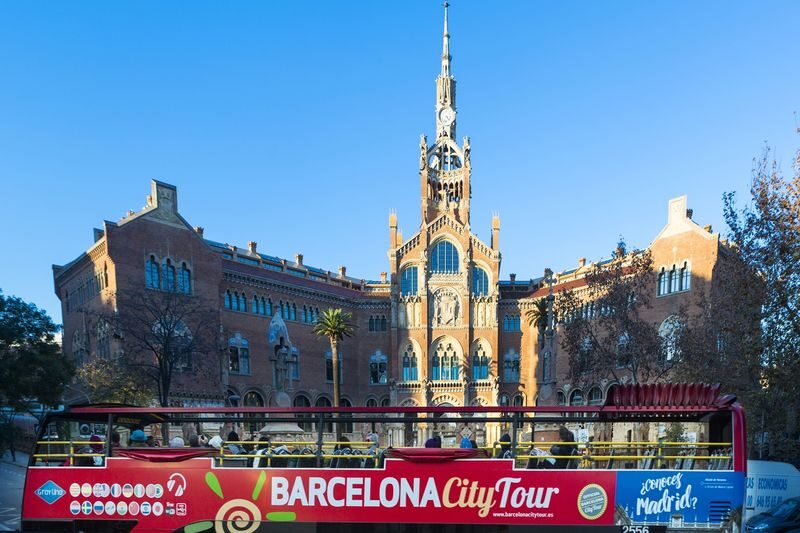
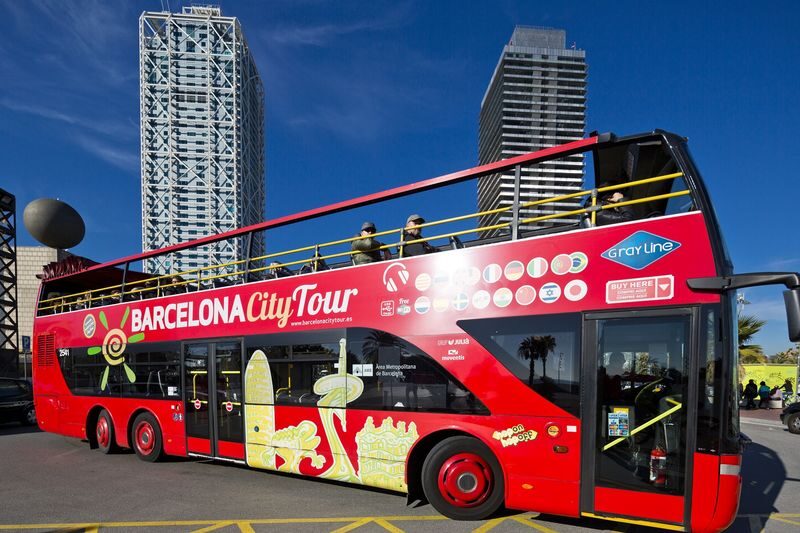
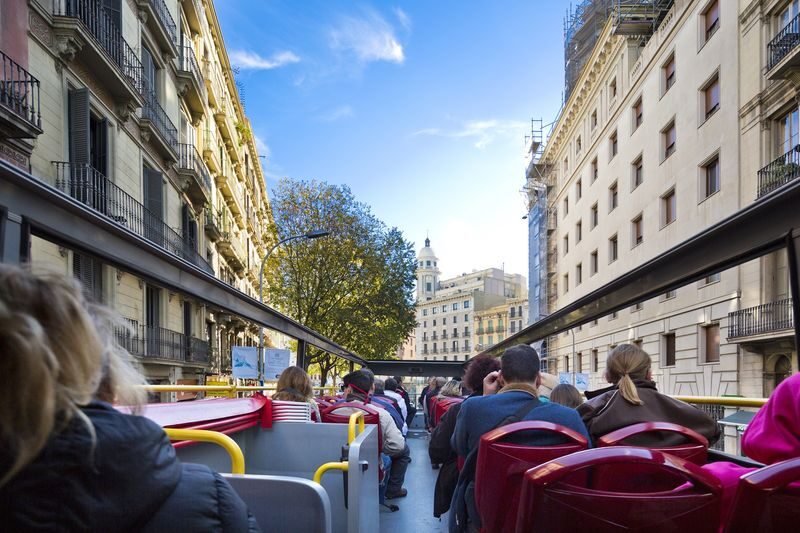

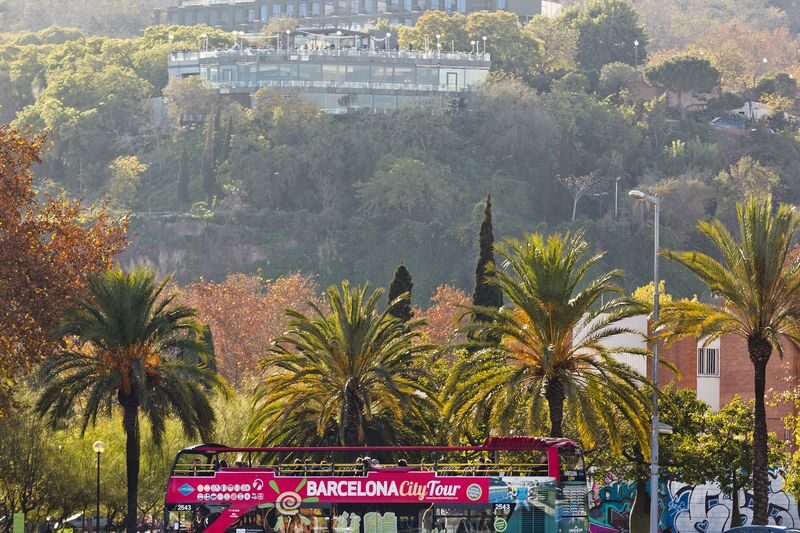
- Two linked routes: The Orange route covers western sights, including Montjuïc, Plaça d’Espanya, Camp Nou, and Passeig de Gràcia. The Green route heads east toward the waterfront, Sagrada Familia, Park Güell, and Tibidabo.
- A useful city overview: Each full circuit takes about two hours or a little longer, depending on season and traffic. Riding both routes gives you a quick sense of how Barcelona’s districts fit together.
- Hop off without watching the clock: The pass allows unlimited boarding during its validity, so you can break up the ride for sightseeing, food, or a rest.
- Audio in 16 languages: Commentary is available in English, Chinese, Japanese, Spanish, Catalan, Dutch, French, German, Italian, Portuguese, Russian, Hebrew, Arabic, Swedish, Norwegian, and Turkish.
- Admission is extra: The bus takes you near major attractions, but museum and monument tickets are not included unless you book a package that names a specific attraction.
- Plan for weather and waits: The open upper deck has the best views, but it can feel exposed in strong sun, wind, or rain. At busy times, you may have to wait for an upper-deck seat.
👉 See our pick of the Best Guided Tours In Montserrat
Two routes, two very different Barcelonas
The bus pass is most useful when you treat it as a connection between districts, not simply as a sightseeing loop. Barcelona’s major attractions are spread out, and walking between many of them would take time and energy. The bus lets you trade some control over timing for a broad reach across the city.
The Orange route, also described as the West route, takes about two hours in summer for a full circuit, subject to traffic. The Green route, or East route, takes around two hours and 25 minutes in summer and about two hours in winter. Those are ride times without extended stops, so a full day with visits to several attractions will need more than a few hours.
The routes meet at Plaça de Catalunya, La Pedrera, and Casa Batlló, which makes switching between them fairly straightforward. A practical plan is to ride one route in the morning and the other later in the day, using a shared stop to transfer. You can also simply stay on the bus for a complete circuit before deciding where to get off.
A full loop is a good first move if you want to get your bearings before choosing what deserves your time. But if you already know you want to visit Sagrada Familia or Park Güell, check the schedule and head there early rather than spending most of your pass riding from stop to stop.
You can also read our reviews of more tours and experiences in Barcelona.



The Orange route: Montjuïc, Plaça d’Espanya, and Passeig de Gràcia
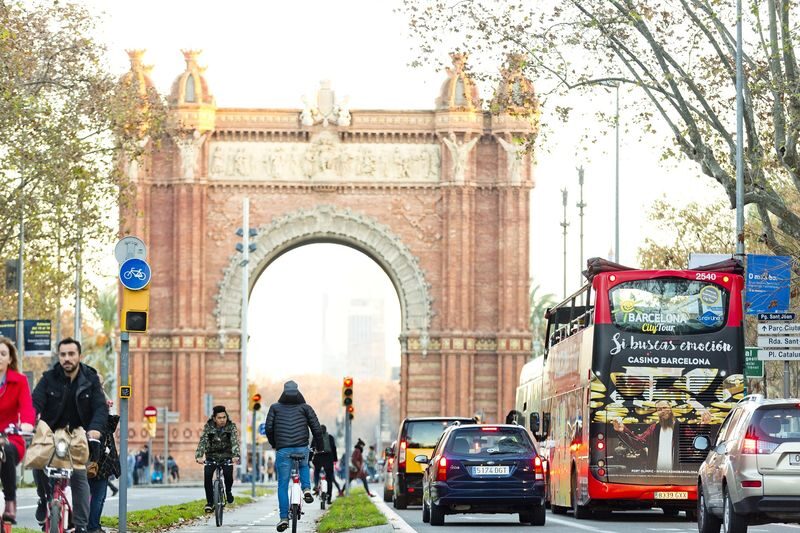
The Orange route begins at Plaça de Catalunya and moves through the old center and waterfront before climbing toward Montjuïc. Its listed stops include Arc de Triomf, El Born-Ciutadella-Zoo, Passeig Colom, the World Trade Center, Jardins de Miramar, Fundació Joan Miró, the Olympic area, MNAC, Poble Espanyol, Caixa Fòrum, and Plaça d’Espanya.
This route is a good choice if you want to see how Barcelona shifts from central streets to its grander civic and cultural spaces. The Montjuïc section is particularly rewarding from the open upper deck, with broad city views as the bus passes gardens and major cultural stops. If you get off, keep in mind that several stops serve a wider area rather than placing you at the door of every attraction.
From Plaça d’Espanya, the route continues past Estació de Sants and Camp Nou, then heads along Plaça Pius XII and Illa Diagonal before returning toward Passeig de Gràcia. That gives you a look at both the city’s major transport hub and its modern commercial avenues. Camp Nou is included as a stop, but admission to the FC Barcelona Museum is separate and its opening hours can change.
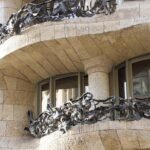
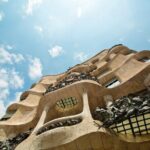
The final stretch is especially handy for architecture fans. La Pedrera and Casa Batlló are both on Passeig de Gràcia, and the shared stop makes it easy to change routes or explore this area on foot. La Pedrera’s listed opening hours are Thursday to Sunday, 9:00 to 18:30, with last admission 30 minutes before closing, but check current details before planning your visit.
The Green route: Sagrada Familia, Park Güell, and the coast
The Green route also starts at Plaça de Catalunya, then passes Port Vell, the Maritime History Museum area, Barceloneta, Port Olímpic, Poble Nou, and the Zoo area. It continues past Teatre Nacional and the Glòries district before reaching Sagrada Familia, Sant Pau, Park Güell, and Tibidabo.
This is the route to choose for the city’s best-known Gaudí stops and its seaside stretch. From the bus, you get a broad view of Barcelona’s waterfront and newer districts before the route turns inland toward the basilica and Park Güell. The contrast between the port, beach area, modern city, and hills is one reason riding both routes is more useful than repeating only one.
Sagrada Familia is a major reason many people buy the pass, but the bus ticket does not include entry. Set aside time to visit the basilica properly, and check your chosen entrance stop and walking route in advance. Some stops may not be right beside the attraction, so do not assume the bus drops you at the entrance.
The route also serves Recinte Modernista de Sant Pau, a former hospital complex, and Park Güell. Both reward a longer stop if they are on your list, but they take more time than a quick photo break. Park Güell is on the hillside, so the approach may feel like more work in the heat. The bus makes the wider journey easier, but it does not remove the need to walk once you get off.
Tibidabo marks the route’s furthest reach toward the hills. If you are short on time, riding this far gives you a sense of the city’s spread, but it may leave less time for the central sights. The Green route takes longer than the Orange loop in summer, so plan your stops around what matters most to you.
The upper deck is the best seat, weather permitting
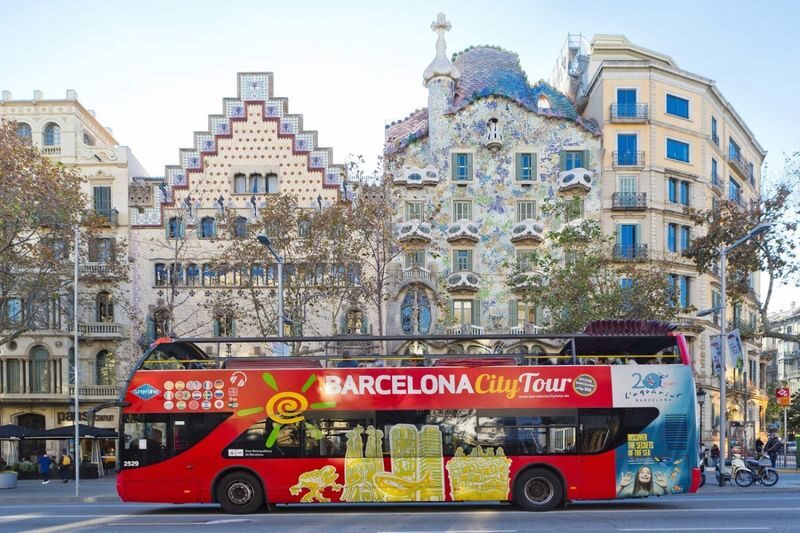
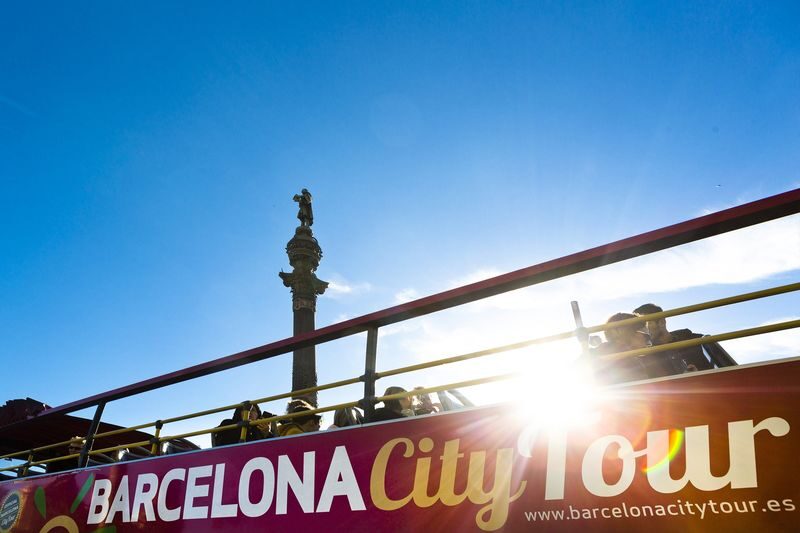
An open-top double-decker is a fine way to see Barcelona’s architecture without weaving through traffic on foot. You can look across rooftops, catch views along the coast, and take photos as the bus moves between districts. The onboard audio guide offers commentary in 16 languages, and headphones are provided.
The upper deck is the obvious choice on a clear, mild day. But summer heat can make it uncomfortable, especially when the bus is stopped for a while or the sun is strong. Some buses have a shade cover that may be adjusted for the weather, but shade is not guaranteed in every seat. If the upper deck is full, the lower deck offers a more sheltered ride, though one summer visitor found it too hot when air conditioning was not working.
On rainy or windy days, the upper deck can be exposed even when a roof is in place. If the forecast looks unsettled, bring a layer and be ready to sit downstairs. The bus is still useful in poor weather, but the panoramic view is a large part of what you are paying for.
Wi-Fi is included, and the buses are described as wheelchair- and stroller-accessible. Service frequency varies from about 7 to 25 minutes by season and time of day, so a short wait is possible. At holiday periods, allow extra time, since buses can fill and you may not get your preferred seat on the first one.
Making a one-day pass earn its keep
The listed starting price is $36.65, with 1-day and 2-day tickets among the package options. The right comparison is not simply the bus fare against a public transport ticket. Ask how many distant sights you plan to visit, how much you value an easy overview, and whether you want the flexibility to pause without planning every connection.
If you intend to see several attractions on both routes, the pass can be good value. It saves you from arranging separate rides between far-flung stops and gives you a guided overview as you go. If you plan to visit only one or two places, use public transport, or spend most of the day inside museums, the bus may be less economical.
The pass is valid for 24 hours after activation. Start at 3:00 p.m. and, according to the stated validity, you can keep using it until 3:00 p.m. the next day. That makes a late start useful if you want an afternoon loop followed by morning sightseeing. A 2-day option is also offered; check the selected ticket details before purchase, since the package you choose determines what is included.
A simple first-day plan is to board early, ride the Orange route for an overview, then change at La Pedrera or Casa Batlló and take the Green route toward Sagrada Familia. That is a lot to fit into one day if you make long visits, so choose one or two major attractions rather than trying to enter every stop. If you want a slower pace, use the 2-day ticket and give each route its own day.
The bus does not include hotel pickup, attraction admission, personal expenses, or gratuities. Some ticket combinations add a catamaran cruise, aquarium entry, or another named attraction, but those are separate package options. Check what your chosen fare includes before you count it as part of the price.

Finding your stop and avoiding a wasted wait
You can board at Plaça de Catalunya or at any stop on either route by showing a mobile or printed voucher. Plaça de Catalunya is the main stop and a practical starting point, but it can be confusing if you see more than one sightseeing bus operator. Check the bus name and route color before joining a queue.
Keep the stop guide or route map handy. Some stops can be harder to locate than expected, and a bus stop may be some distance from the landmark it serves. The current notice says Red Route stop 22 at Torre Glòries is out of service, with an alternative at 160 Badajoz Street. The route information also notes that roadworks, traffic, demonstrations, sports events, and other city events can change the itinerary.
The Green route is listed as running from 9:00 to 20:00 in summer and 9:00 to 19:00 in winter. The first bus starts at 9:00, while the final departures are listed from La Pedrera on the Orange route and Plaça de Catalunya on the Green route at 19:00. The bus does not operate on December 25 or January 1. Because schedules and routes can shift, check current operating details on the day you go.
For children, ages 0 to 3 ride free, while discounted tickets are available for ages 4 to 12 and seniors 65 and older. Children aged 13 and up pay the adult rate. The activity is listed as wheelchair- and stroller-accessible, which can make it a practical way to cover long distances with less walking.
Who will get the most from this bus?
I’d choose this tour if you have limited time, are visiting Barcelona for the first time, or want a low-effort way to connect sights on opposite sides of town. It is also useful when you want a day with some structure but do not want to follow a guide on foot or keep changing public transport.
It is less ideal if you dislike waiting, are visiting in intense summer heat, or want a precise door-to-door service. The buses follow set routes and traffic can slow them down. And while the audio guide gives you context, it is not a substitute for a guided visit inside a monument.
For the best balance, use the bus as transport and orientation, not as the entire day’s activity. Pick the stops you care about, confirm how close each one is to the attraction, and leave space for unplanned breaks. That way, the pass gives you freedom instead of turning into a race to complete two long loops.
Should you book the Barcelona Hop-On Hop-Off Bus Tour?
Book it if you want to see Barcelona’s main districts in a day or two, especially if you plan to visit sights on both routes. The strongest reasons are the broad coverage, flexible boarding, and multilingual audio commentary. The main cautions are summer weather, possible queues for upper-deck seats, and the fact that entry tickets are extra.
If you are deciding between the 1-day and 2-day pass, choose based on how many places you plan to enter, not just how many you want to photograph. A single day can work for a city overview and a couple of stops. For slower visits to Sagrada Familia, Park Güell, Montjuïc, or the waterfront, a second day gives you more breathing room.
Barcelona Hop-On Hop-Off Bus Tour
“all was amazing, I would recommend it if you have a short time to the city.”
FAQ
How long does each route take?
The Orange route takes about two hours in summer, subject to traffic. The Green route takes about two hours and 25 minutes in summer and about two hours in winter.
How long is the pass valid after I first use it?
The pass is valid for 24 hours after activation. For example, if you first board at 3:00 p.m., you can use it until 3:00 p.m. the next day.
Can I board at a stop other than Plaça de Catalunya?
Yes. You can board at Plaça de Catalunya or any other stop on the routes by showing your mobile or printed voucher.
Are attraction admission tickets included?
No. Admission to attractions is not included with the standard bus ticket. Some separate package options combine the bus with a named attraction or activity.
What languages are available for the audio guide?
The audio guide is available in English, Chinese, Japanese, Spanish, Catalan, Dutch, French, German, Italian, Portuguese, Russian, Hebrew, Arabic, Swedish, Norwegian, and Turkish.
What are the operating hours?
The listed summer schedule is 9:00 to 20:00 daily, and the winter schedule is 9:00 to 19:00 daily. The bus does not operate on December 25 or January 1. Schedules may change, so check before setting out.
Is the bus wheelchair- and stroller-accessible?
Yes. The activity is listed as wheelchair- and stroller-accessible.
Do children need a ticket?
Children aged 0 to 3 ride free. Discounted tickets are available for children aged 4 to 12 and seniors aged 65 and older. Children aged 13 and up pay the adult rate.
Is the Torre Glòries stop operating?
Stop 22 on the Red Route at Torre Glòries is currently listed as out of service. The alternative stop is at 160 Badajoz Street. Routes can change, so check the current stop information before boarding.