Madrid’s Inquisition story is written into ordinary streets and old buildings, not just museum displays. On this two-hour walk, you follow the trail of a tribunal that shaped Spain’s religious and political life, while learning how its story became a source of fear and legend abroad.
I like two things here: the guide explains the forces behind the Inquisition, not only its punishments, and the route connects that history to real places in central Madrid. Past guides have included Sebastian, Enrique, Joaquin, Jovan, and Lexi, though you cannot choose who leads your departure.
One thing to keep in mind: the tour is about historical context and street-level sites, not a string of dramatic interiors or a guaranteed ghost story. Some places may be seen from outside, and the route can change to suit the group.
- Follow the Inquisition’s Madrid trail: Visit central areas tied to tribunal activity, including the site of a mass trial.
- See La Encarnación: The Royal Monastery is included as a stop on the route.
- Look beyond the lurid legend: Learn about the Inquisition’s origins, motives, consequences, and the Black Legend.
- Expect strong storytelling: Past guides such as Sebastian, Enrique, Joaquin, Jovan, and Lexi have led engaging, question-friendly tours.
- Plan for a two-hour walk: Wear comfortable shoes and arrive at Plaza Mayor ready to walk between stops.
- A darker story in Madrid’s everyday streets
- From Plaza Mayor into the old centre
- The mass-trial site and the machinery of authority
- La Encarnación and the city’s religious history
- The former jail and the limits of the ghost story
- The Black Legend and Spain’s reputation abroad
- A guide-led walk, not a lecture in a square
- What two hours and get you
- Who will get the most from this walk
- Should you book the Spanish Inquisition walking tour?
- FAQ
- How long is the tour?
- Where does the tour meet?
- How do I get to the meeting point by Metro?
- What language is the tour in?
- Which locations are included?
- Is the tour wheelchair accessible?
- Do children under 13 need to pay?
- Is hotel pickup included?
- The Best Of Madrid!
- More Walking Tours in Madrid
- More Tours in Madrid
- More Tour Reviews in Madrid
- Not for you? Here's more nearby things to do in Madrid we have reviewed
A darker story in Madrid’s everyday streets
The Spanish Inquisition can sound like a subject built for grim spectacle. This tour takes a more useful approach: it places the institution in the setting of Madrid and explains how it began, how it worked, and why it left such a long shadow. You are not simply asked to picture cruelty. You get a framework for understanding the political and religious pressures that shaped it.
The tour describes an institution formed to defend Catholic orthodoxy and police religious life, then traces how those aims developed into a system of repression. It also considers the people who directed it and the consequences for those accused. The supplied tour information cites more than 3,000 deaths over four centuries. That scale is sobering, but the guide’s larger task is to help you understand the machinery and motives behind the numbers.
That context matters because popular accounts can flatten the Inquisition into a single image of torture and terror. The walk looks at how the tribunal operated and how later stories helped define Spain’s reputation abroad. You leave with a clearer sense of both the history and the way the history was told.

👉 See our pick of the 12 Best Shopping Tours In Madrid
From Plaza Mayor into the old centre
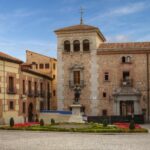
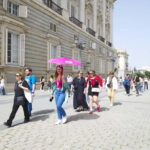
The meeting point is in front of the Tourist Information Center on Plaza Mayor, a central and easy-to-find place to begin. The guide wears a red T-shirt and carries a red umbrella. If you are coming by Metro, take line 1, 2, or 3 to Sol, then walk about 400 metres to the square.
From there, expect to move through central Madrid’s plazas, lanes, and streets. The tour is not a sightseeing loop with a dramatic set piece at every corner. Its strength is the guide’s explanation of what ordinary-looking places meant in the period, and how power was exercised in the city.
That means you should pay attention to the stories as much as the buildings. Several past participants have found that the Inquisition’s physical traces are not always obvious at first glance. A guide can point out where activity took place and explain what you would miss if you were simply walking through on your own.
The route may vary depending on what the guide thinks works best for the group. So treat the named highlights as the shape of the experience, not a promise that every walk follows precisely the same street sequence.
You can also read our reviews of more walking tours in Madrid
The mass-trial site and the machinery of authority
One of the tour’s key stops is the site of a dramatic mass trial. The significance lies not just in the event itself, but in what a public trial could communicate: the tribunal’s authority, the seriousness of its demands, and the pressure placed on people accused of breaking religious rules.
Your guide connects the location to the wider process of the Inquisition. You hear about its origins, the people who ran it, and the motives behind its actions. The aim is not to treat history as a list of dates, but to show how institutions can turn beliefs about order and morality into systems of control.
The tour description frames the Inquisition as an attempt to protect the Catholic Church and the moral life of the population that became oppressive. That tension is central to the walk. Understanding the institution’s stated purpose does not excuse its violence; it does help explain how it gained authority and endured.
La Encarnación and the city’s religious history
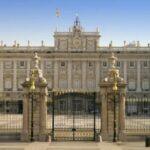
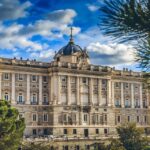
The route includes the Royal Monastery of La Encarnación, a landmark that connects the walk’s subject to Madrid’s religious institutions and built environment. It is one of the more tangible stops on a tour that often relies on a guide to make the historical meaning of a place visible.
The monastery visit is included, but the information provided does not spell out exactly which areas you will enter. Keep expectations flexible. Some historical locations on the route may be viewed from the street rather than explored inside, and the itinerary can shift.
This is also a good point to notice the contrast between the city’s graceful architecture and the harsh history being discussed. Madrid’s centre is attractive and easy to enjoy on a casual stroll. The guide’s interpretation asks you to look again, with an eye for the political and religious forces that shaped these streets.
The former jail and the limits of the ghost story
Another highlight is an old jail used during the Inquisition. The tour presents it as haunted, but the draw is the history attached to the building, not a promise of paranormal activity. One past participant specifically noted that ghost stories were not part of the tour they took, and found the focus on process and politics worthwhile.
That is a useful expectation to set. If you want theatrical scares, this may feel restrained. If you want a grounded account of how confinement and interrogation fitted into the tribunal’s work, the stop gives the guide a strong setting for that discussion.
You may not get an interior visit at every site. The buildings and locations are part of the experience, but this is still a walking tour, not a series of guaranteed admissions. The value comes from having someone explain what happened there and how the place fits into the wider story.
More Great Tours NearbyThe Black Legend and Spain’s reputation abroad
The walk also explores the Black Legend, the body of stories and arguments that shaped how the Spanish Inquisition was viewed outside Spain. This adds an important second perspective to the tour: not only what the institution did, but how its image travelled and influenced opinions of Spain.
That distinction helps keep the history from becoming a one-note tale. The tour examines the tribunal’s real harms and the way those harms were represented abroad. It gives you a chance to think about the gap between historical events and the political stories built around them.
The guide’s framing is especially valuable here. Past guides have been praised for correcting misconceptions and drawing connections between the Inquisition and the broader history of Spain. If you arrive knowing only the familiar shorthand, you can expect a more layered account, without needing to be an expert beforehand.



A guide-led walk, not a lecture in a square
The guide is the heart of this experience. The tour covers a difficult subject across several locations, and a clear storyteller can make the difference between an absorbing walk and a jumble of dates. Past guides named by participants include Sebastian, Enrique, Joaquin, Jovan, and Lexi. The guide for your own tour may be someone else.
People have particularly valued explanations that are both lively and careful with historical nuance. Guides have answered questions beyond the Inquisition, adding details about Madrid, Spanish culture, and the city’s other historical sites. Some have also suggested places to visit or eat after the walk. Those extras can make a short tour more useful as an introduction to the city.
The subject is serious, but the tone need not be dry. Reports of funny, attentive guides and strong storytelling suggest a tour that can hold a mixed group’s attention. Families with teenagers have found the subject engaging, though parents should decide whether a discussion of persecution and violence is right for younger children.
What two hours and $31 get you
At $31 per person, the tour is a modestly priced way to add structure and meaning to a walk through central Madrid. You are paying for a local guide and a focused route, including the visit to the Royal Monastery of La Encarnación. The price is easiest to justify if you want more than a quick overview and value being able to ask questions as you go.
The two-hour duration is also practical. It is long enough to connect several locations and set the Inquisition in context, without taking over a full day of sightseeing. Some past walks have run longer than two hours, so allow a little breathing room if you have a tight schedule afterward.
The tour is in English and is wheelchair accessible. Children under 13 go free with valid ID. Hotel pickup and drop-off are not included, so you make your own way to Plaza Mayor. Cancellation is free up to 24 hours in advance, and the reserve-now, pay-later option lets you keep plans flexible.
Who will get the most from this walk
This tour suits history-minded visitors who want to understand how Madrid’s streets fit into Spain’s past. It is especially worthwhile if you already know the basic outline of the Inquisition but want clearer context about its origins, its operation, and its international reputation.
It also works well as an early Madrid activity. The guide may point out other places worth seeing, and the route gives you a different way to read the city centre. You do not need prior knowledge, but you should be ready to listen closely: the walk’s main attraction is explanation, not a parade of dramatic objects or elaborate interiors.
If you are mainly after ghost stories, graphic details, or access inside every historic building, this may not match your expectations. If you want a thoughtful account of a difficult period, delivered in the places connected to it, the format makes good sense.
Should you book the Spanish Inquisition walking tour?
Book it if you want a compact, guided introduction to the Inquisition that combines Madrid locations with political and religious context. At $31, the guide’s storytelling and the route’s historical focus offer solid value, particularly for visitors who would otherwise pass these streets without knowing their associations.
Skip it if your priority is a haunted-house-style experience or a tour built around entering many buildings. Go with comfortable shoes, an open mind, and enough time afterward not to rush away at the two-hour mark. The best reason to book is simple: a good guide can help you see how a dark chapter of Spanish history belongs to the city around you.
Madrid: The Spanish Inquisition Walking Tour
FAQ
How long is the tour?
The tour is listed as two hours. Allow some flexibility, as the route may vary and past tours have sometimes run longer.
Where does the tour meet?
Meet in front of the Tourist Information Center on Plaza Mayor in Madrid. Look for a guide wearing a red T-shirt and holding a red umbrella.
How do I get to the meeting point by Metro?
Take Metro line 1, 2, or 3 to Sol station, then walk about 400 metres to Plaza Mayor.
What language is the tour in?
The live tour guide speaks English.
Which locations are included?
The tour includes central Madrid sites connected to the Inquisition, the site of a mass trial, an old jail used during the Inquisition, and the Royal Monastery of La Encarnación. The exact route may vary.
Is the tour wheelchair accessible?
Yes, the activity is listed as wheelchair accessible.
Do children under 13 need to pay?
Children under 13 go free with valid ID.
Is hotel pickup included?
No. Hotel pickup and drop-off are not included, so you need to reach the meeting point on your own.
You can check availability for your dates here: