A Bangkok cooking class can do more than hand you a recipe. At Go Thai, you start with local ingredients, then cook a meal yourself in a neighborhood setting near Bang Rak Market. The class covers three savory dishes and a dessert, with an instructor guiding you through each step.
I like two things in particular: you get your own cooking station, so you can take part rather than just watch, and the lesson explains how Thai ingredients work, including possible substitutes for cooking at home. The meal at the end is generous enough that you should arrive hungry.
One consideration: the dishes depend on what is fresh and available, so you may not get to choose every recipe. The room can also feel warm while everyone is cooking, and finding the entrance takes a little care.
- What to know before you book
- Start at Bang Rak Market
- Choose a class time that suits your day
- Cook Thai dishes, not just watch a demonstration
- Learn from the instructor’s methods
- Sit down to the meal you made
- Weigh the price against what you get
- Keep expectations practical
- Should you book Go Thai?
- FAQ
- How long is the Go Thai cooking class?
- Which dishes will I cook?
- Is the class suitable for beginners?
- Is a market visit included?
- How do I get to the meeting point?
- Are drinks and cooking ingredients included?
- The Best Of Bangkok!
- More Cooking Classes in Bangkok
- More Tours in Bangkok
- More Tour Reviews in Bangkok
- Not for you? Here's more nearby things to do in Bangkok we have reviewed
What to know before you book
 1 / 6
 2 / 6
 3 / 6
 4 / 6
 5 / 6
 6 / 6
- Bang Rak Market is part of the setting: The class meets near a local market, where you can see the ingredients that shape the day’s menu.
- You cook four dishes: The package includes three savory dishes and one dessert, with recipes selected according to fresh ingredient availability.
- Menus can include Thai favorites: Pad Thai, Tom Kha Gai, Som Tam, curry, spring rolls, and mango sticky rice are among the dishes associated with the class.
- The evening option is shorter: It runs three hours, from 6 pm to 9 pm. Morning and afternoon options are four hours.
- The teaching is the main attraction: Instructors such as Natcha, Sally, and Kimmy have led classes, with a focus on clear steps, Thai ingredients, and ways to adapt dishes to your taste.
- Come hungry, and check directions: You eat what you cook, and the venue can be hard to spot if you rely on a map pin alone.

👉 See our pick of the 25 Best Shopping Tours In Bangkok
Start at Bang Rak Market
Go Thai meets at Go Bangkok Tours HQ on Charoen Krung Soi 44, in Bang Rak. The address is 69/2-3-4 Talad Luang, Bangkok. The venue is associated with the market area, rather than a large street-facing cooking school, so take a moment to confirm the entrance before you set off.
The closest BTS stop named for the route is Saphan Taksin. From Exit 1, walk along the back of the Shangri-La hotel toward the shophouses and Bang Rak Market. A route video is provided, and it is worth watching: map directions have led people to the wrong alley. If you take a taxi, give the driver the Charoen Krung Soi 44 address.
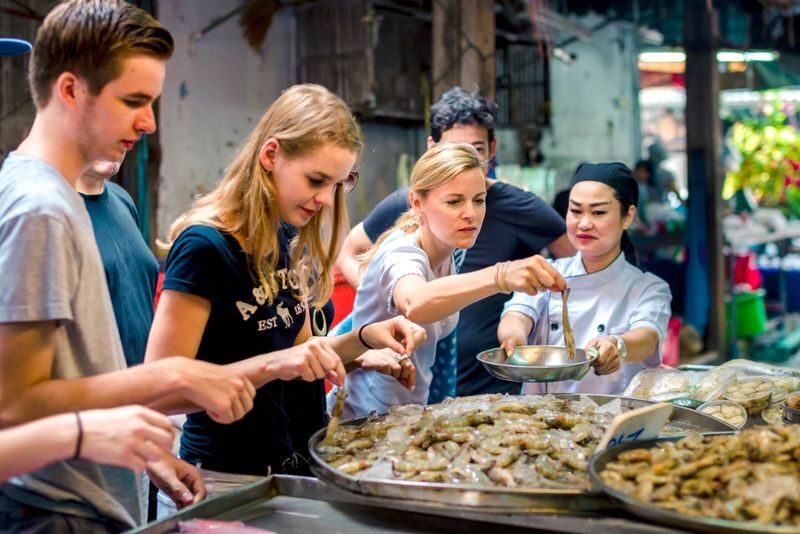
The market is a useful first lesson in itself. Thai cooking depends on balancing fresh herbs, aromatics, vegetables, and seasonings, and seeing ingredients before they reach the cooking station gives you a better sense of what is familiar and what may be new. The morning class is the best fit if the market visit is a priority. The evening schedule starts with a short session on the day’s ingredients at 6 pm, followed by cooking from 6:15 to 9 pm.
Expect the market portion to be practical, not a long food tour. You go to understand the ingredients for class and shop for what you will use. Market activity can also vary with the day: a holiday or other closure may limit what is open.
You can also read our reviews of more cooking classes in Bangkok

Choose a class time that suits your day
There are morning and afternoon classes, each listed as four hours, and an evening class listed as three hours. The evening schedule is straightforward: ingredient preparation and explanation at 6 pm, cooking from 6:15 pm, then dinner and the end of class at 9 pm. The daytime options give the experience more room, particularly if you want to include the market visit.
Think about the rest of your Bangkok plans before choosing. The class is in Bang Rak, near Saphan Taksin and the river area. Afterward, you can continue toward Asiatique, as the activity information suggests, or make your own plans nearby. It can work well on a day that already includes river transport or sights around the area, but leave enough time to reach the meeting point.
The class length also matters if you are not used to standing while cooking. A four-hour session may mean a long spell on your feet, and even the shorter evening class includes several dishes. Wear comfortable clothes and shoes, and arrive ready to eat rather than squeezing in a large meal beforehand.
Cook Thai dishes, not just watch a demonstration
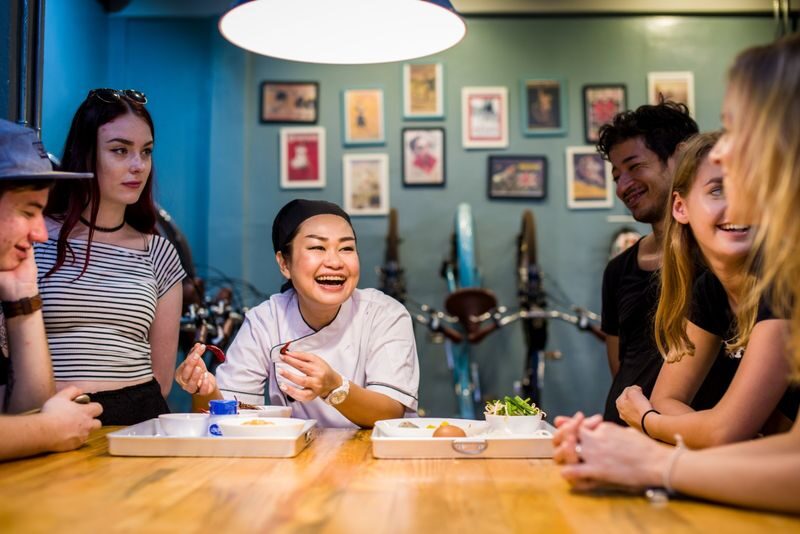
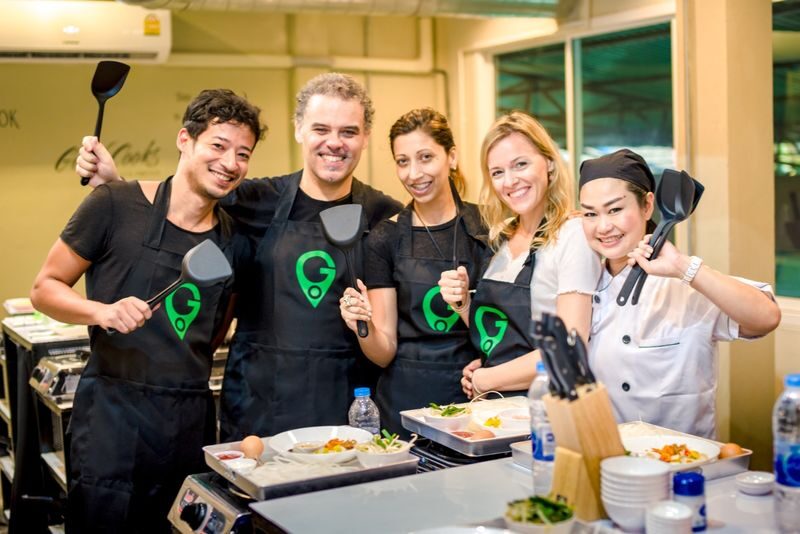
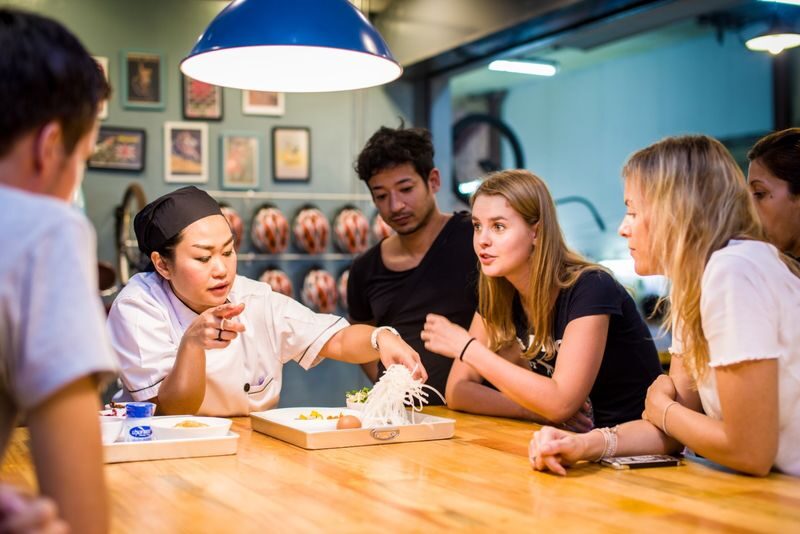
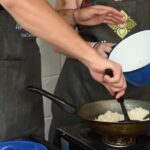
The central promise is hands-on cooking. Each person has a cooking station, and an English-speaking instructor leads you through the selected dishes. The class is designed for beginners as well as people with some kitchen experience. The recipes are broken into steps, and past classes have included explanations of how to adjust the seasoning and what ingredients can be substituted back home.
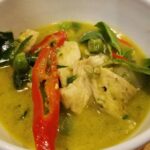
The menu changes with the fresh produce available that day. Three main dishes are selected from the class menu, alongside a dessert. Pad Thai, Tom Kha Gai, and Som Tam are listed possibilities; classes have also prepared green or red curry, spring rolls, and mango sticky rice. The exact combination is not guaranteed, so book for the chance to learn Thai cooking rather than for one specific dish.
That flexibility is a strength if you want a lesson in how the cuisine works. You can ask how to make a dish milder or how to find a replacement ingredient at home. Instructors have adapted recipes to suit different comfort levels with spicy food, while also explaining the intended flavor of traditional versions. If you prefer a less sweet or less spicy result, say so, but stay open to tasting the dish as taught first. The seasoning is part of the lesson.
There is a small caveat about how hands-on the class feels. You will cook at your own station, but some ingredients may be prepared in advance, and the amount of chopping or other preparation can vary. If your main goal is to practice knife work from scratch, this may not be as extensive as you hope. The value lies more in guided preparation, cooking, ingredient explanations, and tasting than in a full-day culinary course.
Learn from the instructor’s methods
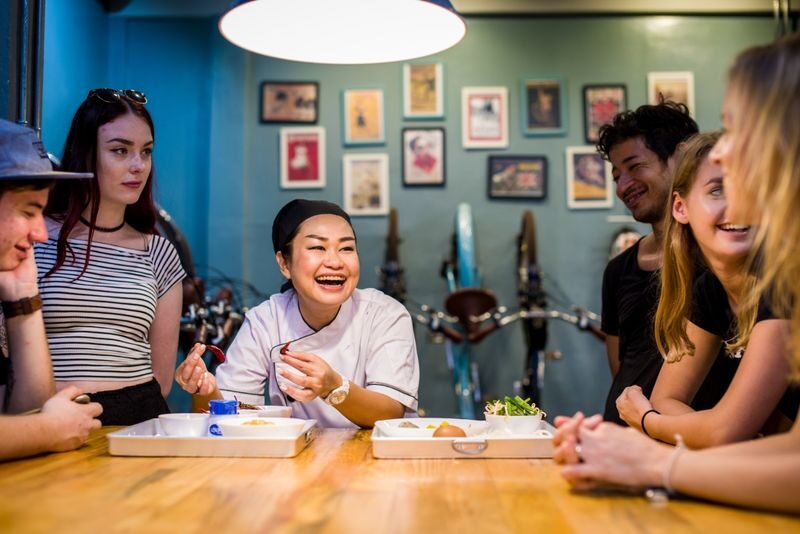
The instructors named in past classes include Natcha, Sally, and Kimmy, though you should expect the teacher to depend on the date. Natcha has been praised for clear demonstrations and practical tips, while Sally has taught in English and discussed substitutions for ingredients that may be easier to find abroad. The useful thing is not the name alone, but the chance to ask questions as you cook.
A good instructor can make an unfamiliar recipe feel manageable. You are not expected to arrive as a confident cook, and the lessons are described as easy to follow. If you have a dietary preference, note it when booking. You can also tell the instructor about your spice tolerance and ask what can be adjusted.
The teaching style may not suit everyone. A cooking class moves between explanation, preparation, cooking, and cleaning, and the pace can vary with the group. Some sessions may feel more like a demonstration at moments, especially if an instructor is managing several tasks. If you want a highly technical course with individual attention at every stage, this is a casual group experience, not a professional training session.
Sit down to the meal you made
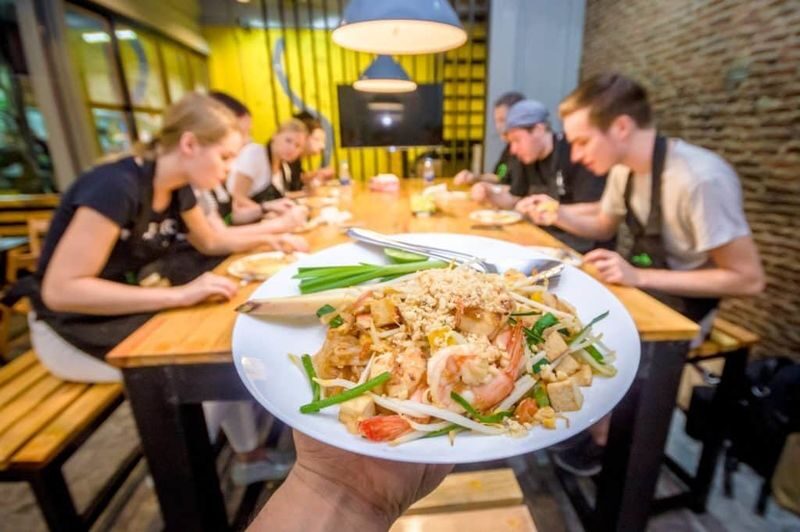
Once the cooking is finished, you eat with your classmates and instructor. That shared meal is more than a convenient finale: it lets you compare the flavors across dishes and ask follow-up questions while the recipes are still fresh in your mind. The class includes three savory dishes and a dessert, so the portions can add up. Arrive hungry; a couple of dishes may be enough to make you feel full.
The dessert may be mango sticky rice, a familiar Thai favorite, though the final menu depends on the day. You also leave with a recipe book, a useful reminder of the steps and ingredients once you are back home. Drinking water, coffee, and tea are included, while soft drinks and beer cost extra. Listed prices are THB20 for soft drinks and THB60 for beer.
This is a good format for couples, friends, and families who want to do something together rather than simply book another meal out. Children and other visitors can join for an additional fee when accompanied by an adult, but they are not allowed to cook. Their fee includes Wi-Fi and drinking water, not cooking. Check that distinction before booking if you are planning a family outing.
You can also read our reviews of more tours and experiences in Bangkok


Weigh the price against what you get
The listed package prices vary by time and may change. The evening class is shown from US$34.85, while morning and afternoon classes are shown from US$41.69; a separate headline price is listed as US$38.35. Check the price for your chosen date and option before paying.
For the cost of a casual Bangkok meal, you get instruction, ingredients, a market-related introduction, four dishes to prepare, a meal, and a recipe book. That makes the class good value if you want both dinner and a practical activity. It is less compelling if you are only interested in tasting Thai food or want complete control over the menu.
Also factor in the time and energy involved. The four-hour options take a meaningful chunk of the day, and the shorter evening class still involves cooking several dishes. Transfers are not included, so you will need to make your own way to Bang Rak. The BTS directions are useful, but the entrance can be confusing, so leave time to find it instead of arriving at the last minute.
Keep expectations practical
The classroom is described as roomy and comfortable, but conditions may feel different when the room is full and several cooking stations are in use. Bangkok heat and active cooking can make the session warm. One class attendee found the room hot even with air conditioning, so do not count on the room feeling cool throughout.
The location itself is part of the appeal, but it is not a polished, resort-style cooking studio. It sits by a working market, and the surroundings may feel informal. That is a reasonable trade-off if you want a neighborhood setting and fresh ingredients close at hand. If you would rather have a quiet, air-conditioned classroom with a highly controlled schedule, compare options before booking.
The overall rating is 4.5 out of 5 from 75 ratings, and the provider’s wider review total is 345, with a 92 percent good-review rate. That is a strong record, but it does not erase the practical limits: menus change, some preparation may be done for you, and comfort can vary by group size and conditions.
Should you book Go Thai?
Book this class if you want to learn a handful of Thai dishes, ask questions about ingredients, and eat your own work afterward. It suits first-time cooks, curious food lovers, and families with children who are happy to watch rather than cook. The morning option is the best choice if seeing the market is high on your list; the evening session works well if you want a shorter activity and dinner in one.
Skip it if you need a guaranteed recipe, want extensive hands-on prep for every ingredient, or are uncomfortable with a warm, informal classroom. For most people looking for a practical Bangkok food experience, the combination of market context, guided cooking, and a generous meal makes the class worthwhile. Watch the route video, arrive hungry, and treat the day’s menu as part of the experience rather than a fixed promise.
Go Thai Cooking Class
“A very pleasant and well-organized workshop. In a beautiful space, with lots of explanations and delicious dishes. It was great to do with my famil…”
FAQ
How long is the Go Thai cooking class?
The evening class is three hours, from 6 pm to 9 pm. Morning and afternoon classes are listed as four hours.
Which dishes will I cook?
You will cook three savory dishes and one dessert. The exact selection depends on fresh ingredient availability; possible dishes include Pad Thai, Tom Kha Gai, Som Tam, curry, spring rolls, and mango sticky rice.
Is the class suitable for beginners?
Yes. The instructor provides step-by-step guidance, and the class is described as suitable for people with little or no cooking experience.
Is a market visit included?
The experience includes a visit to a nearby local market to learn about and shop for ingredients. The morning class is particularly suited to people who want to visit the morning market.
How do I get to the meeting point?
The meeting point is Go Bangkok Tours HQ at 69/2-3-4 Charoen Krung Soi 44, Talad Luang, Bang Rak. You can take a taxi or use BTS to Saphan Taksin and walk from Exit 1. Watch the route video because map directions may point to the wrong alley.
Are drinks and cooking ingredients included?
All ingredients, drinking water, coffee, and tea are included. Soft drinks and beer cost extra, and transfers are not included.