Amanohashidate, Ine and Miyama show three very different sides of northern Kyoto in one day: a long sandbar, a working fishing town built at the water’s edge and a mountain village of thatched homes. The scenery changes often, which makes the 10.5-hour outing more rewarding than a day spent shuttling between similar sights.
I like two things in particular: the chairlift gives you a memorable overhead view of Amanohashidate, and the boat ride and village stops add experiences beyond simply looking at scenery. The English- and Chinese-speaking guide also handles the route, which is useful for places that are a long way from the cities.
The trade-off is time. You cover a lot of ground by bus, and the stops are short, so this is a highlights tour rather than a slow visit. Bring snacks, wear comfortable shoes and be ready to keep an eye on the clock.
- The day at a glance
- Three corners of northern Kyoto in one day
- Amanohashidate, from the chairlift to the sandbar
- A short boat ride beside the sandbar
- Ine’s Funaya, where homes meet the bay
- Miyama’s thatched roofs and rural quiet
- What the bus day feels like
- What to bring, and what to plan around
- Is this northern Kyoto day trip right for you?
- FAQ
- How long is the tour?
- Where does the tour depart from?
- Are the cable car and boat tickets included?
- Are meals included?
- How much time is spent at each stop?
- Is the tour wheelchair-accessible?
- Can I cancel or change my booking?
- The Best Of Kyoto!
- More 1-Day Tours in Kyoto
- More Tours in Kyoto
- More Tour Reviews in Kyoto
- Not for you? Here's more nearby things to do in Kyoto we have reviewed
The day at a glance
 1 / 9
 2 / 9
 3 / 9
 4 / 9
 5 / 9
 6 / 9
 7 / 9
 8 / 9
 9 / 9
- Look down on Amanohashidate: Ride a single-seat chairlift toward Kasamatsu Park for the classic view of the sandbar.
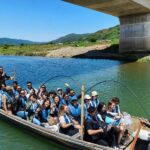
- Get out on the water: The sightseeing boat takes about 20 minutes, with views of the sandbar and seabirds close to the boat.
- Walk among Ine’s boathouses: The 45-minute stop gives you a short look at the distinctive Funaya buildings along Ine Bay.
- See a mountain village: Miyama’s Kayabuki no Sato has dozens of traditional thatched-roof homes, with about 45 minutes to explore.
- Choose your departure carefully: Tours leave from Osaka or Kyoto, and direct-route options avoid going through the other city.
- Budget for extras: Cable car and boat tickets may cost 1,000 yen and 800 yen respectively, unless your selected package includes them.

👉 See our pick of the 25 Best Workshops And Classes In Kyoto
Three corners of northern Kyoto in one day
This outing links places that are lovely, but not close together. Amanohashidate is one of Japan’s Three Scenic Views, Ine is known for its waterfront Funaya boathouses, and Miyama is a mountain settlement with traditional thatched homes. Seeing all three in a single trip gives you a useful taste of the region’s variety.
The price starts at $51.19, but check which package you are choosing before you book. Some options include the Amanohashidate chairlift and sightseeing boat, while others leave those tickets to be paid separately. The listed extra costs are 1,000 yen for the cable car and 800 yen for the boat. Meals, drinks and the Miyama Folk Museum are also not included.
The main value is practical: a bus and guide take you between distant places that would be harder to combine independently in one day. In exchange, you give up the flexibility to linger. If you want a relaxed, in-depth visit to each town, stay overnight in the region or choose fewer stops.
You can also read our reviews of more tours and experiences in Kyoto


Amanohashidate, from the chairlift to the sandbar
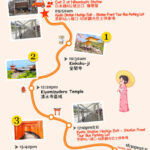
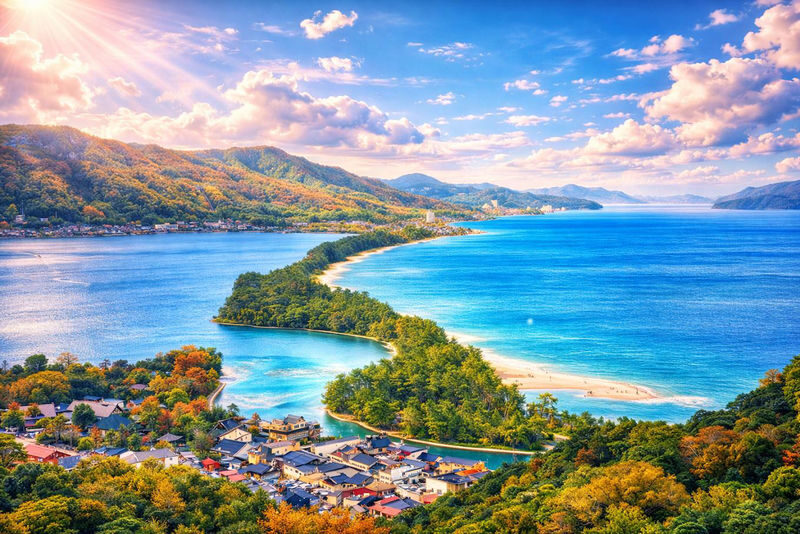
The day begins with the most varied stretch of sightseeing. You have about two hours around Amanohashidate, a long, pine-covered sandbar that appears to connect opposite sides of the bay. The planned visit includes a cable car or chairlift ride, Chion-ji Temple, the rotating bridge and a walk on the beach.
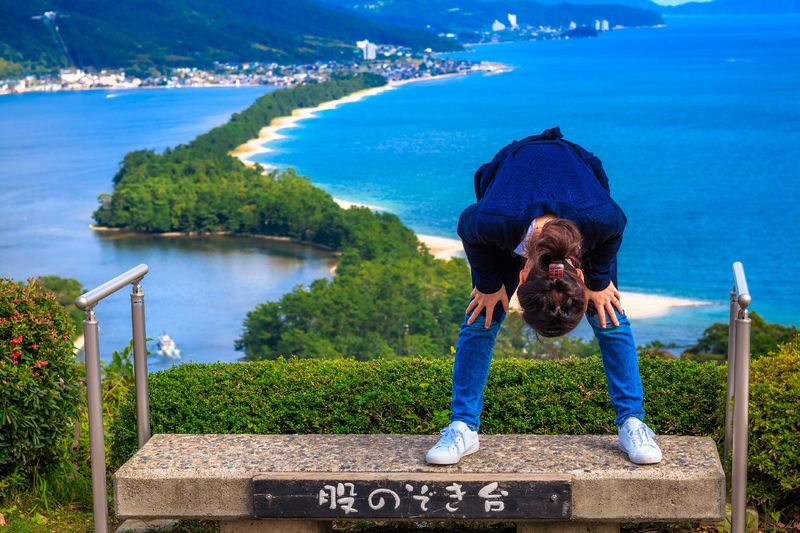
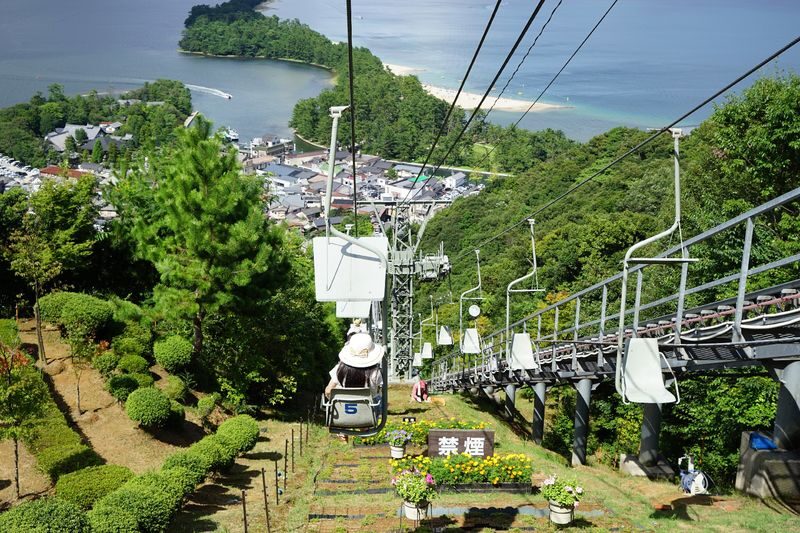
For a memorable view, take the single-seat chairlift up toward Kasamatsu Park. From the viewing area, you can look down the length of the sandbar. The tour description highlights matanozoki, the traditional upside-down viewing pose used to make Amanohashidate appear like a dragon rising into the sky. The view changes with your angle, so take time to look both normally and upside down.
This is a chairlift, not a standard enclosed gondola, and that open-air ride is part of the fun. If heights make you uneasy, consider that before booking. The cable car ticket is not included in every package, so confirm your selection. The guide can help buy tickets on site; there is no need to buy them in advance.
Chion-ji Temple offers a quieter pause. It is associated with Monju Bodhisattva, the figure linked with wisdom, and is known for fan-shaped fortune slips. You can appreciate the temple’s traditional architecture and atmosphere, but the stop is brief. If you want to pray, look around and take photos, you will need to make choices about how to spend your two hours.
The rotating bridge and beach add a different feel. Kaisen Bridge turns to let boats pass, while the nearby sand offers a chance to stretch your legs beside the water. This is not a long beach day: the temple, viewpoint and other sights share the same limited window. Keep your return time in mind, especially if you stop to eat.
A short boat ride beside the sandbar
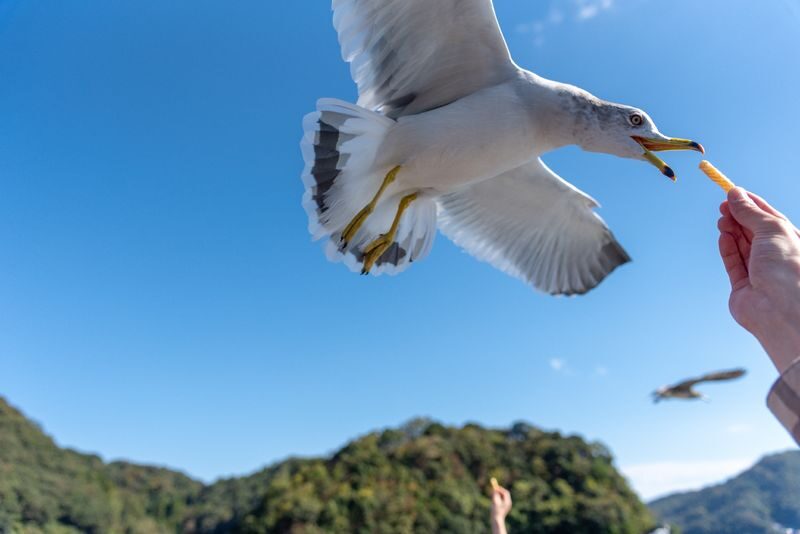
The Amanohashidate sightseeing boat stop is scheduled for about 20 minutes. It gives you a fresh view of the sandbar from the water, and seabirds may fly alongside the vessel. Some tours offer an opportunity to feed them, which can make this one of the day’s most playful moments.
Do not expect a long cruise. This is a short excursion, not a full bay tour, and the boat route or arrangements may vary. Check the guide’s instructions on the day. The sightseeing boat costs 800 yen if it is not covered by your chosen package.
Ine’s Funaya, where homes meet the bay
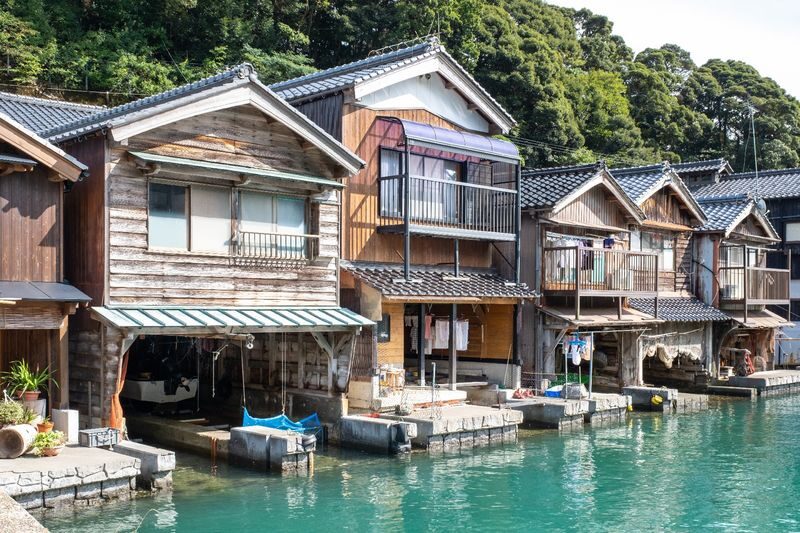
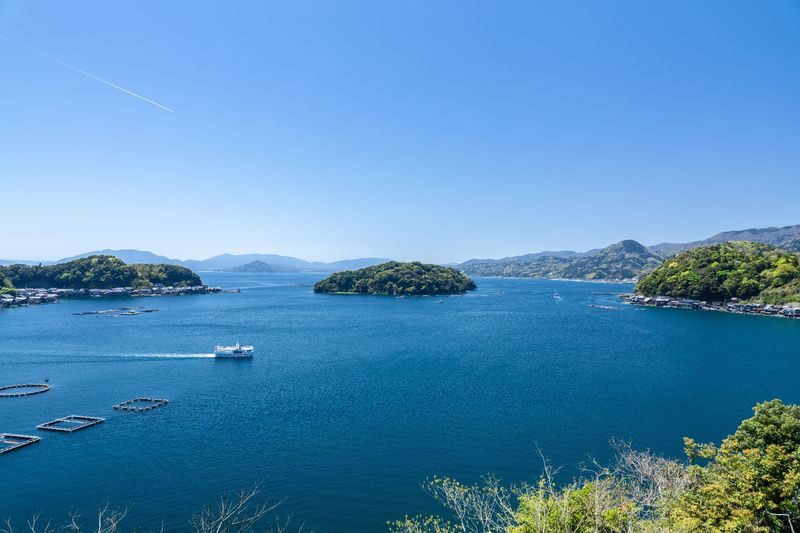
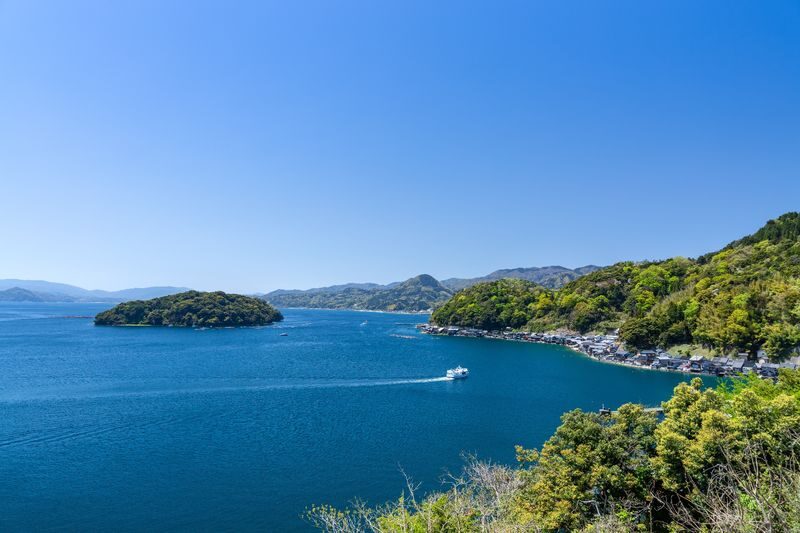
Ine is the most distinctive stop for architecture. Its Funaya are traditional boathouses built at the water’s edge, with boat storage at the lower level and living space above. Their close relationship with the bay reflects the practical needs of a fishing community, not just a picturesque style.
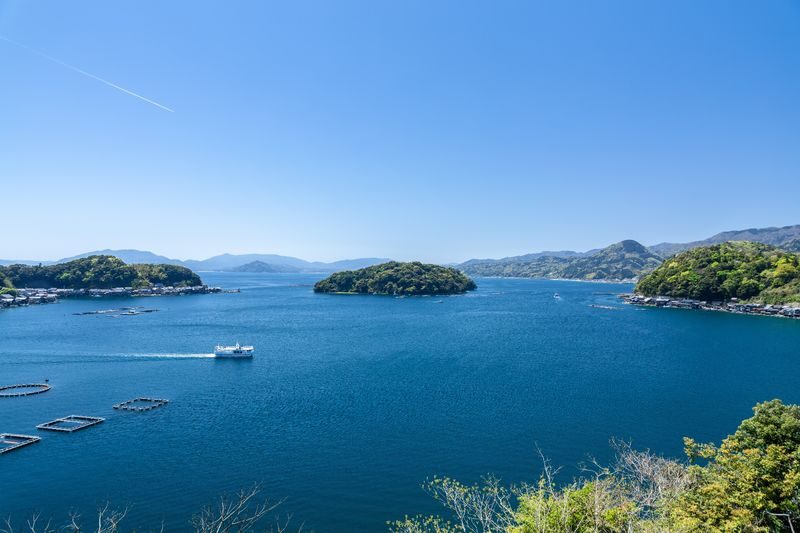
You have around 45 minutes to walk through the area and see the buildings near the waterfront. Ineura Park is noted as a place to get a closer look at the architecture. The setting is a strong contrast with Amanohashidate: quieter, more intimate and shaped by everyday life on the water.
The bay’s clear water and unusual color are among the sights that make the trip memorable, particularly in good weather. But Ine is a real town, not a museum built for visitors. Be considerate around homes and private property, and follow the guide’s directions about where to walk and take photos.
Forty-five minutes is enough for a short stroll and pictures, not a full exploration of the village. If Ine is your main reason for coming, a day trip with three stops may feel rushed. The tour works best if you value seeing several places in one go.
Miyama’s thatched roofs and rural quiet
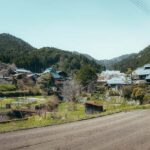
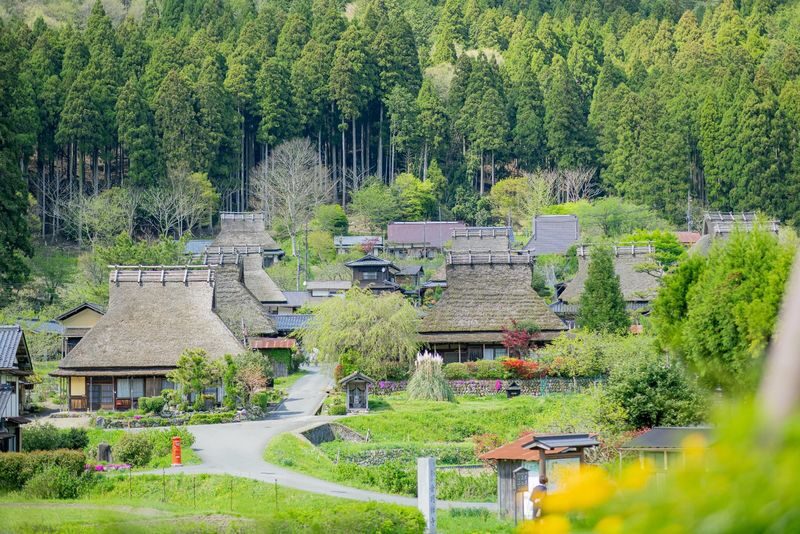
Miyama’s Kayabuki no Sato is the final village stop, with about 45 minutes to walk among its traditional thatched-roof houses. The village is described as preserving 38 homes more than 200 years old. Streams and chimney smoke add to the rural atmosphere, though the exact feel depends on the weather and what is happening that day.
This stop changes the pace again. After a day of bays and sea views, Miyama brings you into a mountain setting. You can stroll the village lanes, take in the roofs and pause for a local snack if time and opening hours allow. The Miyama Folk Museum is not included, and there may not be time to visit it during the short stop.
A few useful details come from people who have taken the trip: Miyama milk ice cream is a popular treat, and there are also recommendations for pizza. These are options to look out for, not guaranteed parts of the tour. Bring some cash and do not count on having time for a leisurely meal.


What the bus day feels like
The scheduled departure is 7:30 a.m., and you are asked to arrive 15 minutes early. Depending on your package, the pickup is in Osaka or Kyoto. The tour returns to Kyoto Station or Osaka’s Kintetsu-Nippombashi Station, with arrival usually around 6 p.m. but potentially as late as 7:30 p.m. if traffic is heavy.
Expect substantial time on the road. A day that reaches three distant areas cannot avoid bus travel, and the Osaka departure may feel especially long. One account described around ten hours on the bus, while other reports found the stops workable and well paced. The difference may come down to route, traffic and how much time you want at each place.
Pick the direct departure from your own city if available. Options include routes from Osaka that do not detour through Kyoto, and routes from Kyoto that do not go through Osaka. A few package choices also include the chairlift and boat tickets. Read the exact option name before paying; the package details can differ.
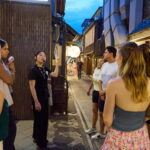
Guides vary by date. Names associated with recent departures include Oscar, Sarah, Xixi, Amy and Zoya, among others, so do not book expecting a particular person. The guide’s role matters here: a clear meeting time and concise directions help you use short stops well. Some guides also share suggestions through a group chat. The tour is offered with English- or Chinese-speaking guides, but confirm the language and option that suit you.
What to bring, and what to plan around
Wear comfortable walking shoes. You will be getting on and off the bus and walking through temple grounds, village streets and beach areas. The tour also advises bringing weather-appropriate clothing, rain gear and sun protection.
Breakfast and other meals are not included. Some stops may have places to eat, but the available time is limited. Bring a snack and water so you are not relying on finding a meal at exactly the right moment. One useful tip is to eat before departure or carry something for the morning; restaurants at the first stop may not be open early.
The tour is not recommended for people with impaired mobility, pregnant people or those with certain medical conditions, including high blood pressure or epilepsy. It is not wheelchair- or stroller-accessible, and child seats are unavailable. Infants and children must be included in the passenger count. The stated luggage allowance is two standard-sized bags.
Is this northern Kyoto day trip right for you?
Book it if you want to see Amanohashidate, Ine and Miyama in one day and are comfortable with an early start, a long bus ride and brief stops. It is especially useful if you are based in Osaka or Kyoto and do not want to plan the connections yourself. The mix of chairlift, boat, temple, waterfront walk and rural village keeps the day varied.
Skip it if you want a slow pace, long meals or time to explore Ine beyond its central waterfront. The schedule is designed to cover ground, not to let you settle in. For the best value, choose the departure that does not detour through the other city, check whether tickets are included and bring food for the ride. With those expectations set, this is a practical way to see a striking corner of Kyoto Prefecture in one demanding but rewarding day.
Day Trip to Amanohashidate & Ine no Funaya & Miyama Thatched Village in the Sea of Kyoto (Departure from Osaka or Kyoto)
“Friendly tour guide, beautiful location, clear direction and guide. Would definitely recommend”
FAQ
How long is the tour?
The day is listed as about 10.5 hours, with a 7:30 a.m. departure. Return time is generally around 6 p.m., but traffic can delay arrival until about 7:30 p.m.
Where does the tour depart from?
You can choose an Osaka or Kyoto departure. The listed return points are Kintetsu-Nippombashi Station in Osaka and Kyoto Station. Check your selected package for its exact meeting point.
Are the cable car and boat tickets included?
It depends on the package. If they are not included, the listed costs are 1,000 yen for the Amanohashidate cable car and 800 yen for the sightseeing boat. The guide can help buy tickets on site.
Are meals included?
No. Meals and beverages are not included, so plan to pay for food and drinks yourself.
How much time is spent at each stop?
The schedule allows about two hours at Amanohashidate, 20 minutes for the sightseeing boat, 45 minutes in Ine and 45 minutes in Miyama. Travel time and traffic can affect the day.
Is the tour wheelchair-accessible?
No. The activity is not wheelchair- or stroller-accessible and is not recommended for people with impaired physical mobility.
Can I cancel or change my booking?
A full refund is available if you cancel at least 24 hours before the activity date, in the destination’s local time. Changes are allowed until 24 hours before the activity starts, subject to the stated booking restrictions.