Sengoku-teien is a garden built around stones with presence: enormous formations, unusual shapes, and vivid colors set across four hectares in Higashihiroshima. Opened in 2023, it takes a different path from the quiet, timeworn garden many people picture when they think of Japan.
I like two things in particular: the collection turns stones into the main event, giving the grounds a bold, almost geological character, and the seasonal plantings add a reason to visit at different times of year. The on-site restaurant and covered BBQ area also make it easy to turn a garden stop into a longer outing.
One consideration is location. This is outside central Hiroshima, and the listed access is by taxi from nearby stations or the airport, so you will need to plan transport. The admission ticket covers entry, but the details do not say that meals or BBQ use are included.
- Key points to know
- A garden where stone takes center stage
- What the 1-to-2-hour visit feels like
- Seasonal reasons to choose your date
- A garden visit that can become a family outing
- Getting to Higashihiroshima
- Is admission worth the price?
- Booking and practical details
- Should you book Sengoku-teien?
- FAQ
- Where is Sengoku-teien Japanese Garden?
- How long should I plan for a visit?
- How much does admission cost?
- What does the admission ticket include?
- Can children visit for free?
- How can I get to the garden from nearby stations?
- How far is the garden from Hiroshima Airport?
- What are the garden’s opening hours?
- Can I leave the garden and come back in?
- Is there a restaurant or BBQ area on site?
- The Best Of Hiroshima!
- More Tours in Hiroshima
- More Tour Reviews in Hiroshima
- Not for you? Here's more nearby things to do in Hiroshima we have reviewed
Key points to know
 1 / 4
 2 / 4
 3 / 4
 4 / 4
- Four hectares of stone features: See famous stones, megaliths, and unusual rocks brought from across Japan.
- A garden with a different mood: Its bright, expansive design aims to evoke the creation of a new world, rather than an aged, mossy retreat.
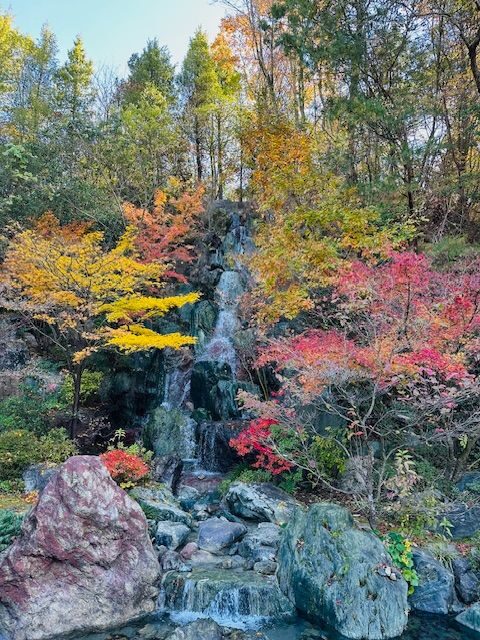
- Seasonal color: Expect plum and cherry blossoms in spring, fresh greenery and crape myrtle in summer, and autumn foliage in fall.
- More than a garden visit: The grounds include a large pond, waterfall, lawn, athletic field, restaurant, and covered BBQ area.
- A short outing, if you keep moving: Plan on about 1 to 2 hours for the garden, with extra time if you eat or use other facilities.
- An accessible admission price: Tickets start at $6.30, a modest entry cost for a four-hectare site, though add-on costs are not specified.

👉 See our pick of the 3 Best Workshops And Classes In Hiroshima
A garden where stone takes center stage
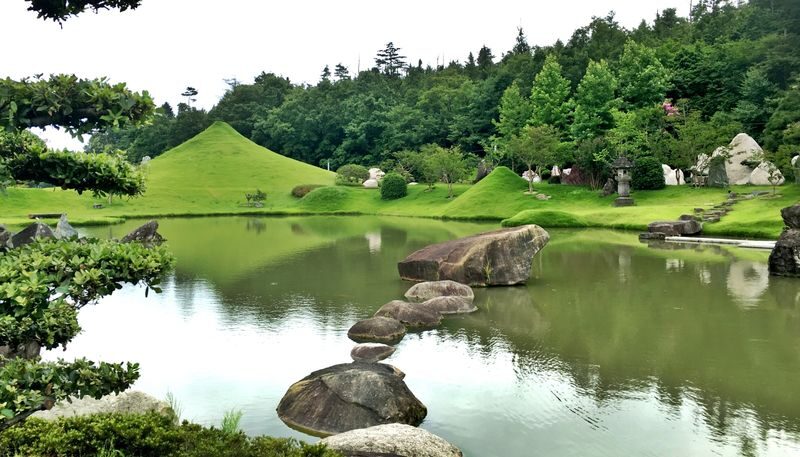
Sengoku-teien, sometimes rendered as Sengokuteien, opened in 2023 in the Takaya area of Higashihiroshima City. The garden is devoted to distinctive stones collected from around Japan, including famous stones, huge rock formations, and shapes that look almost sculpted by nature.
The scale is part of the point. Over four hectares, the stones are not small accents placed beside a path. They are the core of the visit, arranged to suggest the force and movement of the Earth as it forms. If you enjoy gardens mainly for clipped pines, lanterns, and old temple walls, this may feel like a departure. If you like dramatic natural forms, you have a clear reason to come.
The garden is also described as Japan’s first registered garden-stone museum, certified by the Agency for Cultural Affairs. That status gives the collection a role beyond decoration: you are seeing a site built around garden stones as objects worth preserving and understanding. The available information does not give a detailed interpretation route or explain each stone’s origin, so arrive ready to look closely rather than expecting a guided museum tour.
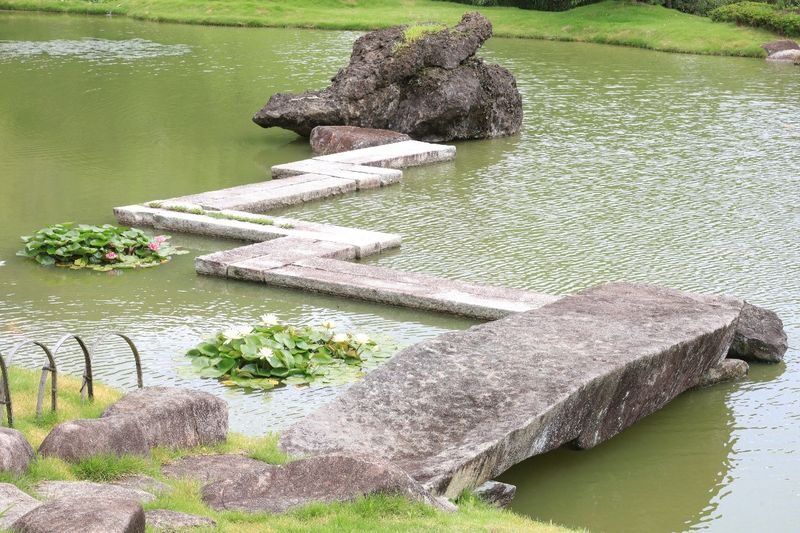
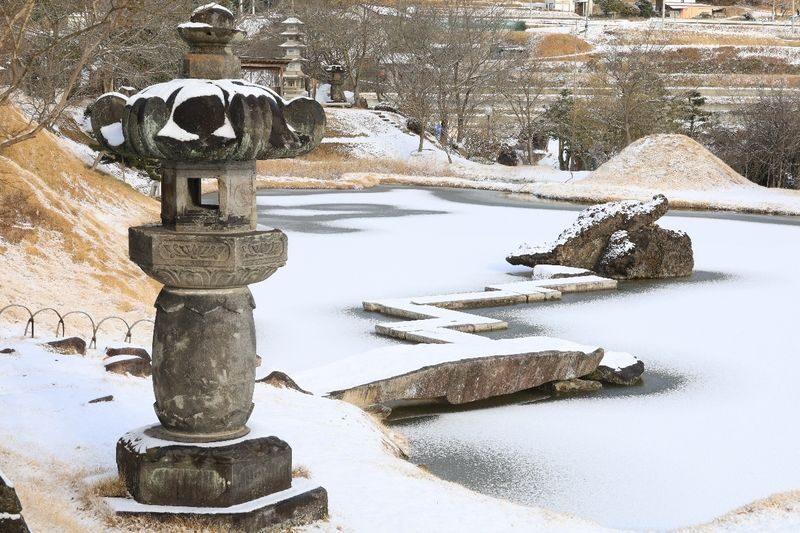
One striking feature is the contrast between the garden’s immense rocks and its broad open spaces. The grounds include a large pond, a large waterfall, a lawn, and a Mt. Fuji feature. Treat the Mt. Fuji element as part of the garden’s design, not as a promise of a view of the actual mountain. The effect is less about a single famous vista and more about the changing scale of the grounds as you move among stone, water, and open lawn.
You can also read our reviews of more tours and experiences in Hiroshima.


What the 1-to-2-hour visit feels like
There is no formal itinerary or guided tour described. You enter with an admission ticket and explore the garden at your own pace. For a first visit, I would allow the full two hours if you want to see the grounds without rushing, especially if you plan to pause at the pond, waterfall, or lawn.
Start by taking in the overall arrangement. A garden this large can be easy to reduce to a checklist of rocks, but it is more rewarding to notice how the features work together. A massive stone can feel different when it sits beside an open lawn than when it is framed by water or smaller formations. Give yourself time to compare those settings.
Then make your way through the stone displays. The collection includes colorful stones, megaliths, and bizarre or unusual rocks from around Japan. The names and stories attached to individual stones are not provided in the visit information, so I would not count on a narrated explanation. Instead, look at the surfaces, shapes, and scale, and notice how the garden makes each piece part of a larger composition.
The large waterfall and pond provide a different rhythm from the stone areas. Water gives the eye a place to rest after the dramatic rock forms, while the pond helps open up the view. There is also a lawn, which adds a plain, spacious counterpoint to the more sculptural parts of the garden. For families, it may be a welcome place to take a breather, though the details do not specify activities or equipment there.
Do not treat the 1-to-2-hour estimate as a strict limit. It is a sensible amount of time for a garden visit on its own. If you add lunch, a BBQ, or time at the athletic field, plan for a longer stay. The experience is flexible, but you will need to decide how much of the day to give it.
Seasonal reasons to choose your date
The garden is intended to have something to offer throughout the year. Spring brings plum and cherry blossoms, then fresh greenery fills out the grounds. In summer, crape myrtle blooms, while fall brings autumn foliage.
That seasonal cycle changes the balance between the plants and the stones. In spring and fall, blossoms or foliage can soften the hard lines of the rock formations. Summer offers dense new growth and flowering crape myrtle. The stones remain the central feature, but the surrounding plants keep the visit from feeling exactly the same in every season.
No specific bloom dates are given, and opening hours or closure dates may change. If your visit depends on seeing a particular flower or fall color, check current conditions and operating information before setting out. The published overview promises seasonal beauty, not a guaranteed peak-bloom date.
A garden visit that can become a family outing
Sengoku-teien has facilities beyond the garden itself, which makes it more practical for a half-day family outing than a quick photo stop. There is an athletic field, a restaurant called Sekitei, and a covered BBQ area. The BBQ facilities are described as usable even if you arrive without supplies, a helpful option for anyone who does not want to shop and carry food beforehand.
But do not assume that BBQ use or a meal comes with the admission ticket. The listed package is an admission ticket, and no prices or reservation rules for food and other facilities are stated. Check directly with the operator if the BBQ is the main reason for your visit, especially if you need to know what is provided and whether you must reserve.
Sekitei offers an on-site dining option, so you do not have to leave the grounds to find a meal. The details do not list its menu, prices, or opening hours, so keep your plans flexible. Beautiful rough stones are also sold on site. That may appeal if you collect stones or want a small memento, though the selection and prices are not specified.
For a family, the mix of garden, lawn, athletic field, restaurant, and BBQ space can help accommodate different interests. For someone seeking a traditional, hushed garden visit, the extra facilities may make the place feel more like a recreational destination. Neither approach is wrong. It is simply useful to know that this is not presented as a silent temple garden.
Getting to Higashihiroshima
The address is 1589-7 Takayacho Takayahori, Higashihiroshima, Hiroshima Prefecture. The suggested access is by taxi: about 15 minutes from JR Saijo Station, 25 minutes from Shinkansen Higashi-Hiroshima Station, and 10 minutes from Nishi-Takaya Station. From Hiroshima Airport, the drive is about 25 minutes using the Sanyo Expressway.
Those timings make the garden manageable from nearby transport hubs, but they also mean you should account for a taxi in your budget and schedule. No bus route or walking directions are provided, so do not assume public transport reaches the entrance conveniently. If you are already in central Hiroshima, compare the extra travel time and fare with other activities in the city before deciding to make the trip.
The location makes most sense if you are exploring Higashihiroshima, arriving by car, or pairing the garden with another stop in the area. If you have only a short stay in Hiroshima, weigh the distinct stone collection against the time required to get there.





Is admission worth the price?
Admission starts at $6.30 and covers entry to the attractions. For a four-hectare garden with large stone displays, a pond, waterfall, lawn, and seasonal plantings, that is a reasonable entry price. The value improves if you have time to walk the grounds at an unhurried pace rather than arriving only to take a few pictures.
The price is less straightforward if you are planning a full family day. The admission package does not state that BBQ, restaurant meals, or any other facility use is included. Children aged 0 to 5 can join free, while children aged 15 and older pay the adult rate. Rates for children aged 6 to 14 are not specified, so check before booking for a group with school-age children.
One direct impression of the garden describes it as lovely and pleasant. That fits the gentler side of a place whose main attractions are large stones and open grounds: you can take the visit at an easy pace, without needing to follow a guide or a fixed schedule. Still, one brief impression cannot tell you whether the garden will suit your taste. The best guide is its focus: stone, scale, water, plants, and space.
Booking and practical details
The admission voucher is valid only on the selected date, and you can enter by presenting it. Re-entry is not allowed after you leave, so plan meals and breaks before exiting the grounds. Dangerous items such as bottles, firecrackers, and lasers are prohibited, along with items that could disturb or inconvenience others.
Opening information is listed for January through December, but hours and closure dates can change. Check the latest details before visiting. Booking changes depend on the ticket type and circumstances, and late arrivals or no-shows are not eligible for refunds. If weather or another unforeseen event leads the operator to cancel, you can request a full refund.
Should you book Sengoku-teien?
Book it if you enjoy unusual garden design, dramatic rock formations, or a relaxed outing with room to walk, eat, and spend time outdoors. Its four-hectare scale and stone collection give you something distinct from a conventional garden, while the seasonal flowers and foliage add variety through the year.
I would be more cautious if your schedule is tight or you are staying far from Higashihiroshima without a car. The taxi access is clear, but it takes planning, and the admission ticket does not clarify the cost of the BBQ or other extras. Check those details first if they matter to your day.
For a modest admission price, Sengoku-teien offers a worthwhile change of pace, especially for families and anyone curious about Japan’s garden stones. Go for the rocks, allow time for the water and open spaces, and treat the restaurant or BBQ as possible additions rather than guaranteed parts of your ticket.
FAQ
Where is Sengoku-teien Japanese Garden?
It is at 1589-7 Takayacho Takayahori, Higashihiroshima, Hiroshima Prefecture, Japan.
How long should I plan for a visit?
The suggested visit duration is 1 to 2 hours. You may need more time if you plan to eat or use other facilities.
How much does admission cost?
Admission starts at $6.30. The exact price may depend on the selected ticket and booking details.
What does the admission ticket include?
The listed package includes admission to the attractions. It does not specify that meals or BBQ use are included.
Can children visit for free?
Children aged 0 to 5 can join free of charge. Children aged 15 and older are charged the adult rate. The rate for children aged 6 to 14 is not specified.
How can I get to the garden from nearby stations?
Taxi times are about 15 minutes from JR Saijo Station, 25 minutes from Shinkansen Higashi-Hiroshima Station, and 10 minutes from Nishi-Takaya Station.
How far is the garden from Hiroshima Airport?
The listed taxi journey is about 25 minutes from Hiroshima Airport using the Sanyo Expressway.
What are the garden’s opening hours?
Specific opening hours are not provided. The garden is listed as open during January through December, but hours and closure dates may change, so check current information before visiting.
Can I leave the garden and come back in?
No. Re-entry is not allowed after you leave the venue.
Is there a restaurant or BBQ area on site?
Yes. The garden has a restaurant called Sekitei and a covered BBQ area. The ticket details do not state whether meals, supplies, or BBQ use are included in admission.