The Uffizi is a place where a handful of famous paintings can turn into a whole afternoon. In the former Medici offices, you can see Botticelli’s Birth of Venus and Primavera, then follow the art from the Middle Ages into the Renaissance across more than 50 rooms.
I like two things about this visit: you set the pace with the self-guided option, and the collection puts major works by Botticelli, Leonardo da Vinci, and Titian in the same museum. The optional English guided tours add useful context if you prefer a person to an app.
One caution: the ticket handoff can be confusing. Some bookings require you to collect a paper ticket from staff near the museum, and finding the right person has been a real snag. Arrive early, read your confirmation closely, and do not assume the voucher itself admits you.
- A Medici office turned art gallery: The Uffizi began as administrative offices and became a home for the family’s art collection.
- More than a few headline paintings: Allow time for over 50 rooms spread across two floors, with paintings, antiques, and sculptures.
- Self-guided or guided: Choose a mobile audio guide or an English tour lasting 1.5 or 2.5 hours.
- A timed visit, not an open-ended ticket: Your voucher is valid only for the date and time shown.
- Entry can take planning: You may need to meet a ticket representative before joining the museum’s entrance process.
- A full morning or afternoon: Two hours is a brisk visit. Give yourself three or four if you want to linger.
- The Uffizi begins with the Medici
- Botticelli, Leonardo, and the famous rooms
- Choose the visit style that suits you
- Getting inside without losing your time slot
- How long to spend among the paintings
- Florence’s nearby sights and practical route
- What the price buys, and what it does not
- Who should book the Uffizi experience
- FAQ
- How long should I allow for the Uffizi Gallery?
- What works can I see at the Uffizi?
- Is a tour guide included with the self-guided ticket?
- Which languages are available in the POP-Guide app?
- Do I need to download an app before arriving?
- Where is the meeting point?
- How early should I arrive?
- What are the Uffizi Gallery’s opening days and hours?
- Are children eligible for this activity?
- Can I take photos inside the gallery?
- The Best Of Florence!
- More Museum Experiences in Florence
- More Tours in Florence
- More Tour Reviews in Florence
- Not for you? Here's more nearby things to do in Florence we have reviewed
The Uffizi begins with the Medici
 1 / 8
 2 / 8
 3 / 8
 4 / 8
 5 / 8
 6 / 8
 7 / 8
 8 / 8
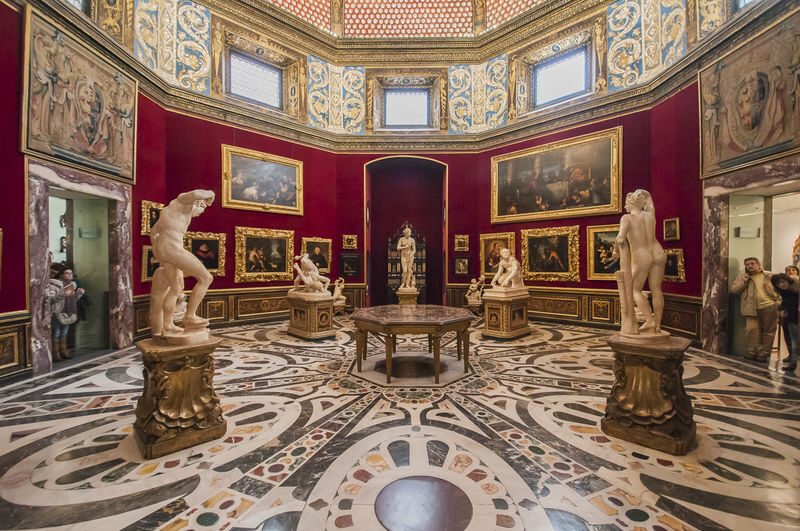
The Uffizi is not just a box of famous paintings. Its history is tied to the Medici, the powerful Florentine family whose patronage helped shape the city’s art and politics. Cosimo de’ Medici commissioned the building as offices, or uffizi, and it later became a showcase for the family’s collection.
That history gives the visit a useful frame. You are looking at art in a city where wealth, civic ambition, and artistic skill were closely linked. The collection ranges from the Middle Ages into the Renaissance, so you can see styles change rather than meeting each masterpiece as an isolated postcard.
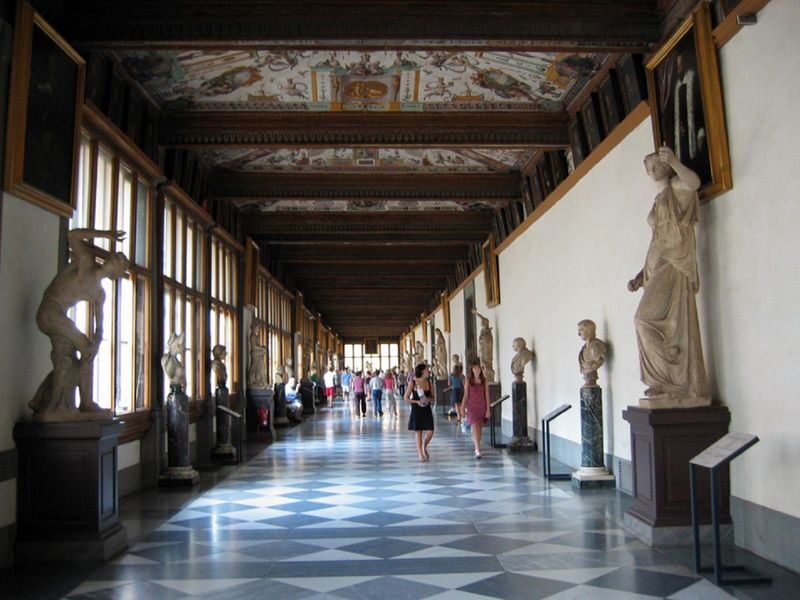
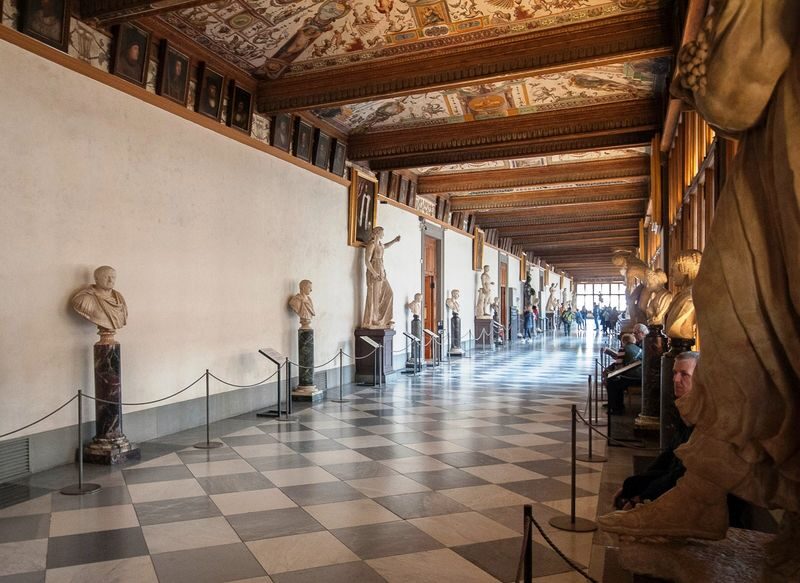
Expect scale. The museum has more than 100,000 paintings, antiques, and sculptures, displayed across two floors and more than 50 rooms. You will not see everything carefully in a single visit, and you do not need to try. Pick a few works you especially want to see, then leave room for discoveries along the way.

👉 See our pick of the Best Tours In Poggibonsi
Botticelli, Leonardo, and the famous rooms
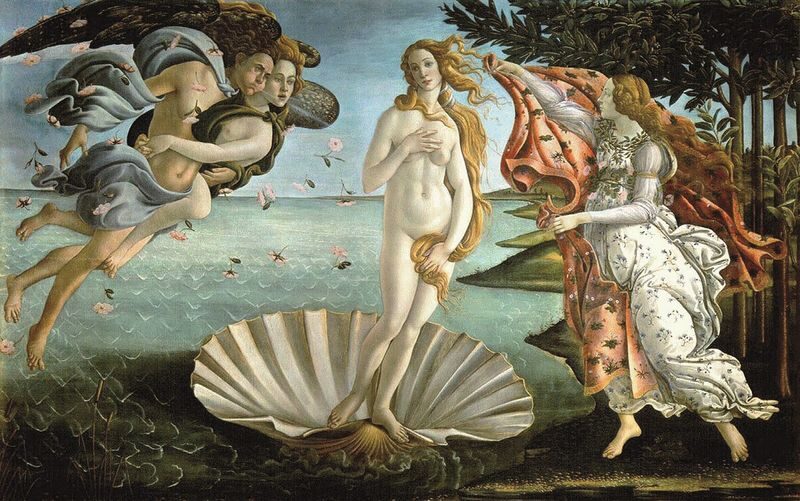
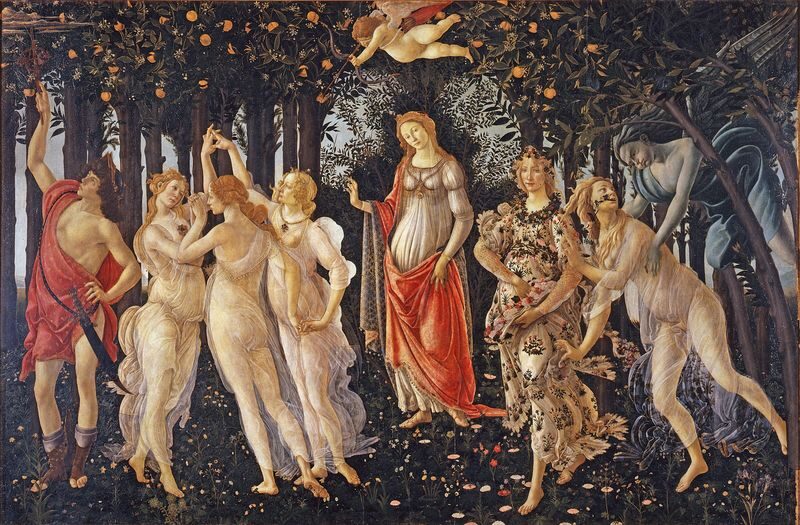
Botticelli’s Birth of Venus and Primavera are two of the best-known works in the collection. Their fame brings crowds, but seeing them in person lets you study details that reproductions flatten: the figures, the line, and the way the large compositions occupy the room.
The collection also includes Filippino Lippi’s Madonna and Child with Two Angels and Titian’s Venus of Urbino. Leonardo da Vinci and other major artists are part of the Uffizi’s story too. The gallery’s broader sequence helps you understand how painting developed from earlier religious traditions toward the more naturalistic approaches associated with the Renaissance.
Do not race from one celebrated painting to the next. The rooms also hold sculpture and antique works, including Roman pieces, that add another time layer to the visit. Even if you arrive with a short must-see list, pause now and then to look beyond the names you already know.
The mobile guide is meant to explain artists’ methods, techniques, and tools as you move through the rooms. That can make a self-guided visit more rewarding than simply reading labels, but it depends on having the app ready and working. Its listed languages are English, Chinese (Mandarin), Spanish, French, German, and Italian. Korean is not listed.
You can also read our reviews of more museum experiences in Florence



Choose the visit style that suits you
The basic option is an entrance ticket with a self-guided mobile tour. You get admission and an app code for the POP-Guide, then explore at your own pace. This suits you if you like to stop where you want, skip rooms that do not hold your interest, or spend longer with a particular painting.
There are also guided options in English: a 1.5-hour express tour and a 2.5-hour masterclass tour. A guide can connect the artworks to Florence and explain why certain pieces matter, which is helpful if you want a clear story rather than a string of names and dates. The English tours cost more than the self-guided option, so the extra charge makes most sense if live explanation is a priority.
The price information varies by package. The experience is advertised from $48.05, while the self-guided package details show a starting price of $43.65 and the 2.5-hour guided tour starts at $78.05. The express tour price is not provided here. Treat these as starting figures, not a guaranteed final price, and compare the exact date, time, and inclusions before booking.
There is a practical reason to pay for a reserved ticket during busy periods: buying at the museum can involve a long wait, reportedly as much as five hours in high season. But a third-party ticket is not automatically a door-to-gallery shortcut. This activity may require a paper-ticket exchange, and visitors have sometimes had trouble locating the representative or still faced a queue. The time-saving value depends on the handoff going smoothly.
Getting inside without losing your time slot
The meeting point is at Uffizi Galleries Museum Door 1, Piazzale degli Uffizi 6. Arrive 15 minutes before your scheduled time. That buffer matters because you may need to find staff, show your voucher, and collect a physical ticket before entering. The mobile voucher alone may not be accepted at the museum door.
Read the latest instructions in your booking confirmation, especially the precise meeting point and whether your ticket will be sent digitally or handed over in person. The information for this activity says that from July 1, 2026, a digital ticket copy will be sent by email or WhatsApp to make entry smoother. It also says the app code and skip-the-line ticket are provided by staff at the meeting point. Because those directions describe different parts of the process, confirm what applies to your selected date rather than relying on an old screenshot or assumption.
Download the POP-Guide app before you arrive, and make sure your phone is charged. The app code is supplied at the meeting point, but the app itself should already be on your smartphone. Museum-area internet may not be reliable enough for a last-minute download, and the app is designed for use on your own device.
The ticket is valid only on its selected date and, where applicable, time. Being five minutes late can mean losing the booking without a refund, so build in time for Florence’s streets and the ticket handoff. Your original identity document is also required on the day.
A reserved or skip-the-line ticket does not promise that every queue disappears. Security checks and crowding can still slow entry, and timed admissions may bunch up. The strongest plan is to arrive early, find the correct representative first, and ask clearly where to join once you have your ticket.
How long to spend among the paintings
The stated visit duration is two to four hours, and that is a sensible range. Two hours gives you a focused look at the major works, with limited time to pause. Three or four hours allows for a slower route, the sculpture and antique collections, a rest, and more attention to rooms beyond the best-known paintings.
If you are using the mobile guide, avoid trying to listen to every item. Choose the works that interest you, then let the rest of the gallery unfold at your own pace. A guide can help you notice technique and context; the trade-off is that audio stops can stretch the visit and make a crowded room feel even slower.
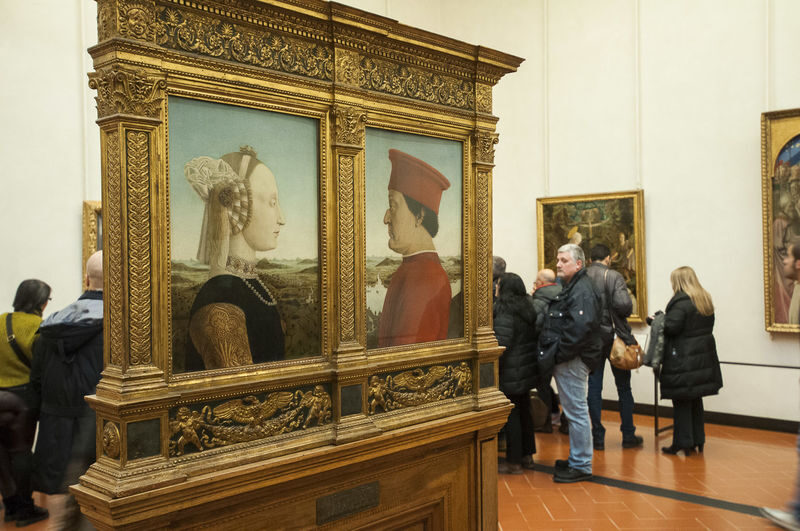
The ground-floor experience is described as including Renaissance works such as pieces by Piero della Francesca. The collection as a whole spans a longer period, so expect the visit to move through different artistic styles rather than stay focused on one era or one artist.
Florence’s nearby sights and practical route
The Uffizi sits within easy walking distance of the Ponte Vecchio and Piazza della Signoria. That makes it straightforward to combine the gallery with a walk through central Florence, though it is wise not to book another timed attraction too close to your Uffizi slot. The museum itself can take several hours, and entry delays are possible.
The Palazzo Pitti and Boboli Gardens are connected to the Medici story and make natural companions for a longer art-and-history day. They are separate attractions, however, and this Uffizi ticket does not list them as included. The Bargello Museum is also mentioned as a possible additional visit, but it is not part of the listed admission.
From Florence’s Santa Maria Novella station, the gallery is about 1.3 kilometres away, roughly a 20-minute walk. A taxi or bus is another option. The supplied directions also list bus routes 39, 50G, 131, and B23 to Florence Bus Station, followed by a 17-minute walk, and tram 2 to Unità, followed by a 14-minute walk. Check current local service details before setting out.




What the price buys, and what it does not
The main value is access to one of Italy’s most important collections, with a reserved visit that may save you from buying a ticket on site during a busy period. The self-guided app is a bonus if you want background without paying for a live guide. But if your main aim is simply the lowest price, compare the final cost and conditions with the museum’s official ticket options.
The trade-off is that this booking can add a layer of coordination. You may need to find a local representative and exchange the voucher for a physical ticket. When that works, the process can be quick; when the meeting point is hard to identify, a ticket meant to save time can become an unwelcome scavenger hunt.
The guided tours cost more, but their value is easier to judge: you are paying for a human explanation and a set duration, not just entry. A 1.5-hour express tour is a fit if you want the main story in a limited window. Choose the 2.5-hour masterclass if you want more time with the art and context. Neither guided option is described as including transport.
Who should book the Uffizi experience
I would consider this ticket if the Uffizi is a priority, your chosen date and time suit your itinerary, and you are comfortable following detailed meeting instructions. It is especially useful if you want to explore independently or prefer an English-speaking guide to bring the collection into focus.
I would be cautious if you have a tightly packed day, dislike uncertain handoffs, or need a particular audio language that is not listed. Check the current ticket delivery method and exact meeting instructions before paying. If you book, arrive early, install the app in advance, and leave enough time to enjoy the art once you are inside.
The Uffizi itself is an easy yes for art lovers and curious visitors alike. The booking format is more conditional: it can be good value when the ticket exchange is clear and the time saved matters, but convenience is not guaranteed. Book it for the collection, not on the assumption that every queue will vanish.
Uffizi Gallery Experience
“This was very good. host was really lovely and very insightful and there are a lot of paintings and statues everywhere. I also need more Klook cash…”
FAQ
How long should I allow for the Uffizi Gallery?
Plan on two to four hours. Two hours is enough for a focused visit, while three or four gives you more time to study works and move through the collection at an unhurried pace.
What works can I see at the Uffizi?
The collection includes Botticelli’s Birth of Venus and Primavera, Titian’s Venus of Urbino, Filippino Lippi’s Madonna and Child with Two Angels, and works by artists including Leonardo da Vinci. It also includes sculptures and Roman antiquities.
Is a tour guide included with the self-guided ticket?
No. The self-guided package includes admission and a mobile app code. Separate English-language options include a 1.5-hour express tour and a 2.5-hour masterclass tour.
Which languages are available in the POP-Guide app?
The listed languages are English, Chinese (Mandarin), Spanish, French, German, and Italian.
Do I need to download an app before arriving?
Yes. You must download the POP-Guide app to your own smartphone before joining. The app code is provided at the meeting point.
Where is the meeting point?
The redemption address is Uffizi Galleries Museum Door 1, Piazzale degli Uffizi 6, 50122 Firenze, Italy. Check your confirmation for the exact instructions for your booking.
How early should I arrive?
Arrive 15 minutes before your scheduled activity time. The ticket may need to be collected from staff before you enter.
What are the Uffizi Gallery’s opening days and hours?
The gallery is listed as open Tuesday through Sunday from 8:15 a.m. to 6:30 p.m., with last admission at 5:30 p.m. It is closed on Mondays, December 25, and January 1. Check current hours before your visit.
Are children eligible for this activity?
Participants must be at least 12 years old. Children aged 12 and older are charged the same rate as adults.
Can I take photos inside the gallery?
Non-professional photography and videography are allowed. Flash, stands, and tripods are not allowed. Outside food and drinks are also prohibited.