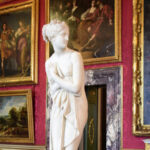
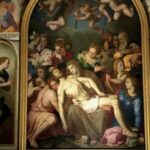
Santa Maria Novella is more than a church to step into on your way across Florence. Its 13th-century basilica and cloisters bring the city’s medieval and Renaissance art into one visit, with works by Masaccio, Giotto, Ghirlandaio, and Lippi. I like that the ticket includes a tablet video guide, so you can explore at your own pace rather than rely on a group’s schedule.
I also like the chance to see the cloisters, especially the striking Chiostro dei Morti and its 14th-century scenes of paradise, purgatory, and hell. The main snag is practical: there are two entrances, and the video guide is collected at the Piazza della Stazione 4 entrance. Go to the right one first, and leave time for the ticket’s possible 30-minute entry-time variation.
- Key points before you book
- A Florence basilica with more than one story
- Start at the Cloister Entrance
- Inside the basilica: look, then listen
- The cloisters: a quieter change of pace
- What the tablet guide adds
- Allow for the schedule, not just the artwork
- Is the ticket good value?
- Who will enjoy Santa Maria Novella?
- Should you book this ticket?
- FAQ
- What does the Santa Maria Novella ticket include?
- Where do I collect the video guide?
- What languages are available for the audio commentary?
- How far is the entrance from Firenze Santa Maria Novella station?
- When is Santa Maria Novella open?
- Can children visit, and is the site accessible?
- Can I cancel the ticket?
- The Best Of Florence!
- More Tickets in Florence
- More Tours in Florence
- More Tour Reviews in Florence
- Not for you? Here's more nearby things to do in Florence we have reviewed
Key points before you book
 1 / 2
 2 / 2
- See Masaccio’s Trinity: A major Renaissance work is among the basilica’s highlights.
- Explore the cloisters: Fresco cycles by Ghirlandaio and Lippi add more to the visit than the church interior alone.
- Use the included tablet guide: Commentary is available in five languages, and you can set your own pace.
- Find the right entrance: Collect the guide at Piazza della Stazione 4, the Cloister Entrance.
- Plan around changing hours: Last admission is one hour before closing, and opening times can change.
- Expect a self-guided visit: The package includes entry and a tablet guide, not a live guide or a meal.

👉 See our pick of the Best Tours In Poggibonsi
A Florence basilica with more than one story
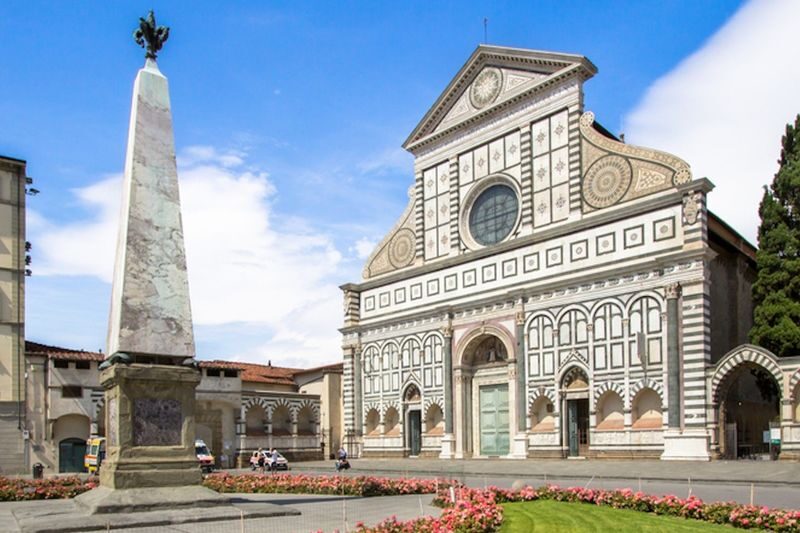
Santa Maria Novella is the first basilica in Florence, and its long history is visible in the range of art and spaces included in this visit. The church connects the city’s medieval past with the Renaissance, while its cloisters offer a different atmosphere from the main basilica.
That variety is the chief reason I’d make time for this stop. You can look at the architecture, pause over major artworks, then move into quieter cloister spaces where frescoes tell stories in a more intimate setting. It’s a visit for people who want to see how religious art developed across periods, not just tick off one famous painting.
The basilica is associated with the Dominican Order, and the ticket description frames the visit around that history as well as the building’s art. The tablet guide helps put works and architecture in context. It is still a self-guided experience, though, so you choose what to linger over and what to pass by.
You can also read our reviews of more tours and experiences in Florence



Start at the Cloister Entrance
The most useful detail to know before you set out is that the guide pickup is at Piazza della Stazione 4, identified as the Cloister Entrance. Santa Maria Novella has two entrances, and going to the wrong one can cost time and energy before your visit even begins.
Show your smartphone voucher at the video desk to collect the tablet guide. The directions say you can then enter the basilica right away, but your admission time may vary by up to 30 minutes from the time you selected. Arrive 30 minutes before your scheduled activity time, as instructed, and avoid cutting it close.
The location is convenient if you’re arriving by train: Firenze Santa Maria Novella station is about a three-minute walk away. The meeting point is also given as Piazza della Stazione, 4, Florence. Check the map before heading over, and look for the Cloister Entrance rather than assuming any church doorway will do.
Inside the basilica: look, then listen
Once inside, take time to notice the building itself as well as its artworks. The ticket gives access to the 13th-century basilica, whose story is closely tied to the Dominican Order and the religious life of Florence. The tablet guide offers commentary on its architecture and artworks, helping you make sense of what you’re seeing without having to follow a fixed group route.
The package does not name a live guide, and it doesn’t include one. Instead, the tablet’s audio commentary is available in English, Spanish, German, French, and Italian. That makes it a practical choice if you prefer to listen in your own language and pause when a particular work catches your attention.
Among the artists associated with the basilica are Giotto and Nardo di Cione. Their work helps show why this visit is more than a quick look at a handsome church. The appeal lies in seeing art from different periods together, then using the guide to add context as you go.
The cloisters: a quieter change of pace
The cloisters are an important part of the visit, not an optional extra to rush through if you have a few minutes left. They offer another setting for the art, with frescoes that carry the experience beyond the main church interior. You’ll find cycles associated with Ghirlandaio and Lippi, as well as work by Nardo di Cione.
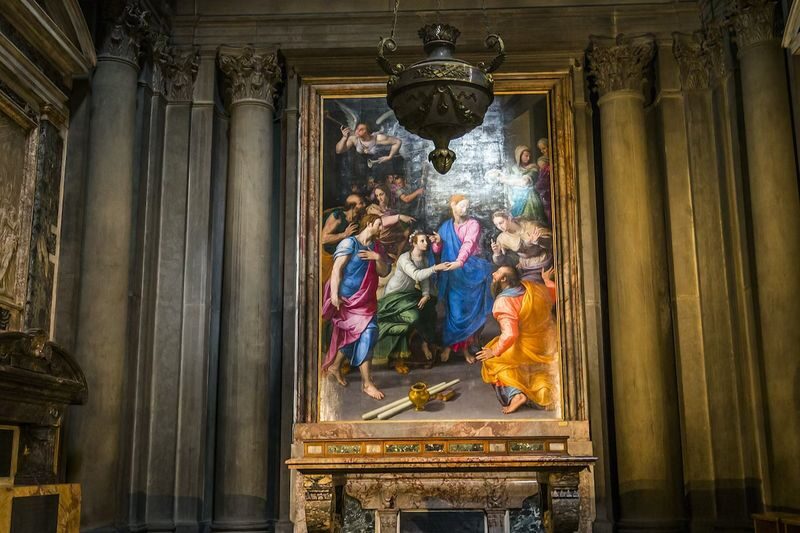
Masaccio’s Trinity with the Madonna is one of the specific works to look for. The ticket information also highlights the Gothic Chiostro dei Morti, or Cloister of the Dead. Its 14th-century decorations portray paradise, purgatory, and hell, a sober subject that reflects the atmosphere of the Plague era.
That change in mood is part of what makes the cloisters memorable. They aren’t simply a pleasant passage between rooms; they add a more reflective side to the visit. Take the time to look closely at the frescoes, and use the tablet guide to help you connect individual images with their wider themes.
What the tablet guide adds
A tablet guide can’t replace a live art historian, but it suits this visit well if you enjoy moving at your own pace. One useful feature is its audio commentary, which introduces works in sequence. You can follow the suggested order or pause and spend longer where your interest takes you.
The included guide is also a clear part of the ticket’s value. At a starting price of $17.89, you’re paying for admission and the tablet guide, rather than entry alone. That may be worthwhile if you want context for the art and architecture; if you prefer to wander without commentary, you may not use as much of what’s included.
There’s no need to plan a meal or other personal spending as part of this package. Meals, beverages, personal expenses, and tips are not included. The essential purchase is the entry ticket with video guide, so compare the price with what you value most: access to the basilica and cloisters, or the added interpretation as you explore.





Allow for the schedule, not just the artwork
Opening times vary by day and may change without notice, particularly around religious holidays. The general schedule gives Monday through Thursday as 09:00 to 17:30, Friday as 11:00 to 17:30, and Saturday as 09:00 to 17:30. Sunday opening is listed as either 12:00 or 13:00, depending on the season.
Last admission is one hour before closing. Check the official website before your visit, especially if you’re planning around a holiday or arriving late in the day. A dated voucher is valid only on the selected date, and the selected time matters where one applies.
The package is described as skip-the-line entry, but that doesn’t mean you should arrive at the last minute. You need to collect the tablet at the correct entrance, and the operator may adjust your admission time by up to 30 minutes. Build that into your plan rather than scheduling another activity right on the heels of your visit.
Is the ticket good value?
The price starts at $17.89, and the main value question is whether you want the guide as well as admission. If you’re interested in the art and want help following the basilica’s story, having a tablet included makes the ticket easier to justify. If you only want to pop inside briefly, the added commentary may matter less.
The visit also gives you more than one kind of space to explore: the basilica, the cloisters, and the Cloister of the Dead. That range is useful if you’re comparing it with a ticket for a single museum or monument. You’re not limited to one artwork or one room, though the exact time you’ll spend is up to you. No visit duration is specified, so leave a flexible gap in your day rather than trying to fit it into a tightly timed slot.
The activity has a 4.5 out of 5 rating from four reviews, a small sample. The clearest practical takeaways are that ticket pickup can be straightforward once you find the right entrance, and the guide can provide a useful, ordered introduction. The main complaint was difficulty locating the entrance, which is easy to guard against by heading directly to Piazza della Stazione 4.
Who will enjoy Santa Maria Novella?
I’d recommend this ticket to anyone interested in medieval and Renaissance art who wants a self-paced visit. It suits independent visitors who like to pause, listen, and move on when ready. It can also work for families: children aged 0 to 17 must be accompanied by a paying adult.
The activity is listed as wheelchair- and stroller-accessible, which is useful when planning with mobility needs or young children. Check with the venue if you need details beyond that general accessibility information.
If your priority is a live guide who can answer questions on the spot, this isn’t the package to choose. It includes a tablet video guide, not a named guide or a guided group tour. For a flexible visit with context built in, though, the format is a sensible fit.
Should you book this ticket?
Book it if Santa Maria Novella is on your Florence list and you want entry plus a guide to the art and architecture. The church and cloisters make a rewarding pair, and the chance to see Masaccio’s Trinity and the atmospheric Chiostro dei Morti gives the visit a distinct character.
Before you pay, make sure the selected date and time fit your plans, check current opening hours, and save the address for the Cloister Entrance. That small bit of preparation can spare you the most avoidable frustration. If you’re happy exploring at your own pace with a tablet rather than a live guide, this is a practical way to see one of Florence’s important religious and artistic landmarks.
Santa Maria Novella Ticket in Florence
“The church is so beautiful, worth to visit”
FAQ
What does the Santa Maria Novella ticket include?
It includes admission to Santa Maria Novella and a tablet video guide. Meals, beverages, personal expenses, and tips are not included.
Where do I collect the video guide?
Show your smartphone ticket at the video desk at Piazza della Stazione 4, the Cloister Entrance. There are two entrances, so head to this address for guide pickup.
What languages are available for the audio commentary?
The audio commentary is available in English, Spanish, German, French, and Italian.
How far is the entrance from Firenze Santa Maria Novella station?
The stated route is a three-minute walk from the train station to the meeting point at Piazza della Stazione 4.
When is Santa Maria Novella open?
The listed hours are Monday to Thursday, 09:00 to 17:30; Friday, 11:00 to 17:30; and Saturday, 09:00 to 17:30. Sunday opening is listed as 12:00 or 13:00, depending on the season. Hours may change, so check the official website before going.
Can children visit, and is the site accessible?
Children aged 0 to 17 must be accompanied by a paying adult. The activity is listed as stroller- and wheelchair-accessible.
Can I cancel the ticket?
You can receive a full refund if you cancel at least 24 hours before the activity date, using destination local time. The voucher is valid only for the selected date and, where applicable, time.