At Jogyesa, a temple visit becomes more than a walk past lanterns and carved details. You’ll learn about Korean Buddhism with K-culture professor Jason, try a small Buddhist craft, sit for guided Seon meditation, and finish with temple food and a rare 1991 aged pu-erh tea ceremony.
I like two things in particular: the craft changes by day, so the activity can feel tied to the traditions you’re learning, and Jason explains the ingredients and meaning behind the meal instead of leaving you to guess at a plate of unfamiliar dishes. The bilingual cultural manual is another thoughtful touch, especially if you’d rather follow explanations in your own language.
The main consideration is the price. This is a private, guided half-day program, not a low-cost temple visit, and the restaurant choice changes the total. You’ll get the most from it if you want cultural context and a sit-down meal, not simply a quick look inside Jogyesa.
- A few things to know before you book
- Start with a small Buddhist craft
- Read Jogyesa with Jason’s help
- Try guided Seon meditation
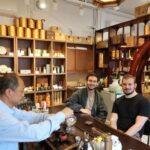
- Make time for the 1991 pu-erh tea
- Choose Balwoo Gongyang or Sanchon
- How the price compares with what you get
- Timing, meeting point, and practical details
- Who will get the most from this visit
- Should you book this Jogyesa temple and dining experience?
- FAQ
- Where does the experience meet?
- What time does the experience start?
- How long does the program last?
- Which restaurant can I choose?
- Is a meal included?
- What craft activity will I do?
- Is meditation part of the experience?
- What tea is served?
- Are young children allowed?
- What is the cancellation policy?
- The Best Of Seoul!
- More Private Tours in Seoul
- More Tours in Seoul
- More Tour Reviews in Seoul
- Not for you? Here's more nearby things to do in Seoul we have reviewed
A few things to know before you book
 1 / 3
 2 / 3
 3 / 3
- The meeting point is Jogyesa’s Templestay Information Center: Meet Jason on the first floor at 11:00 AM for lunch or 4:00 PM for dinner.
- The craft depends on the day: You might make a lotus lantern, prayer bracelet, or woodblock print, color traditional patterns, or write along with the words of the Buddha.
- The meal has two distinct options: Choose Michelin-listed Balwoo Gongyang or Sanchon, a traditional temple-food restaurant in Insadong.
- The tea is a special part of the program: A guided ceremony features mellow, aged pu-erh from 1991.
- Plan on about three and a half hours: The program combines a craft, temple visit, meditation, tea, and dining.
- There are private price tiers: Options are listed for one person, a couple, or a private group of three or more.
👉 See our pick of the 25 Best Guided Tours In Seoul
Start with a small Buddhist craft
The meeting is at the Templestay Information Center at Jogyesa, where Jason begins with an introduction and a hands-on activity. It’s a useful way to settle in before the temple visit: rather than starting with a stream of dates and terms, you have something simple to do while you begin to hear about Buddhist culture.
The activity rotates by weekday. Monday, Thursday, and Sunday are for lotus lantern making; Tuesday and Saturday for prayer bracelet making; Wednesday for traditional pattern coloring; and Friday for woodblock printing. Writing along with the words of the Buddha is offered every day.
That rotation gives repeat visitors a reason to choose a different day, but it also means you should not book expecting one particular craft unless your date matches. The activity is a modest cultural connection and a take-home keepsake, not a long workshop. If a specific craft matters to you, check the weekday schedule before choosing your time.
You can also read our reviews of more private tours in Seoul

Read Jogyesa with Jason’s help
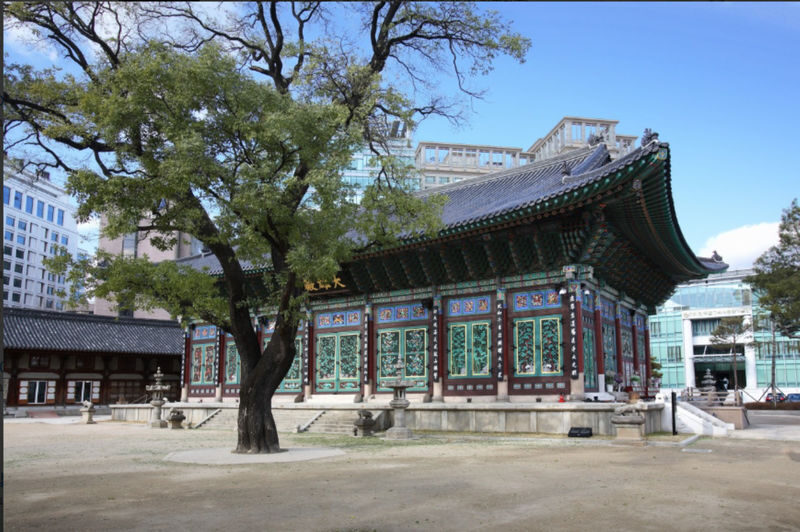
Jogyesa is the center of the temple portion, just a short walk from the meeting point. Jason introduces Korean Buddhism and the temple’s history, architecture, and rituals. That background helps you notice more than the visual details: the visit is meant to explain how a working Buddhist temple fits into Korean religious and cultural life.
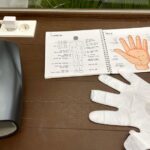
A guide is particularly useful if this is your first temple visit. Rituals and symbols can be hard to interpret on your own, and the program gives you a chance to ask questions rather than rely on a quick sign or a phone search. The bilingual cultural manual, provided in English and your native language, includes temple explanations and guidance for meditation and dining. It can help you keep up even if English is not your strongest language.
The program also points out the Buddhist Museum of Korea and the site of Korea’s first post office. These nearby places add a wider view of the neighborhood, though the information provided does not specify museum admission or how much time is spent inside. Think of them as additional context Jason introduces, rather than assuming the tour includes an extended museum visit.
Try guided Seon meditation
A guided Seon, or Zen, meditation session is part of the temple visit. It gives you a practical introduction to a Buddhist practice, not just an explanation of what meditation means. If you’ve never tried it, a guide can make the first few minutes feel less awkward and give you a point of focus.
This is not described as a lengthy retreat or an intensive meditation course. It’s one element in a varied half-day program, alongside the craft, temple walk, tea, and meal. If you want a quiet stretch of time within a busy Seoul schedule, it may be a welcome pause. If you’re booking mainly for extended meditation, this format may be too brief.
The tone matters here. The program is designed to be informative and comfortable without rushing, a balance worth having when a schedule includes several different activities. One visitor specifically valued Jason’s explanations of the prayers, so you can expect the religious details to be part of the conversation, not an afterthought.
Make time for the 1991 pu-erh tea
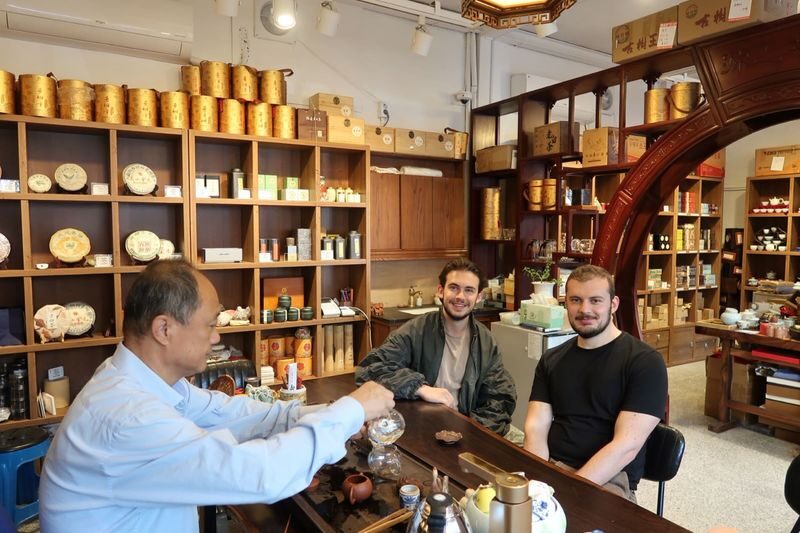
The guided tea ceremony features a rare, mellow pu-erh aged since 1991. That detail sets this apart from a standard tea break: you’re not only being offered a drink, but also a chance to pay attention to its age and character with guidance.
Tea is a small but memorable bridge between the temple visit and the meal. The information describes it as part of the experience, though the order can vary in the wording of the schedule. One account of the program places the tea at the end, while the general outline describes it before the restaurant meal. If timing matters to you, ask when you book or confirm with the provider.
The ceremony will suit you best if you enjoy slowing down over a cup and hearing about what you’re tasting. If you’re not especially interested in tea, it still adds a calm counterpoint to the more active parts of the visit, but it may not be the main reason to pay for the tour.
Choose Balwoo Gongyang or Sanchon
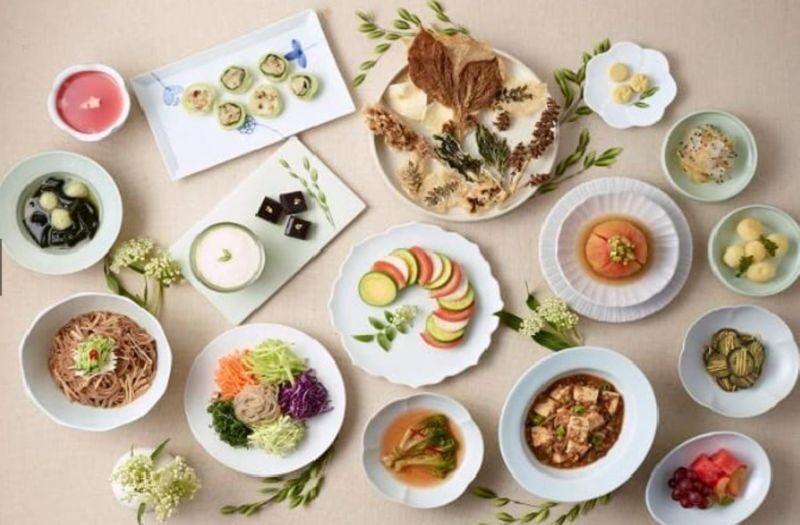
The restaurant choice shapes the final part of the program. Balwoo Gongyang is described as a Michelin-listed temple restaurant, while Sanchon is known as one of Seoul’s most established temple cuisine destinations. Both are presented as ways to understand Buddhist food traditions through a proper meal, rather than as ordinary restaurant stops.
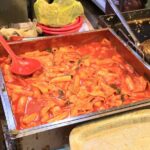
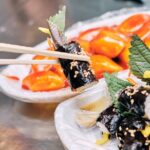
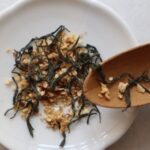
At Balwoo Gongyang, Jason introduces the dishes, their ingredients, seasonal approach, and the Buddhist ideas behind temple food. That explanation matters because temple cuisine is about more than leaving out meat. The meal is an opportunity to learn how ingredients and mindful eating connect with Buddhist practice. Choose this option if the Michelin-listed restaurant is a priority for you.
Sanchon offers a different setting in Insadong’s cultural heart. It was founded by a Buddhist monk and is known for seasonal vegetarian dishes, traditional architecture, and interiors shaped by Korean Buddhist aesthetics. Its style is described as warm and heritage-focused, with a strong sense of the culture around the meal. Choose it if you want a traditional atmosphere and a restaurant associated with Seoul’s temple-food scene.
The available information does not give a fixed menu, so don’t book expecting a particular dish. The point is to learn about ingredients and traditions as you eat. Both restaurants are intended to make the food part of the cultural program, though the atmosphere and price differ.
You can also read our reviews of more tours and experiences in Seoul



How the price compares with what you get
The advertised starting price is $165.05, while the listed package options show different starting amounts by restaurant and party size. Sanchon is listed from $150.05 for one person, $187.75 for a couple, and $263.89 for a private group of three or more. Balwoo Gongyang is listed from $197.90 for one person, $270.69 for a couple, and $376.25 for a private group of three or more. Prices can change, so check the amount for your selected date and package before paying.
This is a premium price for a half-day activity, but it includes more than a restaurant booking. You’re paying for Jason’s guidance, the cultural activity, temple explanations, meditation, the tea ceremony, and lunch or dinner. The bilingual manual adds practical value if you prefer to follow detailed explanations in your own language.
The value depends on what you want from the meal. Balwoo Gongyang costs more, so it makes sense if its Michelin listing is important to you. Sanchon is the more affordable choice and brings its own cultural setting and temple-food history. If your main goal is simply to visit Jogyesa, you can do that without booking a private program. If you want a guide to connect the temple, ritual, tea, and food, the bundled experience has a clearer case.
The listed price structure also rewards larger bookings only in some ways: each package is priced for a party size, and the total rises with the number of people. Compare the final group price against what you’d pay for separate guided and dining plans, rather than assuming a private format automatically makes it a bargain.
Timing, meeting point, and practical details
The experience lasts about three and a half hours. The lunch session runs from 11:00 AM to 2:30 PM, and the dinner session from 4:00 PM to 7:30 PM. Meet Jason at the Templestay Information Center on the first floor at Jogyesa at the chosen start time.
Lunch and dinner, meals, and beverages are included. The experience is listed as private, with package options for one person, a couple, or three or more. Infants and children must be included in the passenger headcount, and children aged zero to three are free.
The voucher is valid only on the date and time selected. Confirmation is expected within 24 hours; if it does not arrive, contact customer support. You can receive a full refund if you cancel at least 48 hours before the activity date, using Seoul local time.
The meeting point is Jogyesa, while the Sanchon address is 13 Insadong-gil 30, Jongno-gu, Seoul. Since the temple visit and meal are in the same general cultural district, the program is laid out as a neighborhood outing rather than a citywide tour. No transportation between distant sights is described, so plan to arrive at the meeting point on your own.
Who will get the most from this visit
I’d recommend this to you if you’re curious about Korean Buddhism but want an approachable introduction rather than a formal temple stay. The combination of a craft, guided interpretation, meditation, tea, and food gives you several ways to connect with the subject. It also suits couples or small private groups who prefer time to ask questions.
It’s a strong fit for anyone who likes food with context. Jason’s explanations can help you notice ingredients and seasonal ideas you might otherwise miss, and the meal gives the cultural discussion a tangible finish. The tea ceremony adds another focused moment for people who enjoy traditional drinks and guided tasting.
You may want to skip it if your Seoul schedule is very tight, if you only want a quick look around Jogyesa, or if the premium meal is not part of your plan. The program’s appeal depends on taking time for all its pieces. Also, the daily craft changes, and the exact meal menu is not specified, so book for the overall format rather than a guaranteed craft or dish.
Should you book this Jogyesa temple and dining experience?
Book it if you want a personal introduction to temple culture with a meal that has meaning beyond the menu. The strongest reasons are Jason’s explanations, the thoughtful mix of ritual and hands-on activity, and the rare 1991 pu-erh ceremony. For a lower listed starting price, choose Sanchon; pay more for Balwoo Gongyang if its Michelin listing is part of the draw.
Skip it if you’re mainly seeking a cheap temple visit or a long meditation session. This is a guided cultural outing with a premium meal, and its value comes from bringing those elements together. Check the chosen restaurant, package price, and weekday craft before you book.
Seoul Private Temple, Meditation, Tea Ceremony & Michelin Dining
“Jason did a great job guiding us through the buddhism tradition and culture. Thank you so much Jason for this experience. Paolo and Federica”
FAQ
Where does the experience meet?
Meet Jason at the Templestay Information Center on the first floor at Jogyesa Temple.
What time does the experience start?
The lunch session starts at 11:00 AM and runs until 2:30 PM. The dinner session starts at 4:00 PM and runs until 7:30 PM.
How long does the program last?
It lasts approximately three and a half hours.
Which restaurant can I choose?
The listed choices are Balwoo Gongyang, a Michelin-listed temple restaurant, and Sanchon, a traditional temple cuisine restaurant in Insadong.
Is a meal included?
Yes. Lunch or dinner is included, along with meals and beverages.
What craft activity will I do?
The activity depends on the day. Options include lotus lantern making, prayer bracelet making, traditional pattern coloring, woodblock printing, and daily writing along with the words of the Buddha.
Is meditation part of the experience?
Yes. The program includes a guided Seon, or Zen, meditation session.
What tea is served?
The program includes a guided tea ceremony featuring mellow pu-erh aged since 1991.
Are young children allowed?
Infants and children must be included in the passenger headcount. Children aged zero to three are free.
What is the cancellation policy?
A full refund is available if you cancel at least 48 hours before the activity date, using destination local time.