Korean temple food is more than a recipe lesson: it is a chance to hear how Buddhist values shape what goes on the plate. At the Korea Temple Food Center, a monk introduces the approach, demonstrates a seasonal dish, and then puts you to work with a small team.
I like two things here: the cooking comes with a thoughtful explanation of its purpose, and the seasonal ingredients offer a taste of a Korean food tradition beyond the usual restaurant menu. The trade-off is that you make just one dish, and how much you do yourself can depend on the recipe and your group.
- Key points before you book
- What the temple food lesson is really about
- From the monk’s explanation to the cooking station
- How much cooking do you actually do?
- Seasonal recipes, small portions, and the shared table
- A small group, with translation support reported
- Getting to the Korea Temple Food Center
- What the price buys
- Who is likely to enjoy this class
- Practical details to pack and check
- Should you book the Seoul temple food class?
- FAQ
- Where is the cooking class held?
- What time does the class begin?
- How long does the class take?
- What will I cook?
- Is the class private?
- What should I bring?
- Can children take part?
- Is English translation available?
- Can I cancel for a refund?
- The Best Of Seoul!
- More Food & Drink Experiences in Seoul
- More Tours in Seoul
- More Tour Reviews in Seoul
- Not for you? Here's more nearby things to do in Seoul we have reviewed
Key points before you book
 1 / 4
 2 / 4
 3 / 4
 4 / 4
- A monk leads the lesson: Expect an introduction to temple food and its guiding ideas before the cooking begins.
- The recipe changes with the season: Ingredients and the dish can vary, so you cannot count on choosing a particular menu.
- You cook in a team of four: This makes the class social, but it also means you may share the hands-on tasks.
- The class is compact: One dish to prepare and one side dish to sample make this a short cultural activity, not a full meal workshop.
- Bring two useful items: Pack a 500 to 600 ml food container and two dishcloths. An apron is provided.
- Anguk Station is close: The center is about a minute from the station, at 39 Yulgok-ro, Jongno-gu.
👉 See our pick of the 25 Best Guided Tours In Seoul
What the temple food lesson is really about
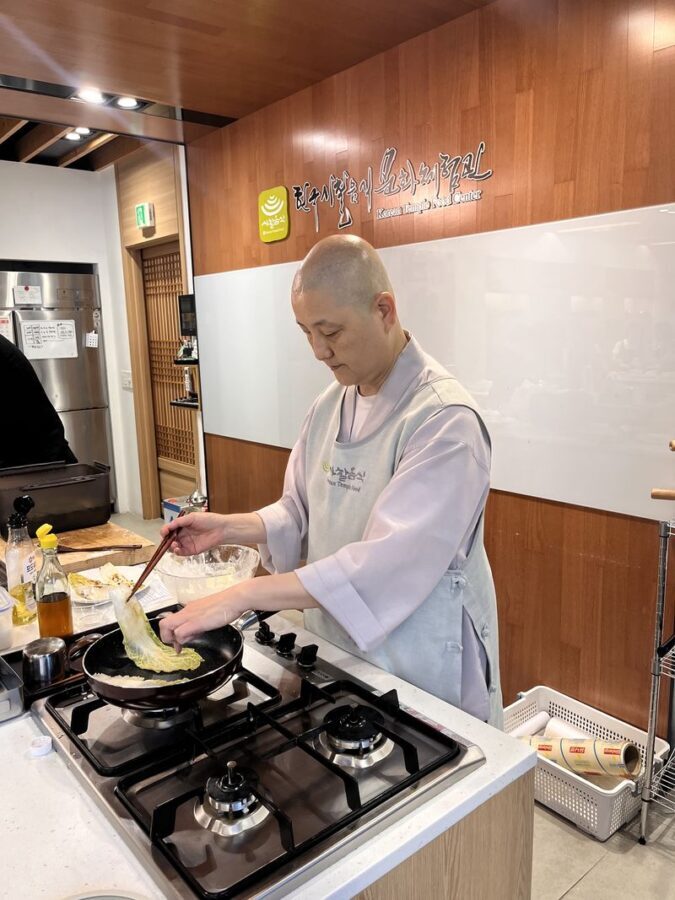
The draw here is not a long list of dishes. It is the chance to connect a simple recipe with the values behind Korean Buddhist cooking. The monk explains the spirit of temple cuisine, then shows how those ideas take shape in food made with seasonal, natural produce.
That context helps make a modest cooking session feel more substantial. You are not just following a set of instructions; you are learning why the ingredients and the style of cooking matter within a monastic tradition. If you are curious about Korean culture as well as Korean food, that is the part I would put at the top of the list.
The format is approachable, too. You do not need to arrive with cooking experience, and the class includes a demonstration before you start. Still, the lesson is built around one dish, so come expecting an introduction rather than a broad course in temple cuisine.
You can also read our reviews of more food & drink experiences in Seoul


From the monk’s explanation to the cooking station
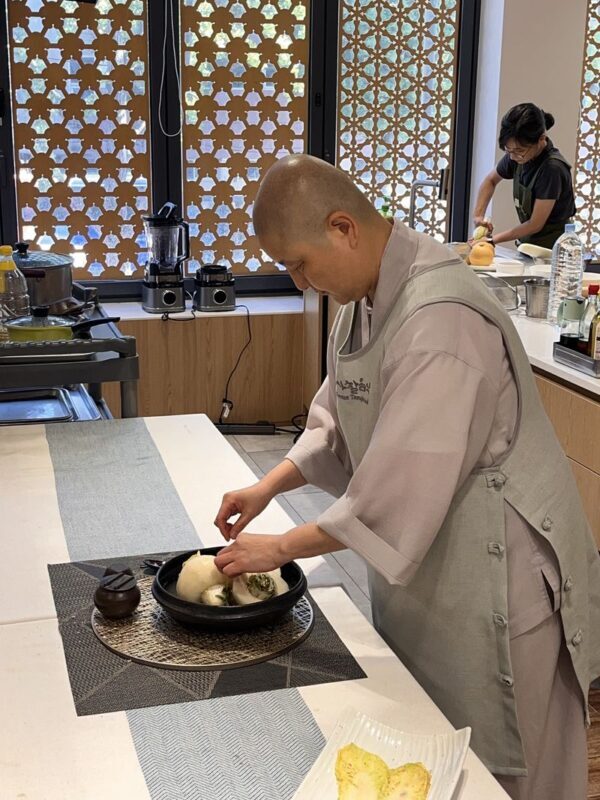
The session begins with an explanation of temple food. One participant described this opening portion as lasting about 30 minutes, followed by a demonstration of the recipe. That gives you time to understand the ideas before the practical work starts, although the overall class is still fairly brief.
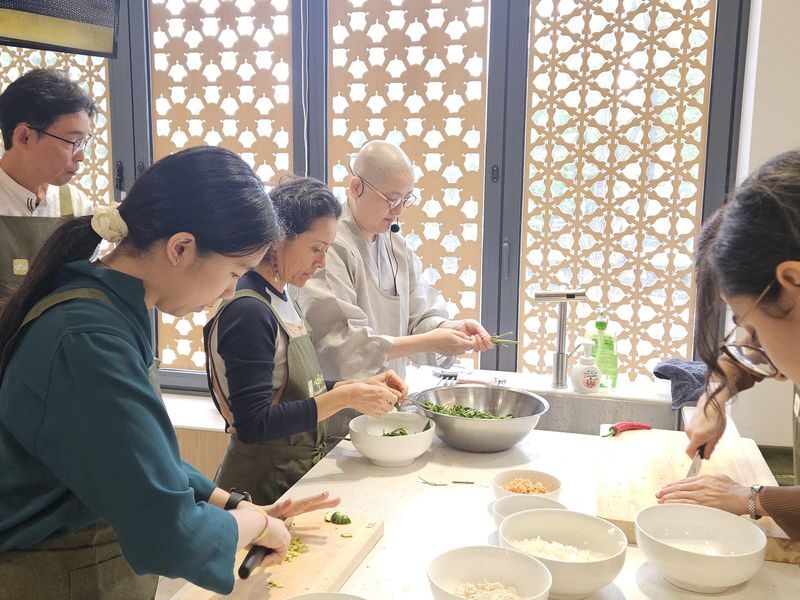
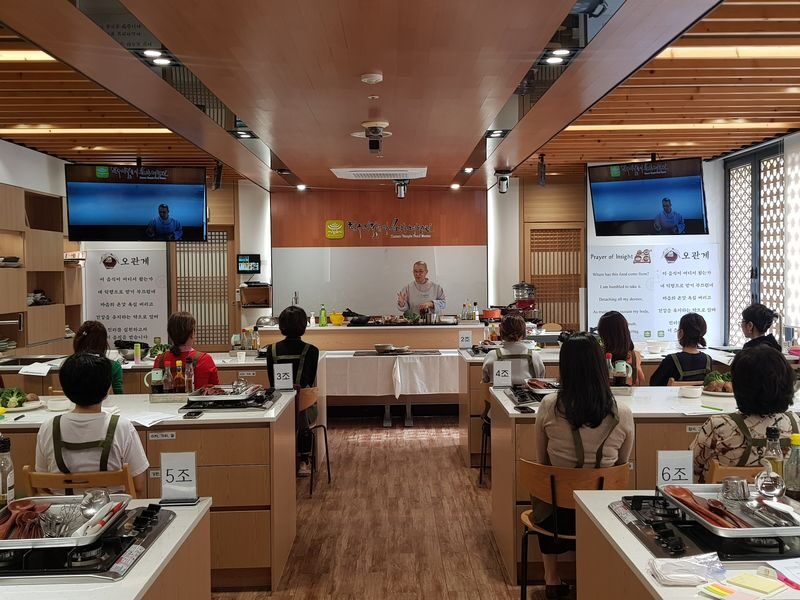
After the demonstration, participants cook in teams of four. The total class can include up to 24 people, so this is a shared group activity rather than a private lesson. Working alongside others can make the class friendly and relaxed, but it also means tasks are divided among the team.
The experience lasts around an hour and a half, based on one participant’s account. That is a manageable block in a day of sightseeing, and the central location makes it easy to pair with other plans in Seoul. Keep an eye on the clock, though: one attendee found the cooking portion rushed. Arriving on time matters, since late arrivals may not be allowed in after the monk has begun the demonstration and food explanation.
How much cooking do you actually do?
The practical part is hands-on, but the amount of work is not guaranteed to feel equal for everyone. The class includes one dish to make and one side dish to taste, and the team format means some people may take on only a portion of the preparation.
That difference can be noticeable when a recipe has a few simple steps or when several people share one workstation. One menu, for example, involved juice and a cake. A participant felt there was little to do beyond cutting a pear and shaping cake balls, and thought the class offered too little cooking for the price.
That is a fair caution if you are looking for a busy, technique-focused cooking workshop. You may have a more active role with another seasonal recipe, but the menu can change with ingredient availability, and there is no promise that each person will prepare every component. Think of this as a cultural class with a cooking activity, not a full kitchen session where you make an entire meal from scratch on your own.
Seasonal recipes, small portions, and the shared table
Seasonality is part of the point. The menu can change according to the time of year and what ingredients are available, which gives the class a connection to the produce on hand rather than a fixed tourist menu. The flip side is that you cannot book around a specific recipe unless the center confirms it for your date.
You make one temple food dish and sample one side dish. The amount may be modest, so I would not plan to treat this as lunch or dinner. Bring the container specified for the class if you would like a way to carry home any unfinished preparation. The container should hold 500 to 600 ml.
The food itself is described as simple and tasty, with seasonal ingredients. One participant particularly liked a red bean paste preparation, while others enjoyed the flavor of what they cooked. Those details suggest that the appeal is less about elaborate restaurant-style cooking and more about discovering how uncomplicated ingredients can work together.
A small group, with translation support reported
Four people share a cooking group, while the overall class may hold as many as 24. That is a useful middle ground if you like meeting people but do not expect a one-on-one lesson. Participants have described working with people from different countries as part of the fun.
English translation has been provided in classes, including live interpretation during the explanation and help from a volunteer. That can make the cultural context easier to follow, but the available details do not promise a particular interpreter for every date. If translation is essential for you, confirm what is arranged for your session before booking.
The atmosphere is designed to be calm, and the monk’s explanation is central to the experience. Give that opening your attention. This is not a class to arrive late for and catch up as you go: late arrivals may be turned away once the demonstration and explanation are underway.
You can also read our reviews of more tours and experiences in Seoul


Getting to the Korea Temple Food Center
The center is at 39 Yulgok-ro, Jongno-gu, Seoul, and is about a minute from Anguk Station. That makes it a convenient stop if your plans already take you through central Seoul. When you reach the address, go to the second floor.
The available departure time listed is 10:00, and you are expected to attend the time selected at booking. The precise time is confirmed after booking, so check your confirmation rather than relying only on a general schedule. Arrive 10 minutes early to find the room and settle in before the monk begins.
The class details refer to a return to a hotel or personal address, but the practical meeting instructions focus on getting to the center. Do not assume transport is included in the cooking experience. Other personal expenses are not included, and the class itself takes place at the Korea Temple Food Center.
What the price buys
The listed starting price appears in two different amounts: about US$18.89 for the Cooking Experience package and about US$20.79 in the general experience summary. Treat either as a starting figure, and check the price shown for your date and booking before you pay.
At that level, the value depends on what you want from a cooking class. You are paying for the monk’s introduction to temple food, a demonstration, a chance to prepare one seasonal dish, and a sample of one side dish. You are not buying a long menu, a private lesson, or a guaranteed hands-on role for every step.
For someone mainly interested in food techniques and a generous meal, the limited scope may feel expensive, especially if the recipe has little preparation work. If the Buddhist perspective and the chance to learn in a temple-food setting matter as much as cooking, the price is easier to justify. I would book it for the cultural context, not for the volume of food.
Who is likely to enjoy this class
This suits curious eaters who want a low-key cultural activity and are happy to share a workstation. It can also work well for first-time visitors to Korean cooking classes, since the monk demonstrates the dish before the group begins and aprons are supplied.
It is a reasonable choice if you want something different from a standard restaurant meal, but it is not ideal if your main goal is to spend several hours cooking a full menu. Families should note the age rules: participants must be at least 8, and preschoolers cannot take part.
The group structure can be a plus or a minus. You may enjoy meeting people and dividing the tasks, or you may prefer a private class where the instructor can focus on your own pace. This one is explicitly shared, with up to 24 participants and cooking teams of four.
Practical details to pack and check
Bring a 500 to 600 ml container and two dishcloths. The apron is provided, but dishcloths are not, so do not count on finding them at your station. A container is also useful if you have food left over after tasting.
The recipe depends on the season and ingredient availability. If you are hoping to make a particular dish, ask before booking rather than assuming the menu will be fixed. The activity voucher is valid only for the date and time specified, and confirmation is expected within 24 hours. If confirmation does not arrive, contact customer support.
You can receive a full refund if you cancel at least 72 hours before the activity date, using destination local time. That gives you some flexibility, but the cutoff is firm enough to be worth noting while planning a busy Seoul itinerary.
Should you book the Seoul temple food class?
Book this if you want a compact introduction to Korean temple cuisine, value the monk’s explanation, and are comfortable sharing the cooking. The central location, seasonal recipe, and calm group setting make it an appealing cultural stop, especially for food-minded visitors who want more than another restaurant meal.
Skip it if you expect a full cooking workshop with substantial individual preparation or a large meal at the end. The best way to set expectations is to think of it as a short lesson in food and philosophy, with a modest amount of cooking built in. If that balance sounds right, it is a distinctive way to spend part of a morning in Seoul.
Seoul Korean Temple Food Cooking Class
“Very interesting, and the atmosphere was very calm and nice. I was very happy with the overall experience, and I will go again.”
FAQ
Where is the cooking class held?
It takes place at the Korea Temple Food Center, 39 Yulgok-ro, Jongno-gu, Seoul. The center is about a minute from Anguk Station, and you should go to the second floor when you arrive.
What time does the class begin?
The listed departure option is 10:00. The time is confirmed after booking, and you should attend the time you selected and arrive 10 minutes early.
How long does the class take?
One participant described the full class as taking about an hour and a half. The schedule may vary.
What will I cook?
You will make one temple food dish and sample one side dish. The menu may change with the season and ingredient availability.
Is the class private?
No. It is a shared class with a total capacity of up to 24 people, and cooking takes place in groups of four.
What should I bring?
Bring a 500 to 600 ml food container and two dishcloths. An apron is provided.
Can children take part?
Participants must be at least 8 years old. Preschoolers are not eligible to participate.
Is English translation available?
English translation has been provided during classes, including live translation and volunteer help. The available details do not guarantee a specific translation arrangement for every session, so check before booking if you need it.
Can I cancel for a refund?
You can receive a full refund if you cancel at least 72 hours before the activity date, using destination local time.