Matchaya’s workshop turns matcha from a pretty green drink into something you can judge with your own senses. At its Tiong Bahru tea bar, you’ll learn some of the background, smell and taste different matchas, and make a cup yourself.
I like two things in particular: the hands-on tasting, which gives you a way to notice differences in quality, and the practical whisking session, which lets you try the preparation rather than just hear about it. Past instructors have included Adrian and Wade, though you should not count on a particular teacher being there.
The main caveat is the balance between the advertised 1.5-hour session and the short-course feel some people have experienced. If you expect a full tea ceremony or lessons in both usucha and koicha, check what the current workshop covers before paying.
What to know before you book
- You compare matchas by smell and taste, not just by appearance.
- You get to whisk a cup yourself, with usucha preparation covered in past sessions.
- The class includes theory and practical learning, though the exact pacing may vary.
- The workshop is at Matchaya in Tiong Bahru, at Tiong Poh Road, Block 82, #01-05.
- Plan for 1.5 hours, but know that some past sessions have felt shorter.
- The listed price starts at US$58.69, or about S$64.55, and the voucher is valid only for its selected date and time.

👉 See our pick of the 25 Best Guided Tours In Singapore
- What to know before you book
- Matcha is more than a green powder
- From tea basics to tasting the differences
- A short class with a practical payoff
- Finding Matchaya in Tiong Bahru
- Is the price worth it?
- Who will get the most from this workshop?
- Should you book the Matchaya workshop?
- FAQ
- How long is the Matcha Appreciation Workshop?
- Where does the workshop take place?
- What will I do during the workshop?
- Will I learn both usucha and koicha?
- Is the workshop suitable for beginners?
- Is there an age limit?
- How much does the workshop cost?
- Can I cancel or get a refund?
- The Best Of Singapore!
- More Workshops & Classes in Singapore
- More Tours in Singapore
- More Tour Reviews in Singapore
- Not for you? Here's more nearby things to do in Singapore we have reviewed
Matcha is more than a green powder
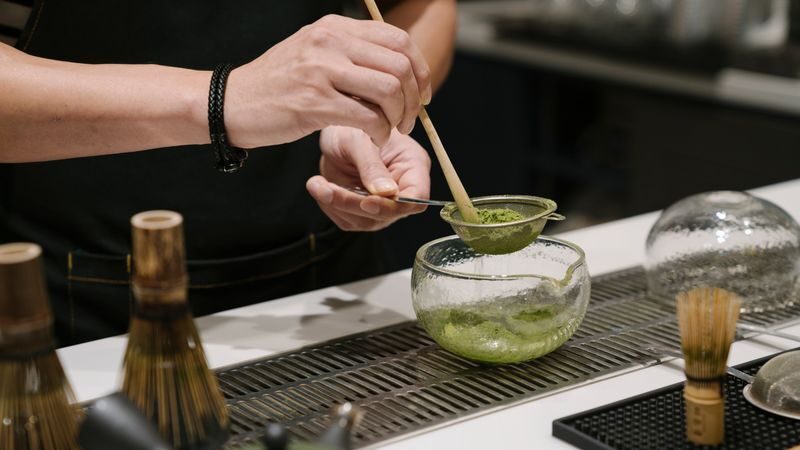
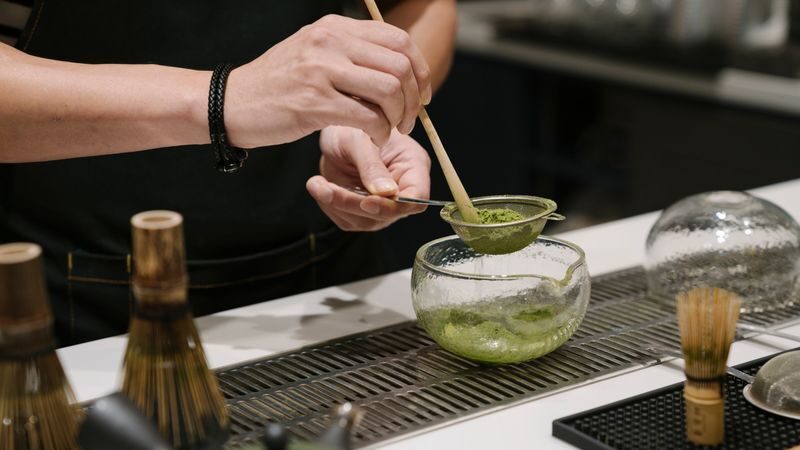
Matcha can look like a simple café order: bright green, whisked, and often sweetened or mixed into a latte. This workshop offers a useful change of pace. Rather than treating it only as a drink, you learn to pay attention to aroma, taste, preparation, and the differences between grades.
That sensory approach is the heart of the experience. You’re not expected to take in a long lecture about tea and leave with a notebook full of jargon. Instead, you smell and taste different matchas, then use those comparisons to think about quality. It is a modest but useful skill: the next time you order matcha, you’ll have more to go on than colour or a café’s menu description.
The workshop is run by Matchaya, a modern tea bar focused on matcha and Japanese tea. The aim is to make tea appreciation approachable, so this can suit a newcomer as well as someone who already keeps matcha at home. You do not need to know the difference between grades or own a whisk before you arrive.
You can also read our reviews of more tours and experiences in Singapore


From tea basics to tasting the differences
The session combines a short theory section with practical tasting and preparation. In past classes, the first part has covered background on matcha and green tea, including how matcha is harvested and its benefits. That gives you a frame for the tasting, without requiring you to arrive with much prior knowledge.
Then comes the part that makes the class useful: smelling and tasting different matchas side by side. Comparisons help you notice qualities that are easy to miss when you taste only one cup. You can begin to connect what you smell and taste with the idea of matcha quality, rather than relying on packaging or price alone.
The details available do not specify the matchas’ origins, exact grades, or a fixed tasting menu. So think of this as a guided introduction, not a technical class in tea sourcing. If you are keen to compare particular regions or learn how to assess matcha for professional use, ask Matchaya whether those topics are included in the current workshop.
Past classes have also included a DIY preparation session. You get to whisk your own cup of usucha, the thinner style of matcha preparation. That hands-on step matters: the experience of preparing the drink makes the tasting less abstract, and gives you a first feel for the process.
One point to clarify before booking is whether the class covers koicha, the thicker style of preparation, as well. A past participant expected to learn both koicha and usucha but found that only usucha was taught, with the practical segment feeling rushed. The workshop’s content and pace may have changed, but if learning both methods is essential to you, ask directly rather than assuming they are included.
A short class with a practical payoff
The workshop is listed as 1.5 hours. That is enough time for an introduction, tasting, questions, and a turn at making matcha, but it is not a long course. Some participants have described learning a lot in about an hour, while another felt that the final whisking lesson was squeezed for time.
That difference is worth keeping in mind when you set expectations. You are paying for a compact introduction, not a detailed certification course. If the instructor keeps the pace clear, the mix of background and sensory practice can make a short session feel worthwhile. If the schedule runs tight, the practical portion is the part most at risk of being hurried.
The instructor can shape the experience. Past sessions have been led by Adrian and Wade, and descriptions of those classes point to patient explanations and engaging facts. Those names are useful context, not a promise about who will teach your class. If you have a particular instructor in mind, check before booking.
The session’s format also suits questions. Matcha has its own vocabulary, and the differences between preparation styles can be confusing at first. A friendly teacher who takes time to explain terms can make the material easier to follow. If you are new to tea, do not worry about asking basic questions; that is precisely when a guided tasting is most useful.
Finding Matchaya in Tiong Bahru
The workshop meets at Matchaya’s Tiong Bahru location: Tiong Poh Road, #01-05, Block 82, Singapore 160082. One practical warning: the building exterior may not look like the cosy tea setting you expect, and the address can be a little hard to find. Give yourself time to locate the unit instead of arriving at the last minute.
There is ample parking in the area, according to a past participant. That may help if you are driving, but it does not remove the need to check your route and arrival time. If you are attending as a group, arrive early: the seating has been described as free seating, so early arrival may make it easier for you to sit together.
The venue is also not the only location that has hosted the class. A past session took place at Matchaya’s Takashimaya store, a more central setting. The listed meeting point for this experience is Tiong Bahru, so do not assume that an older location or a different Matchaya branch applies to your booking.
Is the price worth it?
At about US$58.69, or S$64.55, this is a special-interest activity rather than a cheap café stop. Its value depends on what you want from it. If you like matcha and want to understand what you’re smelling and tasting, the guided comparisons and chance to prepare a cup can make the price reasonable. You leave with a better basis for choosing matcha, even if you never become a home whisking enthusiast.
It is less compelling if you mainly want a long, formal tea ceremony or expect detailed instruction in several preparation methods. The session is relatively short, and the available information does not promise a deep technical course. Before booking, compare the workshop catalogue with your expectations and confirm which preparation styles are included.
A past participant received a 20% discount on retail items after attending. Treat that as a possible extra, not a guaranteed part of the deal, and check with Matchaya if the discount would affect your decision. The main value should be the class itself, not a retail offer that may vary.
The workshop has a 4.7 out of 5 rating from 15 ratings, and the provider’s overall good-review rate is listed as 94 percent across 34 reviews. Those figures suggest a generally well-liked experience, but they do not remove the practical questions about pacing and course content. The most commonly praised qualities are clear instruction, friendly service, an enjoyable atmosphere, and the chance to smell and taste different matchas.






Who will get the most from this workshop?
I’d choose this class if you already drink matcha and want to understand it better, or if you’re curious but have never tried more than a latte. The guided sensory comparison gives beginners a clear starting point, while the preparation step adds something concrete to take away.
It can also work well as a compact activity during a Singapore visit, especially if you want a break from shopping and sightseeing that still connects to Japanese tea culture. The workshop has no age limit, so there is no stated age restriction to factor into your plans. Still, the subject and format are likely to appeal most to people who enjoy tasting, asking questions, and learning through a short practical session.
I would pause if you are looking for a rigorous course, a guaranteed lesson in both usucha and koicha, or a long ceremony. Confirm the current syllabus and timing first. And because the voucher is valid only on the date and time selected, plan carefully: cancellations and refunds are not available.
Should you book the Matchaya workshop?
Book it if you want an approachable, hands-on introduction to matcha, especially one that helps you use smell and taste to notice differences. The combination of a little theory, guided comparisons, and making usucha is the strongest reason to go.
Skip it, or ask more questions first, if you expect detailed instruction in multiple preparation styles or want a longer course. Confirm the current class content, allow time to find the Tiong Bahru venue, and treat the 1.5-hour duration as a scheduled window rather than a promise of an intensive lesson.
Matcha Appreciation Workshop at Matchaya
“Easy redemption. Instructor was okay. U get a 20% off retail items if you are attending the workshop.”
FAQ
How long is the Matcha Appreciation Workshop?
The workshop is listed as 1.5 hours. Past sessions have sometimes felt shorter, so ask Matchaya if you need a precise schedule for a particular date.
Where does the workshop take place?
The meeting point is Matchaya at Tiong Poh Road, #01-05, Block 82, Singapore 160082, in Tiong Bahru.
What will I do during the workshop?
The session includes matcha appreciation, with theory, tasting and smelling different matchas, and a chance to prepare a cup of usucha.
Will I learn both usucha and koicha?
That is not guaranteed by the available details. Confirm the current workshop syllabus with Matchaya if you want to learn both styles.
Is the workshop suitable for beginners?
Yes. The class is presented as an introduction to matcha and Japanese tea, and no prior experience is stated as a requirement.
Is there an age limit?
No. The activity has no age limit.
How much does the workshop cost?
The package starts at US$58.69, approximately S$64.55. The price can depend on the selected package.
Can I cancel or get a refund?
No. Cancellations and refunds are not available, and the voucher is valid only on the date and time specified.