Leonardo3 makes Leonardo da Vinci’s ideas tangible: beside displays about his art, you’ll find interactive reconstructions of machines drawn in his notebooks, some built from designs that never left the page. It’s a compact, hands-on way to meet the inventor as well as the painter.
I like two things in particular: the working models make the science easier to grasp, and the Last Supper display offers a way to study the famous painting beyond a quick look at the original. The exhibition is also right inside the Galleria Vittorio Emanuele II, an easy stop between the Duomo and other central Milan sights.
The main caution is space. This is a relatively small exhibition, and it can feel crowded when several people gather around the same interactive displays. Think focused museum visit, not a sprawling collection.
Key points
- More than 200 3D machine reconstructions bring ideas from Leonardo’s manuscripts into view.
- The Last Supper display uses digital and virtual reality elements to explore the painting.
- Musical instruments and a paddle boat show Leonardo’s interests beyond painting and military engineering.
- A central location puts the exhibition in the Galleria Vittorio Emanuele II, a three-minute walk from Duomo metro station.
- Plan one to two hours, depending on how much time you spend reading and trying the interactive features.
- The ticket does not include a guide or audio guide, so check what language options are available if you want more explanation.

👉 See our pick of the 25 Best Workshops And Classes In Milan
- Key points
- Leonardo’s notebooks, rebuilt at Leonardo3
- From machines to music and the Navigli
- A digital look at The Last Supper
- Allow one to two hours, not half a day
- What the ticket covers, and what it does not
- Finding the entrance in the Galleria
- Is Leonardo3 worth booking?
- FAQ
- How long should I plan for Leonardo3?
- Where is Leonardo3 in Milan?
- How do I get to Leonardo3 by metro?
- What time does Leonardo3 open?
- Is Leonardo3 open on December 25?
- What does the ticket include?
- Do I need to exchange my mobile voucher?
- Are children allowed at Leonardo3?
- Can I take photos inside Leonardo3?
- Can I leave and re-enter the exhibition?
- The Best Of Milan!
- More Tickets in Milan
- More Tours in Milan
- More Tour Reviews in Milan
- Not for you? Here's more nearby things to do in Milan we have reviewed
Leonardo’s notebooks, rebuilt at Leonardo3
 1 / 5
 2 / 5
 3 / 5
 4 / 5
 5 / 5
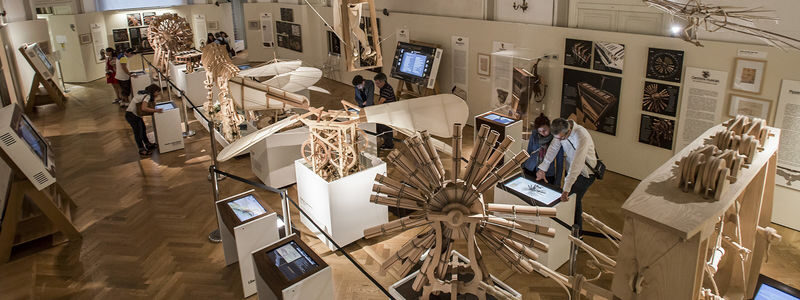
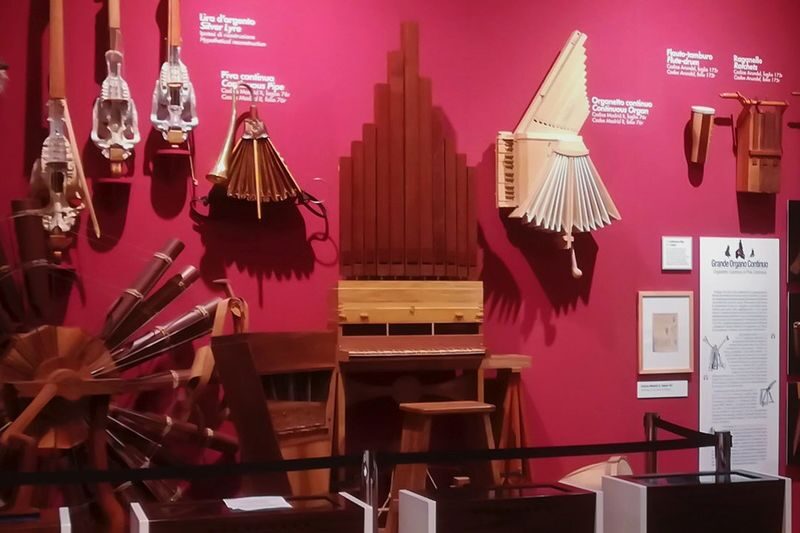
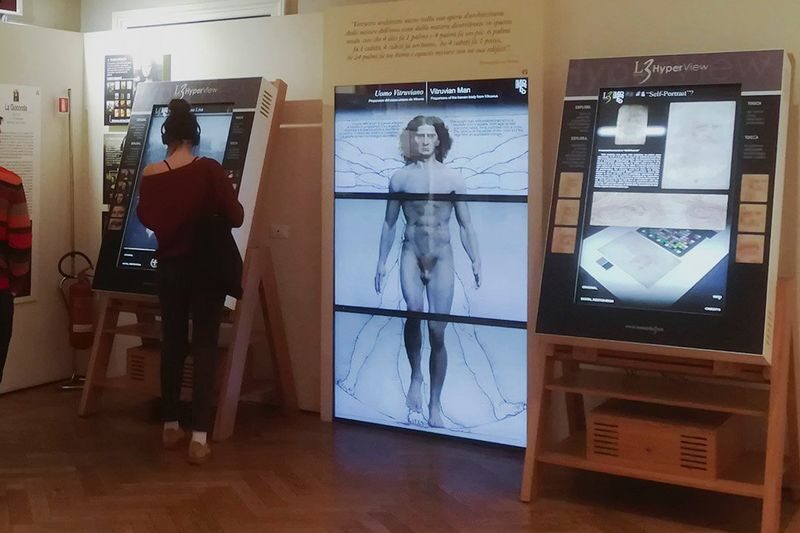
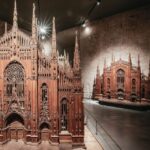
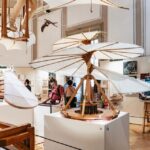
Leonardo3 is less about looking at finished masterpieces and more about asking how Leonardo’s mind worked. The exhibition presents more than 200 interactive 3D machines reconstructed from his original manuscripts. You can see the designs turned into models and use selected displays to get a clearer sense of the mechanisms behind them.
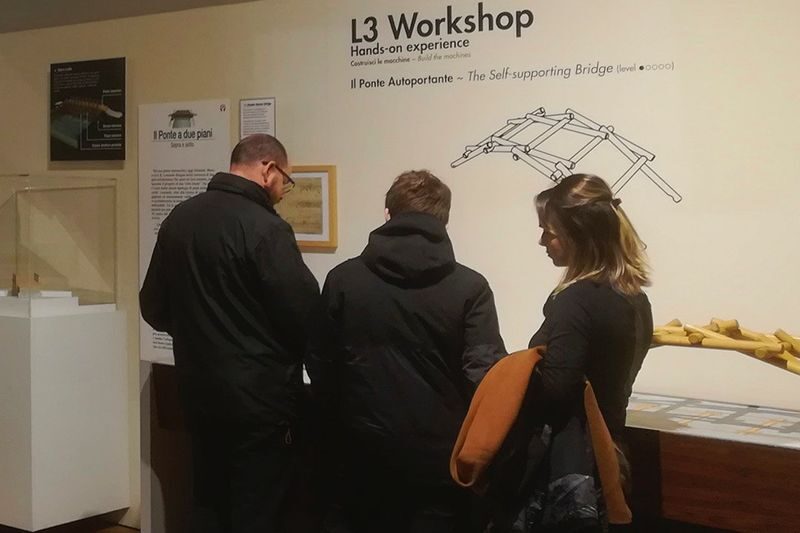
That change of scale matters. A drawing of a machine can be hard to read, especially when gears, levers or moving parts overlap on the page. A physical or digital reconstruction lets you examine the idea as an object, not just as an image. The result can make Leonardo’s engineering feel less like a list of clever sketches and more like a series of practical questions: how could this fly, move, lift or play?
The models are a strong reason to visit if you like art and science in equal measure. They also give children and teenagers something to do besides read labels. The displays are designed to be interactive, and families can use them to talk through what a machine might do and how its parts fit together.
Keep expectations in scale. The exhibition is not a huge museum, and a small footprint means people may collect around popular stations. If you prefer to study every explanation at a leisurely pace, allow the full two hours and be patient when a display is occupied.
You can also read our reviews of more tours and experiences in Milan


From machines to music and the Navigli
Leonardo’s interests did not stop at engineering plans. The exhibition also presents musical instruments designed by him, a useful reminder that his work crossed the boundaries we tend to draw between art, science and performance.
One of the more playful features lets you ride a digital paddle boat across Milan’s Navigli. It is an imaginative way to connect an inventor’s design with the city around you, rather than treating the machines as isolated objects. The experience is interactive, though the information provided does not specify exactly how long each activity takes or which controls it uses.
For families, this variety helps keep the visit moving. A child who is less drawn to paintings may be more interested in operating a model or trying a simulation. Older children and adults can use the same displays to look closer at the designs and consider how Leonardo’s ideas were represented in his manuscripts.
There is a trade-off: interactive features can be more appealing than explanatory text, but the text is what supplies context. Take time to read the information that interests you. If you move quickly from one button or model to the next, you may leave with a sense of spectacle but miss the reasoning behind the inventions.
A digital look at The Last Supper
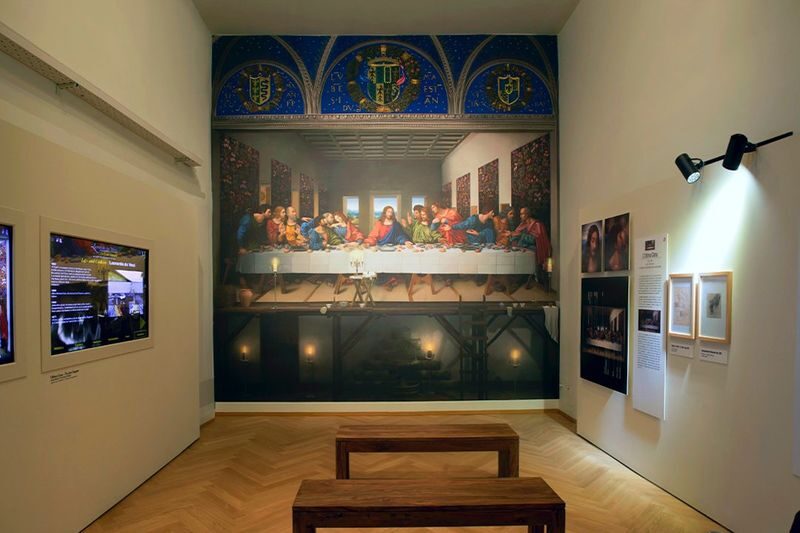
The Last Supper is one of Milan’s essential works of art, but seeing the original requires its own visit and advance planning. Leonardo3 offers a different kind of encounter: a digital and virtual reality presentation that helps you examine the painting and consider what it was like around 500 years ago.
This is not a replacement for seeing the original at Santa Maria delle Grazie. It is a way to spend more time with the image and its details in an exhibition setting. If you already have a reservation to see the painting, Leonardo3 can work well before that visit, giving you useful context to carry with you. If you are not visiting the original, the display still offers a closer study than a glance at a reproduction in a guidebook.
Digital equipment can be a weak spot in any interactive museum. Some virtual reality features may not work as smoothly as intended at a given moment, so it is sensible to treat them as one part of the exhibition, not the sole reason to buy a ticket. The wider collection of models and explanations gives you other things to see if a particular activity is unavailable.
Allow one to two hours, not half a day
Most visitors can plan for one to two hours. Your pace depends on whether you skim the displays or stop to read the information, try the interactive models and spend time with the Last Supper presentation. The small size can make the visit feel brief, but there is enough detail to fill two hours if Leonardo’s designs hold your attention.
This makes Leonardo3 easy to fit into a day in central Milan. You could pair it with the Duomo or a walk through the Galleria Vittorio Emanuele II without needing a separate half-day plan. Its location is a practical advantage, especially if you have limited time in the city.
The trade-off is that a central location can bring crowds. If you arrive when several groups are inside, you may need to wait for a popular display or move around people reading the same panel. The exhibition is open daily from 9:30 a.m. to 7 p.m., with last admission one hour before closing. The museum is closed on December 25.
What the ticket covers, and what it does not
The ticket covers admission to the interactive exhibition. It does not include an audio guide, a tour guide, hotel pickup or drop-off, or personal expenses. You should therefore expect to explore on your own unless you arrange an audio option separately.
A useful note for English-speaking visitors: an English audio option has been reported at the venue for an additional €2, but that price and availability may change. Confirm before relying on it. Without audio, make time for the written explanations, particularly if you want to understand the engineering behind the models rather than simply see them.
The listed starting price is $19.75, though the amount you pay can vary. For that price, the value depends on your interests. If you enjoy Leonardo, interactive exhibits or family-friendly learning, the models and central location can make this a worthwhile short visit. If you expect a large gallery of original paintings or a long, guided museum tour, the ticket may feel less compelling.
A wardrobe room lets you leave jackets free of charge. Lockers and storage cost an additional €2. You may re-enter with your ticket, wristband or stamp, which gives you some flexibility if you need to step out. Food and drinks from outside are not allowed inside.
You can also read our reviews of more museum experiences in Milan


Finding the entrance in the Galleria
The address is Galleria Vittorio Emanuele II, 11, 20121 Milano. The entrance is at the end of the Galleria nearest Piazza della Scala. The simplest public transport option is metro Line 1 or Line 3 to Duomo station, followed by a walk of about three minutes.
The location is one of the exhibition’s practical strengths. You can combine it with nearby central sights without adding a long journey across Milan. It is also easy to use as a short indoor stop during a day of sightseeing, though the exhibition operates in all weather conditions and is not just a rainy-day attraction.
For entry, present your mobile voucher and passport or valid ID, then exchange the voucher for a physical ticket. Student tickets are for ages 18 to 26, and students need to show a valid school ID as well as a passport. Children aged 0 to 6 must be accompanied by a paying adult.
Photography is allowed, but commercial photography and video, as well as live broadcasting, are prohibited. Do not bring outside food or drinks, or items such as bottles, firecrackers or lasers that could disturb other visitors.
Is Leonardo3 worth booking?
I would put Leonardo3 on your Milan list if you want a compact, hands-on introduction to Leonardo’s inventions, especially if you are visiting with children or teenagers. The models make abstract designs easier to understand, the Last Supper display adds an art-history angle, and the central address makes the stop simple to fit around other plans.
I would be more cautious if you want a large museum, a guided tour included in the ticket or a quiet room for a long, uninterrupted visit. Crowds and the small floor area can affect how much time you spend at each station, and the audio guide is extra.
For a short stay in Milan, this is a practical choice when Leonardo’s ideas interest you and you want something beyond the city’s best-known churches and paintings. Book it for the interactive machines and the context around the art, not for sheer size.
Leonardo3: The World of Leonardo Interactive Exhibition Ticket in Milan
“very fun and interactive my children enjoyed while learning. although the area is small”
FAQ
How long should I plan for Leonardo3?
Allow one to two hours. Your visit may be shorter if you move quickly, or closer to two hours if you read the displays and try the interactive features.
Where is Leonardo3 in Milan?
The exhibition is at Galleria Vittorio Emanuele II, 11, 20121 Milano. The entrance is in the Galleria, entering from Piazza della Scala.
How do I get to Leonardo3 by metro?
Take Line 1 or Line 3 to Duomo station. From there, it is about a three-minute walk.
What time does Leonardo3 open?
It is open daily from 9:30 a.m. to 7 p.m. Last admission is one hour before closing.
Is Leonardo3 open on December 25?
No. The museum is closed on December 25.
What does the ticket include?
It includes one admission ticket to the World of Leonardo interactive exhibition. A guide, audio guide, hotel transfers and personal expenses are not included.
Do I need to exchange my mobile voucher?
Yes. Present your mobile voucher and passport or valid ID, then exchange the voucher for a physical ticket.
Are children allowed at Leonardo3?
Yes. Children aged 0 to 6 must be accompanied by a paying adult. Student tickets are for ages 18 to 26.
Can I take photos inside Leonardo3?
Photography is allowed. Commercial photography and video, along with live broadcasting, are prohibited.
Can I leave and re-enter the exhibition?
Yes. Re-entry is permitted if you show your ticket, wristband or stamp at the entrance.