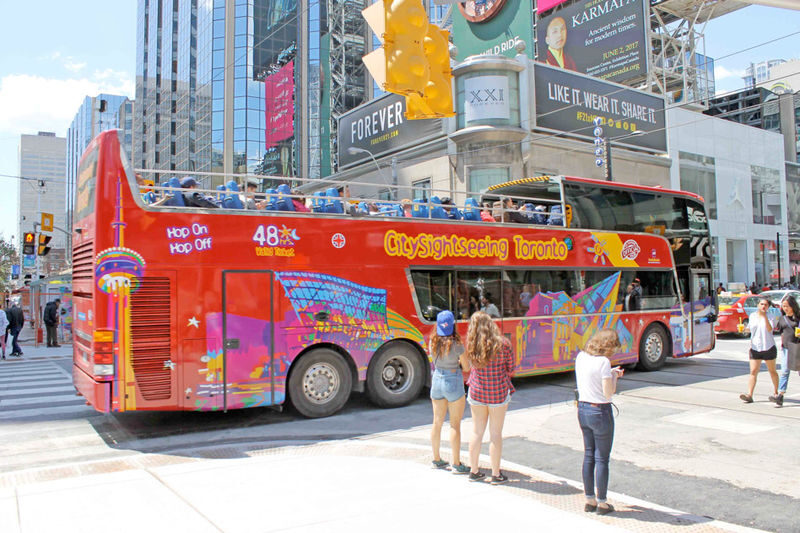
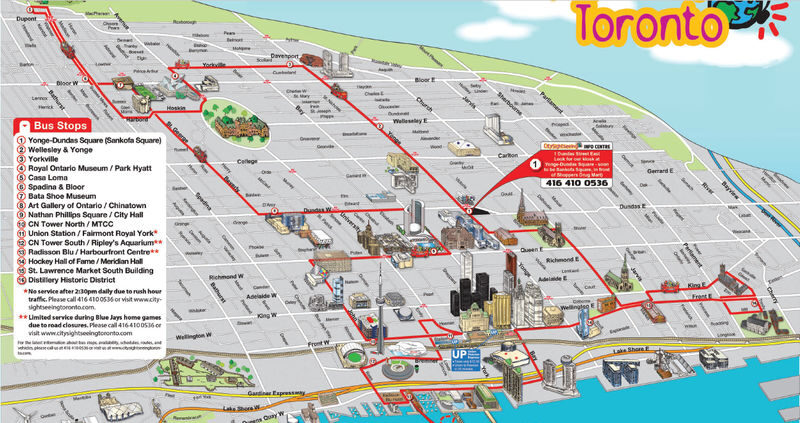
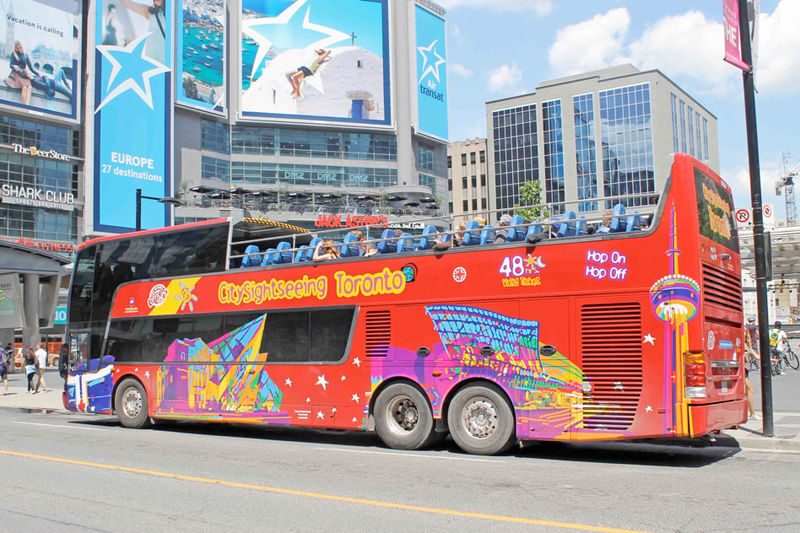
The best part of this Toronto bus tour is how it links sights that are spread across the city. From Yonge-Dundas Square, you can ride to Casa Loma, Chinatown, the CN Tower area, and the Distillery District, then choose where to spend your time instead of walking the whole route.
I like two things in particular: the open top gives you a clear view of the city, and the hop-on, hop-off format lets you linger where you want. Live guides add local stories and practical tips, while audio commentary gives you more language options. One caveat: a 24-hour ticket does not mean buses run all night, and service frequency can vary by season.
- At a glance
- A city route that saves your legs
- From Yonge-Dundas Square to Yorkville
- The Royal Ontario Museum and Casa Loma
- Chinatown, the AGO, and Nathan Phillips Square
- The CN Tower, waterfront, and Hockey Hall of Fame
- The Distillery District and the final stretch
- Guides, audio, and the view from the top deck
- Timetables, value, and practical planning
- Should you book this Toronto bus tour?
- FAQ
- Where does the bus tour start?
- Does the ticket include attraction admission?
- Does a 24-hour ticket mean buses run all night?
- How long does the full bus loop take?
- How often do buses run?
- What languages are available for audio commentary?
- Is the bus wheelchair-accessible?
- Are children allowed on the tour?
- The Best Of Toronto!
- More City Tours in Toronto
- More Tours in Toronto
- More Tour Reviews in Toronto
- Not for you? Here's more nearby things to do in Toronto we have reviewed
At a glance
 1 / 5
 2 / 5
 3 / 5
 4 / 5
 5 / 5
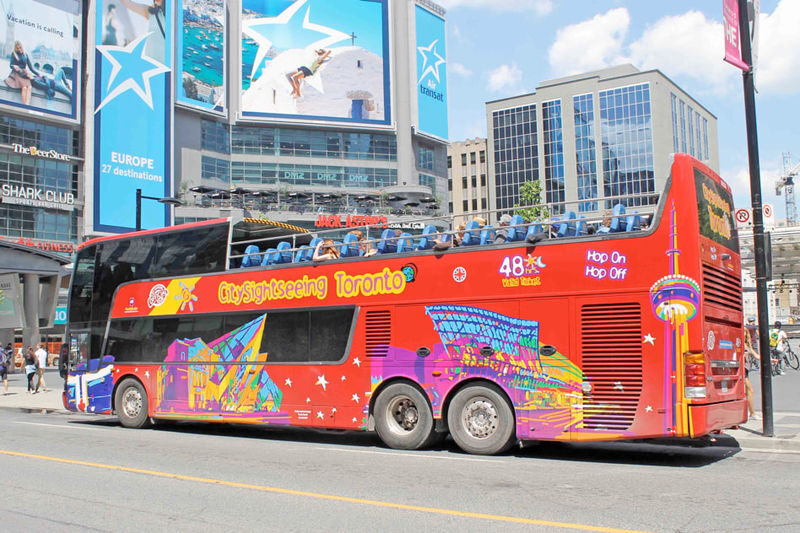
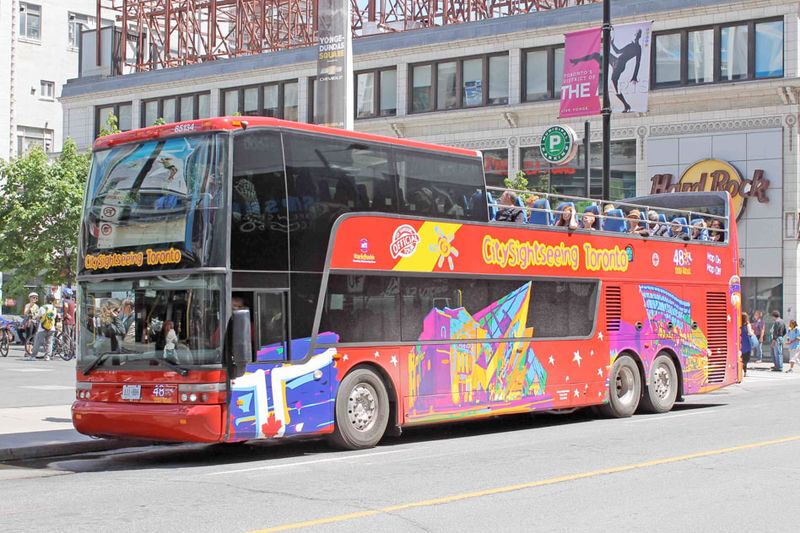
- Start at Yonge-Dundas Square: The main departure point is at 1 Dundas St E, near the heart of downtown.
- Pick your own stops: The route links major sights, museums, shopping districts, and waterfront areas.
- Choose your commentary: Buses offer a live guide or multilingual audio. In winter, most buses have an English-speaking guide only.
- Plan around daylight service: The full loop takes about 120 minutes, but buses stop running in the afternoon.
- Bring headphones: The City Sightseeing app includes real-time bus tracking, audio commentary, and two self-guided walking tours.
- Budget for attractions separately: Admission, food, drinks, and personal expenses are not included.

👉 See our pick of the 20 Best Guided Tours In Toronto
A city route that saves your legs
Toronto’s sights are spread over a wide area, and a bus can be a useful way to connect them. The route has stops at places such as the Royal Ontario Museum, Casa Loma, the Art Gallery of Ontario, the CN Tower area, St. Lawrence Market, and the Distillery District. You can stay aboard for an overview or get off when a particular stop deserves more time.
The ticket is sold as a 24-hour or 48-hour option, but the service itself is not a round-the-clock operation. In practice, you need to fit your rides into daytime operating hours. A full circuit takes roughly two hours, so check the timetable before planning several stops in one day.
There are around 15 hop-on, hop-off stops, though the published route list names several locations along the loop. Think of the bus as a sightseeing route and a way to move between districts, not a substitute for Toronto’s regular transit or a late-night ride.
You can also read our reviews of more city tours in Toronto


From Yonge-Dundas Square to Yorkville
The bus begins at Yonge-Dundas Square, an easy-to-recognize downtown meeting point at 1 Dundas St E. If the location feels busy or confusing, check the bus signage and confirm with staff that you are boarding the City Sightseeing route. One traveler had trouble finding the right bus and nearly boarded a different tour, so a quick double-check is worthwhile.
From there, the route passes Yonge and Wellesley toward Yorkville. This stretch gives you a quick sense of central Toronto, from the downtown core to a district known for shops and hotels. It is a useful orientation ride, though the bus’s main value comes when you use it to reach places farther apart.
The Royal Ontario Museum and Casa Loma
The Park Hyatt and Royal Ontario Museum stop is a strong choice if you want to spend time with art, culture, and natural history. The museum is a major Toronto attraction, but admission is not included in your bus ticket. Decide in advance how long you want to stay: a museum visit can easily take longer than the gap between buses.
Casa Loma is one of the route’s most distinctive stops. This grand Gothic-style home dates to the early 20th century and now operates as a museum. The bus gets you to the area, but you will need a separate admission ticket to explore the house and grounds. If you only ride past, you will get a glimpse rather than the full experience.
Spadina and Bloor and the Bata Shoe Museum add more options nearby. The shoe museum offers a focused look at the history of footwear in Canada, a change of pace from Toronto’s larger art and history institutions. As with the other attractions, entry costs extra, so choose stops that match your interests rather than trying to see everything in one run.
Chinatown, the AGO, and Nathan Phillips Square
The Art Gallery of Ontario and Chinatown stop combines two very different ways to spend an afternoon. The AGO is a major art museum, while Chinatown offers restaurants and shops shaped by the mix of Canadian and Asian cultures. You can pick one, or use this stop as a chance to walk between the two areas.
The Art Gallery of Ontario is described as the largest in America in the tour information. That is a large claim, but the practical point is simple: allow time if you plan to go inside, and check its current admission and opening details separately. The bus fare covers transportation and commentary, not gallery entry.
Next, Nathan Phillips Square is a useful downtown stop for seeing Toronto’s civic center. It can also make a convenient break in your day before heading farther west or south. The route’s stops are close enough to major sights to be useful, but you should not assume every landmark is best viewed from the bus. Some require a walk or a dedicated visit.
The CN Tower, waterfront, and Hockey Hall of Fame
The route includes stops near the CN Tower, the Metro Toronto Convention Centre, and Ripley’s Aquarium of Canada. These are among the city’s best-known attractions, but the bus ticket does not include entry to any of them. If you plan to visit both the tower and aquarium, leave enough time for each and do not expect to fit them into a short hop between buses.
The Radisson Blu and Harbourfront stop brings you toward the lakefront. It offers a different feel from the downtown streets, and it is a sensible place to get off if you want to explore the waterfront area. The bus gives you transport between neighborhoods, but the specific experience on the ground depends on how much time you set aside.
At the Hockey Hall of Fame and Meridian Hall, sports fans can stop for an attraction devoted to the leading names in ice hockey. St. Lawrence Market is another worthwhile stop on the route, especially if you want a break from museums and major landmarks. The market is a well-known food destination, but meals and drinks are not part of the ticket price.






The Distillery District and the final stretch
The Distillery District is the final highlight listed on the route. Its historic character and concentration of shops and places to eat make it a good place to get off and slow down. The included app also offers a self-guided walking tour covering Corktown and the Distillery Historic District, so bring headphones if you want to follow it.
Another free app walk covers Old Town Toronto and St. Lawrence Market. These walks are a useful addition because the bus can move you across town, while a walking route helps you make sense of one area at a time. Download the app before setting out, and bring your own headphones.
Guides, audio, and the view from the top deck
Each bus has either a live guide or multilingual audio commentary. The included audio languages are Spanish, Chinese, English, French, German, Italian, Portuguese, and Russian. The app lists additional audio languages, including Brazilian Portuguese, Mandarin, Ukrainian, and Croatian, along with the two walking tours.
Live guides can make a short ride more engaging by giving context as you pass the sights. Grace has been named as a guide who shared concise descriptions of downtown attractions, and another guide, recorded as Vedo or Veko, was praised for keeping a rainy ride light. Names and guides may change, of course, but a good live guide can add local character that recorded commentary cannot.
There is a practical wrinkle: when a guide and the audio track speak at the same time, it may be hard to follow both. If you want to hear all the commentary, choose one source during a ride. You can also ride the full loop once for orientation, then use later trips to focus on specific stops.
The open top is a real advantage on clear days. You get broad views and a better sense of how the city’s districts connect. But Toronto weather is not obliged to cooperate, so bring a layer or rain protection when the forecast calls for it. In winter, most buses are reported to have an English-speaking guide only, and the service is much less frequent.
Timetables, value, and practical planning
The stated operating pattern changes by season. In the busiest summer period, buses are listed every 15 to 20 minutes, while early spring, autumn, and winter can bring longer waits. A separate route schedule lists service from May 2 to November 5, with a loop of about 120 minutes and departures between 9 a.m. and 4:20 p.m. Timings can change with weather, demand, traffic, and road work, so check the latest schedule before you set out.
That timetable is the main thing to plan around. A 24-hour ticket can sound like an all-night pass, but it does not extend the operating day. One summer rider wished the buses ran later, and another found that very limited winter departures made hopping off and back on less useful. In the quieter months, treat the service as a scheduled sightseeing circuit rather than a frequent shuttle.
At from $55, the value depends on how you use the pass. If you ride the loop and get off at several distant attractions, it can save time and effort while giving you a broad first look at Toronto. If you only want to reach one or two places, regular transit or walking may cost less. Attraction admission is extra, so the total day’s cost can rise quickly if you add museums and major sights.
The 48-hour option may suit a slower visit, but confirm the exact terms when booking. A student ticket is available with valid ID, children aged 0 to 2 ride free, and children aged 0 to 12 must be with a paying adult. Children aged 13 and older pay the adult rate.
The activity is wheelchair-accessible, and staff can assist visitors who need disability support. Present your mobile voucher at the meeting point. Free cancellation is available with at least 24 hours’ notice, according to the stated terms.
Should you book this Toronto bus tour?
I would consider it if you are new to Toronto, short on time, or keen to see several districts without piecing together every trip yourself. Its strongest points are the open-top views, the choice of commentary, and the freedom to spend more time at selected stops. Guides can add helpful local context, and the route reaches a broad mix of cultural sights, sports attractions, and waterfront areas.
I would be more cautious if you expect dependable evening service, want a guided deep history of every neighborhood, or plan to visit only one attraction. Check the operating schedule for your dates, allow for waits, and choose your must-see stops before boarding. That is the best way to turn a city overview into a useful day out.
Toronto Hop-On Hop-Off Bus by City Sightseeing
“It is open 24 hours, so why can't I board the night tour?”
FAQ
Where does the bus tour start?
The meeting point is at 1 Dundas St E, Toronto, ON M5B, Canada, at Yonge-Dundas Square.
Does the ticket include attraction admission?
No. Admission to attractions, meals, beverages, tips, and personal expenses are not included.
Does a 24-hour ticket mean buses run all night?
No. The ticket is sold as a 24-hour option, but buses operate during daytime hours. Check the current schedule for your visit.
How long does the full bus loop take?
The listed loop takes about 120 minutes.
How often do buses run?
Frequency changes by season. The published information gives intervals ranging from about 15 to 20 minutes in the busiest summer period to every two hours in mid-November through March. Schedules may change.
What languages are available for audio commentary?
The included audio guide is listed in Spanish, Chinese, English, French, German, Italian, Portuguese, and Russian. The app also lists additional languages.
Is the bus wheelchair-accessible?
Yes. The activity is listed as wheelchair-accessible, and staff are available to assist visitors who need disability support.
Are children allowed on the tour?
Yes. Children aged 0 to 2 ride free. Children aged 0 to 12 must be accompanied by a paying adult, and children aged 13 and older are charged the adult rate.