Hoa Lo Prison tells a hard story through its walls, cells, and objects. Built as a high-security prison under French colonial rule, it later became part of the story of American pilot detentions. A guided visit helps you connect those different eras without treating the site as just a collection of old rooms.
I like two things about this visit: the small group limit of 10, which leaves room for questions, and the guide’s help with entry, so you can focus on the exhibits. Guides named on this tour have included Liam, Levy, Mac, Ben, Flora, and Paul, though you cannot request or count on a particular person.
One consideration: this is a sobering visit, not a light sightseeing stop. The displays include confinement spaces and a guillotine, and you may want to leave time afterward to think through what you have seen.
- Thick walls and secure barriers show how the prison was designed to control and confine.
- Original cellblocks and isolation rooms make the site’s conditions more immediate than a written account alone.
- The guillotine, photographs, and inmate belongings give the history tangible detail.
- French colonial rule and American pilot detentions bring distinct periods of Vietnam’s 20th-century history into view.
- An English-speaking guide for groups of up to 10 helps explain context and answer questions.
- A visit of about one to two hours fits neatly into a Hanoi day, though the subject deserves your attention.
- Why Hoa Lo is more than a stop on a city walk
- At the entrance, look closely at the prison’s design
- Cellblocks and isolation rooms put confinement in focus
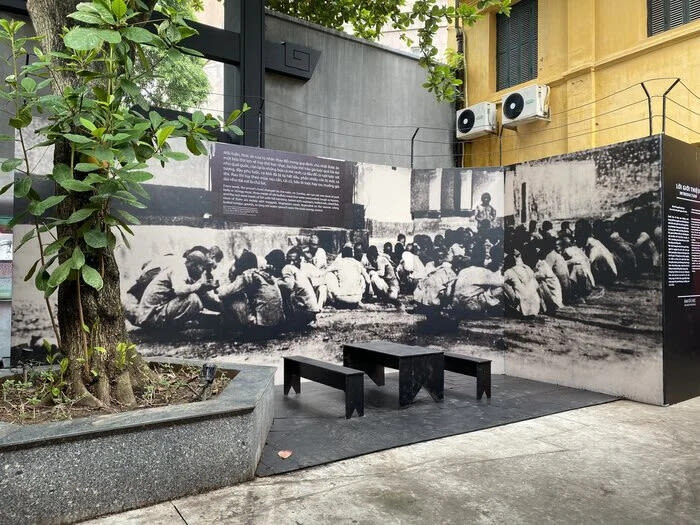
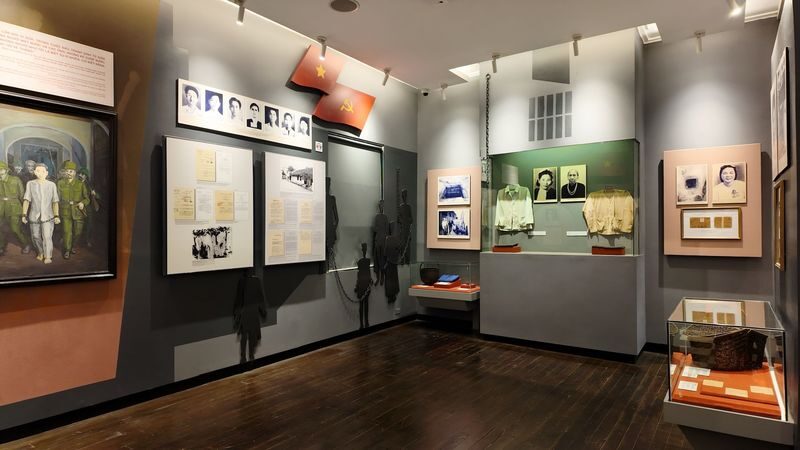
- Photographs and personal objects add human detail
- Two periods of history need careful context
- Plan on one to two hours, with time to absorb it
- Is the US.40 starting price good value?
- Who should book this guided visit?
- FAQ
- How long does the Hoa Lo Prison tour last?
- What is included in the ticket?
- How much does the guided ticket cost?
- Where is the meeting point?
- What time is Hoa Lo Prison open?
- Can I cancel or change my booking?
- Can I leave and re-enter the prison?
- The Best Of Hanoi!
- More Tickets in Hanoi
- More Tours in Hanoi
- More Tour Reviews in Hanoi
- Not for you? Here's more nearby things to do in Hanoi we have reviewed
Why Hoa Lo is more than a stop on a city walk
 1 / 4
 2 / 4
 3 / 4
 4 / 4
Hoa Lo Prison is a place where architecture carries part of the message. Thick walls, high-security barriers, cellblocks, and isolation rooms were built for confinement, and they make the prison’s purpose plain before a guide has said a word.
The site also asks you to follow more than one chapter of history. Its displays address French colonial rule and political prisoners, as well as the later period when American pilots were detained there. That shift in context matters: you are not looking at a single event, but at a site shaped by different conflicts and political realities.
I would allow more attention here than you might give a small museum between errands. The displays include rare photographs and personal artifacts, and the subject can be emotionally heavy. You do not need to arrive with a detailed knowledge of Vietnamese history, but a willingness to listen and ask questions will help you get more from the visit.

👉 See our pick of the 25 Best Shopping Tours In Hanoi
At the entrance, look closely at the prison’s design
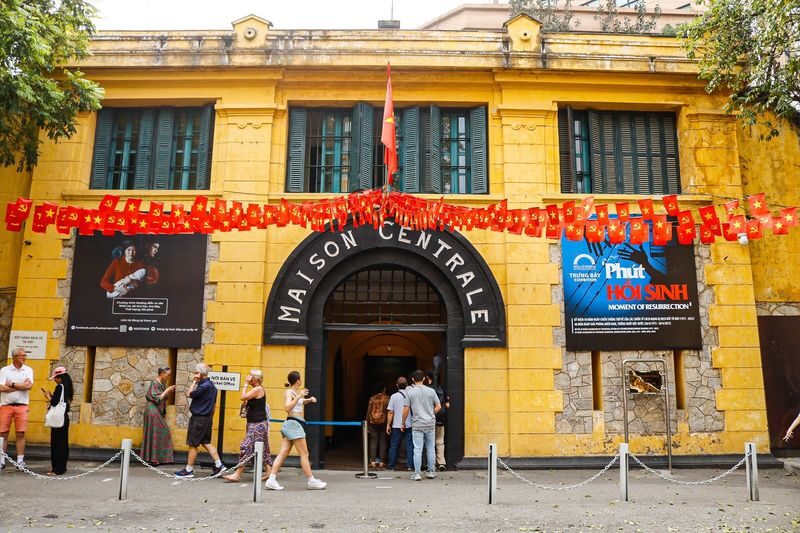
The first useful lesson is written into the building. Hoa Lo was designed as one of the largest and most secure prisons in French Indochina. Its thick walls and barriers were not decorative flourishes; they were part of a system meant to restrict movement and enforce control.
You will move through original cellblocks and other parts of the prison, with the guide explaining what the spaces were used for and how they fit into the site’s history. The rooms can feel stark, but that spareness is part of their force. You are not seeing a recreated set. You are looking at preserved spaces connected to the prison’s actual use.
The guided format helps you avoid a common museum problem: seeing a room, reading a label, and moving on without understanding why it matters. A local guide can connect the physical setting with the broader history of political prisoners and colonial rule. The tour is in English, and the group is limited to 10 people, a practical size for hearing explanations and getting questions answered.
You can also read our reviews of more tours and experiences in Hanoi



Cellblocks and isolation rooms put confinement in focus
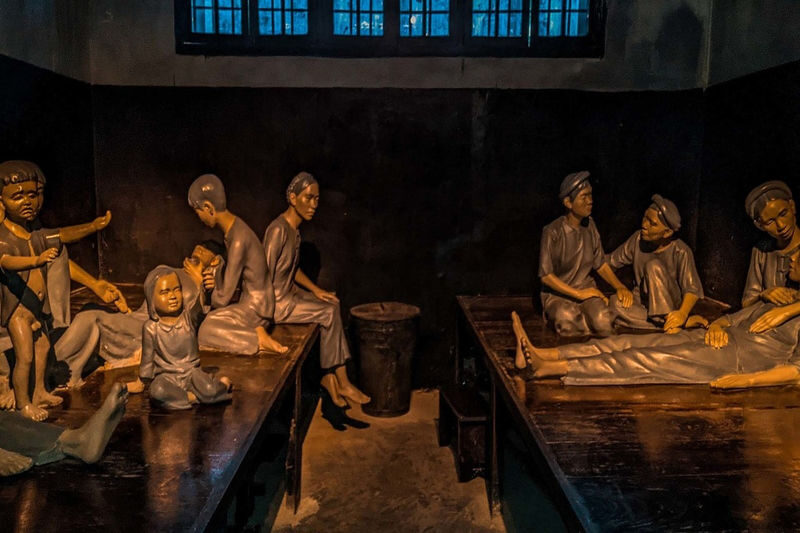
The cellblocks are among the most important parts of the visit because they bring the prison’s function down to human scale. Rather than treating the history as a list of dates and names, you can look at the spaces where people were held and consider what confinement meant in daily life.
The isolation rooms are a particularly sobering stop. The available details do not specify how long the tour spends in each room, so do not expect a fixed script or a set amount of time at every display. What you can expect is a walk through significant spaces with a guide explaining their historical role.
The subject can be difficult. Hoa Lo’s displays address political imprisonment and harsh conditions, and the presence of the guillotine adds a stark reminder of the violence associated with the prison’s past. If you are visiting with children or anyone who prefers lighter museum material, keep in mind that there is no age limit, but the content is serious.
I would take the guide’s explanations at a measured pace rather than rushing from room to room. The point is not to collect every detail. It is to understand how the site’s design and use shaped the lives of people held there.
Photographs and personal objects add human detail
The exhibits include rare photographs and personal artifacts, including inmate belongings. These objects can make a visit feel less abstract. A prison wall tells you about the institution; a personal item hints at the individual lives caught within it.
The guillotine is another key artifact. It is a confronting object, and its presence can sharpen your sense of the prison’s history. The guide can provide context around what you are seeing, which is especially valuable when an exhibit is emotionally charged or easy to misread without explanation.
Guides associated with this tour have included Liam, Levy, Mac, Ben, Flora, and Paul. Their names are not a booking guarantee, but the kind of guidance described for the tour is clear: careful explanations, patience with questions, and attention to both the prison and Vietnam more broadly. If you want a particular guide, the information provided does not offer a way to request one.
Several of the named guides have been praised for explaining the history clearly and making room for questions. That matters at a site where a brief label cannot carry the whole story. A guide can help you connect the artifacts to the people and political periods behind them, rather than leaving you to piece together the context alone.
Two periods of history need careful context
Hoa Lo’s story includes French colonial rule and the era of American pilot detention. These periods are related by the prison itself, but they are not interchangeable. A good visit gives each its proper context instead of folding everything into one broad story of war.
You can expect the guide to discuss political prisoners and the prison’s role under French rule, then address the later period involving American pilots. This broader frame helps explain why Hoa Lo remains significant to Vietnamese history and international relations. It also reminds you that the meaning of a historic site can change with the period being remembered and the people telling its story.
The tour’s strength is not that it settles every historical question in one or two hours. It gives you a clearer starting point. If a particular detail stays with you, you can take it as a prompt to read further after your visit.
Plan on one to two hours, with time to absorb it
The stated duration is one to two hours. A visit can take a little over an hour, but the pace depends on how much time you spend with the guide and exhibits. If you like to read every display carefully or ask several questions, leave room for the longer end of that range.
The prison is open daily from 8:00 a.m. to 5:00 p.m. The meeting point is Hoa Lo Prison Relic, at 1 Hoa Lo, Tran Hung Dao, Hoan Kiem, Hanoi. Arrive five minutes before your scheduled time; late arrivals and no-shows cannot be refunded.
You present a mobile voucher, and the guide handles ticketing and entry logistics for the group. That is a modest convenience, but a useful one when you have a timed activity in a busy city day. Re-entry is not allowed once you leave, so finish your visit before heading out.
Food and drinks are not allowed inside, and smoking and drinking are prohibited. Pets are not permitted, except service animals with valid identification. The activity has no age limit, though the subject matter is not light.





Is the US$5.40 starting price good value?
At a starting price of US$5.40, this is an inexpensive way to visit a major historical site with an English-speaking guide. The admission is included, and the group size is capped at 10. For the price, the main added value is not simply getting through the entrance; it is having someone explain the rooms, artifacts, and historical context while you are there.
The price is especially appealing if you would otherwise visit on your own and rely on brief written labels. The tour’s guides have been singled out for detailed explanations, patience with questions, and clear storytelling. These are precisely the qualities that can turn a short museum visit into a more thoughtful one.
Still, value depends on what you want. If you prefer to move through museums at your own pace and read independently, you may not need a guide. If you want context and the chance to ask questions, the small-group format is a sensible upgrade for a modest added cost.
Free cancellation is available with at least 24 hours’ notice, and changes are allowed until 24 hours before the activity starts, subject to stated exceptions. The voucher is valid only for the selected date and time, so check your plans before booking.
Who should book this guided visit?
Book it if you want a concise, carefully explained introduction to Vietnam’s 20th-century history, especially the prison’s role under French colonial rule and its later connection to American pilot detention. It suits history-minded visitors, first-time visitors to Hanoi, and anyone who would rather ask questions than piece the story together alone.
It is also a good choice if you have limited time. A one-to-two-hour visit can fit into a city itinerary, and the group limit keeps the guide-led format personal. Just give yourself enough breathing room around the visit; the subject is serious, and rushing straight to your next activity may feel abrupt.
You might choose an unguided visit if you want silence, a slower independent pace, or only a quick look at the building. But if historical context is the reason you are going, I would book the guided option. Hoa Lo’s most important details are not only in the walls and objects. They are in understanding how the site changed meaning across different periods of Vietnam’s history.
Hoa Lo Prison Ticket in Hanoi
“Our guide, Ben, provided detailed and careful explanations, giving us a much better understanding of Vietnamese history.~~”
FAQ
How long does the Hoa Lo Prison tour last?
The listed duration is one to two hours. Some visits may take a little over an hour, depending on the pace and time spent with the exhibits.
What is included in the ticket?
The package includes admission to Hoa Lo Prison and an English-speaking join-in guide. The group size is limited to 10 people.
How much does the guided ticket cost?
The guided admission package starts at US$5.40. The final price may depend on the booking details shown when you select your activity.
Where is the meeting point?
Meet at Hoa Lo Prison Relic, 1 Hoa Lo, Tran Hung Dao, Hoan Kiem, Hanoi. Arrive five minutes before the scheduled activity time.
What time is Hoa Lo Prison open?
The site is open daily from 8:00 a.m. to 5:00 p.m., all year.
Can I cancel or change my booking?
You can cancel for a full refund with at least 24 hours’ notice. Changes are allowed until 24 hours before the activity starts, with some exceptions, including certain passes and bookings with freebies.
Can I leave and re-enter the prison?
No. Re-entry is not allowed after you leave the venue, so complete your visit before exiting.