
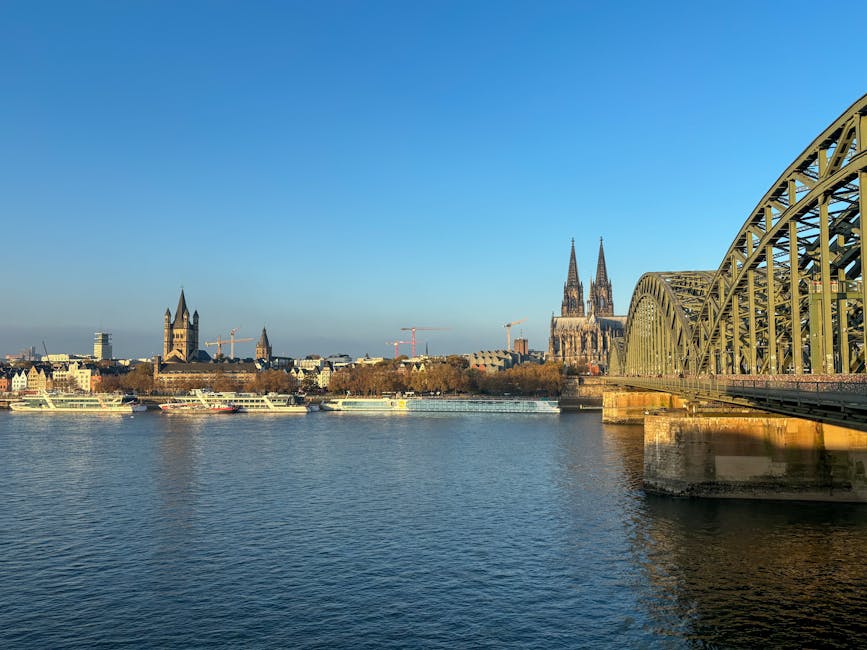
Walk into Cologne Old Town for the first time and you’ll be confused. The Cathedral is unmissable, sure. But everything around it looks half-modern, half-medieval, with no obvious thread tying it together. The payoff of a guided walking tour is that someone finally explains why: most of the Old Town was rubble in 1945, and what you’re looking at is a 2,000-year palimpsest of Roman warehouses, medieval squares, and post-war reconstruction sitting on top of each other.
That context turns a confusing wander into one of the most layered city walks in Germany. Below is what I’d actually book, what to skip, and how to read the streets you’re walking through.
In a Hurry? My Quick Picks
- Old Town Highlights Walking Tour ($34): the standard 2-hour English walk, hits the Cathedral, Roman ruins, Alter Markt, Great St. Martin and the Rhine. Book this one if you only do one.
- Night Watchman Tour ($18, German-only): atmospheric lantern-lit walk with a costumed guide. Cheaper, magical at dusk, but you need to follow German. Book the Night Watchman.
- Cathedral City Tour ($35): includes snacks, bottled water and a small drink. Shorter on history, longer on hospitality. Book the Cathedral City tour.
- In a Hurry? My Quick Picks
- What a Cologne Old Town Walking Tour Actually Covers
- The Walks Worth Booking
- 1. Cologne Old Town Highlights Walking Tour:
- 2. Cologne Night Watchman Old Town Tour:
- 3. Cologne City Tour Experience:
- Picking Between English and German Tours
- What Walking Tours Skip and How to Add It
- Reading Cologne’s Layers as You Walk
- Roman (50 AD to 450 AD)
- Medieval (1000 to 1500)
- 1880s and the Cathedral Push
- 1945 and Reconstruction
- Practical Booking Notes
- Combining the Walk with Other Cologne Tours
- How Cologne Compares to Other German City Walks
- Common Questions Before Booking
- What to Eat and Drink Near the Tour Route
- Best Time of Year for an Old Town Walking Tour
- Skip This One: The Hop-On Hop-Off Bus as a Walking Tour Substitute
- What I’d Actually Do
- Pairing Your Old Town Walk with the Rest of Your Cologne Trip
What a Cologne Old Town Walking Tour Actually Covers
The Altstadt itself is small. You can walk the historic core in 25 minutes if you’re just moving. A guided tour stretches that to 90 minutes or 2 hours because the value isn’t the distance. It’s the layered history at every stop.
A standard route hits seven or eight things in roughly this order:
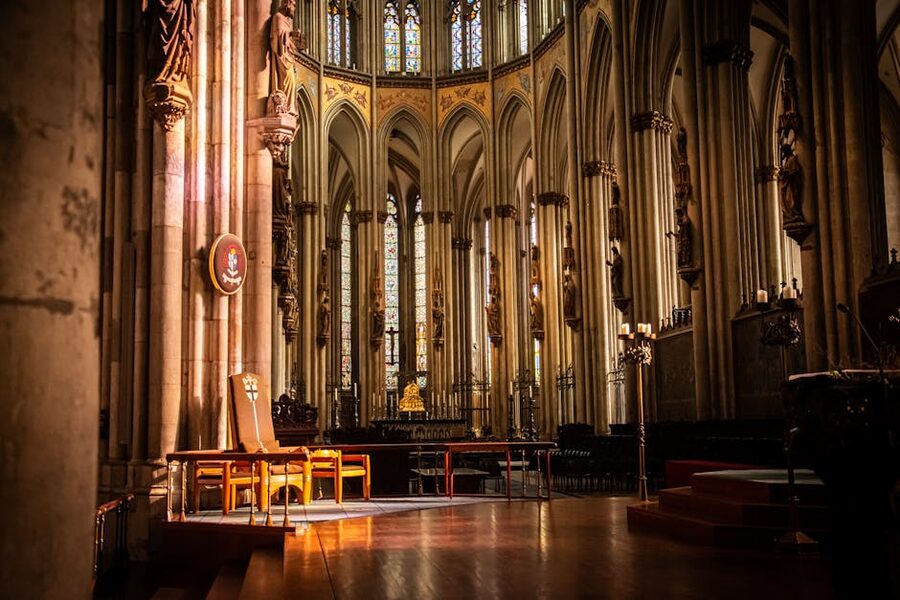
- Cologne Cathedral (Kölner Dom). Usually the start point, on Roncalliplatz right outside the main station. Most tours don’t go inside (entry is free but separate). The guide explains the 600-year build and why it survived 1945.
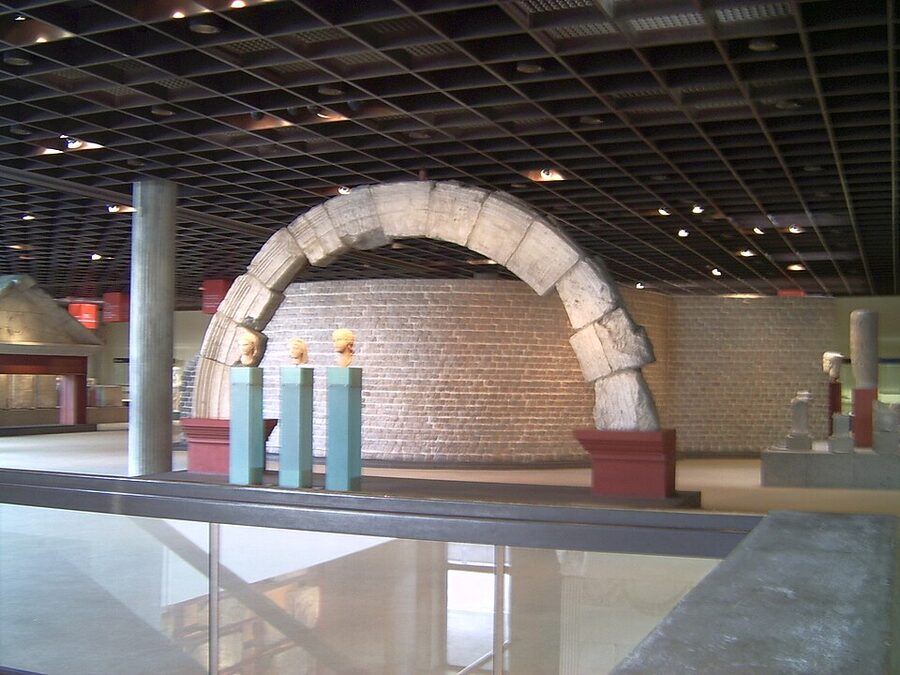
- Roman ruins. Fragments of the Roman north gate, the praetorium, mosaic floors. Cologne was Colonia Claudia Ara Agrippinensium, a Roman colony for 500 years. You’re literally walking on it.
- Alter Markt and Heumarkt. The two main squares. Alter Markt has the medieval town hall (oldest in Germany), Heumarkt has the equestrian statue of Friedrich Wilhelm III.
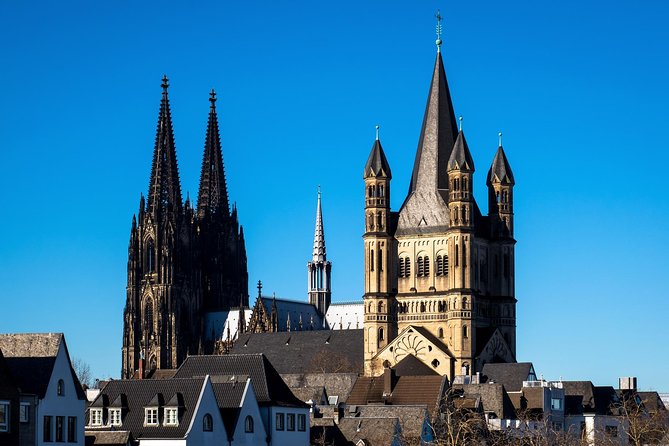
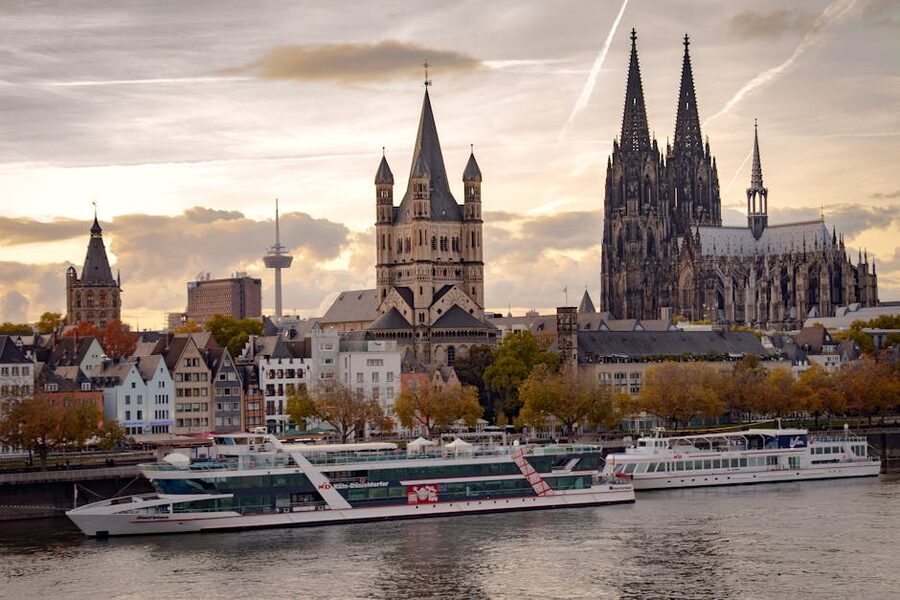
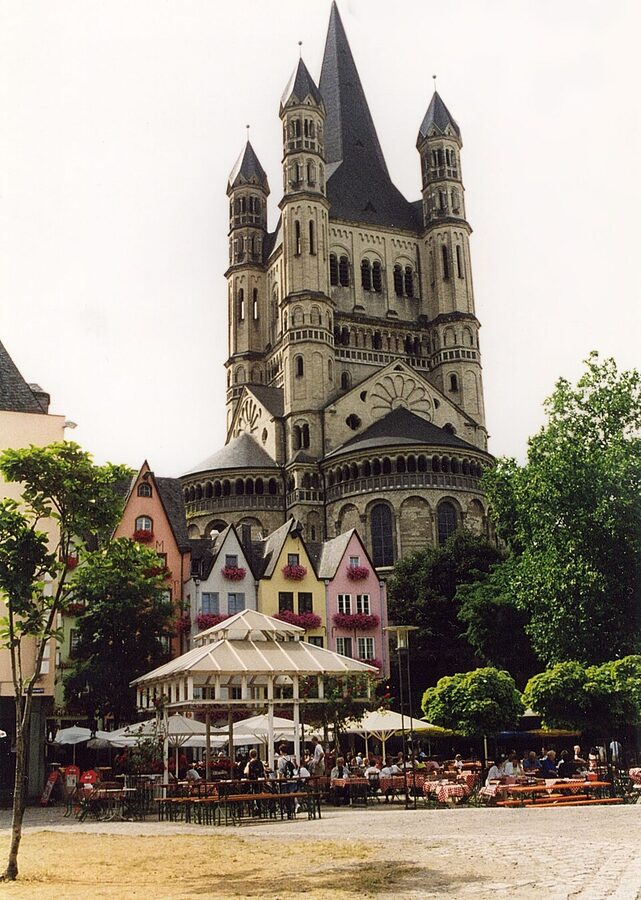
- Great St. Martin Church (Groß St. Martin). The Romanesque church with the 75-meter spire that anchors every photo of the Old Town riverfront.
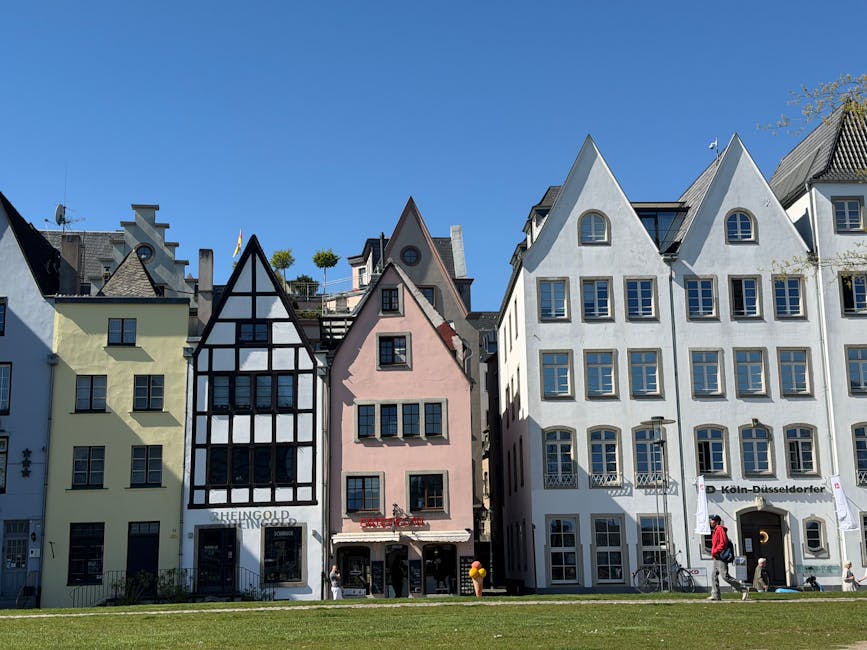
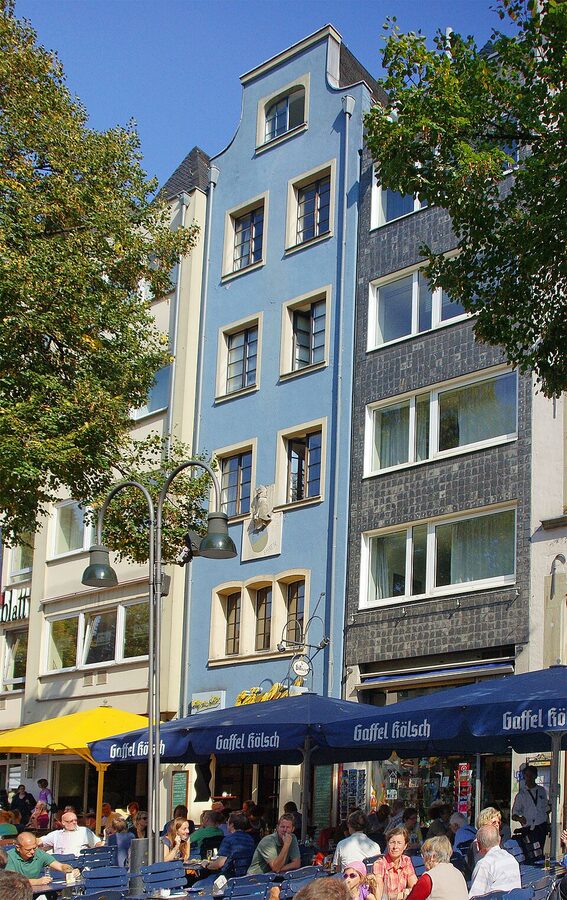
- Fischmarkt. The small triangular square between Great St. Martin and the river, with the famous colored gabled houses.
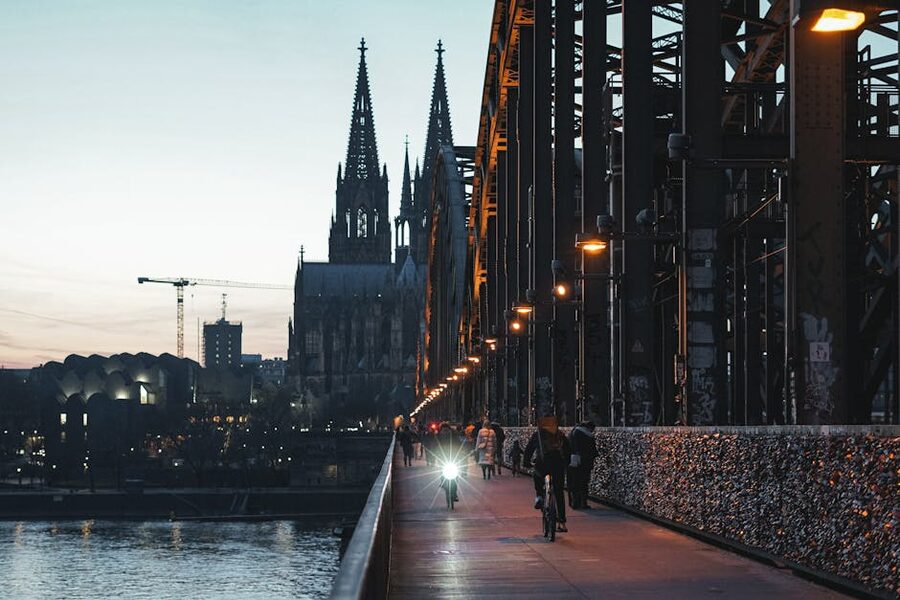
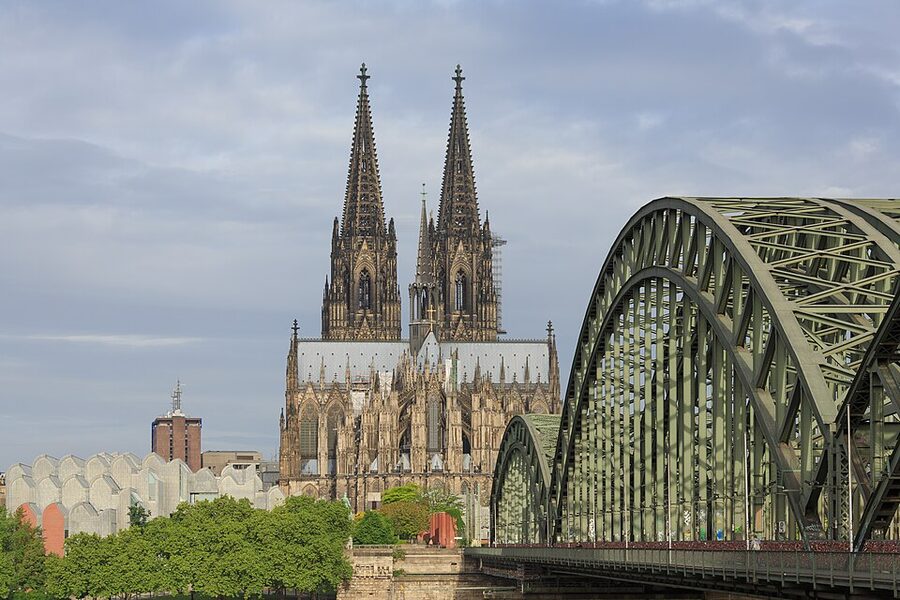
- Rheingarten and the Hohenzollern Bridge. The riverside promenade where the tour usually wraps up.
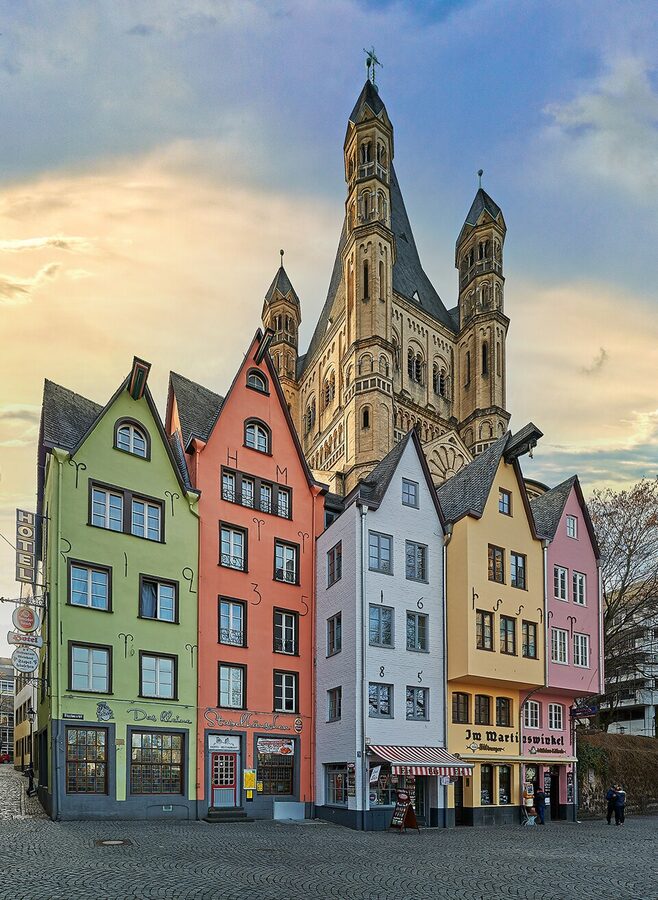
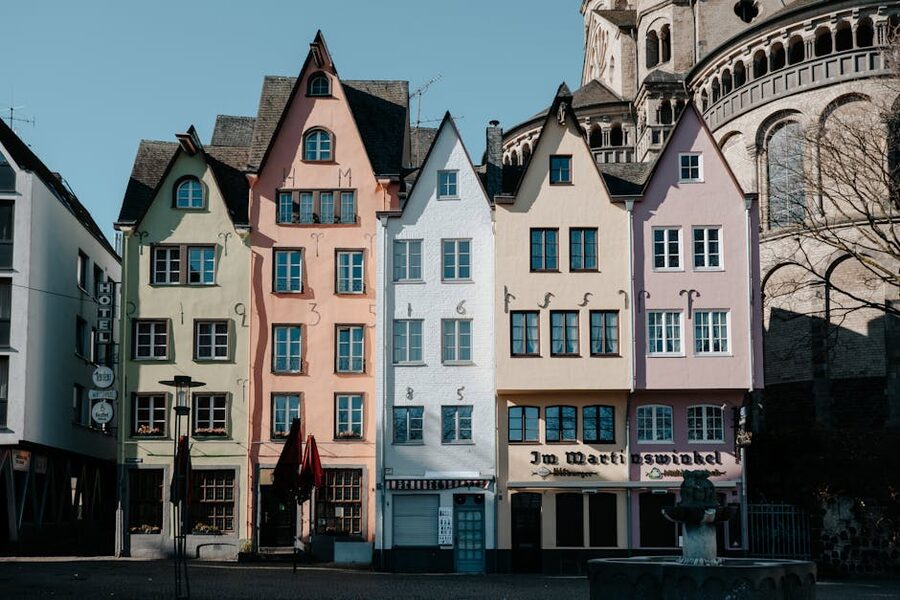
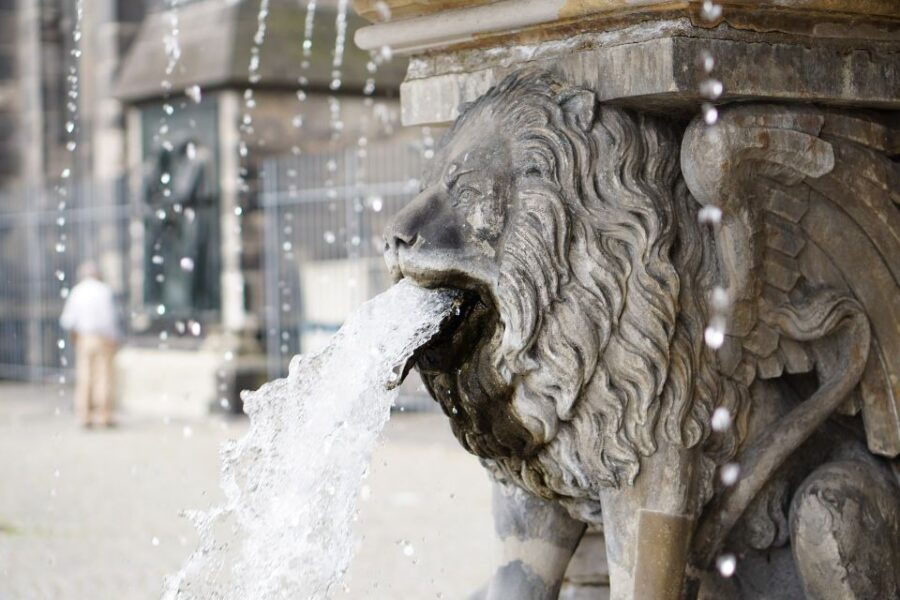
Some tours add the Hohenzollern Bridge love locks, the Heinzelmännchen fountain, and the Eau de Cologne house at 4711. Tours including a Kölsch tasting or cathedral interior add 30 to 60 minutes and roughly 15€ to 25€.
The Walks Worth Booking
1. Cologne Old Town Highlights Walking Tour: $34
If you only book one tour in Cologne, this is it. Two hours, a strong English guide, and the route hits every Old Town landmark a first-time visitor needs to see. The guides are good at the awkward bit most travelers don’t expect: explaining what was rebuilt versus what’s original. That’s what makes the city click. The full review covers a guide named Sascha who shows up in roughly half the recent reviews and is worth requesting.
2. Cologne Night Watchman Old Town Tour: $18
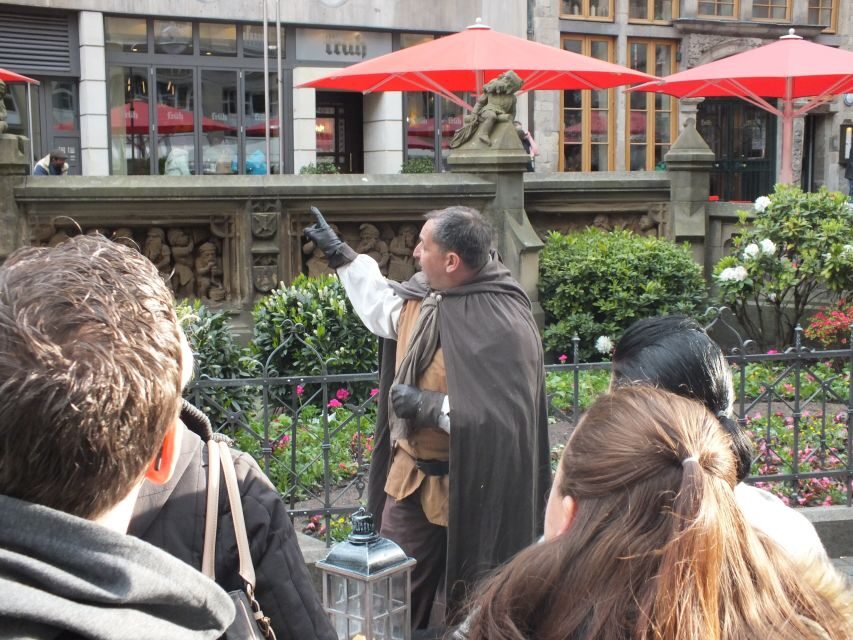
This is the cheapest and most atmospheric Old Town tour in Cologne, but read the language line carefully. Our full review flags it clearly: the tour is run entirely in German. If you don’t speak German you’ll get the lantern-lit ambiance but miss the legends and ghost stories that are the whole point. Skip it unless you’re comfortable in German, and book the next pick instead.
3. Cologne City Tour Experience: $35
This tour gets a 5-star average and reviewers single out the same guide, also a Sascha (confusingly the most common guide name in Cologne walking tours), for being funny and knowledgeable. It’s the warmest option of the three, with included snacks and a drink that turn the walk into a small social occasion. Our full review breaks down what’s actually included.
Picking Between English and German Tours
Cologne has a lot of German-language walking tours. Some are excellent and cheaper, but the language line is buried in the booking page and easy to miss.
If you’re an English speaker, filter ruthlessly. The Old Town Highlights tour and the Cathedral City Tour both run in English daily. The Night Watchman tour is German-only and that’s not negotiable, no matter how many star reviews it has. Don’t book it expecting a translator.
For German speakers, the Night Watchman is the better atmosphere pick. The costumed guide and lantern setup is theatrical in a way the daytime English tours aren’t. Tamara from Frankfurt called it “super, gute Gruppengröße, lustiger und angenehmer Guide” in her February review, and that’s the consensus.

What Walking Tours Skip and How to Add It
Two things consistently get left off the standard Old Town route, and both are worth your time after the tour ends.
Cologne Cathedral interior and tower climb. The Cathedral itself is free to enter but most walking tours stop outside. Inside is the Shrine of the Three Kings (the largest medieval gold reliquary in the western world), the medieval stained glass, and the Gerhard Richter window from 2007 that still divides locals. The tower climb costs 8€ for 533 steps to a viewing platform 100 meters up. Do it after the walking tour, not before. Your guide will tell you what you’re looking at.
The Romano-Germanic Museum. Right next to the Cathedral, this is where most of the Roman archaeology gets stored, including the Dionysus mosaic that was discovered during a 1941 air raid shelter dig. Walking tours point at the building from outside but don’t go in. Worth a separate hour if you found the Roman section interesting.
Reading Cologne’s Layers as You Walk
This is the bit that turns a confusing city into a fascinating one. Cologne has four historical periods stacked on top of each other, and a good guide will point them out as you walk.
Roman (50 AD to 450 AD)
Cologne was founded in 50 AD as Colonia Claudia Ara Agrippinensium, named for Agrippina the Younger (Nero’s mother) who was born here. The Roman colony lasted four centuries and the street grid you walk through still follows the original Roman layout. The cardo maximus (main north-south street) is now Hohe Straße, the main shopping street. Look down on the corner of Schildergasse and you can see Roman foundations behind glass.
Medieval (1000 to 1500)
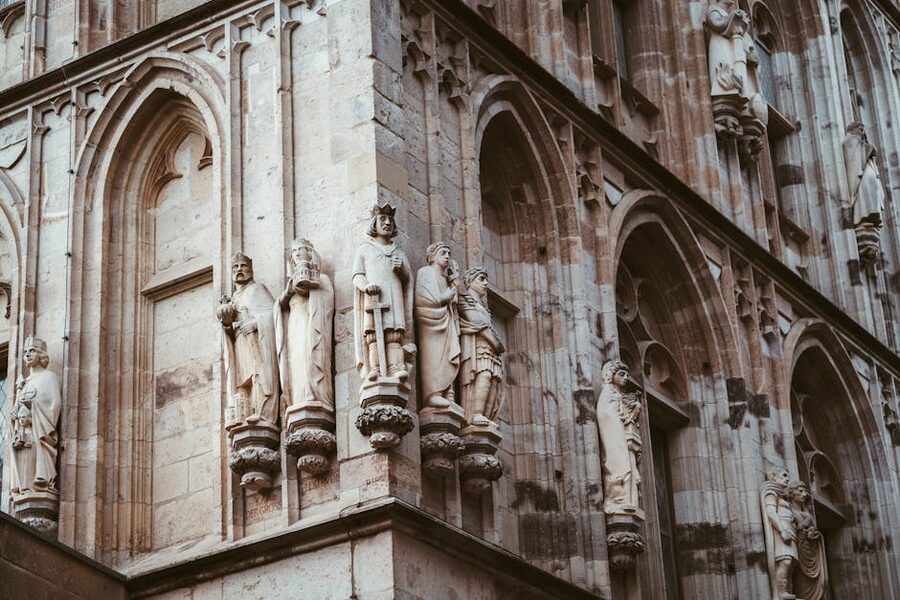
By the High Middle Ages, Cologne was the largest city in the Holy Roman Empire and a key Hanseatic League port. This is the period that gave the city the Cathedral (started 1248), the twelve Romanesque churches, the medieval town hall, and the city walls with their three remaining gates. Most of what your tour points at as “old” comes from this period.
1880s and the Cathedral Push
The Cathedral sat half-built for 300 years. The Prussians finished it in 1880 as a national symbol, which is why it has the look of an authentic Gothic building but with 19th-century stonework. When Cologne residents say the Cathedral is “the city,” this is the era they mean.
1945 and Reconstruction
This is the part that’s hardest to see and most important to understand. By the end of WWII, 95 percent of Cologne’s Old Town was destroyed. The Cathedral somehow survived (theories range from “the spires were a navigation landmark for Allied bombers” to “structural luck”), but everything around it was rubble. What you walk through today is a careful 1950s and 1960s reconstruction based on old photographs. The Fischmarkt gabled houses, Great St. Martin, the town hall: all rebuilt. Once you see it, you can’t unsee it.
Practical Booking Notes
Where the tour starts. Almost every Old Town walking tour meets at the Cathedral, usually at the Roncalliplatz fountain or under the south tower. Plan to arrive 10 minutes early because the meeting point gets crowded with school groups in summer.
How long the tour really takes. “2 hours” usually means 1 hour 50 minutes of walking and 10 minutes of the guide saying goodbye and answering questions. Plan a buffer if you have a Rhine cruise or train booked after.
Group size. The English-language Old Town Highlights tour can run up to 25 people in summer. Quieter shoulder months (March, November) get groups of 8 to 12, which is a much better experience. Book in shoulder season if you have flexibility.
Tipping. Tip 5€ to 10€ in cash if you enjoyed the walk. The free walking tour companies (Freewalk Cologne, SANDEMANs) are tip-only, so 10€ to 15€ is the going rate there.
Weather. Cologne rains. A lot. Tours run in light rain but most companies cancel in heavy rain or thunderstorms with a refund. Bring an umbrella, not a poncho. It’s a city walk, not a hike.
Combining the Walk with Other Cologne Tours
The Old Town walk is a perfect first day in Cologne but it’s only half the city. The other half is the Rhine and the breweries.
If you have two days, the natural pairing is a walking tour on day one and a Rhine cruise on day two. The cruise gives you the riverfront view of the Old Town silhouette that you can’t get from inside it. For day three (or a longer afternoon), a Kölsch brewery tour covers the food and drink culture the walking tour can’t fit in.
If you’re after something more unusual, the VR time travel experience reconstructs medieval and Roman Cologne in a virtual headset. It pairs surprisingly well with the walking tour because you’ve just stood in the actual streets the VR is recreating.
How Cologne Compares to Other German City Walks
If you’re doing a multi-city Germany trip, Cologne’s Old Town walk lands somewhere in the middle of the difficulty curve.
Dresden’s reconstruction story is more dramatic in a single building. The Frauenkirche was rebuilt stone-by-stone from the rubble in the 1990s, and a guided walk there is mostly the rebuilding story plus the Saxon court history. Dresden also has its own Night Watchman tour that runs in English on selected evenings (a real difference from Cologne).
Hamburg’s Old Town is younger and the walks lean toward the harbor, the Speicherstadt warehouses and St. Pauli. A St. Pauli walking tour is the polar opposite of Cologne’s: less old buildings, more nightlife history.
Berlin has more layers (Prussian, imperial, Nazi, Cold War) and most walks pick one. A Berlin Third Reich walking tour handles the WWII layer in much more depth than Cologne’s quick mention. The general Berlin Old Town walk is closer to Cologne’s in scope.
Munich is the cleanest comparison. Munich’s Third Reich tour is the equivalent of Cologne’s reconstruction angle but with more documented Nazi-era buildings. Cologne is poorer, friendlier, and easier to walk in 90 minutes.
Common Questions Before Booking
Do I need to book in advance? Yes for weekends and any tour with under 20 spots, including the Night Watchman. The Old Town Highlights tour is high-volume so weekday bookings the day before usually work.
Are the tours kid-friendly? The English Old Town tour works for kids 10 and up because there’s a 2-hour attention span requirement. The Night Watchman tour is more dramatic and works for younger kids who understand German.
Can I combine the walking tour with the Cathedral interior? Some operators run a “Cathedral plus Old Town” combo for around 50€ that includes a 30-minute interior visit before the city walk. Worth it if you’re tight on time.
What about the free walking tours? Freewalk Cologne and SANDEMANs both run free tip-based walks. They’re solid for the basics but the guides change shift-to-shift. The 18€ to 35€ paid tours are tighter on history. If budget is the only constraint, free is fine. If you want the deep version, pay.
Is the Old Town walkable in heels or dress shoes? Yes. Most of the route is paved, the cobblestones are flat, and there are no real hills. Comfortable shoes are nice but it’s not a hiking situation.
What to Eat and Drink Near the Tour Route
Most walking tours end near the Rhine, which puts you 5 minutes from a dozen Kölsch breweries. Kölsch is Cologne’s specific beer style: light, top-fermented, served in 200ml glasses called Stangen. The waiters (Köbes, traditionally surly) keep bringing fresh ones until you put the coaster on top of your glass.
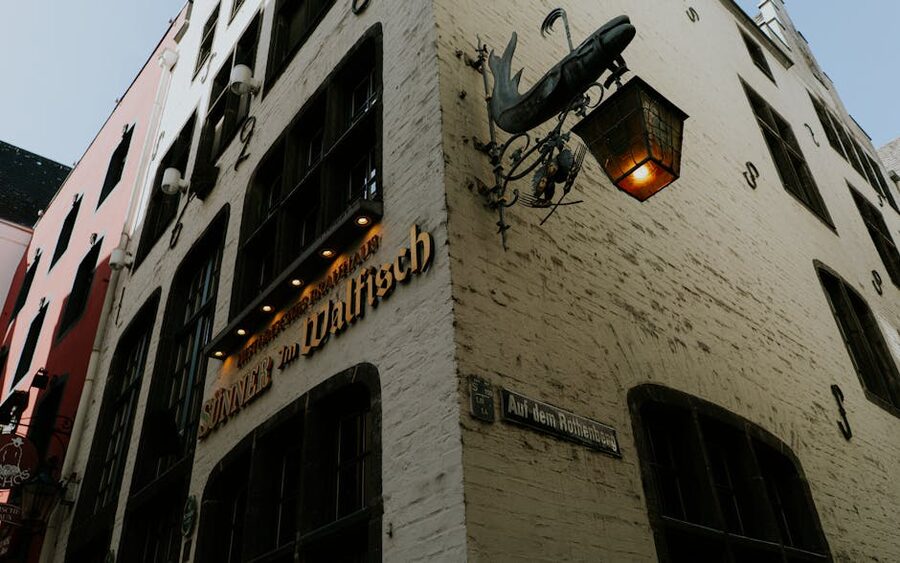
Three breweries within Old Town walking distance: Früh am Dom right next to the Cathedral (the most touristy but solid food), Päffgen on Friesenstraße (the locals’ pick, no-nonsense), and Brauhaus Sünner im Walfisch on Salzgasse (the building itself dates to 1626, one of the few real medieval survivors). For Halve Hahn (a local rye roll with cheese, the dish Cologne pretends is a chicken dish to confuse tourists), any of the three works.
If beer isn’t your thing, there’s a chocolate museum 10 minutes south of the Old Town on the Rhine that walking tours sometimes pass but don’t enter. It’s worth its own afternoon if you have kids.
Best Time of Year for an Old Town Walking Tour
Spring (April to early June): the best balance. Mild weather, light crowds, the Rhine still a little high from snowmelt. Tours run with full schedules.
Summer (June to August): peak season. Tours run multiple times a day but groups are bigger (often 20+ people). Heat in the squares can hit 30°C and there’s almost no shade on Roncalliplatz.
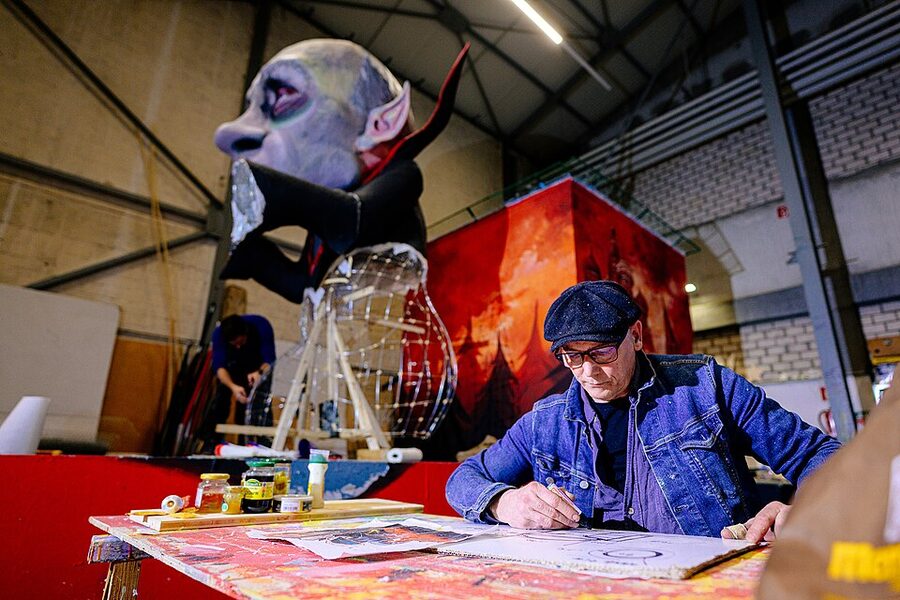
Carnival (Weiberfastnacht through Aschermittwoch, usually February): avoid. The Old Town becomes a costumed party zone for a week and most walking tours either cancel or get drowned out. Come during Carnival for Carnival, not for history.
Autumn (September to October): the local pick. Cool but not cold, golden light on the sandstone, and the smaller groups make every guide better. My favorite window.
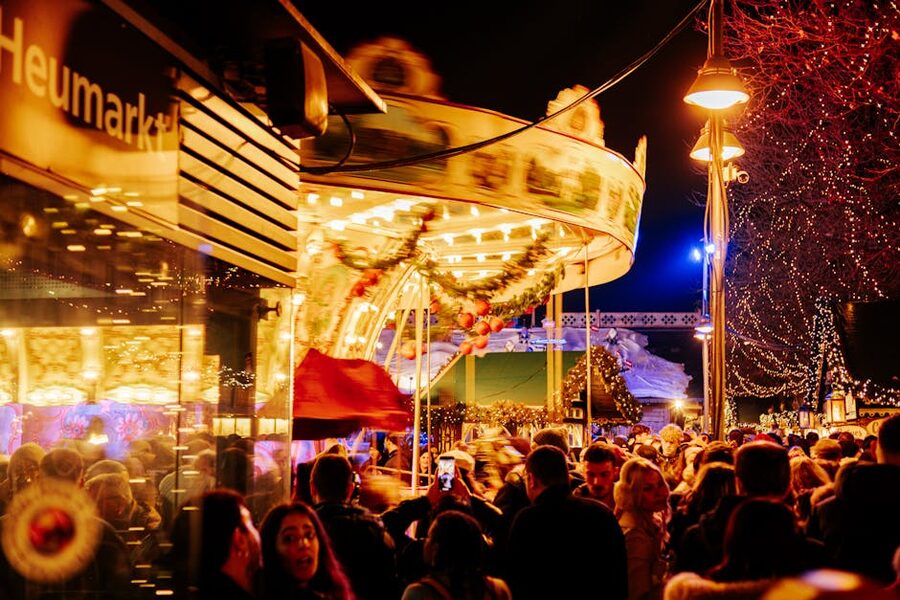
Winter and Christmas markets (late November to December 23): excellent if you don’t mind the chill. The Cathedral market on Roncalliplatz is the biggest in Germany and several tours run “Christmas market plus Old Town” combos with mulled wine stops. Mid-January through February is the dead season, and most non-Carnival tours run on a reduced schedule.
Skip This One: The Hop-On Hop-Off Bus as a Walking Tour Substitute
The Cologne hop-on hop-off bus covers more ground but it’s not a substitute for an Old Town walk. The Old Town is mostly pedestrianized and the bus loop runs around the perimeter, not through it. You’ll see the Cathedral and the riverfront from a distance but you’ll miss every square, every Roman remain and every gabled house.
Use the bus for outer Cologne (the chocolate museum, the trade fair area, Mediapark) on a separate day. Don’t substitute it for the walk.
What I’d Actually Do
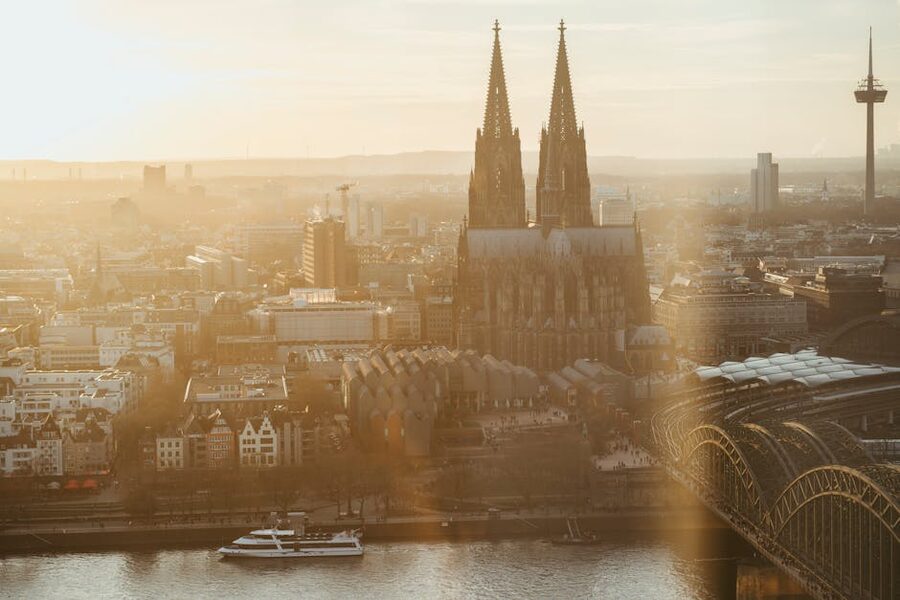
If I had a single day in Cologne, I’d land in the morning, drop the bag at a hotel near the station, walk to the Cathedral and stand in front of it for 10 minutes. Then book the 11am Old Town Highlights walking tour and let the guide do the heavy lifting on the layered history. Lunch at Päffgen, an afternoon Rhine cruise, dinner at Früh am Dom, and a 9pm walk back along the Hohenzollern Bridge to see the Cathedral lit up.
If I had two days, I’d add the Cathedral interior plus tower climb on day two, the Romano-Germanic Museum, and a slower brewery dinner. The walking tour is the spine that makes the rest of the city navigable. It’s worth booking on day one before you’ve made up your mind about the place.
Pairing Your Old Town Walk with the Rest of Your Cologne Trip
The walking tour is the foundation. Once it’s done, the city opens up. A Rhine cruise on day two gives you the riverside view of the same Old Town you’ve just walked. A Kölsch brewery tour handles the food and drink culture. And the VR time travel experience shows you the medieval and Roman city your guide had to describe in words. Book the walk first. The rest hangs off it.