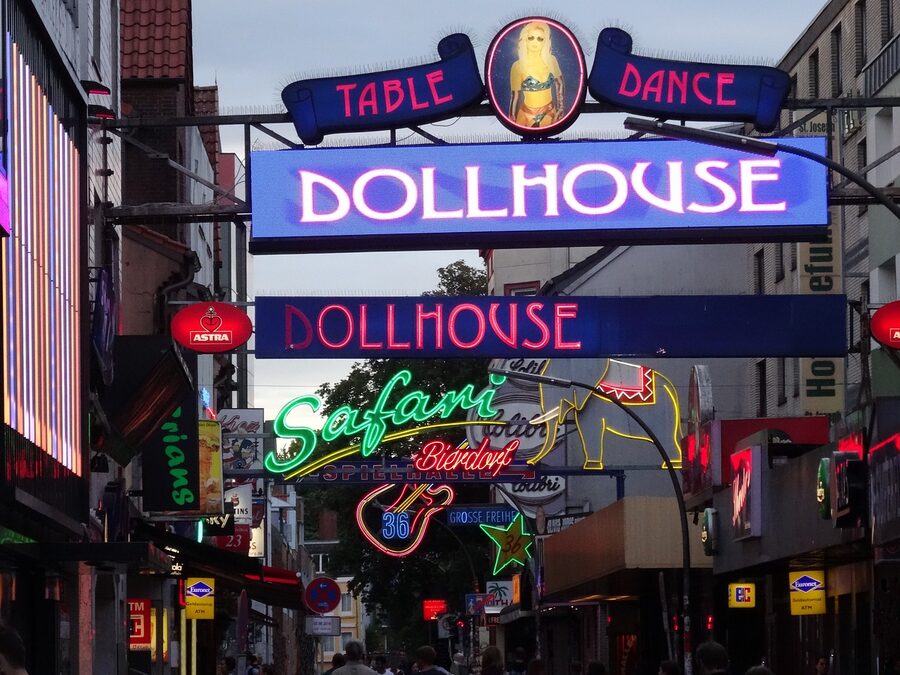
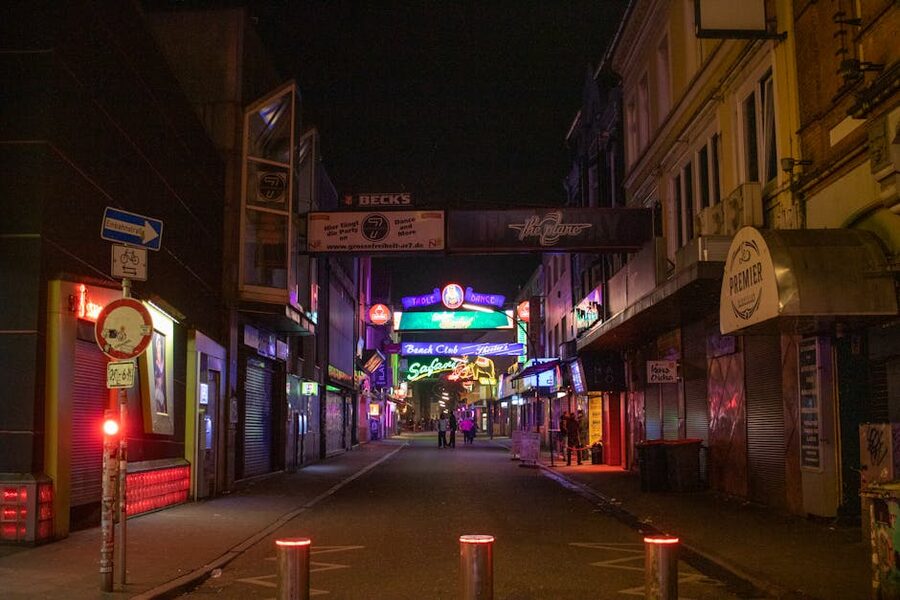
Stand on the corner of Reeperbahn and Davidstraße at 11pm and the air does something. Frying onions from a kiosk, stale beer leaking out of a cellar door, perfume from a doorway, diesel from a taxi rank, and somewhere underneath it all that low salt smell from the Elbe a few streets south. Then a tram rattles past, a stag party in matching shirts howls at nothing, and a guide in a leather jacket lifts a clipboard and says, “alright, we start here.” That’s how a St. Pauli tour begins. It is not pretty, and that is exactly the point.
St. Pauli is the rough, loud, brilliant heart of Hamburg, and a guided walk is the only sensible way to make sense of it. Below is how I’d book one.
- In a Hurry?
- What St. Pauli actually is
- How tours actually work
- English vs German tours
- What to wear and bring
- Three St. Pauli tours worth booking
- 1. Hamburg: Sex and Crime in St. Pauli Tour for Ages 18+:
- 2. Hamburg: Reeperbahn “Lust & Laster” Tour: 0 private group up to 10
- 3. Hamburg: Insider Tour of the Reeperbahn & St. Pauli:
- Where to start: the Davidwache and the Reeperbahn
- Herbertstraße
- Beatles country: Große Freiheit, Beatles-Platz, Star Club
- The Chinese quarter you can’t see
- Bunker Feldstraße and the WWII layer
- FC St. Pauli and the football side
- St. Pauli during the day
- Pairing a St. Pauli tour with the harbour
- Best time of day to go
- Stag and hen parties
- Practical bookings: when to book and what to expect
- Getting there
- Where to eat after
- What good guides do that bad guides don’t
- If you’ve already done St. Pauli
In a Hurry?
- Sex and Crime in St. Pauli (18+), $29. Most popular, two hours, sharper edges. Check availability.
- Reeperbahn “Lust & Laster”, private group up to 10. Best if you’re a stag or hen party or family who wants the tour to themselves. Check availability.
- Insider Tour of the Reeperbahn & St. Pauli, $29, 100 minutes. Slightly tighter, slightly cheaper than the 18+ one if you’re short on time. Check availability.
What St. Pauli actually is
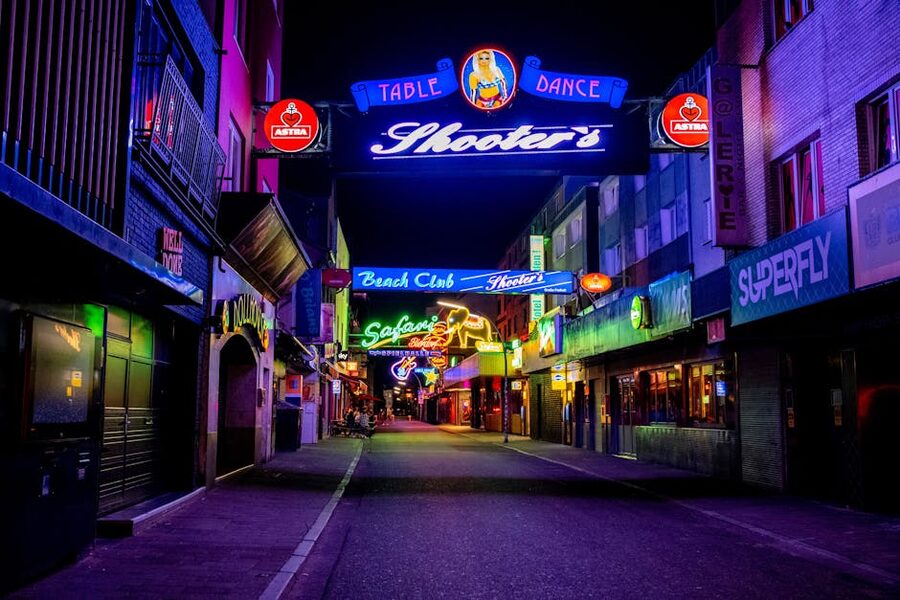
St. Pauli is a working-class district squeezed between the Elbe docks and the city centre. The Reeperbahn is its main street, about 600 metres long, named for the rope-makers who used to twist hawsers for the harbour ships. The whole neighbourhood grew up to serve sailors on shore leave. Bars, brothels, fish stalls, music halls, tattoo parlours. The trades changed but the rhythm did not.
Today it’s three things at once. It’s still the city’s red-light district, with the Herbertstraße alley off Davidstraße closed to women and to men under 18. It’s a serious live-music scene, the same streets that had The Beatles slogging out 8-hour sets in 1960. And it’s a working neighbourhood with butchers, schools, a football club, and old residents being pushed out by rising rents. A good guided tour holds all three of those things in the same hour.
How tours actually work
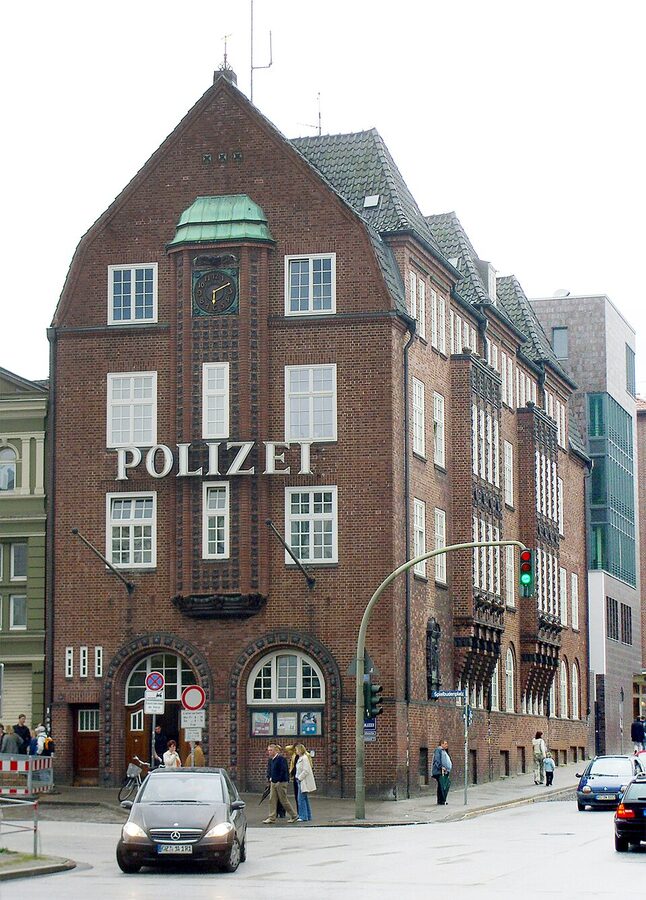
Most St. Pauli walking tours run for 90 minutes to 2 hours and start somewhere on or near the Reeperbahn itself. The two common meeting points are the Davidwache police station at Reeperbahn 22, and Beatles-Platz where Reeperbahn meets Große Freiheit. Both are easy. U-Bahn stop St. Pauli (U3 line) is a 3-minute walk to either.
You book online, you get a voucher with a meeting point and a phone number, and a guide turns up holding a sign or a clipboard. Group sizes vary from 6 to about 20. Most groups are a mix of locals on a night out, German hen parties, English-speaking visitors who’ve come over from a North Sea cruise, and the occasional Beatles obsessive making a pilgrimage. Tours are walking only. There is no bus version of this and there shouldn’t be. The streets are the show.
English vs German tours
You can book in either. German tours are usually a touch cheaper and have older Hamburg locals who won’t soften the rough edges. English tours are run by guides who’ve often lived here for a decade plus, and the pacing is a little more accommodating. If your German is decent, the German-language Lust & Laster tour is the one I’d push you toward. If you only have English, the Sex and Crime tour or the Insider tour are the better fits.
What to wear and bring
Comfortable shoes, obviously. The pavements are uneven, and you’re on cobble in places. Bring a jacket from October to April because Hamburg gets that flat North Sea wind. Cash is useful if you want to peel off after the tour and grab a Currywurst at one of the kiosks; not every place is card-friendly at 1am. Phone in your pocket, not your hand. Pickpockets do work the Reeperbahn at weekends and the guides will tell you the same thing on minute one.
Three St. Pauli tours worth booking
I picked these three because they cover the three real reasons people book a St. Pauli walk: you want the unfiltered red-light story (Sex and Crime), you want a private group with flexibility (Lust & Laster), or you want a tighter, more general intro (Insider Tour). Pick whichever shape fits the night you’re planning.
1. Hamburg: Sex and Crime in St. Pauli Tour for Ages 18+: $29

This is the most-booked St. Pauli tour on the market, and it earns it. Two hours, adults only, and the guides are mostly long-time St. Pauli residents who’ve worked the bars or lived above them. Our full review of the Sex and Crime tour goes into specifics on guides and what each stop covers, but the short version: you get the Herbertstraße context, the Davidwache police stories, an underground boxing-gym anecdote that’s hard to forget, and enough crime history to make sense of why this particular street has the laws it does.
2. Hamburg: Reeperbahn “Lust & Laster” Tour: $500 private group up to 10

Same neighbourhood, same content, but you get the guide to yourselves for two hours. The price looks steep until you split it: ten people pays out at $50 each, six pays out at $83, and the guide will adjust pace and language for whoever’s in the group. Our Lust & Laster review covers what the private format actually changes versus the public tours. The short answer: questions get answered properly, and the guide will detour into specific bars or sites if you ask.
3. Hamburg: Insider Tour of the Reeperbahn & St. Pauli: $29

This one runs 100 minutes, not 120, and the angle is broader: less red-light specifics, more general district history. The guides bring in characters most tours skip, like Eddy Kante (the bodyguard who became a local fixture) and Barbie Stupid the drag queen. Our review of the Insider tour spells out where it overlaps with Sex and Crime and where it diverges. Pick this one if you want a sampler. Pick Sex and Crime if you want to go deeper into the harder material.
Where to start: the Davidwache and the Reeperbahn
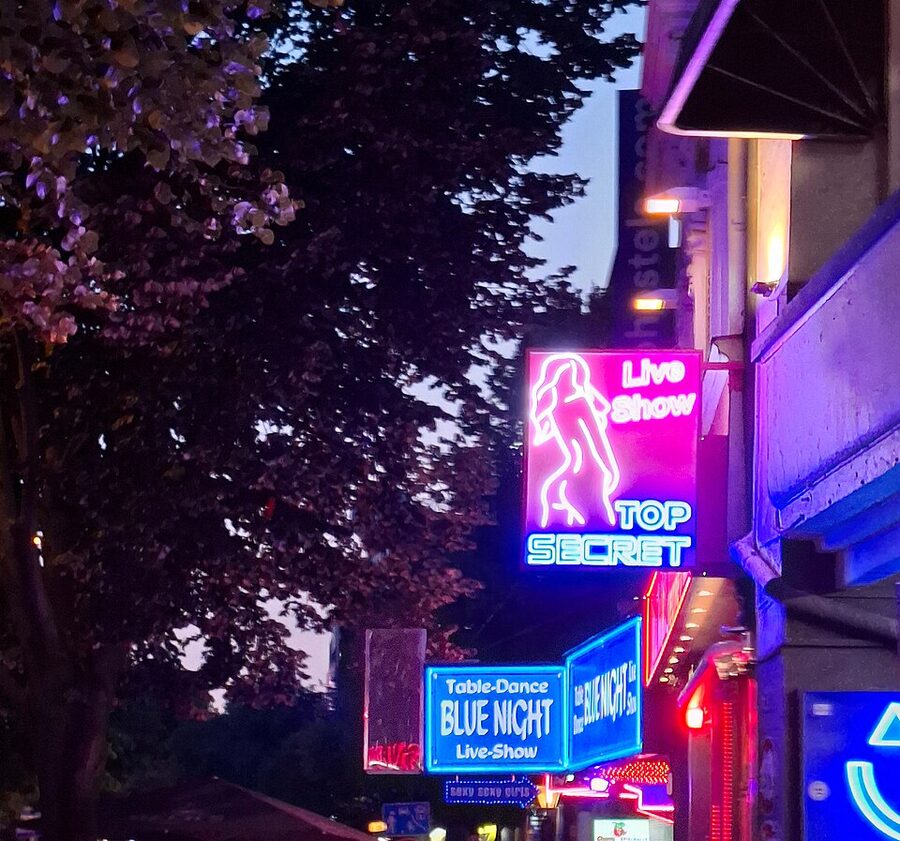
The Davidwache is Germany’s smallest police precinct. It opened in 1914, sits at Reeperbahn 22, and has been the operational nerve centre of the red-light district for over a century. Police here run on a different rhythm to the rest of Hamburg. Drugs, fights, sex-work disputes, lost tourists, missing wallets, tour groups. Nine guides out of ten will start the walk in front of it because it’s the cleanest visual shorthand for the neighbourhood. A small old building doing very specific work.
From there, most tours head west. The Reeperbahn proper is the spine. You’ll pass the Operettenhaus (where The Lion King has been running for over twenty years), then the modern Tanzende Türme (Dancing Towers) building, then the side street that opens onto Beatles-Platz. The big tour-bus stop tends to pull in here, but you don’t want a bus tour for this. You want feet.
Herbertstraße
Herbertstraße is the famous closed alley. Two metal gates, no entry for women or men under 18, and the rule is enforced by the residents themselves. Most tours stop in front of the gates and explain how it works without going through. The Sex and Crime tour goes into more detail than the others. It’s a working street and a piece of history at the same time, and the guides are clear-eyed about both sides of that.
Beatles country: Große Freiheit, Beatles-Platz, Star Club
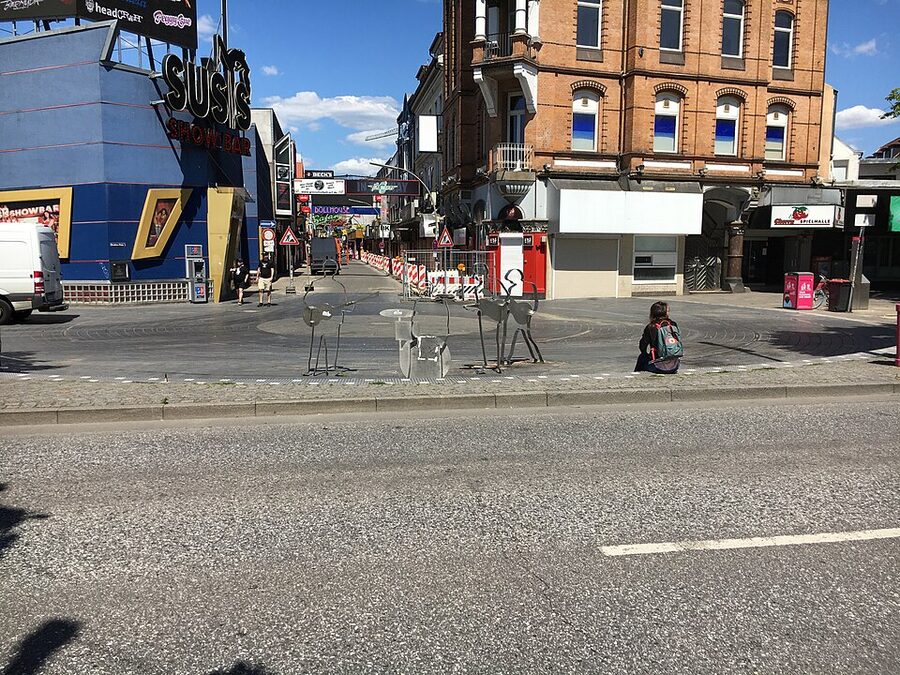
The Beatles were here from August 1960 to December 1962, on and off. They played the Indra, the Kaiserkeller, the Top Ten Club and the Star Club, sometimes for 8-hour stretches, sometimes wired on Preludin to keep going. They lived in a back room behind a cinema toilet on Paul-McCartney-Platz, which is exactly as glamorous as it sounds. John Lennon’s line about Hamburg is the one most guides will use: “I was born in Liverpool but I grew up in Hamburg.” It’s a line worth taking seriously. The band that flew home in 1962 was a different one to the band that arrived.
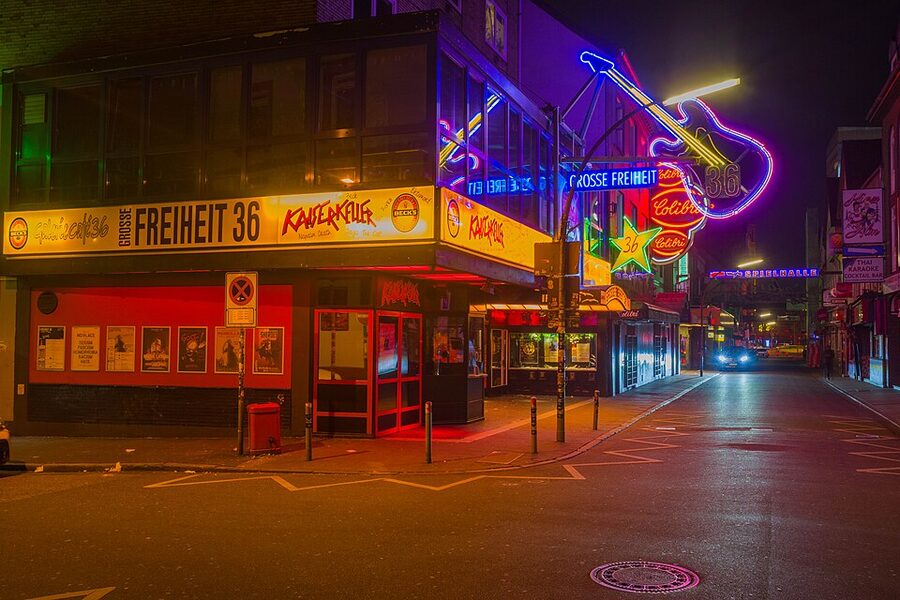
The walk-in attractions for Beatles fans are Beatles-Platz itself (a small steel-silhouette sculpture set into the ground), Große Freiheit 36 where the Kaiserkeller still operates as a club downstairs, and the spot where the Star Club used to be at Große Freiheit 39. The Star Club shut in 1969 and burned down in 1987. There’s a plaque. That’s it. Most general St. Pauli tours give you 10 to 15 minutes on this. If the Beatles are why you’re in Hamburg, book a dedicated Beatles-themed walk on top.
The Chinese quarter you can’t see
This is the bit most tourists miss and most good guides include. In the 1920s and 30s, St. Pauli had a small but lively Chinese community, mostly sailors who’d settled and opened restaurants and laundries on Schmuckstraße. The Nazis dismantled it in 1944 in what was called the Chinesenaktion: 129 men were arrested, sent to camps, and most never came back. The community never re-formed. The only physical traces left are a stolperstein (a small brass cobblestone with a name on it) for Woo Lie Kien, a restaurant owner who died in custody, and the Hong Kong Bar, which a survivor reopened after the war. A guide who points these out is a good guide.
Bunker Feldstraße and the WWII layer
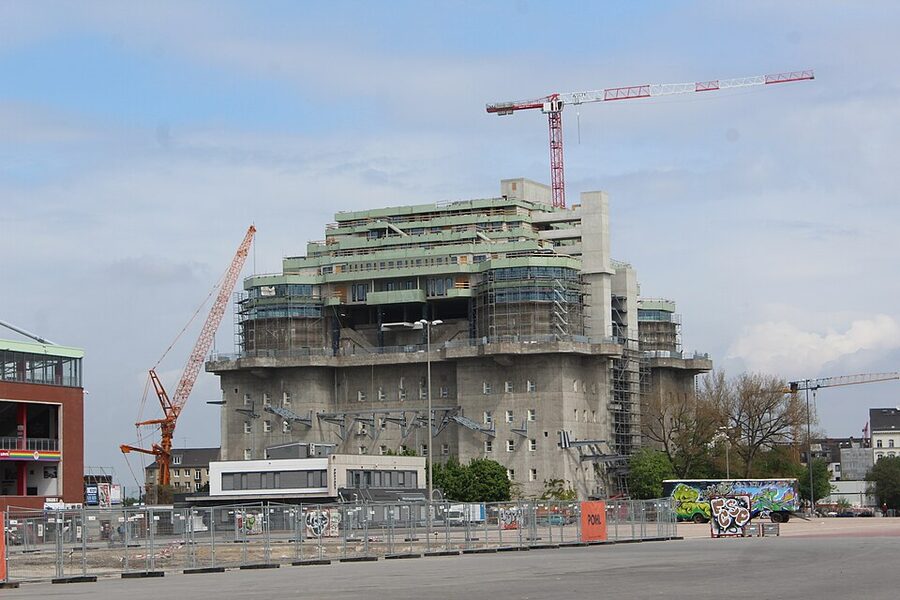
The Feldstraße bunker squats over St. Pauli like a concrete tooth. It’s a 39-metre-tall flak tower built by forced labour in 1942, and it’s so structurally over-engineered that demolition was never seriously considered. Today it houses media studios, music studios, a hotel, and a public roof terrace with a small park. Most St. Pauli walking tours don’t go inside but they will explain it. If you want the WWII layer of Hamburg in more depth, our Munich Third Reich tour guide and Berlin Third Reich walking tour guide are the right pair if you’re working through Germany’s harder history. Hamburg has its own Third Reich tour ecosystem too, and a good St. Pauli guide will signpost it.
FC St. Pauli and the football side
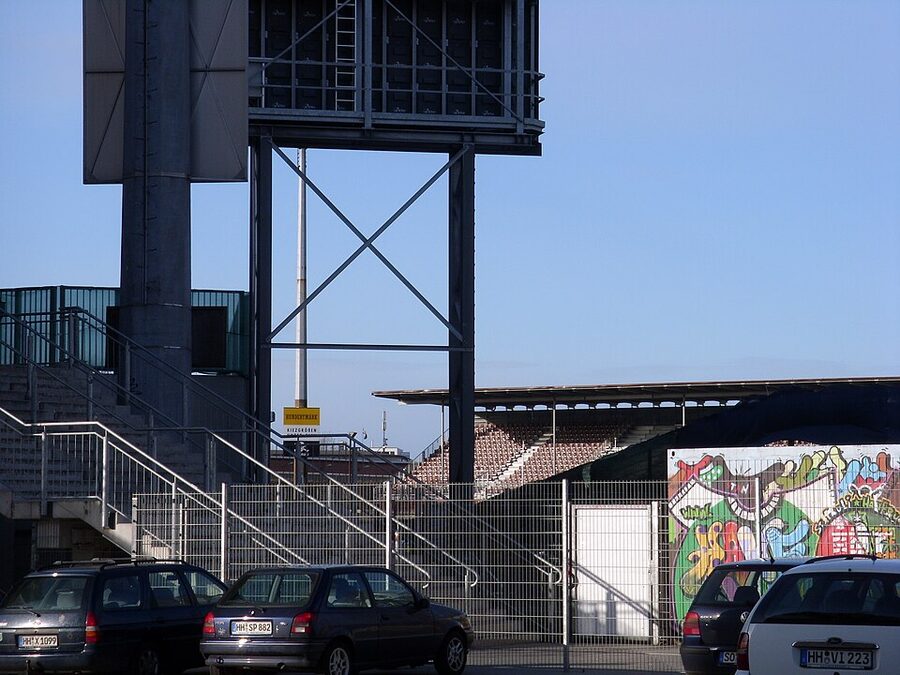
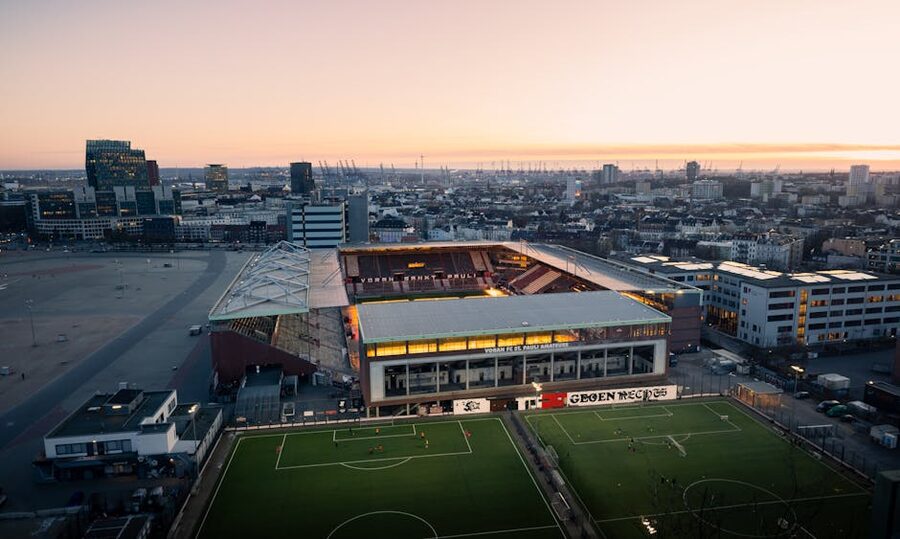
FC St. Pauli is the football club, and they matter to this neighbourhood far more than league position would suggest. The skull-and-crossbones logo, the anti-fascist banners, the punk-and-rock identity, all of it grew out of these streets in the 1980s when squatters and locals adopted the team as a counter to mainstream Bundesliga culture. The Millerntor stadium is two blocks north of the Reeperbahn. On a match day the bars on Hein-Hoyer-Straße and around the Bunker fill from noon. If you’re booking a St. Pauli tour for a Saturday with a home fixture, ask about timing because some guides will work the stadium into the route, and some won’t.
St. Pauli during the day
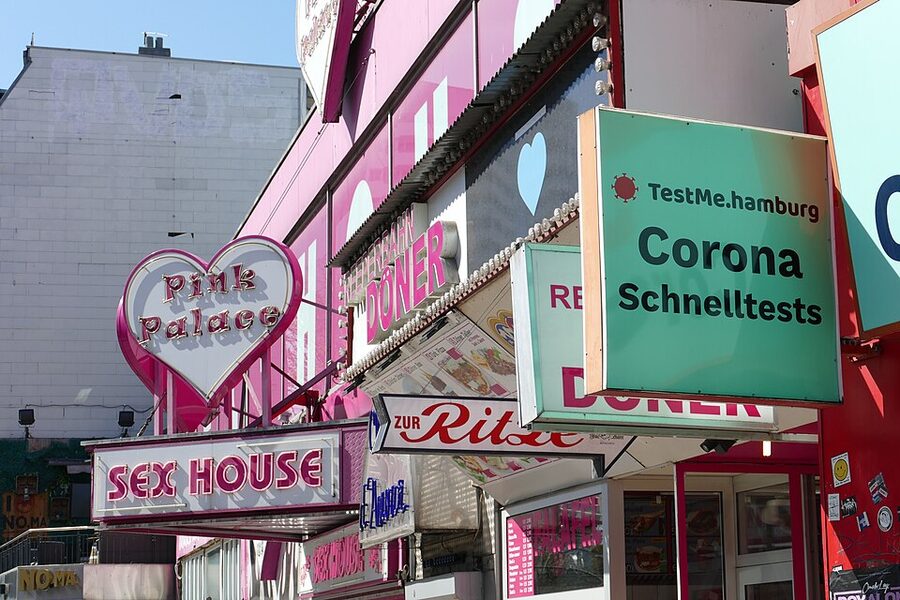
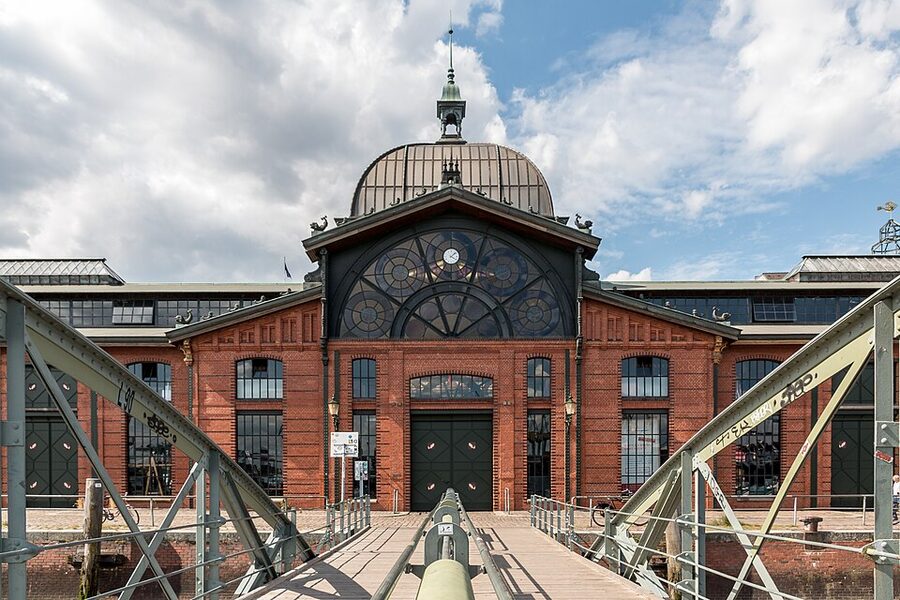
The neighbourhood does not switch off at sunrise. Most of the bars are shut by 6am, but the rest of St. Pauli wakes up at a normal hour and gets on with normal-hour things. The Schanzenviertel just north is full of cafés, bookshops, vintage clothes and good coffee. Park Fiction has the famous palm trees on Antonistraße overlooking the harbour, free to wander. And on Sundays at 5am the Fischmarkt opens down by the river: live bands, fish-bun stalls, locals queueing for breakfast next to clubbers ending the night. It runs until 9.30am sharp.
Pairing a St. Pauli tour with the harbour
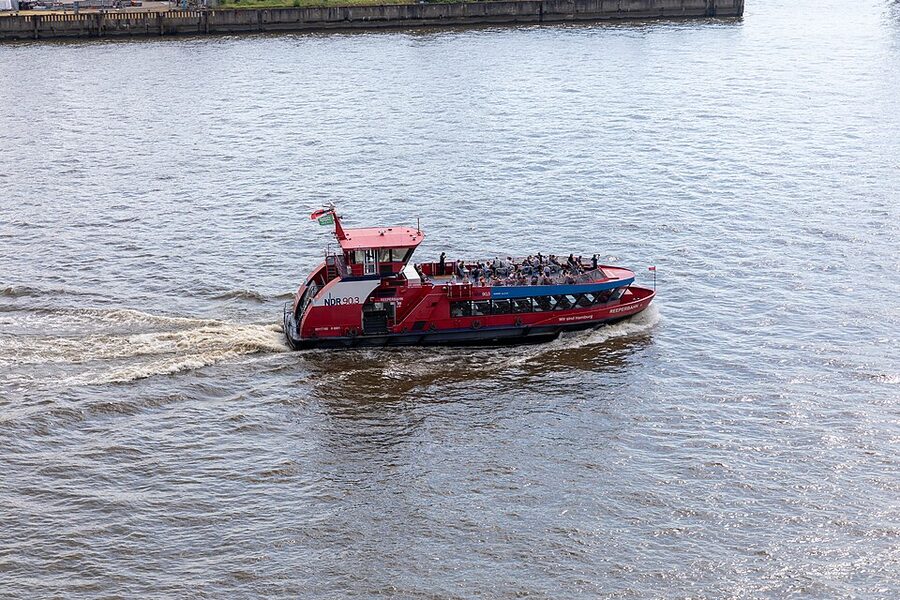
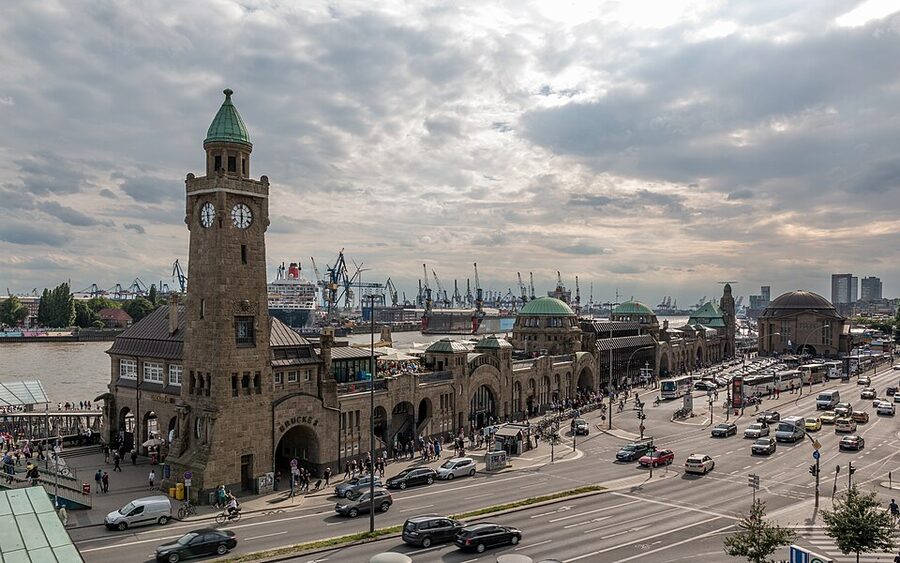
The harbour is two minutes south. The Landungsbrücken jetty piers are the launching pad for almost every Hamburg harbour cruise, and a 60-to-90-minute boat trip is the natural daytime pairing for a St. Pauli evening walk. Different angles of the same neighbourhood. Our Hamburg harbor cruise guide covers which boats are worth booking and which are tourist traps, and our Hamburg hop-on hop-off guide is the right call if you want to slot St. Pauli into a wider city sweep without doing it twice on foot.
Best time of day to go
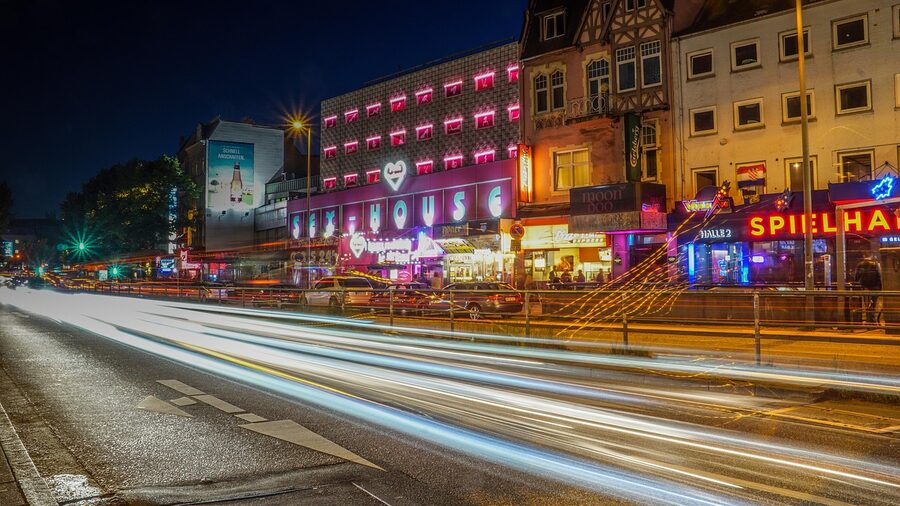
The honest answer is between 8.30pm and 11pm on a Friday or Saturday. The neighbourhood is fully on. Lights, smells, sounds, crowds, the works. Tours that start at 7pm are easier to follow and the guides can be heard over less noise, but you’re getting a softer version. Tours that start at 10pm or later are the full immersion. Daytime tours exist and they have their place, especially if you’ve got kids in tow or you want the history without the chaos, but you do lose something by going in daylight. The street is half the story.
Stag and hen parties
St. Pauli is one of the biggest stag/hen destinations in Germany and most guides have a tested approach: they’re patient, they’re firm about pace, and they’ve heard every joke. If you’re booking for a stag, a private group format like the Lust & Laster works much better than a public 18+ tour where you’ll be mixed in with strangers. Tip the guide either way. They earn it.
Practical bookings: when to book and what to expect
Friday and Saturday tours sell out 2 to 3 days ahead in the summer (June through September) and on weekends with home FC St. Pauli matches. Tuesday through Thursday you can usually walk up. Cancellation policies on both GetYourGuide and Viator are generous: most tours offer free cancellation up to 24 hours before. Book online before you arrive, save the voucher to your phone, and turn up 10 minutes before the start time. There is no formal dress code. There is no “do I need to bring ID” question. Just bring your phone with the voucher.
Getting there
U-Bahn U3 line, stop St. Pauli or Reeperbahn, both put you within 3 minutes of the meeting points. S-Bahn Reeperbahn (S1, S3) is also fine. Walking from the Hauptbahnhof takes about 30 minutes via Jungfernstieg and Gänsemarkt, which is a reasonable warm-up walk if you’ve just stepped off the train. Taxi from the airport runs €30 to €40. Don’t drive. Parking on the Reeperbahn at night is genuinely hostile.
Where to eat after
The Currywurst kiosks on the Reeperbahn itself are fine but predictable. For something more interesting, walk five minutes north to the Schanzenviertel for late-night dürüm wraps on Susannenstraße or beer in the courtyard at Frank und Frei. The Schanzenviertel culinary tour is its own booking if you want a guided food version of that area. If it’s 4am and you’re hungry, the Fischbrötchen kiosks at the Landungsbrücken pier open early.
What good guides do that bad guides don’t
A good St. Pauli guide does three things. They tell you the dirty stories without leering. They give you the gentrification context (rising rents, residents pushed out, dingy clubs becoming corporation-owned) so you understand the neighbourhood is changing under your feet. And they hand you the neighbourhood as a working community, not as a sex-and-crime theme park. The Sex and Crime tour I recommended is direct about all three of those, which is why I keep sending readers there. The cheapest tour is rarely the worst one. The slickest tour is rarely the best one. Pick a guide who’s lived here, not one who’s read a script.
If you’ve already done St. Pauli
If you’ve already walked the Reeperbahn and want the next layer of Hamburg, the right next move is a harbour cruise paired with a hop-on hop-off pass. Our Hamburg harbour cruise booking guide walks through the boat options, and the Hamburg hop-on hop-off guide covers the bus routes that give you a fuller picture of the city beyond St. Pauli. For a polar-opposite pairing on the architectural high end, the Elbphilharmonie booking guide is the white-tie counterweight to a leather-jacket Reeperbahn night. If you’re heading on to Munich next, our Munich hop-on hop-off guide and Dachau day trip from Munich guide are the equivalent starting points. Berlin is the other big German anchor and we cover it heavily, starting with the Berlin hop-on hop-off guide, the Berlin walking tour guide, and a darker counterpart in the Berlin Third Reich tour guide. St. Pauli, the Reichstag, Dachau, the Munich Old Town. Different cities, same idea: book the walk, listen to the guide, get out of the way of your own assumptions.