The surprise here is how much Tottori fits into one day: a vast sweep of sand beside the Sea of Japan, a museum where artists shape sand into detailed sculptures, and a pear orchard where you pick the fruit yourself. It’s a long ride from Osaka, but the stops feel a world away from the city.
I like that the tour includes round-trip transport from Dotonbori, so you can reach Tottori without piecing together train and bus connections. I also like the balance between the dunes and Sand Museum’s art, followed by a hands-on orchard visit and unlimited fresh pears.
The main drawback is the tight day. You’ll spend about six hours on the road, and the dunes offer little shade and can be tiring to walk across. Pear picking is seasonal, so check that it will be available on your chosen date.
- What to know before you go
- Osaka to Tottori: a long ride with a useful payoff
- Walking the Tottori Sand Dunes
- Sand Museum: art made from sand and water
- Sankouen pear picking: fruit straight from the orchard
- What the price includes, and what it does not
- Who will get the most from this day
- Before departure: small details that matter
- Should you book this Tottori day trip?
- FAQ
- Where does the tour depart from?
- How long is the tour?
- How much time do I get at the dunes?
- Are the Sand Museum ticket and pear picking included?
- Is pear picking available all year?
- What languages can the guide speak?
- Can children join, and do young children need a seat?
- More Tours in Tottori
- More Tour Reviews in Tottori
- Not for you? Here's more nearby things to do in Tottori we have reviewed
What to know before you go

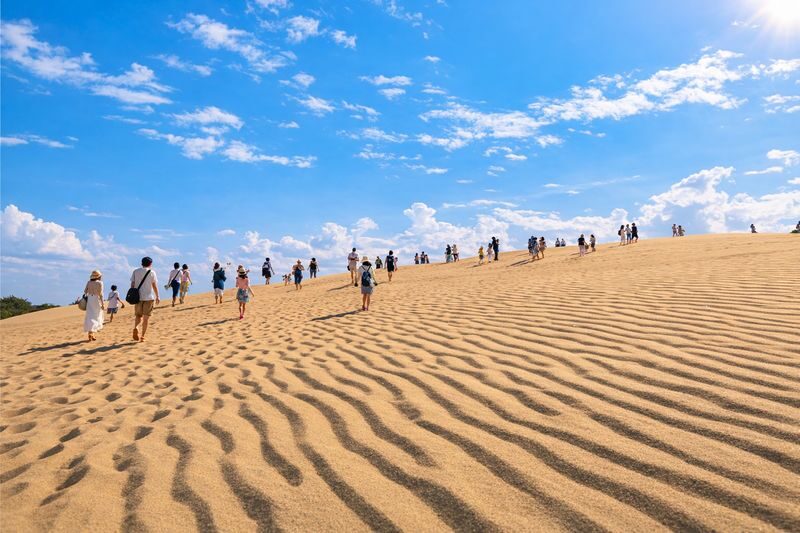




- Climb the dunes for a sea view: Uma no Se, or Horse’s Back, offers a panoramic view of the Sea of Japan, but walking on loose sand takes effort.
- See sand sculpture as a temporary art form: The Sand Museum’s theme changes each year, so the display is different from one visit to the next.
- Pick pears at Sankouen: The included orchard visit lets you pick ripe fruit and eat as much as you like on site.
- Leave the transfers to the tour: A direct ride from Dotonbori avoids arranging separate transport to Tottori.
- Pack for sun and sand: Shade is scarce, and sand can get into shoes. Bring sun protection and wear comfortable footwear.
- Expect a shared group ride: The vehicle may be a small group van or a bus, depending on how many people book.
Osaka to Tottori: a long ride with a useful payoff
The tour starts at 8:00 AM near Kani Doraku Dotonbori East Store. Arrive at least 15 minutes early and look for staff wearing an Easy Go vest or showing the Easy Go logo. The group leaves on time, and late arrivals or no-shows are not refunded, so this is not a morning to cut it close.
From central Osaka, the drive to the dunes takes about three hours. That is a sizable stretch of the day, but it saves you from planning the connections yourself and lets you visit several Tottori sights in one outing. A restroom break may be made along the way, and the return journey is expected to begin around 3:00 PM, with arrival in Osaka around 6:30 PM.
The vehicle depends on the group size. Smaller groups of four to 13 may travel in a van with a driver-guide; groups of 14 to 45 may use a bus with a separate guide. The driver-guide’s main job is driving, so don’t count on a running lecture throughout the route. Guide languages may include English, Chinese, Japanese or Korean, but the language offered on a particular day is not guaranteed.
One guide, Hua Hua, helped a group in both English and Chinese and made the ride feel friendly and clear. That is a nice example of what the guide service can add, but it is not a promise that Hua Hua, or a guide speaking your preferred language, will be assigned to your departure. The tour may bring together people from different language groups.
You can also read our reviews of more tours and experiences in Tottori.


Walking the Tottori Sand Dunes
The dunes are the day’s big visual change. Tottori’s sand stretches beside the Sea of Japan, giving the area an unusual meeting of coast and desert-like terrain. The dunes are described as a 100,000-year-old formation, and the scale makes the place feel quite different from the green hills and city streets most people associate with Japan.
You have time to explore on your own rather than being led step by step. One option is to make your way up Uma no Se, the ridge known as Horse’s Back, for a broad view toward the sea. The climb is part of the appeal, but loose sand makes it harder than a walk on a paved path. If you prefer a slower visit, you can take in the open space and stop for photos without attempting the full climb.
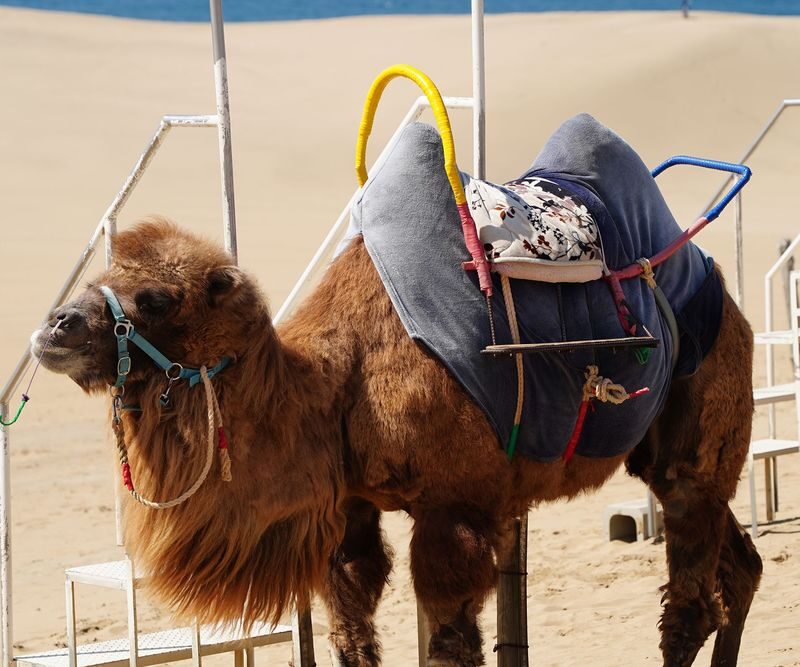
Camels are sometimes part of the scene and can add to the desert-like feel, but treat a photo opportunity as a possibility, not a guaranteed tour feature. The tour description mentions taking photos with camels; it does not specify whether a camel ride is included.
The dunes are exposed. There is little shade, so an umbrella or other sun protection can make a real difference, especially on a hot day. Wear shoes that are comfortable to walk in and easy to clean. Sand can work its way inside; special slippers may be available to rent on site. Bring water and dress for the day’s forecast, since conditions can change.
Around three hours of free time at the dunes gives you room to see the Sand Museum as well. That sounds generous, but you’ll need to manage your time between walking, photos and the museum. The order of stops may change with traffic or weather, so follow the guide’s instructions about when to return to the vehicle.
Sand Museum: art made from sand and water
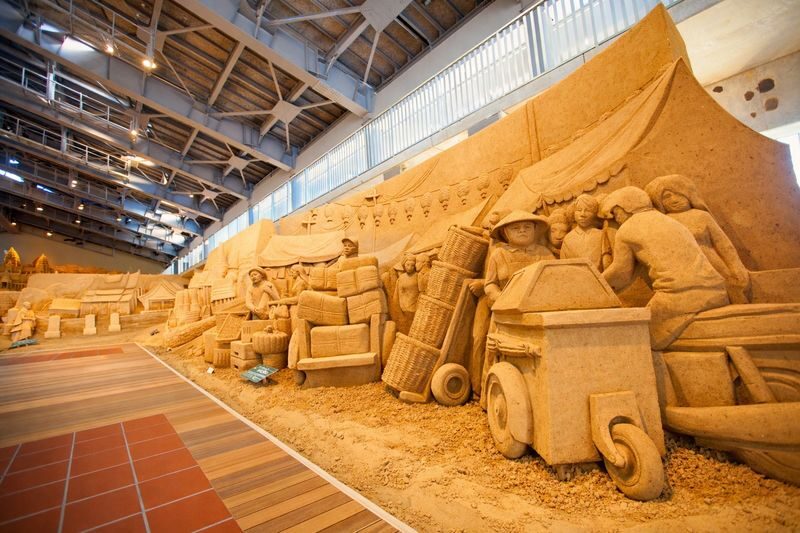
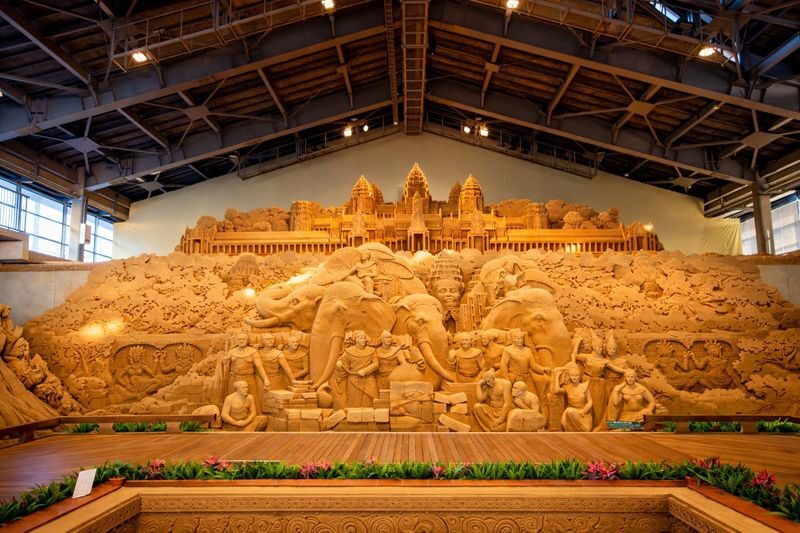
The Sand Museum is a strong counterpoint to the open dunes. Outside, you see sand in its natural setting. Inside, artisans shape sand and water into intricate works, often at an impressive scale. The museum changes its theme each year, which gives the displays a temporary, event-like quality: even if you have seen photos from a past visit, the current exhibition may be entirely different.
Your admission is included. The practical challenge is simply fitting the museum into the time available at the dunes. If the sculptures matter to you, check the current theme before you go and set aside time for a proper look rather than leaving it until the last few minutes. The museum is close to the dunes, so you can combine the two stops without a separate transfer.
The changing exhibition also makes this stop more than a rainy-day backup. It gives the outing a cultural element and shows how a material most people see as loose beach sand can become detailed artwork. Still, the museum’s appeal depends partly on the year’s theme, and the tour does not provide a fixed amount of time inside.
Sankouen pear picking: fruit straight from the orchard
In the afternoon, the tour heads to Sankouen, where Tottori’s pear-growing tradition becomes a hands-on stop. Instead of buying chilled fruit from a shop, you pick pears in the orchard and eat them there. The included fee covers the pear-picking experience and an all-you-can-eat session, so you can taste the fruit freshly picked and peeled.
This is a different kind of attraction from the dunes. There is no major view to climb for or sculpture to study; the pleasure is in slowing down, choosing fruit and tasting it at the source. Fresh pears are juicy and sweet, and the contrast with a long day of walking and driving can be welcome.
Timing matters. Pear picking depends on the harvest season, and it is not available year-round. If picking is a key reason for booking, confirm that it will be operating on your travel date before you pay. If the season has passed, you may have to wait until the following year; the tour information does not promise a replacement activity or refund if the harvest experience is unavailable.
What the price includes, and what it does not
The early-bird package starts at US$57.55 and includes round-trip transport, Sand Museum admission, pear-picking fees, tolls, parking, fuel and operator-provided insurance. The regular package with the same museum and pear inclusions starts at US$65.45. Prices can change, so check the amount shown for your date.
For a full-day trip from Osaka, that price can be good value. You are covering a long intercity drive, entrance to the museum and an orchard activity in one booking. Arranging the same day independently would mean planning the transport between Osaka and Tottori and then working out how to reach the separate stops. The tour’s main value is convenience, not a private or leisurely schedule.
Meals, drinks, personal spending and tips are extra. Bring money for food and any personal purchases, and do not assume that lunch is provided. The schedule leaves the day focused on the listed stops rather than a meal experience.
One appealing practical detail is that the plan centers on the dunes, museum and orchard. There is no souvenir-shop stop listed, and a smooth day can feel more direct when your time is spent at the places you came to see. The group size and vehicle type can vary, though, and you cannot choose your seat with certainty. Seat requests can be noted when booking, but the guide makes the final arrangement; front-row requests are not guaranteed.
You can also read our reviews of more museum experiences in Tottori

Who will get the most from this day
This tour suits you if you want to see Tottori but would rather not organize the long-distance transport yourself. It also works well if you enjoy a mix of outdoor scenery, a museum visit and a local food experience. The dunes give you room to walk and take photos, while pear picking adds something tactile and seasonal to the day.
Families can join, and there is no age limit. Children aged three and over are charged the adult rate. Children aged zero to two can ride free only if they do not need a separate seat, and the operator must be told in advance. They will need to be held by a guardian throughout the journey.
Think twice if you need a flexible timetable, want to stay longer at one stop, or are uncomfortable with a long shared ride. You cannot leave the group early and expect a refund for the parts you skip. Arrival back in Osaka is an estimate, not a firm appointment, so avoid booking evening plans that depend on getting back at exactly 6:30 PM.
Before departure: small details that matter
Pack for walking and weather rather than dressing only for the bus. Comfortable shoes are the safest choice for the dunes, and sun protection is important because shade is scarce. The orchard and outdoor stops also call for clothing suited to the day’s heat or cold.
Each person may bring one standard-sized piece of luggage free. Extra luggage costs ¥2,000 per piece, payable to the driver, and should be declared when you book. If you do not inform the operator, the driver may refuse the extra bag.
The supplier sends meeting-point details, the guide’s contact information and other tour instructions by email before 9:00 PM Japan time on the day before departure. If you book after 6:00 PM, those details may not arrive that same evening. Check your spam folder if the message is missing, and contact the supplier if it still has not arrived. Use the service only on the date shown on your booking.
Traffic and weather can change the order of activities or the return time. Outdoor stops may be adjusted for safety, and the guide may alter the schedule without reducing the listed attractions where conditions allow. Since the group will not wait for late arrivals, keep the meeting details close and get there early.
Should you book this Tottori day trip?
Book it if you want the dunes, the Sand Museum and seasonal pear picking in one day, and value simple transport more than a slow, independent pace. The combination is unusually varied: open sand, handmade sculpture and fruit picked at the orchard. At the early-bird price, the included transfers and admissions make the day especially appealing.
Skip it if you want to set your own timetable, need a guaranteed guide language, or are travelling outside pear season mainly for the orchard visit. The long drive and exposed dunes are real considerations, not fine print. If you can handle both, bring an umbrella, wear shoes you can get sandy and leave the evening open for a possible late return.
Tottori Sand Dunes & Sand Museum & All-You-Can-Eat Pear Picking (Departing from Osaka)
“It was great that we didn't have to visit unnecessary souvenir shops and could go only to the places we wanted to. It might have been geared toward…”
FAQ
Where does the tour depart from?
It departs from the Dotonbori area near Kani Doraku Dotonbori East Store. Arrive 15 minutes early and look for staff wearing an Easy Go vest or displaying the Easy Go logo.
How long is the tour?
Departure is scheduled for 8:00 AM, with arrival back in Osaka estimated at 6:30 PM. The schedule can change because of traffic or weather.
How much time do I get at the dunes?
The schedule allows time at the dunes and nearby Sand Museum, and the tour information describes about three hours of free time at the dunes. The exact timing may change on the day.
Are the Sand Museum ticket and pear picking included?
Yes. Both the Sand Museum admission and Sankouen pear-picking fee are included in the package described.
Is pear picking available all year?
No. Pear picking depends on the harvest season. Check that it will be operating on your chosen date if it is important to your plans.
What languages can the guide speak?
English, Chinese, Japanese and Korean are listed as possible guide languages. The actual language depends on the group and arrangements on the day, so a specific language cannot be guaranteed.
Can children join, and do young children need a seat?
There is no age limit. Children aged three and over pay the adult rate. Children aged zero to two can join free if they do not occupy a separate seat, but you must inform the operator in advance and hold the child throughout the ride.