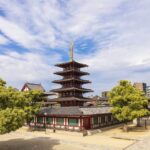
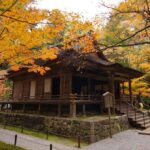
Shirakawa-go is the change of scene that gives this Osaka-to-Tokyo trip its character. In eight days, you move from Nara’s deer park and Kyoto’s shrine gates to mountain villages, Mount Fuji and Tokyo’s big-city sights. I like that Shirakawa-go and Fuji bring countryside and mountain scenery into a trip otherwise heavy on famous cities and temples.
I also like the practical package: English-speaking guides, intercity bus transport, admission to listed sights and daily breakfast are included, so you can spend less time piecing together logistics. The trade-off is pace. You cover a lot of ground, and Fuji views depend on weather; hotel rooms can also be small, and airport transfers are not included.
- At a glance
- A fast route through Japan’s headline sights
- Day 1: Land at Kansai and get settled
- Day 2: Nara’s Buddha, shrine and deer
- Day 3: Choose Osaka or Hiroshima
- Day 4: Kyoto’s torii gates, then on to the mountains
- Day 5: Shirakawa-go and Takayama Jinya
- Day 6: Fuji views, Lake Kawaguchi and Asakusa
- Day 7: From the Imperial Palace to Shibuya
- What the id="section-0",799 price covers, and what it doesn’t
- Who will get the most from this route?
- Should you book it?
- FAQ
- Where does the tour start and finish?
- Are flights and airport transfers included?
- What is included in the id="section-0",799 starting price?
- How much does the optional Hiroshima tour cost?
- Is Mount Fuji guaranteed to be visible?
- What meals are included?
- Can three people share one hotel room?
- The Best Of Osaka!
- More Tours in Osaka
- More Tour Reviews in Osaka
- Not for you? Here's more nearby things to do in Osaka we have reviewed
At a glance
 1 / 10
 2 / 10
 3 / 10
 4 / 10
 5 / 10
 6 / 10
 7 / 10
 8 / 10
 9 / 10
 10 / 10
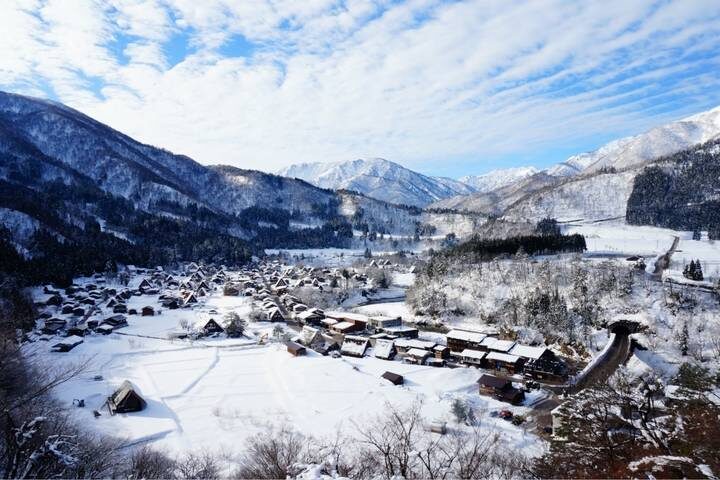
- Shirakawa-go adds a rare rural stop: Walk among the village’s distinctive Gassho-style houses, built with steep roofs suited to the mountain climate.
- Nara pairs a major temple with free-roaming deer: Todaiji’s Great Buddha is about 15 meters tall, and deer crackers cost 150 yen a pack.
- Fuji is a weather-dependent highlight: The bus goes to the 5th Station at 2,300 meters when conditions allow, followed by a short Lake Kawaguchi cruise.
- Hiroshima is optional, not included: The door-to-door day trip by Shinkansen costs $335 per adult and $278 per child under six.
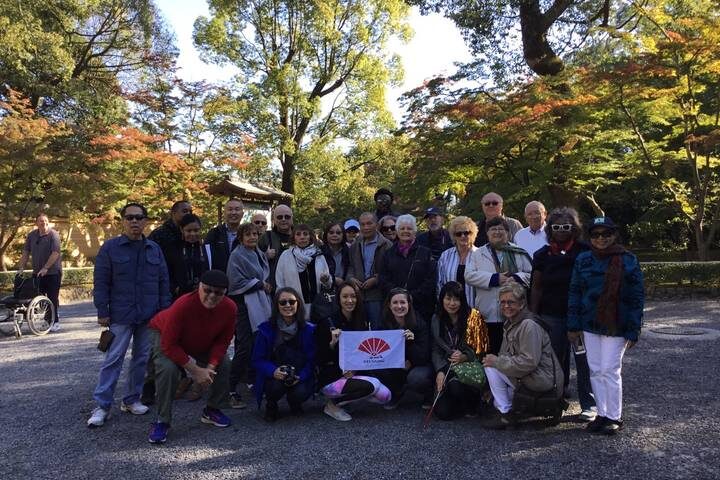
- The group is sized for shared travel: Expect 10 to 30 people, an English-speaking guide, and light physical activity.
- Budget extra for flights and solo rooms: Airfare and airport transfers are excluded, and a single-room supplement may apply.
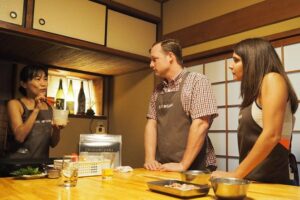
👉 See our pick of the 24 Best Workshops And Classes In Osaka
A fast route through Japan’s headline sights
At a starting price of $1,799, Stunning Japan with Shirakawa-go is a guided group tour from Osaka to Tokyo. It suits a first visit when you want a broad introduction without planning every train connection and hotel yourself. You’ll see major landmarks, travel between regions by bus, and have a little free time to explore on your own.
This is a highlights tour, not a slow cultural study. Many days include several stops and a long transfer, so you may reach a place, see its main feature and move on before you’ve had time to wander far. The sights are familiar for a reason, but if you want local neighborhoods, meals built into the schedule or time to sit over tea, plan to add days before or after the tour.
Stunning Tours supplies English-speaking guides, with a different guide possible in each destination. Past guides have included Yoyo, Trend, Cindy, Phillip and Ben, but names are not guaranteed. Guide service is one of the strongest points of the experience: a capable guide can make a crowded temple visit easier to follow and help the group keep moving. Still, the level of cultural explanation can vary, so ask questions when you want more context.
You can also read our reviews of more tours and experiences in Osaka.



Day 1: Land at Kansai and get settled
The trip begins at Kansai International Airport, or KIX. The hotel is usually described as one train station away, but airport transport is not included. Follow the directions provided for your hotel and allow time to find the right train and manage your luggage.
Check-in is after 3 p.m. If you land early, you may have time for lunch or a walk near the airport before heading to the room. The first hotel is listed as Star Gate Hotel Kansai or a similar three-star property. Since the arrival day is self-directed, this is a useful moment to recover from your flight rather than expect a guided introduction to Japan.
Day 2: Nara’s Buddha, shrine and deer
A half-day outing takes you from Osaka to Nara Park. Todaiji Temple is the main event: its enormous Buddha sits inside a great wooden hall, and the temple’s scale gives you a sense of how important Nara was as an early capital. You’ll also have time in the park, where deer wander freely.
You can buy deer senbei, special crackers, at stalls for about 150 yen per pack. The deer may bow when you hold out a cracker, but keep the food tucked away until you’re ready to feed them. They can be persistent, and a snack in your hand is an invitation.
The visit also includes Kasuga Taisha, a major shrine associated with the protection of the city and the powerful Fujiwara clan. These are meaningful sights, but the stop is not a deep exploration of Nara’s everyday life. One practical caution: distances in the park add up. Wear comfortable shoes and keep an eye on the group’s meeting time, especially if you want to linger with the deer.
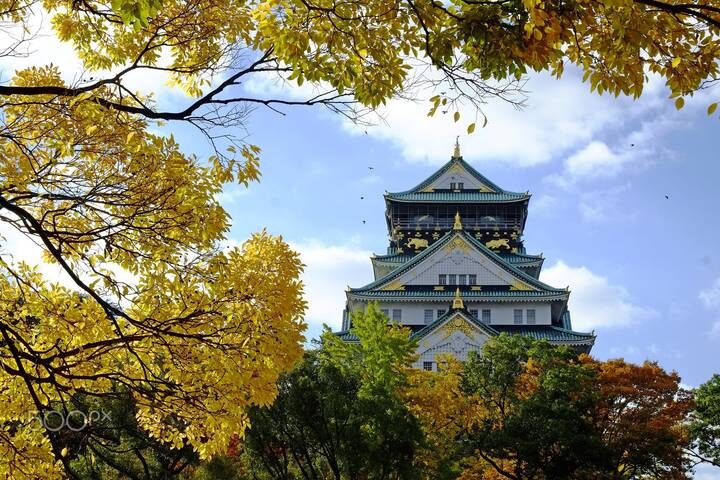
After returning to Osaka, you’ll change hotels. The listed options include Osaka Castle Hotel or a similar three-star property. Your evening is free.
Day 3: Choose Osaka or Hiroshima
The included plan leaves the day open in Osaka. That gives you a chance to rest, explore independently or see a part of the city that interests you. The tour details do not prescribe a set list of Osaka activities, so this is a good day to ask your guide for ideas that fit your pace.
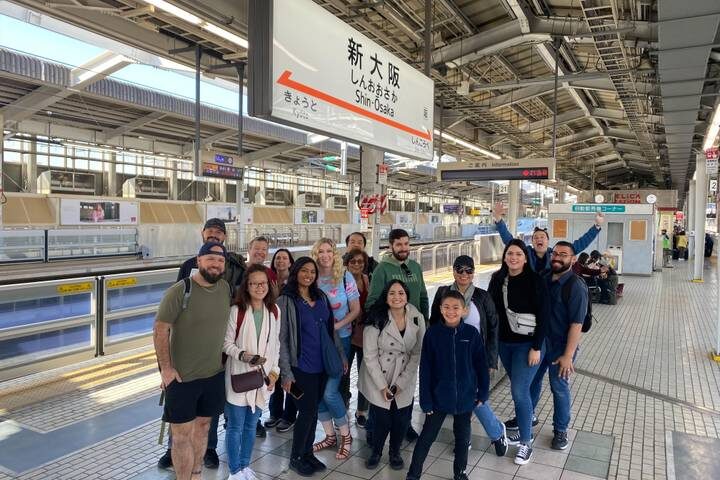
The alternative is a full-day Hiroshima excursion for an extra $335 per adult, with a listed price of $278 for a child under six. It includes hotel pickup, a transfer to Shin-Osaka Station, round-trip travel on the Shinkansen, and visits to Miyajima Island and Itsukushima Shrine, the Atomic Bomb Dome and Peace Memorial Park. The schedule is tightly packed, and the return journey makes for a long day, but the train ride is a memorable part of it.
Check the optional excursion’s current price and schedule before booking. It is not part of the $1,799 base price, and the day is not a casual add-on. If Hiroshima matters to you, this organized option removes much of the station and transport planning. If it doesn’t, use the free day to enjoy Osaka at a gentler pace.
Day 4: Kyoto’s torii gates, then on to the mountains
The group leaves Osaka for Kyoto, beginning at Fushimi Inari Shrine. Its rows of red torii gates are among Japan’s most recognizable sights. You’ll have time to walk through part of the shrine grounds, though the full route up the mountain takes far longer than a quick group stop.
There’s free time for lunch, followed by Kinkakuji, the Golden Pavilion. Its gold-covered exterior and pond setting make it a striking contrast to the vermilion gates at Fushimi Inari. Both places can be busy, and the schedule gives you an introduction rather than an unhurried Kyoto day.
After sightseeing, the bus continues to the Hida Takayama area. This transfer is one reason the tour is convenient, but it also means you should expect a substantial travel day. Overnight accommodation is listed as a three-star hotel or similar.
Day 5: Shirakawa-go and Takayama Jinya
For many people, Shirakawa-go is the trip’s most distinctive stop. The village is a UNESCO World Heritage site in a mountainous area that was once isolated from much of Japan. Its Gassho-style houses have steep, hand-like roofs, and the village’s history is tied to mulberry cultivation and silkworm raising.
You’ll walk among the houses, with time to take in the architecture and setting. It’s a welcome change from city temples, but the stop is still part of a moving itinerary, not an overnight stay. If you want a particular view or a longer look inside a house, ask your guide what time is available and which sites are included.
Later, the group visits Takayama Jinya, a former government building connected to the Edo-period administration of Hida Province. Then it’s onward to the Matsumoto or Suwa area. The shift from village to historic government site gives the day variety, although the bus mileage makes it another full day on the road.
Day 6: Fuji views, Lake Kawaguchi and Asakusa
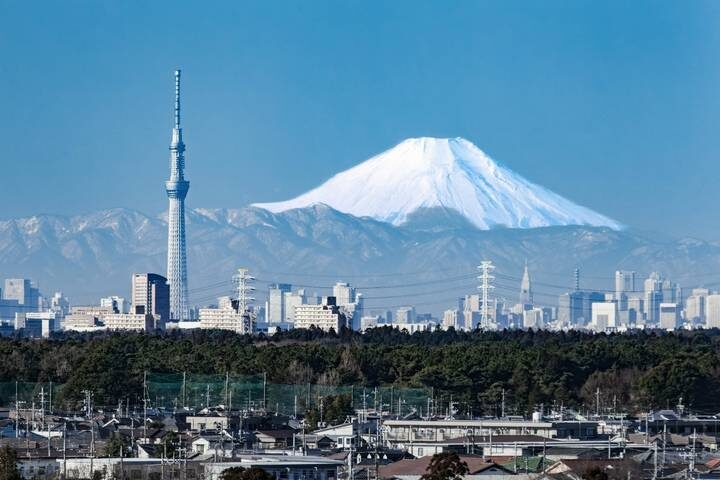
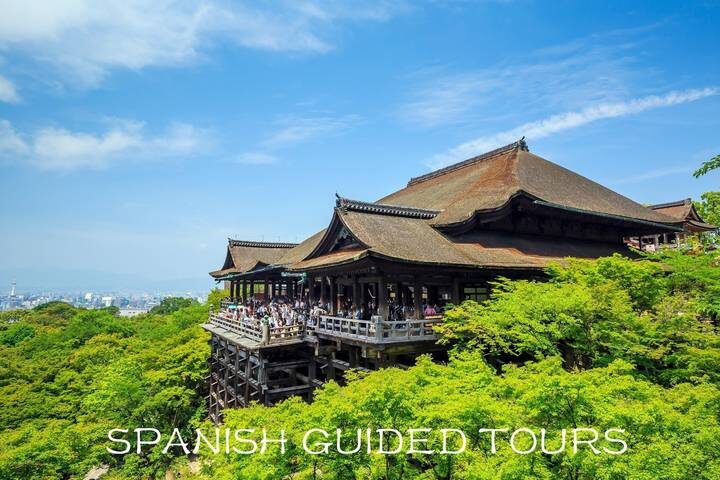
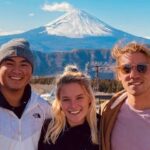
The bus heads to Mount Fuji’s 5th Station, about 2,300 meters above sea level. If weather and access cooperate, you’ll have a high vantage point, along with shrines, torii gates and souvenir shops. The qualification matters: Fuji is often hidden by cloud, and access can be affected by conditions. Treat the stop as a chance to see the mountain, not a promise of a clear view.
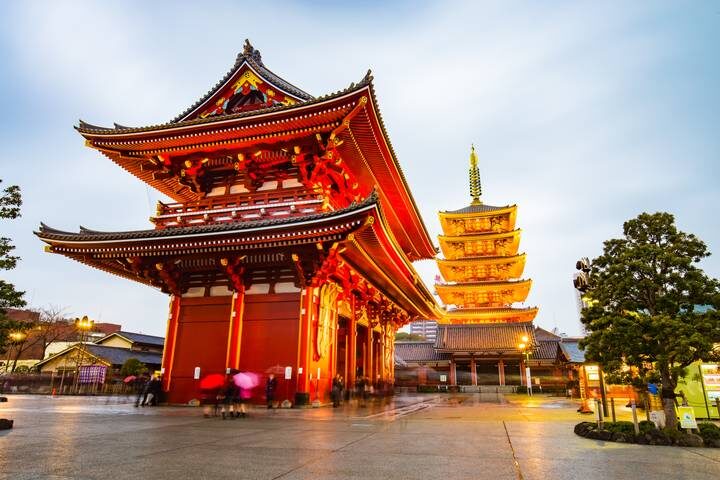
Next comes a short cruise on Lake Kawaguchi, where the surrounding mountains can frame Fuji from another angle. Then the group travels to Tokyo and visits Nakamise shopping street and Asakusa Kannon Temple, also known as Sensoji. Nakamise’s food and souvenir stalls lead toward one of the city’s best-known Buddhist temples.
Weather has caused Mount Fuji visits to be missed or changed, and the quality of backup arrangements is not guaranteed. If Fuji is a must-see, consider allowing extra time in Japan before or after the tour so a cloudy day does not decide your whole experience.
Day 7: From the Imperial Palace to Shibuya
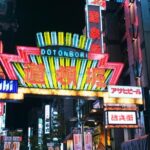
The Tokyo city tour links several very different parts of the capital. Stops include the Imperial Palace, a traditional Japanese rock garden, Odaiba, the Shibuya Scramble crossing and Tokyo Tower. You’ll also drive through Shinjuku Kabukicho, known for its neon-lit streets.
Odaiba offers views of the Gundam figure and time for lunch. Shibuya gives you a close look at one of Tokyo’s most famous crossings, while Tokyo Tower supplies a city landmark and a chance to orient yourself. The schedule assigns roughly an hour to several stops, so expect snapshots rather than long visits. The tour ends with a drive through Kabukicho, not a full evening on foot in the neighborhood.
The hotel is listed as Far East Village Hotel Ariake or similar. Ariake can mean a longer journey to other parts of Tokyo than a central hotel would, so use any free time carefully. The guided day covers a lot, but if you want to explore Tokyo neighborhoods at length, an extra night or two after the tour would help.
What the $1,799 price covers, and what it doesn’t
The base price includes three-star hotel accommodation, daily breakfast, English-speaking guides, transport between cities and attractions by tour bus, and admission to listed sights. The tour has a group size of 10 to 30, and its physical rating is low intensity. That does not mean there is no walking: temple and shrine grounds can involve steps and long paths, and Nara Park covers a wide area.
Airfare, insurance and airport transfers are not included. The Hiroshima excursion costs extra, and tips are optional. A suggested total of $150 per person for the guide and driver is provided, but it is not mandatory. Add these costs to the headline price when comparing tours.
Breakfast is included each day, while lunch and dinner are generally your responsibility. Lunch is included on the Tokyo city-tour day. Vegetarian, vegan, halal and kosher options can be requested, but the practical advice is to contact the operator before travel and clarify what can be arranged. Buffet breakfasts may offer choices, but they do not solve every meal during a full day out.
Hotel rooms in Japan can be compact, and the listed properties may vary. Solo travelers should select a single room; a single supplement of $468 is specified for one room arrangement. Triple rooms are generally not available at many hotels, and a family may need two rooms instead. The tour information also gives inconsistent accommodation-night counts: it calls the trip eight days and mentions eight nights, while the daily schedule appears to run from arrival night through the seventh night, with departure after breakfast on day eight. Confirm the exact number of nights and room setup before paying.
Who will get the most from this route?
I’d consider this tour if you’re visiting Japan for the first time and want an organized sweep of its best-known sights, with transport and hotel arrangements handled for you. Families can benefit from the bus-based format and broad mix of temples, city stops and scenery, though room size and family room arrangements deserve advance attention.
It also works for solo travelers who enjoy meeting a group, provided they budget for the single-room supplement. Past groups have ranged from about 10 people to larger parties, and smaller groups can make it easier to ask questions and get to know one another. The guide and driver can shape the experience; smooth driving and attentive guiding have been frequent strengths.
I would look elsewhere if you want a slow trip, lots of independent time, or a close study of Japanese food and daily life. Several stops are temples and shrines, and the transfer days are long. Some people have also been disappointed when weather disrupted Fuji or when a schedule changed. For a more personal feel, use the free Osaka day for local exploration and add independent time in Tokyo.
Should you book it?
Book this tour if you value broad coverage and simple transport more than staying put. It connects Nara, Kyoto, Shirakawa-go, Fuji and Tokyo in one week, with Hiroshima available as a paid extra. That is a useful amount of Japan for the price, as long as you count flights, transfers, meals beyond breakfast and any single supplement.
Before booking, confirm the number of hotel nights, the room arrangement, current hotel locations and the status of the Fuji stop. If you want more time for food, neighborhoods or quiet moments, plan extra nights on your own. This tour gives you the framework; a little extra time lets you make it your trip.
Stunning Japan with Shirakawa-go by Stunning Tours – 8-Day Osaka to Tokyo Tour
“We had a really good experience. Our tour guide Fred was very attentive and helpful. We lucked out as there were only 10 people in our group so it…”
FAQ
Where does the tour start and finish?
It starts in Osaka, with arrival at Kansai International Airport, KIX, and ends in Tokyo. Haneda is listed as the end airport, and the guide provides directions for reaching either Haneda or Narita.
Are flights and airport transfers included?
No. Flights, insurance and airport transportation are not included. You receive directions for reaching the first hotel from Kansai Airport and guidance on the best route to your departure airport.
What is included in the $1,799 starting price?
The tour includes hotel accommodation, daily breakfast, English-speaking guides, transport between cities and attractions by tour bus, and admission to listed attractions. The Hiroshima optional tour, flights, insurance, airport transfers and tips are extra.
How much does the optional Hiroshima tour cost?
The listed price is $335 per adult and $278 per child under six. It includes hotel pickup, round-trip Shinkansen travel and visits to Miyajima Island, Itsukushima Shrine, the Atomic Bomb Dome and Peace Memorial Park.
Is Mount Fuji guaranteed to be visible?
No. The visit to the 5th Station is weather permitting, and conditions can affect access and views. The tour also includes a short Lake Kawaguchi cruise.
What meals are included?
Daily breakfast is included, and lunch is included on the Tokyo city-tour day. Other lunches and dinners are not specified as included. Vegetarian, vegan, halal and kosher food options can be requested from the operator.
Can three people share one hotel room?
Triple rooms are not available at many of the hotels used. The operator generally recommends two rooms for three adults, and a single-room supplement may apply. Confirm the room arrangement and total price for your party before booking.