Fushimi Inari’s orange gates make a striking finish to this nine-day route, but the tour’s appeal is its mix: Tokyo’s city sights give way to Fuji’s mountain country, old streets in Takayama, and Kyoto’s temples. You get a quick but varied introduction to Japan rather than a deep stay in any one place.
I like two things in particular: the hands-on stops, from making sushi to trying washi paper, and the chance to meet local hosts over a kaiseki lunch. The group format also takes care of much of the transport between cities, a real help on a route with long coach journeys.
The trade-off is a full schedule. Some days involve several hours of walking and standing, and the drive from the Fuji area to Takayama is a long one. If you want unhurried time in Tokyo or Kyoto, plan to add nights before or after the tour.
- What makes this Japan route worth a look
- Tokyo’s temples, shops and high-rise views
- Mount Fuji and the long road to Takayama
- Gokayama’s village craft and Kanazawa’s garden
- Kyoto’s Golden Pavilion and Fushimi Inari
- What the price covers, and what it does not
- Pace, guiding and practical cautions
- Who should book this tour?
- FAQ
- How long is the tour, and where does it start and end?
- What is the starting price?
- Are flights included?
- What meals are included?
- What kind of transport is used?
- How large is the group?
- How much walking should I expect?
- Is Mount Fuji’s 5th Station included?
- Does the tour visit Matsumoto Castle?
- The Best Of Tokyo!
- More Tours in Tokyo
- More Tour Reviews in Tokyo
- Not for you? Here's more nearby things to do in Tokyo we have reviewed
What makes this Japan route worth a look
 1 / 3
 2 / 3
 3 / 3
- Oshino Hakkai’s spring-fed ponds offer a close-up look at the water that comes from Mount Fuji’s snowmelt.
- Gokayama’s thatched houses give you a glimpse of mountain village life, with a local family visit and a washi paper workshop.
- A local kaiseki lunch pairs regional food with conversation about Japanese customs and daily life.
- Tokyo Skytree and Fushimi Inari put two very different views of Japan on the same trip: a vast modern city and a wooded shrine path.
- The route includes four-star hotels and transport by coach and express train, with a tour director and driver managing the practical details.
- Expect an active pace of up to 3 to 6 miles of walking a day, with hills, stairs and uneven surfaces on some visits.

👉 See our pick of the 25 Best Guided Tours In Tokyo
Tokyo’s temples, shops and high-rise views
You arrive in Tokyo and transfer by shuttle from Narita or Haneda to the New Otani Garden Tower, where the group meets for drinks and local appetizers. That first evening is a gentle introduction, but you may be tired after a long flight, so don’t count on doing much beyond settling in.
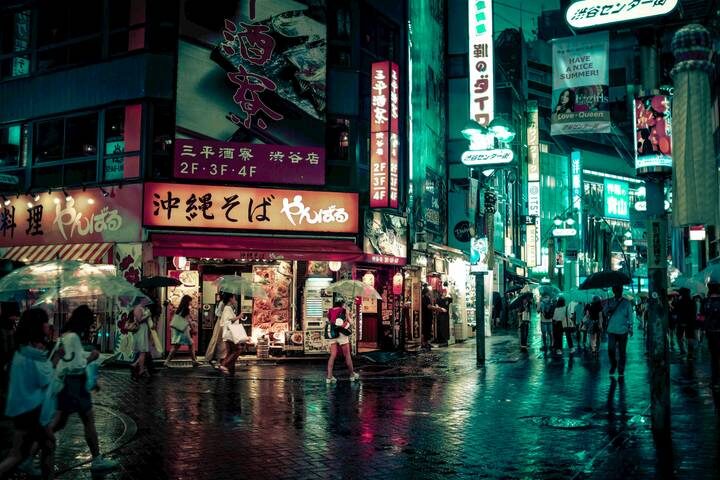
The next day begins in Asakusa at Sensoji, Tokyo’s oldest temple site, founded in 628 and rebuilt over the centuries. Nakamise Street leads toward the main hall, lined with snacks, crafts and souvenirs. It’s a popular stop, so expect crowds, but it gives you a useful first look at the city’s older downtown character.
Tokyo Skytree changes the scale. From its observation deck, you get a broad view across the city, with the chance of seeing Mount Fuji in clear weather. The day finishes in Ginza, known for shopping, or you can join an optional evening outing in Shinjuku with your director. That choice matters: the included sightseeing offers a first pass, while an extra evening can show you another side of Tokyo.
On Day 3, you visit the Imperial Palace Plaza and East Gardens, then browse Japanese art and archaeological objects at the Tokyo National Museum. A sushi chef leads a hands-on preparation session, followed by lunch made from what you prepare. It’s a more engaging way to learn about a familiar food than simply ordering it at a restaurant.
Then the coach leaves the city for the Fuji Five Lakes area. At Oshino Hakkai, eight clear ponds are fed by Mount Fuji’s snowmelt. It’s a scenic, quieter stop after Tokyo, though your view of the mountain depends on the weather. You stay at Fuji Marriott Yamanakako.
You can also read our reviews of more tours and experiences in Tokyo.


Mount Fuji and the long road to Takayama
The coach climbs to Mount Fuji’s 5th Station, at about 2,300 metres. From there, you can look across Lake Kawaguchiko and the surrounding peaks. The stop is weather dependent: clouds can obscure the views, and the mountain road may not always offer the conditions you hope for. Treat the visit as a chance to see the high slopes, not a guaranteed panorama.
Afterward, the route heads through the Japanese Alps toward Takayama. This is one of the longer coach days, and it can feel like a lot of sitting, but the mountain scenery gives the ride a purpose beyond simply getting from A to B. You arrive in time for dinner at the hotel, the Associa Takayama Resort.
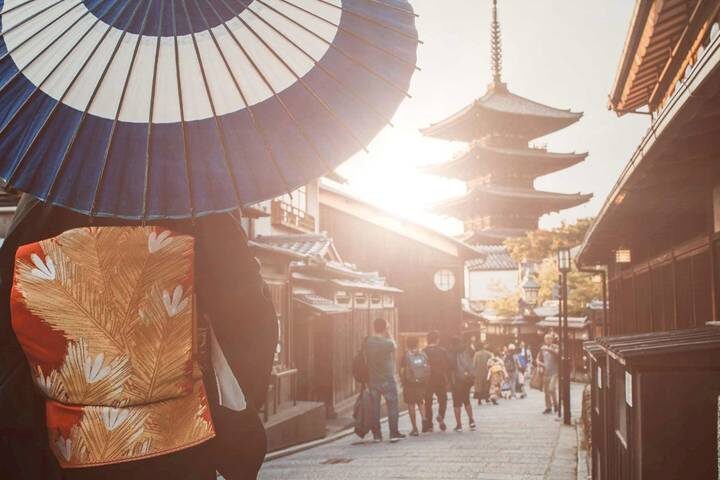
The following morning, you walk through Takayama’s Old Town, where Edo-style streets and traditional buildings set a slower pace than Tokyo. The tour includes a sake sample and lunch featuring Hida-gyu beef, a well-regarded local specialty from black-haired Japanese cattle. For anyone who wants to understand how regional food differs across Japan, this meal is a useful part of the route, not just a break between sights.
Gokayama’s village craft and Kanazawa’s garden
Gokayama is one of the trip’s most distinctive stops. Its Gassho-zukuri houses have steep thatched roofs designed to shed heavy snow, and their timber frames were built without nails. You visit a local family in one of the houses, then watch artisans make washi paper and try the process yourself. The workshop supports a local business, and it gives you a hands-on connection to a craft that would be easy to miss on a temple-heavy tour.
The visit does involve another coach journey onward to Kanazawa, where you stay at Kanazawa Tokyu for two nights. That overnight rhythm is welcome after the previous day’s travel.
Kanazawa’s first stop is a gold leaf painting session with a local specialist. Gold leaf has been practised in Japan since the 16th century, and the demonstration helps explain the care and precision behind a craft that appears in decorative arts and architecture. You can also choose an optional kimono experience for a photo in Kenroku-en, though the basic tour already includes a visit to the garden.
Kenroku-en is one of Japan’s best-known gardens, with ponds, bridges and carefully arranged plantings shaped over more than a century. Give yourself time to notice the details rather than treating it as a quick photo stop. Later, Omicho Market brings a more everyday view of Kanazawa, with seafood stalls reflecting the city’s coastal location. In the Nagamachi samurai district, Nomura House offers a look at a preserved warrior family home, its garden and period objects.
Kyoto’s Golden Pavilion and Fushimi Inari
An express train carries the group from Kanazawa to Kyoto. The change from coach to rail breaks up the road travel, and the train is a practical way to cover this stretch. In Kyoto, you visit Kinkakuji, the Golden Pavilion, once a 14th-century villa and now a Zen temple. Its gold exterior reflects in the pond and surrounding gardens. It’s a famous sight, and it can be crowded, but the setting explains why it remains one of Kyoto’s most recognisable landmarks.
The Be My Guest meal is another highlight, though it is a lunch, not an overnight stay at a ryokan. You share kaiseki food at a traditional restaurant with the Nakamura family, who talk about local customs and regional traditions. It adds a personal dimension to a schedule otherwise built around major sights.
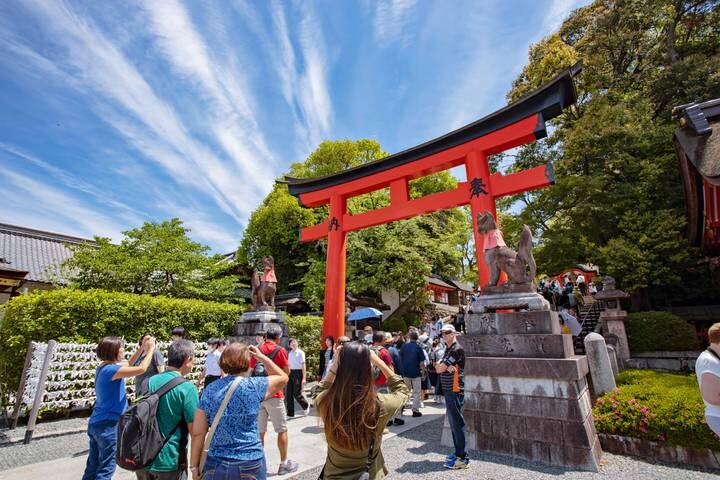
The next day begins at Fushimi Inari Shrine, where rows of orange torii gates wind through the forest and up the mountain. You can walk part of the path or continue farther, depending on your pace and the time available. The route includes slopes and steps, so comfortable walking shoes are a sensible choice. Sanjusangen-do Hall follows, with its 1,001 statues of the thousand-handed goddesses of mercy. You finish with a walk through Gion, known for traditional wooden machiya houses and geisha culture, then gather for dinner with the group.
The tour ends in Kyoto on Day 9, with a shuttle transfer to Kansai International Airport or Osaka Itami Airport. Your flight is not included, so check departure times carefully before arranging onward travel.
What the price covers, and what it does not
The advertised price starts at $4,455, based on the cheapest room option. Flights and insurance are extra, and a single room requires a supplement. In return, the fare covers eight nights in listed four-star hotels, daily breakfast, three lunches, three dinners, coach and train transport, a tour director and driver, sightseeing, hotel charges, tips and restaurant gratuities.
That package can represent good value if you want the logistics handled and plan to visit several regions in a short time. The included meals are meaningful parts of the schedule: sushi you prepare yourself, Hida-gyu beef in Takayama and kaiseki with a local family. Still, not every meal is covered, and optional activities cost extra. Budget for meals and personal spending during free time.
The hotels include New Otani Garden Tower in Tokyo, Fuji Marriott Yamanakako, Associa Takayama Resort, Kanazawa Tokyu and Kyoto Tokyu. The named properties provide a helpful baseline, but similar hotels may be used. The group size is listed as 20 to 32, which is large enough for a social tour and small enough for a director to coordinate, though group pace and personalities can shape your day.






Pace, guiding and practical cautions
The physical rating needs a closer look. The general description calls the tour low intensity, but the detailed activity guidance says to expect up to 3 to 6 miles of walking a day, with 1 to 5 hours of cumulative standing. Some routes include hills, stairs, cobblestones or uneven ground, plus frequent early starts and evening activities. You should be comfortable getting on and off the coach without help and managing your own luggage in some situations, such as train travel.
A tour director is with the group throughout, and past departures have had directors named Yama, Mike, Kaito and Keiko. The director changes by date, so those names are examples, not a promise. The strongest part of guided travel on this route is the coordination: hotel changes, coach transfers, rail tickets and timed visits are handled for you. That leaves more attention for the places themselves.
There is one detail worth checking before you pay: Matsumoto Castle appears among the listed highlights, but it is not included in the day-by-day schedule described here. Ask Trafalgar to confirm whether your specific departure visits it. Likewise, the stated tour endpoint is Kyoto, not Osaka, although the final airport transfer goes to one of Osaka’s airports.
Special diets, including Jain, vegetarian, vegan, halal and kosher meals, can be requested. Other dietary needs, such as gluten-free or dairy-free, may also be requested but are not guaranteed. Share requirements well ahead of departure and confirm them directly with the operator.
Who should book this tour?
This route suits first-time visitors who want a guided overview of Japan and are happy to trade free time for efficient travel between major sights. It’s especially appealing if you value a director’s explanations, hands-on cultural activities, comfortable hotels and a mix of cities, mountain scenery and historic districts.
I’d hesitate if you prefer to set your own pace, spend several days in each city or avoid long coach rides. Tokyo and Kyoto each deserve more time than this tour can give them. If those cities are your main focus, consider adding nights before or after the group trip.
Book it if you want a well-organized introduction to several sides of Japan in nine days. Before confirming, check the Matsumoto Castle question, your room arrangement, the exact meal and transfer details for your departure, and whether the walking pace fits you.
Splendours of Japan by Trafalgar – 9-Day Tokyo to Kyoto Tour
“What a fantastic trip. It was a well organised and supervised trip. Great range of places and great motels. We really enjoyed the diversity of gues…”
FAQ
How long is the tour, and where does it start and end?
It lasts nine days, starting in Tokyo and ending in Kyoto.
What is the starting price?
The advertised price starts at $4,455 per person, based on the cheapest room option. A single supplement may apply if you want your own room.
Are flights included?
No. Flights and travel insurance are not included.
What meals are included?
The tour includes eight breakfasts, three lunches and three dinners. Vegetarian, vegan, Jain, halal and kosher meals can be requested.
What kind of transport is used?
The itinerary uses a deluxe coach for much of the route and an express train from Kanazawa to Kyoto. Airport shuttle transfers are listed for the first and final days.
How large is the group?
The group size is listed as 20 to 32 people.
How much walking should I expect?
The detailed activity guidance gives a range of up to 3 to 6 miles a day, with 1 to 5 hours of standing. Some routes involve hills, stairs or uneven surfaces.
Is Mount Fuji’s 5th Station included?
Yes. The tour plans a coach visit to the 5th Station, at about 2,300 metres. Views depend on weather and road conditions.
Does the tour visit Matsumoto Castle?
Matsumoto Castle is named in the highlights, but it does not appear in the detailed day-by-day schedule provided here. Confirm with Trafalgar whether it is included on your specific departure.