Tokyo’s giant crossing, Nagano’s hot-spring monkeys and Kyoto’s tea ceremony make a memorable eight-day introduction to Japan. The route pairs the country’s big-city icons with a quieter stop for temples, sake and forest scenery, while arranged trains and hotel transfers take much of the planning off your plate.
I like two things especially: you get private guides for key sightseeing days, not a guide following you around every hour, and the trip gives Nagano a proper place between Tokyo and Kyoto. That middle stop adds a different pace and a chance to see more than Japan’s best-known cities.
The trade-off is that eight days move quickly. You have just two full sightseeing days in Tokyo, one in Nagano and one in Kyoto, with train journeys and free time taking up the rest. If you want slow mornings or several days in each city, this route may feel packed.
- At a glance
- Eight days, three very different sides of Japan
- Day 1: Arrive in Tokyo, then take it easy
- Day 2: Palaces, old streets and a city from above
- Day 3: Quiet shrine paths, Harajuku and Shibuya
- Day 4: Tokyo to Nagano by train
- Day 5: Snow monkeys, Zenkoji and local sake
- Day 6: The rail journey to Kyoto
- Day 7: Kyoto’s imperial past, bamboo and gold
- Day 8: Depart from Kyoto
- What the private format does well
- Hotels, meals and the overall value
- Who should choose this tour?
- FAQ
- Where does the tour start and end?
- How long is the Japan in a Nutshell tour?
- Is this a private tour?
- Is a guide with me every day?
- What transport is included?
- Which hotels are listed?
- Are meals included?
- What activities are included in Kyoto?
- What are the payment terms?
- The Best Of Tokyo!
- More Private Tours in Tokyo
- More Tours in Tokyo
- More Tour Reviews in Tokyo
- Not for you? Here's more nearby things to do in Tokyo we have reviewed
At a glance
 1 / 7
 2 / 7
 3 / 7
 4 / 7
 5 / 7
 6 / 7
 7 / 7
- Tokyo by local train: A guide helps you connect the Imperial Palace, Nihonbashi, Tokyo Skytree and Asakusa using the city’s rail network.
- A quieter day in Nagano: Meet snow monkeys near natural hot springs, visit Zenkoji Temple and sample sake at a historic brewery.
- A classic Kyoto finish: See the palace gardens, Arashiyama Bamboo Forest and Kinkakuji, then take part in a kimono tea ceremony.
- Private, but not guided every day: Your party has private guided sightseeing on selected days, with independent time built into the schedule.
- Four-star hotel stays: The listed hotels are Park Hotel Tokyo, Mercure Nagano Matsushiro Resort & Spa and Kyoto Tokyu Hotel.
- Arranged rail and transfers: Airport pickup, hotel transfers and intercity train tickets are included as specified in the itinerary.

👉 See our pick of the 25 Best Guided Tours In Tokyo
Eight days, three very different sides of Japan
This is a city-and-culture trip with an efficient north-to-south rhythm. You begin in Tokyo, take the train west to Nagano, then continue to Kyoto. The route makes sense for a first visit: each stop gives you a distinct impression, without asking you to solve every train connection and hotel transfer yourself.
The tour is partially guided, which is worth understanding before you book. Your English-speaking guide joins you for selected full-day visits, while arrival days, train travel and some free time are left to you. That balance offers useful structure without making every hour a group activity.
The private format is best for a family, couple or small party that wants its own pace and room to adjust. Firebird’s planning service is also a notable part of the offer: the company can discuss preferences and make itinerary changes or hotel upgrades. The trip’s value, then, is not just a checklist of sights. It is the combination of tailored planning, private assistance on key days, four-star lodging and prearranged travel.
No tour price is provided here, so there is no honest way to call it a bargain or compare it dollar for dollar with a self-planned trip. The useful comparison is what you would need to arrange and pay for separately: three hotel stays, airport pickup, intercity rail, several private guided days and transfers at the stations. If you are comfortable planning rail journeys and booking guides yourself, independent travel may cost less. If you want those pieces coordinated, the private format may justify a higher price.
You can also read our reviews of more private tours in Tokyo

Day 1: Arrive in Tokyo, then take it easy
A driver meets you in the airport arrivals hall and takes you to Park Hotel Tokyo. The rest of the day is free, a sensible choice after a long flight. You can rest, eat near the hotel or take a short walk to get your bearings, without having to keep up with a scheduled tour.
There is no planned sightseeing today, so treat that as useful breathing room rather than a wasted day. Tokyo can be disorienting at first, and a gentle start leaves you better placed to enjoy the full days ahead.
Day 2: Palaces, old streets and a city from above
Your first guided day links several major sights by Tokyo’s train system. That is a practical introduction to getting around a city where rail travel is central to daily life. You do not need to navigate alone on this day, but you will see how the system fits together.
At the Imperial Palace, you get a look at the setting of Japan’s imperial household and its official life. Keep expectations clear: the itinerary promises a visit and a glimpse of the palace, not access to private imperial rooms. The nearby walk through Nihonbashi adds a change of mood, from palace grounds to a historic business district that grew around a bridge in use since the 17th century.
After lunch, you head to Tokyo Skytree and its 350-meter observation deck. From that height, the scale of the city becomes easier to grasp. Bring a charged phone or camera, as the tour specifically includes the observation deck and its far-reaching views.
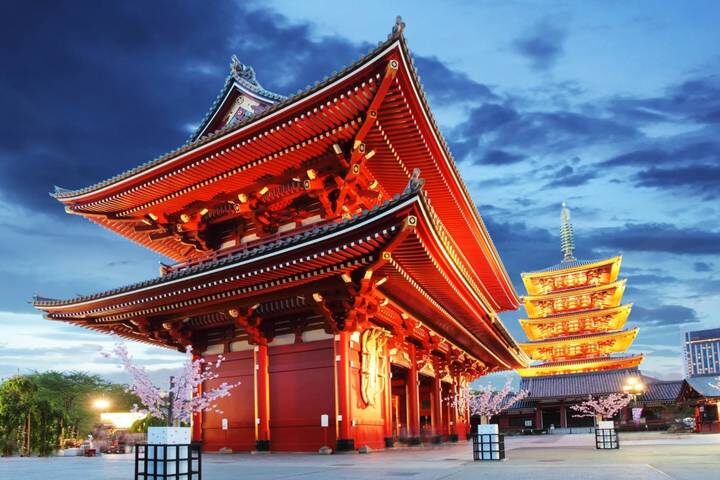
The day ends at Asakusa Temple, Tokyo’s oldest temple, and Nakamise, the shopping street leading toward its grounds. Here, the pace shifts from modern towers to traditional temple customs and stalls selling souvenirs and local sweets. It is a satisfying contrast, though the full-day itinerary covers a lot of ground. Comfortable shoes and a willingness to move between stops will help.
Breakfast and lunch are included on this day. Dinner is at your own expense and the evening is free.
Day 3: Quiet shrine paths, Harajuku and Shibuya
Meiji Shrine offers a calm opening to a day devoted to modern Tokyo. Its forested approach feels removed from the city around it, even though the shrine is near Harajuku Station and Yoyogi Park. It is a good place to see how religious spaces and daily city life sit side by side.
From there, you explore Harajuku, then continue to Shibuya. The famous crossing is less about a single monument than the experience of watching pedestrians stream across from every direction as traffic stops. It is a brief, distinctly urban spectacle, and you can also explore the surrounding shopping district.
Ginza rounds out the day with a more polished side of Tokyo: high-end shopping, dining and entertainment in one of Japan’s most expensive districts. The contrast between shrine, youth-oriented Harajuku, busy Shibuya and refined Ginza gives the day its appeal. The itinerary does not specify meals for this day, so plan to buy food as you go.
This is another long day, and its stops are spread across distinct neighborhoods. The guide and public transport make the logistics easier, but you still need enough energy for several hours of walking and city movement.
Day 4: Tokyo to Nagano by train
A driver takes you from your hotel to the station, then you travel by train to Nagano. On arrival, another private transfer brings you to Mercure Nagano Matsushiro Resort & Spa. The rest of the day is free, giving you time to settle in or explore independently.
The change of setting matters. After Tokyo’s dense urban pace, Nagano offers a different point of view on Japan, with a day planned around wildlife, religious history and local sake. There is no guided sightseeing scheduled on arrival day, so use the time to rest before the next full excursion.






Day 5: Snow monkeys, Zenkoji and local sake
The day begins with a visit to snow monkeys bathing in natural hot springs in a forest setting. Seeing wild animals at close range is a very different kind of Japanese highlight from a temple or city view. It is also the most nature-focused stop on the tour.
The schedule then turns to Zenkoji Temple, founded in the seventh century and regarded as one of Japan’s important Buddhist temples. The site is associated with an early Buddhist statue brought to Japan when Buddhism first arrived. You get a useful historical counterpoint to Tokyo’s modern sights and the Kyoto temples still to come.
Before dinner, you visit a sake brewery described as 200 years old and sample its products while learning about local production. That gives the day a human, regional detail: not just an old temple and a wildlife encounter, but a glimpse of a local craft tradition.
Lunch is mentioned in the day’s timing, but it is not listed among the included meals. Check what your particular departure includes before budgeting. The tour is rated low intensity, though the monkey visit is an outdoor activity, so sensible footwear and clothing suited to the season are practical choices.
Day 6: The rail journey to Kyoto
After breakfast, you check out and take the train from Nagano to Kyoto. A driver meets you at Kyoto Station and transfers you to Kyoto Tokyu Hotel. The rest of the day is open for independent sightseeing or an optional activity.
This is a travel day, not a guided Kyoto tour. The included station pickup is helpful after a long rail journey, but you will need to decide how to spend the afternoon yourself. If you want to add a particular activity, the tour information says optional experiences can be booked, but does not specify which ones or their prices.
Day 7: Kyoto’s imperial past, bamboo and gold
Your final full day starts at Kyoto Imperial Palace, the former residence of Japan’s imperial family when Kyoto served as the capital. The tour includes the palace buildings from the outside and its gardens, rather than a promise of interior access. That distinction matters if you are choosing the tour mainly for palace interiors.
Next comes Arashiyama, where the Bamboo Forest is the headline stop. Walking among the tall bamboo gives the day a striking change of scene, though it is one of Kyoto’s most photographed locations and can draw plenty of people. The district also has temples and shrines, but the listed visit focuses on Arashiyama and the grove.
Kinkakuji, or the Golden Pavilion, brings the day back to temple architecture. Its gold-covered exterior and setting make it one of Kyoto’s most recognizable sights. The visit is a visual highlight, but the schedule places several major sites in one day, so you should expect to keep moving rather than linger at length everywhere.
The day closes with a traditional tea ceremony. You wear a kimono, taste matcha and have Japanese sweets made to accompany the tea. This is a hands-on cultural activity rather than just another photo stop, and it gives you a chance to learn the customs behind a familiar Japanese ritual.
Breakfast is included. The evening is free after the ceremony, so you can have dinner independently and enjoy a final night in Kyoto.
Day 8: Depart from Kyoto
You check out in the morning and depart from Kyoto. No departure transfer is listed, so confirm your onward transport plans before you go. The tour ends in Kyoto, not back in Tokyo.
What the private format does well
The strongest case for this trip is how it handles the complicated parts. Airport pickup, private transfers between stations and hotels, intercity rail tickets and guided sightseeing are all part of the plan. That can save time and reduce the stress of coordinating separate bookings, especially for a family or a first visit to Japan.
The private arrangement also allows some flexibility. Firebird’s advisers have been able to adjust itineraries and hotel choices to match travelers’ preferences, and the guides are described as friendly and willing to adapt the pace and interests of the group. No guide names are provided, so you cannot request a particular person based on the available information.
The operator’s app is another practical feature. It is used to keep trip details updated, which can be useful when you are moving between cities. Still, an app does not replace checking train times and transfer instructions yourself, particularly on free-time days.
Hotels, meals and the overall value
The three listed hotels are four-star properties: Park Hotel Tokyo for the first three nights, Mercure Nagano Matsushiro Resort & Spa for two nights, and Kyoto Tokyu Hotel for the final two. The itinerary describes them as exceptional downtown accommodations, but exact room types, views and hotel amenities are not specified. If a particular hotel feature matters to you, ask before booking.
Breakfasts at the hotels are included. Lunch is specifically included on Day 2, while the Nagano schedule mentions lunch without clearly listing it as included. Other meals are not specified as part of the package, so leave room in your budget for meals beyond breakfast and the stated Tokyo lunch.
The payment terms are a 20 percent deposit, with the balance due 95 days before departure. Departure months are not currently listed, so check availability before making plans around specific dates.
Who should choose this tour?
I would consider this tour if you want a private, well-organized introduction to Japan and would rather spend your planning time choosing what matters than researching every transfer. It suits families and small parties especially well, since the guide days can be adjusted to your group’s pace and interests.
It is also a good fit if you want the familiar first-trip sights, but do not want to spend all eight days in Tokyo and Kyoto. Nagano adds a welcome change, with snow monkeys, Zenkoji and sake giving the route a more regional feel.
Skip it if you want extensive free time, several nights in each city, or a trip focused on deep exploration of one region. The pace is brisk, and the main sights take priority over less-known neighborhoods and long, unplanned afternoons. Book it for convenience, private guidance and a strong first look at Japan; choose a slower itinerary if lingering matters more than covering ground.
Japan in a Nutshell Private Tour by Firebird Tours – 8 Days, Tokyo to Kyoto
“Firebird Tours planned the best itinerary for us. We wanted a mix of luxury hotels and boutique stays. During the planning stages they were happy t…”
FAQ
Where does the tour start and end?
It starts in Tokyo and ends in Kyoto. Your arrival transfer is from Tokyo airport to the hotel, and the tour ends after checkout in Kyoto.
How long is the Japan in a Nutshell tour?
The tour lasts eight days, with hotel stays in Tokyo, Nagano and Kyoto.
Is this a private tour?
Yes. The tour is designed for your own party, such as friends or family, rather than a shared group.
Is a guide with me every day?
No. It is partially guided. English-speaking guides lead selected sightseeing days, while arrival days, train journeys and some free time are independent.
What transport is included?
The itinerary includes airport meeting services, private transfers as specified, and train tickets and intercity transportation between Tokyo, Nagano and Kyoto. Tokyo sightseeing on Day 2 uses the city’s public train system.
Which hotels are listed?
The hotels are Park Hotel Tokyo for Days 1 to 3, Mercure Nagano Matsushiro Resort & Spa for Days 4 and 5, and Kyoto Tokyu Hotel for Days 6 and 7. Each is listed as a four-star hotel.
Are meals included?
Hotel breakfasts are included, along with lunch on Day 2 in Tokyo. The Nagano schedule refers to lunch, but the included-meals information does not clearly confirm it. Other meals are not listed as included.
What activities are included in Kyoto?
The guided Kyoto day includes Kyoto Imperial Palace and its gardens, Arashiyama and the Bamboo Forest, Kinkakuji, and a tea ceremony with kimono, matcha and Japanese sweets.
What are the payment terms?
A 20 percent deposit is due when you book, and the balance is due 95 days before departure.