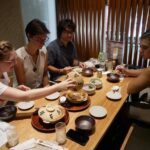
At SJ Sakurayama, Japanese home cooking begins with the basics: making dashi from kombu and dried bonito, then building a meal around it. Grandma Junko and an assistant lead this small-scale kitchen experience, with local ingredients such as miso, soy sauce, mirin, and salted rice malt at the center of the lesson.
I like that you learn a useful cooking foundation, not just one recipe, and that the tea ceremony with seasonal sweets gives the meal a cultural finish. One thing to consider: the class cannot accommodate allergies or several common dietary needs, including vegetarian, vegan, gluten-free, lactose-free, or halal diets.
- Key points to know
- A home-cooking lesson built around dashi
- Choose the menu that suits your appetite
- From the station to the kitchen
- Cooking, eating, then taking tea
- What the price covers
- Who will get the most from this class
- A few practical details before you book
- Should you book Grandma Junko’s class?
- FAQ
- How long does the cooking class last?
- Where is the meeting point?
- What address is the kitchen studio?
- What menus can I choose from?
- Will I learn how to make dashi?
- Is lunch included?
- Is the tea ceremony included?
- Can the class accommodate allergies or special diets?
- Are children allowed, and what do they cost?
- What is included in the price?
- The Best Of Nagoya!
- More Cooking Classes in Nagoya
- More Tours in Nagoya
- More Tour Reviews in Nagoya
- Not for you? Here's more nearby things to do in Nagoya we have reviewed
Key points to know
- Learn dashi from scratch: Make the basic Japanese soup stock with kombu and dried bonito flakes.
- Pick one meal menu: Options include miso-marinated chicken, salmon with shio-koji, or a Nagoya-style home meal.
- Stay for tea and sweets: A tea ceremony follows the cooking and shared lunch.
- Meet near Sakurayama Station: Pickup is outside Exit 7 at 10:30, with the kitchen studio about a two-minute walk away.
- Plan for a half-day: The activity runs from 10:30 to 13:00 and includes lunch, drinks, an English recipe, and return transport.
- Check dietary needs first: The class cannot accommodate allergies or the listed restricted diets.
👉 See our pick of the 8 Best Workshops And Classes In Nagoya
A home-cooking lesson built around dashi
This class gives you a practical introduction to ichiju-sansai, the Japanese pattern of a soup and three side dishes. Rather than treating Japanese food as a collection of restaurant specialties, it focuses on the kind of balanced home meal you can understand dish by dish.
The first useful lesson is dashi, the stock that supports many Japanese soups and other dishes. You’ll make it with kombu and dried bonito flakes, then get a chance to see how it fits into the broader meal. If you’ve eaten Japanese food but never considered what gives a soup its savory base, this is a good place to start.
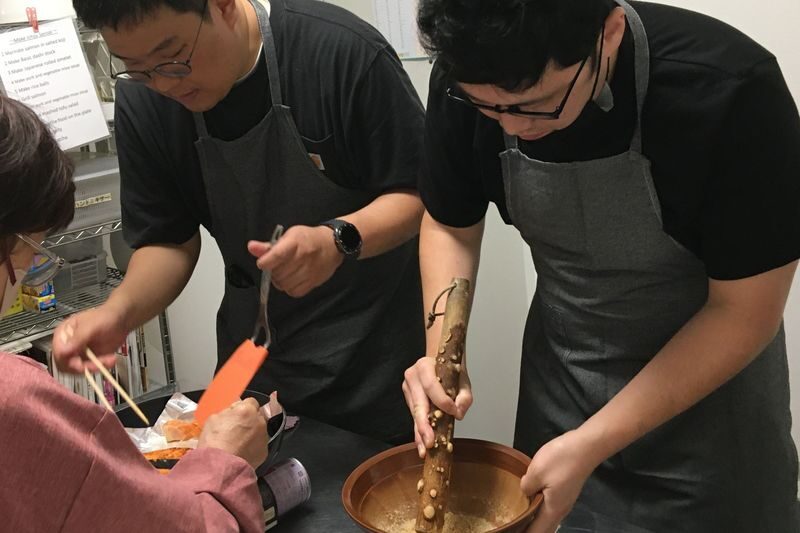
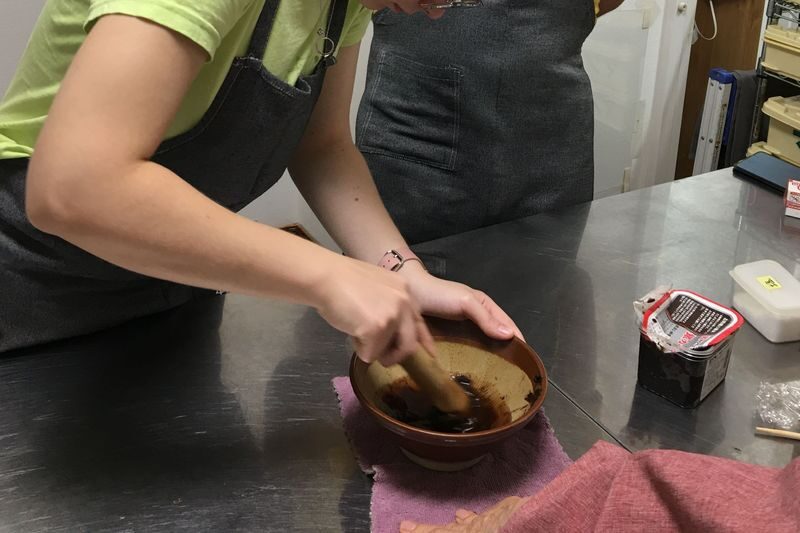
The cooking also introduces ingredients tied to the Nagoya area’s fermentation traditions. Miso, soy sauce, mirin, and malt-based seasonings are explained as you use them. That context matters: you’re not only following steps, but learning why particular flavors work together and how common pantry staples shape a home-style meal.
Grandma Junko is joined by an assistant, and the class is conducted with English and Japanese support. An English recipe is included, so you can keep the instructions after the class rather than relying on memory alone. The setting is described as a kitchen studio at SJ Sakurayama, but the emphasis is on family cooking and personal instruction, not a formal restaurant kitchen.
You can also read our reviews of more cooking classes in Nagoya



Choose the menu that suits your appetite
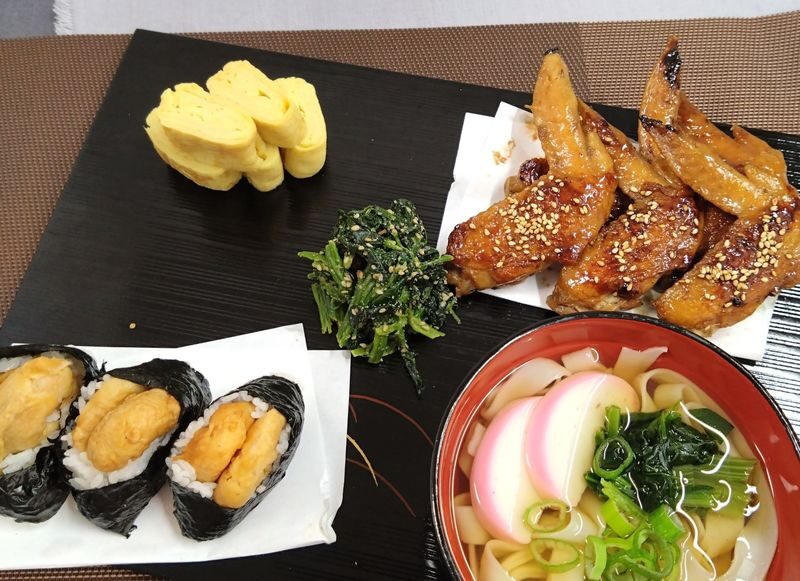
You need to select one menu for your group. The listed package choices are miso-flavored chicken and grilled salmon with shio-koji, or salted rice malt. A third menu is also described as a Nagoya home meal, featuring dishes such as tebasaki chicken wings, tenmusu rice balls with shrimp tempura, and kishimen noodles.
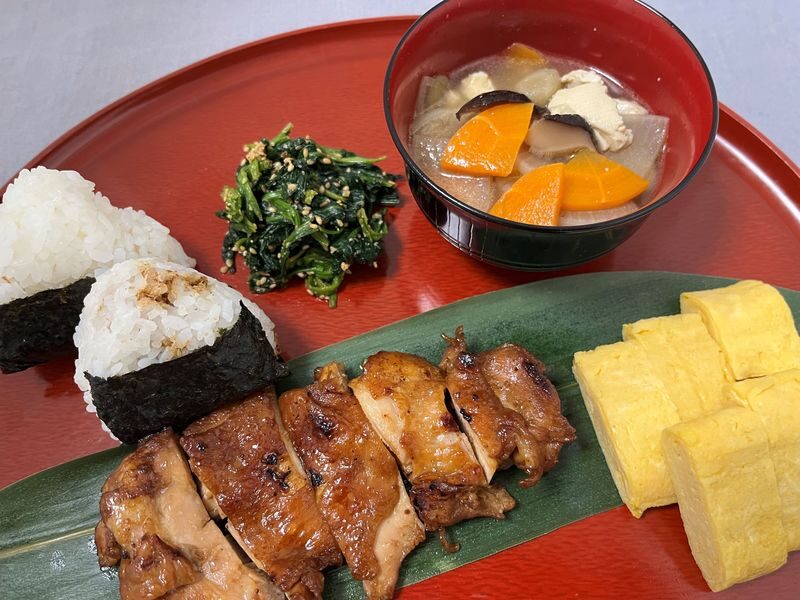
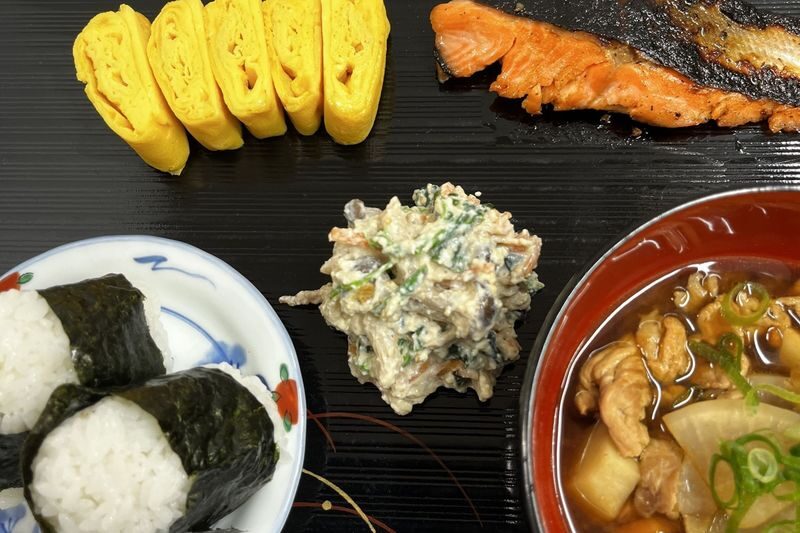
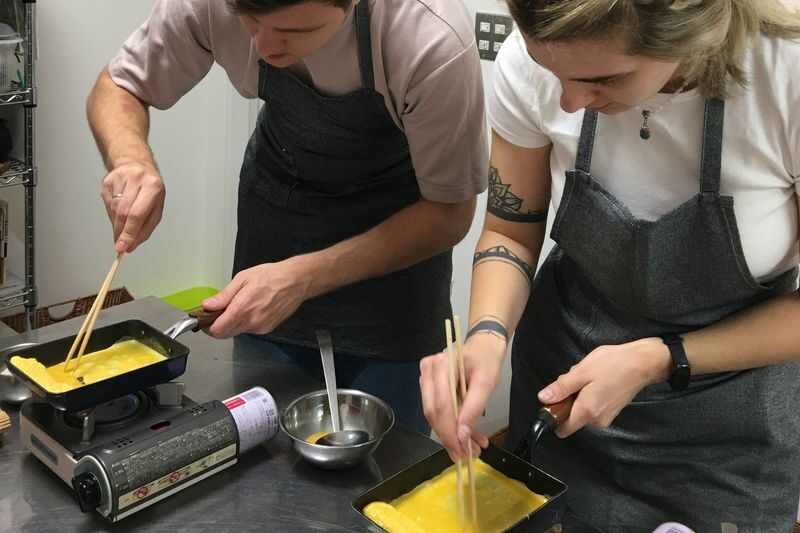
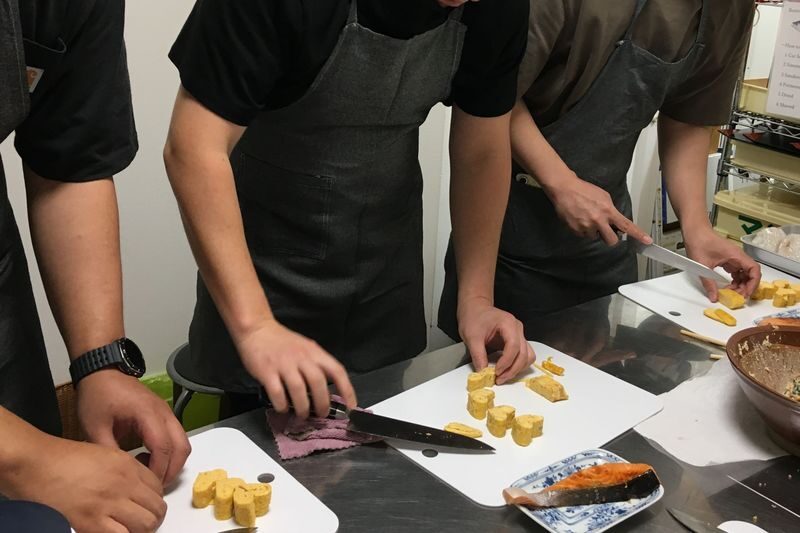
The chicken menu sample includes grilled chicken marinated with red miso, vegetable soup with soy sauce, spinach salad with sesame sauce, Japanese rolled omelet, rice balls, and basic dashi stock. It is a useful spread for seeing how a meal balances protein, soup, vegetables, egg, and rice. The salmon option brings shio-koji into the lesson, a seasoning that adds a different kind of savory flavor.
The Nagoya-style menu is the most locally focused choice of the three. Tebasaki, tenmusu, and kishimen are associated with Nagoya’s everyday food culture, so this option may appeal if you want to connect the cooking lesson more directly to the city. The available package choices list only chicken and salmon, however, so check which menus can be booked for your date before choosing.
Menus can change with the season and ingredient availability. That is normal for a cooking class built around food rather than a fixed demonstration, but it means you should treat the sample menu as a guide rather than a promise of every dish.
From the station to the kitchen
The meeting point is outside Exit 7 of Sakurayama Nagoya subway station. The kitchen studio is about a two-minute walk west from the exit, and the guide is scheduled to meet you there at 10:30. This is a straightforward start if you are comfortable using the subway and can reach the station on time.
The activity takes place at SJ Sakurayama, at 1F, 4-69-6 Hiromi-cho, Showa-ku, Nagoya. The listed return time is 13:00, with transport back to a hotel or personal address included. That return transfer is a useful part of the arrangement: you do not have to retrace your route after lunch or work out the next leg while carrying a full stomach and a new recipe.
The schedule leaves roughly two and a half hours for the whole activity. That includes the cooking, lunch, and tea ceremony, so expect a compact session rather than an extended culinary course. The short format suits a busy Nagoya itinerary, though anyone hoping for a leisurely, all-afternoon cooking workshop should note the firm return time.
Cooking, eating, then taking tea
The lesson’s appeal is that you cook the food you will eat. That makes each technique immediately useful: you can see how the stock works in a dish, how seasonings affect the flavor, and how the separate elements come together at the table. The included lunch and beverages also mean the listed price covers more than a demonstration.
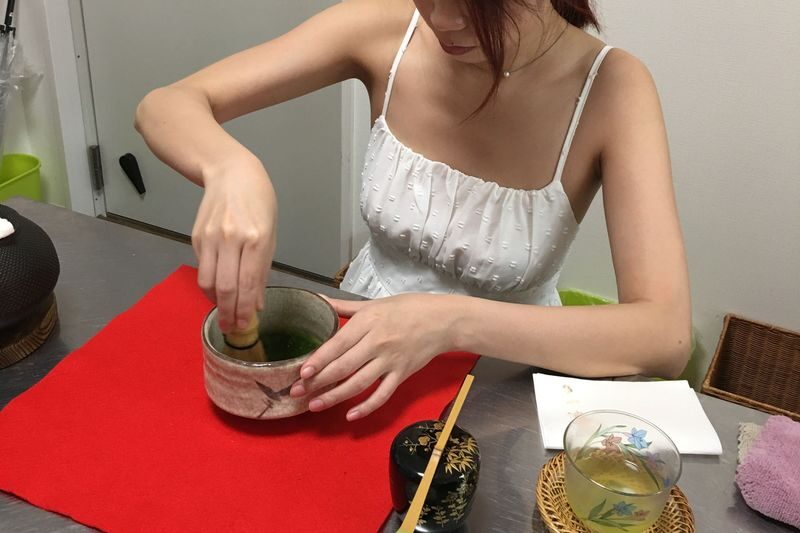
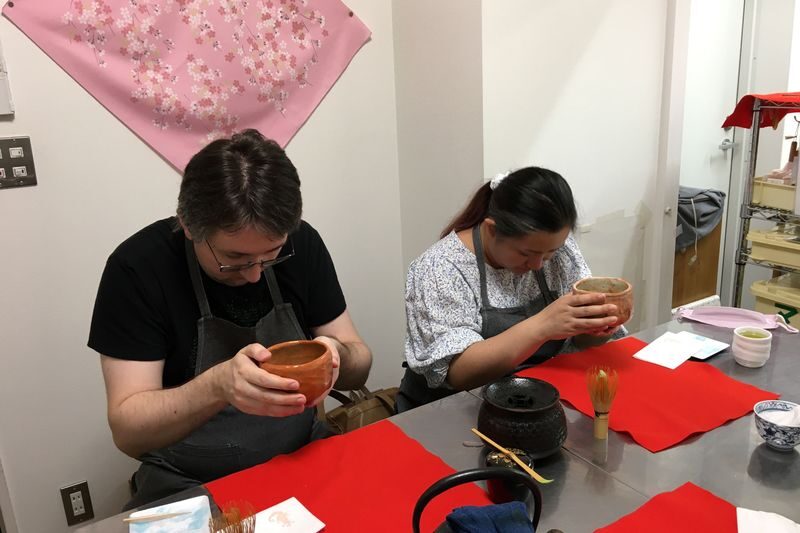
After the meal, the class moves to a tea ceremony with seasonal Japanese sweets. It offers a change of pace from the kitchen and adds another part of Japanese food culture to the visit. The sweet is seasonal, so the specific treat can vary rather than being fixed in advance.
The cooking and tea ceremony make a good pair. One is hands-on and centered on everyday food; the other gives you a quieter, more formal way to finish. If you are choosing between a cooking class and a tea experience, this combines both in one morning, though the tea portion is part of a short class rather than a separate, long ceremony.
What the price covers
The experience starts at US$94.59 per person. That price includes an English or Japanese-speaking guide, the home-meal cooking activity, lunch, meals and beverages, an English recipe, and round-trip transfers to and from the meeting location. Personal expenses are not included.
For a half-day activity with instruction, a cooked meal, and a tea ceremony, the price can make sense if you value direct participation and cultural context. You are paying for a guided lesson and lunch, not simply for a meal out. The English recipe adds lasting use: you can refer back to the steps when you try the dishes at home.
The value depends partly on your expectations. If you want a long, advanced cooking course, this is not that. If you want an approachable introduction to dashi, Japanese seasonings, and a home-style meal, with tea included, it offers several distinct parts in a manageable block of time.
You can also read our reviews of more tours and experiences in Nagoya


Who will get the most from this class
I’d recommend the class to curious eaters who want more than a tasting menu, especially if you enjoy learning how familiar ingredients are used. It is also a good fit for couples or friends looking for a shared activity that includes a meal and a cultural element without taking over the day.
The English recipe and English-speaking guide make it suitable for English speakers. The class has been manageable for participants who used a phone translator at times, but that should not be taken as a guarantee that every exchange will be effortless. If detailed verbal instruction is important to you, confirm language arrangements when booking.
Families should account for the age and pricing rules. Infants and children must be included in the passenger headcount, and children aged seven or older are charged the adult rate. Pets are not allowed.
Dietary restrictions need special attention. The activity cannot accommodate halal-certified requirements, lactose intolerance, allergies, gluten intolerance, vegetarian diets, or vegan diets. If you have any of these needs, this is not a suitable choice, even though the cooking uses familiar ingredients that might sound easy to adapt.
A few practical details before you book
Arrive at the meeting point in time for the 10:30 pickup outside Exit 7. The kitchen is close, but the class schedule is short, and late arrival can affect the activity. Bring your mobile voucher, which is the required voucher format.
The menu can change with seasonal ingredients and availability. You can choose from the available menu options, but one group can select only one menu, so everyone in your party should agree before booking. The package choices shown are chicken and salmon, while the Nagoya home-meal menu is also described as an option; check availability for your date if that is the one you want.
Cancellations made at least 72 hours before the activity date qualify for a full refund under the stated policy. If the operator cancels because of extreme weather or an unforeseen event, you can request a reschedule or a full refund, subject to the policy terms. Late arrivals of 30 minutes or more are not eligible for a refund.
Should you book Grandma Junko’s class?
Book this class if you want a hands-on introduction to Japanese home cooking, especially the fundamentals of dashi and fermented seasonings. The combination of cooking, lunch, and a tea ceremony gives the morning a clear shape, while the English recipe makes the lesson useful beyond Nagoya.
Skip it if you need dietary accommodations, want an advanced course, or prefer to spend several hours on cooking alone. For everyone else, it is a thoughtful way to spend a half-day learning how a Japanese meal comes together, then sitting down to eat it.
Grandma’s Traditional Japanese Cooking Class & Tea Ceremony
“The instructor was incredibly kind and taught cooking very well. They also answered all my questions about the class and travel during the session,…”
FAQ
How long does the cooking class last?
The activity runs from 10:30 to 13:00, for about two and a half hours.
Where is the meeting point?
The guide meets you outside Exit 7 of Sakurayama Nagoya subway station. The kitchen studio is about a two-minute walk west from the exit.
What address is the kitchen studio?
The address is SJ Sakurayama, 1F, 4-69-6 Hiromi-cho, Showa-ku, Nagoya, Aichi.
What menus can I choose from?
The described choices are miso-flavored chicken, grilled salmon with shio-koji, and a Nagoya home meal with dishes such as tebasaki, tenmusu, and kishimen. One group can select only one menu. The listed package choices are chicken and salmon, so check availability for the Nagoya menu.
Will I learn how to make dashi?
Yes. The class teaches you to make basic dashi using kombu and dried bonito flakes.
Is lunch included?
Yes. Lunch, meals, and beverages are included, along with the cooking activity and tea ceremony.
Is the tea ceremony included?
Yes. The class includes a tea ceremony with seasonal Japanese sweets.
Can the class accommodate allergies or special diets?
No. It cannot accommodate allergies, halal-certified requirements, lactose intolerance, gluten intolerance, vegetarian diets, or vegan diets.
Are children allowed, and what do they cost?
Infants and children must be included in the passenger headcount. Children aged seven or older are charged the same rate as adults.
What is included in the price?
The price includes an English or Japanese-speaking guide, lunch, meals and beverages, round-trip transfers to and from the meeting location, the cooking experience, and an English recipe. Personal expenses are not included.