
The first thing you notice is the temperature. You step off Malé Náměstí into a quiet doorway, follow a guide down a narrow stone stairway, and within thirty seconds the warm Prague afternoon falls away. The air gets cool, then cold, then slightly damp, with a smell that’s hard to place. Old stone. Old water. Centuries of it. You’re standing in a cellar that was the ground floor of a Romanesque house in the 12th century, before the city raised its streets eight metres to escape the floods.
That moment is the whole reason these tours exist. Above ground, Old Town Square looks like a postcard. Below ground, Prague turns into a different city.
- In a Hurry? My Quick Picks
- What You’re Actually Going Underground To See
- Where the Tours Actually Meet
- What It’s Like, Minute by Minute
- The Three Tours Worth Booking
- 1. Prague Oldtown, Medieval Underground & Dungeon History Tour:
- 2. Ghosts, Legends, Medieval Underground & Dungeon Tour:
- 3. Prague Old Town Medieval Underground & Dungeon Historical Tour (Viator):
- How to Pick Between Them
- Don’t Book This Tour If
- The Stories Worth Knowing Before You Go
- The Floods That Buried the Original City
- The Defenestrations
- Rudolf II and the Prague Alchemy Boom
- The Astronomical Clock’s Dark Origin
- What Else to Pair With This
- Ticket and Booking Practicalities
- If You’re Already Doing Other European Cities
- The One Thing I’d Tell My Past Self
- One Last Thought Before You Book
In a Hurry? My Quick Picks
- Old Town Hall & Medieval Underground History Tour ($31). The most-booked option, 80 minutes, classic format. Check availability
- Ghosts, Legends, Medieval Underground & Dungeon Tour ($31). Same cellars, leans into legends and ghost lore. Check availability
- Old Town Medieval Underground Historical Tour (Viator) ($33). Book on Viator if that’s your platform. Same descent, slightly longer at 90 minutes. Check availability
What You’re Actually Going Underground To See
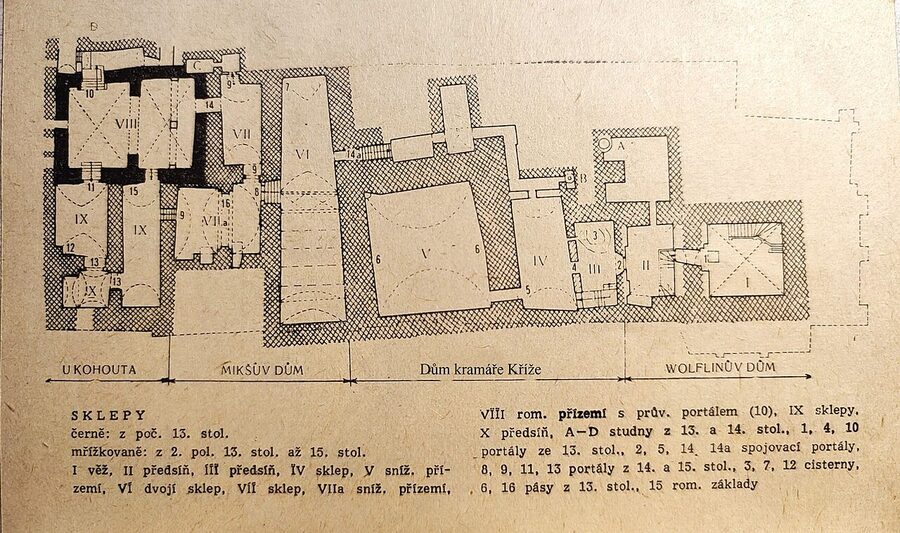
Here’s the thing the booking pages bury. Prague’s medieval underground isn’t a single attraction with a ticket window. It’s a network of cellars under the Old Town, and most of them are private property. The reason these guided tours exist is that they have arrangements with specific buildings around Malé Náměstí to take small groups down through cellar trapdoors and corridors that no individual tourist can access.
What you see, roughly:
- Romanesque and gothic cellars from the 12th to 14th centuries. These were ground-floor rooms before the city raised its streets to deal with Vltava flooding. The arches, doorways, and original stone walls are intact.
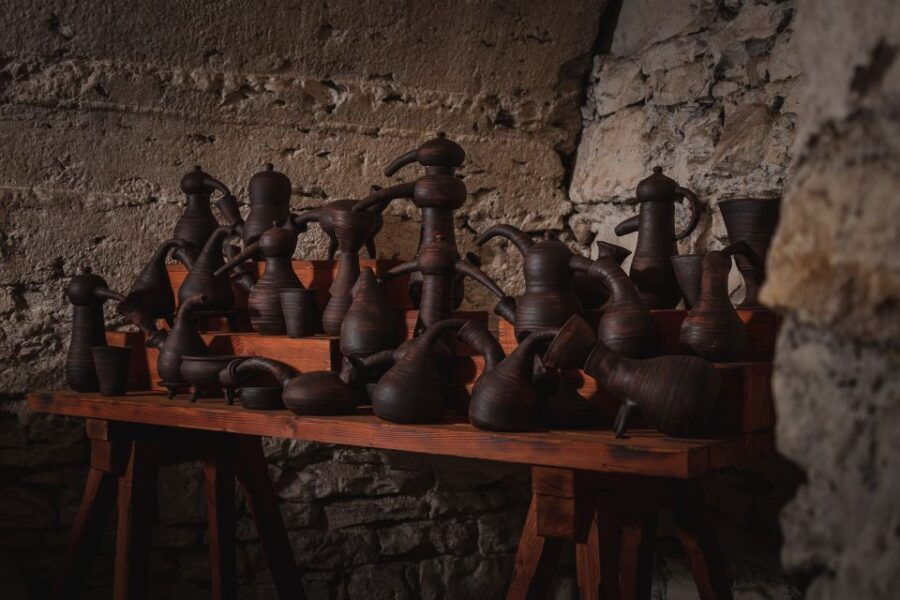
- An alchemy laboratory uncovered after the 2002 flood. Real glassware, ovens, and Rudolf II era ephemera. The story of how it was found is half the appeal.
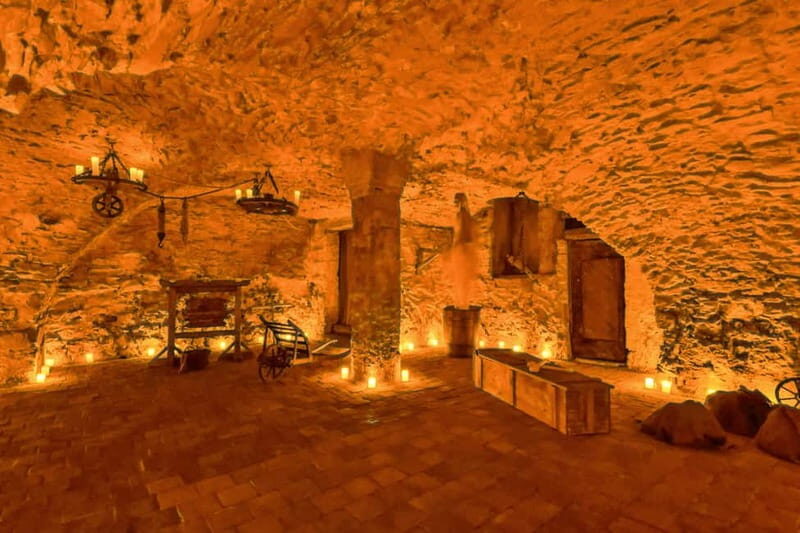
- Dungeon space with period torture instruments, executioner’s tools, and signage explaining what was done with what. It’s grim but it’s also the actual room.
- Foundations of buildings that no longer exist above ground, including walls and corridors connecting properties that were cleared centuries ago.
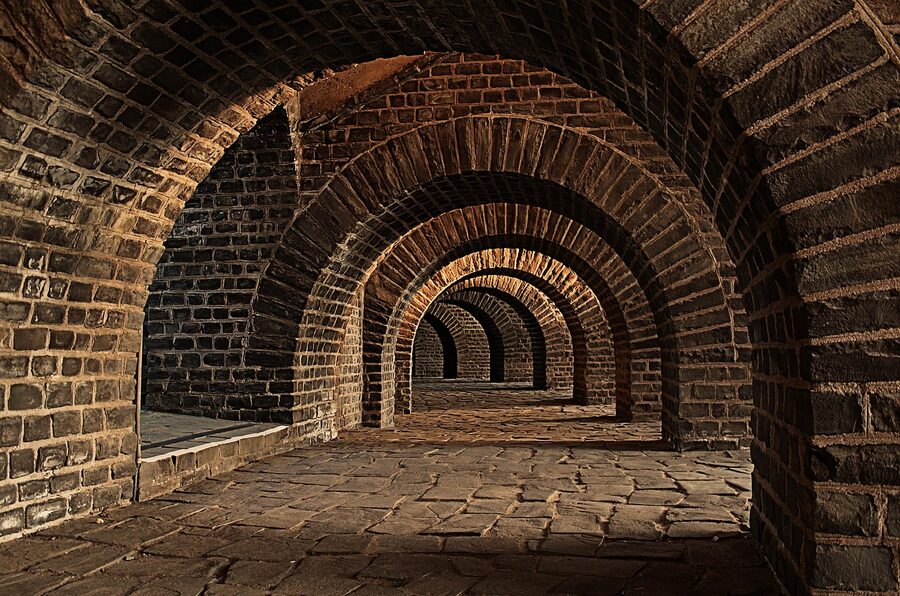
The thing I want to be honest about: it’s not photogenic in the way Prague Castle is photogenic. The lighting is intentionally dim, the ceilings are low, and you’re moving in a small group through narrow passages. The appeal is atmospheric, not visual. Want content for the grid? Book a Vltava sunset cruise instead. Want a story you’ll remember? Go down.
Where the Tours Actually Meet
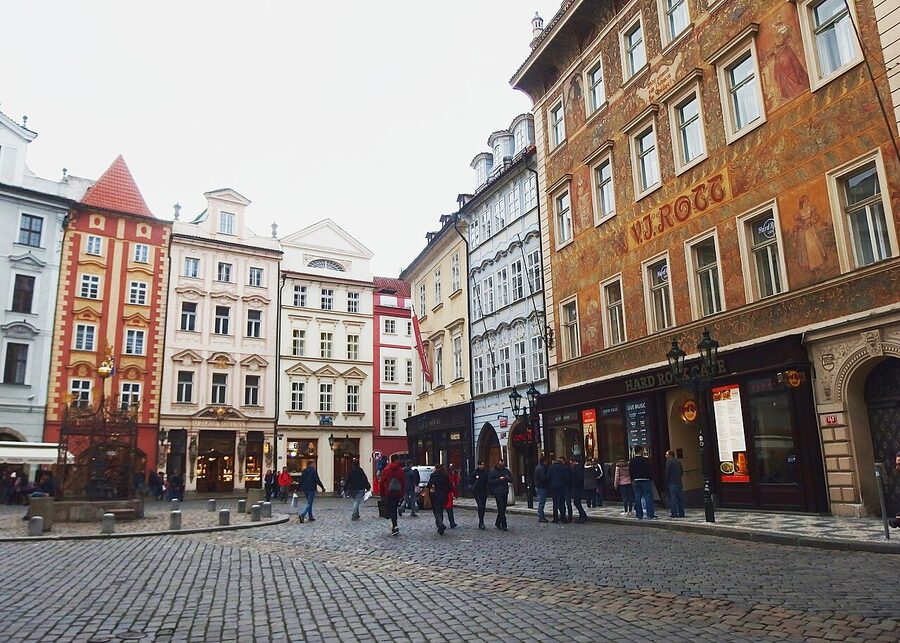
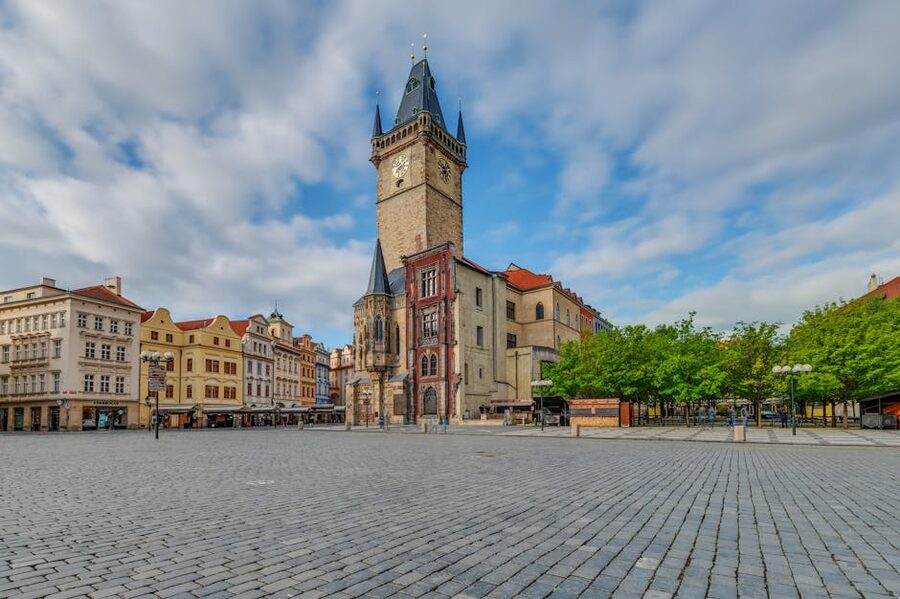
All three tours meet at Malé Náměstí 11, which is the small square directly behind the Old Town Hall. If you’re standing in front of the Astronomical Clock looking at it, walk to the right side of the building, around the corner, and you’re there. It’s roughly forty seconds from the clock face. The square has a fountain in the middle. Your guide will be holding a sign.
Show up fifteen minutes early. This is the one piece of practical advice I’d actually fight someone over. The first part of the tour is descending through trapdoors and narrow stairs, and it doesn’t wait for stragglers. Late arrivals get refused on busy days. There’s no second batch.
What It’s Like, Minute by Minute
The first ten minutes happen above ground. The guide walks you across Malé Náměstí, points out a few markers in the cobblestones, and gives you the framing: Prague was originally a city of ground-floor stone houses, the Vltava kept flooding them, so they raised the streets and the original ground floors became cellars. Plot established.
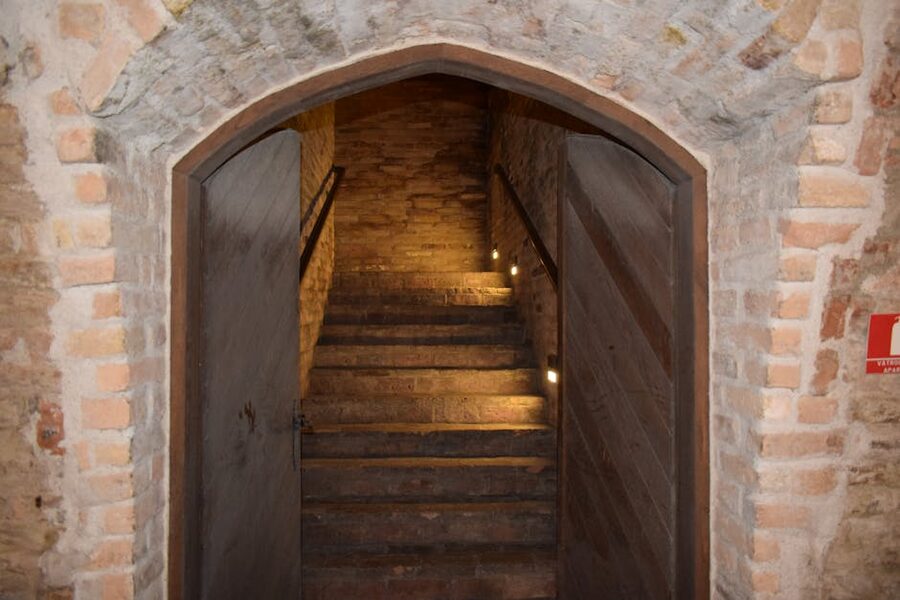
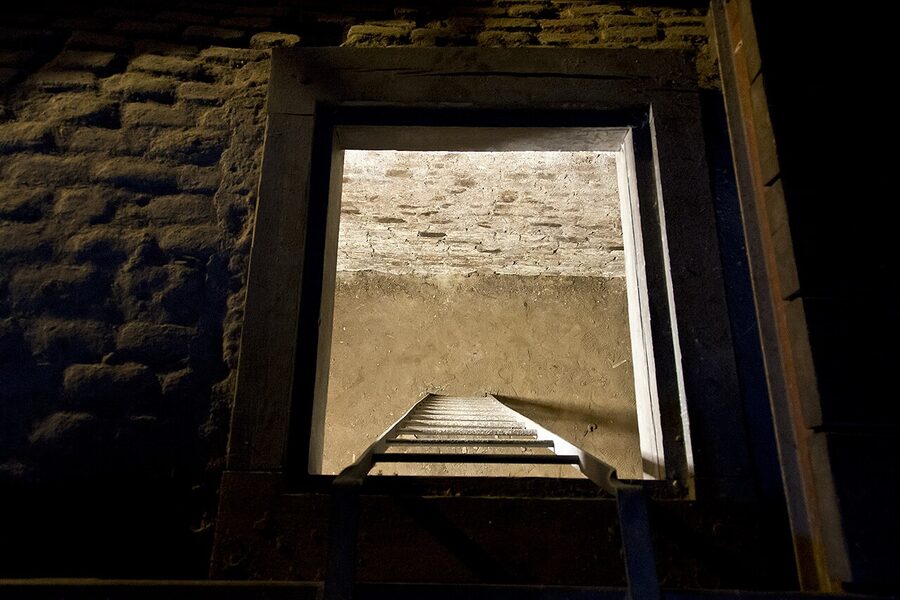
Then you go down. Usually through a doorway in a building most people walk past. The stairs are stone, narrow, and steeper than modern code allows. Your shoulders may brush both walls.
From there it’s roughly an hour of moving through connected cellars. The guide stops at six or seven set pieces. The alchemy lab is usually first. The torture room is usually last because it’s the one that lingers. In between you get the genuinely weird stuff: a 12th century well still holding water, a corridor that connects three houses through their basements, a stone trough used for storing meat in winter when ice was money.
The exit is a different staircase. You come back up into a different building, blinking, on a different street. The first time it happened to me I was disoriented for a full minute. I thought I’d circled back to the meeting point.
The Three Tours Worth Booking
Multiple operators run versions of this experience, but the three I’d actually book are below. They cover the same network of cellars but differ in length, platform, and whether the storytelling leans historical or supernatural.
1. Prague Oldtown, Medieval Underground & Dungeon History Tour: $31
This is the tour with over 10,000 reviews on GetYourGuide, and the one I’d send a first-time visitor to without hesitation. The 80-minute format is the right length for the underground content, the guides have the routine sharp, and our full review covers what makes the storytelling click. Expect a steady mix of history and dark humour rather than ghost-show theatrics.
2. Ghosts, Legends, Medieval Underground & Dungeon Tour: $31
Same underground network, same descent, but the script tilts toward legend and ghost lore. Guides often dress in period costume, and you’ll hear about the Golem of Prague, the executions on Old Town Square, and the clockmaker’s curse. Our full review unpacks why the night slot is the one to book. If you’ve already done a daytime walking tour and want a darker companion piece, this is it.
3. Prague Old Town Medieval Underground & Dungeon Historical Tour (Viator): $33

Functionally the same descent, booked through Viator instead of GetYourGuide, and stretched out to ninety minutes which gives the guide more breathing room on the alchemy and plague stories. Our review goes deeper on the longer-format pacing. If you already have a Viator account and want one tab open, this is the natural pick.
How to Pick Between Them
Honest version. The first two tours are functionally close. They both cost $31, both run about 75 to 80 minutes, and both descend into the same cellar network around Malé Náměstí. The choice isn’t really historical accuracy versus ghost story. It’s tone.
Pick the History tour if you want the guide to talk about Rudolf II’s alchemists, defenestrations, and the actual archaeological story of how these spaces survived. The humour stays dry. The script has more substance.
Pick the Ghosts & Legends tour if you want a guide in costume, you’re booking for an evening, and you’ve got somebody with you who’d be bored by straight history. It’s the better tour for couples and for the post-dinner slot.
Pick the Viator tour if you’ve already booked your other Prague activities through Viator and want everything in one place, or if the GYG slots are full when you’re checking. The extra ten minutes is genuine, not padding.
Don’t Book This Tour If
Some practical guardrails the booking page understates.
- You have mobility issues or use a wheelchair. The stairs are unavoidable. There are usually two flights down, narrow, and a third or fourth between cellars. No lift exists. The booking pages say this; I’m restating it because some people read it as a soft warning rather than a hard one.
- You’re seriously claustrophobic. The corridors aren’t pitch black, but several sections have low ceilings, no cell signal, and walls within arm’s reach on both sides. If small spaces trigger you, the alchemy lab section will make you regret your booking.
- You’re travelling with kids under seven or eight. The torture room signage is graphic in the way museum signage is graphic. The ghost tour version mentions executions explicitly. Older kids who want to be scared will love it. Smaller kids may not.
- You’re hoping for a comprehensive Prague history tour. The underground tour is specifically about the underground. For the wider sweep, pair this with a separate Old Town and Jewish Quarter walking tour, which covers everything happening above ground.
The Stories Worth Knowing Before You Go
The tours move quickly. Reading these three short stories beforehand will roughly triple how much you get out of the time underground.
The Floods That Buried the Original City
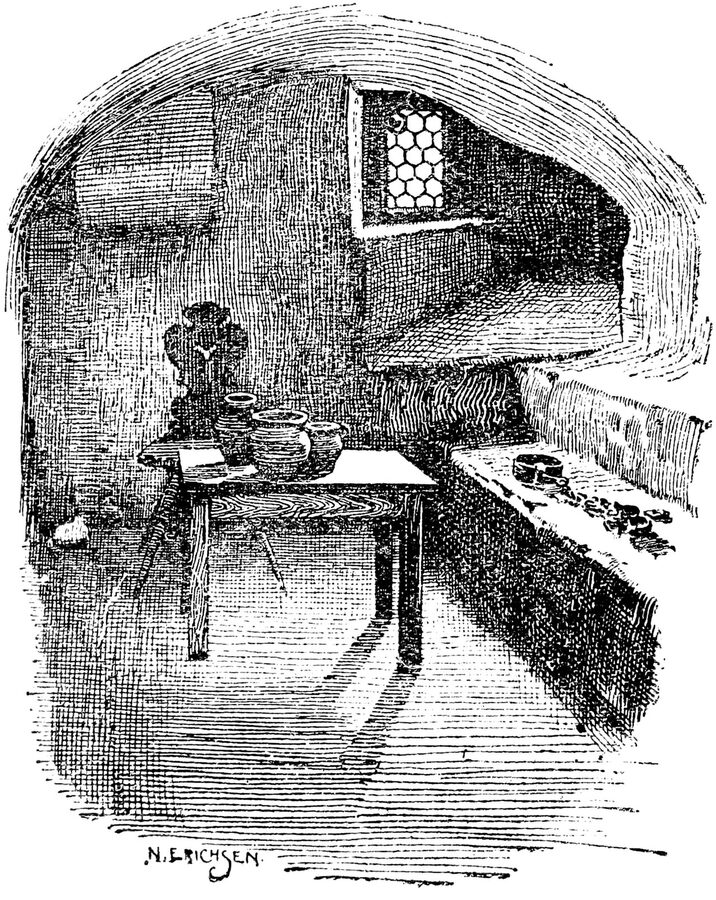
Prague Old Town sits in a bend of the Vltava, and for the first three centuries of its existence the river won. Major floods in the 12th and 13th centuries kept turning the ground floors of houses into mud. The solution, eventually, was to raise the streets. Buildings got new ground floors built on top of the old ones, the old ones became cellars, and the city’s medieval skin slid one story underground. That’s why the cellars you walk through are the same height as a normal room. They were normal rooms, until the surface of Prague rose around them.
The Defenestrations
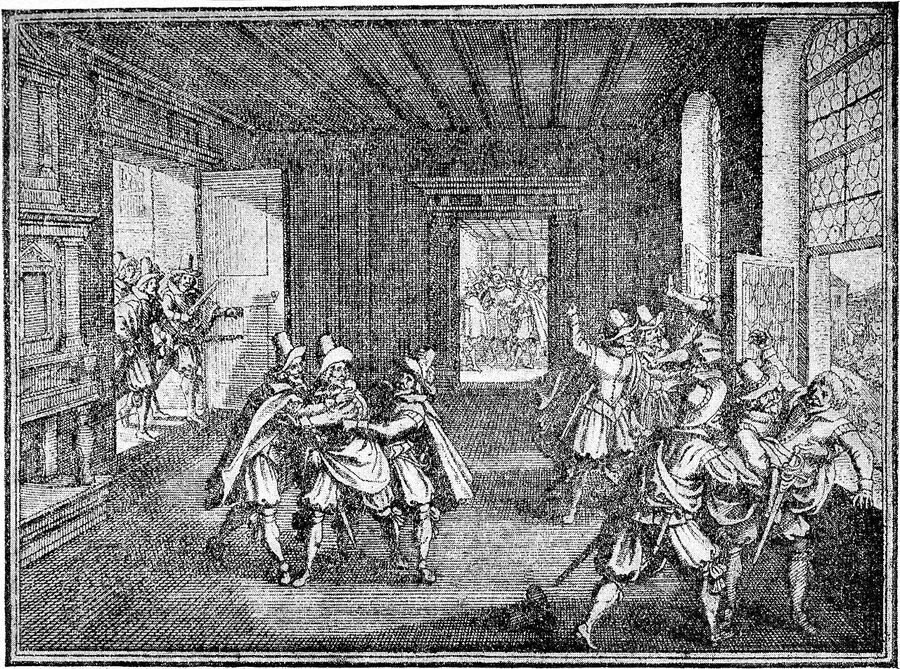
Prague specialises in throwing people out of windows. The famous 1618 Defenestration started the Thirty Years’ War, but the one your guide will tell you about happened earlier, in 1419, at the New Town Hall. Seven city councillors were thrown from a high window onto the pikes of an angry crowd below. Nobody survived. The 1483 version was similar. The 1618 group survived because they landed on a dungheap, which the Catholics later claimed was divine intervention and the Protestants claimed was just a dungheap. Pick your interpretation.
Rudolf II and the Prague Alchemy Boom
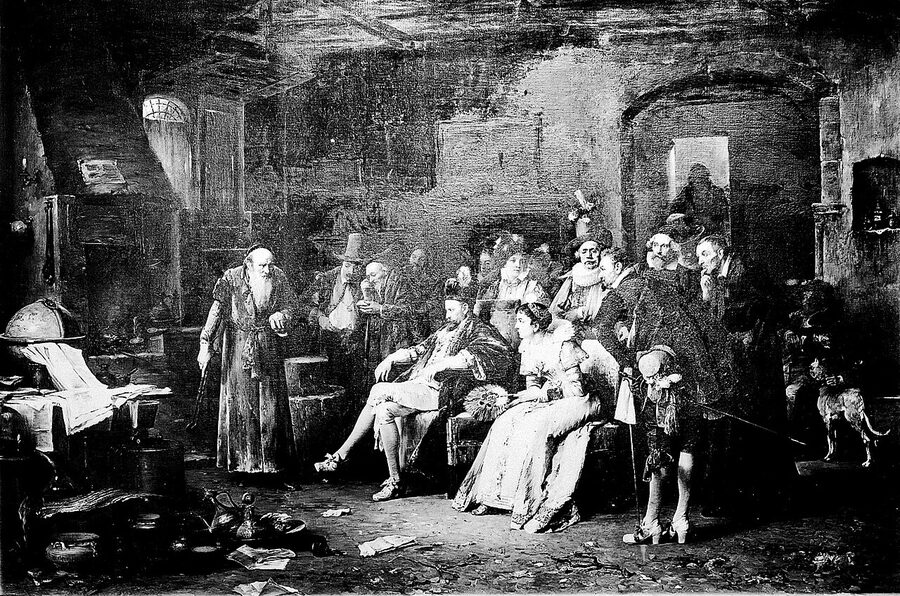
Rudolf II ruled the Holy Roman Empire from Prague between 1576 and 1612 and turned the city into the alchemy capital of Europe. He believed the Philosopher’s Stone existed, he funded anyone who could plausibly claim to be looking for it, and he protected them from the Catholic Church when their theology got creative. Several of those alchemy labs were beneath houses in the Old Town. One of them was lost for four hundred years, and then the 2002 Vltava flood broke through a wall and the cleanup crew found it. That lab, with its original glassware and ovens still intact, is one of the stops on the tour.
The Astronomical Clock’s Dark Origin
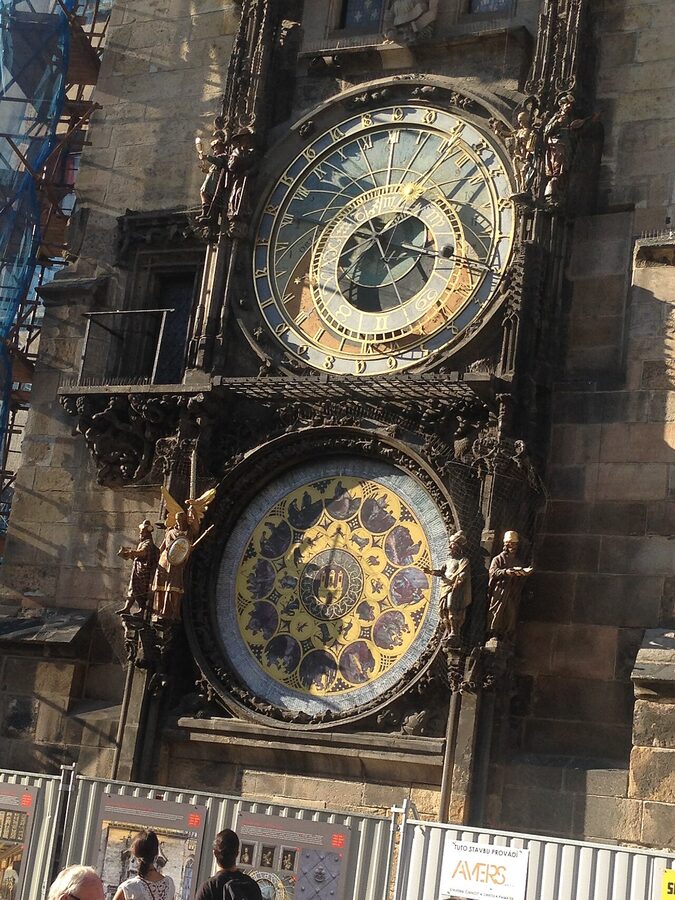
The Astronomical Clock on the Old Town Hall, the one that draws the crowds every hour, has a legend attached that the underground guides love. The clockmaker who built it (Master Hanuš in some versions, Mikuláš of Kadaň in the historical record) was supposedly blinded by the Prague councillors after he finished, so he could never build a more impressive one for another city. The legend says he then climbed up to the mechanism and broke it, and the clock didn’t run properly for a hundred years. Believe the blinding part or not, the clock did break repeatedly during the medieval period, and the underground tour weaves the story in.
What Else to Pair With This
The underground tour takes 75 to 90 minutes. That leaves a lot of day left. My honest advice on what to do next.
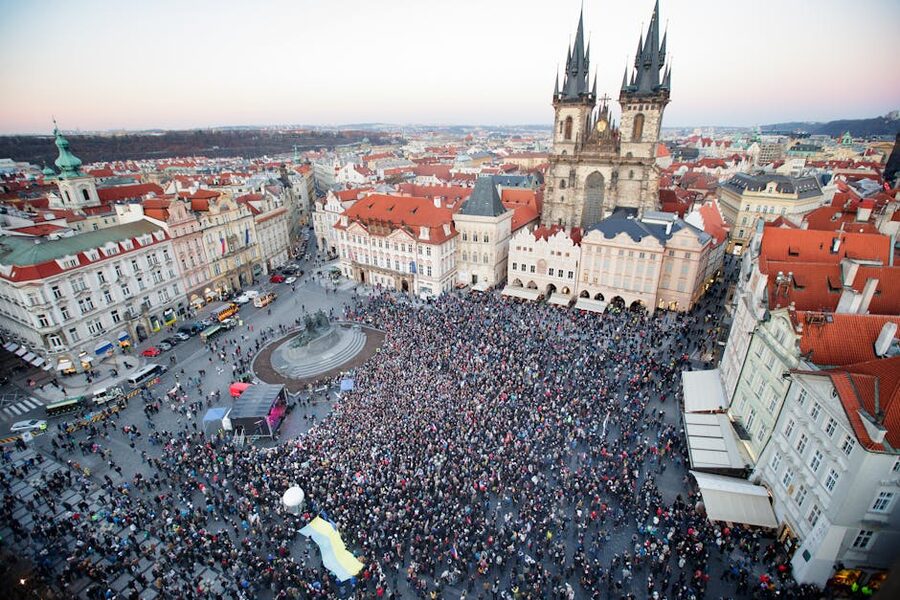
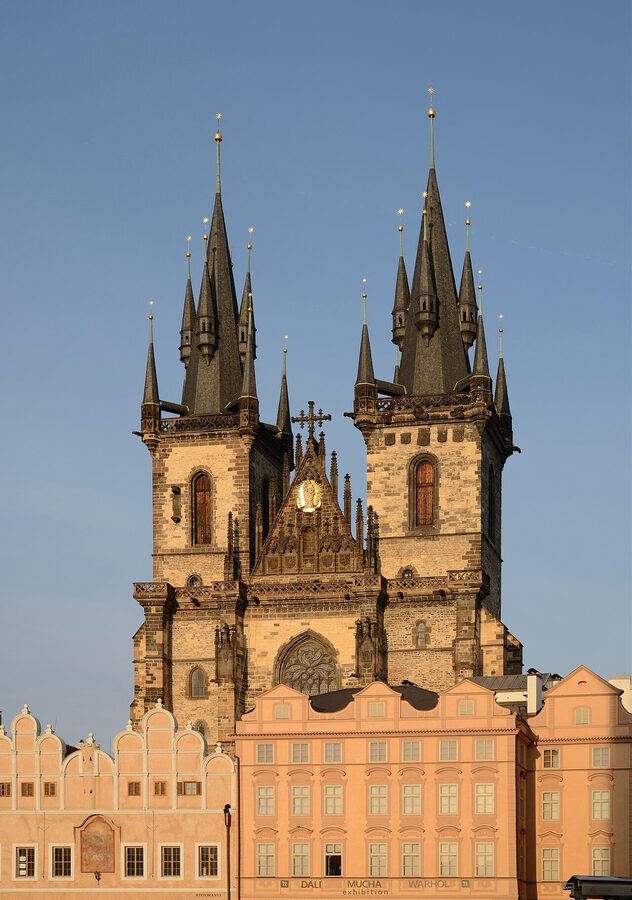
Same morning, after you come up: walk into Old Town Square and stay above ground for a while. After the cellars, even ordinary daylight feels luxurious. The Tyn Church is right there, the Astronomical Clock face is across from it, and Café Louvre or any of the side-street cafés will give you somewhere to sit and process what you just saw.
Same afternoon, if you’re keen: a Vltava river cruise works as the perfect counterweight. You spent an hour underground in cool stone; spend an hour on the river in sunlight. The contrast is the point. Our Prague Vltava cruise booking guide walks through the operators and which boat type to pick.
Different day: a Prague Castle visit covers the other half of the city’s medieval story. The Castle is the seat of power. The Old Town underground is what the city’s tradesmen, prisoners, and alchemists were doing while that power played out across the river. The same day works well as an above-ground complement: pair the underground morning with our Prague Old Town walking tour guide, which covers the squares and churches you only briefly surface into between cellars.
Same evening, if you booked the daytime History tour: the Prague ghost walking tour is the natural follow-up. It stays mostly above ground and covers the squares, the executioner’s house, and the Jewish Quarter legends. Different angle on the same dark material.
Ticket and Booking Practicalities
A few things that aren’t on the booking page.
Booking window. All three tours are bookable on the day in low season (November to March outside Christmas markets) but sell out two to four days ahead in summer and around Easter. Christmas market period is the worst, when even the morning slots fill a week out.
Cancellation. All three offer free cancellation up to 24 hours before. That’s standard for both GetYourGuide and Viator and worth using. If your morning gets eaten by something else, just rebook for a different slot. The 24-hour rule is firm. At 23 hours and 59 minutes, you’re paying.
What to bring. Genuinely nothing special. The cellars stay around 12 to 15°C year-round, so a light layer is enough even in August. Phone torch helps in the darker corners but the guides carry torches and use them. The stone floors get wet in places, so closed shoes beat sandals.
What’s actually included. The guide, all the underground access fees, and a bottle of water at most operators. No food. The torture room and alchemy lab entries are bundled in. There’s no upsell at the end.
Languages. English departures run multiple times daily on all three tours. German is offered most days. French, Spanish, Italian and Czech run on selected days, usually with at least 24 hours’ notice. If your group is mixed, English with simultaneous Czech notes from the guide tends to work well.
Tipping. Czech tour guide tipping norm is about 10 to 15 percent of the ticket price, in cash if possible. The cellars don’t have card readers and your guide is the one who shepherded you through the dark. Worth it.
If You’re Already Doing Other European Cities
This kind of underground tour has a specific shape, and once you’ve done one in Prague you’ll recognise the genre elsewhere. The closest sibling I’ve done is the Nuremberg historic rock-cut cellars, which cover the same medieval-cellars premise but with brewery and World War II layers added. If you’re tracking through central Europe, doing both within a week is a good back-to-back.
For the Saxon Switzerland day-trippers heading to Prague from Dresden, the Dresden Night Watchman tour is the same kind of evening, atmospheric, costumed-guide format the Prague Ghosts tour does. Prague does it underground, Dresden does it above ground in lantern light. Both work. Munich’s Third Reich walking tour is heavier and political rather than supernatural, and Berlin’s Story Bunker covers the literal underground bunker beneath Anhalter Bahnhof. Different tonally, but the same instinct: see the city’s other floor.
If you’re routing Prague through Berlin, the four-hour ICE means it’s normal to do Berlin’s Third Reich walking tour on a Friday and the Prague Medieval Underground on a Sunday. They make a strong pairing because they’re both about what a city tries to remember and what it tries to forget.
The One Thing I’d Tell My Past Self
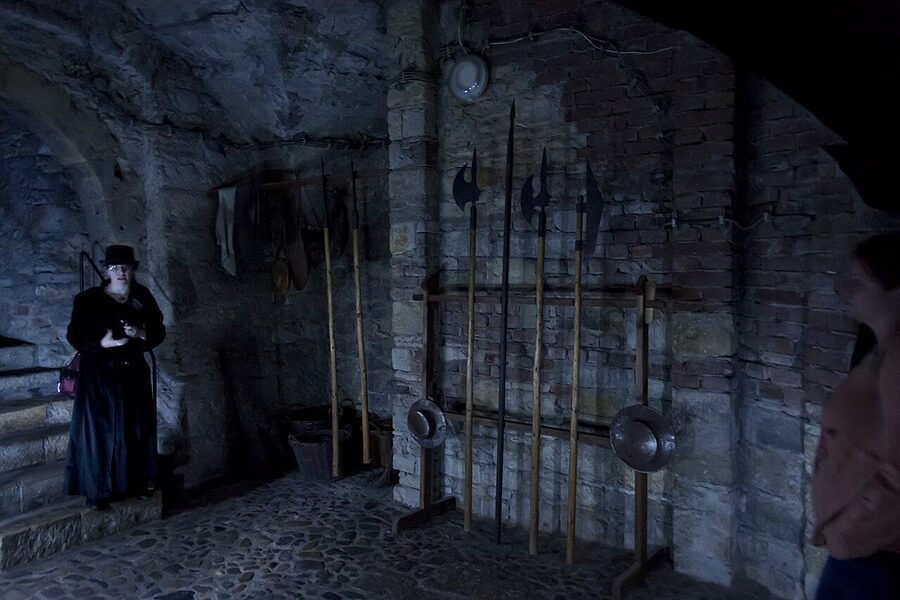
The first time I did this tour I tried to photograph everything. The second time I put the phone away and just listened. The second time was better.
The cellars have been there for eight hundred years. They will be there next time. What you can’t get back is the moment your guide stops mid-sentence, lowers their voice in the alchemy lab, and lets the room finish the thought. That’s what you booked for. Be there for it.
One Last Thought Before You Book
Prague has dozens of paid attractions, and most of them are good. The medieval underground is one of three or four I’d argue is genuinely unique to this city. You can see castles in twenty European capitals. You can ride river cruises in twenty more. You cannot, anywhere else, descend into a 12th century alchemy lab uncovered by a 2002 flood, in cellars that were the original ground floor of a city that decided to raise its streets eight metres. Book it for a morning when you’ve got nothing else scheduled, eat lunch on Old Town Square afterwards, and let the contrast do its work.