
The guide killed his lantern halfway through the tunnel and asked us to stand still for a moment. Sandstone closed in on three sides, the air dropped a few degrees, and somewhere ahead a slow drip echoed off rock that had been hollowed out before Columbus crossed the Atlantic. Then the lantern came back on and we kept walking, and that was when I understood what people mean when they say Nuremberg has a second city under the first one.
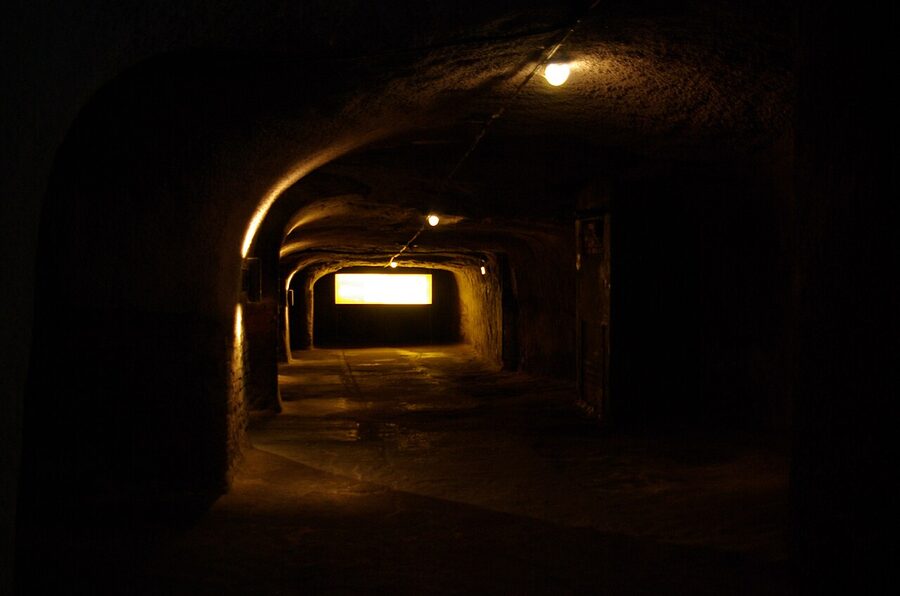
There are three underground experiences worth booking in Nuremberg, and they tell three completely different stories. One is medieval, one is World War Two, and one is the Cold War. You can do all three in a long day if you plan it right, and most visitors only know about the first one.
- In a Hurry?
- What You’re Actually Walking Through
- The City Wall Tunnels Tour: What Happens Down There
- Booking the Tunnels Tour
- The WWII Art Bunker: Where the Dürers Survived
- What the Tour Is Actually Like
- Booking the Art Bunker
- The Cold War Bunker Under the Train Station
- What the Tour Covers
- Booking the Nuclear Bunker
- Which One Should You Book First
- Three Underground Tours Worth Booking
- 1. City Wall Tunnels and Secret Passages:
- 2. Historischer Kunstbunker WWII Art Bunker Tour:
- 3. Nuclear Bunker in the Main Railway Station:
- The Wider Story Above Ground
- Practical Things Nobody Tells You
- If You’re Pairing With Other German Cities
- Once You’re in Nuremberg, What Else
In a Hurry?
- City Wall Tunnels and Secret Passages: $14. The medieval one, runs hourly and books out fastest. Book the tunnels tour
- WWII Art Bunker (Historischer Kunstbunker): $14. Where Nuremberg hid the Dürers and the imperial regalia from Allied bombing. Book the art bunker
- Nuclear Bunker under the Main Station: $15. Cold War fallout shelter for 2,500 people, opened to the public a few years ago. Book the nuclear bunker
What You’re Actually Walking Through
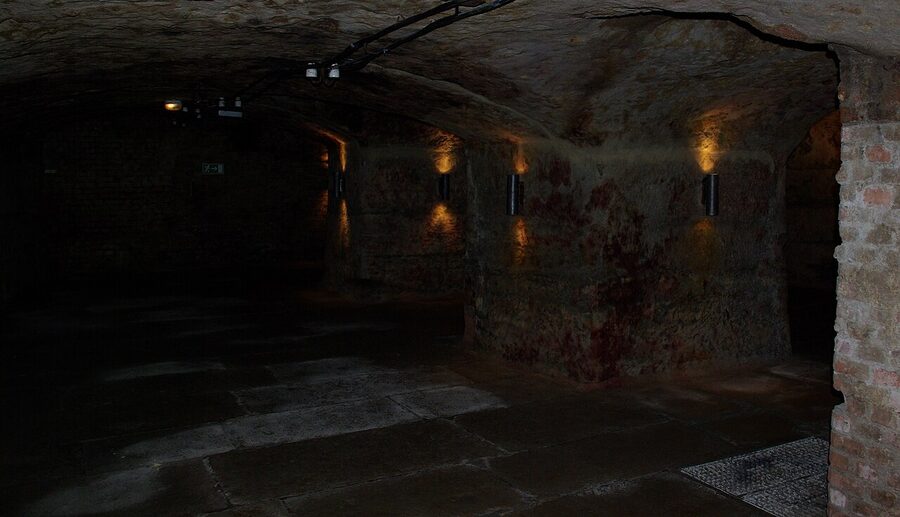
The old town of Nuremberg sits on a sandstone hill, and that sandstone is the reason this whole network exists. From the 1300s onward, every brewery in the city was legally required to have a deep cellar for storing beer at a stable cool temperature. The brewers dug down through the sandstone, hit ideal conditions about three to four metres below street level, and then kept going.
By the 1800s, the cellars under the old town had been linked into a network covering roughly 20,000 square metres. Some are vaulted brick, some are hand-carved rock with chisel marks still visible, and some are just rough corridors that connect one merchant’s house to the next. The locals call them the Felsengänge, which translates to rock-cut passages.
What turned this into a tourist attraction was World War Two. When Allied bombing started flattening the medieval city above, the Nuremberg authorities reinforced sections of the cellars and used them as bomb shelters and as hiding places for the city’s most valuable artworks. The Felsengänge survived the bombings almost completely intact while everything above ground burned. After the war the cellars went back to brewery storage. Public tours started in the 1990s.
The City Wall Tunnels Tour: What Happens Down There
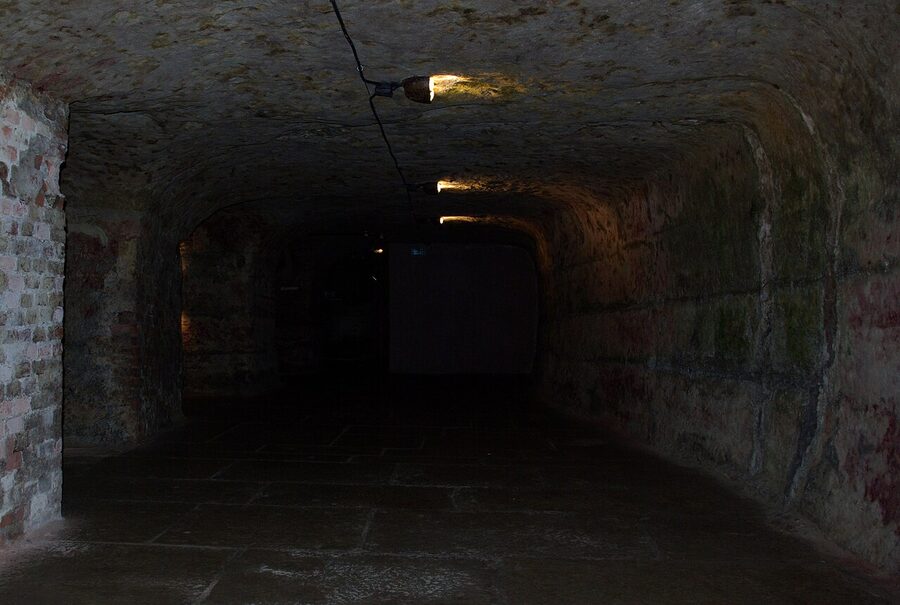
This is the entry-level underground tour and it’s the one I’d recommend you book first. You meet at the brewery entrance just below the Albrecht Dürer House (the half-timbered place near the castle), descend a flight of worn stone steps, and spend about an hour underground.
The route takes you through brewery cellars, secret passages built into the city wall, and a few defensive chambers. The guides cover the medieval brewing system, the role the tunnels played as escape routes during sieges, and how the network was used during the bombing raids of 1945. It is dense with information but it never drags, partly because every five minutes you turn a corner and the space looks completely different.
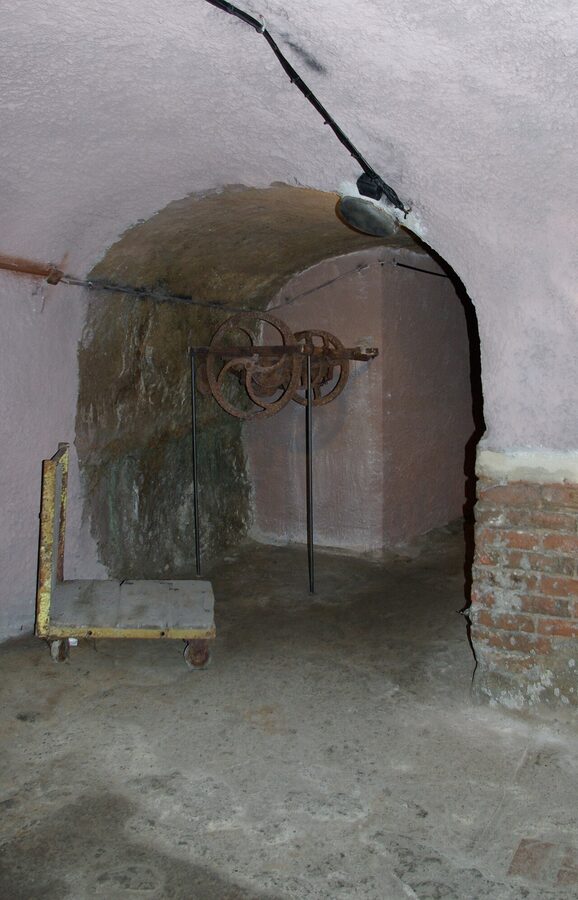
The tour ends with a small tasting of Nürnberger Rotbier, a regional red beer that’s still brewed in the cellars by the Hausbrauerei Altstadthof. It’s not free, but it’s optional and only a few euros. I’d say take it. The beer makes more sense once you’ve seen where it’s stored.
What surprised me most was how loud my own footsteps sounded. The tunnels were never designed for visitors. Every echo, every drip, every shift of your jacket carries. You come out blinking on Bergstraße feeling like you’ve been gone for half a day, even though it was only an hour.
Booking the Tunnels Tour
Tours run roughly every hour during peak season (April to October) and every two hours in winter. English tours are limited, usually one or two per day, so book ahead. The German tours are far more frequent if you’ve got someone who can translate or you don’t mind missing some context.
Tickets are about $14 and you can book through GetYourGuide, which is what I did, or directly through Förderverein Nürnberger Felsengänge if you prefer to support the heritage trust. Either way, get the booking sorted at least 24 hours ahead in summer.
Wear closed shoes. Bring a light jacket even in August. The temperature underground is the temperature of the rock, which is around 8 to 10 degrees Celsius regardless of what it’s doing on the surface.
The WWII Art Bunker: Where the Dürers Survived
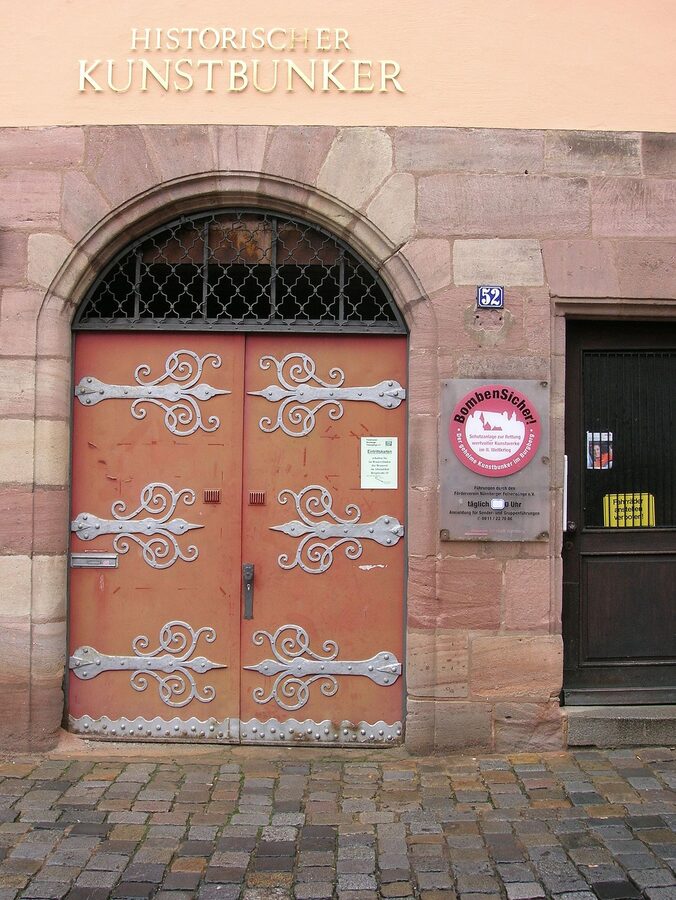
This is the one I think about most when I’m back home. The Historischer Kunstbunker (Historic Art Bunker) is a section of the same sandstone network that was reinforced and converted in 1940 into a climate-controlled bombproof vault for Nuremberg’s most important artworks. It is, in my opinion, the most extraordinary place in the city.
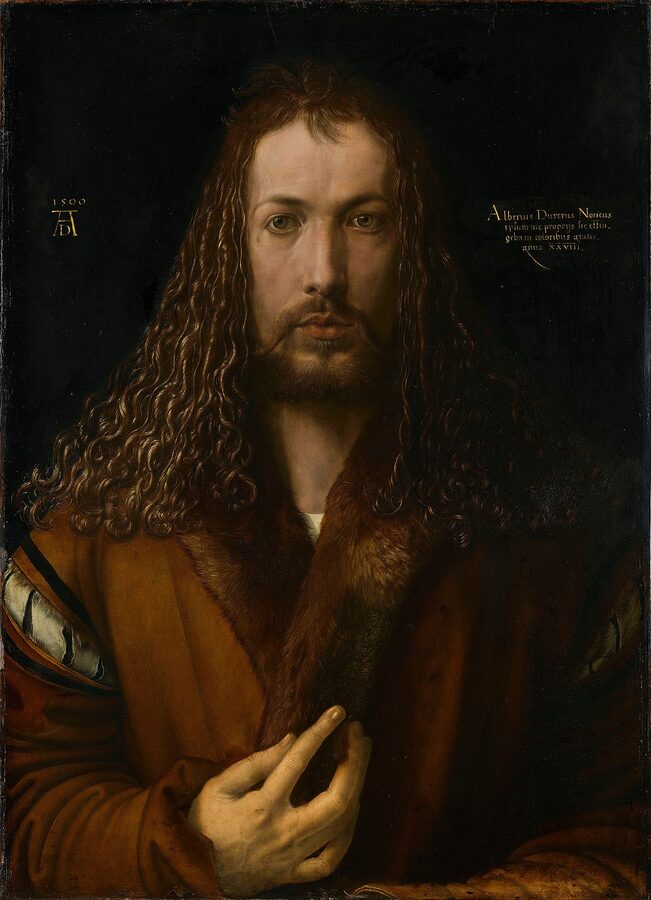
What was hidden down here: the imperial regalia of the Holy Roman Empire, including the crown of Otto the Great. Albrecht Dürer’s most famous self-portraits, painted in this very town. The carved choir stalls from the cathedral, the gothic sculpture of St Sebald, panels from Veit Stoss’s masterpiece in the Frauenkirche. The stained glass from Sebalduskirche, removed pane by pane and crated up.
The imperial regalia would normally be in Vienna’s Hofburg, where it lives now. But during the war the Nazi regime had moved the regalia back to Nuremberg, where Hitler considered it ideologically important. When Allied bombs started falling, all of it ended up here, four storeys underground, behind blast doors and climate control.
The American Monuments Men found the bunker in April 1945 after Lieutenant Walter Horn (himself a former Nuremberg medievalist) tracked down where the regalia had been hidden. He pieced together the story from interviews with Nazi officials and eventually located the entrance behind a sealed wall. Everything was still there. Almost nothing had been damaged.
What the Tour Is Actually Like
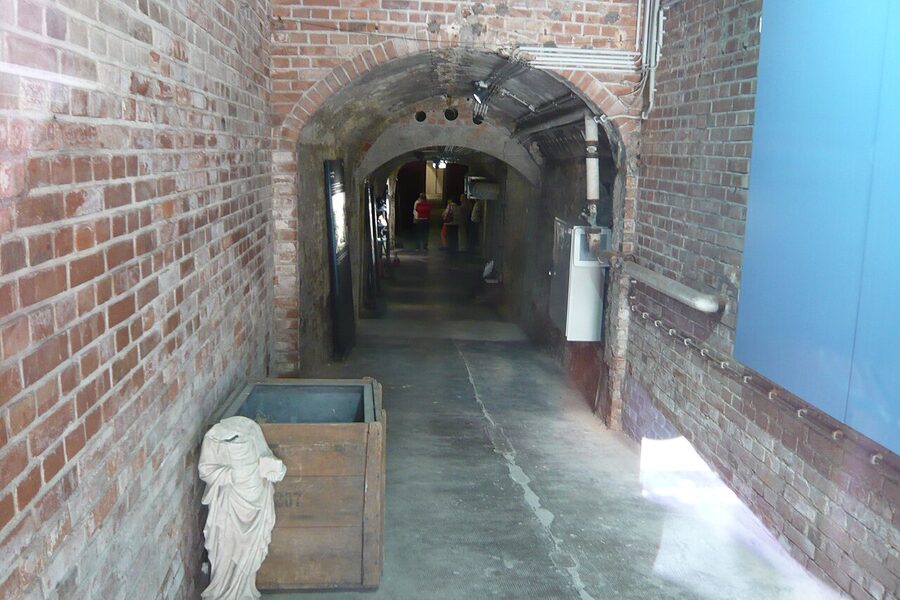
The tour is led by a guide from the museum trust, runs about an hour, and is small (max 20 people). You go down a long corridor, through several reinforced chambers, and the guide tells the story chamber by chamber, often pointing at exact spots where specific objects sat. It is part history lecture, part archaeological walkthrough.
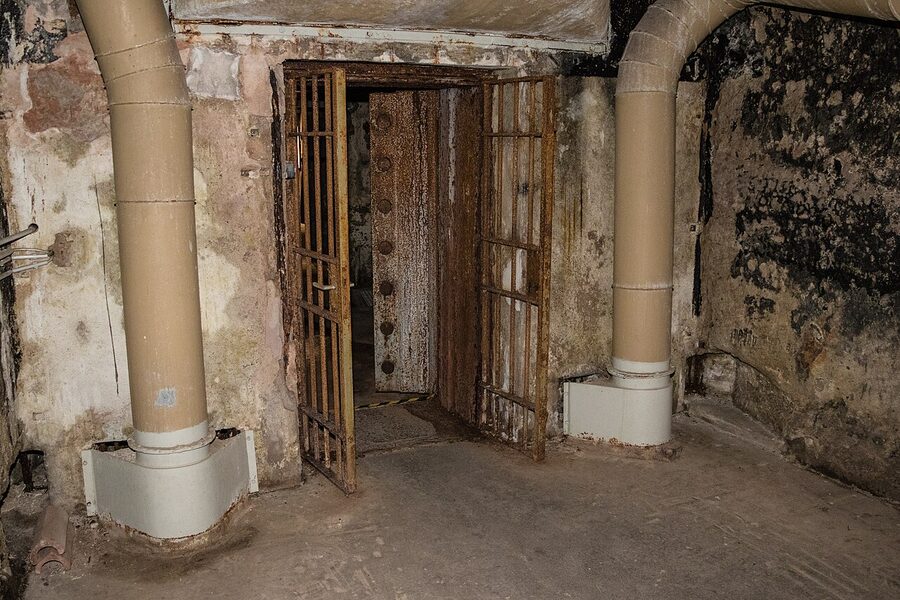
What struck me: the practical detail. The rooms had specific humidity targets, the wooden crates were lined with particular types of paper, the regalia was wrapped in silk. The whole thing was run by museum curators, not soldiers. They were thinking like conservators even while bombs were falling on the city above their heads.
If you’ve already done the city wall tunnels tour, the Art Bunker is the natural next step. They are run by the same heritage trust and use parts of the same network, but the focus is completely different. The walking tunnels tour is about beer and medieval defense. The Art Bunker is about what happens when a culture decides which of its objects are worth saving.
Booking the Art Bunker
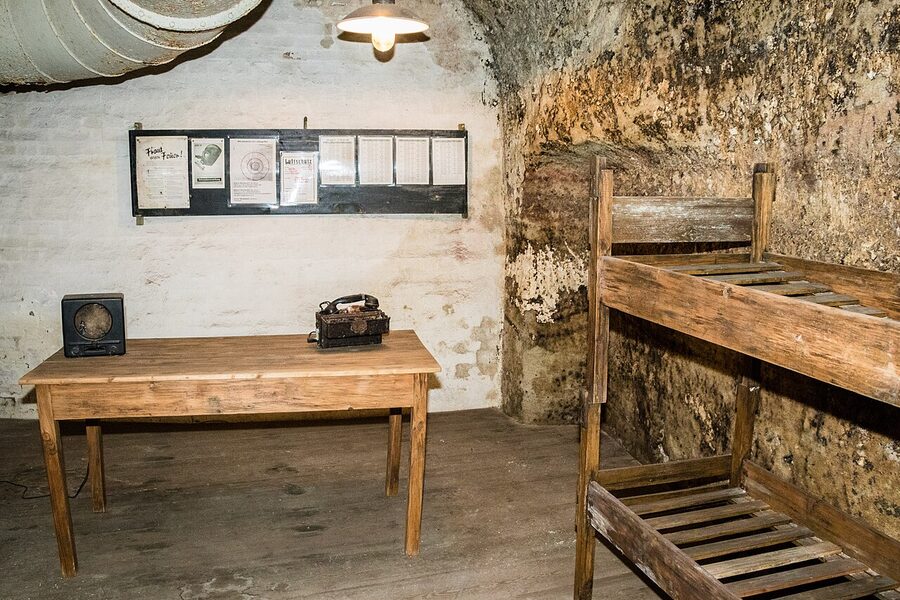
Tours run several times daily in summer, less often in winter. English tours are typically once a day, around 14:30. Tickets are about $14 through GetYourGuide and the maximum group size of 20 is firm. If your dates are tight, book at least three or four days ahead in July and August.
The space is small and atmospheric and very quiet. Don’t bring small children unless they can stay still for an hour. There’s no toilet inside the bunker, so handle that beforehand.
The Cold War Bunker Under the Train Station
This one is newer, less famous, and weirder. In the 1970s, West Germany built a network of nuclear fallout shelters under transport infrastructure across the country. The one in Nuremberg sits beneath the main train station and was designed to hold 2,500 people for two weeks in the event of a Soviet nuclear strike.
It was decommissioned after the Cold War ended and stood empty until the city decided to open it as a museum. The tour started running publicly only in the late 2010s, which is why it’s still under most travelers’ radar.
What you see down there: rows of wooden bunks stacked four high, sealed blast doors with German civil defense markings still on them, a chemical toilet system designed for two weeks of continuous use, and a control room with the original analog instruments. There’s a separate sealed section that was meant for emergency surgery if it came to that.
What the Tour Covers
The guide spends about 75 minutes walking you through the rooms in roughly the order they would have been used during a real fallout event. There’s a heavy emphasis on the daily logistics: how rations would have been distributed, how air was filtered, how people would have slept in shifts because there were not enough bunks for everyone, how psychological breakdowns were planned for.
It’s a different kind of underground experience from the medieval tunnels and the Art Bunker. Those are about preservation. This one is about contingency. The Cold War bunker was built so that the city of Nuremberg, if catastrophe arrived, would not entirely die. It is sobering and the tour does not soften it.
One thing that surprised me: the smell. After fifty years of being sealed up, the bunker has the slightly chemical, slightly stale air of a space that was never meant to be lived in but might have been. The tour guides are honest about this. They don’t try to recreate atmosphere, they just let you stand in the bunk room for a minute and process what you’re looking at.
Booking the Nuclear Bunker
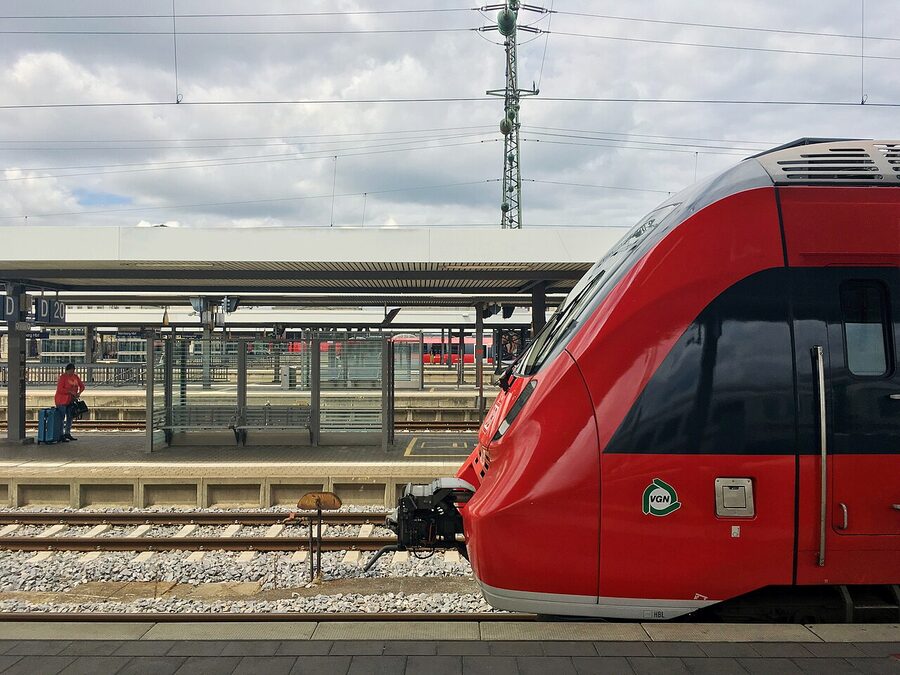
This one is harder to book on short notice because the tours run only a few times a week, mostly weekends. English tours are even rarer, often only once a week. Check the calendar two to three weeks ahead if your trip is in summer.
Tickets are about $15 through GetYourGuide. The meeting point is inside the main station, which makes the logistics easy if you’re traveling by train. The group size is limited and the route involves narrow doorways and steep stairs, so it’s not wheelchair-accessible.
Which One Should You Book First
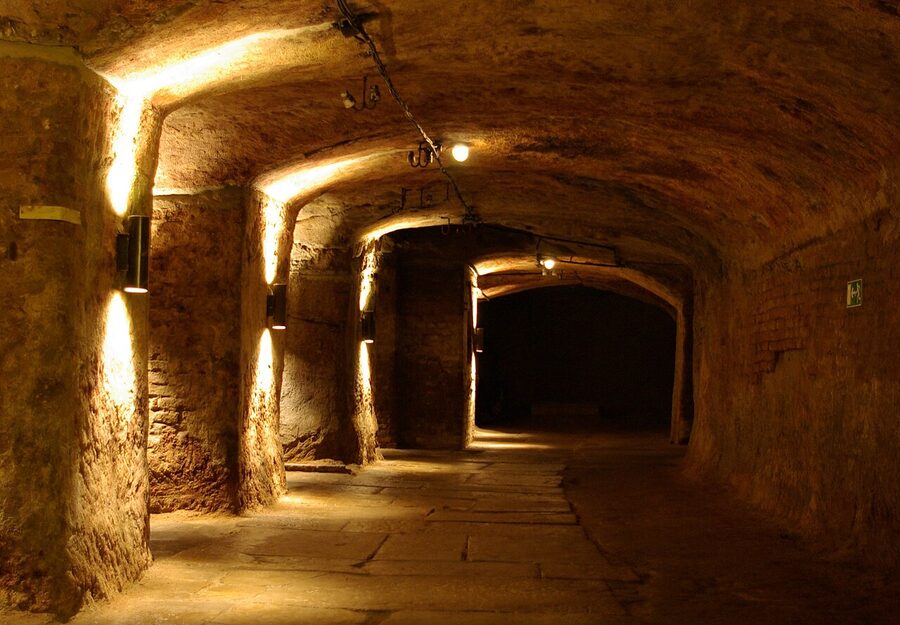
If you have one afternoon: do the City Wall Tunnels. It is the most accessible, runs most often, has the best English coverage, and gives you the broadest history.
If you have two underground slots and you’re interested in WWII, add the Art Bunker. It is shorter, more specific, and emotionally heavier. I’d put a meal break between them. They use overlapping passageways and your brain needs time between two tunnel walks.
If you’re staying three or more days and you want to go deep, do the Nuclear Bunker as the third one. It’s the strangest experience of the three, and most travelers will not have done it.
Don’t try to do all three in one day. The cumulative effect of three underground tours back to back is exhausting. You spend half your day in low light and recycled air. Spread them out.
Three Underground Tours Worth Booking
1. City Wall Tunnels and Secret Passages: $14
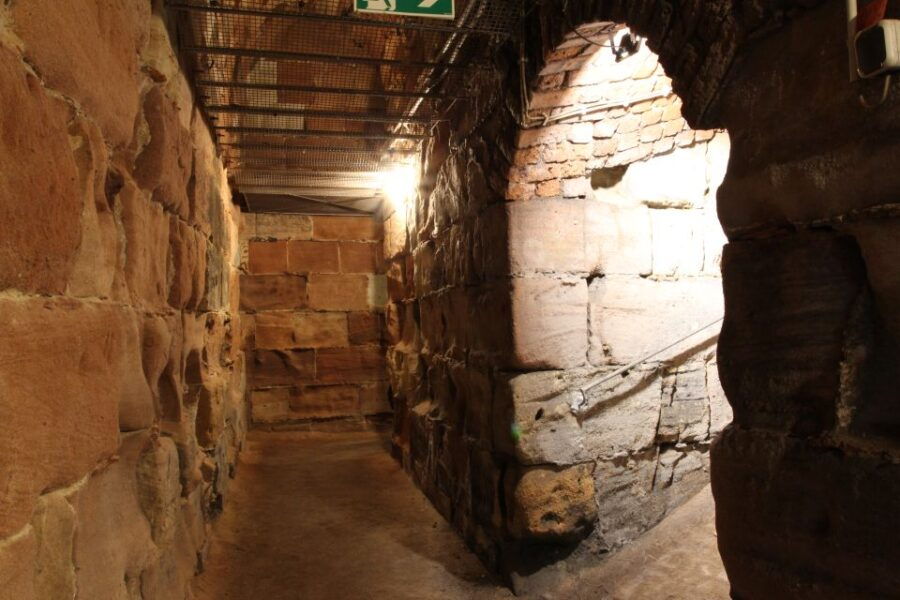
This is the volume seller, with thousands of visitors a year, and it earns the position. The Förderverein Nürnberger Felsengänge runs it as a heritage trust which means the guides know the source material in real depth. Our full review of the city wall tunnels tour has more on what visitors say about the small-group format and the tasting at the end.
2. Historischer Kunstbunker WWII Art Bunker Tour: $14
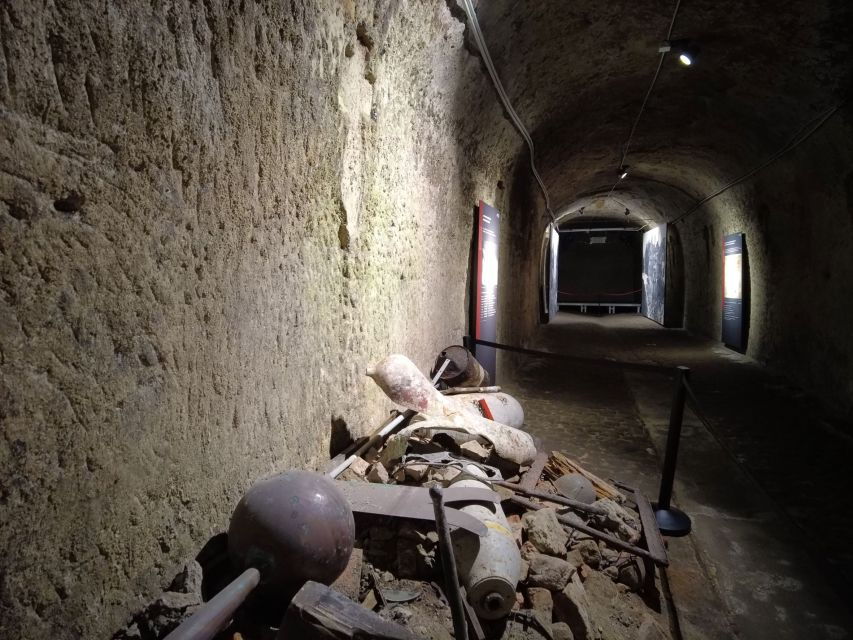
If you want the heaviest WWII layer of any underground experience in Germany, this is it. The bilingual German-English format means most international visitors get the full briefing without anything lost in translation. Our full review of the art bunker tour covers the rescue mission and the conservation methods in more detail.
3. Nuclear Bunker in the Main Railway Station: $15
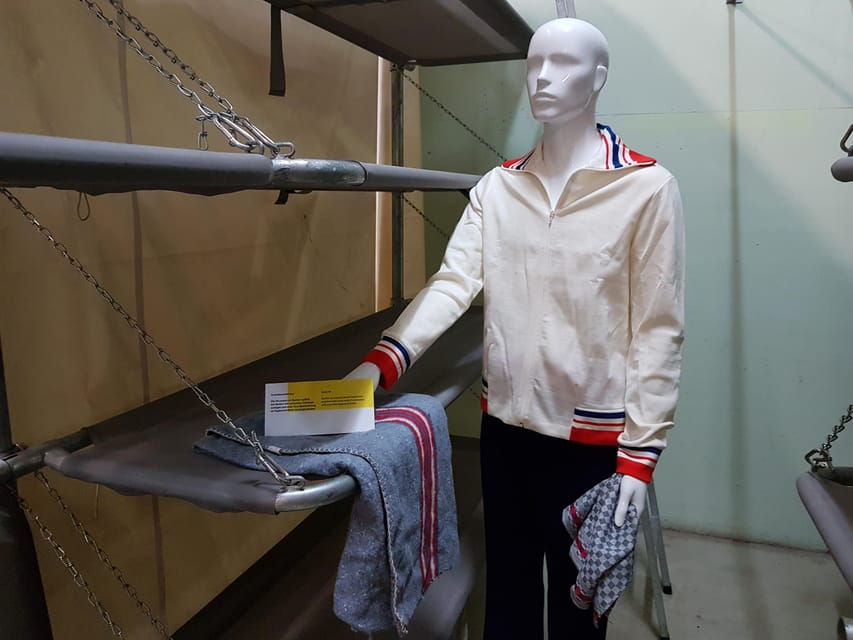
This is the contrarian pick if you’ve done the medieval and WWII underground sites already. The 1970s civil defense engineering and the rare access make this a tour you’ll be telling people about for months. Our full review of the nuclear bunker tour covers what’s actually visible inside and how to time the booking.
The Wider Story Above Ground
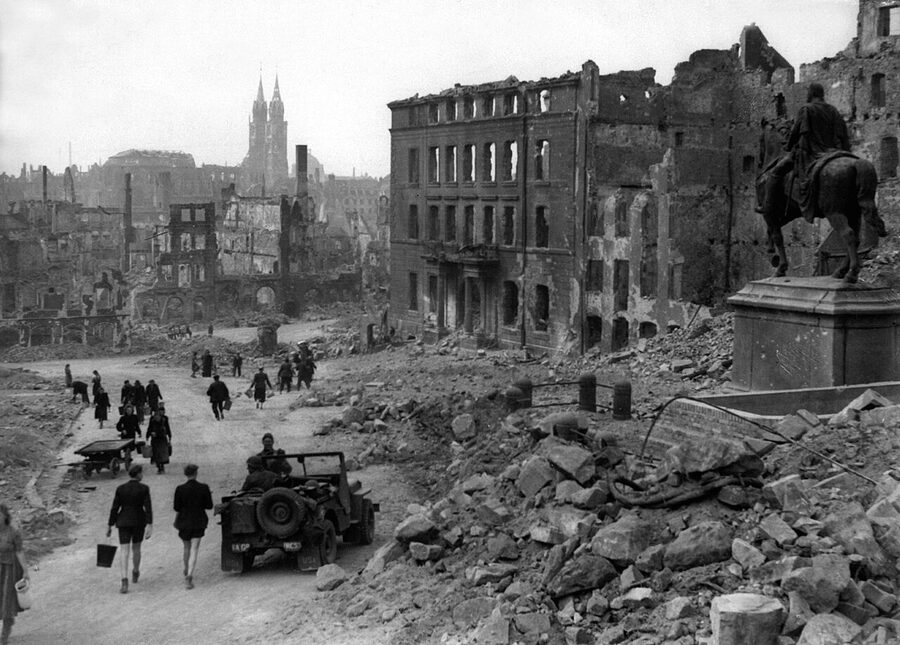
To make sense of why the underground tours hit as hard as they do, you need to know the story of what happened on the surface. On the night of January 2, 1945, an Allied bombing raid destroyed an estimated 90 percent of the medieval old town in just over an hour. Six thousand people died. The fires burned for days.
The art bunker is the reason a great deal of medieval German art still exists. Without the cellars, without the city wall network, without the heritage trust that maintained the tunnels through the bombing months, the regalia of the Holy Roman Empire would be ash and the Dürer self-portraits would be a memory.
The medieval tunnels also served as bomb shelters during the same raids. People sat down there listening to their city collapse above them. After they came out, they spent the next two decades rebuilding. The Nuremberg you walk through now is a reconstruction. The underground is, in a real sense, the only continuous part of the old town.
Practical Things Nobody Tells You
Book online, not at the door. All three tours run small group sizes and sell out, especially in summer and during the Christmas market season in late November and December. Same-day tickets at the door are rarely available.
Time of year matters. The tunnels themselves are at the same temperature year round, but the meeting points are usually outside. December tours are atmospheric (you’ve been in the Christmas market, you descend into the cellars, you come out into snow) but the queues are longer. April-May and September-October are my favourites.
The English vs German split. About 70 percent of tours are in German. If your German is non-existent, lock in your English-language slot before you book your hotel. It’s that hard to get one in peak season.
Combine with the castle. The Kaiserburg sits right above the Felsengänge entrance. Do the castle in the morning, lunch in the old town, then descend into the tunnels in the afternoon. You’ll have walked the entire vertical history of Nuremberg in one day.
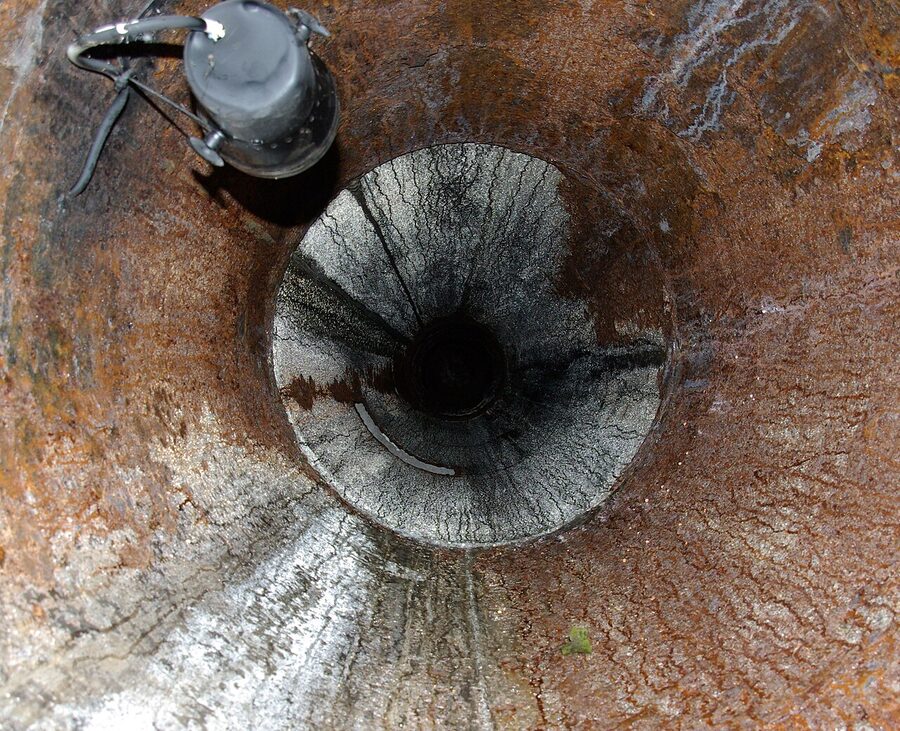
Photography rules vary. The City Wall Tunnels allow handheld photography (no flash, no tripods). The Art Bunker is more restrictive (no photography in some sections, ask first). The Nuclear Bunker allows photography throughout. Bring a camera that handles low light. Phone cameras work fine if they have a decent night mode.
You will be walking on uneven floors. Some sections are smooth concrete, some are original sandstone, some are rough rubble. Wear actual shoes. Sandals will be uncomfortable and risky.
The tours are mostly accessible to anyone who can manage a flight of stairs. But they are not wheelchair-accessible, and the narrow sections in the Art Bunker can be claustrophobic. If tight spaces bother you, the City Wall Tunnels is the most spacious of the three.
If You’re Pairing With Other German Cities
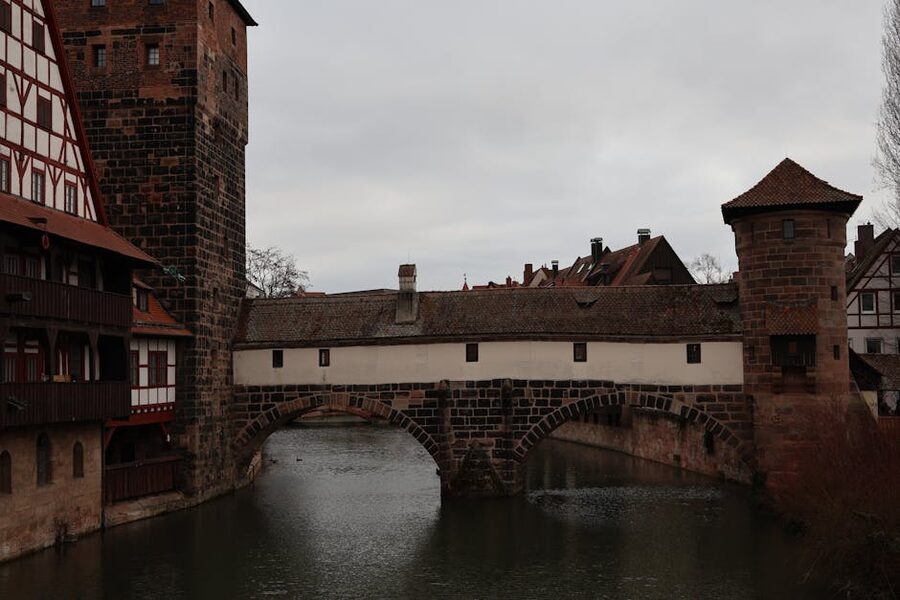
If your itinerary is built around the Bavarian sibling city, our guide to booking a Munich Third Reich walking tour is the natural complement. Munich’s WWII story is largely above ground (rallies, Beer Hall, Königsplatz). Nuremberg’s is largely below it. Doing both gives you a complete picture of the regime that planned the rallies in one city and stored the regalia in the other.
Travelers heading north from Nuremberg often pair the underground tours with Berlin’s WWII sites. Our guide to the Berlin Third Reich tour covers the equivalent surface-level walk through Berlin’s bunker locations and the Topography of Terror. Combining the two is a heavy two-day reading list, but they fit together: Berlin had the offices, Nuremberg had the rallies and the protected vaults.
If you’re spending a few days exploring Bavaria more broadly, the Dachau memorial day trip from Munich sits naturally alongside the Nuremberg underground story. The art bunker is about preservation. Dachau is about destruction. Doing one without the other gives a partial picture.
For the lighter side of any Germany trip, the Cologne brewery tour covers similar terrain to the Nuremberg cellar tasting at the end of the City Wall Tunnels walk. Different beer, different region, same emphasis on regional brewing tradition you can taste right where it’s made.
Once You’re in Nuremberg, What Else
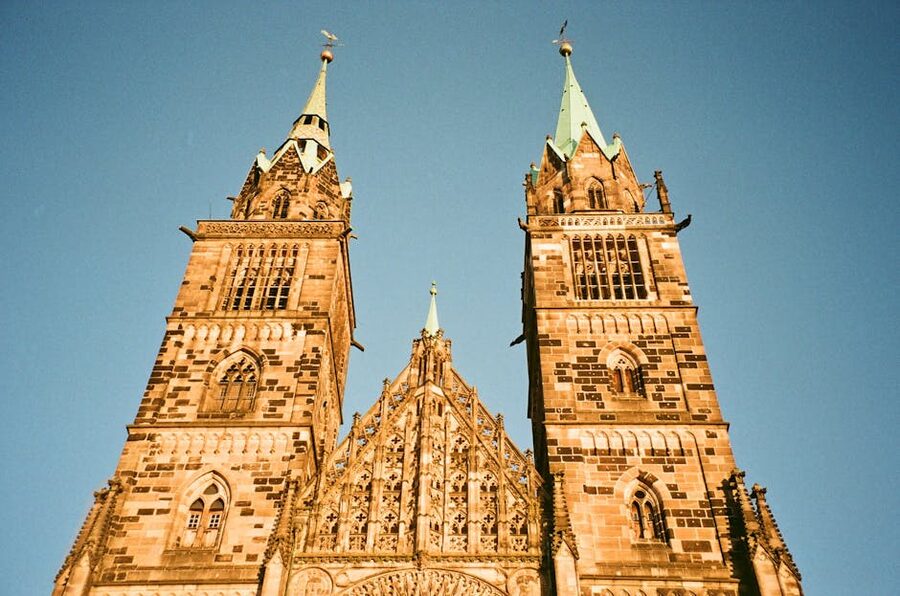
The two natural pairings with the underground tours are the Nuremberg old town walking tour for context on what’s above the cellars, and the Nuremberg rally grounds tour for the Third Reich layer of the city’s twentieth-century history. Doing all three over two days gives you the medieval, the brewery, and the Nazi rally grounds, which is most of what makes Nuremberg specifically Nuremberg.
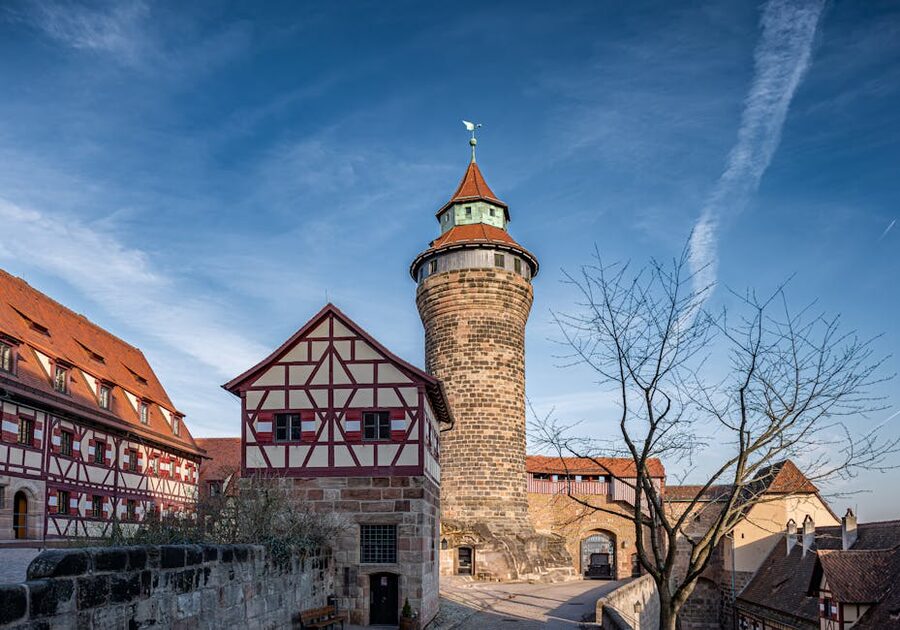
The Kaiserburg (the imperial castle on the hill above the old town) is worth a self-guided visit even without a tour. The view from the Sinwellturm includes most of the area you’ve been walking under. The toy museum and the Albrecht Dürer House, both within five minutes of the Felsengänge entrance, fit naturally into a day that includes one underground tour.
For dinner: stop in at the Hausbrauerei Altstadthof, where the brewery cellars under the City Wall Tunnels tour are still active. The Rotbier is excellent and the small plates of regional Franconian food (Nürnberger sausages, sauerkraut, schnitzel) are exactly what your body wants after an hour underground.
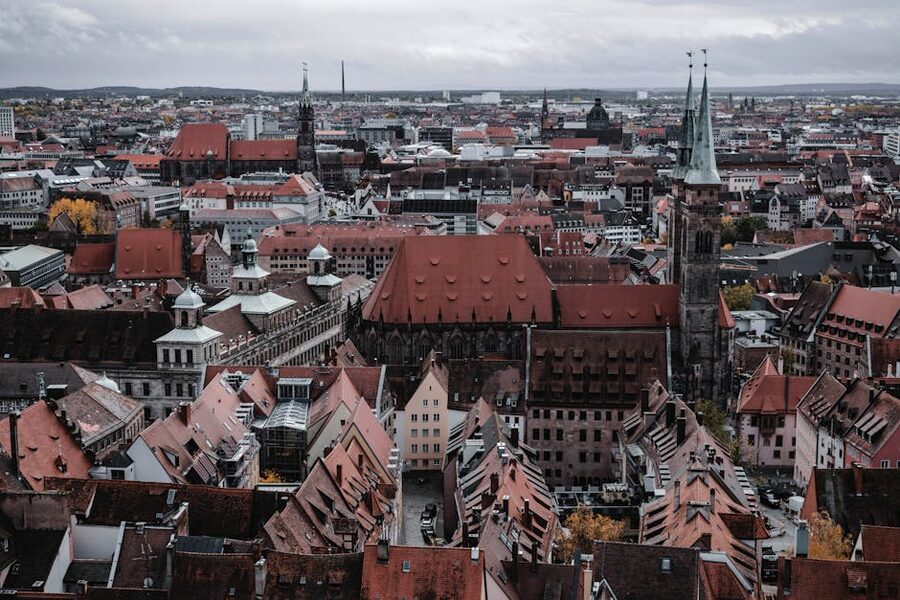
The underground is the part of Nuremberg that survived. The part above ground is largely a 1950s reconstruction, beautifully done but not original. The cellars, the bunkers, the tunnels, the air shafts, those are the actual medieval city. Book at least one tour. You will think about it longer than you think about anything else you do in this town.