
The first thing you notice in Nuremberg’s Old Town is the sound your shoes make. Cobblestones polished by six centuries of feet, narrow streets that funnel a draft of woodsmoke and grilled bratwurst from the next square over, and somewhere above you, the deep clang of a bell from a tower you can’t see yet. A guide can turn that sensory mess into a story.
This guide covers how to actually book a walking tour through the Altstadt: which one is worth the money, who runs the free option that’s not really free, and what you’ll see in the 1.5 to 2 hours you spend on foot.
- In a Hurry?
- Why a Walking Tour Is the Right Call in Nuremberg
- The Three Walking Tours Worth Booking
- 1. Nuremberg Old Town Guided Walking Tour:
- 2. Medieval Tour in Nuremberg: .60
- 3. The Old Town in Evening Light (German only):
- What “Free Walking Tour” Actually Means in Nuremberg
- The Route Most Tours Cover
- Hauptmarkt and Schöner Brunnen
- St. Sebald and St. Lorenz Churches
- The Pegnitz River and Henkersteg
- Weissgerbergasse and the Old Tanners’ Quarter
- Tiergärtnertor and Albrecht Dürer’s House
- The Imperial Castle
- How Much It Should Cost
- When to Walk and What to Wear
- Combining the Walking Tour With Nuremberg’s WWII Sites
- What’s Underneath: The Tunnels and Bunkers
- If You’re Visiting in December
- Booking Logistics
- Pairing Nuremberg With Other German Cities
- What to Do With the Rest of Your Day
- Pairing It With the Rest of Nuremberg
In a Hurry?
- Best overall guided walk: Old Town Guided Walking Tour ($18, 1.5 hrs). The most-booked option and the safest pick if you want one tour and one tour only.
- Best for atmosphere: Medieval Tour in Nuremberg ($19.60). Perfect 5-star rating; leans into the city’s medieval character.
- Best at dusk (German speakers): Old Town in Evening Light ($17, 1.5 hrs). Only book this one if you understand German. It’s beautiful but it’s not in English.
Why a Walking Tour Is the Right Call in Nuremberg
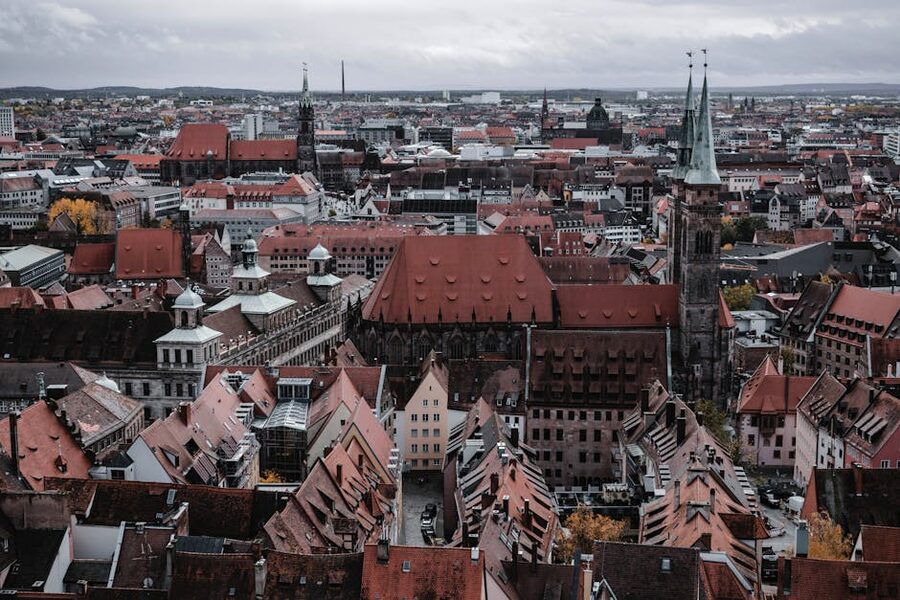
Most German cities reward a walking tour. Nuremberg pretty much demands one. The Old Town fits inside a one-mile ring of medieval wall, almost everything worth seeing is on foot anyway, and the city’s history is so layered that without a guide you’ll walk past most of it without knowing.
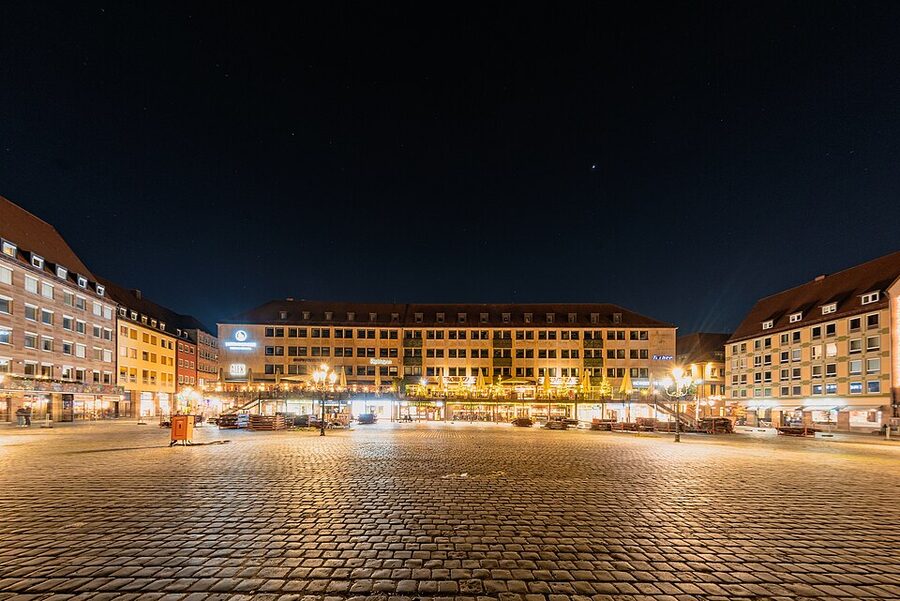
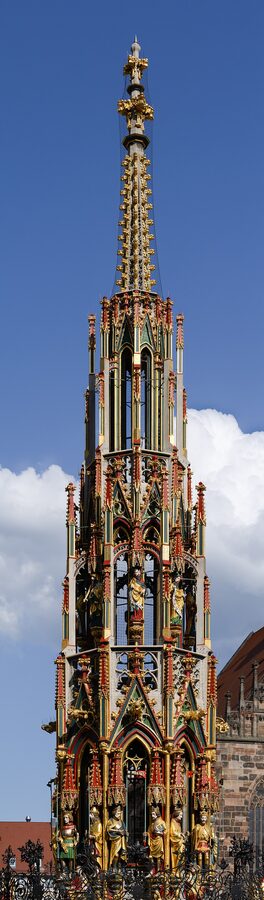
The Hauptmarkt looks like a market square. Until someone tells you the city expelled the Jewish community here in 1349 and built the church on top of their burned synagogue. The Schöner Brunnen looks like an ornate fountain. Until you find the gold ring welded into the railing and learn the legend of the apprentice who slipped it through the bars overnight to prove a point to his master. None of that is on the placards.
The other reason a guide matters: Nuremberg got hit hard in January 1945. About 90 percent of the Old Town was destroyed. Most of what you see today was painstakingly rebuilt from the original stones, photos, and architectural drawings. A guide can point at a wall and tell you which courses of stone are pre-war and which are post-war. Without that, the whole place reads as “old,” and you miss the more interesting story underneath.
The Three Walking Tours Worth Booking
I’ve sorted these by review volume, which is the most honest signal of what tour you’ll actually be on. The top one is the most-booked Old Town tour in Nuremberg by a wide margin. The second has a perfect 5-star rating but a smaller sample. The third is excellent but in German only. Read the section on it before you click.
1. Nuremberg Old Town Guided Walking Tour: $18
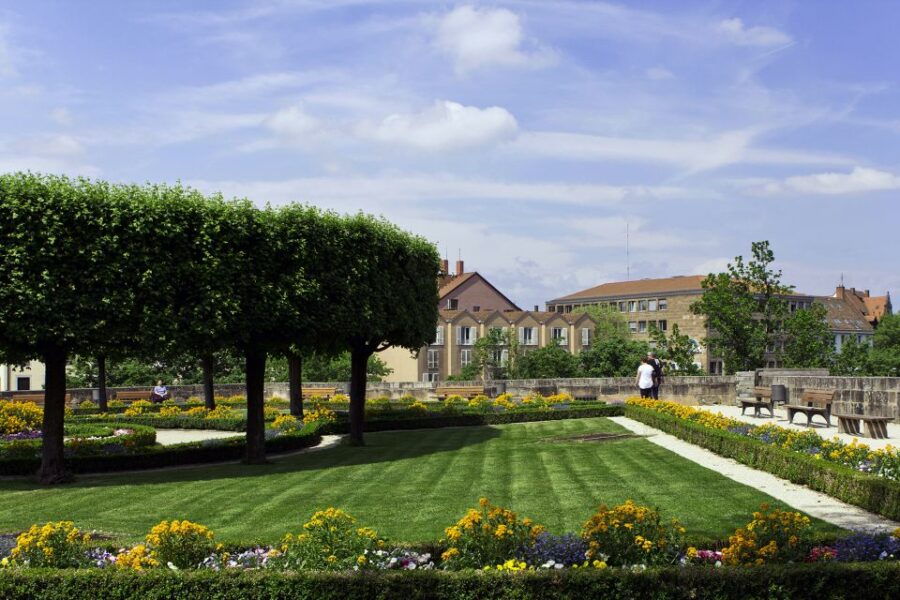
This is the one I’d book first. It’s the most-reviewed walking tour in the city, runs in English at multiple times daily, and 1.5 hours is the right length for the Altstadt. Our full review of the Old Town Guided Walking Tour goes deeper on what the route actually covers (castle, churches, Hauptmarkt, the Hangman’s Bridge) and what guides tend to skip. Bring a jacket even in summer; the alleys hold the cold.
2. Medieval Tour in Nuremberg: $19.60
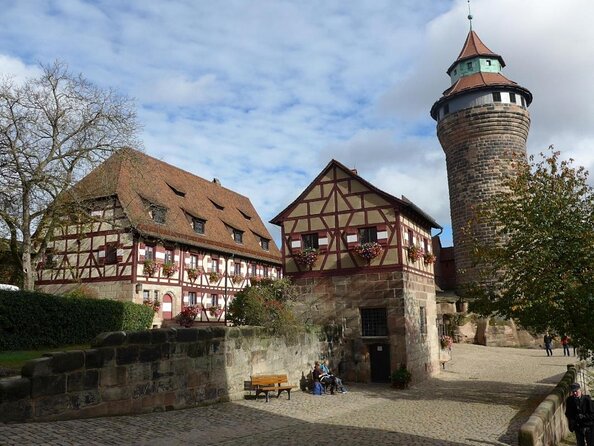
If you’ve already done a generic European city walking tour somewhere else and you want something with more of a hook, this is the move. The framing is strictly medieval, so the focus stays on the 13th to 16th centuries (the craftsmen guilds, the executioner’s house at the river, the witch trials) instead of trying to cover everything from 1050 to 1945. Our Medieval Tour review has a feel for the guide style and what to expect on the route.
3. The Old Town in Evening Light (German only): $17
The hard part first: this tour is in German, full stop. There’s no English-language version of this exact slot. If you speak the language, it’s a beautiful 1.5 hours through the Altstadt at dusk with a knowledgeable local guide. If you don’t, book the standard daytime English tour above and walk the same streets yourself at sunset for free. Our Old Town Evening Light review covers what you actually get.
What “Free Walking Tour” Actually Means in Nuremberg
You’ll see free tours advertised on every other lamp post. They’re real, they’re often good, and they are not actually free. The model is tip-based: the guide makes their living from what you hand them at the end. The conventional tip in Germany is €5 to €10 per person for a 2 to 2.5 hour walk, and a paid $18 tour with a smaller group and a guaranteed slot is usually the better deal.
The free option does have a real upside. Bigger groups, looser format, and the guides tend to be students or recent grads who skew younger and more conversational than the standard licensed guide. If you’re traveling cheap or you want a more social vibe, it’s a fine choice. Just bring cash.
The Route Most Tours Cover
The standard route is a loop. It usually starts at one of the two big squares (Hauptmarkt or the area around St. Lorenz) and wraps around in 1.5 to 2 hours. Knowing the stops in advance makes it easier to follow the guide and easier to come back later for the parts you want more time at.
Hauptmarkt and Schöner Brunnen
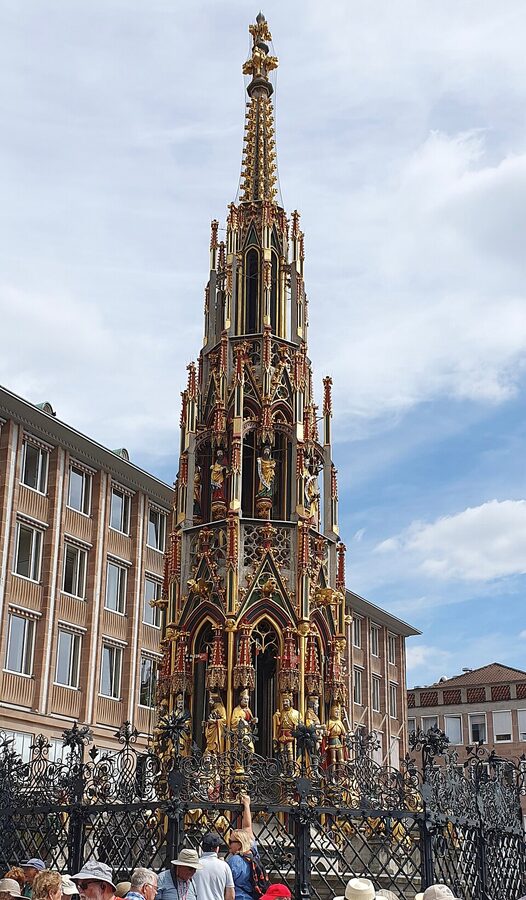
This is where most tours start. The 19-meter-tall Gothic spire of the Schöner Brunnen looks like a church steeple that fell off a building and landed in a fountain. The Christmas market sets up around it every December.
The square is also where the Frauenkirche sits, with the Männleinlaufen mechanical clock that performs at noon every day, with seven electors of the Holy Roman Empire bowing to Emperor Charles IV. If you’re on a tour at 11:55, your guide will herd you over to watch.
St. Sebald and St. Lorenz Churches
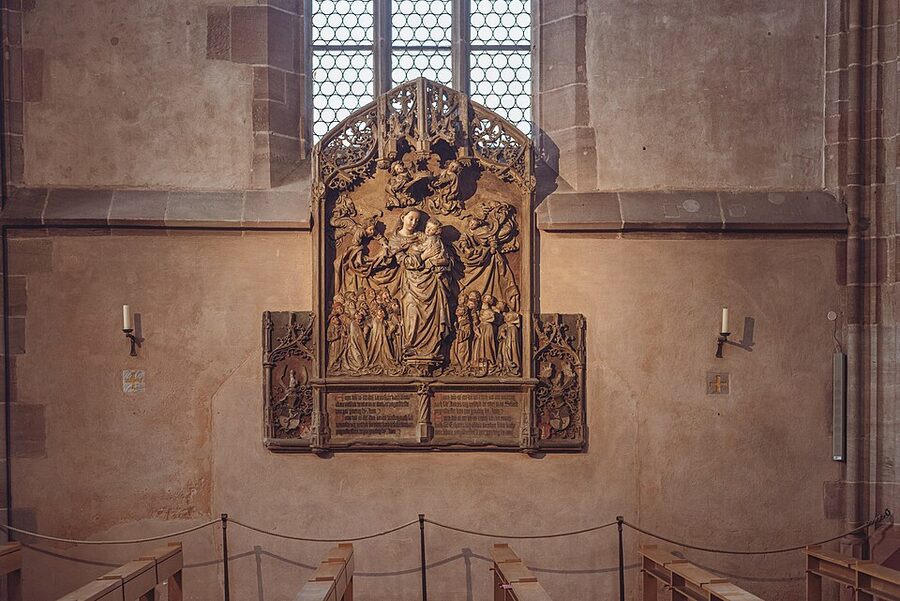
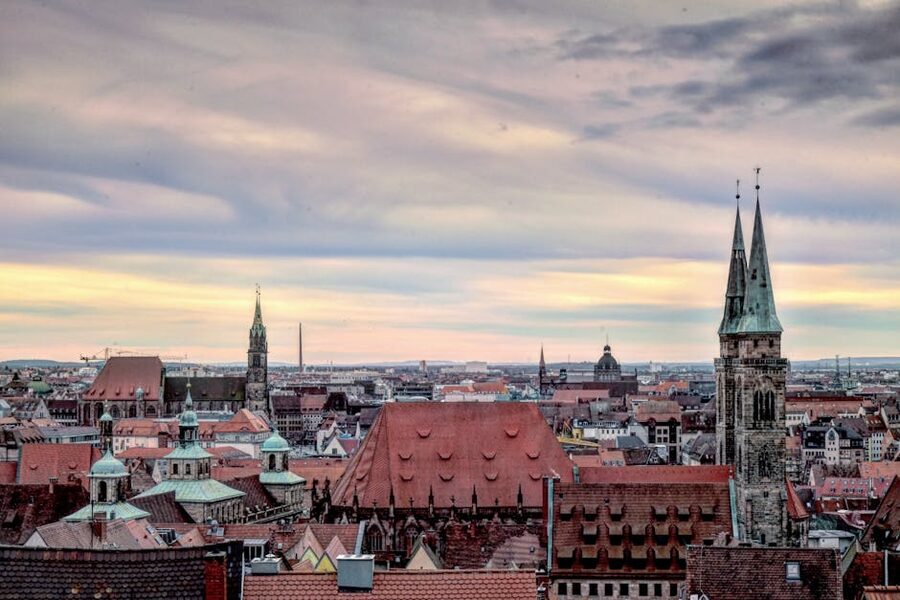
Nuremberg has two big medieval churches, one on each side of the Pegnitz, and a tour will usually walk you to both. St. Lorenz is on the south side and is the larger of the two; St. Sebald, on the north, is older. They’re a matched pair. When the city was still split into two trading rivals before 1320, each side built its own.
The Pegnitz River and Henkersteg
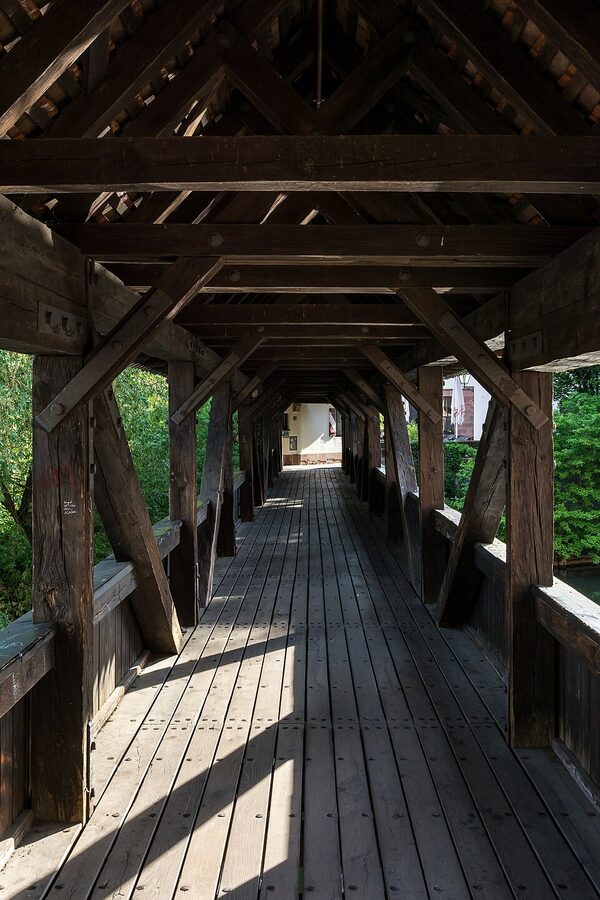
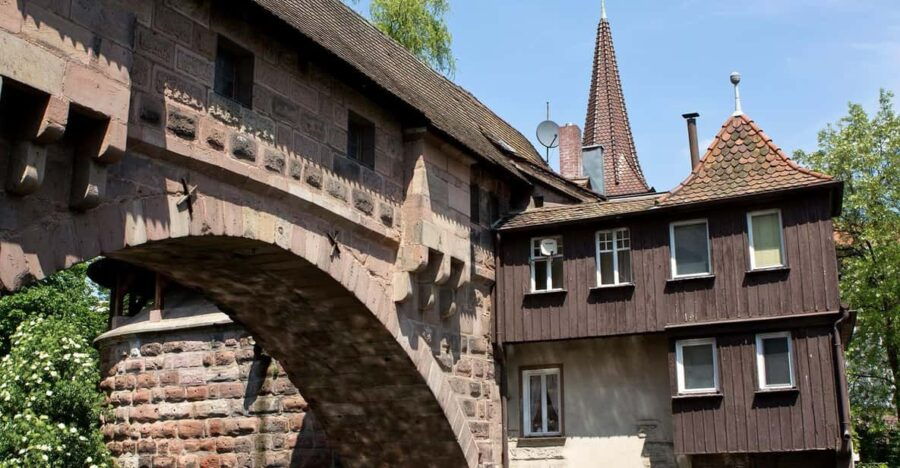
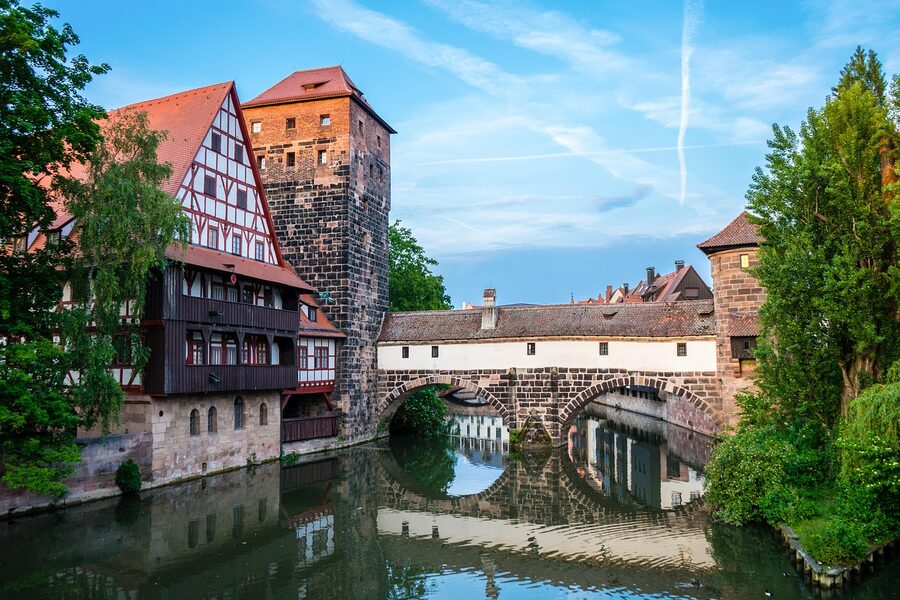
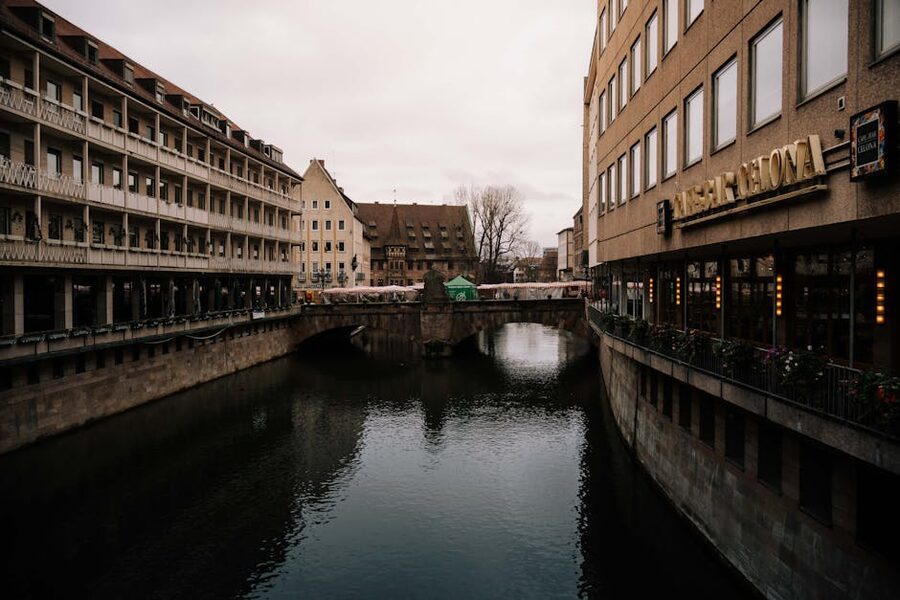
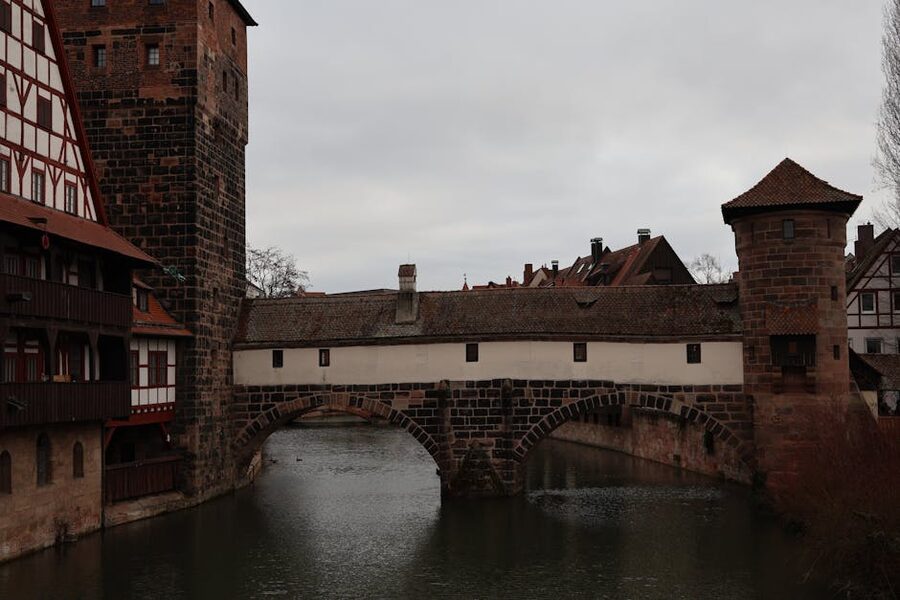
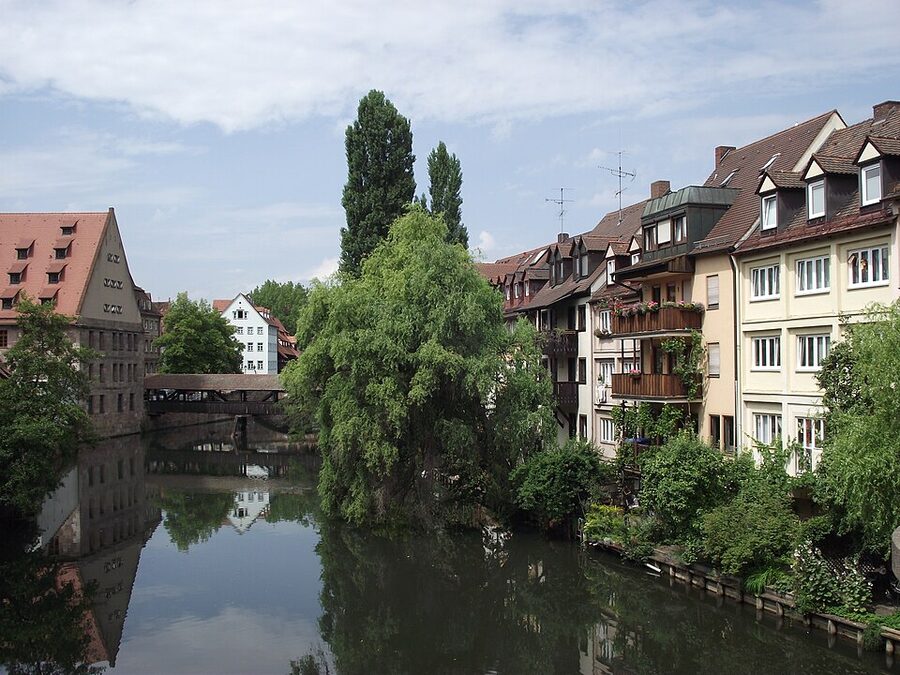
Crossing the Pegnitz is the single best photo on the route. The covered Henkersteg, named for the executioner who lived in the small house attached to the bridge, dates from the 15th century. The half-timbered houses leaning over the water on either side are the postcard shot.
Weissgerbergasse and the Old Tanners’ Quarter
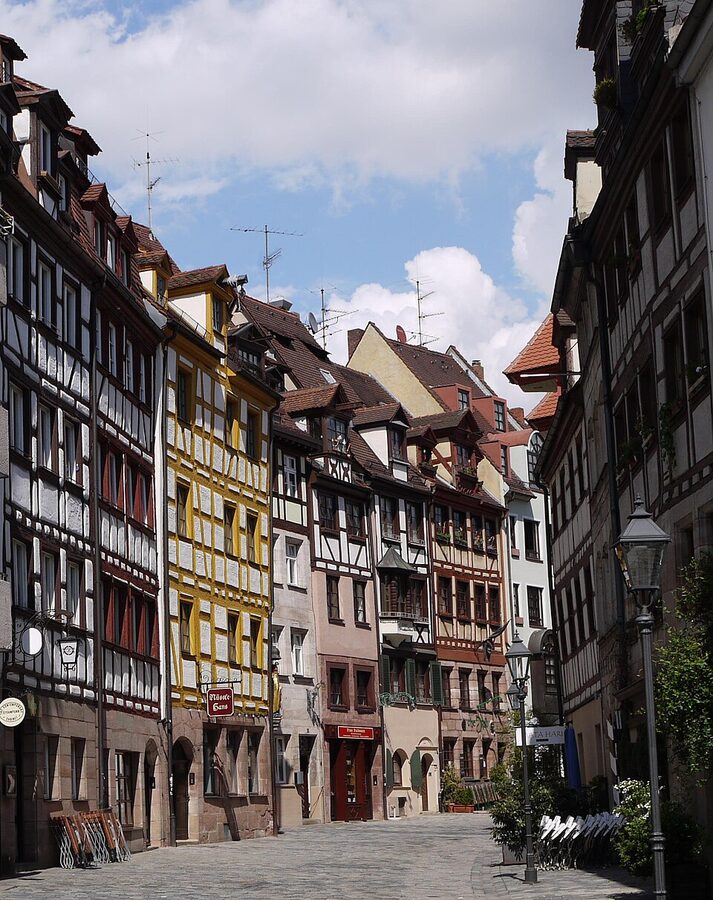
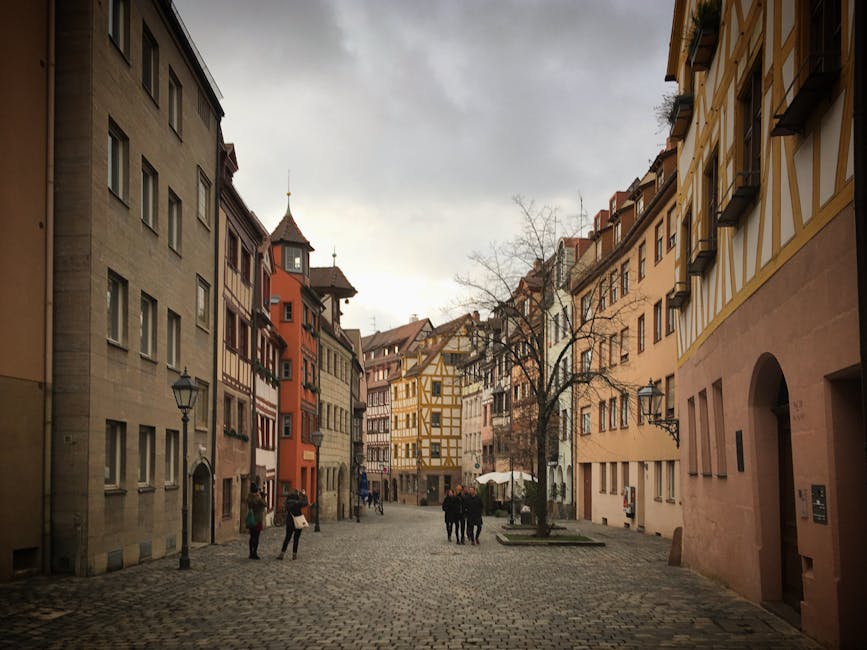
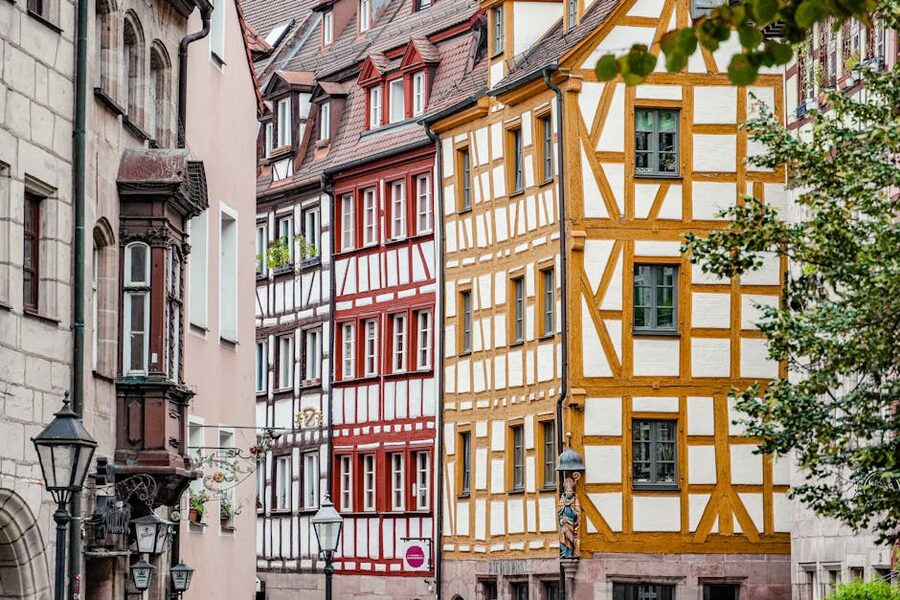
If your tour skips Weissgerbergasse, walk the four-minute detour yourself afterward. It’s a short street of 19 medieval half-timbered houses that came through 1945 mostly unscathed because the bombs missed this corner. The colors (ochre, mustard, dusty pink, oxblood) are unrenovated medieval, not Disney pastel.
Tiergärtnertor and Albrecht Dürer’s House
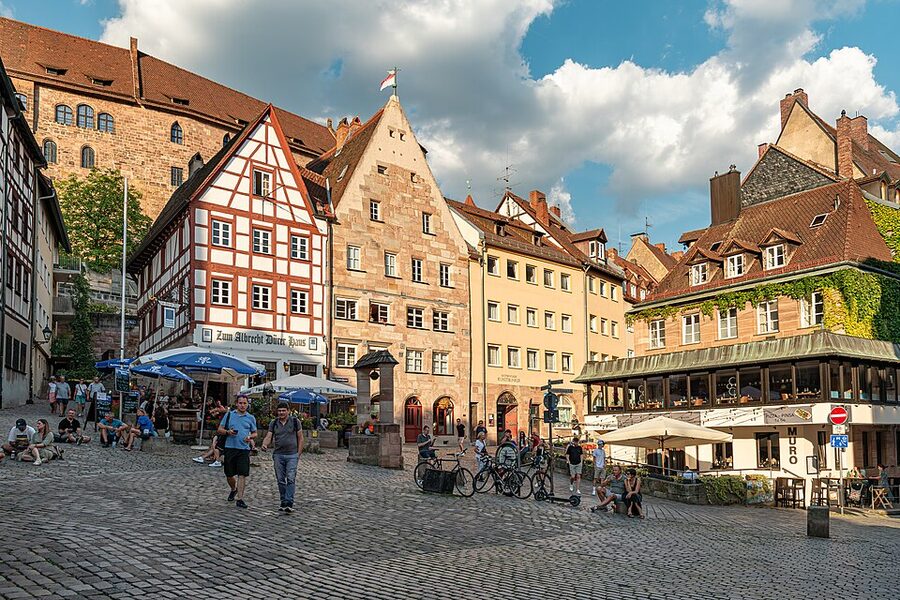
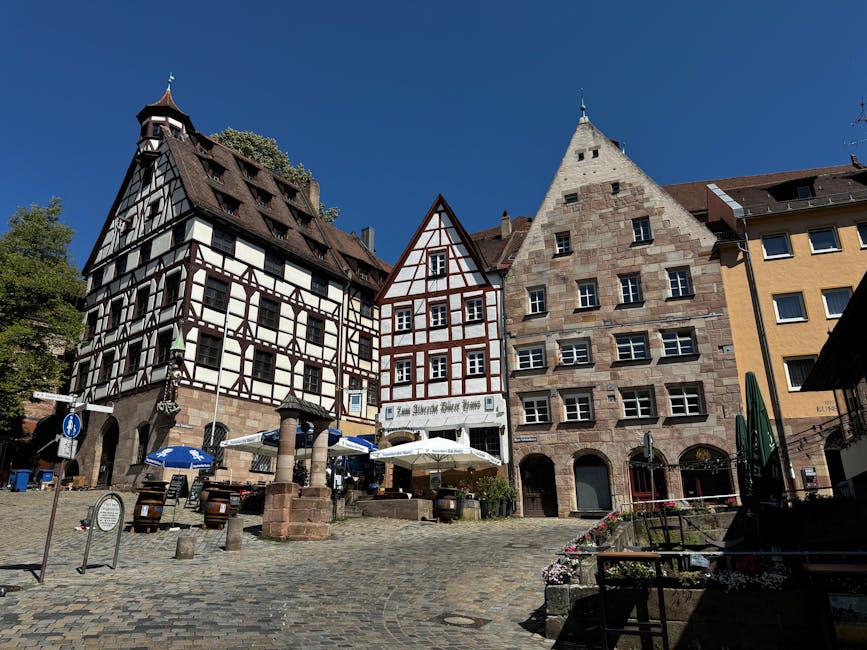
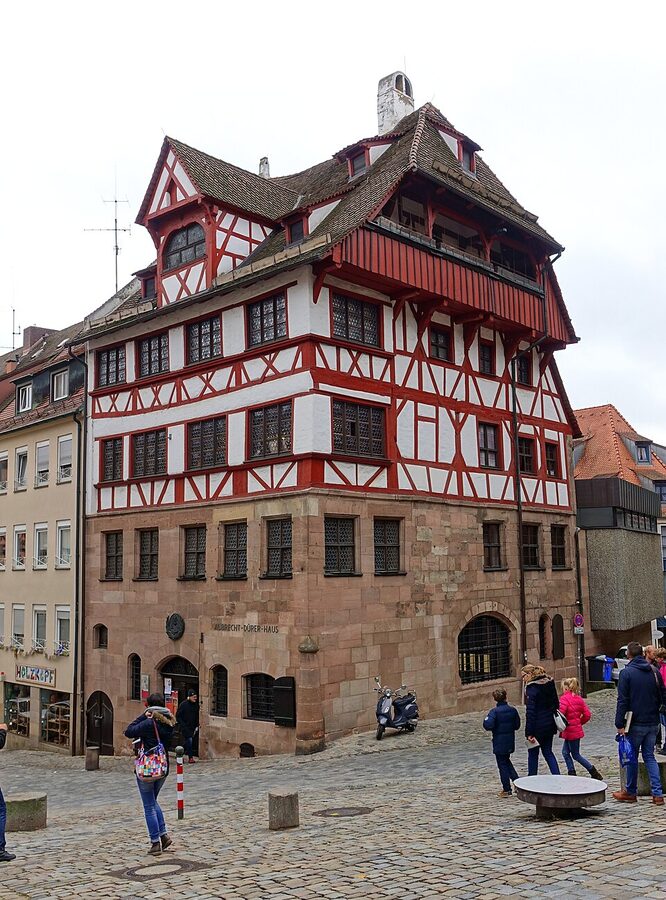
The Tiergärtnertor is one of the four old gates of the city wall, and the small triangular square at its foot is where most tours pause before climbing to the castle. Albrecht Dürer’s house is on the corner of this square. The painter lived here from 1509 to his death in 1528.
The Imperial Castle
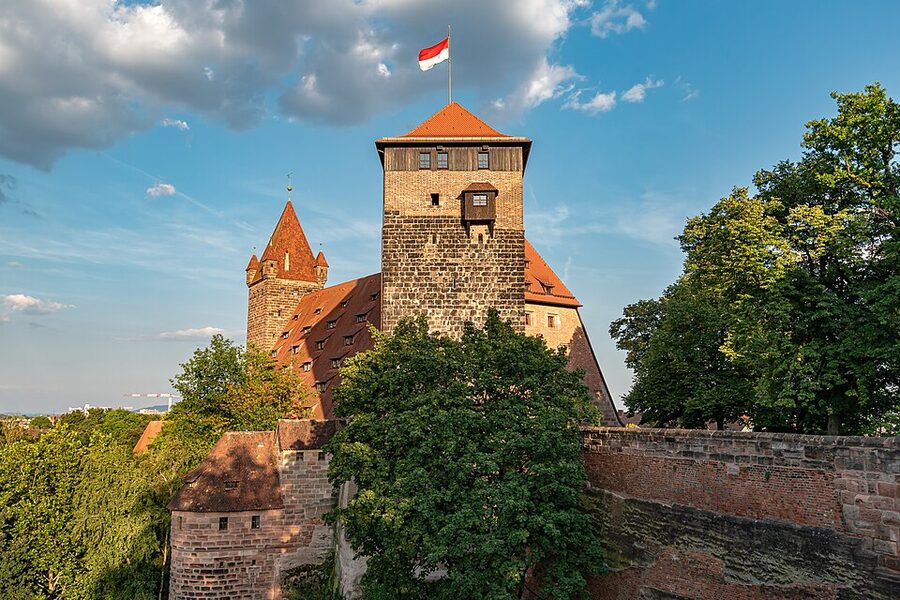
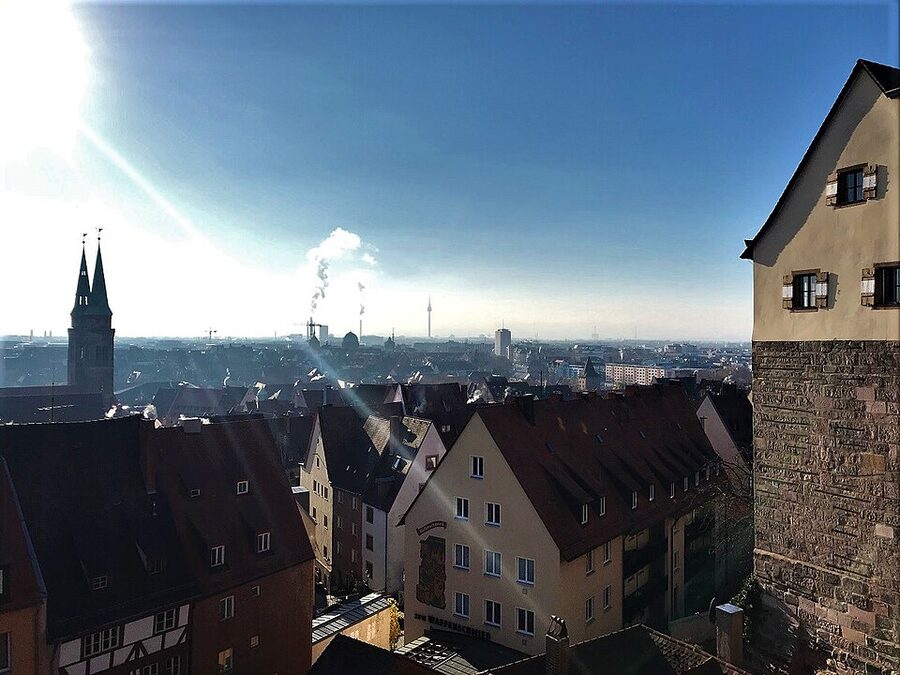
Most tours end at the castle, on the terrace looking south over the rooftops. They stop at the gate. Going inside the castle is a separate ticket and a separate visit, usually 30 to 45 minutes. If you want to see the inside (the Romanesque chapel and the deep well are the highlights), buy the Burgmuseum ticket separately and come back later in the day.
How Much It Should Cost
The market for a 1.5-hour Old Town walk in English sits between $17 and $20. Anything in that range is fair pricing. The free tour is genuinely free at booking time but expects €5 to €10 per person at the end, which puts it in roughly the same bracket once you tip at the going rate.
Private tours are a different category. A 1.5-hour private with a brewery visit runs around $300 for up to four people. That’s $75 a head if you have a group of four, and it’s the move if you want to set the pace, the focus, or the start time. For solo travelers and couples on a normal trip, the group walks are better value.
When to Walk and What to Wear
Best months are May, June, and September. July and August get hot and busy with European school holidays. October is good and quieter. Mid-November to Christmas is a special case: the Christkindlesmarkt takes over the Hauptmarkt, the tours route around it, and the whole experience is louder and more crowded but unforgettable if you like the Christmas market scene.
What to wear: shoes with real grip (the cobbles are uneven and slick when wet), and a layer warmer than you think. The narrow alleys hold the cold even in summer, and the castle terrace at the end is exposed.
Combining the Walking Tour With Nuremberg’s WWII Sites
This is the question I get most. Most people coming to Nuremberg also want to see the Nazi Party Rally Grounds and the Documentation Center on the south side of the city, about 25 minutes by tram from the Old Town. The two are different tours and different headspaces. Don’t try to do both in one block.
What works: walking tour in the morning, lunch break, rally grounds in the afternoon. Or split them across two days if you can. The combo tours that try to do both in one 4-hour stretch are doable but the second half lands flat because you’re tired and the emotional whiplash from medieval squares to a Nazi parade ground is real. If WWII history is your priority, our guide to booking the rally grounds visit covers the options for that side of the city.
What’s Underneath: The Tunnels and Bunkers
Most walking tours stay above ground. There’s an entire second city below: Felsengänge cellars under the castle, the Historischer Kunstbunker where Nuremberg’s medieval art treasures rode out the bombing in 1945, and a Cold War nuclear bunker beneath the main train station. None of it is on a standard Old Town walk. If you want the underground side, our guide to booking a Nuremberg tunnels and bunkers tour walks through which one fits which interest.
If You’re Visiting in December
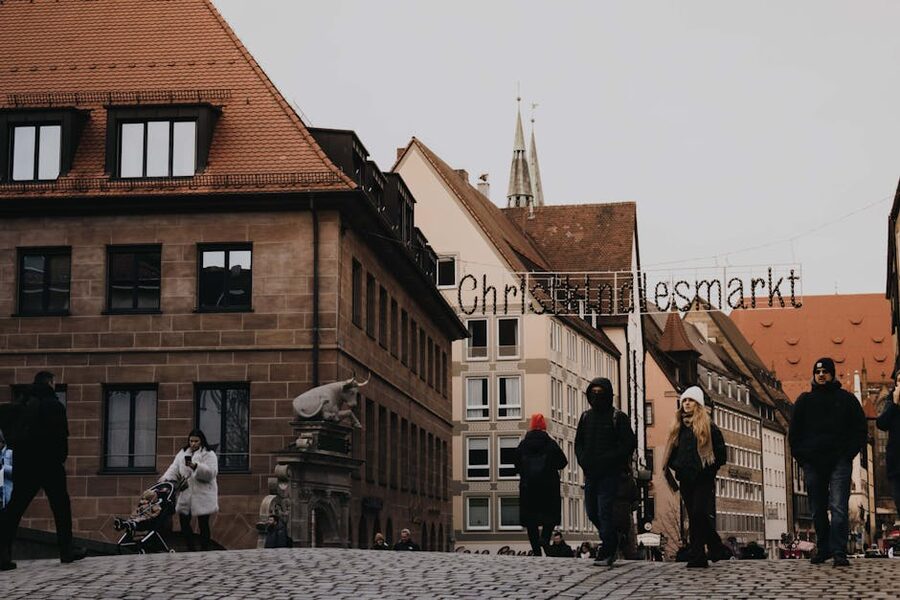
The Nuremberg Christmas Market is the biggest reason most international visitors come, and it changes the walking-tour experience completely. The tours still run, but the Hauptmarkt becomes 180 wooden stalls, the Frauenkirche is hidden behind a giant Christmas tree, and your guide will route you down side streets to keep the group moving.
If you’re here mainly for the market, take a walking tour anyway, but book it for the morning before the stalls open at 10 a.m., or after dark when the crowds thin slightly. The afternoon between noon and 4 p.m. is the worst window for seeing the Old Town clearly. The market itself is best at twilight, around 4:30 to 6 p.m., when the lights come on and there’s still some daylight.

Booking Logistics
Book the day before, not the morning of. The most-reviewed tours fill up, especially in shoulder season when there’s only one or two daily slots in English. Booking two to three days ahead is plenty for spring and fall, and a week ahead for the December market period.
Cancellation: most tours on GetYourGuide and Viator have free cancellation up to 24 hours before. Read the fine print on private tours; some are stricter.
Meeting points: the standard Old Town tours meet at either the Hauptmarkt by the Schöner Brunnen, or at the Hauptbahnhof main exit. Confirm in your booking email and screenshot it. Phone reception in the underground stations is spotty.
Pairing Nuremberg With Other German Cities
Nuremberg is two hours from Munich on the ICE train, three from Berlin, and an easy stop on a Bavaria-Saxony loop. If you’re already booked into Munich, our Munich Third Reich walking tour guide pairs naturally with the Nuremberg rally grounds visit. Same period, different angles. For an easier pairing, the Munich Old Town walking tour works well with this Nuremberg one as a “how I learned to read German cities” two-stop sequence. If your trip already includes the Rhine, our Cologne Old Town walking guide rounds out a three-city Bavaria-Saxony-Rhineland set, with three very different city characters.
From Berlin, the WWII through-line continues. Booking a Berlin Third Reich walking tour before you come to Nuremberg primes you for the rally grounds with the political background, and a quieter Berlin Old Town walking tour beforehand gives you the same medieval-vs-modern reading lens this Nuremberg walk uses. From the south, the Dresden Night Watchman tour gives you the other side of the rebuilt-from-rubble story. Dresden’s destruction was three weeks after Nuremberg’s, and the rebuild philosophies differ in ways you can see on foot.
What to Do With the Rest of Your Day
An Old Town walking tour leaves you with the better half of an afternoon free. The natural follow-on is one of the underground tours (your guide may even mention them), or a long lunch at a Bratwurst place where you order three small Nürnberger Rostbratwürste in a roll for €4. The Bratwursthäusle next to St. Sebald is the institution; the Goldenes Posthorn nearby is older but pricier. If you want to extend the walk into the evening, climb back up to the castle terrace around an hour before sunset and stay until the lights come on across the rooftops. It’s free, and it’s the single best moment in the city.
Pairing It With the Rest of Nuremberg
The Old Town walking tour is the foundation. Once you’ve got it, the rest of Nuremberg snaps into place around it: the medieval city you just walked through, the WWII-era city that bombed it down to one in ten buildings, and the underground city that survived because it was below the rubble. If you’ve got two full days, do the Old Town walk first, then split day two between the Nazi rally grounds in the morning and a tunnels or bunker tour in the afternoon. That sequence (surface, ideology, underground) is the order that makes the city make sense.