
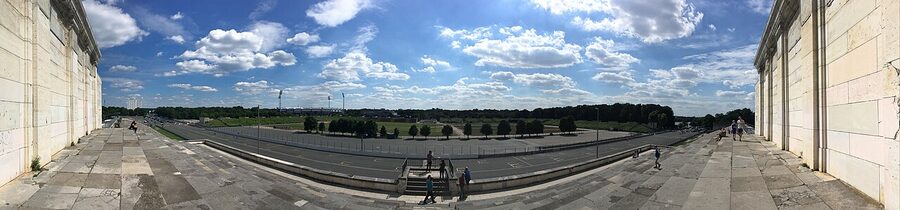
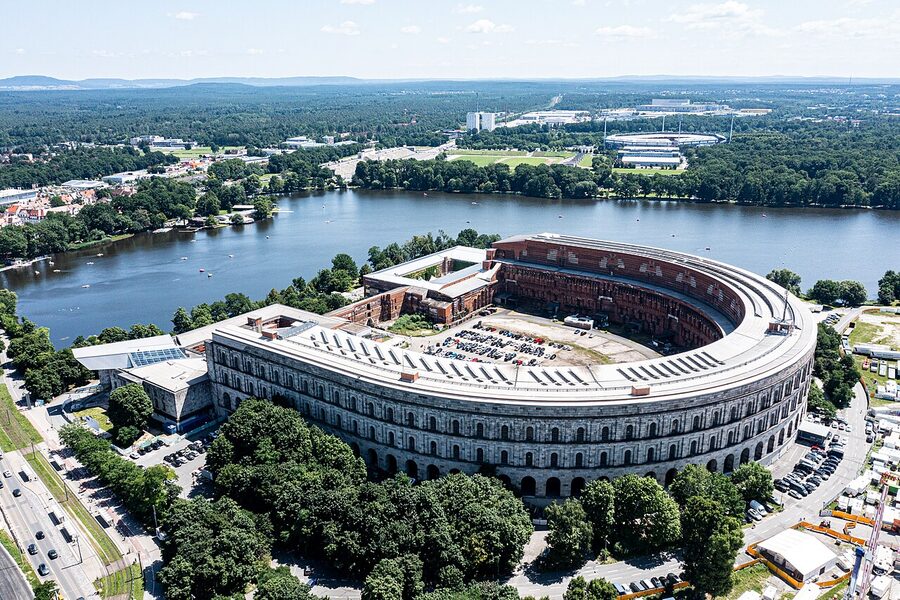
Here is the surprising thing about the Nuremberg Rally Grounds. The Congress Hall at the centre of the site was designed to be larger than the Roman Colosseum, and the whole complex was meant to hold half a million people. Most of it never got finished, and the ruins are deliberately being left to crumble rather than restored.
That fact changes how you walk the place. You are not looking at preserved history. You are looking at controlled decay. The cracked concrete of the Zeppelin Grandstand, the unroofed shell of the Congress Hall, the weeds pushing through the granite of the Great Road. All of it intentional. Germany decided long ago that megalomania should be allowed to fall apart in front of you, slowly, on purpose.
This guide covers how to actually book a tour, which one I would pick for which type of visitor, what is open and what is shut for renovation, how to combine the site with the Old Town, and the few things competitor blogs leave out about getting there and what to expect on the day.
- In a Hurry?
- Why You Need a Tour
- The Three Tour Options That Actually Run
- 1. Rally Grounds Walking Tour:
- 2. Old Town and Rally Grounds Combined: .74
- 3. GetYourGuide Combined Walking Tour:
- What You Actually See on the Tour
- The Congress Hall
- The Documentation Center: Open Again in 2025
- The Great Road and the Märzfeld
- Getting There from the Old Town
- Pairing It With Other Nuremberg Sites
- The Historical Photo Most People Have Seen
- Booking Tips That Save You Time
- The Old Town Side, If You Want a Lighter Afternoon
- Where to Go After Nuremberg
In a Hurry?
- Rally Grounds Walking Tour, $15. The rally-grounds-only deep dive, two hours with a historian, by far the cheapest way in.
- Old Town + Rally Grounds Combined, $44. Four hours covering both halves of Nuremberg if you only have one day.
- GetYourGuide Combined Tour, $43. Same idea, different operator, often easier weekend availability.
Why You Need a Tour
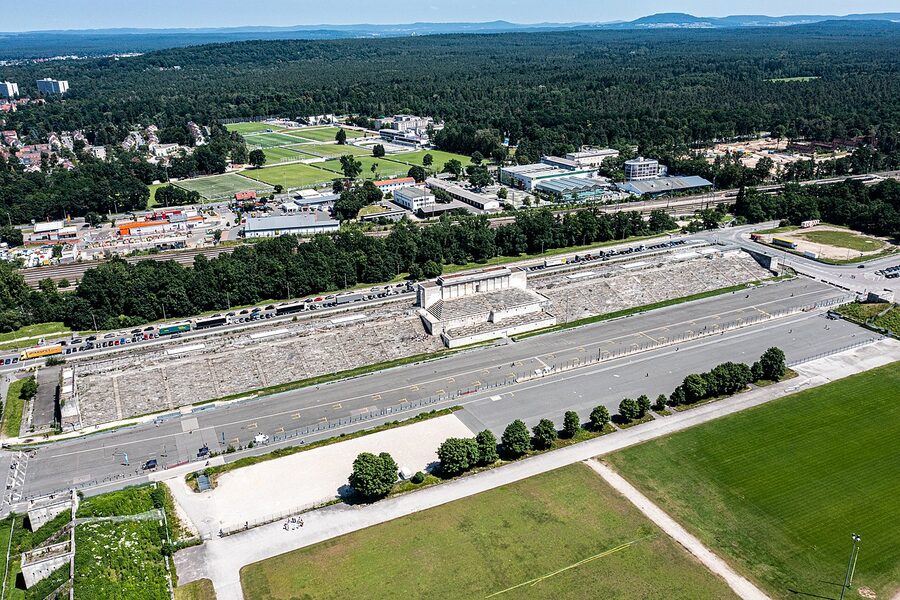
The Rally Grounds are not a museum. They are an open-air park, free to enter, with almost zero on-site signage. You can walk the whole thing alone for nothing. But you will miss almost everything that matters.
The site is enormous. It covers roughly four square miles south-east of the Old Town, including the Zeppelin Field, the Congress Hall, the Great Road, the Märzfeld foundations, and a string of half-finished foundations hidden in the trees. Without context, it just looks like overgrown concrete next to a lake. With a guide pointing at specific cracks and stones, it becomes one of the most disorienting historical sites in Europe.
The Zeppelin Grandstand in particular is closed for safety. The famous balcony where Hitler addressed the crowds is fenced off. Only guided tours with permits get inside the dressing rooms and the Golden Hall under the grandstand. If you turn up without a tour you will not see those spaces.
The Three Tour Options That Actually Run
Most blogs lump every Nuremberg tour together. They are not the same. There are three shapes worth booking, and they suit different travellers.
The first is the rally-grounds-only deep dive. Two hours, walking the Zeppelin Field and the Congress Hall with a guide who specialises in Third Reich history. Cheapest, most focused, best for people already interested in WWII history.
The second is the combined Old Town and Rally Grounds tour. Four hours, covers both halves of Nuremberg in one go. Good if you have only one day in the city and want a full overview.
The third is the same combined format as option 2, run by a different operator. Worth keeping in mind if your first choice is sold out for the day you want.
1. Rally Grounds Walking Tour: $15

This is the most-booked Nuremberg rally tour on the market by a wide margin, and the price is genuinely surprising for a two-hour guided experience with a historian. Our full review has the breakdown of what you actually walk through, but the short version is: Zeppelin Field, the grandstand area, the Great Road, and the Congress Hall, with a guide who knows the architectural detail. No Old Town fluff, no church tour padding, just the site.
2. Old Town and Rally Grounds Combined: $44.74
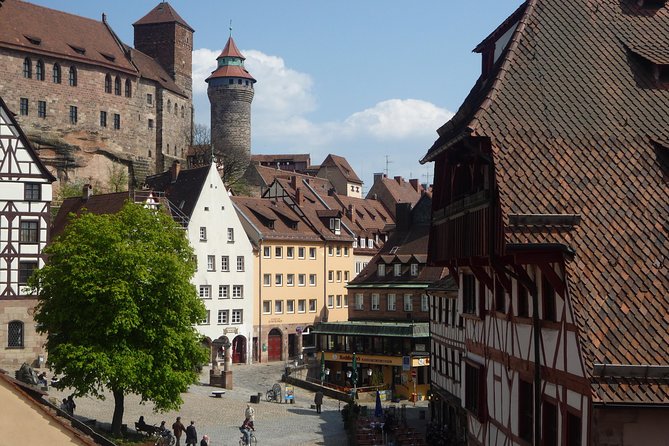
If you only have a single day in Nuremberg, this is the tour. It pairs the medieval Old Town (castle, city walls, St Lawrence Church) with the rally site, joined by a guided lunch break in between. Our review covers the pacing, which is the bit most people get wrong: four hours sounds long, but the contrast between the two halves of the city is the point of the tour, not the duration.
3. GetYourGuide Combined Walking Tour: $43
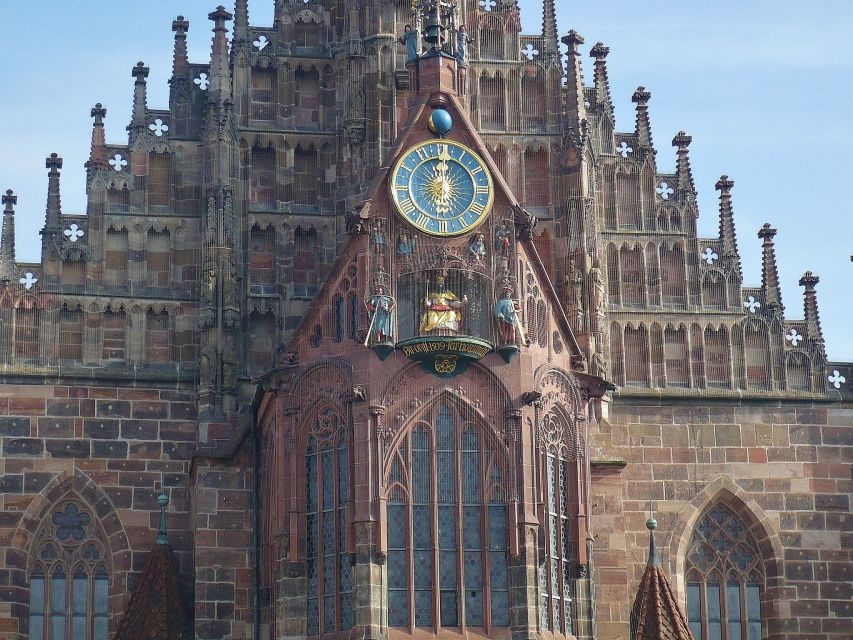
Same four-hour combined format as option 2, run by a different operator and bookable on GetYourGuide. Our take notes this one tends to have better weekend slots than the Viator version, so if you are travelling Saturday to Sunday and the other combined tour is full, switch to this one. Quality of guide is roughly equivalent.
What You Actually See on the Tour
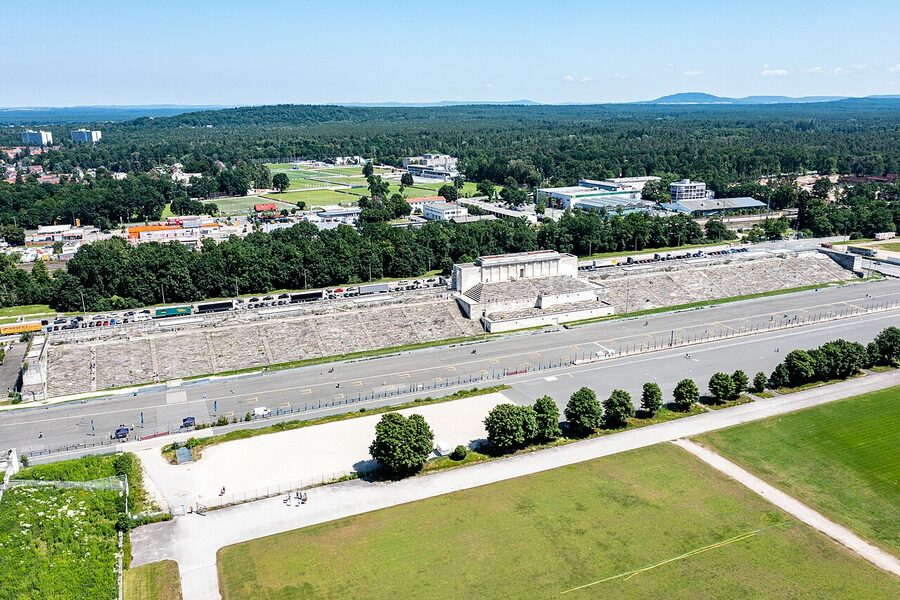
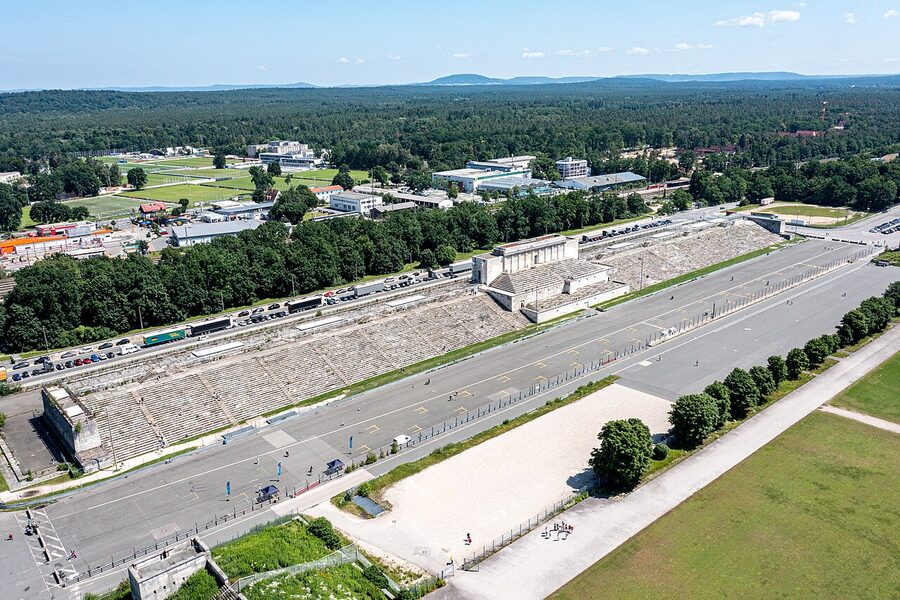
The Zeppelin Field is the central stop. It is an enormous rectangular parade ground bordered on the long side by the Zeppelin Grandstand. The grandstand looks like the Pergamon Altar with its top sliced off, which was deliberate. Albert Speer modelled it on classical antiquity to make the regime look like an inheritance of Rome.
The two flanking colonnades are gone. The American military blew them up in 1967 because they were too useful as a backdrop for neo-Nazi photo opportunities. What remains is the central tribune with the speakers’ balcony, a long set of steps, and the empty field below. A guide will walk you up onto the balcony, point out where the swastika used to be (also blown up by the Americans in 1945), and explain why the Germans deliberately do not restore any of it.
The deliberate decay is the part most visitors do not understand without context. Nuremberg’s official policy is that these structures should be allowed to deteriorate as a visible reminder of what they were and what they failed to become. The Zeppelin Grandstand is being stabilised, not restored, at huge cost, specifically so it can stand for another generation looking exactly as ruined as it does today. That is a hard concept to grasp without someone explaining it on site.
The Congress Hall
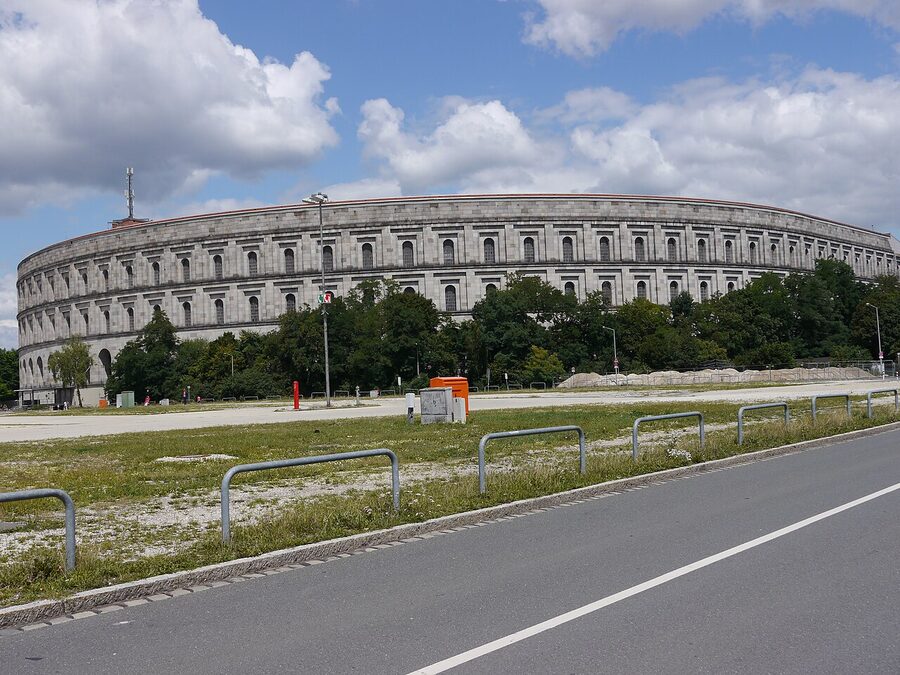
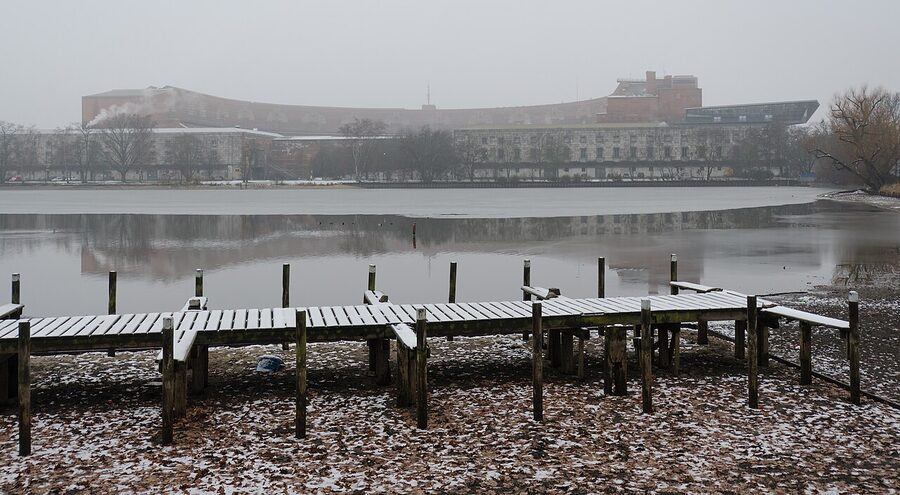
The Congress Hall is the building that hits people hardest. It is the second-largest piece of Nazi architecture still standing, after Tempelhof Airport in Berlin. It was designed to seat 50,000 party functionaries under a single self-supporting roof, with a facade explicitly modelled on the Colosseum. They never finished the roof. They never finished the upper storey. Construction stopped in 1943 when Germany ran out of everything.
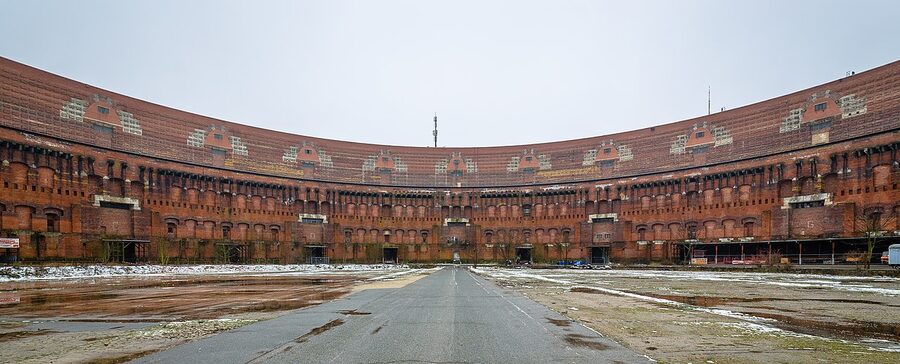
You walk inside the atrium and look up at sky. The walls are eighty feet high and made of granite from quarries the SS ran with concentration camp labour. The thing is too big to demolish (it would cost more than the city has) and too significant to ignore, so it just stands there, a doughnut-shaped ruin half full of weeds, used today partly as a Documentation Center and partly as a music school storage facility.
The Documentation Center: Open Again in 2025
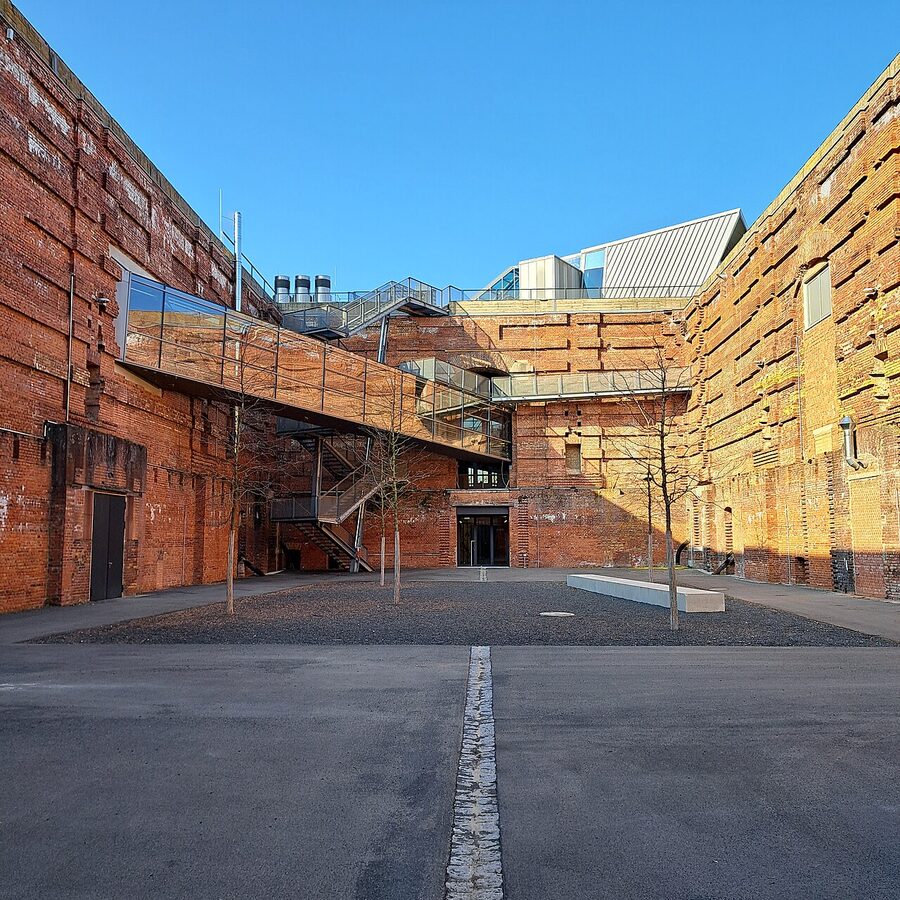
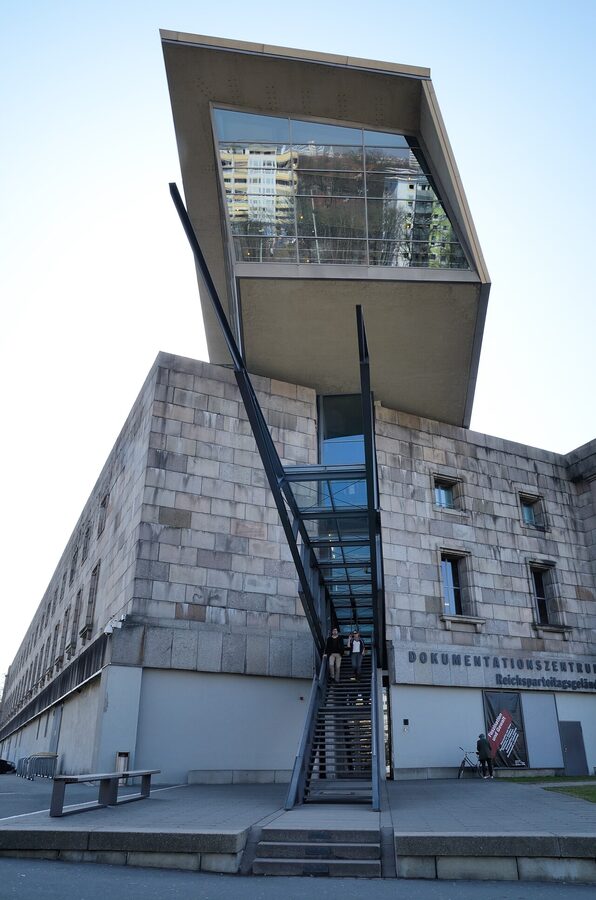
This is the bit a lot of older online guides get wrong. The Documentation Center, the museum built into the unfinished northern wing of the Congress Hall, was partly closed for years for a major renovation. It reopened in stages, with the inner courtyard back in early 2025 and a new permanent exhibition planned shortly after. If you have been before and remember a smaller, darker exhibition, expect a substantially different experience now.
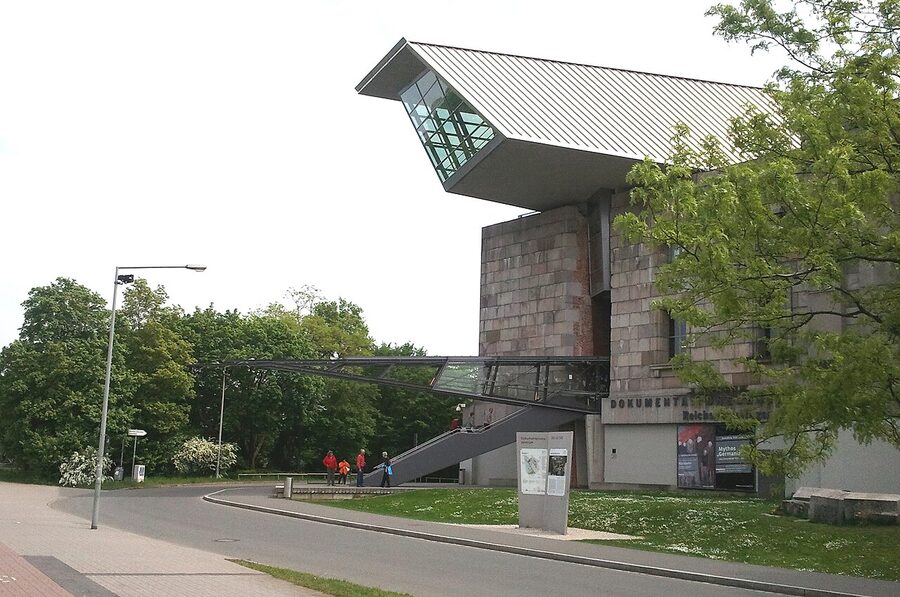
Most of the rally-grounds-only walking tours include a stop here but not entry. The entry ticket to the Documentation Center is separate, around $7.50, and you tack it on at the end of the walking tour if you want to spend another hour or two reading the exhibition. The combined Old Town tours generally do not include it because the timing does not work.
The Great Road and the Märzfeld
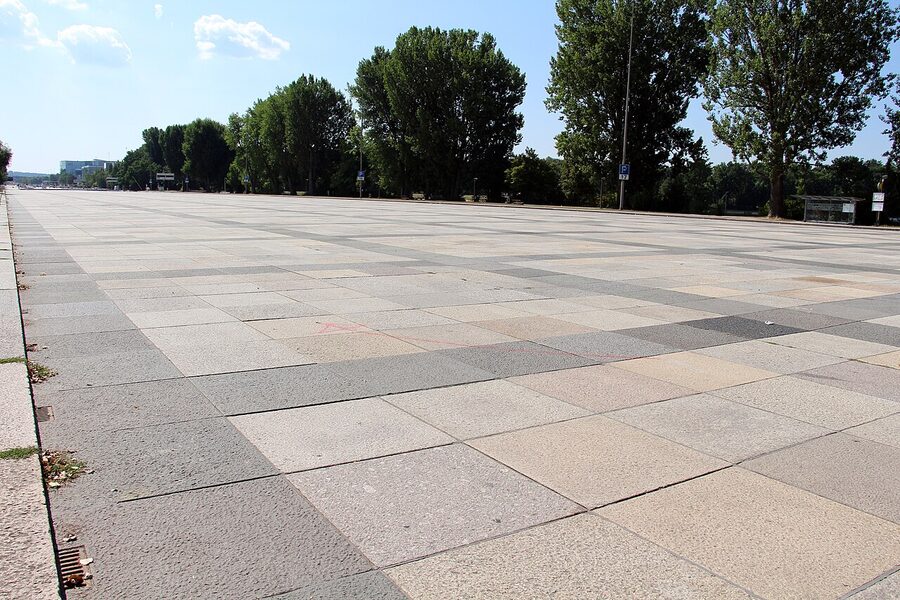
The Great Road runs almost two kilometres south from the Congress Hall, paved in granite slabs each weighing several tonnes. It was the parade axis: troops would march down it from the Märzfeld assembly area in the south to the Congress Hall in the north. It is utterly enormous and utterly empty.
Today the city uses it as a car park during the Trade Fair, which is the kind of detail that makes people laugh, and is also the most German solution imaginable: take the most aggressive piece of fascist urban design ever attempted and turn it into overflow parking. A guide will walk you a section of it and let you stand in the middle to feel the proportions.
Getting There from the Old Town
The Rally Grounds are a fifteen-minute tram ride from the Hauptbahnhof. Take tram line 8 to Doku-Zentrum stop. That drops you at the Documentation Center, which is the gateway to the whole site. From there everything is walkable: Zeppelin Field is five minutes east, the Great Road is five minutes south.
If you have already done a guided walking tour of the Old Town, the rally-grounds-only deep dive is a perfect afternoon follow-up. Morning Old Town, lunch at one of the bratwurst places near St Sebald, then tram out to the Doku-Zentrum stop for the 2pm rally tour. That is the itinerary I would actually do.
Going in winter? The site is open all year, but it is exposed and there is almost no shelter. The grandstand offers some, the Congress Hall is roofless. Wear layers. The tour still runs in light snow, only cancelled in heavy ice.
Pairing It With Other Nuremberg Sites
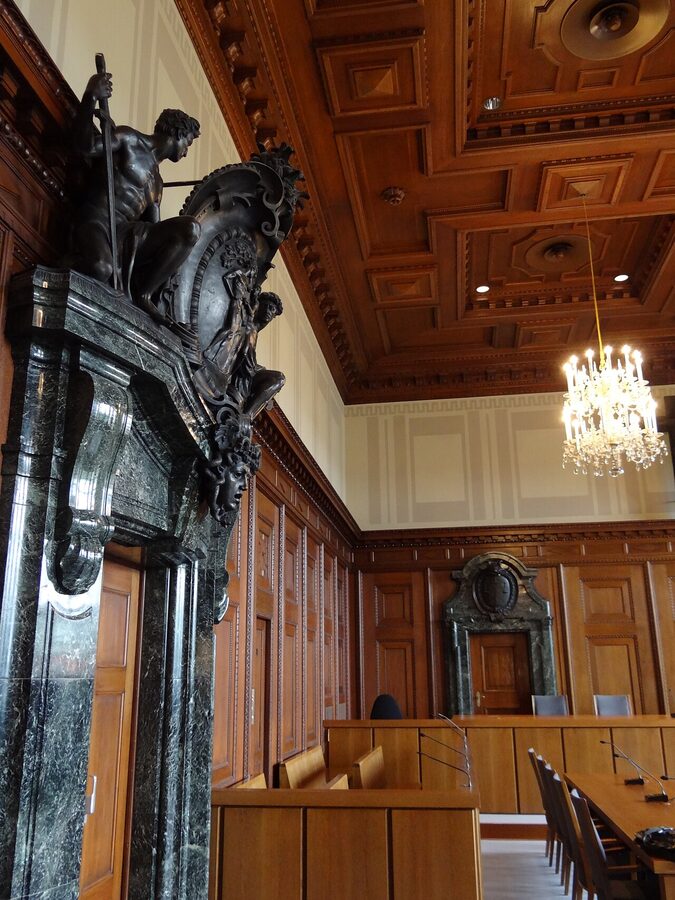
Nuremberg deals with its own history in two halves. The Rally Grounds are where the regime put on its public face. Across town, Courtroom 600 in the Palace of Justice is where the Allied tribunal tried it after the war. Both sites are run by the same museum administration and a combined ticket exists if you want to do both in a day.
The other site that pairs naturally is the Nuremberg underground tunnels, which were where the city’s art treasures were hidden during the bombing raids that destroyed the medieval centre. That is the third leg of the Nuremberg WWII story: rallies, trials, hidden art. You can do all three in a long weekend without rushing.
The Historical Photo Most People Have Seen
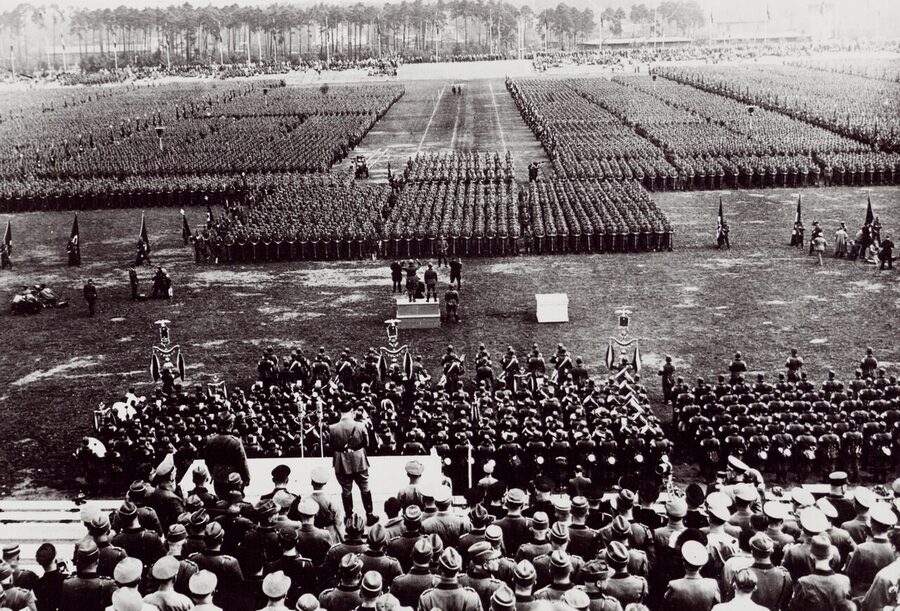
The 1934 rally is the one that produced the famous Leni Riefenstahl footage in Triumph of the Will. The film was shot specifically here. A guide will, at some point, stop you near the grandstand steps and pull out a print of a still from the film, and then you can match the angle of the camera to the spot you are standing on. That moment is what people remember from the tour.
Booking Tips That Save You Time
Book the rally-grounds-only tour at least one day in advance in summer. It runs every day at 1:45pm or 2pm in season, but only a couple of times a week off-season, and the slots fill. The combined Old Town tours have more departures so are easier to grab last-minute.
If you want into the Golden Hall (the dressing-room hall under the grandstand where Hitler prepared before speeches) you specifically need a tour that advertises Golden Hall access. Not every operator has the city’s permit. The two-hour rally tour above does. Confirm before booking if it matters to you.
The full Documentation Center exhibition is best as an add-on after the tour, not before. The museum makes much more sense once you have walked the actual ground.
The Old Town Side, If You Want a Lighter Afternoon
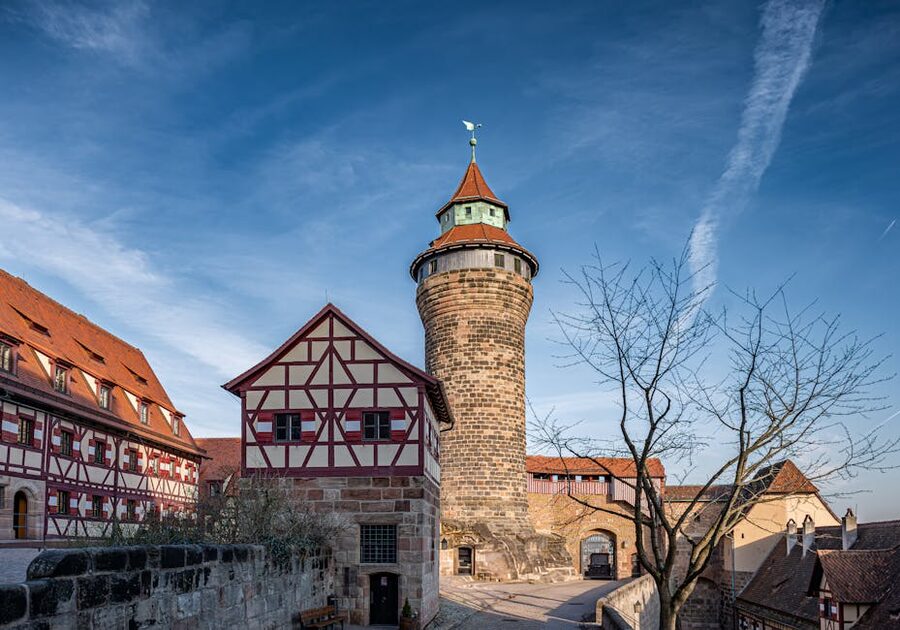
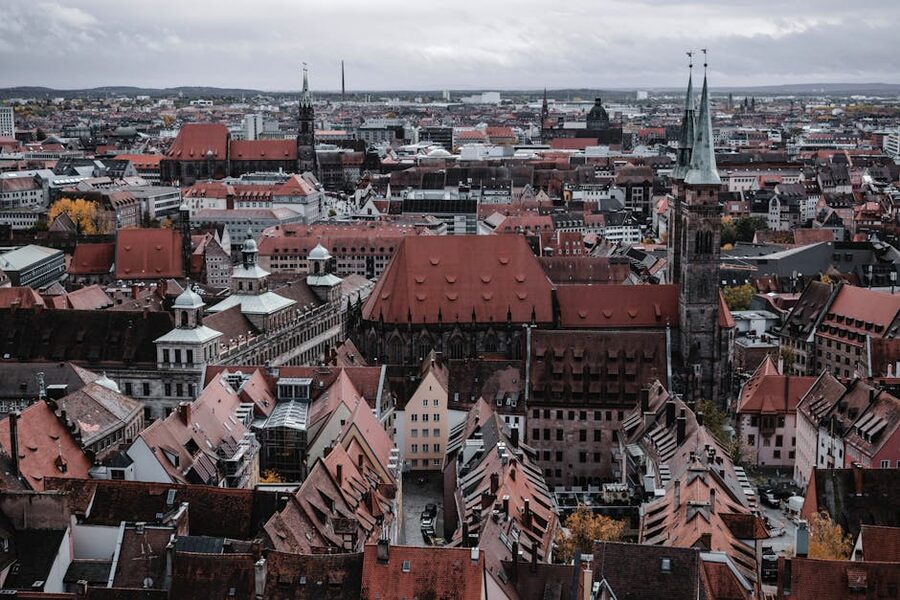
The Rally Grounds are heavy. Two hours of Third Reich history will leave most people quiet. The standard local advice is to spend the rest of the day in the Old Town: the Imperial Castle, the medieval city walls, the Pegnitz River footbridges, the bratwurst kitchens around St Sebald.
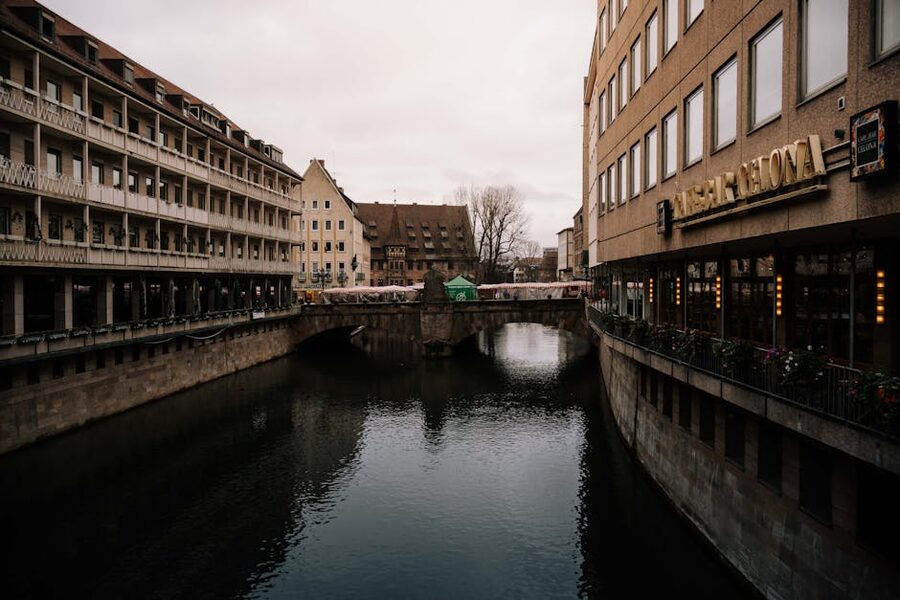
If you have done the rally-grounds-only deep dive in the morning and want a structured afternoon rather than wandering, a separate Old Town walking tour is the move. Otherwise the Old Town is small enough to enjoy on your own with a map.
Where to Go After Nuremberg
If the Third Reich history strand of your trip is what brought you here, the natural extensions are Munich’s Third Reich tour and the Dachau memorial day trip from Munich. Munich is two hours south on the ICE train. A guided Munich Old Town walking tour is the standard partner for that side of the trip. The rallies happened there too. Hitler started his political career in Munich beer halls, not Nuremberg, and the trio of Munich, Dachau and Nuremberg is the standard pilgrimage for serious WWII visitors. Berlin’s Third Reich and Cold War walking tour closes the picture from the capital end. Together those four cities tell the whole story.
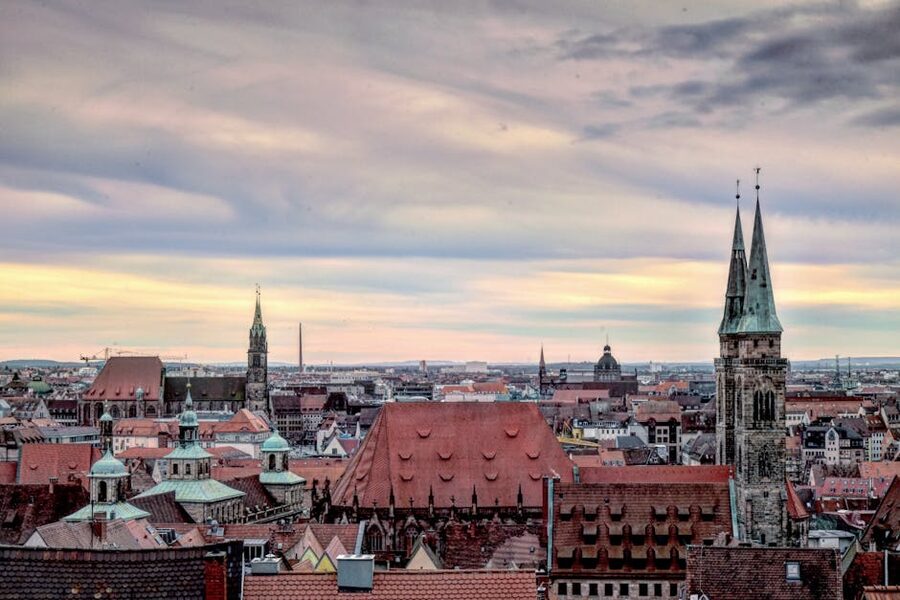
If you came for the medieval-Germany side rather than the WWII side, the Nuremberg Old Town deserves a slow second day. The city’s underground tunnel tours (our review of the city-wall tunnels tour) are the unexpected highlight that almost nobody mentions in advance. They are how Nuremberg saved its art collection from the air raids, and they are the most surprising thing in the city after the rally site itself. Those two together are a very strong day.