
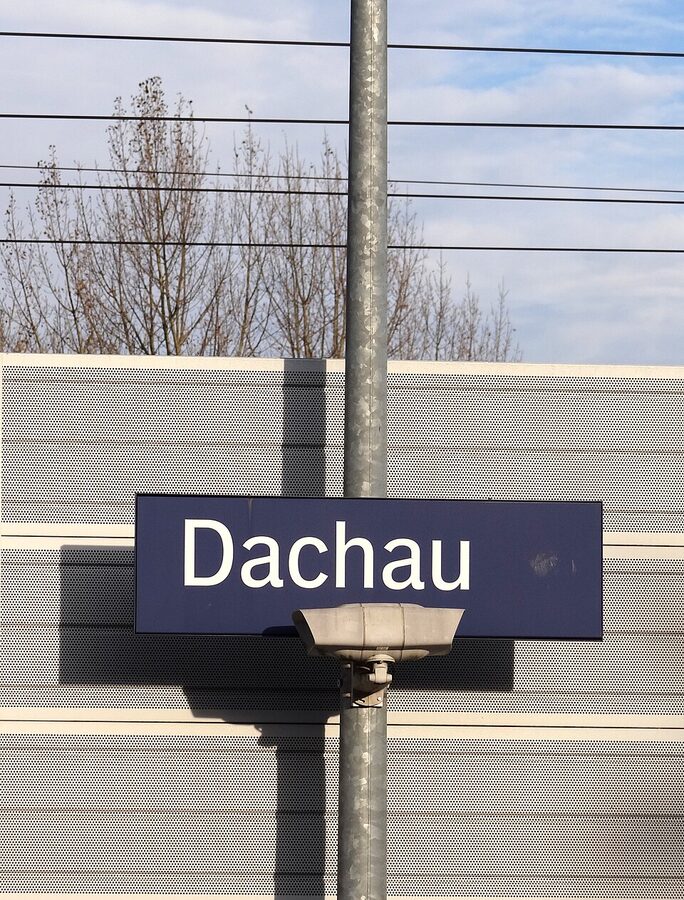
Dachau opened in March 1933, six weeks after Hitler became Chancellor. It was the first Nazi concentration camp on German soil, and every camp built after it followed the Dachau template, including Auschwitz. The site sits 16 kilometres northwest of central Munich. You can reach it on a regional train ticket and you do not pay anything to walk through the gate.
I have visited the memorial twice. The first time I went on my own with a printed map. The second time I went with a licensed guide and learned ten times more in the same number of hours. This guide covers both options, with everything I wish someone had told me before I set out from Munich Hauptbahnhof.
- In a Hurry?
- Visiting on Your Own vs With a Guide
- How the Memorial Site Is Laid Out
- How to Get from Munich to Dachau by Public Transport
- Tour Picks: Three Worth Booking
- 1. From Munich: Dachau Memorial Site Day Tour:
- 2. Dachau Memorial Site Tour from Munich by Train:
- 3. From Munich: Dachau Memorial Site Half-Day Trip:
- What You Will Actually See on Site
- The Permanent Exhibition
- The Reconstructed Barracks
- The Crematorium Area
- The International Memorial
- How Long to Allow
- What to Bring and How to Behave
- Opening Times and Logistics
- Best Time of Year and Day to Visit
- Why Dachau and Not Another Memorial
- Combining Dachau With Other Munich Day Trips
- A Few Notes on Tone
- Other Munich Itineraries Worth Pairing With This One
In a Hurry?
If you only have time to skim, these are the three booking choices I would point a friend toward, ranked by what you actually get for the money.
- From Munich: Dachau Memorial Site Day Tour ($49): The most-booked guided option. Train ticket included, six hours total, English guide who knows the site. Check availability.
- Dachau Memorial Site Tour from Munich by Train ($64): Viator’s version of the same idea, 5,600+ reviews, slightly larger groups. Check availability.
- From Munich: Dachau Memorial Site Half-Day Trip ($62): Same content, tighter window if you have an evening plan in Munich. Check availability.
Visiting on Your Own vs With a Guide
Entry to the Dachau Memorial Site is free. Always has been. The only money that changes hands is for transport, the audio guide, and any tour you choose to book. That throws people who assume there must be a ticket to skip a line.
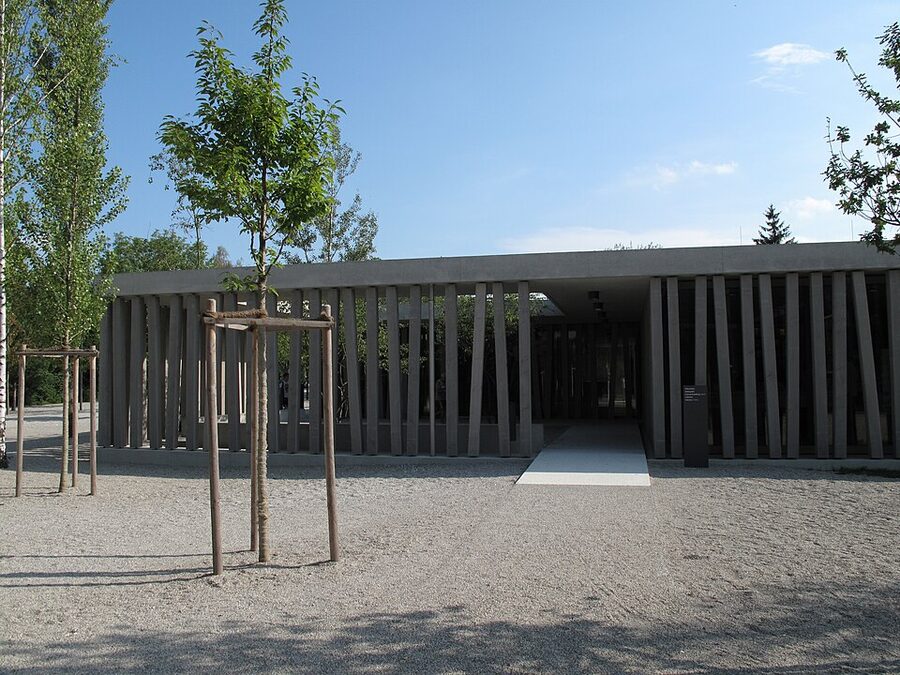
I went solo my first time. I picked up the audio guide at the visitor centre for €4.50, walked the camp road, sat in the reconstructed barracks, and read every panel in the permanent exhibition inside the maintenance building. It took me about four hours and I left with a strong impression but a thin understanding.
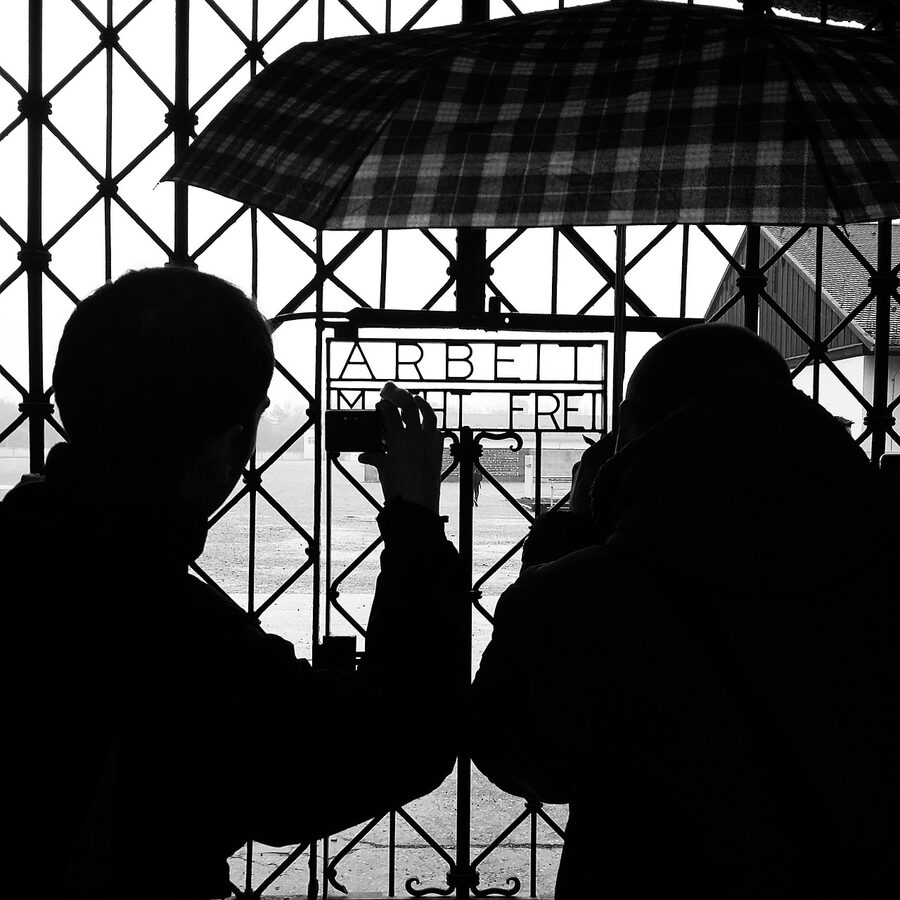
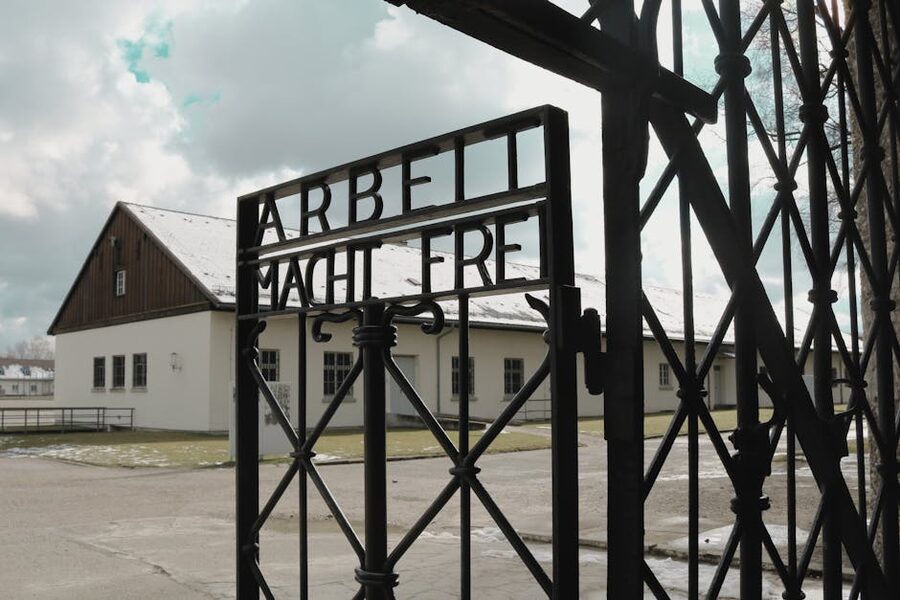
The second time I came back with a licensed guide who answered my questions in real time. Why did this gate use that exact phrase? What was the difference between this barracks and the next? Who is buried under that mound? I wrote down notes on my phone for an hour straight. The guide knew names, dates, and which prisoner accounts to read when I got home.
If you have any interest in the history beyond the surface, book the guide. If you want to be alone with your thoughts and read at your own pace, go solo.
How the Memorial Site Is Laid Out
The site is large but easy to walk through. Everything is on flat ground, signage is in English, and the main loop takes about three hours of slow walking.
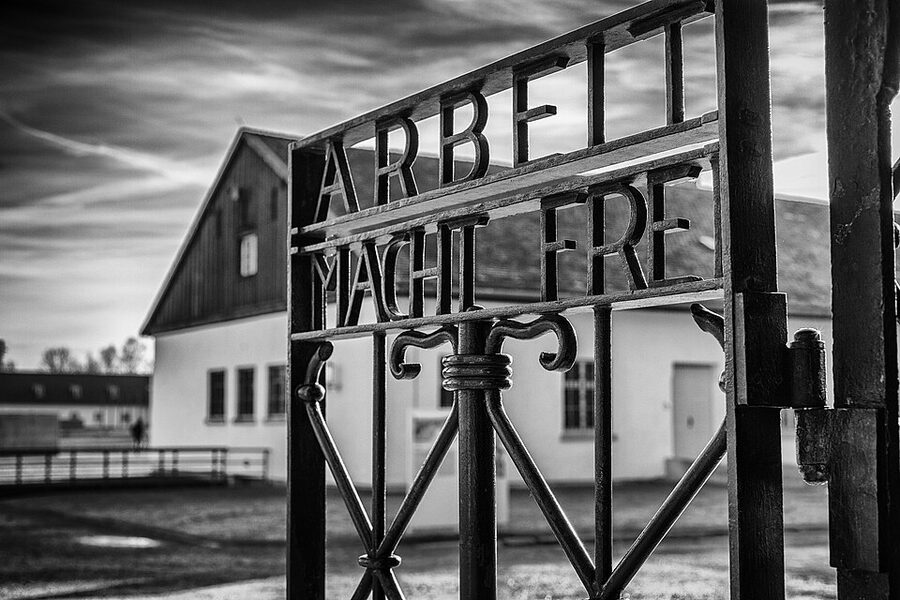
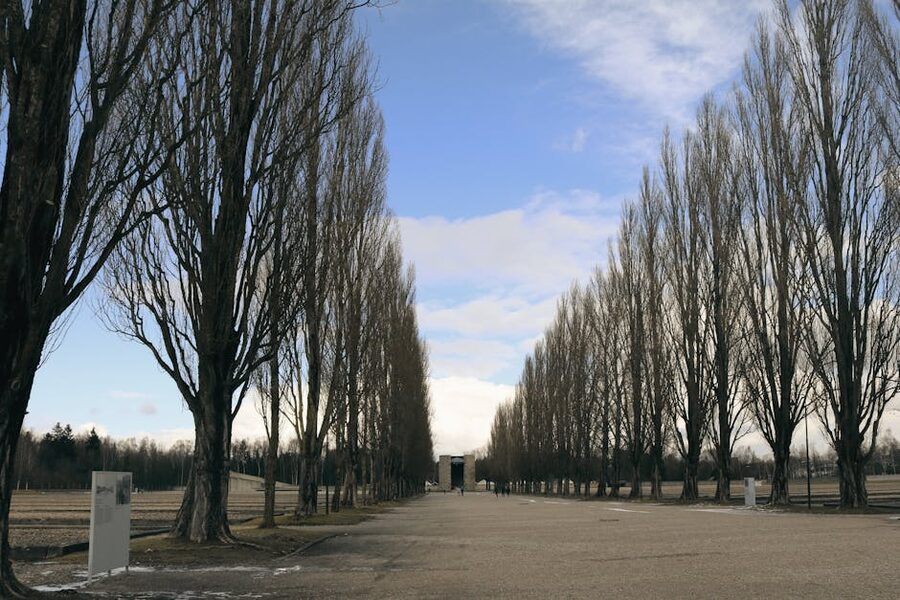
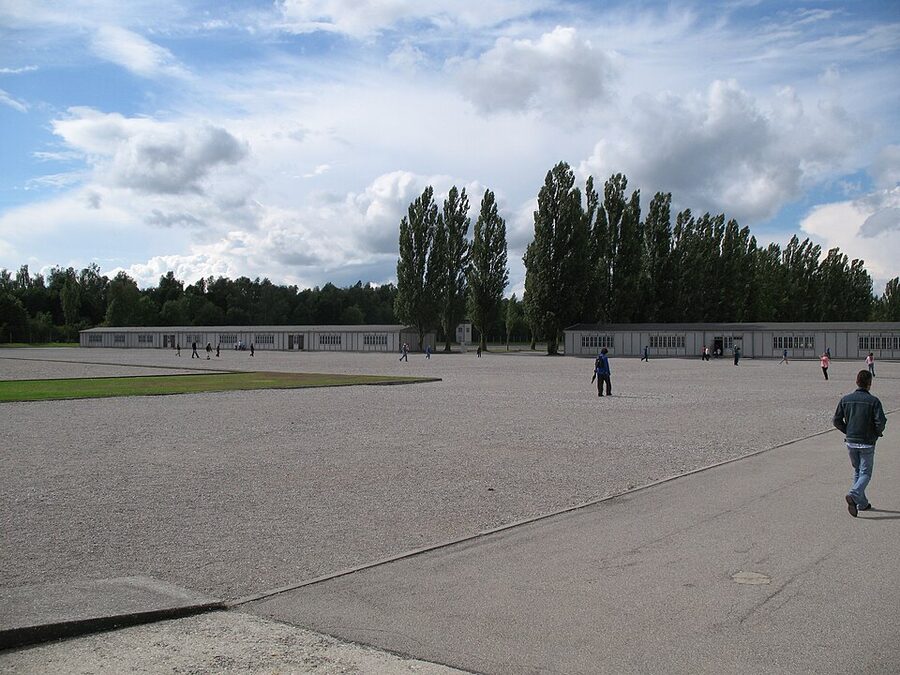
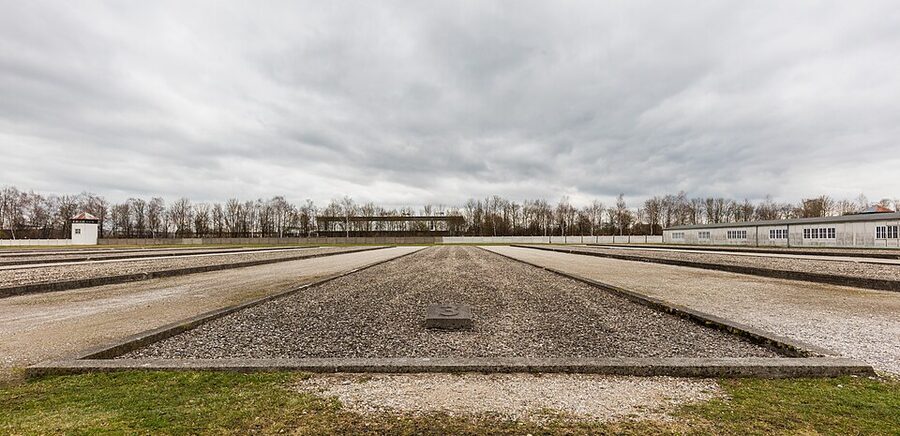
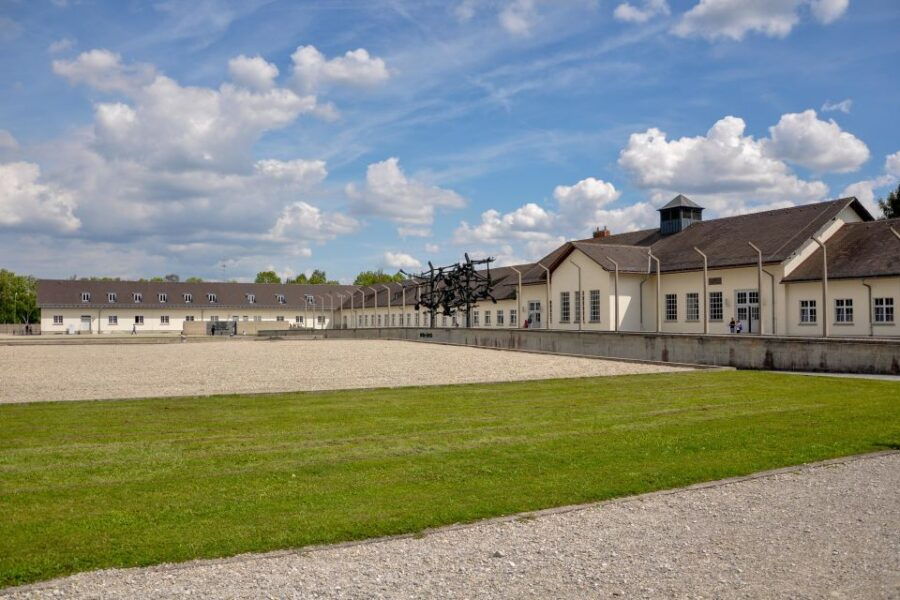
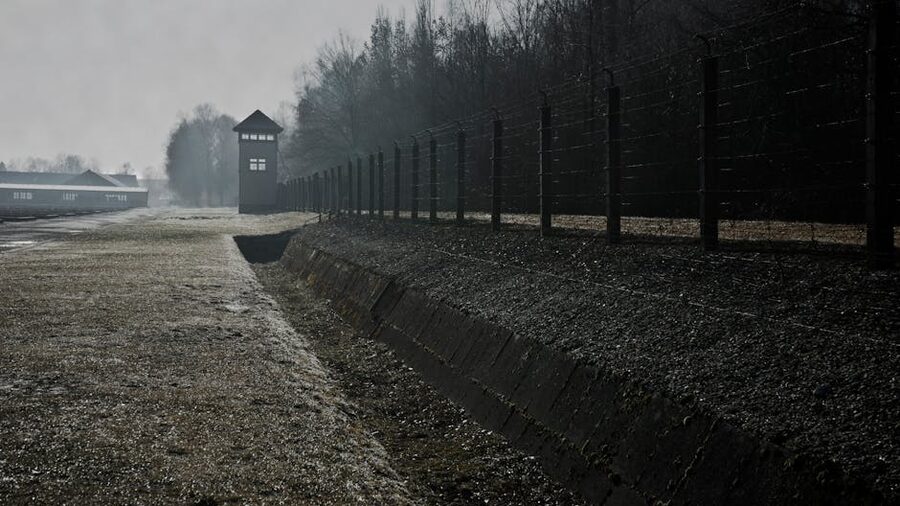
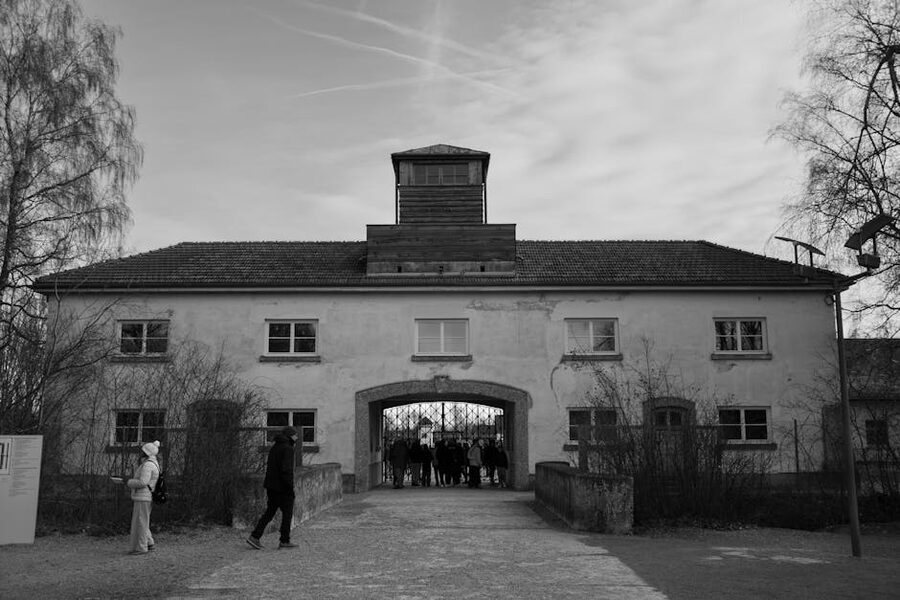
You enter through the Jourhaus, the SS guardhouse with the gate inscription. Beyond it is the Appellplatz, the roll-call square where prisoners stood for hours in any weather. To your left, the maintenance building holds the permanent exhibition. To your right, two reconstructed barracks. Behind everything, a long camp road lined with poplars.
The camp road ends at the religious memorials. From there you cross a small bridge to the crematorium area, which is set apart from the main camp. Most visitors miss this part because it requires deliberate effort to leave the central courtyard. Do not skip it.
How to Get from Munich to Dachau by Public Transport
The route is one of the simplest in Bavaria, and almost every guided tour from Munich uses it.
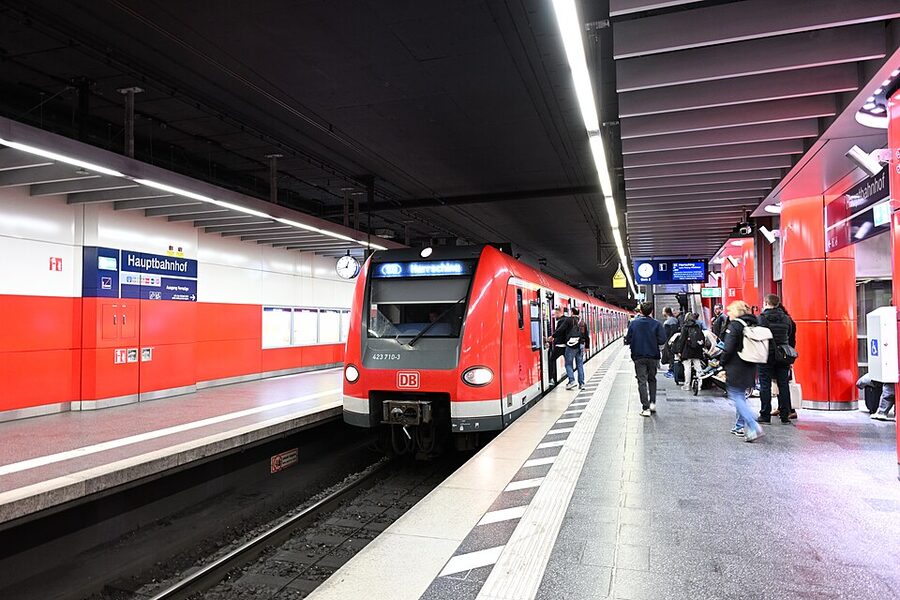
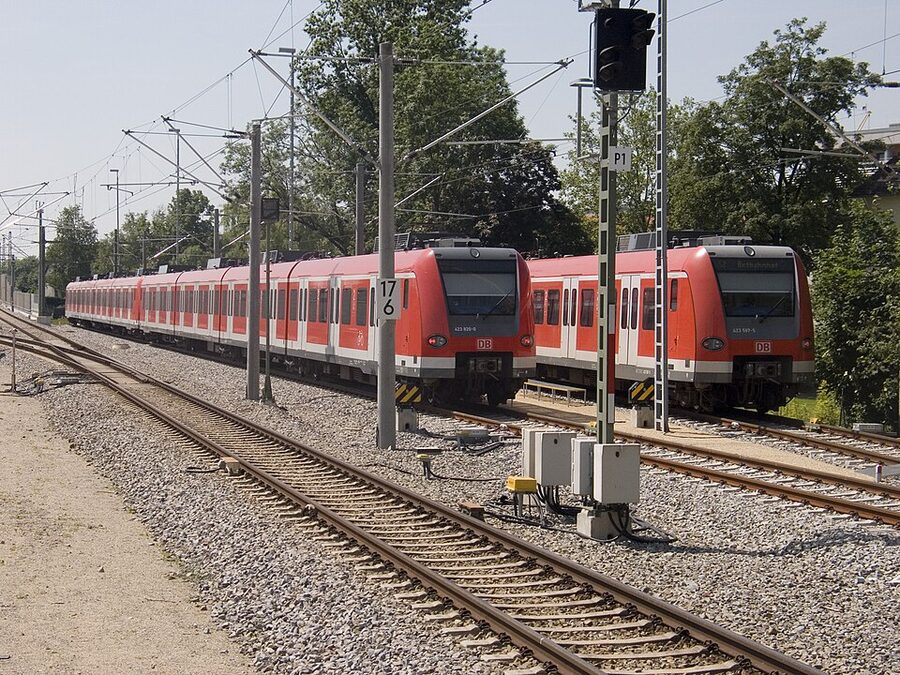
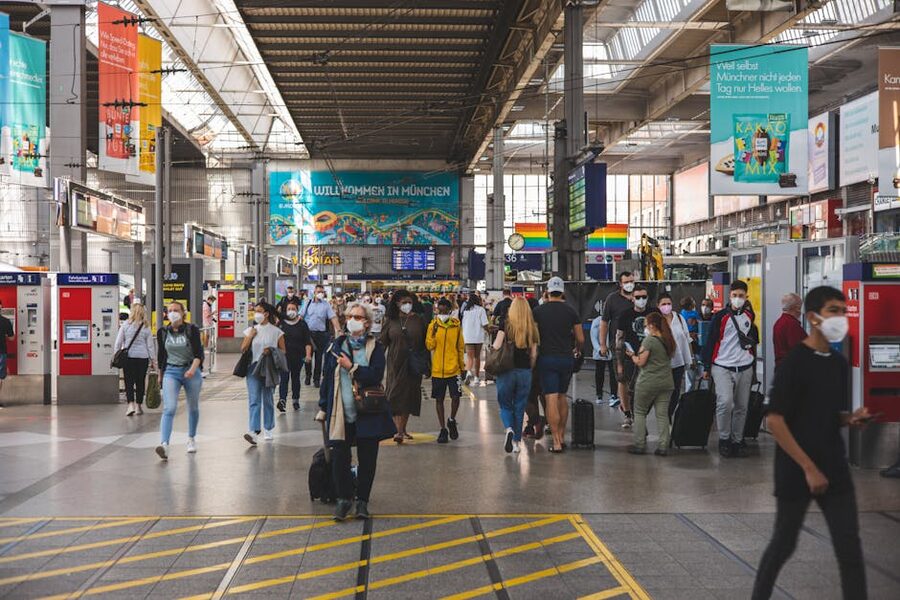
- From Munich Hauptbahnhof, take the S2 S-Bahn toward Dachau or Petershausen. Journey time is roughly 25 minutes.
- At Dachau station, leave the platform and look for bus 726 toward Saubachsiedlung. The bus stop you want is called KZ-Gedenkstätte. The ride is another 8 minutes.
- Buy a Munich-M1 day ticket from any machine. It covers the S2, the bus, and unlimited rides inside the same zone for the day. Cheaper than two singles, simpler at the gate.
By car you take the A8 from Munich westbound, exit Dachau-Fürstenfeldbruck, then follow the B471 into Dachau-Ost. Parking at the memorial is €3 per car but the lot is small and fills up by mid-morning in summer. Note for May 2026: the B471 is under construction between Dachau-Ost and Obergrashof until 17 May, with detours and traffic delays. Use the train.
Tour Picks: Three Worth Booking
I have looked at every Dachau-from-Munich tour bookable on the major platforms. Three stand out, and they cover the three main shapes of visit: the most-booked train tour, the budget-friendly half-day, and the long-format day tour with extra context. There are smaller variations as well, including a small-group half-day version if you want a tighter cohort, and a memorial walking tour with a different operator for travellers who specifically prefer non-headset tours.
1. From Munich: Dachau Memorial Site Day Tour: $49
This is the most-recommended Dachau tour bookable from Munich. The guide handles the S-Bahn ticket, the meeting point, and the timing, leaving you to focus on the site itself. Our full review covers what is included in the price and how the guide structures the camp loop.
2. Dachau Memorial Site Tour from Munich by Train: $64
If you book through Viator out of habit, this is the version to choose. The Viator listing carries 5,600 reviews and the same train-and-bus route, just with a different operator on the ground. Our review compares the two head to head.
3. From Munich: Dachau Memorial Site Half-Day Trip: $62
The half-day works if you have an evening plan in Munich already. The guide compresses the site loop into about 2.5 hours on the ground, which means you skip parts of the bookshop and the religious memorials but cover the camp itself in full. See our half-day review for what gets cut.
What You Will Actually See on Site
The first thing that surprises people is the scale. Dachau is much larger than the photographs suggest. The roll-call square alone is the size of two football pitches, and the camp road behind it stretches another 600 metres before you reach the religious memorials.
The Permanent Exhibition
The Dachau exhibition is the strongest part of the site for understanding context. It walks you through the camp’s role as the SS training ground, where guards rotated through before being posted to other camps. This is why Dachau gets called the model camp. The administrative system, the architecture, the daily routine, all of it was developed here and exported.
The Reconstructed Barracks
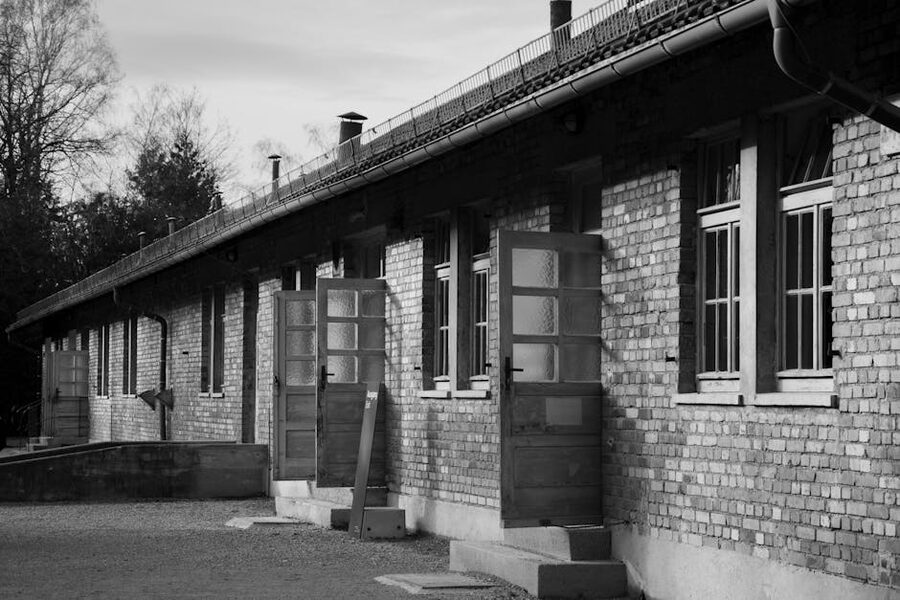
Two barracks were rebuilt to give visitors a sense of the original 32 prisoner blocks. They show the changes over time, from the early 1933 layout when the camp held political prisoners with relatively basic conditions, to the 1944 overcrowding that reduced sleep space to centimetres per person.
The Crematorium Area
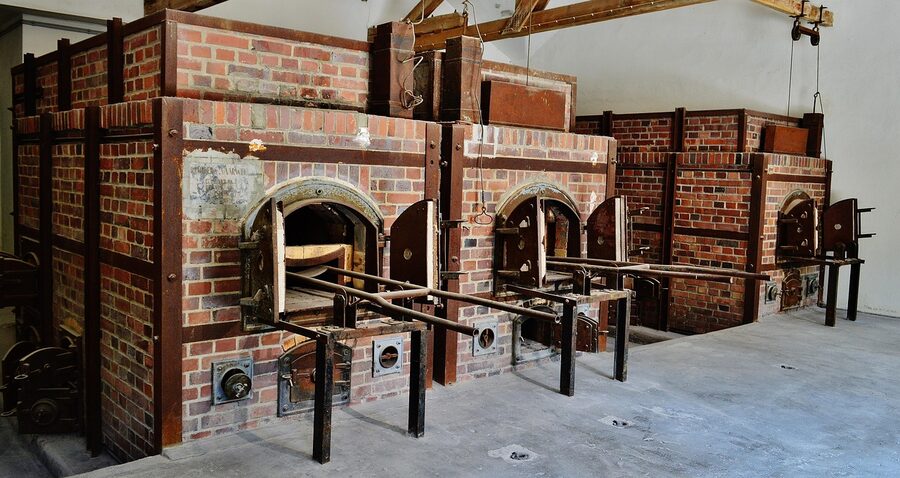
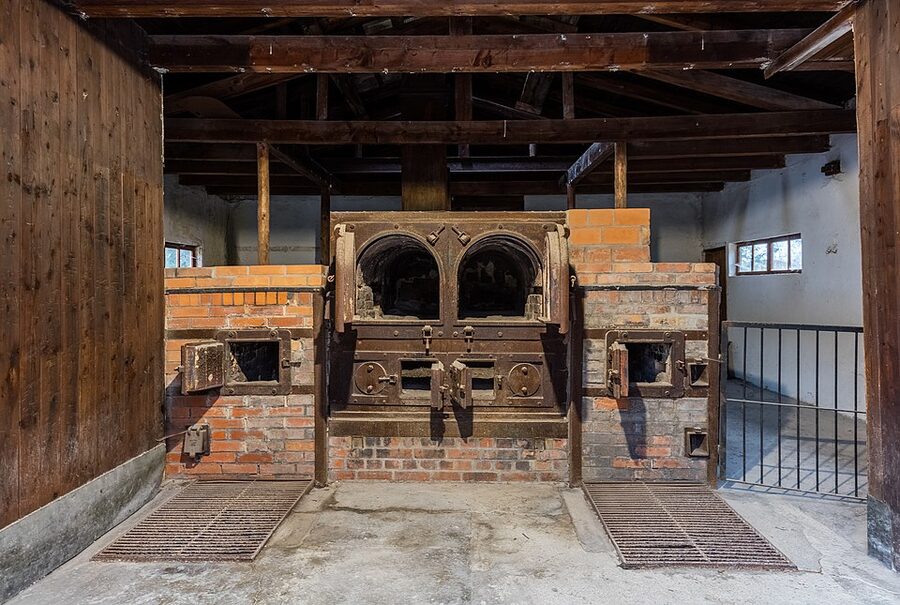
The crematorium sits in a small fenced compound across a footbridge from the main camp. There are two buildings: the original Baracke X built in 1940, and a larger replacement built in 1942-1943. A gas chamber was constructed inside the new building but the historical record on whether it was used for mass killings at Dachau is contested.
The International Memorial
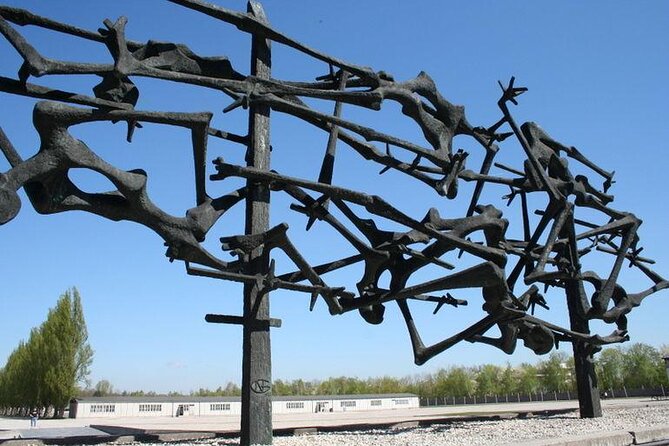
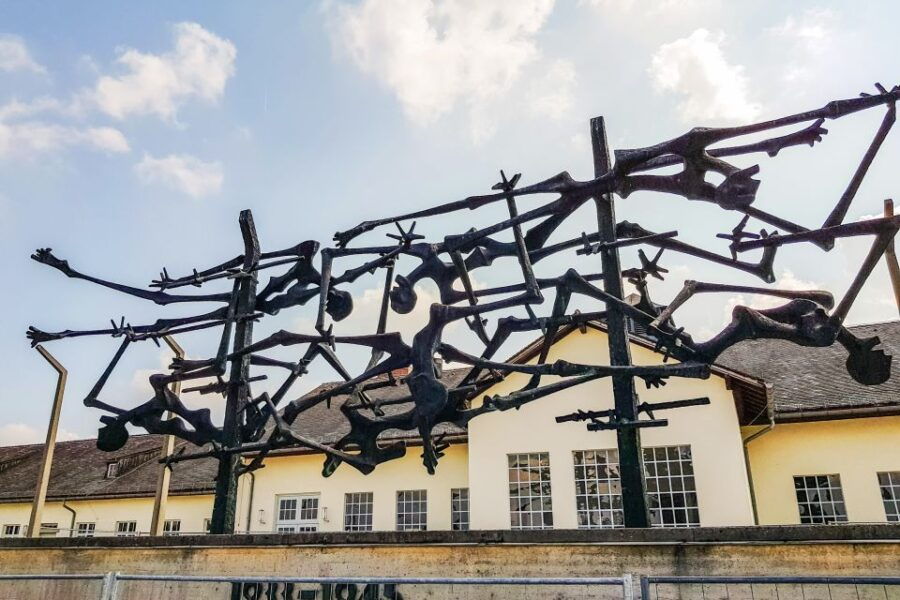
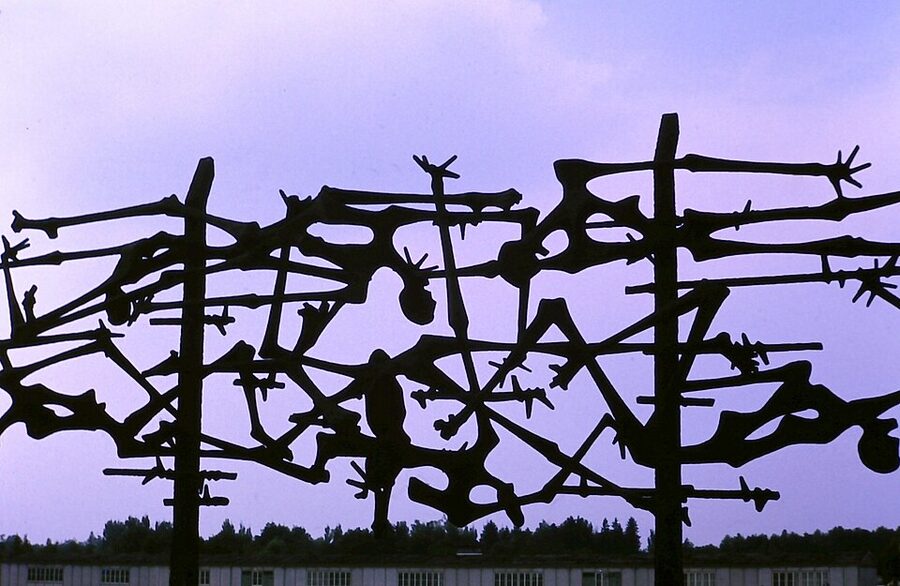
At the end of the camp road sits the international memorial sculpture by Yugoslav artist Nandor Glid, unveiled in 1968. It depicts a tangle of emaciated bodies caught in barbed wire and is one of the most affecting Holocaust monuments anywhere in Europe. Behind it stand the religious memorials: a Jewish memorial, a Catholic chapel, a Protestant church, and a Russian Orthodox chapel, each erected in the years after the war.
How Long to Allow
The honest minimum is three hours on site, plus 90 minutes of round-trip transit from central Munich. So a four and a half hour total commitment if you sprint. I do not recommend sprinting.
If you read most of the panels in the exhibition, walk the full camp road, visit the crematorium, and look around the religious memorials at the back, plan on five hours at the site. With travel that turns into a full day. Most of the booked day tours give you six hours total, which is the right length for a first visit.
What to Bring and How to Behave
Photography is allowed in most parts of the site but not inside the gas chamber room or the crematorium ovens. Signs are posted clearly. The expected dress code is what you would wear to a cemetery; cover shoulders, no slogans on shirts, no bright sport-tourist colours if you can help it. Children under 12 are not recommended by the memorial itself for the camp grounds, though there is no formal age restriction.
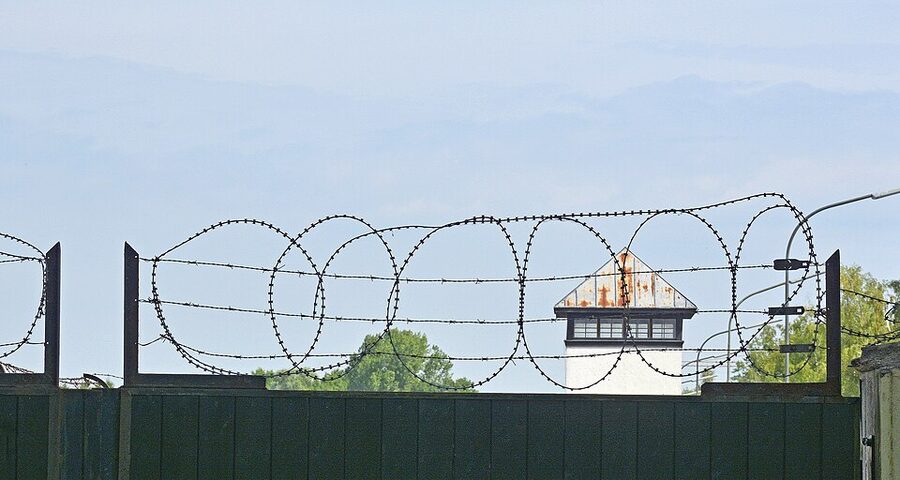
Wear comfortable shoes. The site is gravel and concrete. Bring water in summer; the bookshop sells bottles but there is no proper cafe inside the camp boundary. The visitor centre cafeteria does coffee and simple food at fair prices.
Opening Times and Logistics
The memorial is open daily from 09:00 to 17:00, including weekends and most holidays. It closes on Christmas Eve. The last entry is at 16:30 but you can stay on the grounds until 17:00. Guided tours in English run twice daily at 11:00 and 13:15 and cost €4 per person if you book directly with the memorial education department, separate from any third-party tour booking.
Audio guides at the visitor centre cost €4.50 and come in nine languages. They run for about 2.5 hours of content, which you can pause and resume as you walk. The free permanent exhibition handouts in many languages are also useful if you prefer reading to listening.
Best Time of Year and Day to Visit
The site is open year round and the experience is similar in any season, but practical comfort changes a lot. Spring and autumn are the easiest weather. Summer brings school groups and a busy car park; aim for an early morning arrival before 10:00. Winter visits are quietest but the camp road in light snow has a heaviness that some people find harder than the museum itself.
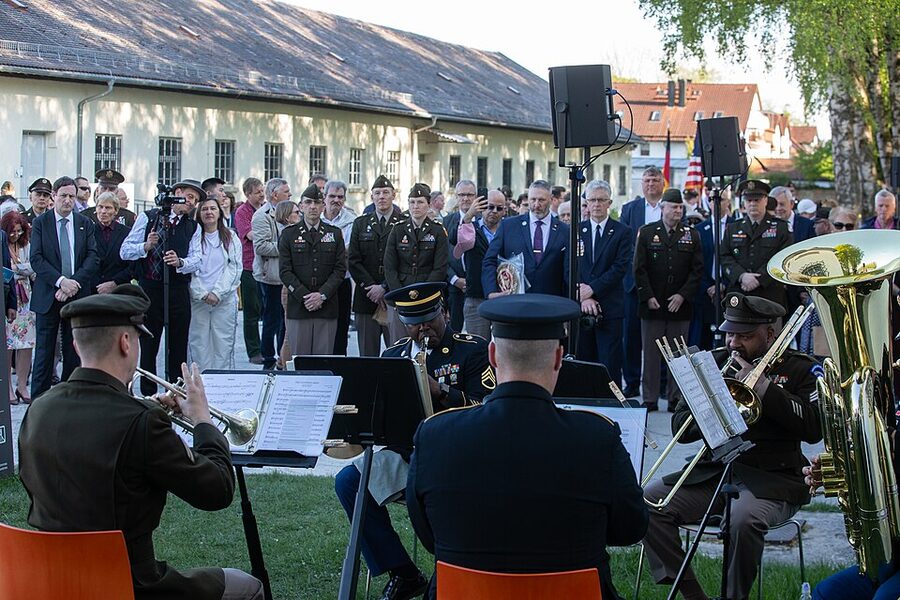
April and early May see anniversary events around the date of the camp’s liberation, 29 April 1945. The 80th anniversary in 2025 brought survivors, US veterans, and dignitaries to the site, and the memorial typically marks the date with a public ceremony each year.
Why Dachau and Not Another Memorial
People sometimes ask whether Dachau is the right camp to visit if they are only making one such trip. My answer is yes, for two reasons. First, it is by far the most accessible from a major tourist city; you cannot say the same about Auschwitz from Krakow without a much bigger logistical lift. Second, Dachau was the prototype, and understanding the prototype helps you understand the entire system.
Dachau was operational for 12 years, longer than any other Nazi camp. Around 200,000 people were registered there. Over 41,000 are confirmed dead, and the real number is higher. Survivors came from more than 30 countries. The list of nationalities reads like a map of occupied Europe.
Combining Dachau With Other Munich Day Trips
I would not pair Dachau with anything else on the same day. The site is too heavy to follow with a beer hall or a castle tour, and it is also too much to absorb back to back with another big topic. Give it its own day. If you have multiple days in Munich, Dachau pairs naturally with the Munich Third Reich walking tour on a separate day, which covers the same political period in the city itself, including the Hofbräuhaus, Königsplatz, and the Beer Hall Putsch sites.
For a different shape of Munich day, the full-day Neuschwanstein trip takes you in the opposite direction toward the Alps. And if you want a quick orientation of the city before going deeper, the Munich hop-on hop-off bus is the easiest way to map central Munich on day one before tackling Dachau on day two.
A Few Notes on Tone
Dachau is a memorial, not a museum. The distinction matters. Museums are designed to entertain and inform; memorials are designed to commemorate. The educators who run the site, including the licensed guides who lead the booked tours, hold this line carefully. They are not performers and they will not soften the content if you ask them to.
If you are visiting with someone who has a personal connection to the period, give them space and follow their pace. If you are visiting alone, take notes; the panels move quickly and the names blur together if you don’t write them down.
Other Munich Itineraries Worth Pairing With This One
If Dachau is part of a multi-day Munich plan, a few other bookings combine well. Our Munich Third Reich walking tour guide is the natural city-side companion to Dachau and works best on a separate day. The Munich hop-on hop-off bus guide helps you sketch the rest of the city on either side of the heavier days. For a contrasting full-day excursion that takes you toward the Alps instead of the suburbs, our Neuschwanstein from Munich guide is the standard pairing. Berlin travellers often ask whether to compare Dachau with Sachsenhausen near Berlin; both matter and both are different in atmosphere, with Dachau older and Sachsenhausen larger. If you have one day per city, do both. The Berlin Third Reich walking tour rounds out the picture in the capital.