Mochi starts as steamed glutinous rice, but turning it into the soft, stretchy treat you know takes more than a recipe. At Oh Mochi in Osaka’s Dotonbori, you get to pound and shape the rice yourself, then eat the results while they are fresh.
I like two things here: the hands-on work with traditional tools makes the process stick in your mind, and the tasting lets you try mochi with toppings such as kinako, red bean paste, nori, and sweet soy sauce. The English-speaking staff also explain the tradition as you go, so this is more than a snack stop.
The main trade-off is value: the session lasts one hour and starts at $30.99, which may feel steep if you want a full cooking class or a quiet, highly local setting. The space is small, and the storefront can be tricky to spot along the water.
- At a glance: mochi pounding in Dotonbori
- Why pounding mochi makes a good Osaka break
- A short history before the rice hits the mortar
- Steaming rice, then turning it into mochi
- Fresh mochi, five classic ways
- The room, location, and finding the entrance
- Is .99 a fair price for an hour?
- Who will enjoy this activity most?
- Booking times and practical details
- Should you book the mochi pounding experience?
- FAQ
- How long does the mochi pounding experience last?
- Where does the activity take place?
- What departure times can I choose?
- Can children take part?
- What food is included?
- Is the activity available in English?
- The Best Of Osaka!
- More Food & Drink Experiences in Osaka
- More Tours in Osaka
- More Tour Reviews in Osaka
- Not for you? Here's more nearby things to do in Osaka we have reviewed
At a glance: mochi pounding in Dotonbori
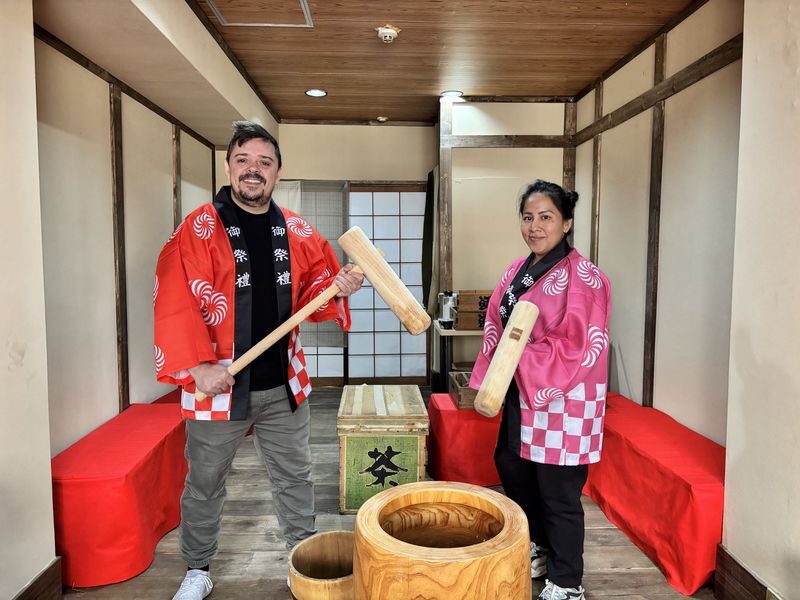 1 / 10
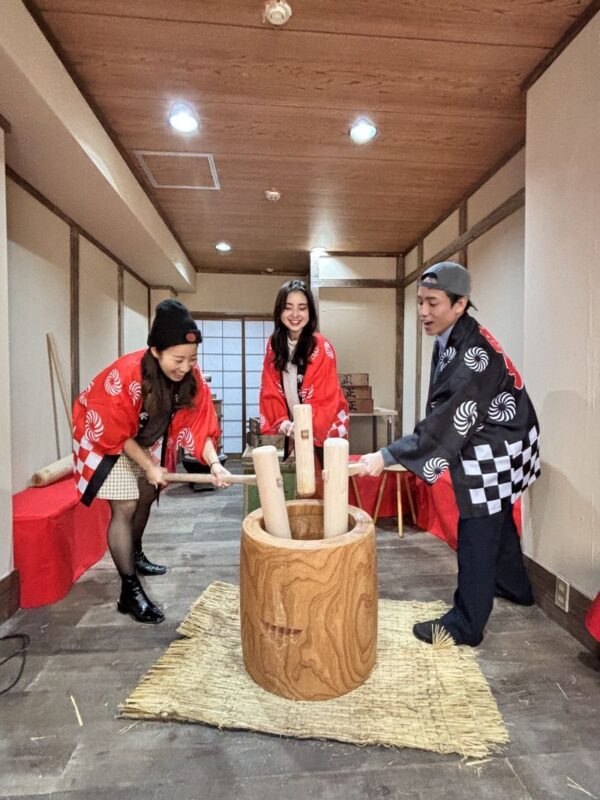 2 / 10
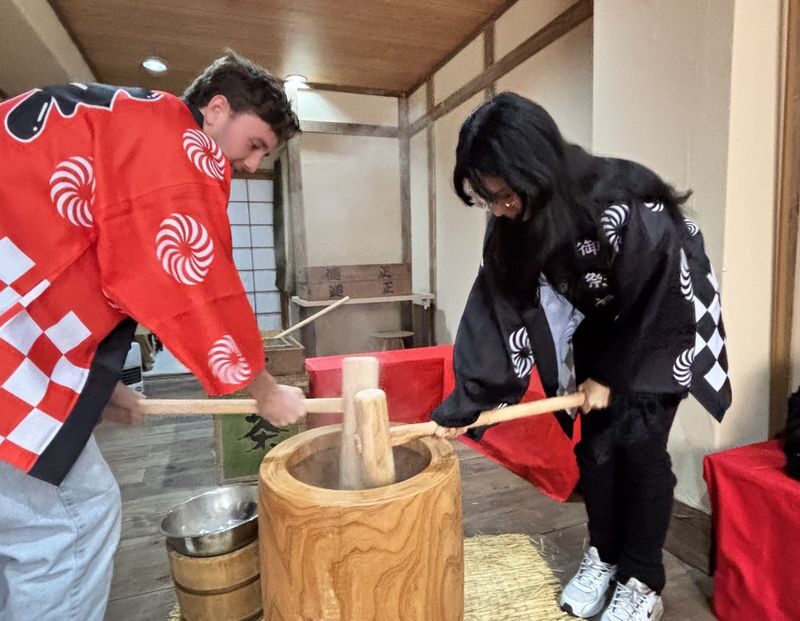 3 / 10
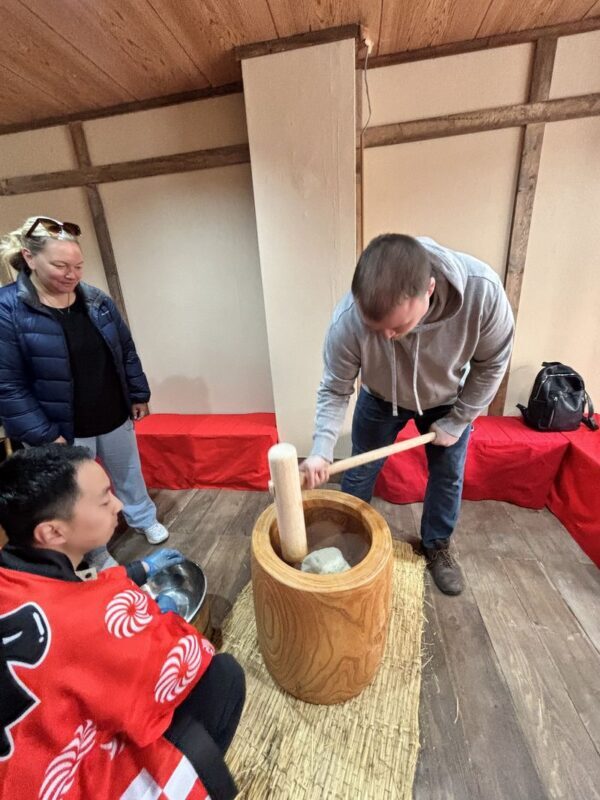 4 / 10
 5 / 10
 6 / 10
 7 / 10
 8 / 10
 9 / 10
 10 / 10
- You pound the rice yourself: Use traditional tools to turn steamed glutinous rice into mochi, then help shape it.
- The session begins with context: A short talk explains the history and cultural role of mochi pounding.
- Tasting is part of the hour: Try freshly made mochi with Japanese seasonings and accompaniments, plus tea.
- English is available: The experience includes an English-speaking guide and English-speaking staff.
- Choose the right plan: The adults plan is for ages 13 to under 76. Choose the family-friendly plan if anyone is under 13.
- Arrive at the right door: The venue is at 2-4-11 Dotonbori, near the waterfront, and can be hard to find from the street.
👉 See our pick of the 24 Best Workshops And Classes In Osaka
Why pounding mochi makes a good Osaka break
Osaka’s food scene gives you plenty of chances to eat well, but this one asks you to join in. The rice begins firm and steamy, then gradually becomes a smooth, elastic mass as you work it with the traditional tools. That change is satisfying to watch, and more memorable than simply buying a sweet from a shop.
The activity also gives you a practical glimpse of a tradition that can otherwise feel distant. Mochi is closely tied to Japanese customs and celebrations, and the opening talk connects the pounding process to its cultural meaning. In about ten minutes, you get enough background to understand why the work matters without spending half the session in a lecture.
This is a compact, guided activity rather than a long workshop. You meet at the venue, spend an hour there, and leave with a better sense of how mochi is made, plus the taste of it fresh from the pounding.
You can also read our reviews of more food & drink experiences in Osaka



A short history before the rice hits the mortar
The session starts with a brief talk about mochi’s history and cultural significance. It is a useful opening because the activity is not only about making a chewy sweet. You learn why mochi pounding has a place in Japanese tradition before taking part in the process yourself.
The talk is short, which suits the one-hour format. If you are hoping for an in-depth history lesson, this probably will not satisfy that wish. But the background gives the practical steps a bit more meaning, and the staff speak English, so you can follow the explanation without relying on guesswork.
Past hosts named in sessions include Mayuko, Sana, Mao, Kazu, and Runa. Staff assignments can change, but the experience is led by English-speaking staff, and the explanations cover each stage of the process.
Steaming rice, then turning it into mochi
After the introduction, you join in the process of steaming the glutinous rice. The supplied details do not specify how much of this stage you handle directly, so think of it as part of the demonstration and preparation, rather than assuming you will manage every step from raw grain onward.
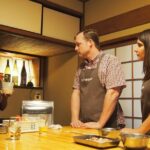
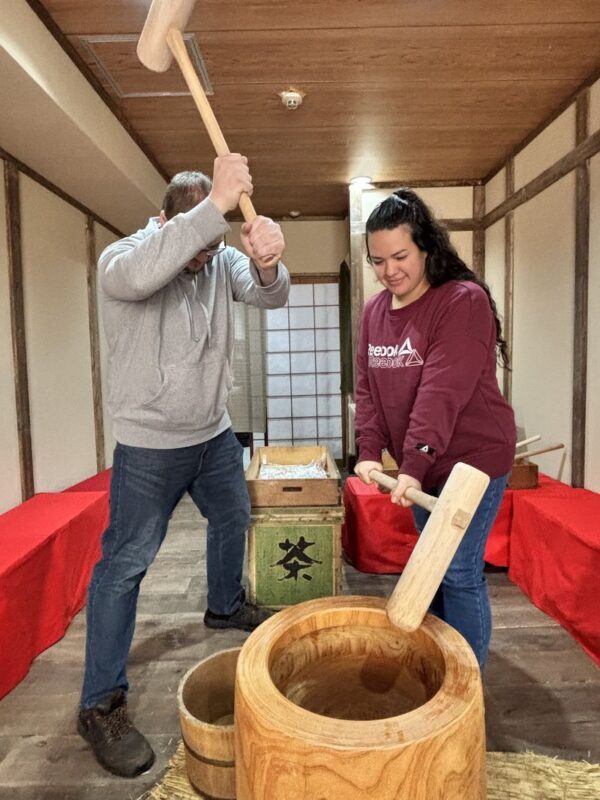
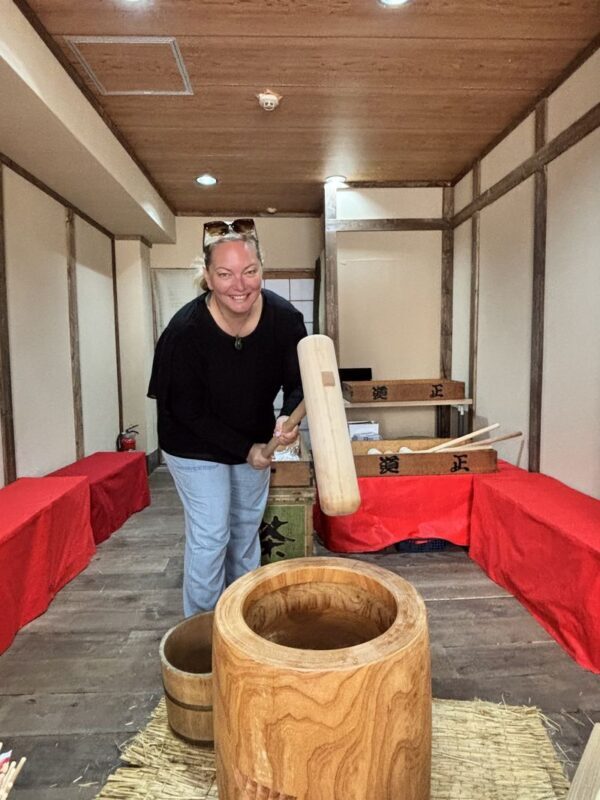
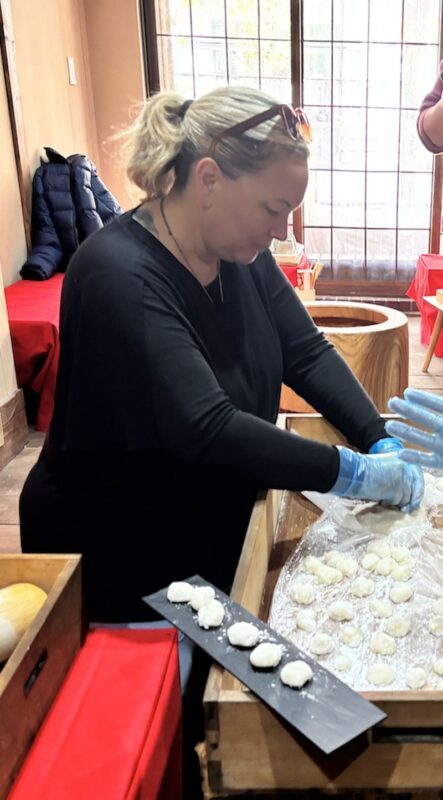
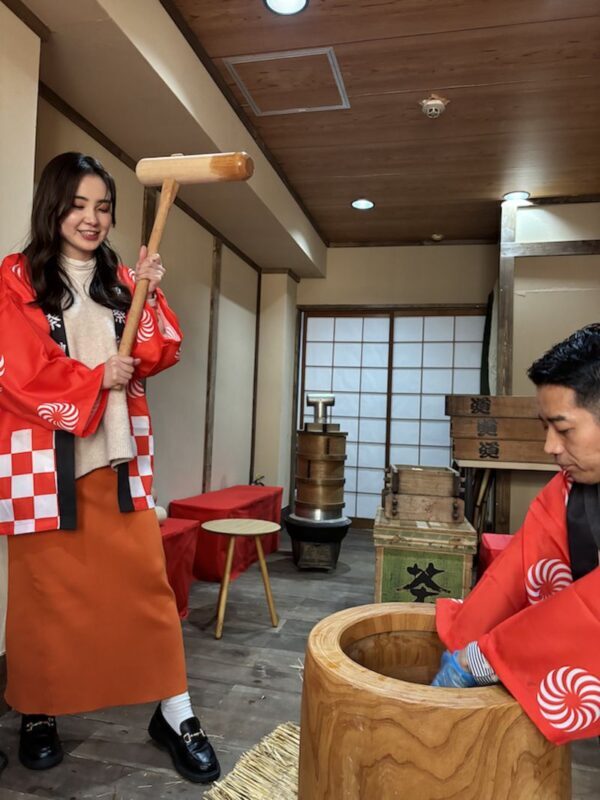
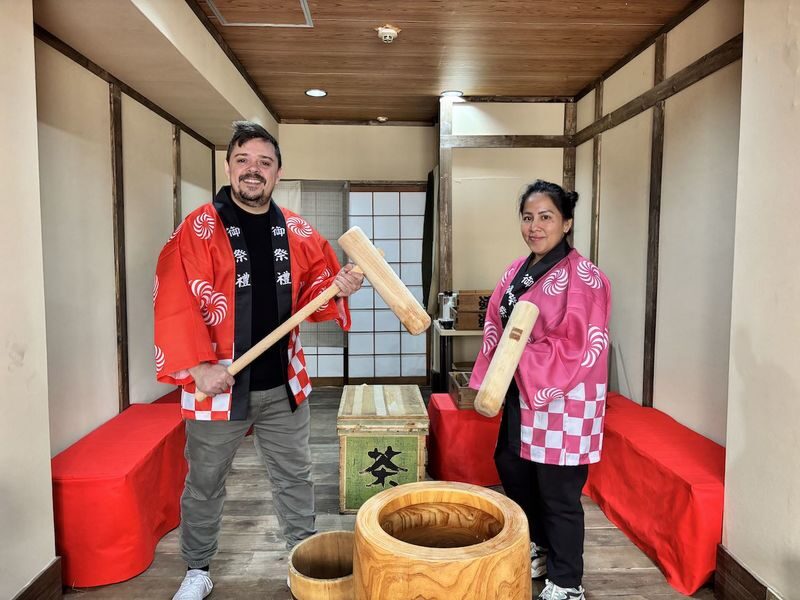
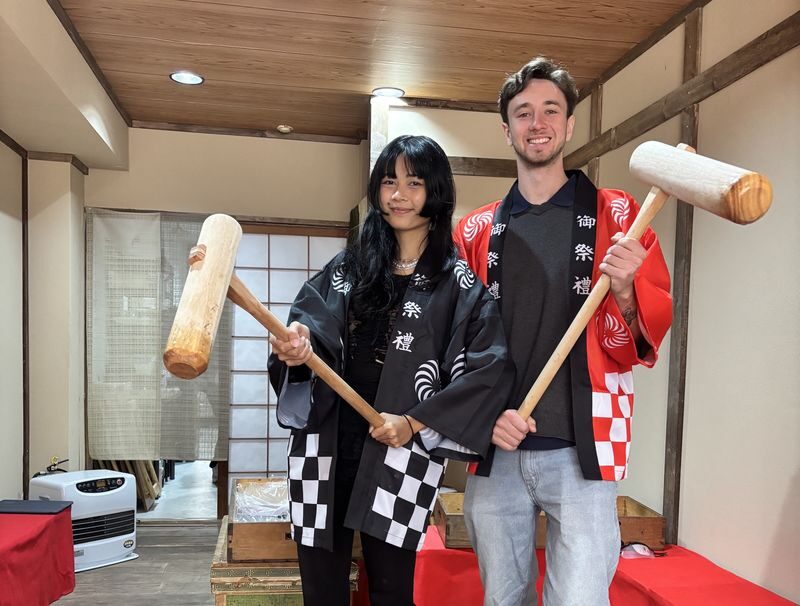
Then comes the defining part: pounding the steamed rice into mochi with traditional tools. You take turns working the rice and helping shape the dough. The activity is hands-on, but staff guide the process and explain what to do, making it approachable even if you have never cooked with glutinous rice.
This is where the hour earns its place in an Osaka itinerary. You are not just watching a host make something while you stand back. You get to feel the rhythm and effort of pounding, see the rice change texture, and take part in shaping the finished mochi.
The tools are part of the appeal, but this is still a guided group activity, not an open-ended cooking class. The schedule is brisk, and the room can feel crowded when a group is gathered around the work. If you prefer plenty of personal space or a slow, quiet lesson, that is worth weighing before you book.
Fresh mochi, five classic ways
The tasting is a strong finish. You try the freshly pounded mochi plain or with accompaniments such as kinako, a roasted soybean powder, sweet red bean paste, nori, and sweet soy sauce. A cup of tea is served alongside it.
The contrast between toppings helps you notice how much a simple change can alter the taste. Kinako gives the mochi a nutty edge; red bean paste brings sweetness; nori and sweet soy sauce offer more savory options. The exact selection may vary, so do not count on every topping being available at every session.
Expect a generous amount. Some participants find the tasting filling enough to count as a substantial snack, and some say there is more mochi than they can finish. I would avoid scheduling this immediately before a large meal if you want to enjoy every bite.
This is also the point where mochi fans get the clearest value. You are not tasting a single small sample after the activity. You get several ways to try what you helped make, which turns the end of the session into part of the lesson.
The room, location, and finding the entrance
Oh Mochi is at 2-4-11 Dotonbori, Chuo Ward, near the waterfront. That central location makes it easy to combine the activity with time in Dotonbori, but the shop may take a little finding. The storefront sits along the water, and a taxi may not be able to drop you directly at the door.
Give yourself time to locate the entrance rather than arriving at the last minute. If you are unsure where to wait, the door may be the right one to try; staff have helped people who were uncertain about whether to enter. Keep the address handy and check the map before setting off.
The space is small. That helps keep the activity close and interactive, but it can also feel tight when more than a dozen people are in the room. One participant found the air conditioning weak on a warm day, so anyone sensitive to heat or crowded indoor spaces should keep that in mind.






Is $30.99 a fair price for an hour?
The price starts at $30.99 per person. That buys more than a tasting: the hour includes a short cultural introduction, the rice preparation and pounding process, shaping, fresh mochi with several toppings, tea, and English-speaking guidance.
For a visitor who wants a distinctive activity and likes mochi, the mix of doing and eating makes the price easier to justify. You leave with a better understanding of how the sweet is made, rather than simply buying a packaged treat. It can also work well as a brief break between sightseeing stops, especially given its Dotonbori location.
Still, it is not a bargain if you judge it only by the time spent or the ingredients. The session is short, the space is compact, and the process is guided rather than an extensive cooking course. If your main goal is a quiet local setting or the lowest-cost food experience, you may want to spend your budget elsewhere.
Who will enjoy this activity most?
Mochi lovers are the natural audience, but you do not need to know much about the sweet beforehand. The talk and demonstrations make the steps clear, while the tasting gives you a chance to compare different flavors and textures. It is a good fit if you enjoy food activities that let you participate instead of just watch.
Families can book the family-friendly plan, and it has been used by households with young children. The organizers put safety first during the pounding, and children can take part with adult supervision. The adults plan is limited to people aged 13 and older, so select the family option if anyone in your party is under 13.
The stated age eligibility also sets an upper limit: participants must be under 76. Pets are not permitted. If you are booking for a mixed-age group, check that you select the plan that matches the youngest participant rather than assuming every ticket covers the same age range.
The activity is less suited to anyone looking for a long, highly detailed culinary course. You will get a short cultural introduction and an active session, not an afternoon of instruction. But for a one-hour taste of a Japanese food tradition, the balance of explanation, participation, and tasting is appealing.
Booking times and practical details
You can choose from departures at 10:00, 11:30, or 14:00. The return times are listed as 11:00, 12:30, and 15:00, depending on the departure you select. Book the time that fits your day and arrive for that specific slot.
Reservations are required for all participants and visitors. Booking confirmation is usually sent within minutes, and the voucher is valid only for the selected date and time. The activity is available to book for the following day, subject to availability.
Free cancellation is offered if you cancel at least 24 hours before the activity date, based on local time. Other personal expenses are not included in the price. The experience includes admission, English-speaking guidance and staff, snacks, meals, and beverages as specified for the activity.
Should you book the mochi pounding experience?
Book this if you want a short, hands-on cultural activity in central Osaka and you like the idea of eating what you make. The combination of a concise history talk, traditional pounding, and a generous tasting gives the hour a clear purpose. Friendly English-speaking staff and a family-friendly option make it easier to recommend to mixed-age groups.
Skip it if you want a spacious setting, a long cooking class, or a low-cost snack. The room is small, the entrance can be easy to miss, and $30.99 is a meaningful price for a one-hour activity. For mochi fans and curious eaters, though, it is a practical way to turn a familiar Japanese sweet into something you understand from the inside.
Traditional Mochi Pounding Experience with Tasting
“It was a wonderful and wholesome experience at this Mochi-making workshop. There was history and background provided for the mochi we were making….”
FAQ
How long does the mochi pounding experience last?
The experience lasts one hour, including the introduction, pounding and shaping, and tasting.
Where does the activity take place?
It takes place at Mochi Pounding Experience Osaka Oh Mochi, at 2-4-11 Dotonbori, Chuo Ward, Osaka.
What departure times can I choose?
The available departure times are 10:00, 11:30, and 14:00. Choose the time you select when booking.
Can children take part?
Yes, but select the family-friendly plan if anyone in your party is under 13. The adults plan is for participants aged 13 and older, and children must attend with an adult.
What food is included?
You taste freshly made mochi with accompaniments such as kinako, sweet red bean paste, nori, and sweet soy sauce, served with tea.
Is the activity available in English?
Yes. The experience includes an English-speaking guide and English-speaking staff.