Just beyond Rome, Tivoli offers a striking change of scale: Hadrian’s Villa sprawls across more than a square kilometer, while Villa d’Este turns water into the star of a Renaissance garden. I like that this tour pairs two very different places, and that admission, transport, and an English-speaking guide are included in the price. One drawback: five hours is a brisk window for two large sites, so expect a focused visit rather than a leisurely day.
I also like the audio receivers, which let you hear the guide without having to crowd close. Guide Valentina has been praised for bringing the villas to life, though your guide may differ. The early 8:30 departure gets you back to Rome by about 13:30, leaving the afternoon free, but the schedule can shift with traffic or weather.
- What to know before you go
- Two Tivoli villas, two very different worlds
- Hadrian’s Villa: an emperor’s country retreat
- Villa d’Este: frescoes and fountains
- Five hours from Rome: useful, but brisk
- What the 3.29 starting price includes
- Who will enjoy this tour most
- Should you book the Tivoli villas tour?
- FAQ
- How long is the tour?
- Where is the meeting point?
- What is included in the price?
- Are meals and drinks included?
- Is hotel pickup included?
- What should I bring?
- Can I bring a stroller, and is the tour wheelchair-accessible?
- Do children need to be included in the booking?
- The Best Of Tivoli!
- More Tours in Tivoli
- More Tour Reviews in Tivoli
- Not for you? Here's more nearby things to do in Tivoli we have reviewed
What to know before you go

- Hadrian’s Villa covers more than a square kilometer, with over 30 buildings, pools, and thermal stations to give you a sense of an emperor’s grand country retreat.
- Villa d’Este is famous for water powered by gravity, with pools, fountains, and water features set among its gardens.
- The two sites tell different stories: Hadrian’s Villa dates to the 2nd century AD; Villa d’Este was created in the 16th century.
- The five-hour schedule is compact. You depart Rome at 8:30 and are due back around 13:30.
- Admission and round-trip transfers are included, along with an English-speaking guide and headsets.
- Bring an ID or passport and wear walking shoes. The tour is not wheelchair- or stroller-accessible.

👉 See our pick of the 4 Best Cooking Classes In Tivoli
Two Tivoli villas, two very different worlds
This half-day outing makes sense because the villas are close enough to visit together, yet distinct enough to hold your attention. Hadrian’s Villa gives you the scale and ambition of imperial Rome. Villa d’Este brings you into a later world of decorated rooms, formal gardens, and fountains fed by gravity.
The contrast is part of the appeal. Hadrian’s retreat was built in the 2nd century AD for Emperor Hadrian, who assembled more than 30 buildings, pools, and thermal stations across an enormous estate. Villa d’Este came in the 16th century, when Cardinal Ippolito II d’Este created a lavish residence and garden nearby.
There is also a direct link between the two places: marble and statues were taken from Hadrian’s Villa to adorn Villa d’Este. That detail gives the visit a thread to follow. You are not just seeing two celebrated sites; you are seeing how a later age reused the remains of an earlier one.
Both sites are UNESCO World Heritage Sites, but their appeal is not simply a label. Their scale, architecture, and setting make them rewarding stops for anyone curious about how powerful people shaped the places around them. The tour takes care of transport and entry, so you can spend your limited time looking and listening rather than sorting out the practical pieces yourself.
You can also read our reviews of more tours and experiences in Tivoli.

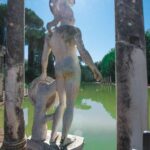

Hadrian’s Villa: an emperor’s country retreat
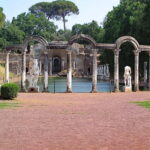
Hadrian’s Villa is the more expansive of the two stops. The estate covers more than a square kilometer and contains over 30 buildings, along with pools and thermal stations. Even that short description hints at the challenge: this is not one building with a single entrance hall to take in. It is a large complex, and a guided visit can help you make sense of its size and purpose.
The villa was Hadrian’s luxurious country retreat, a place that displayed the emperor’s wealth and power. Its many structures suggest a self-contained world, with space for leisure, bathing, and grand architecture. You will encounter the remains of a vast imperial estate rather than a perfectly preserved palace, so it helps to picture the scale and ambition behind what is still visible.
A guide adds context to ruins that might otherwise read as a series of walls and foundations. You also get an audio receiver, which makes it easier to hear explanations while standing at a little distance. That is useful in open spaces, where a guide’s voice can otherwise compete with wind, footsteps, and the general shuffle of a group.
The site’s size is also the main trade-off. The tour lasts five hours in total, including the journey from Rome and a visit to Villa d’Este. You should not expect to explore every corner of Hadrian’s estate at your own pace. If you prefer long, unhurried visits, a tour with more time at the villas may suit you better.
Villa d’Este: frescoes and fountains
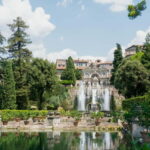
Villa d’Este offers a different kind of spectacle. Created in the 16th century by Cardinal Ippolito II d’Este, it combines frescoed interiors with a garden built around pools, fountains, and water effects. The shift from Hadrian’s sprawling Roman estate to this designed Renaissance villa gives the day a pleasing change of mood.
The garden’s defining feature is its use of gravity to power the water displays. There is no need for modern pumps to understand the basic marvel: the fountains and water games were engineered to work through the landscape’s natural fall. It is a clever meeting of design and practical know-how, and one of the most memorable details to look for as you walk through the grounds.
The frescoed rooms add another layer to the visit. At Hadrian’s Villa, you are mostly taking in the scale of an ancient complex; here, you also get decorated interiors and a more formal garden setting. The fountains are the obvious draw, but the rooms help explain the care and expense that went into the estate.
Weather matters at this stop. The gardens are outdoors, and rain can make the visit less comfortable even when the site remains beautiful. Bring a hat, sunscreen, or sunglasses for sunny conditions, and dress for the day’s forecast. Walking shoes are a sensible choice for both villas.
Five hours from Rome: useful, but brisk
The tour departs at 8:30 from Viale Giorgio Washington, at the entrance to Villa Borghese park. Arrive at least 15 minutes early. The meeting point is in Rome, not at either villa, and the tour includes round-trip transfers so you do not need to arrange the drive to Tivoli yourself.
You are scheduled to return around 13:30. That timing is convenient if you want to keep the afternoon open for Rome, but it does mean the villa visits are compressed into a half-day. A past participant wished for a later departure and more time at the sites. That is a fair point to weigh: the schedule gives you a useful introduction, not an open-ended exploration.
Traffic and weather can change the timetable, so treat 13:30 as the planned return rather than a promise to the minute. If you have a fixed afternoon booking in Rome, leave a buffer. The tour’s morning format is a practical fit for a short stay, but less appealing if your priority is spending the whole day among the villas.
Transport quality can vary, too. One participant found the bus old and a bit smelly compared with another tour vehicle. That is a reminder that the main value here is the guided access and the two-site plan, not a guarantee of a new coach. If comfort on the road is a major concern, keep that possibility in mind.
What the $133.29 starting price includes
The listed starting price is $133.29 per person. It covers admission to both Hadrian’s Villa and Villa d’Este, round-trip transfers from the Rome meeting point, an English-speaking guide, and headsets. Having the tickets and transport handled makes the day straightforward, especially if you would rather not piece together separate travel and entry plans.
The value depends on what you want from the visit. If you want a guided overview of both sites in a single morning, the package combines several practical costs and saves you from planning the transport yourself. If you want long stretches to wander at your own pace, the short schedule may feel like a poor fit regardless of what is included.
The price is listed as starting at $133.29 for both the English- and Spanish-speaking join-in tours. The amount is not the whole cost of your day, though: meals, drinks, personal expenses, and gratuities are not included. Hotel pickup and drop-off are also excluded, so you need to reach the meeting point on your own.




Who will enjoy this tour most
I’d consider this tour if you have limited time in Rome but want to see more than the city’s best-known ancient sites. It gives you a compact introduction to two important places outside the capital, with a guide to help connect the history and design. The quieter feel of Tivoli can also make a welcome change from Rome’s busiest central attractions.
It suits people who value convenience and structure. You meet in Rome, travel by transfer, enter both sites with admission covered, and have a guide with headsets. Families can bring children, but infants and children must be included in the passenger headcount. Children aged 0 to 2 are free, children aged 0 to 7 must be with a paying adult, and children aged 8 or older pay the adult rate.
It is less suitable if you need step-free access or want to bring a stroller: the activity is not wheelchair- or stroller-accessible. The substantial outdoor walking and the five-hour pace are also worth considering if you have mobility concerns or prefer a slower visit.
Before you set out, bring a valid ID or passport. The name on your booking must match the document you present, and the stated requirement is a passport or ID with six months’ validity. Pack walking shoes and weather protection. The mobile voucher is accepted, and the voucher is valid only for the date and time booked.
Should you book the Tivoli villas tour?
Book this tour if you want a convenient, guided half-day that links Hadrian’s immense Roman retreat with Villa d’Este’s frescoes and gravity-powered garden. The included transport and admission are real advantages, and the audio receivers help you follow the guide across open sites. A guide such as Valentina can make the history feel vivid, though the experience will naturally depend on who leads your departure.
Skip it, or compare it with a longer visit, if you want to linger at every section or dislike a tightly timed group schedule. Five hours is enough for a strong first look, not a slow, thorough exploration. For a short Rome stay, though, the combination is a practical way to see two very different sides of Tivoli without arranging the day yourself.
Tivoli, Villa d’Este, and Villa Adriana Day Tour from Rome
“Such a great tour and beautiful to see! Valentina was an amazing tour guide that really brought the villas to life!”
FAQ
How long is the tour?
The tour lasts five hours. It is scheduled to leave Rome at 8:30 and return around 13:30.
Where is the meeting point?
Meet at the entrance to Villa Borghese park on Viale Giorgio Washington in Rome. Arrive 15 minutes before departure.
What is included in the price?
Admission to Hadrian’s Villa and Villa d’Este, round-trip transfers from the meeting point, an English-speaking guide, and headsets are included.
Are meals and drinks included?
No. Meals and beverages are not included, and you should also budget for personal expenses and any gratuity.
Is hotel pickup included?
No. Hotel pickup and drop-off are not included. You need to make your own way to the Rome meeting point.
What should I bring?
Bring a valid ID or passport, walking shoes, and weather protection such as sunscreen, sunglasses, or a hat. Dress for the day’s weather.
Can I bring a stroller, and is the tour wheelchair-accessible?
No. The activity is not stroller- or wheelchair-accessible.
Do children need to be included in the booking?
Yes. Infants and children must be included in the passenger headcount. Children aged 0 to 2 are free, children aged 0 to 7 must be accompanied by a paying adult, and children aged 8 or older are charged the adult rate.