The heart of this Osaka tea ceremony is not just watching a host prepare matcha. You get to try it yourself, whisking powdered tea with traditional tools in a tatami room after an instructor explains the ceremony’s customs and meaning. It is a short, hands-on way to meet a quieter side of the city.
I like two things about this format: the English-speaking instructor makes the etiquette easier to follow, and the session gives you a turn at making your own matcha rather than leaving you as a spectator. The seasonal Japanese sweet is part of the tasting, too, and some visitors have particularly enjoyed nerikiri, a traditional confection.
The main consideration is the 45-minute limit. This is an introduction, not an extended or highly formal tea gathering, and the shared room may feel busy when a session is full. Arrive five minutes early: late arrivals and no-shows cannot be refunded.
- What to know before you book
- A quiet room in the middle of Dotonbori
- First, a welcome and a little context
- Watching the matcha demonstration
- Your turn to whisk a bowl
- What the 45-minute format can and cannot do
- Is .65 good value?
- Who will enjoy this ceremony
- Practical details to check before you go
- Should you book it?
- FAQ
- How long does the tea ceremony experience last?
- How much does the experience cost?
- Where is the meeting point?
- How do I get to the venue by train?
- What time can I book?
- What is included in the activity?
- Can children take part?
- Can the activity accommodate food allergies?
- What is the cancellation policy?
- The Best Of Osaka!
- More Tours in Osaka
- More Tour Reviews in Osaka
- Not for you? Here's more nearby things to do in Osaka we have reviewed
What to know before you book
 1 / 10
 2 / 10
 3 / 10
 4 / 10
 5 / 10
 6 / 10
 7 / 10
 8 / 10
 9 / 10
 10 / 10
- You make your own matcha: After a demonstration, you use traditional tools to whisk a bowl yourself.
- The host explains the ceremony in English: Instructors wear kimono and introduce the history, tools, and basic manners.
- A seasonal sweet comes with the tea: The tasting pairs matcha with a Japanese confection.
- It takes place in Dotonbori: The venue is on the second floor, a short walk from Kintetsu-Nippombashi Station.
- It is a compact cultural break: The session lasts 45 minutes and costs from $24.65, with transport and personal expenses extra.
- Families should check the age rules: Children must be at least five; those aged 12 and over pay the adult rate.
👉 See our pick of the 24 Best Workshops And Classes In Osaka
A quiet room in the middle of Dotonbori
The venue, Tea Ceremony Osaka The Osaka, sits in Dotonbori, a central Osaka neighborhood best known for its busy streets and food spots. The contrast is part of the appeal: you can step off the city’s main circuit for a short, structured activity in a traditional Japanese room.
The address is 2F, 1-chome Higashi-5-26, Dotonbori, Chuo Ward, Osaka. For the simplest route, take the train to Kintetsu-Nippombashi Station, use Exit 6, and walk about three minutes. Search the venue’s full name in Google Maps to find the correct location, as the meeting point is inside a building rather than at a street-level landmark.
This is a meet-up activity, not a tour with transport. You make your own way there, and the experience ends at the same address. That makes it easy to fit between other plans in Namba or Dotonbori, but leave enough time to find the second-floor entrance. The session times are 10:00, 11:00, 12:00, 14:00, 15:00, and 16:00. Arrive five minutes before the time you booked.
You can also read our reviews of more tours and experiences in Osaka.



First, a welcome and a little context
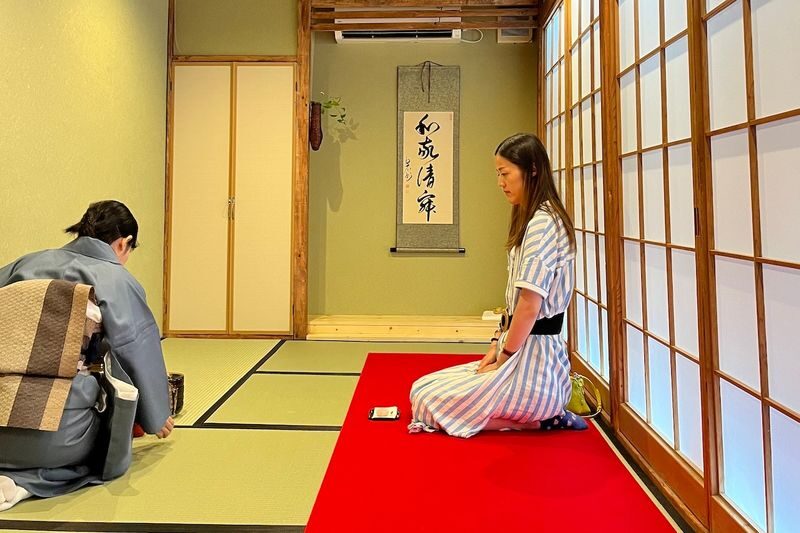
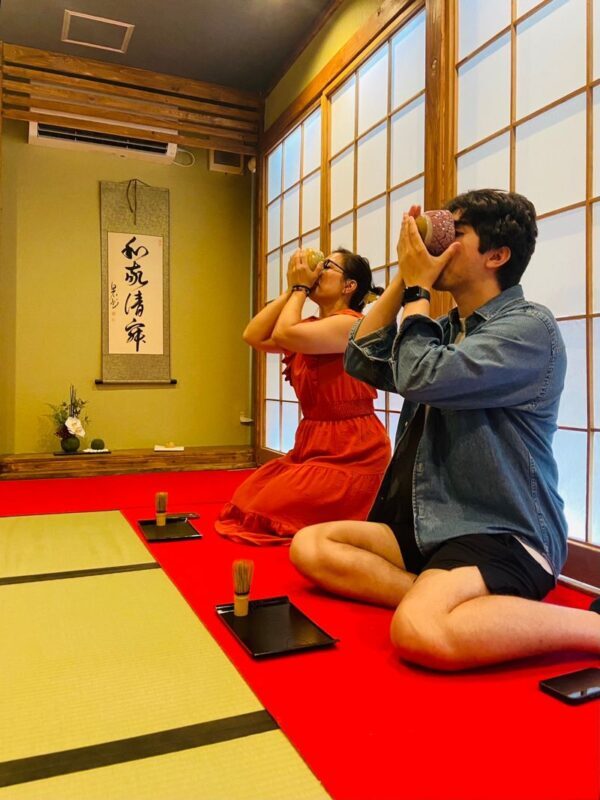
The session opens with a welcome in the tatami room. Your instructor gives a short introduction to the history and spirit of the tea ceremony, setting out why the preparation is deliberate and why even basic manners matter.
The background is concise rather than academic. That suits a 45-minute visit: you get a useful frame for what you are about to see without spending most of the session listening to a lecture. Instructors named by past participants include Kazu, Haruna, Eri, Mayumi, Akiko, and Erin. You cannot choose a particular teacher based on the information provided, but the format is designed to be led in English.
The room itself helps mark a change of pace. You are still in central Osaka, but the tatami setting and measured steps of the ceremony offer a brief pause from the city outside. This is not a retreat or a long meditation session. It is a practical introduction, with enough quiet to pay attention to the small details.
Watching the matcha demonstration
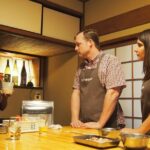
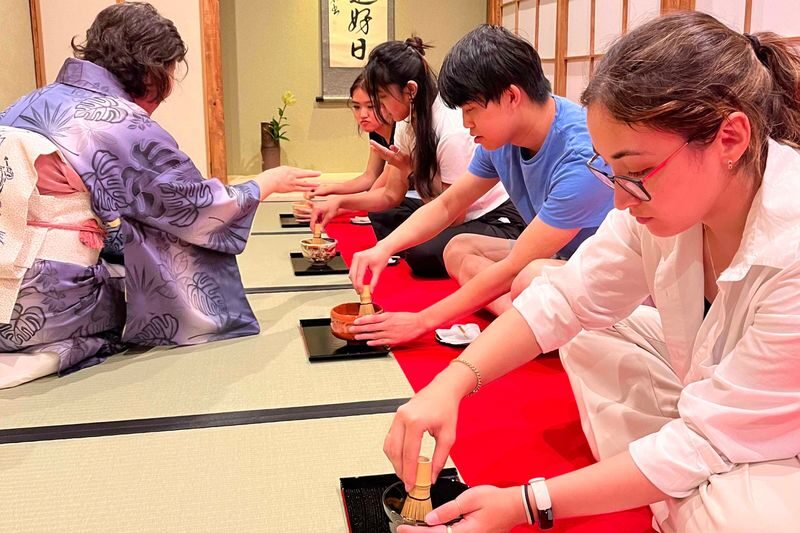
Next, the instructor prepares matcha while explaining the tools and basic etiquette. You see how the tea is handled and whisked before it is your turn, which makes the hands-on part easier to follow. The demonstration also gives you a chance to notice the ceremony’s careful rhythm rather than treating matcha as simply a drink to stir and serve.
The English guidance is valuable here. Tea ceremony manners can be unfamiliar, and clear explanations make it easier to take part without worrying that you will get every gesture exactly right. The emphasis is on learning the basic steps, not passing a test in formality.
Instructors vary, but several have been praised for clear explanations and a warm manner. Eri, Mayumi, and Kazu are among the names associated with especially engaging sessions. Those names are examples, not a promise of who will lead your chosen time. Expect a Japanese instructor in traditional kimono, speaking English and guiding you through the process.
Your turn to whisk a bowl
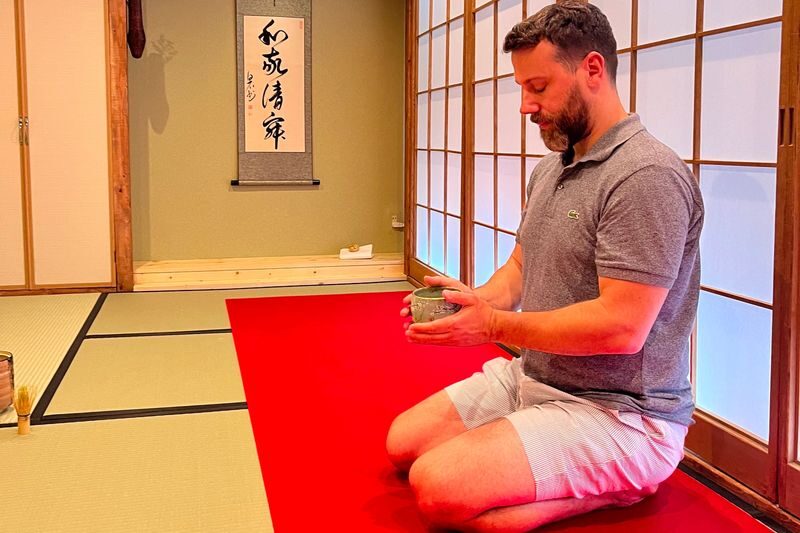
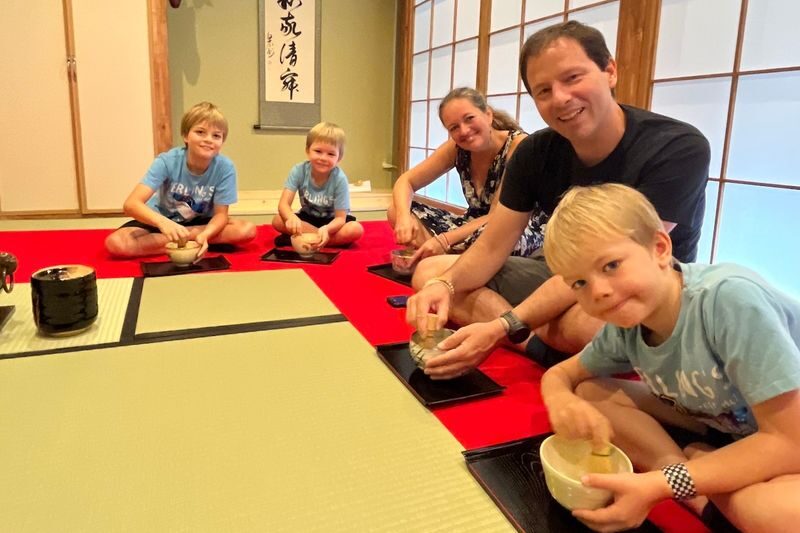
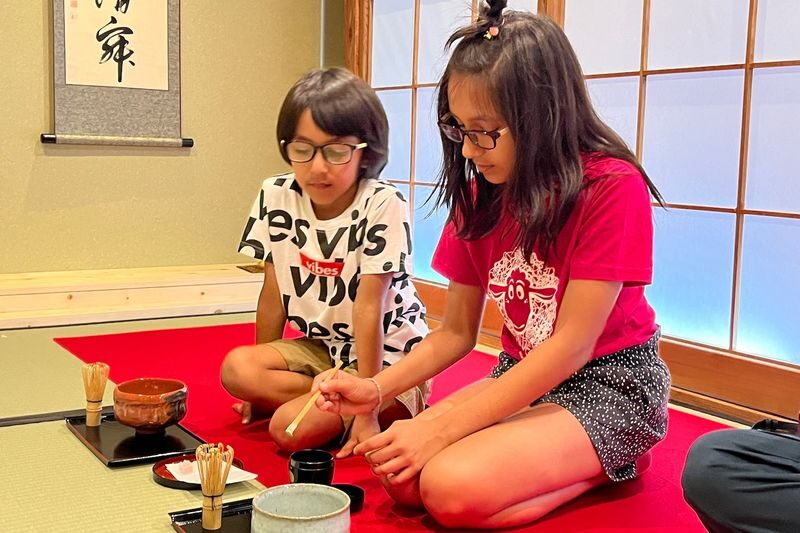
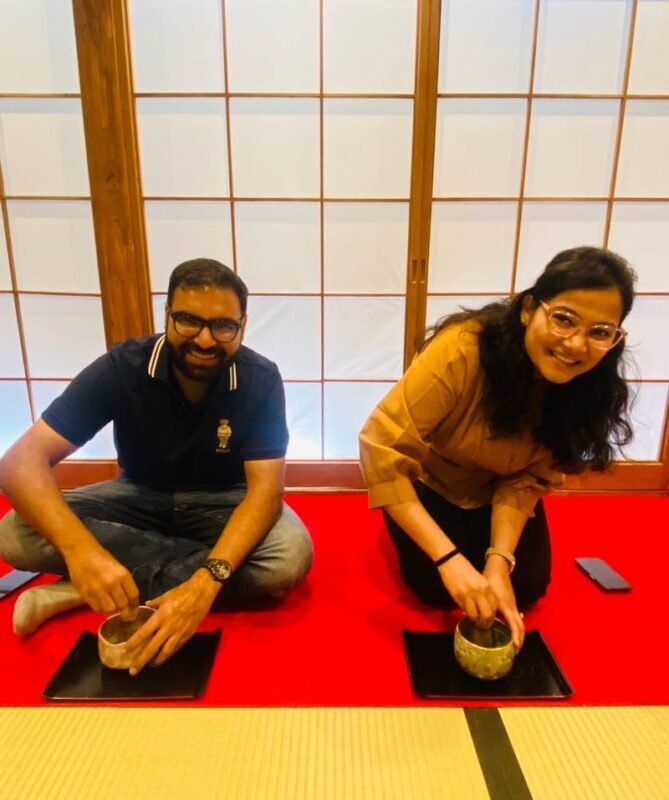
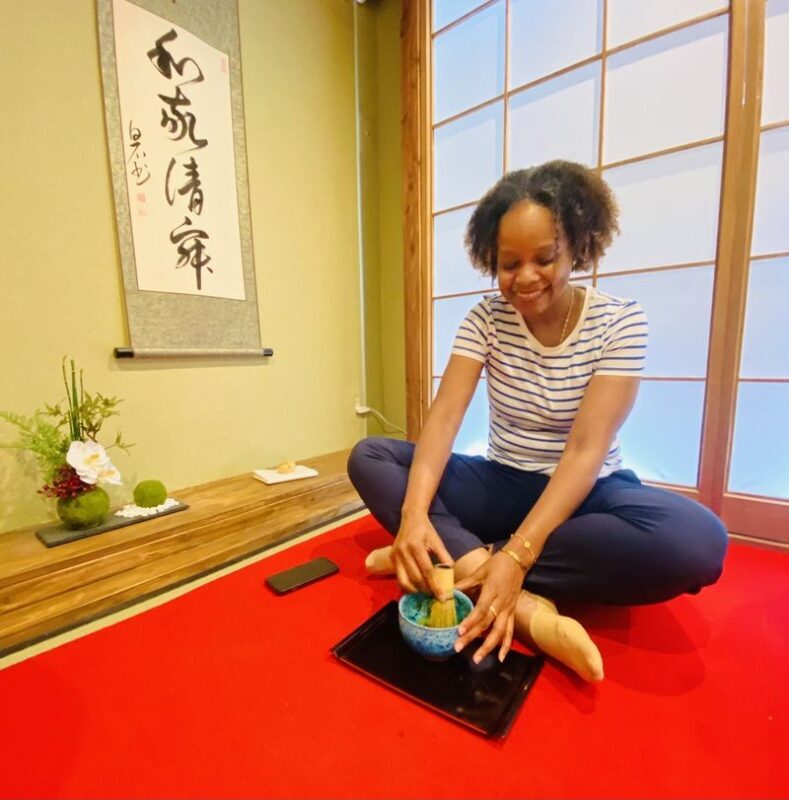
The most useful part for many first-timers is making matcha yourself. Once you have watched the demonstration, you handle the traditional tools and prepare your own bowl with the instructor’s guidance. The activity is participatory but approachable, so you do not need prior tea experience.
This hands-on step turns the ceremony from a performance into something you can understand through doing. You get a feel for the movements and see how the preparation differs from making a quick cup at home. It is also a good moment to ask yourself what you noticed during the demonstration, since the steps are still fresh.
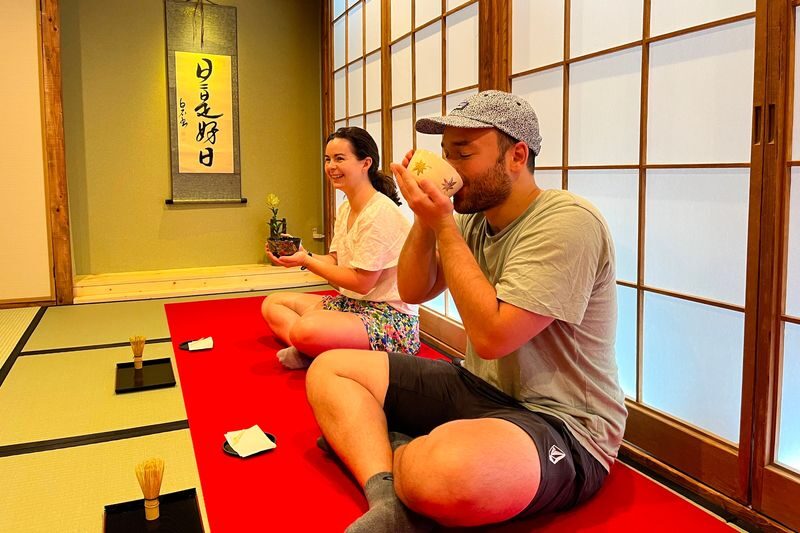
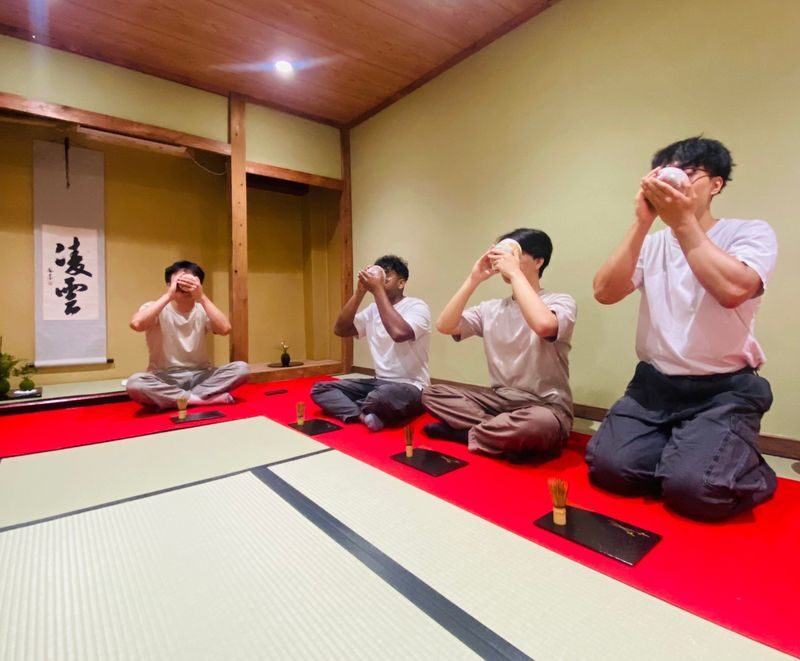
Then you taste your matcha with a seasonal Japanese sweet. The pairing gives the session a clear finish, and the sweet is included in the price. Nerikiri, a traditional Japanese confection, has been enjoyed in some sessions, but the exact sweet is seasonal, so do not count on one specific design or flavor.
If you have never tried matcha, this is a low-pressure introduction. You will make and taste it, but the activity does not promise a detailed lesson in tea cultivation, regional varieties, or advanced preparation. Book it for a cultural encounter and a first-hand taste, not as a specialist tasting course.
What the 45-minute format can and cannot do
Forty-five minutes is enough for a welcome, a concise explanation, a demonstration, and your own turn at preparing tea. It is short enough to fit into a packed Osaka day, and the included tea and sweet mean you do not need to plan a separate tasting stop.
The trade-off is depth. A single session cannot cover every school, ceremony form, or historical period in detail. If you already know tea practice well, you may find the introductory level familiar. One visitor described the activity as pleasant and educational but not extraordinary, a fair reminder that this is a well-presented first encounter rather than a rare, lengthy ceremony.
The shared format can also affect the feel of the room. Some sessions have felt intimate, while another was described as a little crowded. The group size is not specified, so you should not book expecting a private lesson. If a calm, one-to-one setting is essential, check directly with the operator before booking.


Is $24.65 good value?
At a starting price of $24.65, the value comes from the combination of an English-led introduction, a live demonstration, hands-on matcha preparation, and a seasonal sweet. You are paying for instruction and participation, not just admission to a room or a cup of tea.
For a first visit to Japan, or for a short break between Osaka sights, that is a sensible package. It adds cultural context to a drink many people already recognize, and the 45-minute commitment makes it easier to schedule than a longer workshop. The activity is also direct: no transport is included, and there are no extra stops to fill the time.
The price does not include your journey to Dotonbori or personal purchases. Factor in transport when comparing it with activities farther from your hotel or other plans. If you want a longer workshop or a more specialized lesson, compare other tea ceremony options in Osaka before deciding. But for a compact introduction with a chance to make your own bowl, the starting price is reasonable.
Who will enjoy this ceremony
I would put this high on the list for first-time visitors curious about Japanese customs, especially if you prefer learning by doing. Couples, solo visitors, and families can all take part, and children have been included in sessions. The guided format helps younger participants stay involved, though the ceremony’s quiet pace may not suit every child.
Children must be at least five to join the shared plan. Children aged 12 and over are charged the adult rate. Infants are not recommended, and children under five cannot enter with the shared plan, even if the adults have tickets. The activity is listed as stroller-friendly, but that does not change the age restriction.
It also works well for anyone who wants a calm counterpoint to a busy sightseeing day. You do not need to dress up, prepare in advance, or know Japanese tea etiquette. Just arrive on time and be ready to follow a few simple instructions.
Practical details to check before you go
The experience includes admission, an English-speaking staff member, a professional instructor, tax, matcha, and a traditional Japanese sweet. Transport and other personal expenses are not included. You can book as soon as tomorrow, and confirmation is sent within minutes. Your mobile voucher is valid only for the date and time selected.
The activity cannot accommodate dietary requirements related to allergies, so contact the operator before booking if that applies to you. Outside food and drinks are not allowed, pets are prohibited, and anyone who appears intoxicated may be refused service without a refund.
Free cancellation is available if you cancel at least 24 hours before the activity date, using destination local time. Late arrivals and no-shows are not eligible for refunds or changes. That makes punctuality more than a courtesy: leave a buffer for finding the entrance and reaching the second floor.
Should you book it?
Book this if you want a short, English-led introduction that lets you prepare matcha yourself, not merely watch a ceremony. The combination of clear explanations, kimono-clad instructors, a tatami room, and a seasonal sweet makes for a well-rounded cultural stop at a modest starting price.
Skip it if you are looking for a long, highly specialized lesson, a private session, or a detailed study of tea history. For most first-timers with 45 minutes to spare in Dotonbori, though, it is an easy and worthwhile way to slow down and learn something beyond the usual Osaka food-and-shopping circuit.
Tea Ceremony Experience in Osaka
“Learned about the culture of the Japanese tea ceremony.”
FAQ
How long does the tea ceremony experience last?
The activity lasts 45 minutes. It includes an introduction, a demonstration, hands-on matcha preparation, and a tasting with a Japanese sweet.
How much does the experience cost?
Prices start at $24.65. The price includes admission, an instructor, English-speaking staff, tax, matcha, and a traditional Japanese sweet. Transport and personal expenses are extra.
Where is the meeting point?
Meet at Tea Ceremony Osaka The Osaka, on the second floor at 1-chome Higashi-5-26, Dotonbori, Chuo Ward, Osaka 542-0077. Search the venue name in Google Maps for the correct address.
How do I get to the venue by train?
Take a train to Kintetsu-Nippombashi Station, leave through Exit 6, and walk about three minutes.
What time can I book?
Available start times are 10:00, 11:00, 12:00, 14:00, 15:00, and 16:00. The options shown may depend on the time you select.
What is included in the activity?
Admission, English-speaking staff, a professional instructor, tax, matcha, and a traditional Japanese sweet are included. Transport and other personal expenses are not.
Can children take part?
Participants must be at least five years old. Children aged 12 and over pay the adult rate. Children under five cannot enter with the shared plan, even when accompanied by adults who have tickets.
Can the activity accommodate food allergies?
No. The activity is unable to accommodate allergy-related dietary requirements.
What is the cancellation policy?
You can receive a full refund if you cancel at least 24 hours before the activity date, using destination local time. Late arrivals and no-shows cannot be refunded or amended.