At Canggu’s Batu Bolong Beach, the lesson gets you from beachside practice to trying real waves in one two-hour session. You’ll learn the safety basics, practice your pop-up on shore, then paddle out with an instructor who can help you choose and catch waves. Wayan and Yanto are two of the instructors frequently named for patient, clear coaching.
I like two things in particular: the semi-private format, which gives you close help without making the lesson feel like a solo exam, and the focus on safety before you enter the water. Board, rash guard or Lycra, and bottled water are included, so you can travel light.
The catch is that surfing takes stamina, and paddling can wear out beginners quickly. The lesson is not suitable for non-swimmers, and the schedule depends on tides and weather, so you may not get your preferred time.
- Batu Bolong is the launch point: The class is held at the Canggu beach area also associated with Old Man’s Beach.
- Shore practice comes first: Learn safety, board position, paddling, pop-up, stance, and wave riding before heading out.
- Coaching is semi-private: The package is designed for close instruction, commonly one instructor for two students.
- The sea time takes effort: Beginners should expect paddling, balancing, and repeated attempts, with rest when needed.
- Photos cost extra: Surf photos are not included. Some students have been offered a separate photo package for about 250,000 rupiah.
- Plan around tides: Classes run between 7 a.m. and 5 p.m., with the operator confirming your time in advance.
- Your first waves at Batu Bolong
- What semi-private coaching means
- The effort, water, and safety side
- Timing your lesson to the tides
- Getting to the beach and what to bring
- What the price buys
- Is We Surf Bali a good fit for you?
- FAQ
- How long is the surfing lesson?
- Where does the class meet?
- What time do the classes run?
- Is the lesson suitable for beginners?
- Can I take part if I cannot swim?
- What should I bring?
- Are surf photos included in the price?
- More Workshops & Classes in Canggu
- More Tours in Canggu
- More Tour Reviews in Canggu
- Not for you? Here's more nearby things to do in Canggu we have reviewed
Your first waves at Batu Bolong
 1 / 4
 2 / 4
 3 / 4
 4 / 4
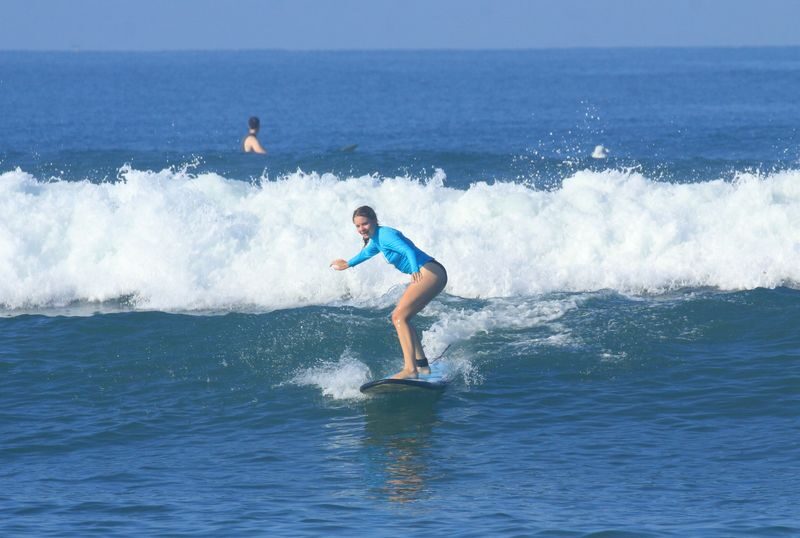
This lesson is aimed at beginners, including people who have never stood on a surfboard. You start on the beach, where an instructor introduces the equipment and the basics of staying safe around other surfers. That groundwork matters at a popular surf spot: it gives you a few simple rules to remember before the board and waves start competing for your attention.
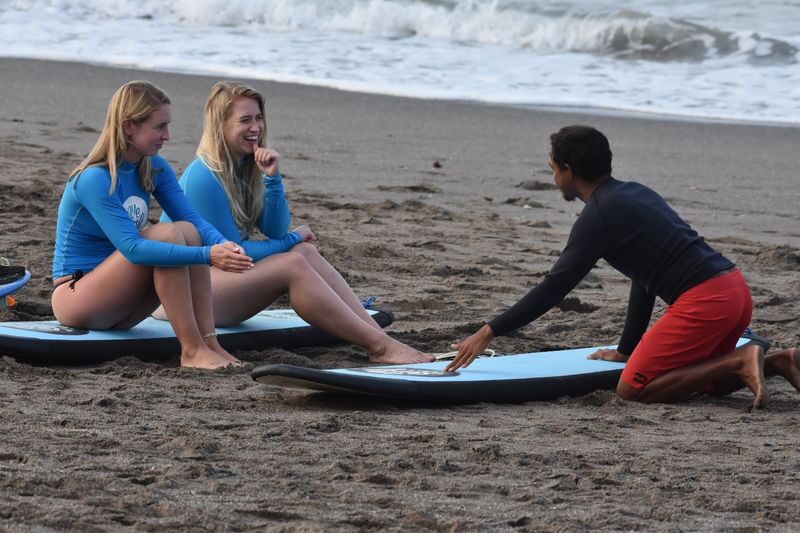
The practice covers how to lie on the board, where to position yourself, how to paddle, and how to pop up from lying down to standing. You’ll also work on a balanced stance and learn the basics of riding a wave. The point is not to master surfing in two hours. It is to understand the sequence and get a chance to try it with help close by.
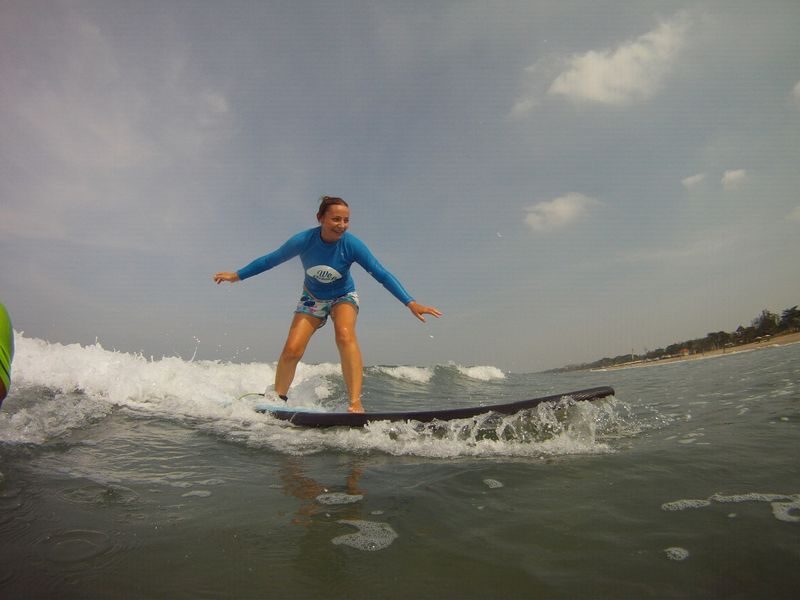
Once you head into the water, your instructor can guide you through the attempts and offer feedback. A good coach makes a practical difference here. If a wave is too weak or poorly timed, you may spend more effort paddling back out than riding it. Instructors Wayan and Yanto are often praised for spotting suitable waves, explaining adjustments, and keeping nervous beginners encouraged.
The lesson lasts two hours. One session structure described by participants includes beach instruction followed by roughly 80 minutes in the water, though the exact division can vary. Tide, weather, your energy, and the conditions on the day all affect how the class unfolds.
What semi-private coaching means
The semi-private option is built around a small instructor-to-student ratio. It is commonly arranged as one instructor for two students, which suits a couple or two friends who want to learn together while still receiving individual guidance. If you book alone, the pairing may depend on whether another person chooses the same time. In some cases, a solo booking has become a one-to-one lesson, but that is not guaranteed.
A shared class can be helpful for beginners. You get a breather while your partner takes a turn, and you can watch how the instructor positions and assists them. The trade-off is that your coach’s attention is shared, so you may not be riding every wave yourself. Surfing is tiring enough that the pauses can be welcome.
The instruction is in English, and the teaching style appears to put a lot of weight on encouragement and clear directions. That is useful when you are trying to remember several things at once: where your hands go, when to push up, and how to keep your feet under you. Even a short correction can help you make a better attempt on the next wave.
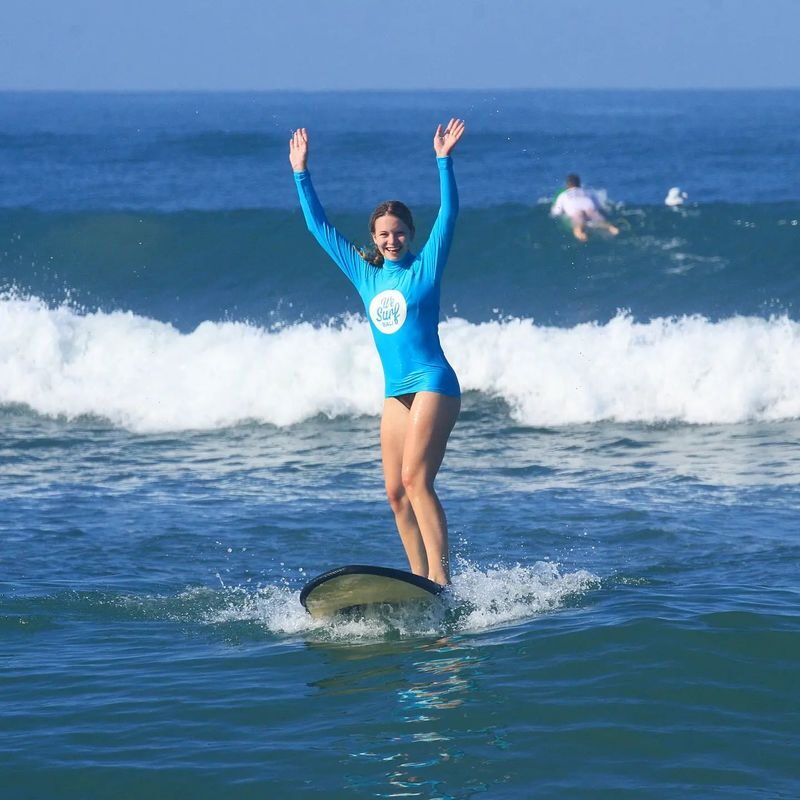
Some beginners do manage to stand and ride waves during their first class. Treat that as a possible reward, not a promise. Balance, fitness, confidence, and sea conditions all play a part. You’ll get more from the lesson if you focus on learning the motions and listening to the safety advice rather than counting successful rides.
You can also read our reviews of more tours and experiences in Canggu



The effort, water, and safety side
Surfing looks effortless from the sand. In practice, paddling and getting back into position can be the tiring part, especially for first-timers. Several people found that repeated attempts took more stamina than expected. If you are unsure about your fitness, know that the activity recommends an intermediate fitness level and that you can tell your instructor when you need a rest.
Safety instruction is part of the class, not an optional extra. You’ll be taught how to avoid collisions and handle the board, and your instructor will be nearby as you practice. That guidance can make a new activity feel more manageable, but it does not remove the need to be comfortable in the water. The operator states that the activity is not suitable for non-swimmers. Some individual participants have described receiving life jackets, but you should not rely on that to make the class appropriate if you cannot swim.
Conditions and the beach itself deserve respect. One participant reported cutting a toe on something in the shallows, and another noticed small jellyfish. These details do not mean you should expect trouble, but they are good reminders to follow the instructor’s directions, watch where you step, and avoid rushing back toward shore. The beach can also be busy, so the safety briefing is especially useful.
The activity is not suitable for pregnant women and is not recommended for anyone with impaired physical mobility. It is for participants aged 10 and older. If you have concerns about your health or ability, check with the operator before booking rather than assuming the class can be adapted.
Timing your lesson to the tides
Classes take place between 7 a.m. and 5 p.m. The operator sets the schedule around high and low tides and confirms the time before the activity date. That means you may choose a preferred time at checkout, but the final schedule depends on conditions. Keep some flexibility in your Canggu plans.
An early class can be a good fit if you want to surf before the heat builds. One participant described an early morning session as a particularly pleasant way to start the day. Still, the tide takes priority, so don’t book a tight onward appointment or assume the class will run at the exact hour you first had in mind.
The experience is listed as a two-hour surf lesson, while the return time shown is around 1:30 to 2 p.m. The broader schedule may change with traffic and weather. Confirm the meeting time in advance and arrive at least 10 to 15 minutes early; the instructions give both timings, so following the earlier 15-minute recommendation is the safer choice. Late arrivals and no-shows are not refundable.
Getting to the beach and what to bring
The meeting area is Batu Bolong Beach in Canggu, with Warung Alody Canggu given as a nearby meeting reference. You can get there by car, motorbike, or online taxi; a private car or local taxi is suggested as the easiest option. Canggu traffic can be slow, so allow more time than your map estimate suggests.
Bring swimwear, a towel, and sunscreen or sunblock. A rash guard or Lycra and a surfboard are included, along with bottled drinking water. Meals, other personal expenses, and tips are not included. Photos are also not part of the package.
If you want pictures of your attempts, ask about the photographer and price before the session begins. Separate photo offers have been described at around 250,000 rupiah, and payment may be requested in cash. Treat that as an optional extra, not a fixed part of the lesson. Practical facilities are basic: some participants describe the showers as outdoor rinse-off showers rather than a place for a full wash and change.
What the price buys
The advertised starting price is around US$24.75, while the semi-private package is also shown from US$22.49. Starting prices can vary by date, availability, and booking conditions, so check the amount at checkout. For the price, the useful value is the combination of a two-hour lesson, equipment, a rash guard or Lycra, water, and coaching in the sea rather than a brief demonstration from shore.
You are paying for guided practice, not just access to a board. A beginner can benefit from having someone explain the pop-up, watch their attempts, and help identify a rideable wave. That is especially valuable in a place where paddling back out and timing a wave are unfamiliar skills. The semi-private format can also make the lesson less costly than a private class while preserving close instruction.
The price does not cover food, personal purchases, tips, or photos. If images matter to you, budget for them separately and confirm the cost on site. The lesson is strongest value if you want to try surfing for the first time or improve basic technique with a coach beside you. If you already surf confidently, a beginner-oriented two-hour class may offer less than you need.





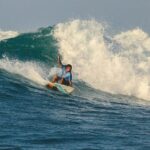
Is We Surf Bali a good fit for you?
I’d book this if you are a capable swimmer, curious about surfing, and happy to put in some effort for the chance to catch a wave. It’s especially well suited to first-timers, couples, friends, and families with participants aged 10 or older who meet the activity requirements. Wayan and Yanto are names worth asking for, though a specific instructor is not guaranteed.
I’d skip it if you cannot swim, need a low-effort activity, or require a highly predictable schedule. Tide and weather shape the timing, and paddling can be tiring. If those limits work for you, this is a practical way to test surfing at Batu Bolong with equipment and instruction included, without needing to arrange a board or figure out the first steps on your own.
Surfing Lesson in Canggu by We Surf Bali
“Canggu was the final stop on our honeymoon in Bali, and it was by far the most fun and enjoyable part of the whole trip! Before starting, I felt a…”
FAQ
How long is the surfing lesson?
The lesson lasts two hours. The amount of time spent on shore and in the water can vary with the conditions and the class.
Where does the class meet?
The lesson is held at Batu Bolong Beach in Canggu. Warung Alody Canggu is provided as a nearby meeting reference.
What time do the classes run?
Classes are scheduled between 7 a.m. and 5 p.m., depending on the tides. The operator confirms your activity time in advance.
Is the lesson suitable for beginners?
Yes. The class covers safety and basic techniques, including board positioning, paddling, the pop-up, stance, and riding a wave.
Can I take part if I cannot swim?
No. The activity is stated to be unsuitable for non-swimmers.
What should I bring?
Bring swimwear, a towel, and sunscreen or sunblock. A surfboard, rash guard or Lycra, and bottled drinking water are included.
Are surf photos included in the price?
No. Photos are not included. A separate photographer and photo package may be available for an additional charge.