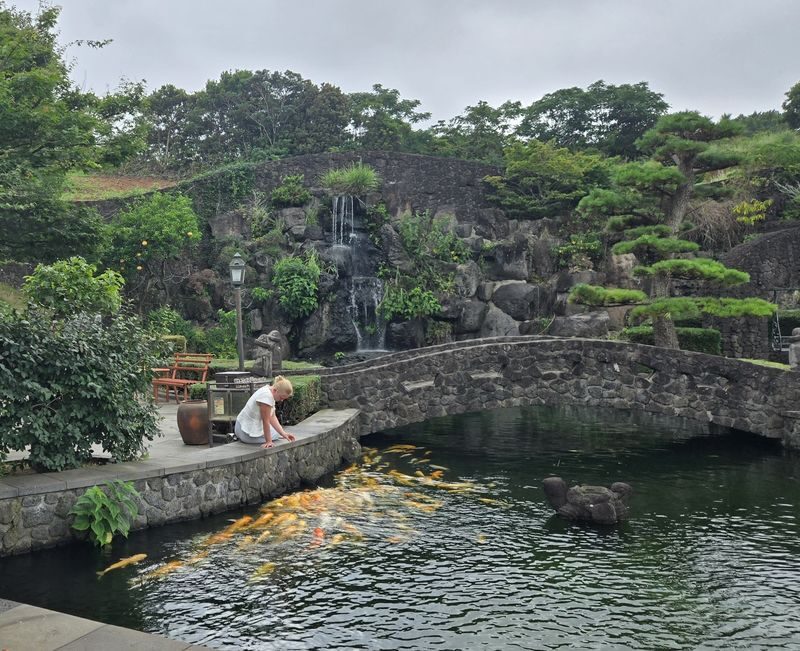
Spirited Garden is a place to look closely, then slow down. Bonsai trees, volcanic stone walls, small waterfalls and koi ponds turn a garden walk into a quieter kind of Jeju outing, with signs about the garden’s history and reflections on life along the way. The garden grew from one person’s work over more than sixty years.
I like two things in particular: the contrast between carefully shaped bonsai and rugged volcanic stone, and the chance to sit beside the koi ponds instead of rushing through. A ticket starts at $9.05 and admission is simple, so you can spend your time wandering rather than following a set tour.
The main drawback is the location. Spirited Garden is outside Jeju City, and getting there by public bus can take patience, so it is much easier to fit into a day when you have your own transport.
- What makes Spirited Garden worth your time
- A garden shaped over sixty years
- Following the path through bonsai and stone
- The signs, benches and moments between stops
- How long to stay, and what the ticket covers
- Getting there and planning the day
- Food and facilities inside the garden
- Who will enjoy Spirited Garden most
- Should you book the Spirited Garden ticket?
- FAQ
- How long should I allow for Spirited Garden?
- What are the opening hours?
- What does the ticket include?
- Where is Spirited Garden?
- Can I take photos in the garden?
- Can I leave and come back in?
- Do young children need a ticket?
- The Best Of Jeju!
- More Tickets in Jeju
- More Tours in Jeju
- More Tour Reviews in Jeju
- Not for you? Here's more nearby things to do in Jeju we have reviewed
What makes Spirited Garden worth your time
 1 / 2
 2 / 2
- Bonsai with a personal story: The garden is the life’s work of one person who spent more than sixty years tending it.
- Volcanic stone, water and trees: Stone walls, waterfalls, bonsai and koi ponds give the walk a distinctive Jeju character.
- A slow, self-guided visit: There is no fixed route or required pace. Most people can walk around in about an hour, but benches invite you to stay.
- Reflective signs along the way: Plaques share history, poetry and thoughts about life, adding context to the planting.
- A peaceful break with useful facilities: You’ll find restrooms, a shop, a cafe and a restaurant on site.
- A transport consideration: Public transport from Jeju City may take a long time, and a bus from a junction can be infrequent later in the day.
👉 See our pick of the 4 Best 3 Day Tours In Jeju
A garden shaped over sixty years
Spirited Garden’s central appeal is not sheer size or a long list of attractions. It is the care visible in each part of the garden, from the bonsai to the stonework and water features. The place grew through more than sixty years of one person’s steady work, so the experience is as much about patience as it is about plants.
That story gives the garden a personal quality. You are not simply looking at a set of landscaped displays; you are walking through a place shaped over a lifetime. The garden’s reflective signs reinforce that idea, but they do not prescribe what you should think. They offer prompts, and you can take them as seriously or lightly as you like.
I’d approach this as a slow visit, not a checklist. If you want a grand botanical collection or constant activity, the garden may feel small. If you enjoy noticing how plants, rocks and water are arranged, an hour here can feel well spent.
You can also read our reviews of more tours and experiences in Jeju


Following the path through bonsai and stone
The visit is self-guided, so you can move at your own pace and spend longer wherever something catches your eye. There is no detailed route or timed program to follow. Allow around an hour for a walk through the garden, with extra time if you want to sit, read the signs or stop for food and a drink.
The bonsai are the natural focus. These carefully tended trees reward a close look, especially if you are curious about how a small, shaped tree can carry the character of an older one. Some signs also explain the garden’s history and the practice of bunjae, the Korean term used for bonsai. If you have little interest in bonsai, this part of the visit may not hold you for long.
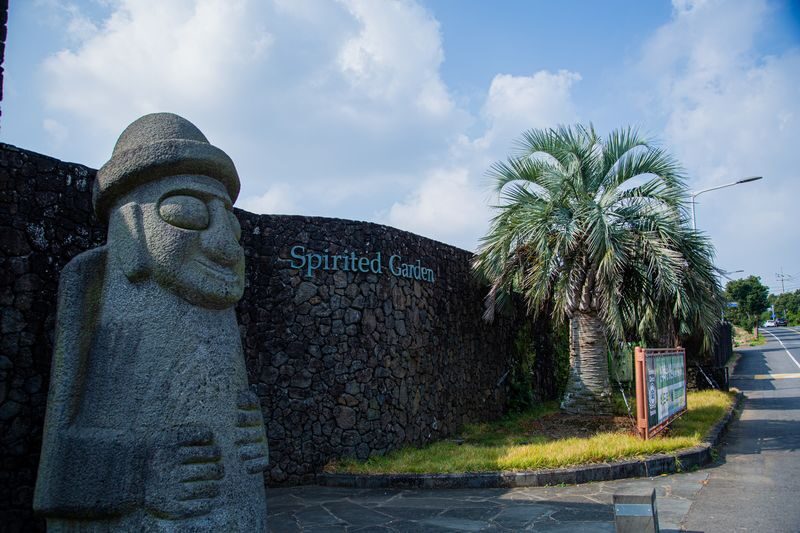
The volcanic stone walls bring a strong local note to the garden. Jeju is known for its volcanic terrain, and here the dark stone creates a striking contrast with the trees and water. Rather than a broad view, the pleasure is in the details: how a wall frames a path, how a plant sits against stone, and how a waterfall changes the feel of a corner.
Small waterfalls and ponds add movement and sound to the walk. The koi pond is a natural pause point, and fish food is available at self-service stations, according to visitors who have used them. That can be a simple, entertaining stop for children, though it is not the main reason to visit.
The signs, benches and moments between stops
The garden’s signs give the walk more depth than a series of pretty views. They share bits of history, poetry and reflections, including references to the effort behind the garden’s creation. Read a few as you go, and the place begins to feel less like a display and more like a record of someone’s long commitment.
You do not need to read every plaque. If you are on a tight schedule, pick the ones that catch your eye and keep moving. If you have time, the signs can make the visit more rewarding, especially if you like learning how a place came to be rather than simply photographing it.
Benches are another important part of the experience. They give you permission to stop, which is useful in a garden whose main pleasure is its calm pace. You can sit near a pond or take a break between sections rather than treating the visit as a quick loop.
The atmosphere will depend in part on how busy the garden is. On a quieter afternoon, you may hear mostly nature and have room to pause without feeling hurried. The garden’s appeal is less about dramatic spectacle than about having space to pay attention.
How long to stay, and what the ticket covers
Plan on roughly one hour for a straightforward walk. The overall visit can take one to two hours if you stop often, read the signs, feed the koi or take a break at the cafe or restaurant. The closing time is 6 p.m., with last admission one hour earlier, so arrive by 5 p.m. at the latest.
Admission includes entry to the attractions in the garden. Personal expenses, such as food and purchases from the shop, are not included. The ticket is valid only on the date selected when booking, so check your plans before choosing a date.
At a starting price of $9.05, the ticket can be good value if you appreciate bonsai, peaceful gardens and a chance to pause during a busy Jeju itinerary. It is less compelling if you expect a large site packed with varied attractions. One visitor found it small and not worth the effort without a car, while others valued its calm, careful design. Both reactions make sense: the garden’s value depends on what you want from a visit.
Getting there and planning the day
Spirited Garden is at 675 Nokchabunjae-ro in Hangyeong-myeon, Jeju-do. It is outside Jeju City, and transport deserves a little thought before you book. One visitor described a long return by bus, including a missed connection and an infrequent service from a junction in the afternoon. That is a good reason not to assume the journey will be quick or convenient.
If you have your own transport, the garden can work as a calm stop in a day exploring Jeju. If you are relying on buses, check the route and return times carefully before setting out. The garden itself may take about an hour, but the journey can take much longer.
Opening hours are 9 a.m. to 6 p.m. every day, with last admission at 5 p.m. There is no re-entry after you leave, so plan your cafe or restaurant break before exiting. Staff can assist visitors who need disability support, and anyone using a wheelchair or mobility equipment should be accompanied. A visitor also reported complimentary stroller and umbrella rentals, but it is sensible to confirm availability on the day.
Photography for personal use is allowed. Commercial photography and video, as well as live broadcasting, are prohibited. Children aged 0 to 2 can enter free as long as they do not need a separate seat.




Food and facilities inside the garden
A cafe, restaurant, shop and restrooms are available on site, which makes it easier to take the visit at a relaxed pace. The cafe is a practical place to pause, and one visitor recommended going up to the third floor for a drink. Treat that as a tip, not a promise of a particular view or experience, since details can change.
The restaurant may appeal if you want to make the garden a longer stop. One visitor praised the food, while another described an uncomfortable interaction with a restaurant staff member. That single account does not define the whole visit, but it is a reminder to keep expectations flexible and to see the restaurant as an option rather than a reason to buy admission.
If you are mainly coming for the garden, you can enjoy the walk without purchasing anything else. The ticket is for admission, and food and personal expenses are separate.
Who will enjoy Spirited Garden most
This is a good fit if you like bonsai, thoughtful garden design and quiet outdoor places. It also suits anyone who wants a slower counterpoint to a full day of sightseeing. Families may find the koi pond a fun stop, and benches make it easier to pause rather than push through the whole walk.
It may not suit you if you want a large attraction with a full schedule or lots of variety beyond plants and garden features. One visitor found little to see without a strong interest in bonsai. That is fair advice: the garden is deliberately focused, and its quieter mood is part of the point.
I would also think carefully about transport. A peaceful hour in the garden can lose its appeal if you spend much of the day waiting on buses. With your own transport, or a well-checked route and timetable, the visit is much easier to recommend.
Should you book the Spirited Garden ticket?
Book it if you enjoy bonsai, koi ponds and an unhurried walk through a garden shaped by decades of personal work. The stone walls, waterfalls, reflective signs and places to sit give you more to notice than a quick photo stop, while the ticket price is modest for a relaxed hour or two.
Skip it if you dislike gardens or need a high-energy attraction to justify a long journey. Before booking, check how you will get there and back, and leave enough time to arrive before last admission. If that practical side works, Spirited Garden offers a calm, distinctive pause in Jeju.
Spirited Garden Ticket in Jeju
“Underrated garden, it's well maintained, quiet and breathtaking. One person is taking care of this whole garden. I highly reccomend this place. pri…”
FAQ
How long should I allow for Spirited Garden?
The visit generally takes about one hour, though the activity duration is listed as one to two hours. You can stay longer to read the signs, sit on a bench or visit the cafe or restaurant.
What are the opening hours?
The garden is open daily from 9 a.m. to 6 p.m. Last admission is one hour before closing, at 5 p.m.
What does the ticket include?
The ticket includes admission to the attractions. Food, shopping and other personal expenses are not included.
Where is Spirited Garden?
It is at 675 Nokchabunjae-ro, Hangyeong-myeon, Jeju-do, in Jeju City, Jeju, South Korea.
Can I take photos in the garden?
Personal photography is allowed. Commercial photos and videos, along with live broadcasting, are prohibited.
Can I leave and come back in?
No. Re-entry is not allowed after you leave the venue.
Do young children need a ticket?
Children aged 0 to 2 can enter free if they do not occupy a separate seat.