The Louvre holds more art than any two-hour visit can cover, so this tour makes a practical choice: focus on a few famous works, learn what you’re looking at, then return to the rooms that catch your eye. You’ll hear how a medieval fortress became a royal palace and, eventually, one of the world’s best-known museums.
I like two things here: skip-the-line admission can save time at the ticket entrance, and a guide gives context to works that can otherwise feel like famous names in a very large building. The small-group format also leaves more room for questions and conversation.
The main drawback is the price, especially if you want only entry and plan to explore alone. Skip-the-line access does not remove security screening, and queues can still form there during busy periods.
- Key points to know before you book
- A two-hour plan for a museum that can swallow a day
- What skip-the-line entry does, and does not, do
- The Louvre’s layers, from fortress to palace to museum
- The famous works, and the trade-off of seeing them fast
- A small group can make the art easier to follow
- Your time after the guided visit
- Is the starting price worth it?
- Who should book this Louvre tour?
- FAQ
- How long is the guided tour?
- What time can I start?
- Where is the meeting point?
- How early should I arrive?
- Does skip-the-line access mean there will be no waiting?
- Which artworks are included in the highlights tour?
- Can I stay in the Louvre after the tour?
- What is included in the price?
- Are children included in the booking headcount?
- Is the tour wheelchair- or stroller-accessible?
- The Best Of Paris!
- More Guided Tours in Paris
- More Tours in Paris
- More Tour Reviews in Paris
- Not for you? Here's more nearby things to do in Paris we have reviewed
Key points to know before you book
 1 / 6
 2 / 6
 3 / 6
 4 / 6
 5 / 6
 6 / 6
- The tour lasts two hours: It covers selected Louvre highlights, not the whole museum.
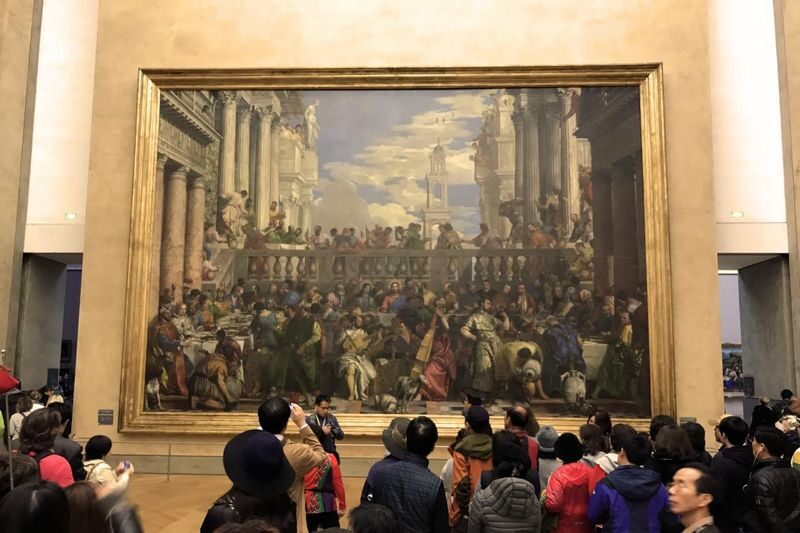
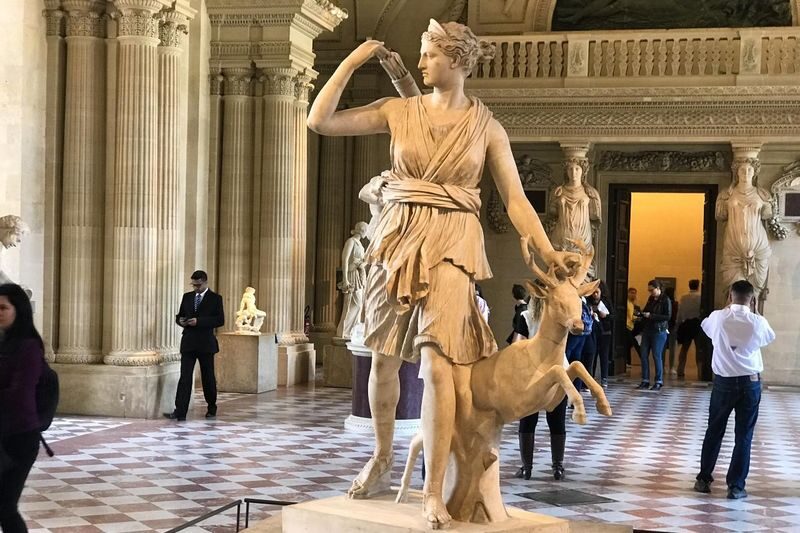
- The guide focuses on major works: Expect the Mona Lisa, Venus de Milo, and Winged Victory of Samothrace, along with art by David, Géricault, and Delacroix.
- You can stay after the tour: Use the guided visit to get oriented, then revisit favorite rooms or keep exploring independently.
- Meet at Librairie Delamain: The meeting point is 155 Rue Saint-Honoré. Arrive 10 minutes before your selected start.
- The ticket queue is not the only queue: Security screening may still take time, especially in peak season.
- The price buys more than admission: You are paying for an English-speaking guide and a planned highlights visit, not just a museum ticket.

👉 See our pick of the 25 Best Shopping Tours In Paris
A two-hour plan for a museum that can swallow a day
The Louvre has more than 35,000 works on display, so a two-hour guided visit is necessarily selective. That limitation can be useful. Instead of spending your first hour trying to work out where to go, you follow a guide toward a handful of major sights and hear stories that help make them memorable.
The tour begins at Librairie Delamain, at 155 Rue Saint-Honoré in central Paris. Available departure times are 9:15 a.m. and 2:15 p.m., though the time you can choose depends on the option offered when you book. The meeting address is specific, but the area can be crowded. I’d use the bookstore name and full street address to find the right spot, and arrive the requested 10 minutes early.
Your exact route through the museum is not specified, and the schedule can change. Expect the guide to shape the visit around the museum’s major works and the group’s progress, rather than follow a promise to see every famous room. That flexibility matters in a museum where crowds and walking distances can affect how much you cover.
You can also read our reviews of more guided tours in Paris


What skip-the-line entry does, and does not, do
The ticket includes skip-the-line admission to the Louvre. That can spare you the regular ticket-entry queue, which is valuable when your visit is short and you want to spend your time with the collection rather than waiting outside.
It is not a guarantee of walking straight through every checkpoint. Security screening may still mean a wait, particularly during peak season. One visitor reported a long delay despite having the skip-the-line option, so I would treat the benefit as reduced ticket-entry waiting, not a promise that all queues disappear.
This distinction is worth keeping in mind when comparing the tour with a standard admission ticket. If your priority is simply getting inside, check the current cost and conditions of ordinary entry before paying extra. If you want a guide to help you find key works and explain their context, the added service may be worth more to you than the time saved alone.
The Louvre’s layers, from fortress to palace to museum
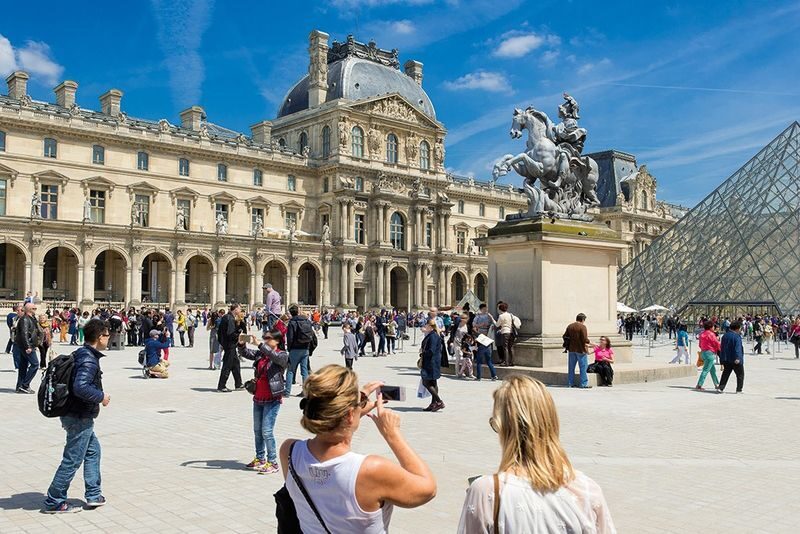
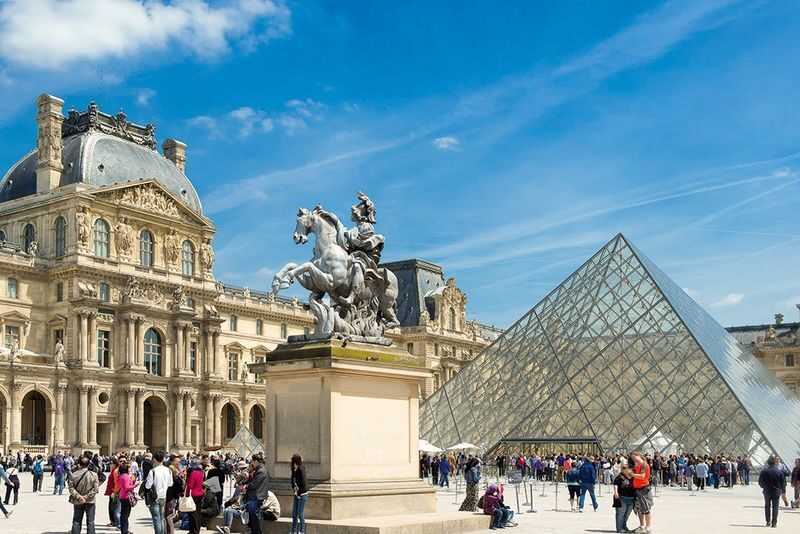
The Louvre is not just a gallery full of paintings. Its story runs from a medieval fortress to a royal residence and then to a public museum, with major changes across more than six centuries. A guide can connect the building’s architecture to the power and wealth it once represented for French monarchs.
That context gives the visit a useful frame. You are not only moving between artworks; you are also crossing through a building shaped by changing rulers, tastes, and ideas about art. The glass pyramid offers a striking modern counterpoint to the older palace around it, and it gives you a clear landmark before the visit moves indoors.
The tour’s emphasis on history is especially helpful if this is your first visit. The Louvre can feel like a city of galleries, and a bit of explanation helps you understand why its rooms and collection are so varied. You will not get a full account of every period or wing in two hours, but you should leave with a stronger sense of how the museum came to be.
The famous works, and the trade-off of seeing them fast
The Mona Lisa is a major stop, alongside the Venus de Milo and Winged Victory of Samothrace. These are among the works most people hope to see, and having a guide steer you toward them can make the visit more direct than wandering on your own.
Famous works also draw crowds. The Mona Lisa may be the main event for you, but it is only one part of a very large collection. A guide can give you a reason to look beyond the first famous face you came to see, and can help set the work in a wider context.
The tour also includes works by Jacques-Louis David, Théodore Géricault, and Eugène Delacroix. The supplied details do not promise particular paintings by these artists, so think of them as part of the artistic range rather than a guaranteed checklist of specific canvases. If one artist or work matters especially to you, ask your guide whether it fits the day’s route.
There is a clear trade-off: you gain orientation and commentary, but you will move at a group pace and cannot stop for long at every object. One visitor felt the visit was rushed and covered too few works. That is a fair concern for anyone hoping to study the collection in depth. I would book this as an introduction, not as a substitute for spending a longer stretch inside the museum.
A small group can make the art easier to follow
The tour is described as a small-group experience, though no exact maximum group size is given. That format can make it easier to ask questions and hear the guide than a large tour, but it does not mean you will have each gallery to yourself. The Louvre is a major attraction, and its most famous rooms can be busy.
The strongest part of this format is the human explanation. A good guide can turn a short stop into a useful one by explaining what to notice and why a work matters. Several visitors valued guides who were friendly, careful, and clear, and some especially liked being able to discuss the art in a smaller group.
The guide is English-speaking. No individual guide is named in advance, so you should not expect a specific person. Audio equipment is not listed as an included feature. If your guide uses any equipment and you cannot hear clearly, speak up early rather than letting the problem follow you from room to room.
You can also read our reviews of more museum experiences in Paris




Your time after the guided visit
The guided portion lasts two hours, but you are free to stay at the museum afterward. That is one of the tour’s most useful features. You can use the guide’s route as a starting point, return to a favorite work, or seek out rooms that were not part of the highlights visit.
The stated return point is also Librairie Delamain, with return times shown as 11:15 a.m. or 4:15 p.m., depending on the departure selected. Since you may remain inside the museum, clarify the practical end-of-tour arrangements with your guide before separating from the group. The key point is that your museum visit does not have to end when the guided portion does.
For a first visit, I’d leave some energy for this independent time. Two hours of guided sightseeing can be a lot of walking and listening. A slower second pass lets you spend time where your own curiosity leads, rather than trying to keep pace with a fixed route.
Is the starting price worth it?
The tour is advertised from $175.75, while a join-in option is also shown from $152.80. Prices and available packages can vary, so confirm the exact option and total cost before you book. At either starting price, this is a substantial premium over buying admission alone.
The value depends on what you need. If you are pressed for time, want an English-speaking guide, and would rather have someone lead you to major works than navigate the Louvre yourself, the added cost may make sense. The tour combines entry, a planned two-hour route, and interpretation, then leaves you free to continue on your own.
If you already know the museum well, prefer to linger over a few works, or are comfortable planning your own route, a standard ticket may suit you better. You may see fewer highlights with a guide than you could reach in a full day, but you also avoid spending the opening stretch of your visit finding your bearings.
The available feedback is mixed, with an overall score of 3.9 out of 5 from seven ratings for this tour option. Praise centers on friendly, detailed guides and an efficient way to see the major sights. The concerns are practical ones: high cost, a tour that felt shorter or more rushed than expected, a long wait at entry, and difficulty finding the meeting group. The small number of ratings makes that score a limited guide, but the complaints are worth factoring into your decision.
Who should book this Louvre tour?
I’d consider it if this is your first Louvre visit, you have limited time in Paris, and you value a guide’s explanations as much as the artworks themselves. It should also suit you if the Mona Lisa and other major highlights are priorities, but you still want a chance to explore independently afterward.
I would think twice if your main goal is to spend several hours studying the collection at your own pace, or if the price premium feels hard to justify. The tour is an introduction, not a full museum visit. Go in expecting a focused route, possible security delays, and a lively museum rather than quiet time alone with the art.
Arrive early, confirm your chosen departure time, and keep your expectations realistic: this is a shortcut to the Louvre’s best-known works and their stories, not a way to see all 35,000 pieces. If that matches your plan, the combination of guided context and free time afterward can be a sensible way to spend a short visit.
Skip-the-line Louvre Museum Small Group Guided Tour
“A really great tour if you're pressed for time. You get to see the highlights of the Louvre and at the same time learn about its history.”
FAQ
How long is the guided tour?
The guided tour lasts two hours and focuses on selected Louvre highlights.
What time can I start?
The listed departure times are 9:15 a.m. and 2:15 p.m. Available options can vary, so choose the time shown for your booking.
Where is the meeting point?
Meet at Librairie Delamain, 155 Rue Saint-Honoré, 75001 Paris.
How early should I arrive?
Arrive 10 minutes before your selected departure time.
Does skip-the-line access mean there will be no waiting?
No. Skip-the-line admission reduces waiting for standard entry, but security screening can still involve a queue, especially in peak season.
Which artworks are included in the highlights tour?
The guide covers the Mona Lisa, Venus de Milo, and Winged Victory of Samothrace, along with works by David, Géricault, and Delacroix.
Can I stay in the Louvre after the tour?
Yes. You are free to remain in the museum after the guided tour and explore on your own.
What is included in the price?
The tour includes skip-the-line Louvre admission, an English-speaking guide, and a two-hour highlights tour.
Are children included in the booking headcount?
Yes. Infants and children must be included in the passenger headcount.
Is the tour wheelchair- or stroller-accessible?
No. The activity is not wheelchair-accessible or stroller-accessible.