The Paris Museum Pass can turn a museum-heavy visit into a simple plan: one pass covers more than 50 museums and monuments, from the Louvre to Versailles. I like two things in particular: you can skip the ticket-buying line at many sites, and the range includes smaller places such as the Musée de Cluny and the Paris Sewers Museum, not just the famous names.
The catch is that the pass does not guarantee entry at your preferred time. Popular museums may require a separate reservation, and some fill up well ahead. I’d settle those bookings before activating the pass, then check the selected package carefully: some options are e-tickets, while others require a physical pass pickup.
- The details that matter before you buy
- A single pass, but not a single queue
- What the pass covers, from the Louvre to smaller museums
- The Louvre and Orsay: plan for art, not a sprint
- Versailles and the Arc: a long day with a grand finish
- Four days gives the pass room to breathe
- Is the 9.29 starting price good value?
- Small planning habits that prevent big frustrations
- Should you book the Paris Museum Pass?
- FAQ
- What attractions are included with the Paris Museum Pass?
- Do I need to reserve a time slot?
- Does the pass let me skip every line?
- How long is the two-day pass valid?
- Do I need to pick up a physical pass?
- Are children admitted free?
- Which days are the main museums closed?
- The Best Of Paris!
- More Museum Experiences in Paris
- More Tours in Paris
- More Tour Reviews in Paris
- Not for you? Here's more nearby things to do in Paris we have reviewed
The details that matter before you buy
 1 / 9
 2 / 9
 3 / 9
 4 / 9
 5 / 9
 6 / 9
 7 / 9
 8 / 9
 9 / 9
- More than 50 sites, with one entry per site: The pass covers major museums and monuments, including the Louvre, Musée d’Orsay, Versailles, the Arc de Triomphe, Sainte-Chapelle, and the Panthéon. You cannot use it for repeat visits to the same attraction.
- Choose two, four, or six days: The right length depends less on how long you are in Paris than on how many included sites you genuinely want to see.
- Timed reservations still matter: Check each attraction’s current rules. The Louvre, Versailles, Orangerie, and other popular sites may require a free, timed reservation in addition to the pass.
- The clock starts at activation: A two-day pass expires at the same time two days after activation. Activate at 1 p.m. and you will have until 1 p.m. on the final day, not until midnight.
- Watch the weekly closures: The Louvre closes Tuesday. Musée d’Orsay, the Orangerie, and Versailles close Monday. Build your route around those days.
- Compare ticket format and price: The listed starting price is $129.29, but options and prices vary. Confirm whether your chosen pass is an e-ticket or needs pickup before you pay.

👉 See our pick of the 25 Best Shopping Tours In Paris
A single pass, but not a single queue
The big convenience is straightforward: instead of buying an admission ticket at each museum, you present your pass at the entrance. That can save time and make it easier to add a smaller museum to your day without another purchase decision. Many sites accept mobile access, and some pass holders report scanning a QR code or barcode at the door.
Still, skip-the-line should be read carefully. The pass can help you bypass the regular ticket-purchase line at many attractions, but it is not a magic key past every queue. You may still face security checks, entry controls, or a wait for a timed slot. At popular places, your pass is only useful for a particular date and time if you have secured the required reservation.
There is also a practical wrinkle with the ticket format. The available packages include both e-ticket and physical-pass options. The redemption instructions for some versions say to exchange your mobile voucher at the Big Bus Information Centre, 11 Avenue de l’Opéra, near Pyramides station. Other e-ticket options may let you use a QR code directly. Read the instructions for the exact package you select, rather than assuming every pass works the same way.
If pickup is required, include it in your first-day plan. The stated redemption point is close to Pyramides metro station, served by lines 7 and 14. A small errand can become a nuisance if you expect to head straight to a museum on arrival.
You can also read our reviews of more museum experiences in Paris


What the pass covers, from the Louvre to smaller museums
The major names make the pass easy to understand, but the smaller sites are part of its appeal. Alongside the Louvre, Musée d’Orsay, Versailles, and Arc de Triomphe, the listed options include Sainte-Chapelle, the Conciergerie, Musée Rodin, Musée de Cluny, the Panthéon, Les Invalides, and the Musée de l’Orangerie.
The selection also reaches beyond traditional art museums. You might visit the Musée des Égouts de Paris, the Paris Sewers Museum, or the Cité des Sciences et de l’Industrie. The Musée du Quai Branly, the Musée National de la Marine, and the Musée des Arts et Métiers offer other ways to shape a day around your interests. Check the official pass site for the current full list, since not every attraction is named in the short package description.
Each included attraction is generally a one-time visit. That suits a trip built around variety, but less so if you like to return to the Louvre after a rest or revisit a favorite collection. The pass is a sampler, not an open-door membership.
The FAQ information also names Notre-Dame among the attractions, while the detailed list supplied for this pass does not spell out which parts are included. Since access can differ by site and may involve separate reservations, verify the exact Notre-Dame attraction on the current official list before building your day around it.
The Louvre and Orsay: plan for art, not a sprint
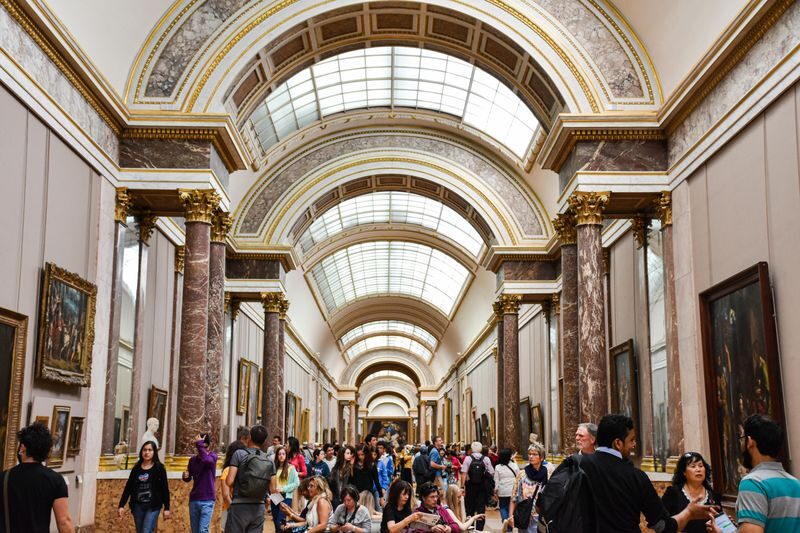
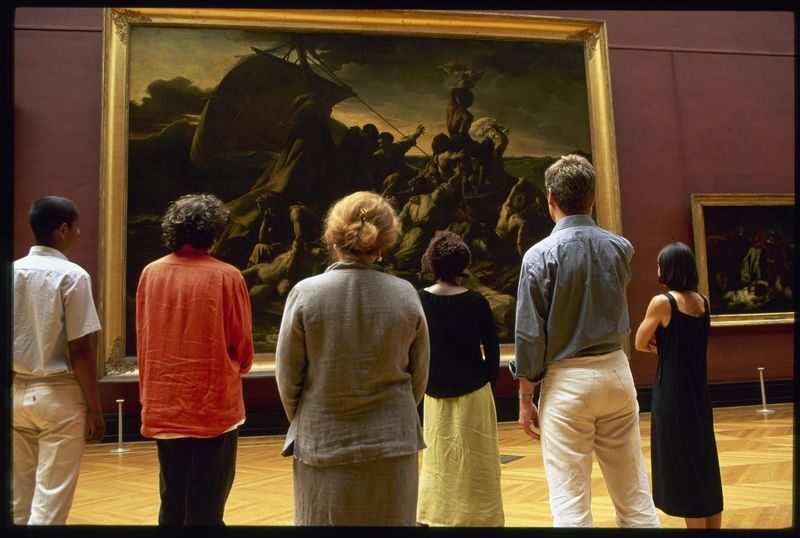
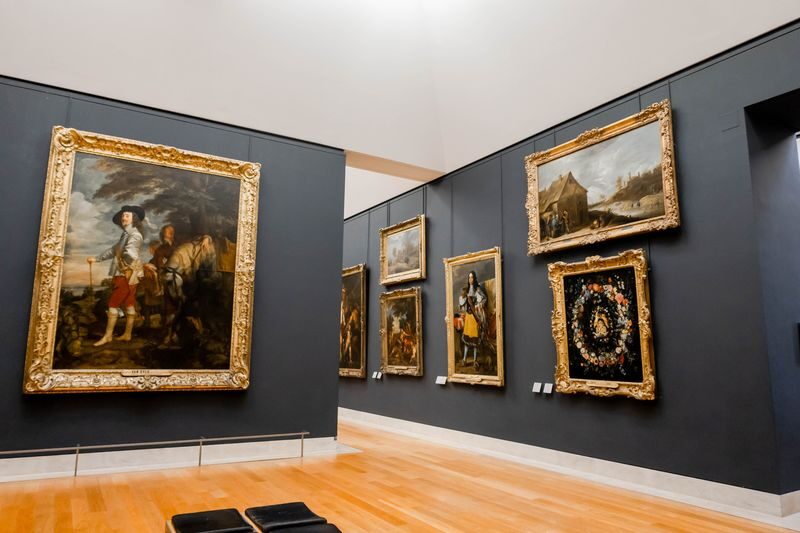
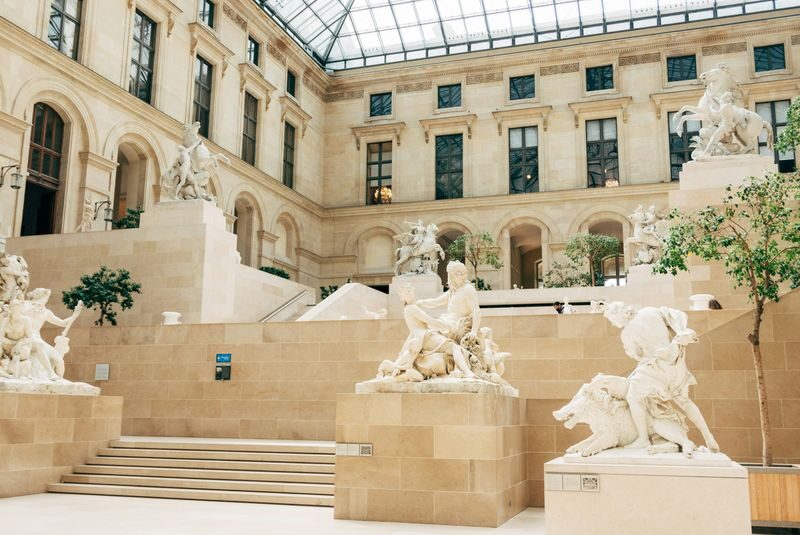
The Louvre is a full-scale undertaking, even with a pass. Its collections range from medieval Western art to works from 1848, as well as Egyptian and Greek antiquities. A pass can ease the ticket-buying step, but it cannot make the museum small. Decide in advance which sections matter most, and reserve an entry time if required.
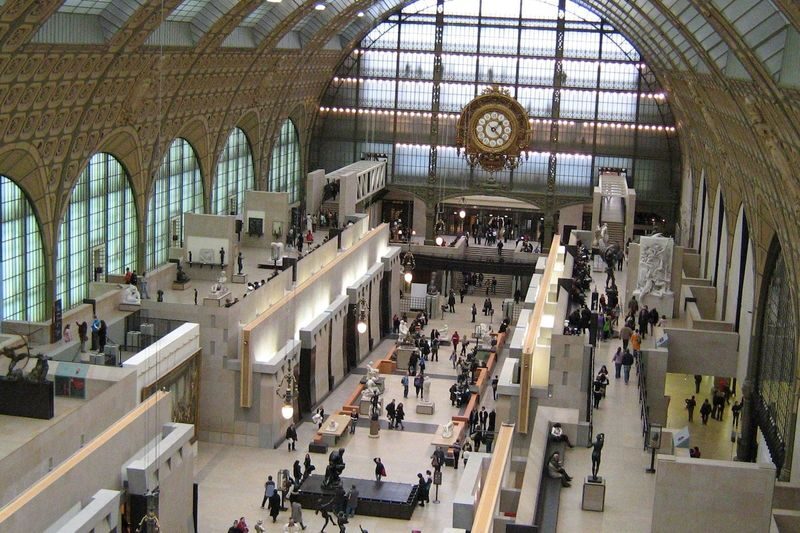
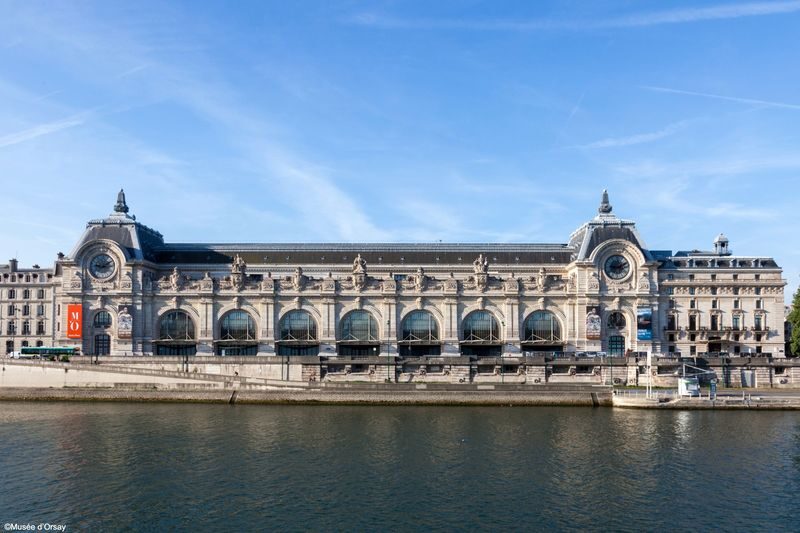
Pairing the Louvre with Musée d’Orsay on the same day is possible, but it makes for a demanding schedule. Orsay is known for its extensive Impressionist and post-Impressionist collection, housed in a former railway station. It rewards time of its own, especially if you want more than a quick walk through the galleries.
For a two-day pass, the suggested first day combines the Louvre in the morning with Orsay in the afternoon. Treat that as an ambitious outline, not a promise that you will have time to see both thoroughly. If you prefer a slower pace, pick one major museum and add a smaller nearby site, or consider a longer pass.
Both museums may require timed reservations. Check availability before activating your pass, and do not rely on arriving at the door and hoping for a slot. The same advice applies to the Orangerie, another popular stop with a compact visit that can fit well into a day focused on art.
Versailles and the Arc: a long day with a grand finish
Versailles is the most ambitious outing in the suggested two-day plan. The palace’s rooms are tied to the lives of Louis XIV, Louis XV, Louis XVI, and Marie Antoinette, and the scale is part of the experience. Allow a substantial part of the day for the visit and check what your pass covers, along with current reservation requirements, before setting out.
The itinerary proposes returning to Paris later in the day for the Arc de Triomphe, perhaps around 4 or 5 p.m. That can work if you have planned the timing carefully, but it leaves little slack for delays or a long palace visit. I’d avoid treating both stops as fixed appointments unless you have confirmed the entry times and are comfortable moving at a brisk pace.
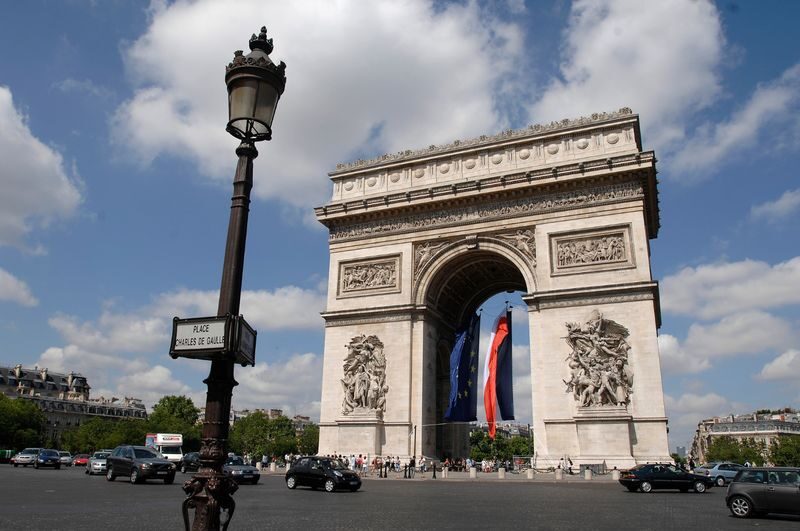
At the Arc, you can see the names of victories and generals engraved on the monument, which honors soldiers of the French Revolution and Napoleonic Wars. It offers a useful contrast to the palace: Versailles shows royal power in its rooms, while the Arc commemorates military history in the heart of the city.
Four days gives the pass room to breathe
For many visitors, the four-day option is the more comfortable choice. A sample plan spreads the major sights out: Louvre and Orangerie on day one, Versailles on day two, Les Invalides with the Musée Rodin and Orsay on day three, then the Panthéon, Sainte-Chapelle, and Arc de Triomphe on day four.
That is still a busy itinerary. Les Invalides includes the Army Museum and Napoleon’s tomb, while Rodin offers sculpture and art in a different setting from the large national museums. Sainte-Chapelle and the Conciergerie can be paired, and together they make a compact visit compared with a major museum. But every extra stop takes time to reach, enter, and appreciate.
The four-day format is valuable because it lets you spread out the headline museums instead of trying to pack them into two days. You can also use the pass to add a site that was not on your original list, provided it is open and you have any required reservation. That flexibility is one of the pass’s real advantages. Just remember that an appealing last-minute idea may not be possible if timed tickets have sold out.
A six-day pass is best for a slower museum schedule or for adding a day trip. Fontainebleau is suggested as a half-day outing, though you should check the current pass coverage and practical travel details before committing. The longer pass is not automatically better value: it pays off only if you use enough of its included admissions.




Is the $129.29 starting price good value?
The listed price starts at $129.29, but the exact cost depends on the duration and ticket format you choose. To judge value, compare the pass price with the individual admission fees for the sites you will actually visit. A rough planning target is five or six attractions during the pass period, including major sites such as the Louvre or Orsay. That is a useful benchmark, not a guarantee that every itinerary saves money.
Your plans matter more than the number of attractions in the brochure. If you visit several full-price museums and monuments in a few consecutive days, the pass can make financial sense and reduce the repeated business of buying tickets. If you only want two or three sites, or prefer long, unhurried visits, individual tickets may cost less.
Free admission rules can change the calculation. Children aged 0 to 18, and European citizens aged 0 to 26, have free access to most included museums and monuments. Disabled visitors can also enter most national museums and monuments free of charge, though the details should be confirmed with each attraction. Many museums also offer free admission on the first Sunday of the month. If any of these apply to you, compare the savings before buying a pass.
The pass has no value for an attraction you cannot book. Reservations may be required even when admission is included, and popular slots can be gone one to three weeks ahead. Check availability first, especially if your Paris dates are fixed. Then do the arithmetic using the actual admission fees and your realistic schedule, not an idealized plan to visit every major museum in town.
Small planning habits that prevent big frustrations
Start with opening days. The Louvre is closed Tuesday; Orsay, the Orangerie, and Versailles are closed Monday. Opening hours and holiday schedules vary, so check each site shortly before your visit. Strikes, heat, or other disruptions can affect access, too. A pass does not override a closure.
Next, make reservations for any site that requires one. Some attractions offer a zero-euro reservation for pass holders, but that still means selecting a time on the museum’s official website. Keep both the reservation confirmation and pass accessible on your phone. A printed copy can be a sensible backup if you prefer not to depend on a download or mobile connection.
Finally, leave breathing room. The pass can tempt you to race from one admission to the next because each visit feels prepaid. But the Louvre, Versailles, and Orsay are not quick errands. A good day might mean one major museum and one smaller stop, rather than three headline attractions and a frantic cross-city dash.
Should you book the Paris Museum Pass?
Book it if you have a clear list of several included museums and monuments, can reserve the popular sites you want, and are happy to visit them within a concentrated two-, four-, or six-day stretch. The convenience is real, and the range makes it easier to mix the Louvre and Versailles with places such as Cluny, Rodin, or the Sewers Museum.
Skip it, or compare individual tickets first, if your schedule is loose, you only want a few attractions, or free admission applies to you. Most important, confirm your reservations and ticket format before paying. With those details settled, the pass can be a practical way to spend less time buying tickets and more time looking at Paris.
Paris Museum Pass
“Remember to check carefully whether you are purchasing a physical ticket or an e-ticket.”
FAQ
What attractions are included with the Paris Museum Pass?
The pass covers more than 50 museums and monuments. Named sites include the Louvre, Musée d’Orsay, Palace of Versailles, Arc de Triomphe, Sainte-Chapelle, the Panthéon, Les Invalides, Musée Rodin, and Musée de Cluny. Check the official pass list for current coverage.
Do I need to reserve a time slot?
Some attractions require advance reservations, even when you hold a pass. Check the current reservation requirements for each site you plan to visit and book any required time slots through the relevant official website.
Does the pass let me skip every line?
No. It can let you enter many sites without buying a ticket at the door, but timed reservations may still be required. Security checks and other entry procedures can also involve waiting.
How long is the two-day pass valid?
It is valid for two days from activation and expires at the same time of day on the final day. For example, if activated at 1 p.m., it expires at 1 p.m. two days later.
Do I need to pick up a physical pass?
That depends on the package you choose. Some options are listed as e-tickets, while the redemption instructions for some versions require exchanging the voucher for a physical pass at the Big Bus Information Centre, 11 Avenue de l’Opéra. Check the exact package details before booking.
Are children admitted free?
Children aged 0 to 18, and European citizens aged 0 to 26, are allowed free access to most included museums and monuments. Check each attraction’s rules before you go.
Which days are the main museums closed?
The Louvre closes on Tuesdays. Musée d’Orsay, the Orangerie, and Versailles close on Mondays. Opening hours and closure dates can vary, so confirm the schedule for each site before your visit.