Sachsenhausen is a place where history becomes physical: you follow the route from Berlin toward Oranienburg, then walk through a former concentration camp and its memorial. The six-hour visit gives you a guided framework for understanding the site, rather than leaving you to piece together its painful history alone.
I like two things in particular: the small group, capped at 15, makes it easier to hear the guide and ask questions, and the visit includes the Jewish Barracks and Camp Prison, two spaces that bring the human story into sharper focus. Guides such as Rebecca, Sarah and Lewis have led tours here, though you cannot choose who will guide your departure.
One practical drawback is that your ABC transit ticket is not included. You travel by public transport, and the day involves plenty of walking, with no food or drink for sale at the memorial. Pack accordingly, and allow for possible train delays.
At a glance
- A six-hour history visit: Depart at 10:00 from Hackescher Markt and return around 16:00.
- A maximum of 15 people: A compact group helps you hear the commentary and keep questions flowing.
- A guide-led site visit: A specially trained, licensed English-speaking guide explains the camp’s history and the memorial.
- Two important places: Step inside the Jewish Barracks and see the Camp Prison, where prominent inmates were held in isolation.
- Public transport is part of the day: You need an ABC-zone ticket, which is not included in the tour price.
- Come prepared: There are no snacks or drinks for sale on site, and the tour runs in all weather.
👉 See our pick of the 2 Best 3 Day Tours In Berlin
- At a glance
- Why a guided visit changes the experience
- From Hackescher Markt to Oranienburg
- Walking through the memorial
- What the six hours feel like
- The guide makes the difference
- Is .99 good value?
- Who should book this tour?
- FAQ
- How long is the Sachsenhausen tour?
- Where do I meet the group?
- Is public transport included in the price?
- Are meals or drinks provided?
- What is included in the tour price?
- Is the tour wheelchair-accessible?
- The Best Of Berlin!
- More Tours in Berlin
- More Tour Reviews in Berlin
- Not for you? Here's more nearby things to do in Berlin we have reviewed
Why a guided visit changes the experience
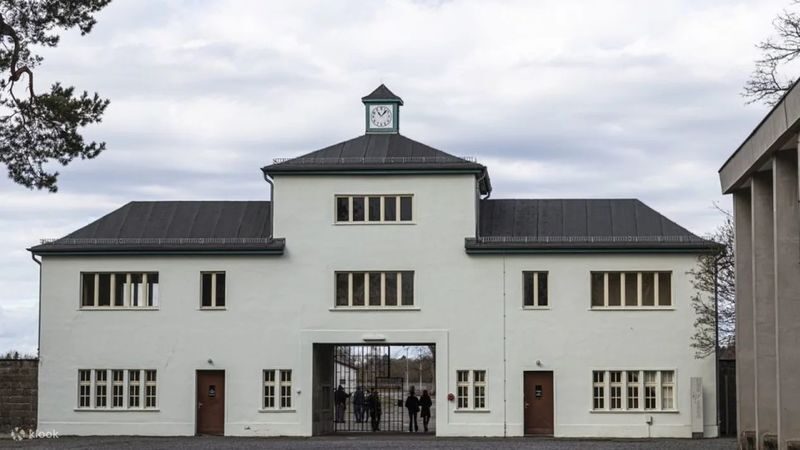
Sachsenhausen was one of Nazi Germany’s forced labor camps and a central part of the Nazi camp network. Today, the memorial presents its history through surviving spaces, exhibitions and testimony. The ground itself can feel stark and quiet, but a guide helps you connect what you are seeing with the lives and suffering of the people imprisoned there.
That context matters. At a large memorial site, it is easy to move from one building to another without understanding how the camp was organized or what a particular place meant. Here, the guide links the setting to historical research and witness testimony, and can answer questions as they arise. You get a structured account rather than a collection of disconnected displays.
This is serious subject matter, not a light excursion between Berlin museums. The tour’s value lies in helping you approach a difficult history carefully and with context. Its tone should be respectful: expect a somber day, and give yourself room to take in what you hear.
You can also read our reviews of more tours and experiences in Berlin.


From Hackescher Markt to Oranienburg
The meeting point is at Neue Promenade 3, near Hackescher Markt. Look for the blue board near Starbucks and guides wearing blue name badges. Arrive 15 minutes before the 10:00 departure. Latecomers and no-shows cannot receive a refund, so do not cut the connection close.
The group travels from central Berlin toward Oranienburg by public transport, following the same train route once taken by prisoners. That journey is part of the day’s historical framing, but it also means the tour depends on train schedules. A delay or cancellation can affect the timetable, and one past disruption led to a substantially later arrival.
Your ABC-zone day pass is an extra cost. The guide may help you work out or buy the right ticket, but do not assume it is included in the tour price. If you already have a valid pass, check that it covers the journey before setting out.
Public transport keeps the advertised starting price lower than a tour with private transfers, but it asks you to share the journey and its uncertainties. Stay with the group, especially when changing trains. The operator returns with you to Hackescher Markt at about 16:00, though the schedule can change with weather and traffic conditions.
Walking through the memorial
At Sachsenhausen, the guide leads you through the memorial and explains how the site functioned within the wider Nazi system. You will hear about daily conditions, suffering and resilience, supported by testimony and research. The aim is not to turn the site into a checklist of buildings, but to make the evidence and spaces intelligible.
The Jewish Barracks is a key stop. Stepping inside gives the history a more immediate scale: the camp is no longer only a name or a diagram, but a place where people lived under imprisonment. The room and its displays offer historical context about those who were held there. Guides have timed visits to the barracks to avoid some crowding, though that depends on conditions on the day.
The Camp Prison offers another perspective. Prominent inmates were confined there in solitary isolation, and the building helps show how confinement and control operated within the camp. It is a focused stop, but one that can make the machinery of imprisonment feel especially personal.
The memorial also includes thought-provoking exhibitions and other original structures and objects. You will have time to see key areas with the guide, but this is not necessarily a leisurely, self-paced museum visit. Some past tours have felt rushed for people who wanted to read every display panel or spend longer in each exhibition. If you prefer to examine every label, keep that in mind when deciding whether a guided schedule suits you.
Site access and timing can also be affected by special arrangements or closures. Since the day is built around public transport and a set return time, the guide may need to adjust the order or duration of stops. The tradeoff is clear: a guide gives you a coherent account and keeps the visit moving, while independent exploration offers more control over your pace.
What the six hours feel like
The day starts at 10:00 and is scheduled to end at 16:00. That is a substantial block of time, but it includes the journey out and back as well as the guided visit. Expect a full day rather than a quick stop at a nearby attraction.
There is no formal lunch included, and you should not count on buying food or drinks at the memorial. Pack a snack and water before leaving central Berlin. Some guides have made a short pause for the group to eat, but that is not the same as a guaranteed meal break. With walking, travel and sustained concentration, a little preparation makes a real difference.
Wear clothes suited to the day’s weather. The tour runs in all conditions, and much of the visit takes place outdoors. The site is wheelchair-accessible, though the walk and transit journey still need practical consideration. A guest with limited mobility described a guide adjusting the pace and pointing out elevators and flat routes; if you have access needs, contact the operator ahead of time to discuss your situation.
The subject can be emotionally demanding. Some guides have been praised for handling the material with care and for checking how the group is managing. Others have been appreciated for a clear, lively delivery that still respected the gravity of the place. A guide’s personal perspective can add meaning, but styles vary. If you want a strictly factual account with little interpretation, that is worth considering.
The guide makes the difference
The strongest part of this outing is often the guide’s ability to turn a complex history into a clear account without flattening it. Rebecca, Sarah, Lewis, Tom, Anja, Will and other guides have led departures. Their names give you a sense of the people who may guide the tour, but they are not a promise of who you will get.
You can expect an English-speaking professional guide, and the group limit helps keep commentary audible and questions manageable. Past groups have included as few as five people, but the maximum is 15. A smaller departure can make it easier to ask questions or hear a quieter explanation; the actual group size varies.
Visitors have especially valued detailed explanations, careful answers and a guide who looks after the group as it moves through the site and transit system. That matters here: the history is complex, and the route involves more than simply arriving at the memorial gate. At the same time, the quality of the visit depends partly on the guide’s pace and choices. A fast-moving group may not leave as much independent reading time as you would like.





Is $36.99 good value?
The join-in tour starts at $36.99, with the same price applying to all ages. The memorial fee, skip-the-queue entry and professional English-speaking guide are included. Your ABC transit pass, meals, drinks, personal expenses and tips are not.
For that starting price, the main value is interpretation: a guide provides historical structure across a site that can be hard to understand on your own. The small-group cap is another plus, especially if you want to ask questions rather than follow a large flag through the memorial. You are not paying for private transport, however, and the extra transit fare should be factored into your budget.
If you are weighing a guided visit against going alone, consider what you value most. Independent travel gives you more freedom to set your pace, but this tour takes care of the route and supplies a trained guide to explain what you are seeing. If context is important to you, that can justify the price. If you want long stretches of quiet time with every display, an organized schedule may feel restrictive.
Who should book this tour?
I would choose this tour if you want a serious, guided introduction to Sachsenhausen and value historical explanation, a compact group and help navigating the public transport journey. It is also a useful choice if you would rather ask questions as you go than rely on signs and displays alone.
Think twice if you have limited time and cannot absorb a possible transport delay, or if you want to explore every exhibition at your own pace. The tour is also a poor fit if you expect food stops or included transfers. Bring your own snack, budget for the ABC ticket and leave the rest of the afternoon flexible.
This is a moving and worthwhile visit, but it is not a casual day trip. Book it for the history, give the subject your attention, and arrive ready for a long, thoughtful day.
Sachsenhausen Concentration Camp Memorial Tour in Berlin
“We joined the Original Berlin Walks tour to the Sachsenhausen concentration camp, and our guide, Sarah, was extremely friendly and enthusiastic. Sh…”
FAQ
How long is the Sachsenhausen tour?
The tour is scheduled for six hours, from 10:00 to about 16:00. The schedule may change because of weather or traffic conditions.
Where do I meet the group?
Meet at Neue Promenade 3, 10178 Berlin, near Hackescher Markt. Look for the blue board near Starbucks and guides wearing blue name badges. Arrive 15 minutes before departure.
Is public transport included in the price?
No. You need an ABC-zone public transport ticket, and it is not included. The tour travels by public transport between Berlin and Oranienburg.
Are meals or drinks provided?
No. Meals and beverages are not included, and there is no possibility of buying snacks or drinks at the memorial. Bring your own food and water.
What is included in the tour price?
The price includes an English-speaking professional guide, skip-the-queue entry at the memorial and the memorial fee. Personal expenses and tips are extra.
Is the tour wheelchair-accessible?
Yes, the activity is listed as wheelchair-accessible. The visit includes walking, and accessible routes may involve elevators and flat pathways.