Nefertiti’s painted bust is the headline act at Berlin’s Neues Museum, but the visit is much more than a stop for one famous face. You’ll also find the head of Tiye, ancient papyri, and archaeological objects that bring everyday life across several eras into view.
I like two things in particular: the chance to see these celebrated Egyptian works in person, and the range of the collections, which moves from ancient Egypt to early human history. The drawback is that the museum is large and its layout can be hard to follow, so a quick visit may feel rushed.
- Key points to know
- Nefertiti is only the beginning
- Two collections, several ancient worlds
- How to make sense of the galleries
- How long to spend, and when to arrive
- Admission and what it is worth
- Small practical details that improve the visit
- Who will enjoy the Neues Museum most
- Should you book admission?
- FAQ
- Where is the Neues Museum?
- How long should I plan for a visit?
- What are the opening hours?
- Is the museum open on Mondays?
- When is the last admission?
- What are the main collections?
- Which famous objects can I see?
- Can I take photographs inside?
- Can I enter with a mobile ticket?
- The Best Of Berlin!
- More Museum Experiences in Berlin
- More Tours in Berlin
- More Tour Reviews in Berlin
- Not for you? Here's more nearby things to do in Berlin we have reviewed
Key points to know
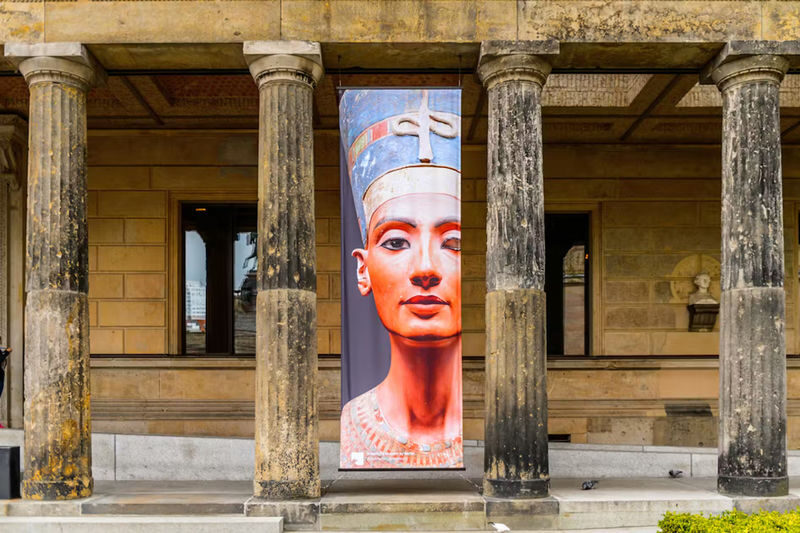
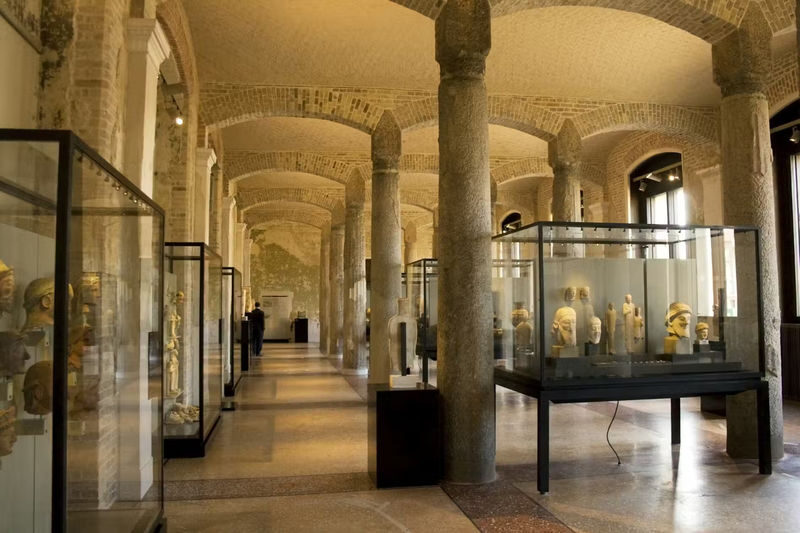

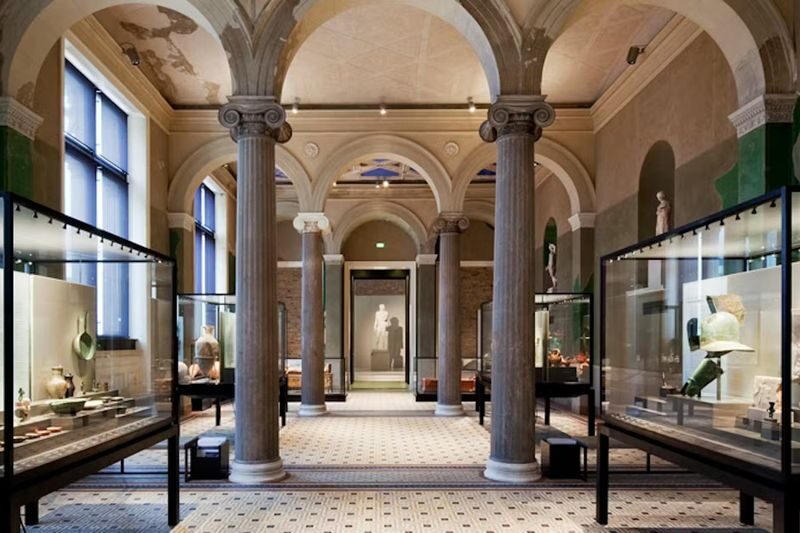
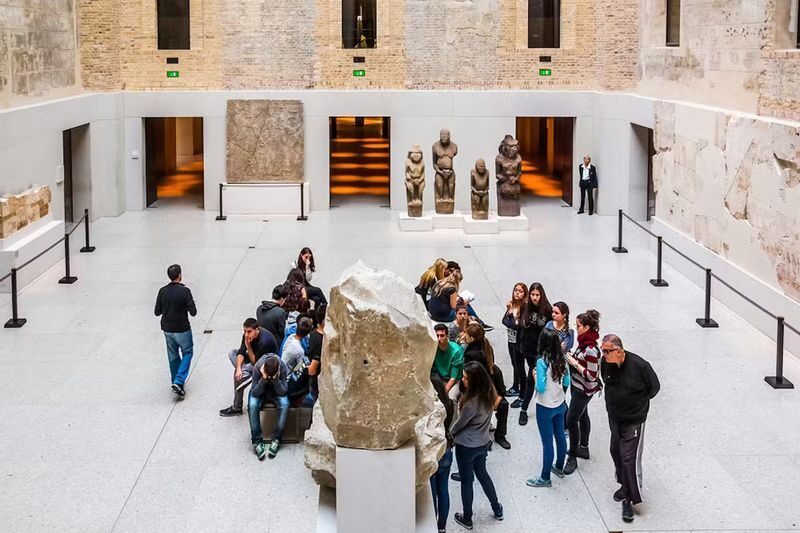

- Nefertiti is the main draw: The 3,300-year-old bust is one of the ancient world’s best-known works.
- Look for Tiye, too: The head of this influential Egyptian queen offers another memorable encounter with ancient portraiture.
- There are two main collections: The Egyptian Museum and Papyrus Collection shares the building with the Museum for Pre- and Early History.
- Expect more than Egyptian artifacts: Displays include archaeological finds from the Stone, Ice, Bronze, and Iron ages, as well as Greek and Roman objects.
- Give yourself time: Two to three hours is a useful starting point, but the collection can occupy much of an afternoon.
- Check the museum map: The galleries cover a lot of ground, and finding your way between sections may take some attention.

👉 See our pick of the 2 Best 3 Day Tours In Berlin
Nefertiti is only the beginning
The Neues Museum stands on Berlin’s Museum Island, at Bodestraße 1-3. It reopened in 2009 after a major restoration, and its collections make it an appealing choice if you want to spend a few hours with objects from ancient Egypt and early European history.
The museum’s best-known treasure is the bust of Nefertiti, an Egyptian queen who lived about 3,300 years ago. Seeing such a familiar image in person is a different experience from seeing it in a book or on a screen. You can take in its details at your own pace, then turn your attention to the surrounding collection rather than treating the visit as a single-photo stop.
I would also make time for the head of Tiye. She was one of the most influential women in ancient Egypt, and her portrait offers another striking link to the people behind the history. The objects here are not only beautiful things to look at. Together, they can prompt useful questions about power, belief, daily routines, and how ancient societies represented themselves.
The museum’s scope is one of its strengths. You can move from Egyptian art and papyrus to finds associated with the Stone, Ice, Bronze, and Iron ages. Greek and Roman artifacts also appear in the collection. That variety gives you a broader sense of the ancient world, though it means you should not expect every gallery to focus on Egypt.
You can also read our reviews of more museum experiences in Berlin


Two collections, several ancient worlds
The visit is centered on two permanent exhibitions: the Egyptian Museum and Papyrus Collection and the Museum for Pre- and Early History. If Egypt is your priority, begin with the Egyptian galleries and allow time for the papyri and other objects that help put famous works in context.
The Nefertiti bust naturally draws attention, but it is worth resisting the urge to hurry straight in and out. The collection includes many other Egyptian artifacts, and the head of Tiye is another important work to seek out. There are also objects that can make ancient life feel less abstract: tools, art, and material remains that help you imagine what people made, used, and valued.
The Papyrus Collection adds a different kind of evidence. A papyrus is not a grand statue or a jeweled object, yet it can bring you closer to the written record of ancient life. If you are interested in how people communicated and kept information, this part of the museum can be as rewarding as the more famous displays.
The Museum for Pre- and Early History shifts the focus away from Egypt. Its archaeological finds span the Stone, Ice, Bronze, and Iron ages. That long timeline is useful if you want a sense of how human societies changed, and how people used tools and materials in different periods. It also helps explain why the museum is not simply an Egyptian antiquities stop.
The Gold Hat from the Bronze Age is among the objects visitors seek out. The collection also includes Greek and Roman artifacts, so you may find yourself moving between cultures and periods in a single visit. That breadth is a plus for curious minds, though it can make the museum feel less focused if you came only for one civilization.
How to make sense of the galleries
A museum with several collections can be a joy to explore, but it can also leave you asking where to go next. Pick up the museum map at the entrance and use it to set a loose route. The displays are marked, and the map can help you locate the major works without turning your visit into a search party.
There is no need to see every object. Choose a few priorities before you begin: Nefertiti, Tiye, the papyri, and the Bronze Age Gold Hat are sensible anchors. Then leave room for whichever galleries catch your attention. This approach is especially helpful if you have only two or three hours.
The museum’s range rewards a slower pace. An object’s label can help connect it to its era and use, while a group of objects can give you a better sense of the culture that produced them. If you race from one famous piece to the next, you may see the highlights but miss the quieter details that make the collection more than a list of famous names.
Navigation may take some patience. The building is large, and the route between sections is not always obvious to every visitor. If you feel turned around, pause and check the map rather than assuming you have missed an entire wing. A little orientation at the start can save time later.
How long to spend, and when to arrive
Plan on two to three hours as a practical baseline. That gives you time for the museum’s major attractions and a look through both permanent exhibitions, though anyone who likes reading labels or lingering over objects could easily spend much of an afternoon here.
The museum is open Tuesday through Sunday from 10:00 a.m. to 6:00 p.m. It is closed on Mondays, and last admission is 30 minutes before closing. If you arrive near the end of the day, be realistic about how much you can see. The collection is extensive, and the final half-hour is not a substitute for a proper visit.
Arriving at opening time can be a sensible way to get started, especially if you want more breathing room for the galleries. One useful strategy is to begin with the Egyptian collection while your attention is fresh, then move to prehistory and early history. You can also reverse that order if the early periods matter more to you.
There is no single right route, but arriving with a short list of priorities helps. If you are visiting several attractions on Museum Island, decide in advance how much time you want to give the Neues Museum. Its collections can fill an afternoon, so it is easy to underestimate the time required.
Admission and what it is worth
General admission gives you access to a museum with a wide range of material, from Egyptian antiquities and papyri to prehistoric artifacts and Greek and Roman objects. That breadth is the main value: you are not paying for a brief encounter with Nefertiti alone, but for a substantial museum visit with several distinct areas to explore.
The exact ticket price is not provided here, so I cannot make a precise cost comparison. As a rule, the visit is easier to justify if you have a genuine interest in history, art, archaeology, or ancient Egypt. If your main goal is simply to see Nefertiti, you may still find the visit worthwhile, but you will get more from the admission by allowing time for the other collections.
The mobile ticket is designed for scanning at the entrance, making entry straightforward. If your schedule is tight, that convenience matters: less time sorting out admission means more time with the exhibits. Do not assume that a mobile ticket means every queue disappears, though. Check the details attached to your chosen ticket before you go.
There is also an audio guide option noted by visitors, which can help explain the Egyptian collection and its context. Confirm what is included with your admission before relying on it. Even without an audio guide, the museum map and exhibit labels offer a starting point for planning your route.





Small practical details that improve the visit
Photography is permitted for most exhibits, but flash photography is prohibited. Touching the glass is not allowed. These rules are simple, but they matter in rooms where visitors may want a close look at a famous object or a clear photograph.
The museum map is available at the entrance, so pick one up before heading into the galleries. It can make the difference between a purposeful visit and a series of wrong turns, especially if you are trying to fit the museum into a short stay.
The address is Bodestraße 1-3, 10178 Berlin, on Museum Island. If you are planning a day around the island’s museums, consider how much time you want to devote to this one. The Neues Museum is substantial enough to deserve its own block of time, rather than being squeezed into the gaps between other stops.
Who will enjoy the Neues Museum most
This is a strong choice if you are drawn to ancient Egypt, early human history, archaeology, or museum collections that cover more than one culture. Families with history-minded children may find the range of objects useful for sparking questions, though the right pace will depend on how long everyone can comfortably spend in galleries.
You do not need to be a specialist to appreciate the highlights. Nefertiti, Tiye, the Gold Hat, and the papyri provide clear points of interest, while the broader collections give you reasons to keep exploring. If you like to understand how artifacts fit into a larger story, allow time to read and compare rather than rushing between the headline objects.
On the other hand, if you want a small, simple museum visit or have little interest in history and ancient art, the scale may feel like too much. The layout can also be confusing at first, so this is not the best place to improvise with only a few minutes to spare.
Should you book admission?
I would book the Neues Museum if you want a substantial encounter with ancient Egypt and early history in the heart of Berlin. Seeing Nefertiti is a rare treat, but the museum’s real value comes from pairing that famous bust with Tiye, papyri, the Gold Hat, and finds spanning several eras.
Go with a short list of priorities, pick up the map, and set aside at least two hours. If you are already planning time on Museum Island, this is a worthwhile stop for anyone who wants more than a quick photo and has the patience to explore a large collection.
Neues Museum Admission in Berlin
“Convenience of Klook booking: It was easy to purchase and visit with the simple entrance QR code~~”
FAQ
Where is the Neues Museum?
It is at Bodestraße 1-3, 10178 Berlin, Germany, on Museum Island.
How long should I plan for a visit?
Plan for two to three hours as a starting point. The museum’s extensive collection can take much of an afternoon to explore.
What are the opening hours?
The museum is open Tuesday through Sunday from 10:00 a.m. to 6:00 p.m.
Is the museum open on Mondays?
No. The Neues Museum is closed on Mondays.
When is the last admission?
Last admission is 30 minutes before closing.
What are the main collections?
The two permanent exhibitions are the Egyptian Museum and Papyrus Collection, and the Museum for Pre- and Early History.
Which famous objects can I see?
The museum is home to the bust of Nefertiti and the head of Tiye. The Bronze Age Gold Hat is another notable object.
Can I take photographs inside?
Photography is permitted for most exhibits, but flash photography is prohibited. Touching the glass is not allowed.
Can I enter with a mobile ticket?
The mobile ticket can be presented at the entrance for scanning. Check the terms of your ticket for any additional entry instructions.