Rome’s streets can make a simple trip across town feel like a small expedition. The Gray Line bus gives you a seat, a city overview, and a way to link some major sights without planning every leg yourself. Choose a non-stop loop to look around, or a pass that lets you get off and explore.
I like the 13-language audio guide, which includes Korean, Mandarin, Japanese, and a children’s version in English and Italian. I also like having several ticket lengths, from a four-hour pass to 72 hours. The trade-off: stops can be a walk from the sights, and traffic, crowded buses, or route changes can stretch your wait.
- Key points before you board
- A moving overview, not a shortcut to every sight
- Choosing a ticket that fits your day
- Termini and the first stretch of the loop
- St. Mary Major and the Colosseum area
- Castel Sant’Angelo, St. Peter’s, and Piazza Navona
- Spanish Steps, Villa Borghese, and Trevi Fountain
- The ride, the audio, and the weather
- Value, service, and where the bus can fall short
- Should you book the Gray Line Rome bus?
- FAQ
- How long are the ticket options valid?
- Does the one-run ticket allow me to get off and board again?
- Is the Colosseum bus stop open?
- What languages are available for the audio guide?
- How often do buses run?
- What are the operating hours?
- Is the bus accessible, and can children ride?
- The Best Of Rome!
- More Tours in Rome
- More Tour Reviews in Rome
- Not for you? Here's more nearby things to do in Rome we have reviewed
Key points before you board
- Stop 3 by the Colosseum is closed indefinitely, so do not count on the bus dropping you beside the archaeological area.
- Buses are scheduled every 15 to 20 minutes from Termini, but traffic and crowding can make the wait longer.
- The audio commentary covers 13 languages, with kids’ audio in English and Italian.
- A one-run ticket is not hop-on hop-off. It covers one continuous loop on your chosen date.
- Pick your pass by the time you have to use it. The half-day ticket lasts four hours after first stamping; 24-, 48-, and 72-hour tickets last for those periods.
- Rome’s summer sun is no small matter. Bring water and a hat, and aim for morning or late afternoon.
👉 See our pick of the 25 Best Guided Tours In Rome
A moving overview, not a shortcut to every sight
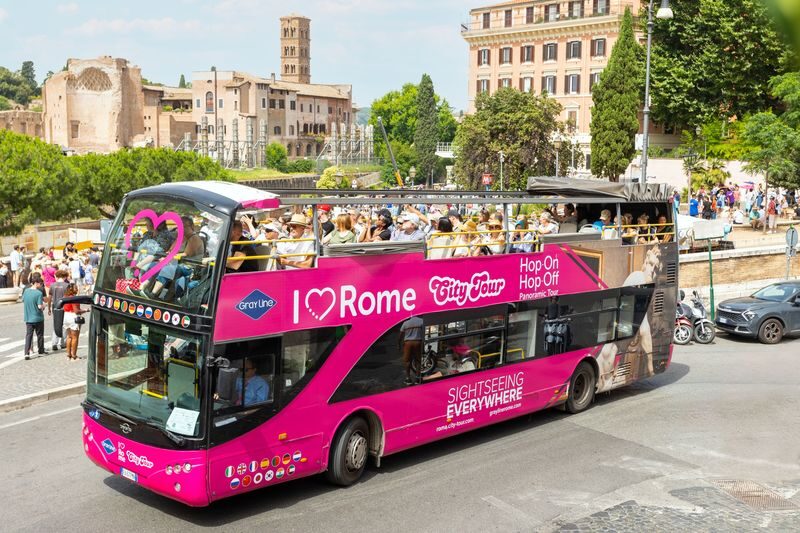
I see this bus as a way to get your bearings and make a few useful connections, not as a replacement for Rome’s regular transport or for walking. The route passes major sights and gives you time to look out from the upper deck, while the audio points out landmarks along the way.
That distinction matters. Rome’s center is large, and a bus stop can leave you several minutes on foot from the place you came to see. One rider found some stops as much as two kilometers from attractions, while others found the walk to their chosen sight manageable. Check the stop locations on a map before you set your day’s plan.
The advertised route has eight stops, but stop 3, the Colosseum Archaeological Area stop, is closed indefinitely. Road closures and traffic can also bring route changes, delays, and reduced frequency. Treat the route as a flexible sightseeing circuit, not a timetable that promises a precise arrival.
You can also read our reviews of more tours and experiences in Rome.
Choosing a ticket that fits your day
The ticket options cover very different plans. A one-run ticket is for one non-stop journey around the route, with no hopping off. It suits you if you want an overview, need a restful ride, or have little time and want to hear the commentary as the city rolls by.
A half-day ticket lasts four hours from your first stamp on the selected date. The full-day ticket is valid for the chosen date, while 24-, 48-, and 72-hour passes run for those lengths from first stamping. The distinction is useful: a full-day ticket is tied to the calendar date, while a 24-hour ticket gives you a rolling period from when you begin.
From $27.15, the starting price is appealing if you plan to use the bus for more than one ride or value the commentary and city overview. But the lowest price does not tell you which pass is best. If you only want one loop, compare the one-run fare with a hop-on hop-off ticket before paying for hours you will not use.
Longer passes make sense only if the route’s stops suit your plans and you expect to board more than once. A 48-hour ticket may sound like a convenient way to get around, but it is less useful if your hotel is far from the route or you prefer to use the Metro and walk. A pass is not automatically a transport bargain just because it lasts longer.
Termini and the first stretch of the loop
Termini Station is stop 1 and the stated starting point. Buses are scheduled every 15 to 20 minutes from there, and the last bus leaves at 18:40 from March 15 through October, or 17:45 from November through March 14. Winter operating hours can change, so check the latest schedule before you set out.
You can redeem your mobile voucher with staff or the driver at a listed stop, rather than having to begin at Termini. That flexibility can be handy if you are already near another stop. The circular route also means you can choose a starting point that works for your day, but first check that the bus is currently serving it.
Do not plan your day around the frequency alone. A 15- to 20-minute schedule is the stated interval from Termini, not a guarantee at every stop. Rome traffic, road closures, and boarding delays can add time, and some riders have faced waits of 30 minutes or longer. If you have timed entry to an attraction, leave a generous margin.
St. Mary Major and the Colosseum area
Stop 2 is near the Basilica of St. Mary Major, which is one of the route’s more direct connections to a major sight. The basilica is an important stop if you want a church visit in your day, and it has been described as particularly close to the bus stop. Still, check your walking route before you get off, especially if you are trying to meet a schedule.
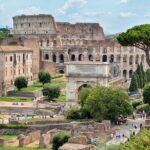
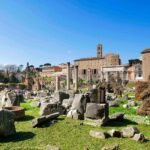
The Colosseum and Roman Forum are essential Rome sights, but the bus stop complication is real: stop 3, the Colosseum Archaeological Area stop, is closed indefinitely. Do not assume you can step off right beside the amphitheater or use the bus as a door-to-door link to the Forum. If those are your priority, look up the current route and walking distance before you buy, and make separate transport plans if needed.
The closed stop does not make the bus useless for seeing the Colosseum area, but it does change the calculation. Traffic and temporary road closures can alter routes further, so keep your plan flexible. The bus is best when you can treat the ride as one part of the day, rather than the only way to reach a specific entrance.
Castel Sant’Angelo, St. Peter’s, and Piazza Navona
The route also takes in views of Castel Sant’Angelo and passes the wider area around St. Peter’s Square and Basilica. These are landmarks where the bus can help you see how Rome’s sights relate to each other. The audio commentary adds context while you ride, but admission to attractions is not included, and there is no live tour guide.
The Vatican area is worth planning carefully. The bus gives you a way to approach the neighborhood, but it does not include entry to St. Peter’s Basilica or any other attraction. If you want to go inside, allow time for the visit and any lines, rather than assuming a bus pass covers the whole experience.
Piazza Navona is another named highlight on the circuit. A hop-off pass can let you pause in the area and explore on foot, then continue when the next bus comes. But the bus is not a guided walking tour: you decide how long to stay, and the walking tours available from stops 4, 5, and 6 require you to ask onboard staff for details.




Spanish Steps, Villa Borghese, and Trevi Fountain
The Spanish Steps and Villa Borghese are associated with stop 7. This makes the stop useful if you want to combine a well-known city landmark with time near the park. The exact walk and access can depend on the current stop location, so use a map rather than relying on the stop number alone.
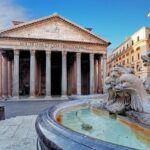
Stop 8 is associated with the Trevi Fountain. It is an appealing stop for a short visit, but remember that the bus only gets you to the vicinity; you still have to walk to the sight. Some riders have chosen to visit the fountain and Spanish Steps on a separate day, which is a sensible option if the bus day is already full.
A hop-on hop-off ticket can tempt you to cram all the sights into one circuit. Resist that urge. You may spend more time walking between stops and attractions than you expect, and a single day may not leave enough time to explore every neighborhood at a satisfying pace. Pick two or three priorities, then use the bus for the connections that help most.
The ride, the audio, and the weather
The buses on the Panoramic Route are open-top double-deckers with a detachable roof, so they can operate in different weather. The upper deck offers an open-air view and a better sense of the city as you move through it. On hot days, however, that same open deck can become tiring; one passenger noted that the wind was welcome in the heat, but the sun still mattered.
Some buses have a lower level where you can sit away from the open air. Do not count on every vehicle having the same condition or equipment. Reports of worn seats and problems with air conditioning or earphones make it wise to check your seat and audio set when you board, and ask staff for help if something is not working.
The audio guide is one of the tour’s strongest practical features. It is offered in Italian, English, French, Spanish, Portuguese, German, Dutch, Russian, Mandarin Chinese, Japanese, Korean, Hindi, and Arabic. Kids’ commentary is available in English and Italian. Bring your own headphones if you prefer, though the tour provides earphones.
The commentary is an introduction, not a substitute for a guide at a monument. It gives you something useful to listen to between stops and can make a one-run ride more rewarding. If you want detailed answers or a guided visit inside an attraction, you will need to arrange that separately.
Value, service, and where the bus can fall short
The best value comes when you use the bus for both orientation and movement. If you are new to Rome, a loop can help you see the broad spread of sights before deciding where to spend more time. If you are tired on your last day, it can also be a pleasant way to revisit the city without adding another long walking route.
The weak point is reliability at busy times. The stated frequency is 15 to 20 minutes from Termini, yet waits can run longer, and some buses may be crowded enough that you cannot board the first one. Other operators may run more often on some stretches. If your schedule is tight, compare the route with the Metro and local transport rather than assuming the sightseeing bus will be quickest.
Stop signs and maps can also be hard to follow. Pink signs help identify the service, but the pickup point near Termini has been confusing for some people, and stops may shift because of road closures. Use a current map, confirm the stop with staff, and allow extra time to find the boarding point.
The route is wheelchair-accessible. Children aged 0 to 5 ride free, children aged 0 to 12 must be with a paying adult, and ages 13 and up pay the adult rate. Bring valid identification matching the booking details, as it may be required at the venue.
Should you book the Gray Line Rome bus?
Book it if you want a city overview, value audio commentary in your language, and have time to work around traffic and walking distances. The one-run ticket is a straightforward choice for a single circuit; the hop-on hop-off options are more useful when you have specific stops in mind and can spare time between buses.
Think twice if your hotel is far from the route, your day depends on tight arrival times, or you expect a stop right at the Colosseum. For a relaxed first look at Rome, or a low-effort ride on a day when your feet need a break, it can be worthwhile. Just plan around the actual stop locations, not the names of the sights.
Rome Hop-On Hop-Off Bus by Gray Line Rome
“The Korean voice support was helpful for the tour.”
FAQ
How long are the ticket options valid?
The half-day ticket lasts four hours from first stamping on the selected date. The full-day ticket is valid on the chosen date. The 24-, 48-, and 72-hour tickets last for those periods from first stamping.
Does the one-run ticket allow me to get off and board again?
No. It is valid for one non-stop journey around the route on the selected date, with no hop-off option.
Is the Colosseum bus stop open?
No. Stop 3, the Colosseum Archaeological Area stop, is closed indefinitely. Route changes and delays may also occur because of traffic or road closures.
What languages are available for the audio guide?
Audio commentary is available in Italian, English, French, Spanish, Portuguese, German, Dutch, Russian, Mandarin Chinese, Japanese, Korean, Hindi, and Arabic. A children’s audio guide is available in English and Italian.
How often do buses run?
The stated frequency from Termini Station, stop 1, is every 15 to 20 minutes. Traffic, road closures, and other delays can affect service.
What are the operating hours?
From March 15 through October, service runs daily from 08:30 to 18:40, with the last bus leaving Termini at 18:40. From November through March 14, service runs daily from 08:30 to 17:45, with the last bus leaving Termini at 17:45. Winter hours may change, so check before visiting.
Is the bus accessible, and can children ride?
The activity is wheelchair-accessible. Children aged 0 to 5 ride free; children aged 0 to 12 must be accompanied by a paying adult, and children aged 13 and older pay the adult rate.