The best part of this Phuket elephant experience is its hands-off approach: you can observe rescued elephants as they eat, roam and take mud baths without riding, bathing or touching them. That gives the visit a different purpose from a photo stop. You are there to learn about the animals and their care, not to make them perform.
I like two things in particular: you can help prepare food before feeding time, and the forest walk gives you a chance to see the elephants in their habitats. The half-day visit adds a Thai cooking demonstration and lunch. One consideration: the short walk may feel modest, and this is a warm, outdoor activity, so bring water, sun protection and closed walking shoes.
- What makes this visit different
- A visit built around watching, not handling
- The 90-minute route, step by step
- Choose the short visit or the half-day
- What the price includes, and what it does not
- Getting there and preparing for the walk
- What the visit can and cannot tell you
- Is this the right Phuket elephant experience for you?
- FAQ
- How long is the elephant experience?
- What activities are included in the 90-minute program?
- Does the experience include elephant riding or bathing?
- What is included in the half-day program?
- Are transfers included in the price?
- What time can I visit?
- What should I bring?
- Is the reserve wheelchair- and stroller-accessible?
- Can I change or cancel my booking?
- The Best Of Phuket!
- More Tours in Phuket
- More Tour Reviews in Phuket
- Not for you? Here's more nearby things to do in Phuket we have reviewed
What makes this visit different
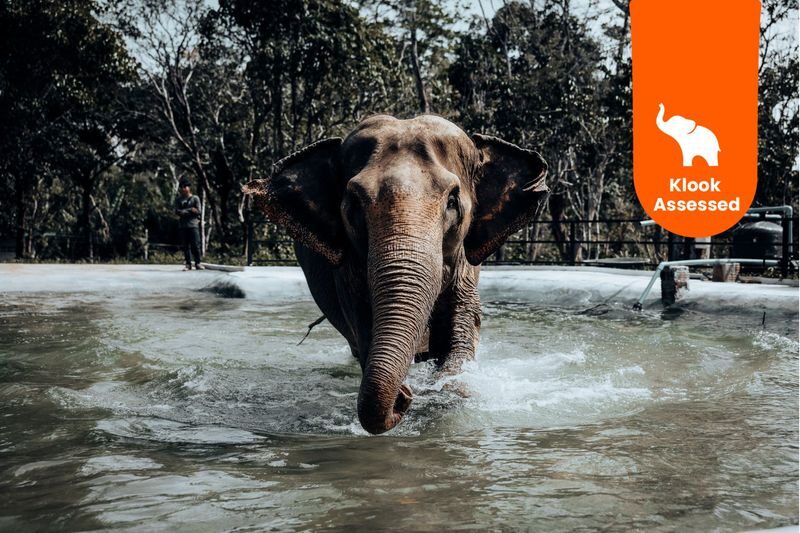
- No riding, bathing or touching: The experience centers on observing the elephants, with staff instructions designed to keep people at a respectful distance.
- Food preparation is part of the encounter: You can help make snacks and offer food under the guide’s direction.
- A forest walk is included: The route visits elephant houses and a hilltop trail, with a chance to watch the animals near mud and water.
- Two formats suit different schedules: Choose the 90-minute program or a half-day visit with a Thai cooking demonstration and lunch.
- Transport costs extra: You can arrange a transfer for an added fee, or make your own way to the reserve in Thalang.

👉 See our pick of the 24 Best Shopping Tours In Phuket
A visit built around watching, not handling
Phuket Elephant Nature Reserve sits on 30 rai of jungle in Thalang, on Phuket’s west coast. It describes itself as a home for elephants rescued from tourist entertainment work, with care guided by international welfare standards. The reserve has also passed Klook’s onsite welfare assessment. That offers a useful point of reference, though no short visit can tell you everything about an animal’s past or the full quality of its long-term care.
The program’s clearest welfare signal is what it does not offer. You will not ride an elephant, scrub one in a bathing pool or touch one for a souvenir photo. Instead, you meet the animals at a managed distance, prepare food, and watch them choose how to spend their time. This can feel less like an amusement activity and more like an educational visit.
That distinction matters when you compare elephant attractions in Thailand. Close contact may look exciting, but it is not the only way to see these animals. Here, the guide sets the pace and explains how to behave nearby. You are asked not to approach without permission, tease elephants with food, make loud noises or move suddenly. Follow those rules even when an elephant looks calm; a large animal still needs space.
The reserve’s work also includes an Elephant Recycling Centre. The details of its operation are not specified in the program information, but visitors have noted that elephant dung is used for fertilizer and papermaking, with paper flowers available to buy. It is a small reminder that care at a sanctuary involves more than the time spent watching the elephants.
You can also read our reviews of more tours and experiences in Phuket.


The 90-minute route, step by step
The short program begins with a briefing of about 10 minutes. You learn about elephant dirt and the types of food they eat, along with basic instructions for staying safe. This introduction is brief, but it helps set expectations: the elephants are not there to follow a visitor’s script.
Next comes about 10 minutes of feeding. You may help prepare or offer snacks, usually under the guide’s direction. This is the most direct part of the visit, but it still depends on the elephants’ choices. They may take the food, or they may not be interested at that moment. That is part of the point: the interaction is not meant to force a response.
The main section is listed as a 40-minute hike with the elephants, including a visit to their houses and a hilltop jungle trail. You can watch the animals moving through the reserve and learn about their habits and stories from your guide. The route is not necessarily a strenuous trek. Some visitors describe the walk as short, with only a few steps between elephant viewing spots, so do not book this expecting a long jungle hike. The value is in seeing the animals in their setting, not covering miles.
The final listed stop lasts about 20 minutes and centers on the elephants’ mud spa pool. You observe them enjoying the mud and water features rather than bathing them yourself. Mud bathing is natural behavior, and watching from a respectful distance keeps the focus on the animals rather than on a staged activity.
The times above add up to about 80 minutes, while the program is sold as a 90-minute experience. Allow for transitions and the guide’s explanations, and treat the advertised duration as a planning guide rather than a minute-by-minute promise. The schedule can shift with traffic and weather.
Choose the short visit or the half-day
The 90-minute program is a sensible choice if your Phuket plans are tight or you want an introduction without giving up half a day. It includes the briefing, feeding, forest walk and elephant habitat viewing. Families have found it manageable, though younger children who expect bathing or hands-on play may find a calm observation visit less exciting than they imagined.
The half-day program gives you more time and adds a Thai cooking demonstration and lunch. The cooking session lets you make a choice of well-known Thai dishes, with Pad Thai and Tom Yum mentioned as examples. If food is part of what you enjoy about travel, this makes the longer option feel like a fuller outing rather than simply a longer elephant visit.
The half-day version is the better fit if you want more context and a slower pace. It also gives children an extra activity in preparing food, while adults can hear more about the elephants’ stories and the reserve’s approach. The short option, by contrast, keeps the visit focused and leaves more of the day free.
Past groups have mentioned guides named Tom, Daeng, Porche and Mike, praising their clear explanations and friendly manner. Those names are not a guarantee for your departure, but they give a sense of the guided format: expect a person to lead the group, explain the animals and manage safe viewing.
What the price includes, and what it does not
The short program is shown from US$35.75, while the overall experience price is also displayed from $39.30. Half-day options are listed from US$89.35 without transport and US$104.20 with transfer. Prices can vary by date and package, so check the amount for your selected option before booking.
For the short visit, the value comes from a guided program rather than a long list of extras. Your fee includes a guide, a briefing, elephant feeding, water features and the jungle nature walk. Insurance is provided by the operator. Food is not included in the short program, and transport is not included unless you select a transfer option.
The half-day package includes lunch and the cooking experience, which makes the higher price easier to justify if you want both activities. If you are staying nearby and can reach the reserve on your own, the no-transfer option costs less. If you are staying farther away, compare the transfer fee with the time and effort of arranging your own ride.
The reserve can arrange transfers within Phuket for an additional THB 500 per adult and THB 250 per child. Pickups from Khao Lak cost an additional THB 2,500 per booking; Klok Kloi and Na Tai are listed at THB 2,000 per booking. Round-trip pickup requires at least two people. The operator reconfirms pickup time after receiving your booking, and pickup and drop-off locations must be the same.
Getting there and preparing for the walk
The reserve’s address is 100 Srisoonthorn, 12 Moo 7, Si Sunthon Road, Thalang District, Phuket 83110. It is near the Manik location in Cherngtalay and close to Blue Tree Phuket. If you are driving, use the map link provided with your booking rather than relying on the address alone.
Departure slots are listed at 09:00, 11:00, 13:00 and 15:00. Return times are listed at 10:30, 12:30, 14:30 and 16:30, but availability depends on your chosen departure and package. Arrive on time: late arrivals and no-shows are not refundable.
Pack for heat and a walk on an uneven outdoor route. The reserve recommends sunscreen, sunglasses, a hat, insect repellent, a water bottle, comfortable shoes and long trousers. Closed shoes are a practical choice for the trail. One past visitor said insect repellent was supplied, but bring your own rather than counting on it being available.
The activity is not wheelchair- or stroller-accessible. Infants and children must be included in the passenger count, and groups are limited to between two and 20 participants. The listed guide languages are Chinese, English, Russian, French and Thai.


What the visit can and cannot tell you
The reserve’s wooded setting, ponds and mud areas give you a chance to see elephants doing more than standing beside a feeding station. Still, this is a managed sanctuary, not an open wilderness. The grounds cover 30 rai, and the elephants live within the reserve’s boundaries. One visitor questioned whether the area was large enough for the elephants, while also noting they did not know enough to judge. That is a fair reason to keep your expectations measured: a short visit gives you a view of the program, not a full assessment of habitat quality.
The same care applies to claims of ethical tourism. The no-riding, no-bathing and no-touching rules are meaningful, and the operator says elephant welfare guides its care. The onsite welfare assessment is another relevant check. But if you are choosing a sanctuary on welfare grounds, you may want to look beyond the photo opportunities and consider the policies that shape the animals’ daily lives. Here, the visitor rules make the reserve’s stated approach clear.
This is also an experience where the guide matters. A thoughtful guide can make a brief encounter more useful by explaining each elephant’s story and the reason behind the rules. Pay attention during the introduction, ask questions when there is time, and let the animals set the pace. The most memorable moment may be a quiet one: an elephant eating, walking through the forest or taking a mud bath without being asked to perform.
Is this the right Phuket elephant experience for you?
I would put this on your shortlist if you want to see rescued elephants without riding, bathing or touching them. The short program works well for a tighter itinerary, while the half-day version offers more discussion, a Thai cooking session and lunch. Both suit people who value observation and education over physical contact.
It is less suited to anyone expecting a long hike, guaranteed close interaction or a full day of activities. The trail may feel brief, and the elephants are not there to entertain on demand. Bring sensible shoes, water and sun protection, choose the package that fits your schedule, and treat the experience as a chance to watch animals on their own terms.
Phuket Elephant Nature Reserve Experience
“very cute, cool, wonderful, awesome, friendly, wow wow elephants, I want to visit the elephants again who love corn”
FAQ
How long is the elephant experience?
You can choose a short program described as 90 minutes or a half-day program. The short visit includes a briefing, feeding, a forest walk and time observing the elephants near their mud pool.
What activities are included in the 90-minute program?
The short program includes a briefing and introduction, elephant feeding, water features, and a jungle nature hike with elephants. It does not include food or transport unless those are selected separately.
Does the experience include elephant riding or bathing?
No. The visit is presented as a hands-off experience focused on observing the elephants. Visitors are not offered riding, bathing or touching activities.
What is included in the half-day program?
The half-day program includes time with the elephants, a Thai cooking demonstration and lunch. You can choose a version with or without transfer.
Are transfers included in the price?
Not in every option. A half-day option with transfer is listed separately from the no-transfer version. Phuket transfers cost extra, and the operator reconfirms pickup time after the booking.
What time can I visit?
Departure slots are listed at 09:00, 11:00, 13:00 and 15:00. Available return times vary according to the departure time and itinerary.
What should I bring?
Bring sunscreen, sunglasses, a hat, a water bottle, insect repellent, comfortable walking shoes and long trousers for the jungle walk.
Is the reserve wheelchair- and stroller-accessible?
No. The activity is not wheelchair- or stroller-accessible.
Can I change or cancel my booking?
Changes are allowed until 24 hours before the activity starts, subject to the stated booking restrictions. A full refund is available if you cancel at least 24 hours before the activity date. In extreme weather or unforeseen circumstances, the operator may cancel and offer a reschedule or full refund.