Beneath Paris’s grand streets, the Catacombs hold the bones of around six million Parisians. This self-guided visit takes you through former quarry tunnels transformed into a vast underground ossuary, a stark and memorable counterpoint to the city above.
I like two things here: the audio guide gives the bones a human and historical context, and you can move at your own pace rather than follow a group. The pre-booked ticket is useful, too, since entry can sell out.
The main drawback is physical, not historical: you’ll descend and climb 130 steps, then walk about 2 km underground. There are no elevators, bathrooms, or lockers, so plan around the limits before you book.
- At a glance
- A different Paris, below street level
- From quarry tunnels to an ossuary
- How the visit unfolds
- The audio guide: useful context, no live guide
- Is the pre-booked ticket worth it?
- What to bring and who should think twice
- Who will get the most from this visit?
- Should you book?
- FAQ
- How long does the visit take?
- How many stairs are there?
- Is an audio guide included?
- Is this a guided tour?
- How many people’s remains are in the Catacombs?
- What should I bring?
- Are there bathrooms or lockers?
- Is the visit wheelchair accessible?
- Can children under four take part?
- Can I cancel the ticket?
- The Best Of Paris!
- More Tickets in Paris
- More Tours in Paris
- More Tour Reviews in Paris
- Not for you? Here's more nearby things to do in Paris we have reviewed
At a glance
 1 / 8
 2 / 8
 3 / 8
 4 / 8
 5 / 8
 6 / 8
 7 / 8
 8 / 8
- The route is underground and about 2 km long: Allow roughly an hour, not counting time you may need around your entry.
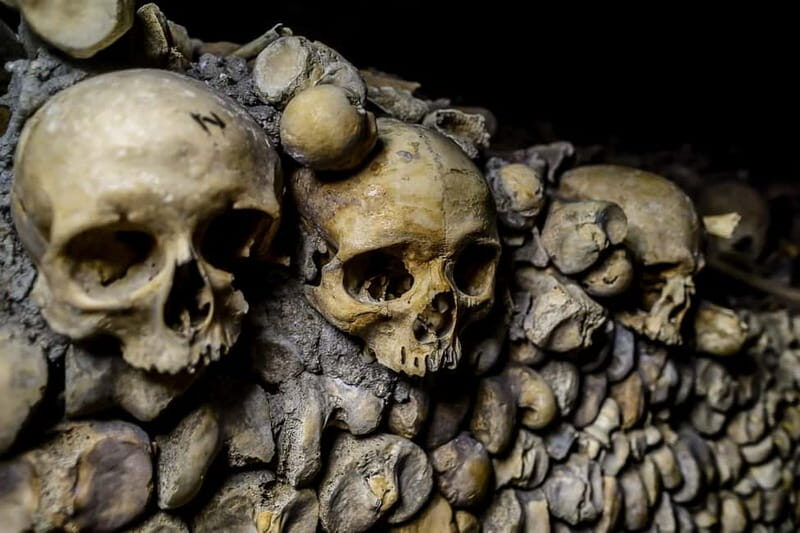
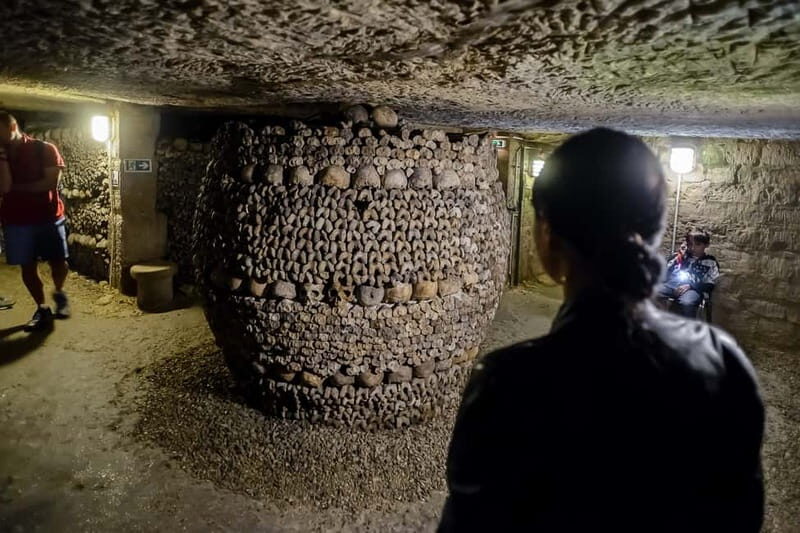
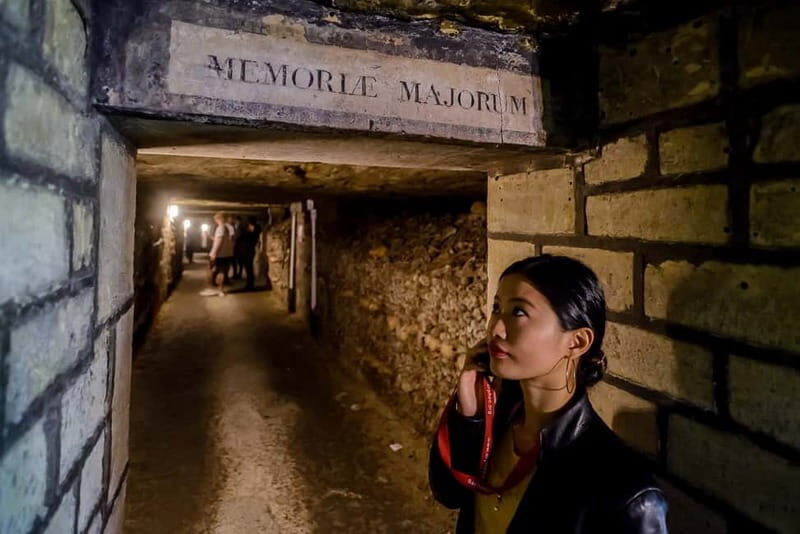
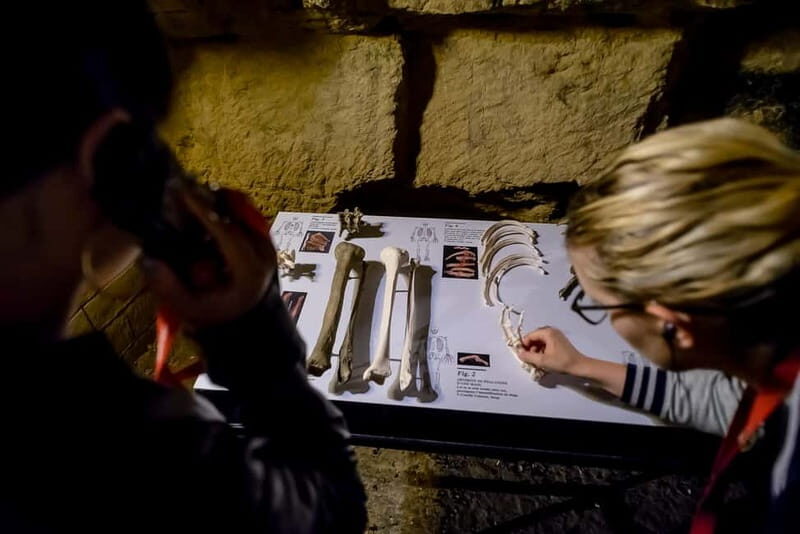
- The bones are the focus: Skulls and bones are arranged in rooms and tunnels, making the scale of the ossuary hard to miss.
- The audio guide is included: Choose from English, French, Spanish, or German, and explore at your own pace.
- You enter with a pre-booked ticket: This can be valuable when same-day tickets are sold out.
- Prepare for the stairs and cool air: Bring warm clothing, and be ready to climb 130 steps down and back up.
- This is not a guided group tour: There is no live guide, and the experience is not suitable for people with several listed mobility or health concerns.

👉 See our pick of the 25 Best Shopping Tours In Paris
A different Paris, below street level
The Catacombs tell a story that is hard to picture from the cafés, monuments, and boulevards above. What began as a quarry became a place to move human remains after Paris’s cemeteries grew overcrowded. The result is not simply a collection of old tunnels. It is a record of how the city dealt with a difficult problem, and a sobering reminder of the people who once lived here.
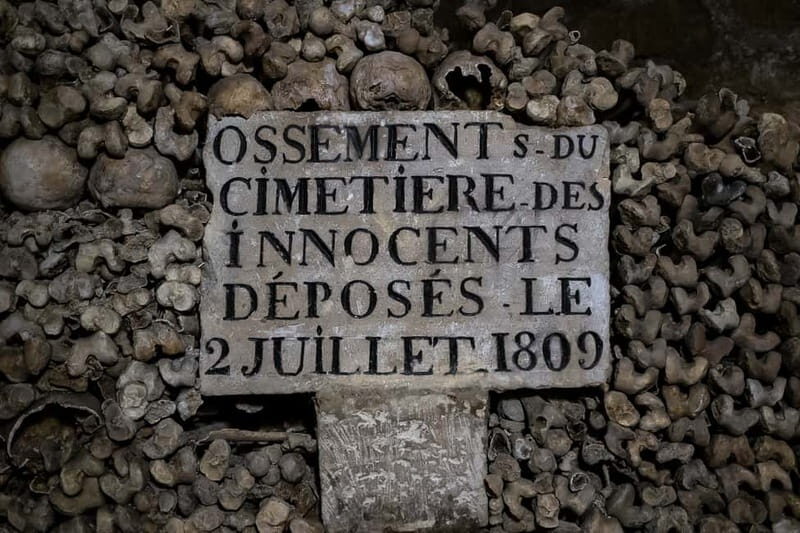
The scale is striking. Around six million Parisians are represented in the bones and skulls lining the route. The sheer quantity can make the remains seem abstract at first, but the audio guide helps connect what you see to the history of the site and the circumstances that brought the dead underground.
This is a memorable visit, but it is not a lighthearted attraction. The remains are human, and the setting feels solemn as well as eerie. I’d approach it with curiosity and respect, and give yourself space to take in the place rather than treating it as a quick photo stop.
You can also read our reviews of more tours and experiences in Paris



From quarry tunnels to an ossuary
The Catacombs were originally a quarry, with tunnels cut beneath Paris. The underground network stretches for hundreds of kilometers, though the public visit follows a much shorter route. That distinction matters: you are seeing a section of a far larger system, not wandering through every tunnel beneath the city.
The reason the tunnels became an ossuary is central to the visit. As Paris’s cemeteries became overfilled, the city moved the dead into the former quarries. The audio guide explains this shift and gives you context as you pass through the rooms decorated with human bones and skulls.
The bones are arranged in dense stacks, creating the striking appearance that draws many people here. Still, it helps to look beyond the visual effect. These are the remains of millions of people, not props, and the story behind their transfer is part of what makes the Catacombs worth visiting.
How the visit unfolds
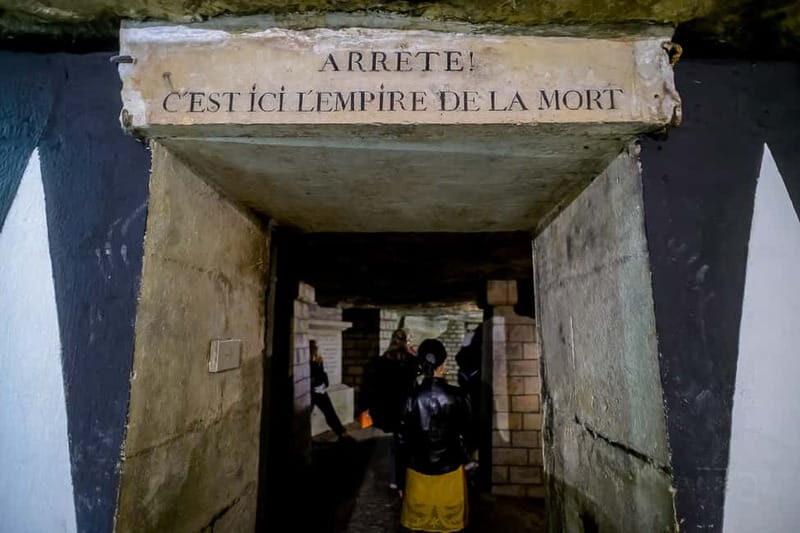
Start by going directly to the Catacombs entrance with your voucher. Once admitted, you begin a self-guided route through the underground passageways. There is no live guide leading a group, so you can set your own pace and use the audio guide for information along the way.
The first challenge comes before the ossuary itself: the descent. You’ll go down 130 steps to reach the underground route, then walk about 2 km and climb 130 steps back up. There are no elevators, so this is an important practical detail, not a minor footnote.
As you continue, the former quarry tunnels lead to rooms and passages lined with bones and skulls. The cool, dark atmosphere adds to the sense of being far from the familiar Paris above. The route’s length is manageable for many people, but the confined underground setting and stairs can make it feel more demanding than the one-hour duration suggests.
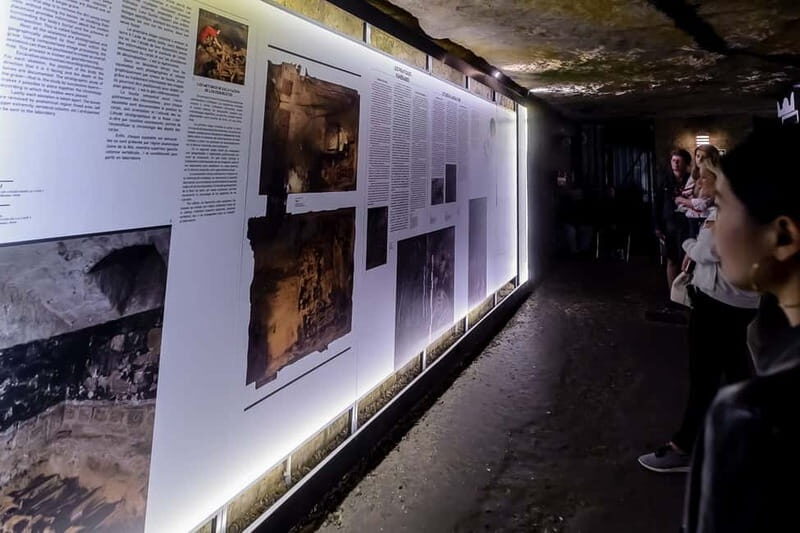
The audio guide gives you the story as you go, without requiring you to keep pace with a group. That freedom is valuable in a place where some people will want to pause and absorb the setting, while others may prefer to move steadily through. The guide is available in English, French, Spanish, and German.
At the end, the activity returns to the meeting point. The visit is compact, and some people may find that an hour passes quickly. If the Catacombs are a major reason for your visit, think of the time estimate as the route itself, rather than a guarantee that you’ll want to hurry through every section.
The audio guide: useful context, no live guide
The audio guide is included with the ticket and is one of the most useful parts of the experience. Without explanation, you might see rows of bones but miss why the tunnels were built, how the site changed purpose, and how the remains came to be here. The commentary helps turn a visually powerful visit into a more meaningful one.
You can listen at your own speed, which suits a place that invites reflection. The guide has been described as easy to follow and informative, though getting started can take a moment. Give yourself a little time to work out the audio before you set off, and don’t assume that someone will be there to guide you through it.
This is a self-guided ticket, not a small-group tour with a historian or a staff member accompanying you. If you want a personal guide to answer questions in real time, this format may not be enough. If you value independence and an included explanation, it is a practical way to understand what you’re seeing.
More Great Tours NearbyIs the pre-booked ticket worth it?
The ticket’s value is less about extra access than about securing a place. Entry can sell out, and a pre-booked ticket helps avoid arriving to find no availability. Some people find that booking ahead costs a little more than buying directly, so compare prices if you have time and availability is not a concern.
But availability changes the calculation. If the Catacombs are high on your Paris list, a confirmed ticket can be worth more than a small saving, especially when walk-up tickets are unavailable. The included audio guide adds further value, since it supplies historical context without the cost or structure of a live guided tour.
This ticket is non-refundable, so make sure the time works with your plans before purchasing. Check the available starting times, and leave enough room in your day for the stairs and underground walk. The stated duration is one hour, but you may want a little flexibility rather than scheduling another activity immediately afterward.
You can also read our reviews of more guided tours in Paris






What to bring and who should think twice
Wear warm clothing. The underground setting is cool, and a layer you can carry comfortably is a sensible choice. Leave luggage and large bags behind: they are not allowed, and there are no lockers to store them.
There are no bathrooms on the route, so plan to use facilities before entering. The lack of elevators, combined with the 130 steps each way and the 2 km walk, makes this visit unsuitable for wheelchair users and people with mobility impairments.
The activity is also listed as unsuitable for children under four, pregnant women, and people with heart problems or respiratory issues. If you have asthma or another breathing concern, take the underground walk and climb seriously; the uphill stairs may be difficult. Back problems can also make the stairs a challenge.
The Catacombs are best for people who are comfortable with enclosed underground spaces, human remains, and a fairly long walk on foot. If you are unsure about the physical demands, consider them before booking rather than expecting to find an elevator or a shorter route once you arrive.
Who will get the most from this visit?
I’d recommend the Catacombs to you if you want to see a side of Paris beyond its familiar landmarks and enjoy learning how a city worked through a practical problem. The bones make an immediate impression, while the audio guide adds the historical frame that helps the place stay with you after you leave.
It is also a good choice when you want an independent visit rather than a scheduled group tour. You can listen, pause, and move on at your own speed. The compact length can fit into a busy sightseeing day, though the steps and underground route make it more than a casual stop.
You may want to skip it if you dislike enclosed spaces, find stairs difficult, or prefer a lighter attraction. And if you expect a live guide or a long, elaborate tour, this is not that: it is a short self-guided visit through one section of the underground site, with an audio guide for context.
Should you book?
Book if you’re curious about the history beneath Paris, comfortable walking underground, and willing to treat the remains with respect. The pre-booked entry and included audio guide make the visit easier to plan and more informative, especially if tickets are selling out.
Think twice if the stairs, lack of facilities, or subject matter are a poor fit. Check availability and the starting time before committing, bring warm clothing, and leave large bags behind. If those conditions suit you, the Catacombs offer an unusual, thoughtful hour that shows Paris from a very different angle.
Paris: Catacombs Ticket and Audio Guide
FAQ
How long does the visit take?
The stated duration is about one hour. You’ll walk roughly 2 km underground, with time spent at your own pace.
How many stairs are there?
You must climb down and back up 130 steps. There are no elevators.
Is an audio guide included?
Yes. The ticket includes an audio guide in English, French, Spanish, or German.
Is this a guided tour?
No. It is a self-guided visit with an audio guide, not a tour led by a live guide.
How many people’s remains are in the Catacombs?
The tunnels and rooms contain the bones and skulls of around six million Parisians.
What should I bring?
Bring warm clothing. Luggage and large bags are not allowed.
Are there bathrooms or lockers?
No. There are no bathrooms or lockers at the Catacombs.
Is the visit wheelchair accessible?
No. The route includes 130 steps down and back up, and the activity is listed as unsuitable for wheelchair users and people with mobility impairments.
Can children under four take part?
No. The activity is listed as unsuitable for children under four.
Can I cancel the ticket?
No. The activity is non-refundable.
You can check availability for your dates here: