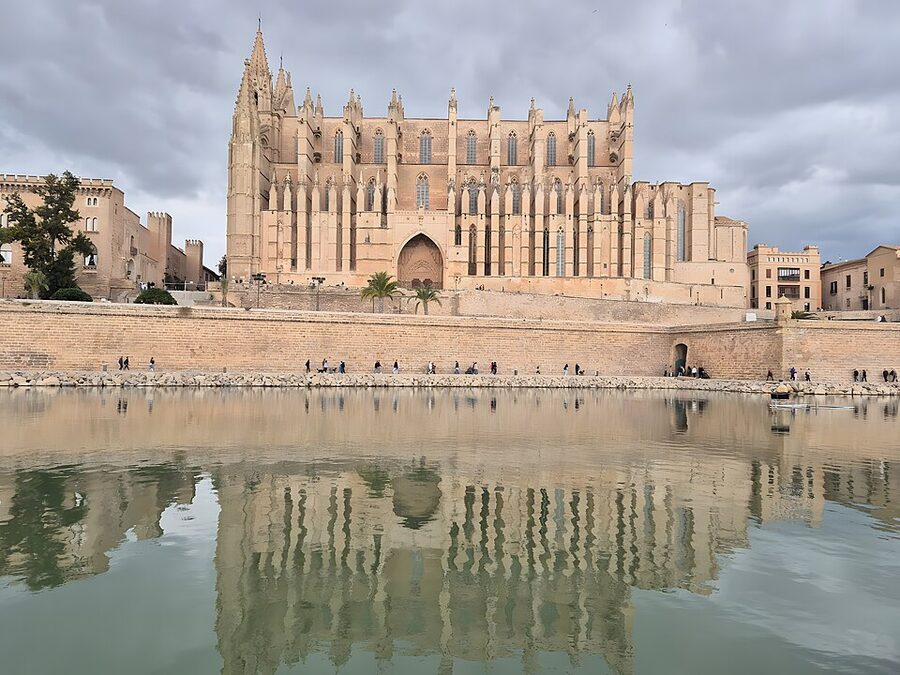
Twice a year, the morning sun lines up perfectly with both rose windows of La Seu, the great Gothic cathedral of Palma. On 2 February and 11 November, around 8:30am, light pours through the larger eastern window, lands on the western wall, and creates a brief eight-petal halo of stained glass against stone. Locals call it the Festival of Light. The rest of the year, you book a normal ticket and just look up.
I went on a regular Tuesday in May, no light show, paid 14 euros at the door, and still walked out feeling I’d seen one of the strangest cathedrals in Europe. This guide walks you through how to actually book it, what’s worth paying extra for, and where La Seu fits in a day around Palma.
Short on time? Three picks for Palma Cathedral
- Skip-the-line entry ticket (around $12). The simplest way in. Mobile ticket, scan and walk past the queue. Book entry ticket.
- City walking tour with the cathedral (around $34). A guide pulls together the old-town context, then takes you inside La Seu. Book walking tour.
- Palma Cathedral plus Valldemossa (around $40). Cathedral in the morning, mountain village in the afternoon, one guide. Book combined tour.
- Short on time? Three picks for Palma Cathedral
- Why La Seu is worth booking properly
- Tickets, prices and what’s actually included
- Free entry for worship
- Opening hours and the morning-only quirk
- The tours I’d actually book
- 1. Palma Cathedral of Mallorca Skip-the-Line Entry Ticket: from
- 2. Palma de Mallorca City Walking Tour with the Cathedral: from
- 3. Palma Cathedral and Valldemossa Guided Walking Tour: from
- Inside: what to actually look at
- The Gaudí intervention
- The Barceló ceramic chapel
- The organs and the rose window
- The terrace tour, separately
- Dress code, behaviour, and the things wardens stop you for
- Combining the cathedral with the rest of Palma
- If you want a fuller island day
- How La Seu compares to the other big Spanish cathedrals
- A short history, the bits worth knowing
- What ‘La Seu’ actually means
- When to go: best time of year and time of day
- Getting there
- What I’d skip
- Frequently asked, briefly
- If you want more from your time in Spain
Why La Seu is worth booking properly
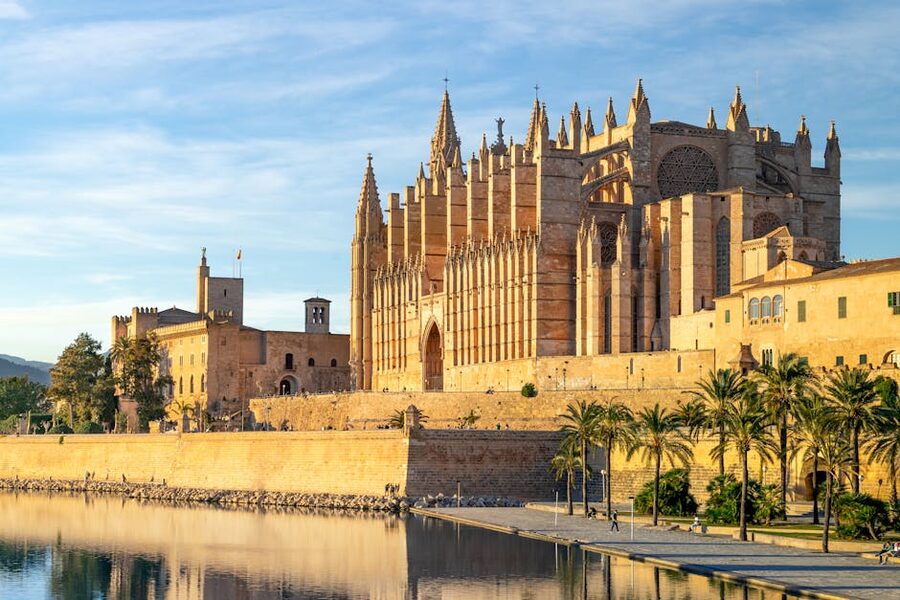
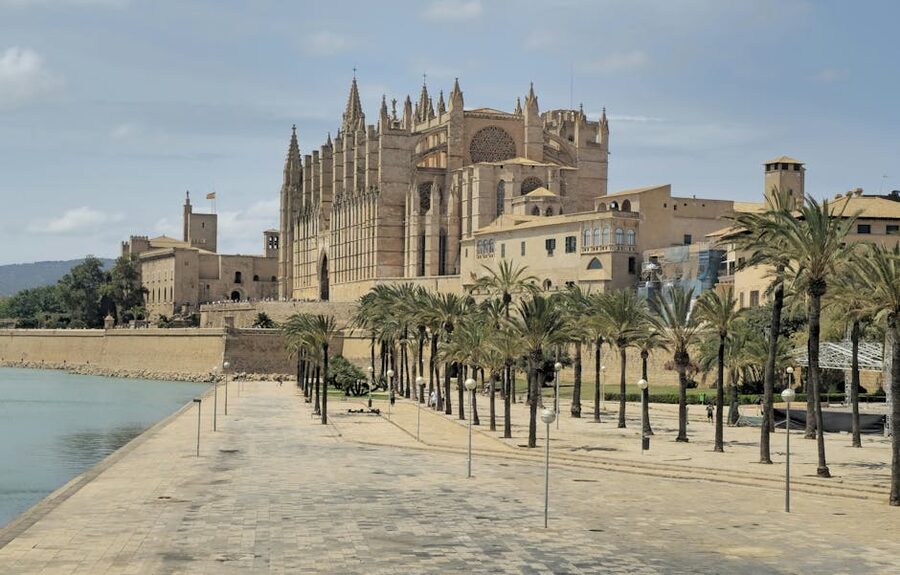
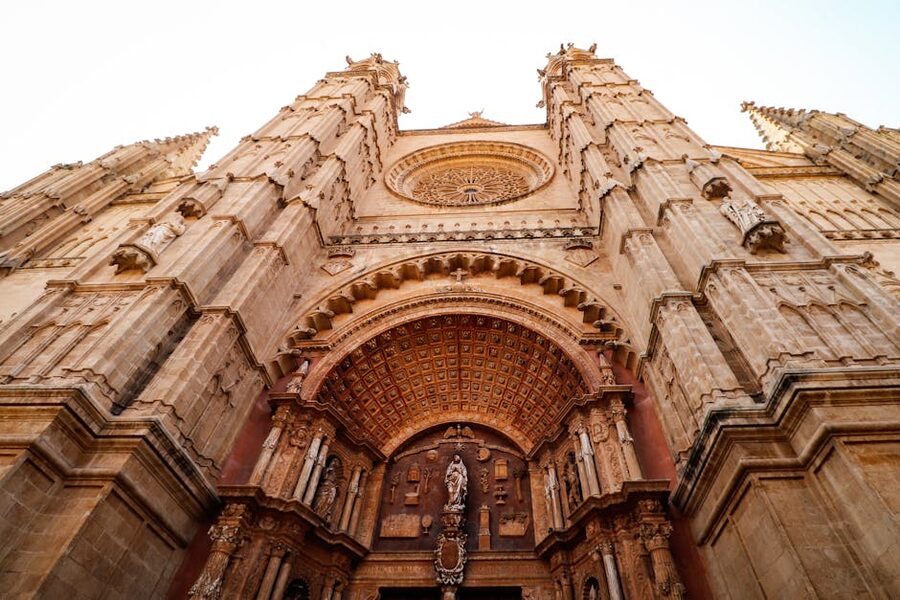
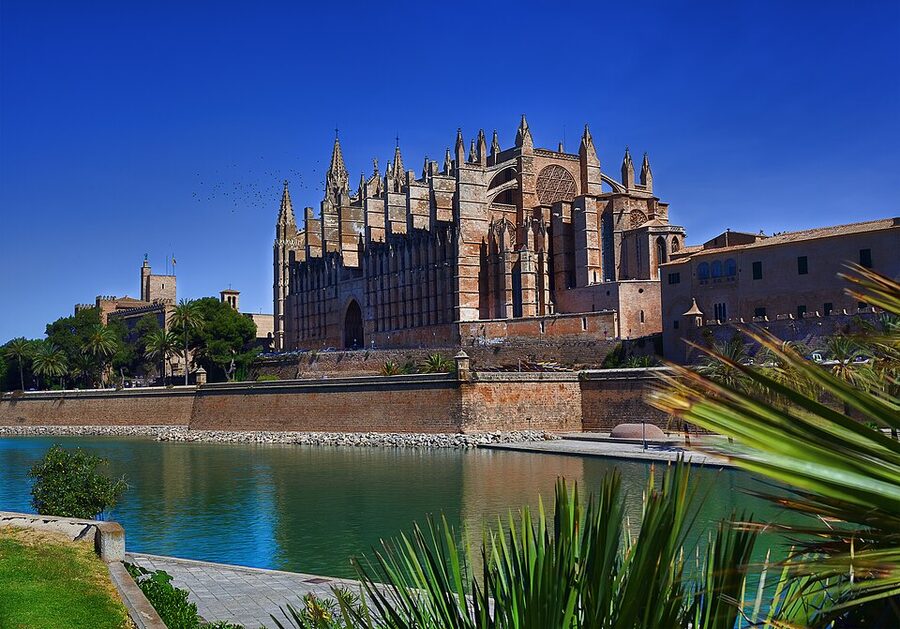
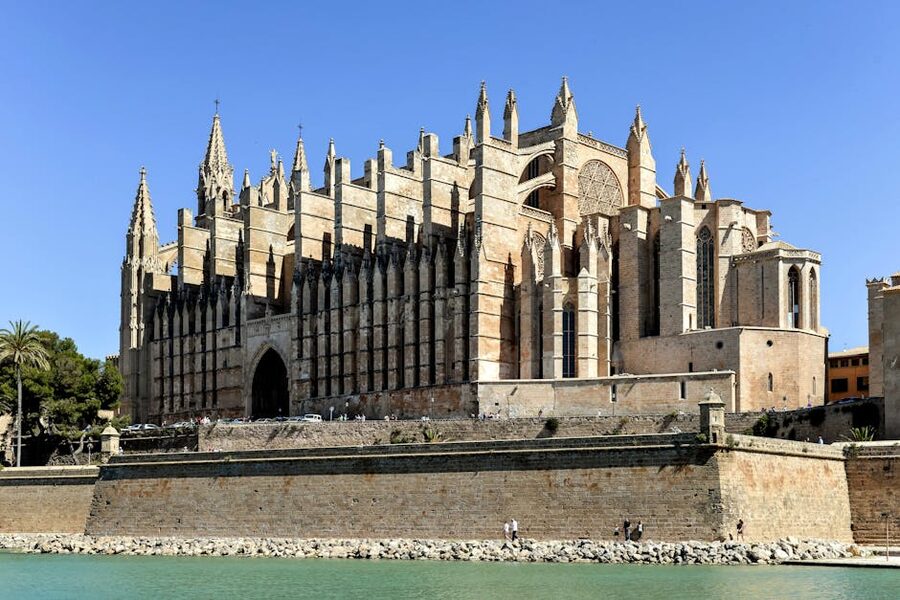
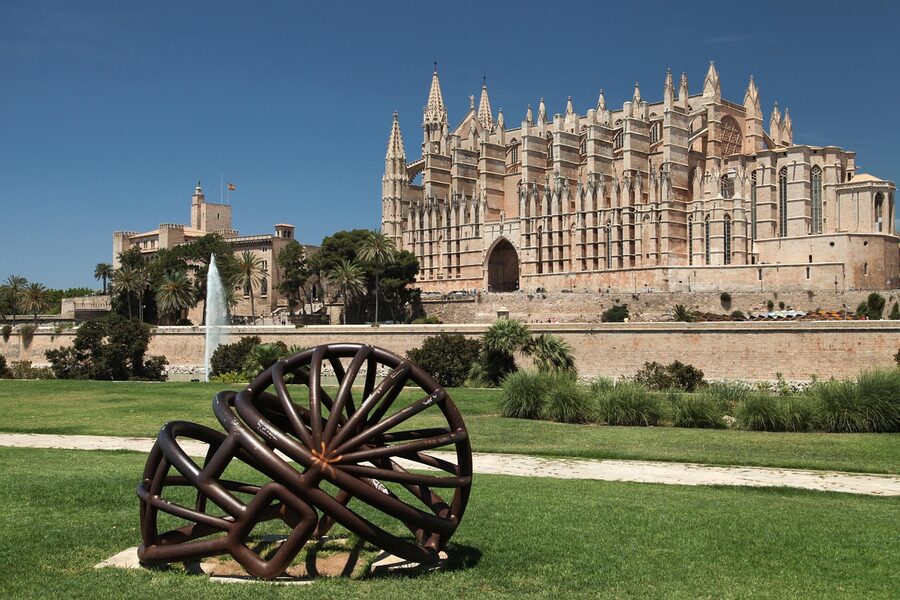
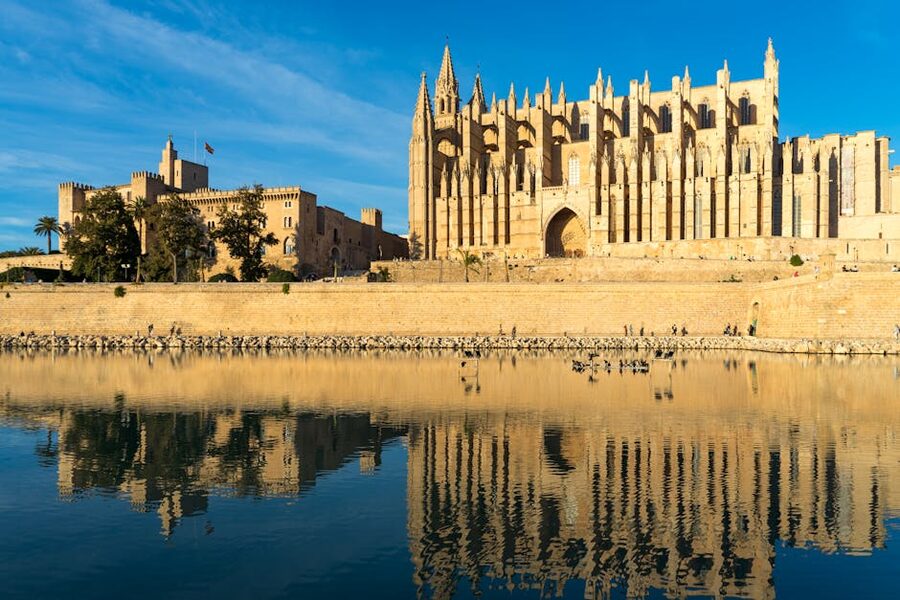
It’s a 14th-century Gothic cathedral built directly on top of a former mosque, finished in stages over more than 350 years, then rewired by Antoni Gaudí in the early 1900s, then handed a bombshell of a chapel by Mallorcan artist Miquel Barceló in 2007. Few cathedrals in Spain have this kind of layered story. The Seville Cathedral wins on sheer scale, but La Seu wins on weirdness, and weirdness is what you remember.
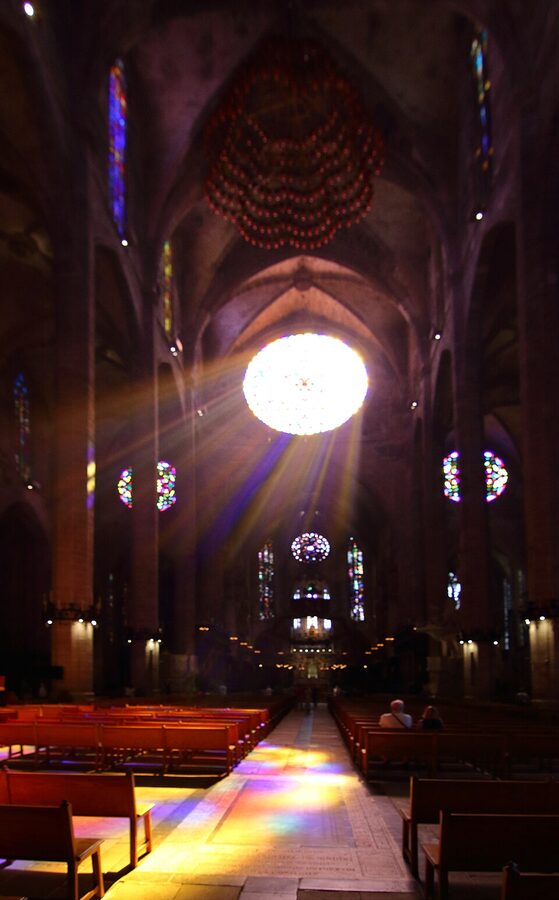
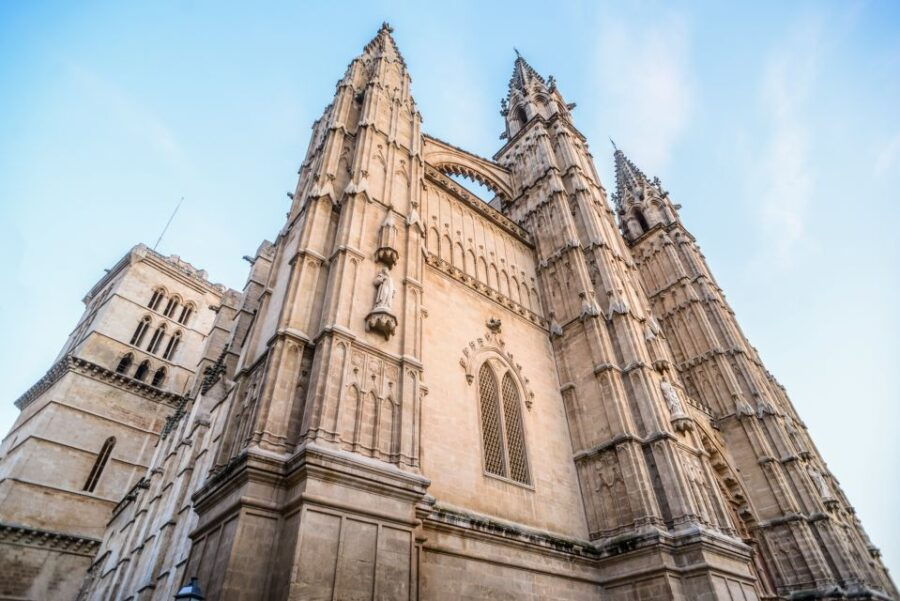
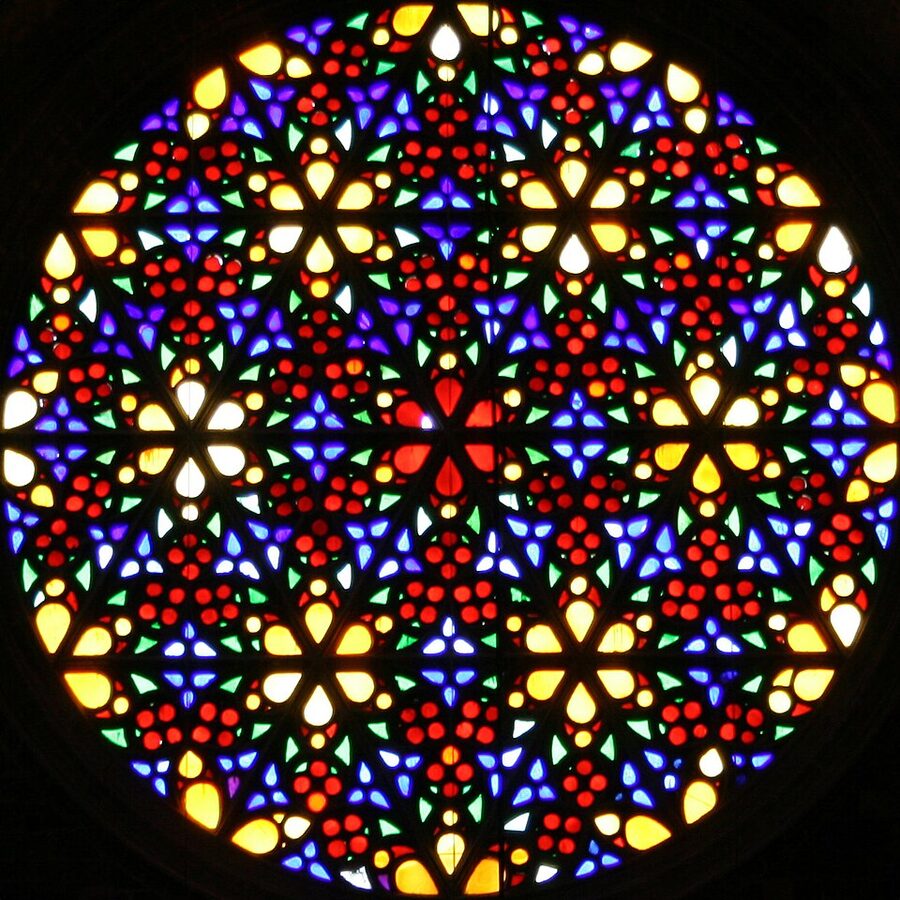
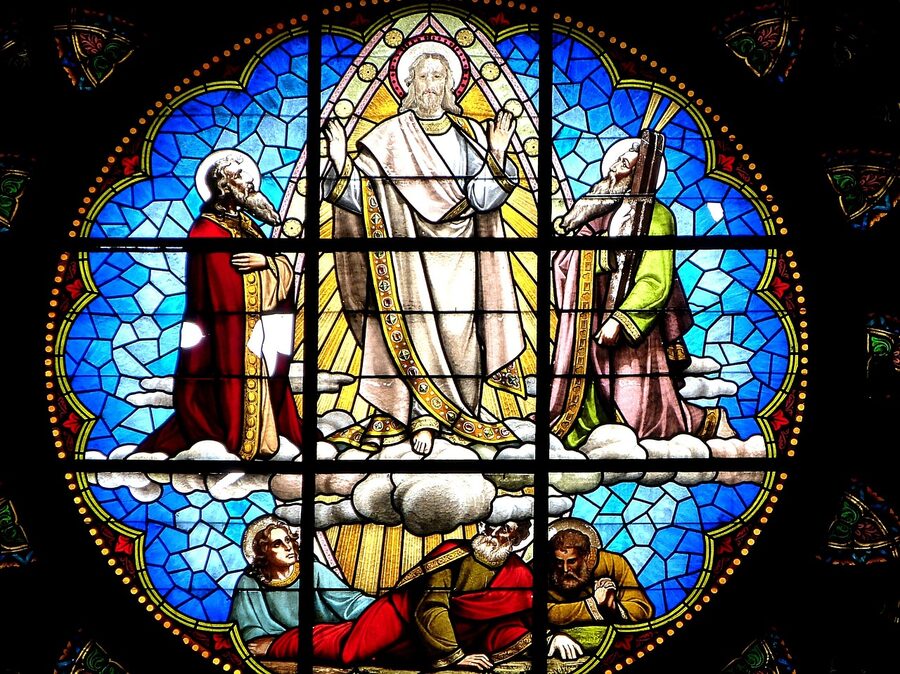
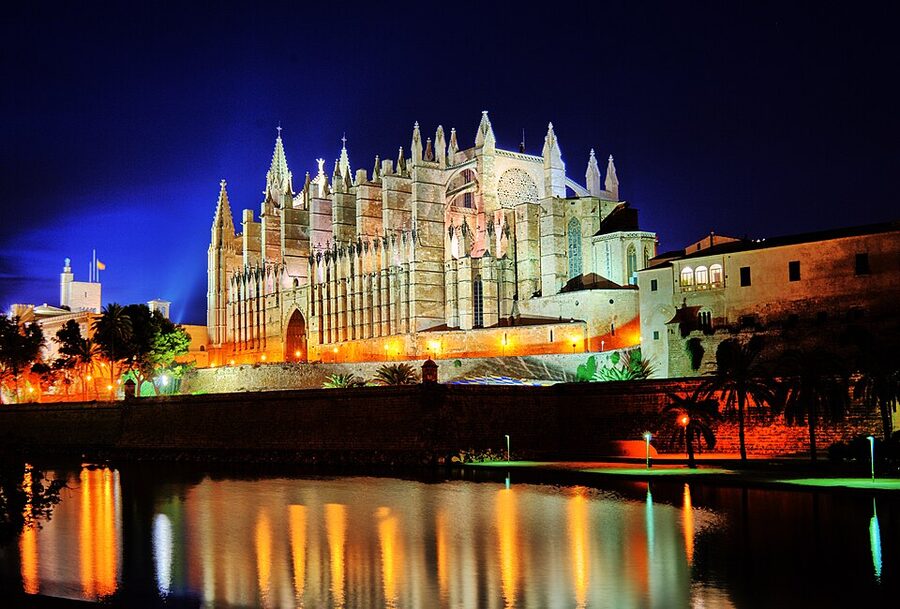
The two rose windows are why the cathedral has been called the cathedral of light. The eastern one, above the central nave, has 1,236 stained-glass panes and is one of the largest Gothic rose windows in the world. The smaller western one sits opposite. On 2 February and 11 November the sun aligns with both, and for a few minutes the inside looks closer to a planetarium than a church.
Tickets, prices and what’s actually included
The base ticket gets you the cathedral interior plus the small Diocesan Museum next door. As of 2026 the on-site price is 14 euros for adults, free for residents of the Balearics with ID, and free for under-12s. There’s a separate, more expensive terrace ticket for the rooftop tour. More on that below.
You can buy at the door, but the queue along Carrer del Mirador can run 30 to 40 minutes in July and August. Pre-booked online tickets cost roughly the same and skip the queue entirely. The flagship skip-the-line entry ticket is the one most visitors end up using, partly because it’s cheap, partly because it’s the most reliable way through the door on a cruise day.
Free entry for worship
The cathedral is also a working church. Mass is celebrated daily and entry is free if you go to attend a service rather than to sightsee. The trade-off: you can’t wander, can’t photograph, and you’re expected to sit, stand and respond like everyone else. If your Spanish or Catalan is shaky, follow the person next to you. Sunday mass at 10:30 is the most attended; weekday morning masses are quieter and a quieter way to see the space at its actual purpose.
Don’t try the worship route as a free workaround. The wardens know exactly what’s happening and will redirect tourists to the ticket queue. If you genuinely want to attend, go through the Mirador door with the morning regulars and the cathedral opens to you for free.
Opening hours and the morning-only quirk
Since the post-COVID changes, La Seu has settled into morning-only sightseeing hours. Roughly:
- Monday to Friday, 10am to about 5:15pm in summer, 3:15pm in winter
- Saturdays, 10am to 2:15pm year-round
- Closed to tourists on Sundays and church holidays (open for worship only)
Hours shift twice a year, so always recheck the day before. If you’re picking between summer and winter visits, the longer summer hours make a real difference if you want to see the rose-window light at the right angle.
The tours I’d actually book
Three packages cover most reasonable visits to the cathedral. They go in this order of usefulness for a first visit.
1. Palma Cathedral of Mallorca Skip-the-Line Entry Ticket: from $12
This is the simplest route in: a mobile ticket, scan it at the door, walk past the queue. Our full review covers exactly which entrance to use and how the audio guide compares to picking up a paper plan inside. If you only do one paid thing at La Seu, do this.
2. Palma de Mallorca City Walking Tour with the Cathedral: from $34
I prefer this one for a first proper visit because the guide walks you through the old town first, including the Almudaina Palace and the Arab Baths, then leads you into the cathedral with the context already loaded. My review goes into how the small group size and pacing compare with the bigger bus options.
3. Palma Cathedral and Valldemossa Guided Walking Tour: from $40
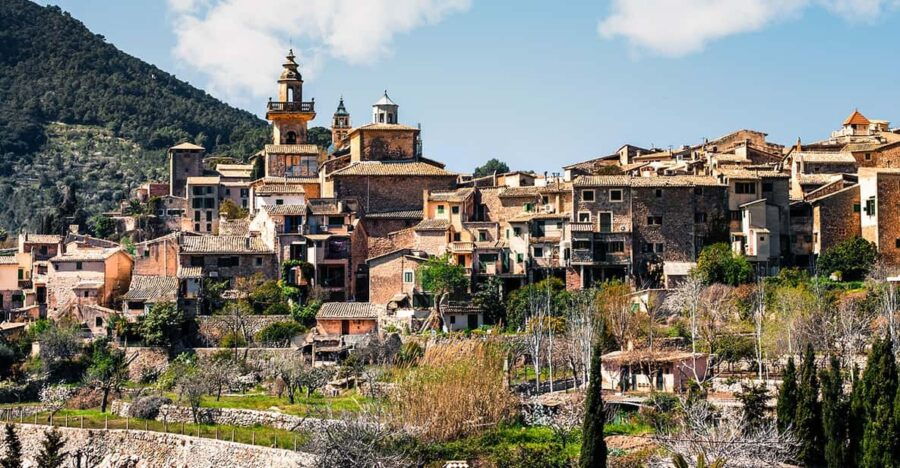
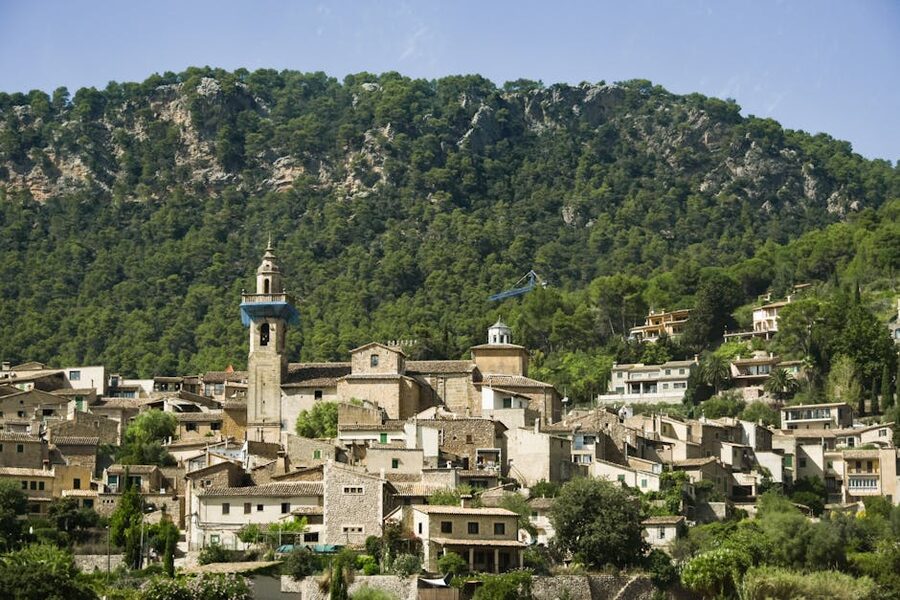
This is the day-trip combo: cathedral in the morning, then up into the Tramuntana mountains to Valldemossa, where Chopin and George Sand spent the famously rainy winter of 1838. Our write-up notes that the pace is calm and the group small, which suits both stops better than a coach trip would.
Inside: what to actually look at
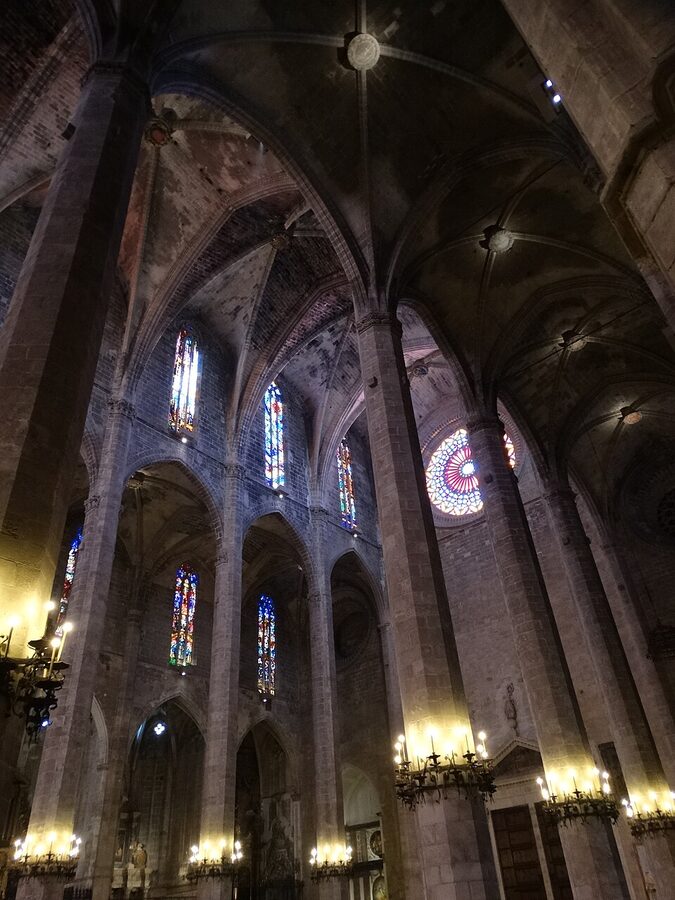
You enter through the cloister and museum, then step into the cathedral itself. Most people stop dead about ten paces in. The nave is one of the tallest Gothic spaces in Europe, and because the columns are unusually thin, the whole interior feels like it has more air than stone. Look up first, then forwards, then up again. That’s the tour.
The Gaudí intervention
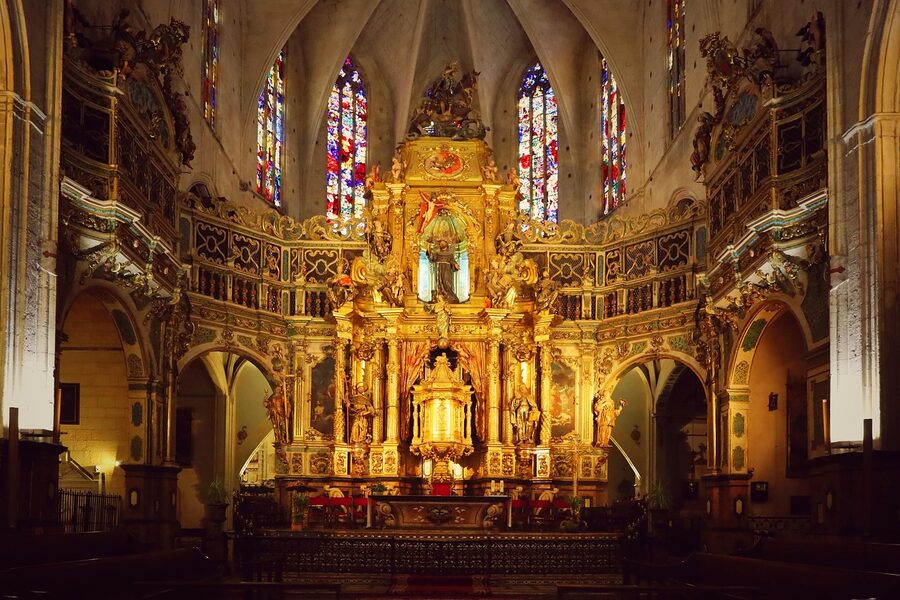
Antoni Gaudí (yes, the Sagrada Familia Gaudí) was hired between 1904 and 1914 to bring the cathedral into modern Catholic practice. He moved the choir out from the central nave and pushed it forward toward the altar so the congregation could actually see what was happening at mass. He hung a strange seven-sided wrought-iron baldachin over the high altar with electric lights inside it, and he reworked the lighting so the rose window above had room to do its job.
The work fell apart in 1914 when Gaudí argued with the cathedral chapter and walked off the project. A lot of his fittings remain. If you’ve already been to Casa Batlló or Park Güell, the wrought iron and the playful proportions feel familiar. If you haven’t, La Seu is a quietly excellent place to meet his work.
The Barceló ceramic chapel
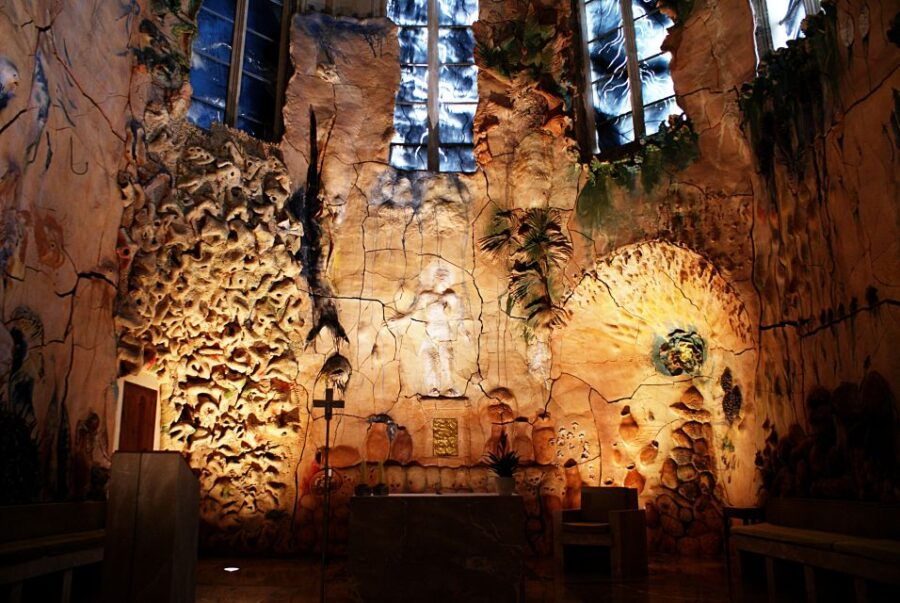
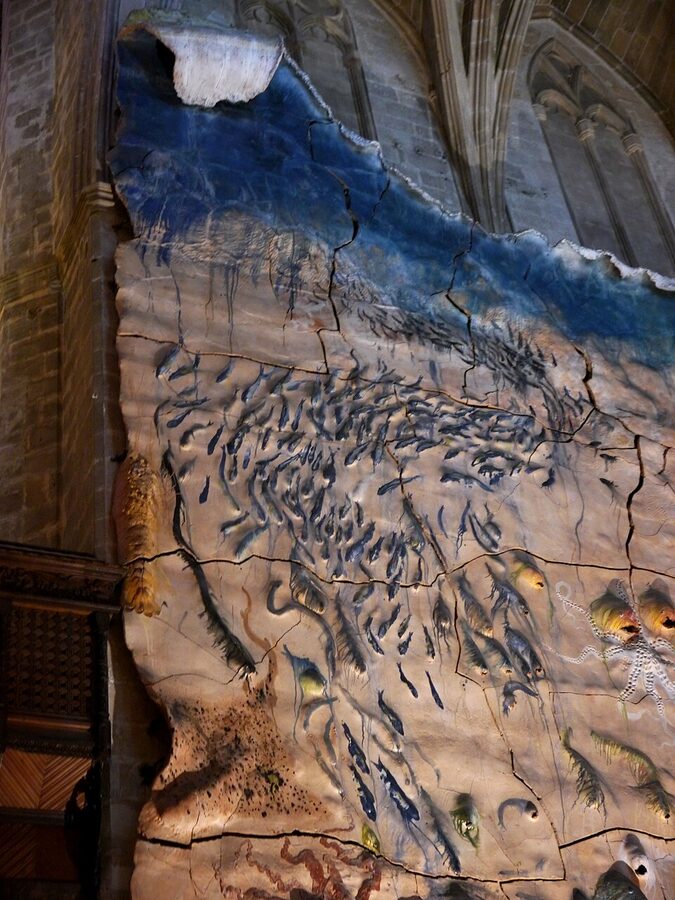
Walk to the right of the high altar and you’ll find the Capella del Santíssim, the chapel of the Holy Sacrament. It was redesigned by Mallorcan artist Miquel Barceló between 2001 and 2007. The walls are made of around 300 square metres of fired ceramic that looks like the floor of the sea has crawled up the wall, with fish, octopuses, fruit and bread shapes pressed into the clay. The ceiling glows red. It’s the most polarising part of the cathedral. Some people stand in front of it for ten minutes; some walk past muttering.
The organs and the rose window
There are two organs. The main one, on the left side of the nave, dates to 1795 and was rebuilt in the 1990s. It’s still played at mass and at the occasional concert. The smaller, older organ tucked higher up the wall is the one you might catch if you take the terrace tour, when you stop near it on the climb to catch your breath.
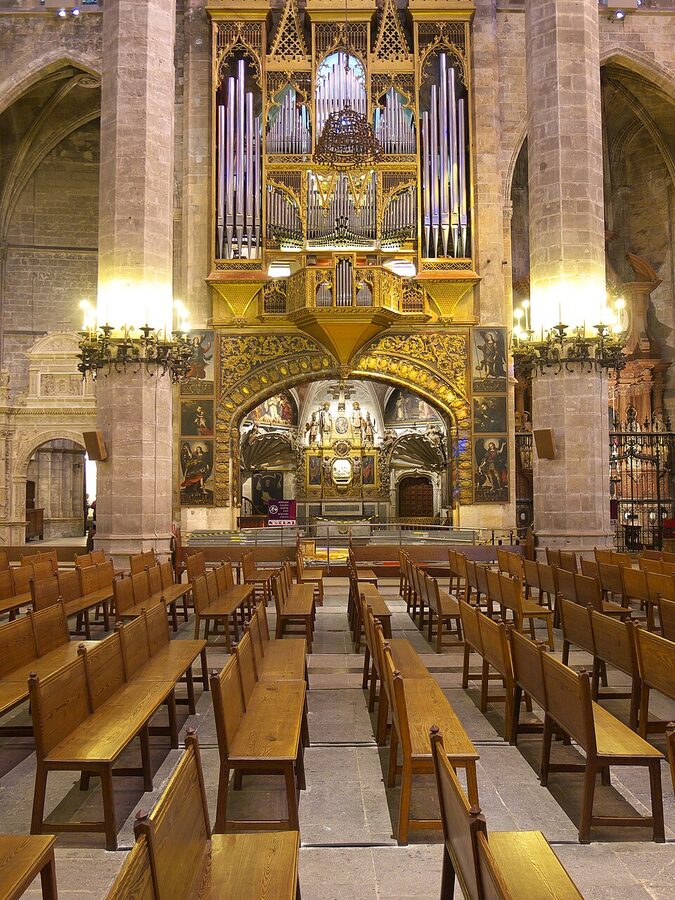
And the rose window itself. From the ground it doesn’t look that big until you realise it’s seven metres across. The eight-pointed star at its centre is the geometric backbone. The 1,236 panes are mostly nineteenth-century replacements, since the originals didn’t survive the centuries, but the design is medieval. Stand in the middle of the nave and look at where the colour falls on the floor. That’s your timing cue for the famous February and November alignment.
The terrace tour, separately
This is the one most visitors miss. La Seu offers a guided one-hour tour of the rooftop terraces, which involves climbing about 215 steps up the spiral staircase on the south side. You walk between the flying buttresses, past the bells, and out onto the front of the cathedral with the whole bay of Palma in front of you.
A few practical notes:
- It’s a separate booking and a separate ticket, around 20 euros, and includes cathedral entry.
- It runs only from 2 May to 31 October. In winter the rooftops are closed.
- Children under 11 are not admitted, and under-18s need a parent. Bring photo ID.
- No toilets on the climb or at the top. Plan accordingly.
- You need to be reasonably fit. The stairs are narrow, uneven, and the last section is steep. Skip it if you don’t like heights or tight spaces.
- Slots sell out two or three weeks ahead in summer. Book before you fly.
I’d put the terrace tour above the standard ticket if you can only do one and you’re physically up to it. The view is what you came to Mallorca for, and it lasts about ten minutes once you’re up there.
Dress code, behaviour, and the things wardens stop you for
There’s no formally enforced dress code, but it’s a working cathedral and the staff have seen everything. The general rule is to cover shoulders and knees. In practice, a t-shirt and shorts is fine; bikini tops and very short hot pants are not. If you’ve come from the beach in summer, throw on a sarong. The ticket office at the entrance has a small selection of cheap shawls if you’re caught out.
Other things you’ll see wardens politely intervene about:
- Phones on speaker. Quiet headphones are fine; videos with sound are not.
- Flash photography. Allowed without flash, even in the Barceló chapel. Not allowed during mass.
- Eating, drinking, or carrying open ice creams. The seaward queue runs alongside ice-cream sellers; finish before you go in.
- Climbing onto pews or sitting on the altar steps for photos.
- Dogs, with the exception of guide dogs.
Combining the cathedral with the rest of Palma
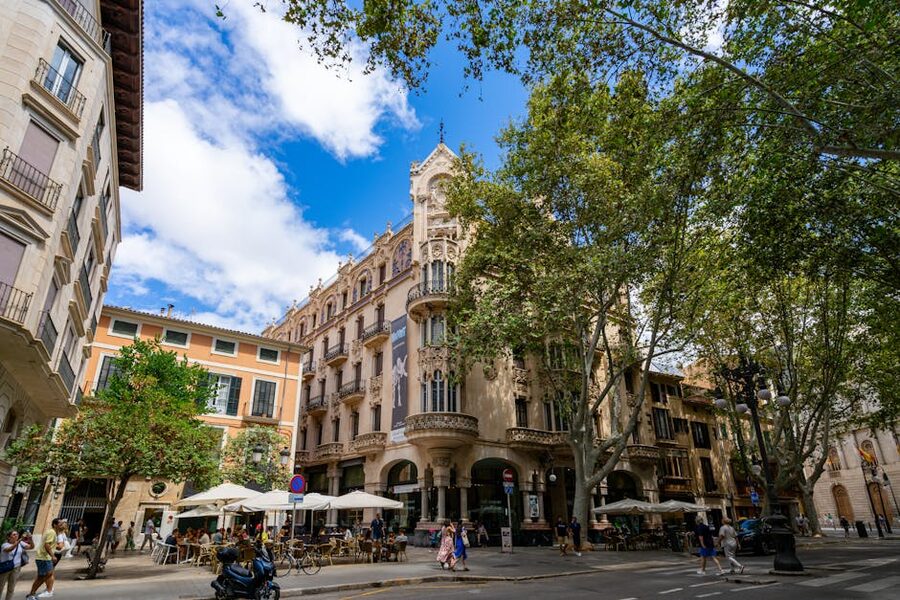
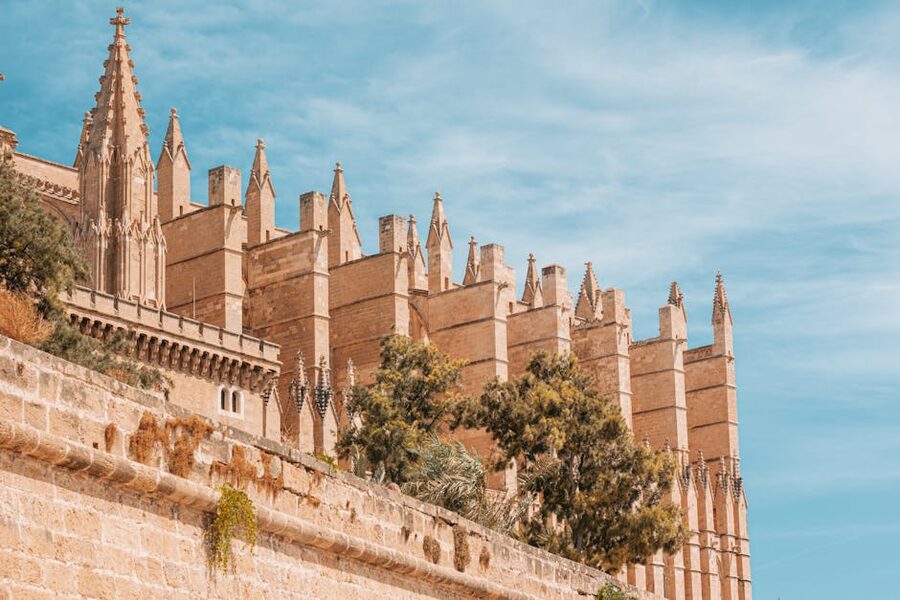
La Seu sits at the southern edge of Palma’s old town, a few minutes from the main shopping street, the Almudaina Palace, and the Arab Baths. You can see the cathedral on its own in 90 minutes, but I think it works better as the spine of a longer walking morning.
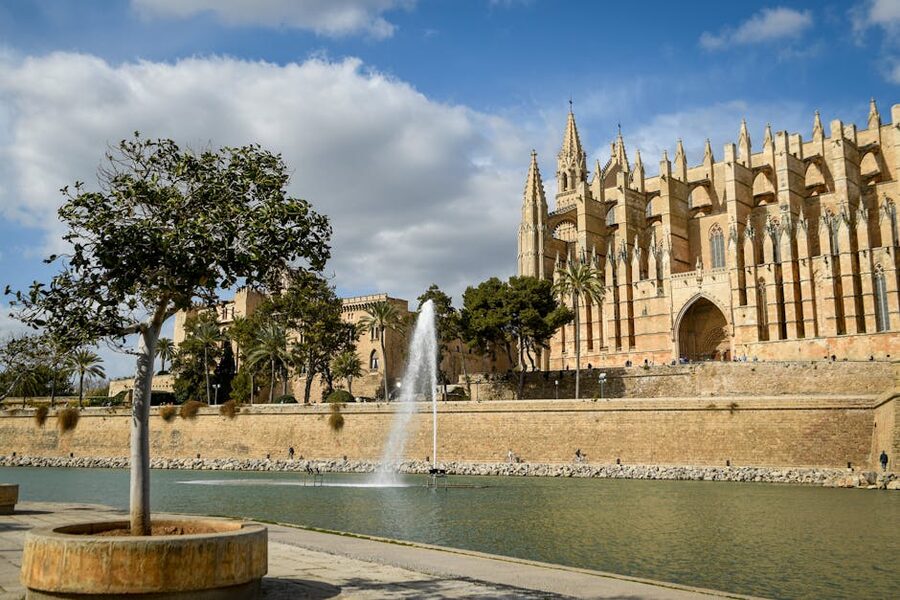
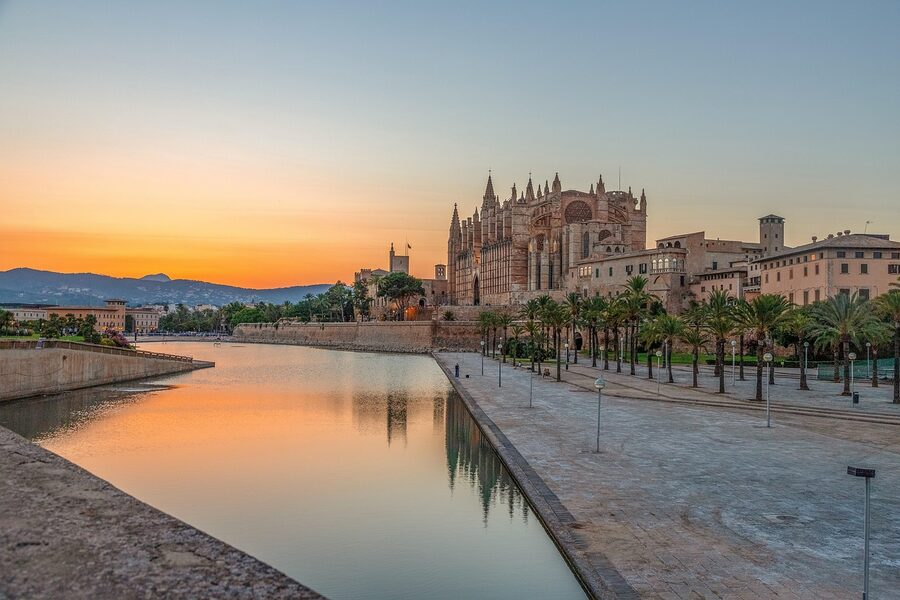
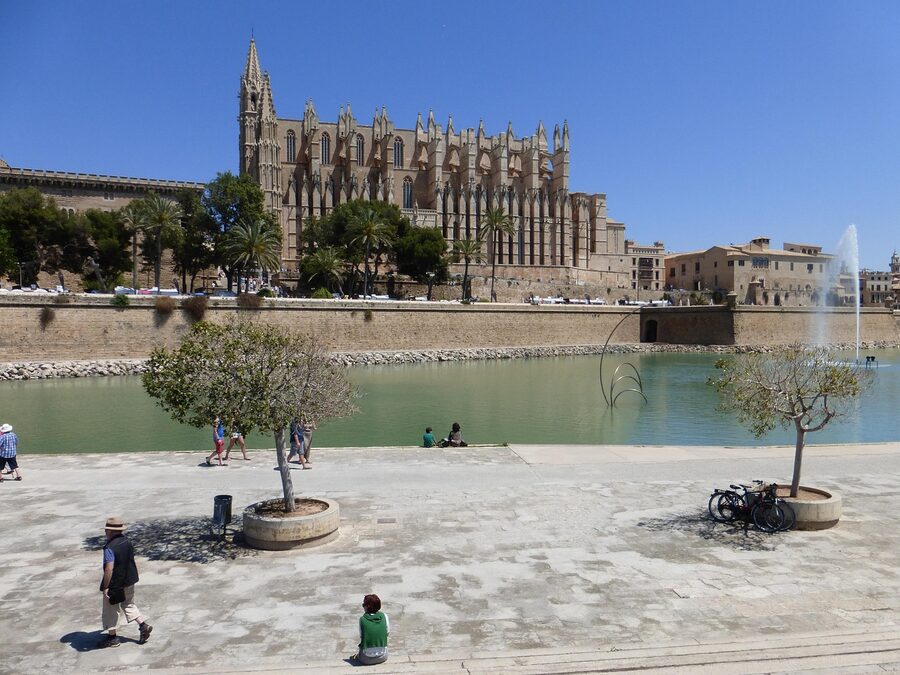
A typical good morning runs roughly: arrive at Parc de la Mar around 9:30am for the photo, into the cathedral at 10am opening, an hour inside, then through the Almudaina, up Carrer del Palau Reial to the Plaça de Cort, and so on into the old town. By 1pm you’re at lunch in a courtyard restaurant. The city walking tour with the cathedral packages exactly this, and the old town and cathedral tour covers the same ground at a slightly faster pace.
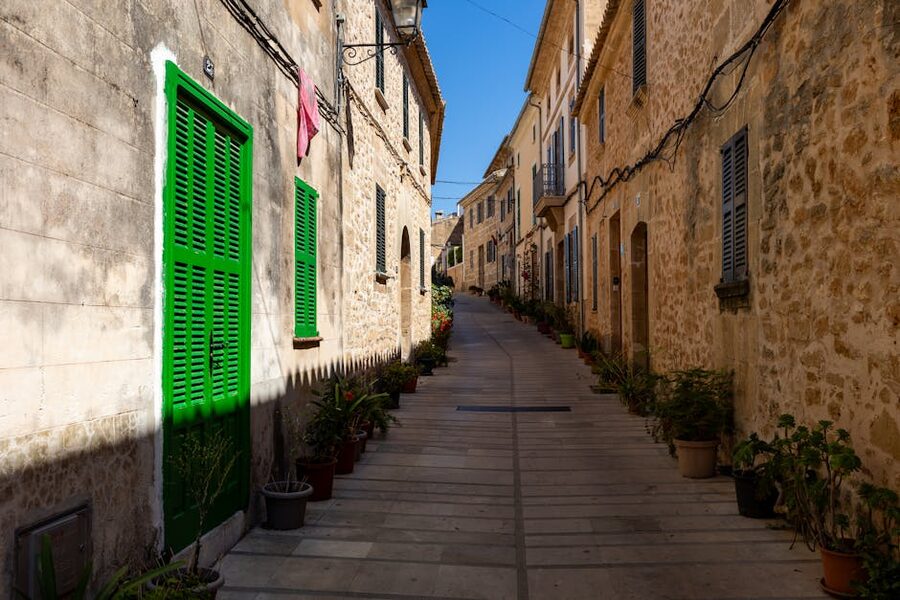
For a longer day, pair the cathedral with Valldemossa and the Tramuntana. The cathedral plus Valldemossa walking tour is the cleanest version. You can also do this independently with a hire car, but the parking in Valldemossa is brutal in summer and the small-group tour bypasses that pain.
If you want a fuller island day
Sightseeing in Palma alone can run thin after a day. If you have two or three days, fold the cathedral into a wider Mallorca itinerary. A morning at La Seu, an afternoon on the water with a Palma catamaran cruise, and a full day on the classic boat-tram-train island tour covers the city, the coast and the mountains in fairly mellow chunks. The hop-on hop-off bus works as cheap shuttling between sights on day one if you’re staying near the port.
How La Seu compares to the other big Spanish cathedrals
If you’re touring Spain on a wider trip, you’ll probably also see Seville Cathedral and the Mezquita of Córdoba. La Seu sits in a useful middle place between them. Seville is bigger, heavier, and built around the tomb of Columbus. The Mezquita is a converted mosque with a forest of red-and-white arches that’s unlike anywhere else in Europe. La Seu is comparatively light: high, airy, and built on a former mosque the way the Mezquita is, but pushed in an entirely different direction.
If you’ve only got time for one Spanish cathedral on your trip, Seville is probably the answer. If you’ve got time for two, La Seu is a far more interesting second choice than the obvious Madrid options. The closer comparison architecturally is actually the cathedral at Barcelona, but the Mallorca version has Gaudí’s fingerprints in a way the Barri Gòtic doesn’t.
A short history, the bits worth knowing
King James I of Aragon promised the Virgin Mary a cathedral if he survived the storm carrying him toward Mallorca in 1229. He did, took the island from its Almohad rulers, and the foundation stone went down on the site of Palma’s main mosque in 1230. Construction took 350 years and was officially finished in 1601, though as with all big cathedrals nothing was ever entirely finished.
The 1851 earthquake cracked one of the western façades and pieces had to be rebuilt. The Gaudí project ran from 1904 to 1914. Barceló’s chapel was unveiled in 2007. Each phase shows. You can read the building like layers of sediment if you know what to look for.
What ‘La Seu’ actually means
‘Seu’ is the Catalan word for ‘see’ as in ‘episcopal see’. La Seu means ‘the seat’, short for the seat of the Bishop of Mallorca. Locals call it that, never ‘Catedral de Palma’. If you’re asking for directions, La Seu is the word that works.
When to go: best time of year and time of day
The two big-occasion days are 2 February and 11 November, when the rose-window alignment happens. If you can arrange your trip around either, do. Mallorca in early February is cold and wet by Mediterranean standards but the cathedral is warm inside, and the festival pulls in real Mallorcan crowds rather than just tourists. November is the better month overall: fewer cruise ships, fewer queues, prices down.
Outside those dates, my preferences:
- Best month: May. Long days, no peak heat, terrace tour open from 2 May, queues still short.
- Worst month: August. Crowded, hot outside, often hot inside despite the stone walls. Cruise schedules dump multiple ships in port at once.
- Best time of day: 10am. First entry, light still raking sideways, fewer phones up. Save 11am to 1pm for the old town and lunch.
- Worst time of day: 4pm in summer. The light has flattened, the queues have stacked, and they’re starting to think about closing up.
Getting there
From Palma airport, take a taxi to Plaça de la Reina (about 15 minutes, 25 euros) or the EMT bus number 1 to Plaça d’Espanya then a 10-minute walk south. From the cruise port, it’s a 25-minute walk along the seafront, or a 5-euro taxi. From the train and bus station at Plaça d’Espanya, it’s an easy 12-minute walk down through the old town.
If you’re driving, don’t. Old-town parking is a bad idea on a normal day and a worse one in summer. Use the underground Parc de la Mar car park if you must drive in, then walk up the steps to the cathedral.
What I’d skip
The audio guide. It’s available, it’s competent, and I’ve found it less interesting than walking the cathedral with a guide on the small-group tours. If you’re going alone with a skip-the-line ticket, just download a basic floor plan to your phone and look up at things. The Wikipedia page on La Seu is, frankly, more useful.
The combined cathedral plus Almudaina ticket sometimes pushed at the door. If you’re tight on time, you’ll get more from spending another 20 minutes in La Seu than from rushing through the palace. The Almudaina deserves its own visit.
Frequently asked, briefly
Can you go inside for free? Yes, if you go to attend mass rather than to sightsee. Tourists get redirected to the ticket queue.
Are children admitted? Yes to the cathedral itself, free under 12. No to the terrace tour for under-11s.
Is the cathedral wheelchair accessible? The main floor is. The terrace tour is not.
Can I see the Barceló chapel without the rest? No. It’s part of the standard ticket. Worth the whole admission on its own.
How long should I budget? 60 to 90 minutes for the interior, plus an hour for the terrace tour if you take it.
Is the dress code strictly enforced? Not aggressively, but you’ll be turned away in beachwear.
If you want more from your time in Spain
Mallorca is the island bit; the rest of Spain has its own draws if you’re stitching a longer trip. Granada’s Alhambra is the obvious next stop for anyone who’s enjoyed the Moorish DNA underneath La Seu. Barcelona is the obvious Gaudí pilgrimage if his work in the cathedral has caught you, with La Pedrera alongside Sagrada Família and Park Güell. And the Madrid-Toledo-Segovia run handles the central plateau if you want a different palette of buildings to compare with.