Mount Agung is Bali’s highest volcano, and climbing it in darkness for sunrise is a serious mountain outing, not a casual holiday stroll. I like that the hotel transfer is included, and that a guide can help you manage steep, loose volcanic ground where careful footing matters.
I also like the chance to watch dawn from high above Bali, with views that may reach Mount Batur and Lombok’s Mount Rinjani. The catch is the effort: expect a long climb, a rough descent and little sleep. The Pasar Agung route may reach a crater-side viewpoint rather than Mount Agung’s true summit.
- Key points before you book
- What the Mount Agung climb is really like
- The late-night pickup and drive to the mountain
- The climb by headlamp
- Sunrise above Bali
- Breakfast, the descent and the long ride home
- What to bring and how to prepare
- Price, value and choosing the right volcano
- Is this Mount Agung trek for you?
- FAQ
- How high is Mount Agung?
- Where does the Pasar Agung trek start?
- Does this route reach Mount Agung’s true summit?
- What time is hotel pickup?
- How long does the hike take?
- What is included in the package?
- What should I bring?
- Who should not take this hike?
- The Best Of Bali!
- More Hiking & Trekking Tours in Bali
- More Tours in Bali
- More Tour Reviews in Bali
- Not for you? Here's more nearby things to do in Bali we have reviewed
Key points before you book
 1 / 2
 2 / 2
- The climb is strenuous: Steep inclines, loose rock and volcanic sand make both the ascent and descent demanding.
- Sunrise comes after a sleepless start: Pick-up is listed at about 9pm, with the hike scheduled to begin around 11pm.
- The route may not reach the true summit: The Pasar Agung approach can stop at a lower crater-rim viewpoint.
- Guides make a real difference: Some, including guides named Leni, Mudia and Kadek Dana, are praised for pacing, encouragement and help on tricky sections.
- Transfers and basic supplies are included: Expect hotel transport, a guide, water and some breakfast, but check what you will carry yourself.
- Choose this for a challenge, not an easy sunrise: If you want a gentler volcano outing, Mount Batur is the more suitable alternative.
👉 See our pick of the Best Shopping Tours In Bali
What the Mount Agung climb is really like
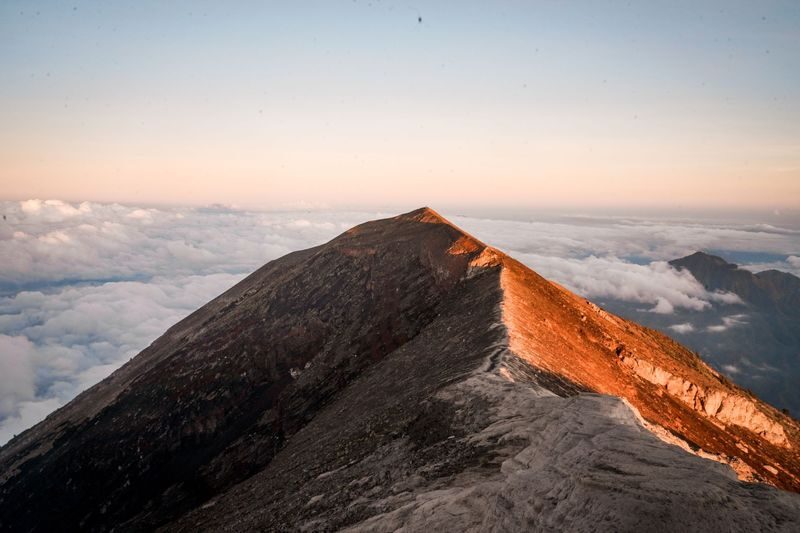
At 3,142 metres, Mount Agung is Bali’s highest mountain, and the climb asks for more than enthusiasm. You gain height on a steep trail, often in the dark, over rocky volcanic ground and loose sand. Some sections involve scrambling, and the descent can be just as taxing as the way up.
The goal is sunrise, but a clear view is never guaranteed. Weather can change, and the route’s endpoint is worth checking carefully: the Pasar Agung approach does not always reach the true summit. The old path along a narrow crater rim was damaged, so the sunrise viewpoint may be below the highest point. You can still get a powerful view from there, but if standing on the top is your main reason for booking, confirm the current route and destination first.
This is not a guided walk where you can switch off and follow a smooth path. You need to watch your footing, manage your pace and save energy for the return. A guide can show you where to step and when to rest, but you still need a reasonable level of fitness and confidence on uneven ground.
You can also read our reviews of more hiking tours in Bali

The late-night pickup and drive to the mountain
The scheduled pickup is around 9pm, though the exact time depends on where you are staying. Hotel transfers cover areas including Kuta, Legian, Seminyak, Canggu, Denpasar, Sanur, Ubud, Nusa Dua and Jimbaran. The driver takes you to the starting area near Pasar Agung Temple, where the climb is scheduled to begin around 11pm.
That leaves little time for sleep, so plan your day around the outing. Keep the evening free, have an early meal and lay out your gear before the driver arrives. Be ready in the hotel lobby five minutes before your confirmed pickup time. The driver may leave after waiting ten minutes, and the trek is not something you want to begin in a rush.
The drive itself can be part of the experience. Some drivers share tips or talk about the mountain and Bali along the way. Drivers named Putu and Putu Adi have received particular praise for being punctual, friendly and careful. The quality of conversation will vary, but a reliable transfer is valuable when you are leaving in the middle of the night and returning tired.
There is a practical detail to settle before departure: pickup and hiking times can vary with location, weather and operator arrangements. The listed schedule is a guide, not a promise that every group will start at precisely the same hour. Confirm your pickup and the current meeting point directly before the activity.
The climb by headlamp
At about 11pm, the hike begins. Your headlamp lights the trail, but the dark can make the steep ground feel more demanding. On the way up, you may encounter loose stones, sand and sections that call for scrambling. One account describes roughly a third of the route as straight scrambling, so sturdy footwear with good grip is more than a nice extra.
The climb is commonly described as a long, hard effort. Some people reach the upper viewpoint in around five to six hours, while other groups take longer. Pace, weather and fitness all matter. Guides may build in frequent rest stops, which help you keep going, though you could also find yourself waiting near the top before sunrise.
Good guides are one of the strongest reasons to book a guided outing rather than attempt the mountain alone. Leni has been praised for helping climbers over slippery ground and supporting them on the descent. Mudia and Kadek Dana have also been singled out for patience and encouragement. Some guides offer clear pointers on where to place your feet and how far you have left to the next rest point. English ability and communication can vary, though, so ask in advance what language support to expect.
The praise is not universal, and that matters on a route this demanding. Some climbers have found a guide attentive and reassuring; others have felt that their guide walked too far ahead or gave little explanation. At the start, make your pace and comfort level clear. If you need a break or cannot safely manage a section, say so rather than trying to keep up at all costs.
Sunrise above Bali
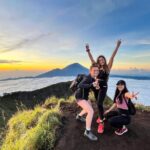
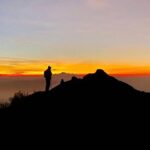
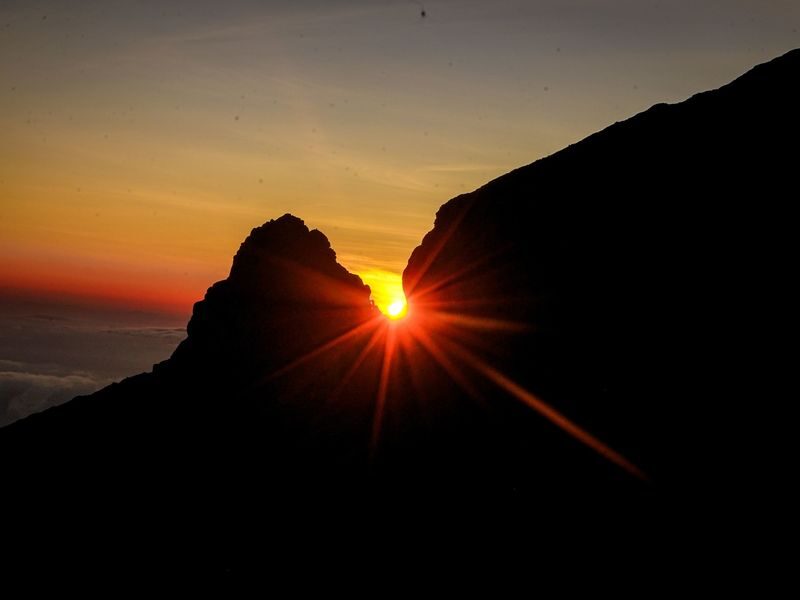
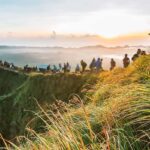
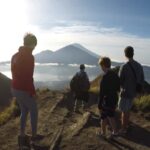
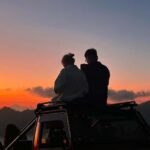
The schedule allows for arrival near the top around 5:30am, with sunrise around 6am. If the weather cooperates, the view can be spectacular: Mount Batur and Mount Rinjani may appear on the horizon, with the sunrise unfolding over a volcanic landscape. Some climbs also offer a look toward Mount Agung’s crater. This is the payoff, but the exact view depends on cloud, wind and visibility.
Not every climb reaches the highest point, and not every sunrise is visible. One account describes missing the sunrise altogether; another describes waiting before dawn at a viewpoint below the true summit. Take the climb for the mountain experience as a whole, not on the assumption that a particular photo or summit point is guaranteed.
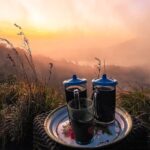
The altitude brings cold, especially after hours of climbing and waiting. Bring a thick jacket or sweater, and keep it accessible rather than buried at the bottom of your pack. Sunglasses and sunscreen become useful once daylight arrives, while a camera can capture the view if conditions are clear. A warm drink may be provided by a guide, but do not count on extras unless the operator confirms them.
Breakfast, the descent and the long ride home
Breakfast is scheduled at the top around 7am. The word breakfast can suggest a full meal, but what is provided may be simple, such as snacks or packaged food. You may need to carry your own food and water, so confirm what the guide supplies and pack extra snacks. Several climbers have found that they carried the provisions themselves rather than receiving them at the top.
Then comes the descent, which deserves as much respect as the ascent. Loose volcanic sand and small stones can make the trail slippery, and tired legs have to control every step. Some people find downhill harder than uphill. Trekking poles and gloves, when supplied, can help, but they do not remove the risk of slipping. Take your time and stay close enough to your guide to get help with difficult footing.
The full outing takes much of the night and morning, and the return drive can leave you ready for a quiet afternoon. The listed schedule does not give a firm hotel return time, and weather, traffic and hiking pace can all affect the day. Do not schedule a tight appointment or a demanding activity afterward.
You can also read our reviews of more tours and experiences in Bali
What to bring and how to prepare
Choose grippy hiking shoes and warm layers. Pack a headlamp or flashlight, a backpack, personal medication, water, snacks, cash and a change of clothes. Sunscreen and sunglasses are useful once the sun is up. A rain layer is sensible too: conditions can shift, and rain can make already slippery ground harder to manage.
Check what is included before you set out. The package lists a guide, breakfast, bottled water, necessary equipment, tolls, parking, fuel and round-trip hotel transfers. Accounts of the equipment and provisions vary: some climbers describe receiving a headlamp, poles, gloves, several litres of water and snacks, while others say they had to carry food and water themselves. Ask the operator what will be handed to you at the start, and bring enough to avoid relying on assumptions.
This is not recommended for anyone with impaired mobility, pregnancy or certain medical conditions, including high blood pressure or epilepsy. Participants must be at least 10, but meeting the age rule does not make the climb suitable for every child. If you are uncertain about your fitness, speak with a medical professional and the operator before booking. The climb involves sustained walking, steep sections and a long descent.
Price, value and choosing the right volcano
The experience is advertised from about US$39.75, while the Pasar Agung package is also shown from US$34.59. Actual prices can vary by package and date, so check the final amount before paying. For a guided climb with hotel transport, the price can be reasonable, especially if your priority is reaching a remote trailhead without arranging a driver yourself.
The value depends heavily on what you expect from the service. Transfers are a useful part of the package, and a strong guide can add real support on rough terrain. But breakfast may be modest, and you may carry your own supplies. If you are comparing prices, ask what equipment, water and food are included, how much English the guide speaks, and which route and endpoint you will take.
There is also a route choice to clarify. The current package information centers on the Pasar Agung starting point, while the climb’s endpoint may be below the true summit. Do not assume that a package name promising a 3,142-metre summit guarantees access to that exact point. Ask the operator what is reachable on your date and whether any route or temple closures are expected.
Weather and religious events can also interrupt plans. A climb may be canceled in extreme weather or because of unforeseen circumstances, and Mount Agung has been closed for religious ceremonies. If that happens, an alternative such as Mount Batur may be offered, sometimes with a price adjustment. Keep your schedule flexible and check the change and cancellation terms before booking.
Is this Mount Agung trek for you?
Book it if you are an experienced hiker, or at least someone comfortable with long, steep walks on loose ground, and if you are prepared to sacrifice a night’s sleep for a sunrise attempt. The view can be extraordinary, and a careful guide can make the climb feel safer and more manageable. Go in with realistic expectations about the route, the breakfast and the possibility that weather will hide the sunrise.
Skip it if you want a relaxed outing, dislike scrambling, have medical or mobility concerns, or need to reach a guaranteed summit point. Mount Batur is the better choice for a more leisurely volcano hike. For Mount Agung, confirm the route, endpoint, pickup time and supplies before you commit, then bring warm clothing, proper shoes and enough energy for the way down.
Mount Agung Sunrise Trekking in Bali
“The guide was very nice, but unfortunately we didn't get to see the sunrise. It's still too difficult for the average person.”
FAQ
How high is Mount Agung?
Mount Agung is 3,142 metres above sea level and is Bali’s highest mountain.
Where does the Pasar Agung trek start?
The package described here starts from the Pasar Agung Temple area. Confirm the current starting point with the operator before your activity.
Does this route reach Mount Agung’s true summit?
Not necessarily. The Pasar Agung route may reach a crater-side viewpoint below the true summit because the old crater-rim path was damaged. Confirm the current endpoint before booking.
What time is hotel pickup?
Pickup is listed at about 9pm, with the exact time depending on your hotel location. The operator is expected to reconfirm your pickup time in advance.
How long does the hike take?
The schedule allows about six and a half hours from the planned 11pm start to arrival near the top at 5:30am. Actual climbing time varies, and the descent takes several more hours.
What is included in the package?
The package includes a professional guide, breakfast, round-trip hotel transfers, necessary equipment, bottled water, admission, and toll, parking and fuel fees. Confirm exactly what food, water and equipment you will receive.
What should I bring?
Bring warm clothing, hiking shoes, a backpack, water bottle, snacks, personal medication, a headlamp or flashlight, cash, sunglasses, sunscreen, a camera and a change of clothes.
Who should not take this hike?
It is not recommended for people with impaired mobility, pregnant women or people with certain medical conditions, including high blood pressure or epilepsy. Participants must be at least 10 years old and fit enough for a demanding climb.