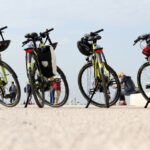
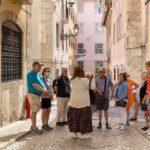
Lisbon’s hills are part of its character, but they can turn a city bike ride into a workout. This 2.5-hour tour links central landmarks with broad viewpoints, and an e-bike makes the uphill stretches much more manageable.
I like two things in particular: the route puts the 1755 earthquake into context at the Carmo Convent ruins, and it gives you a quick sense of how the old center connects to the riverfront and the newer avenues. One consideration: traffic, uneven paving and tram rails call for steady attention, so this is not a carefree ride for a nervous or inexperienced cyclist.
At a glance
- The Carmo Convent ruins introduce the earthquake that reshaped Lisbon.
- Praça do Comércio and the waterfront bring you down to the Tagus, with views toward Alfama.
- Parque Eduardo VII and São Pedro de Alcântara offer two different panoramas over the city.
- An e-bike is the practical choice for many riders, given Lisbon’s steep streets.
- Guides add local context and tips, though you should confirm your preferred tour language before booking.
- The route covers a lot in 2.5 hours, but the pace and city traffic leave less time for lingering at each stop.

👉 See our pick of the 19 Best Shopping Tours In Lisbon
- At a glance
- Starting among Lisbon’s rebuilt streets
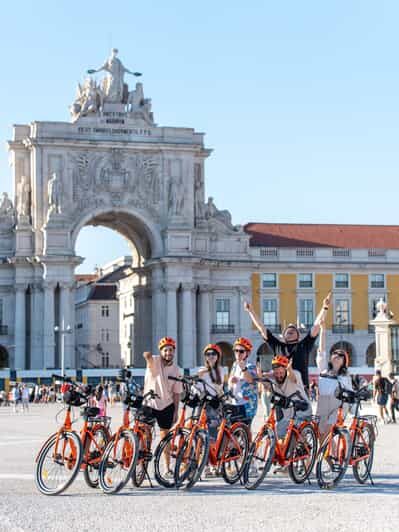
- From Pink Street to Praça do Comércio
- Rossio, Restauradores and the city’s central rhythm
- Climbing toward Marquês de Pombal and Parque Eduardo VII
- Príncipe Real and the São Pedro de Alcântara view
- What the ride feels like on two wheels
- Guides, language and group feel
- Is good value?
- Who should book this ride?
- FAQ
- How long is the tour?
- Where does the ride start and finish?
- Can I choose between a regular bike and an e-bike?
- What sights and neighborhoods does the route cover?
- Which languages are available?
- What is included in the price?
- Are food and hotel transportation included?
- What should I bring, and can I cancel?
- The Best Of Lisbon!
- More Cycling Tours in Lisbon
- More Tours in Lisbon
- More Tour Reviews in Lisbon
- Not for you? Here's more nearby things to do in Lisbon we have reviewed
Starting among Lisbon’s rebuilt streets
 1 / 8
 2 / 8
 3 / 8
 4 / 8
 5 / 8
 6 / 8
 7 / 8
 8 / 8
The ride begins at R. da Condessa 59, in central Lisbon. From there, the route heads to the Carmo Convent, where the roofless Gothic ruins serve as a striking reminder of the 1755 earthquake. Your guide explains how the disaster altered the city and led to the rebuilding that shaped the center you see today.
This is a useful place to start because it gives the ride a thread beyond sightseeing. Lisbon’s squares and streets are not simply a sequence of handsome backdrops; their layout reflects a city forced to recover from catastrophe. A guide can help you read that story as you move through the neighborhoods.
The tour continues through Chiado and Praça Luís de Camões. These central streets show a different side of Lisbon from the medieval lanes and riverside monuments: more shops, cafés and everyday city movement. You pass through rather than stopping for a long visit, so think of this stretch as orientation, not time set aside for shopping or a café break.
You can also read our reviews of more cycling tours in Lisbon

From Pink Street to Praça do Comércio
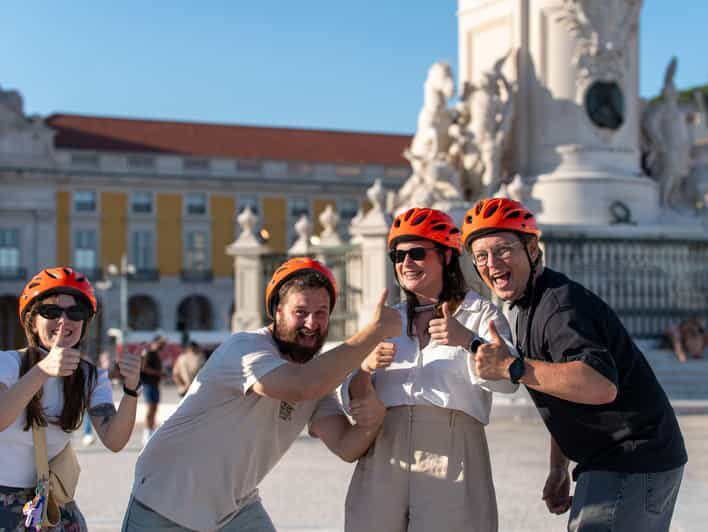
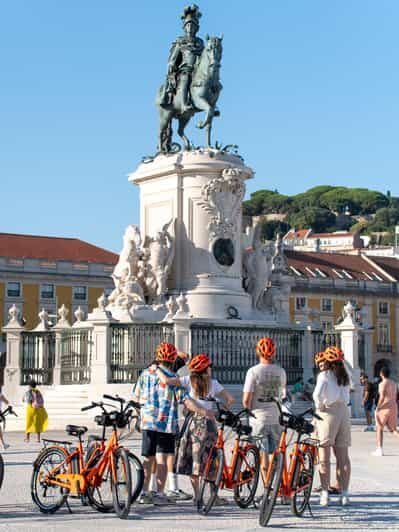
The route descends toward Pink Street and the Tagus. Pink Street is a quick landmark stop, while Praça do Comércio is the bigger historical pause: a monumental square beside the river and a key symbol of Lisbon’s post-earthquake reconstruction.
The scale here matters. After the tighter streets inland, the open square gives you room to take in the waterfront and the orderly architecture of the rebuilt center. It is also a natural point to connect the guide’s account of the earthquake with the city’s physical layout.
From the riverfront, you cycle with views toward Alfama, Lisbon’s oldest district. The route then reaches the Sé de Lisboa, the historic cathedral. Alfama is described as a pass-by rather than a long neighborhood walk, so you get a view and a sense of its position above the river, but not an extended wander through its lanes.
That distinction is worth keeping in mind when you book. This tour is designed to cover ground by bike; it cannot offer the same close-up experience as exploring Alfama on foot. I would use the ride to identify places you may want to revisit later.
Rossio, Restauradores and the city’s central rhythm
The ride returns through the center to Rossio Square and Praça dos Restauradores. These major squares help you understand Lisbon as a capital, not only as a collection of historic neighborhoods. The guide shares stories about the city’s past and its development, while the route gives you a quick look at the central streets between the river and the higher districts.
Praça dos Restauradores includes a little free time in the stated schedule, but the tour overall is still a moving overview. You may have a chance for a photo or a short pause, rather than a leisurely stop at every landmark. Some riders have found the pace brisk, so keep your camera ready and save longer visits for after the ride.
Climbing toward Marquês de Pombal and Parque Eduardo VII
The route then shifts from the old center toward Marquês de Pombal, named for the statesman closely associated with Lisbon’s rebuilding after the earthquake. From there, you continue to Parque Eduardo VII, where the view opens across central Lisbon toward the Tagus.
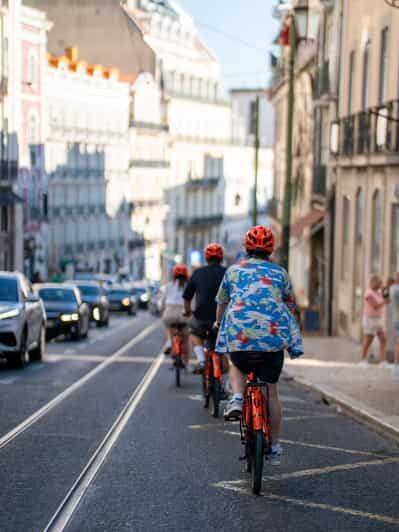
This section helps explain why the bike is useful. The tour links the lower historic center with higher ground, and the city’s slopes are not a minor detail. An e-bike gives you extra assistance on the climbs and makes it easier to keep pace with the group; a regular bike is available, but expect more physical effort.
The park’s wide outlook is a contrast to the close-set streets below. It is a good stop for seeing the city’s broad shape, though the route does not turn into a long park visit. You are there for the panorama and the guide’s commentary before continuing back toward the older quarters.
Príncipe Real and the São Pedro de Alcântara view
On the return, the ride passes through Príncipe Real and its historic garden. This adds a greener, more residential note to a route otherwise centered on squares, monuments and traffic-heavy streets. It also gives you a glimpse of how Lisbon’s neighborhoods change as you climb and descend.
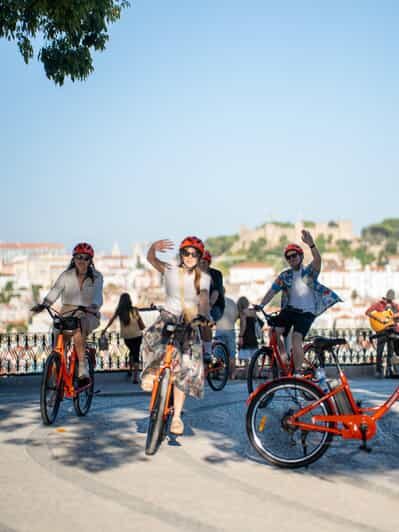
The key viewpoint is Miradouro de São Pedro de Alcântara, overlooking central Lisbon and São Jorge Castle. This is one of the most rewarding stops on the route: from above, the city’s rooftops and hills make more sense, and you can pick out places you have already passed. The panorama is a strong reason to choose this tour over a simple point-to-point ride.
Before returning to R. da Condessa 59, you pass Igreja de São Roque. The stop ties the route back to Lisbon’s older quarters and leaves you close to the central area where the ride began. You should expect a final pass-by and guide commentary, not a full church visit.
You can also read our reviews of more guided tours in Lisbon






What the ride feels like on two wheels
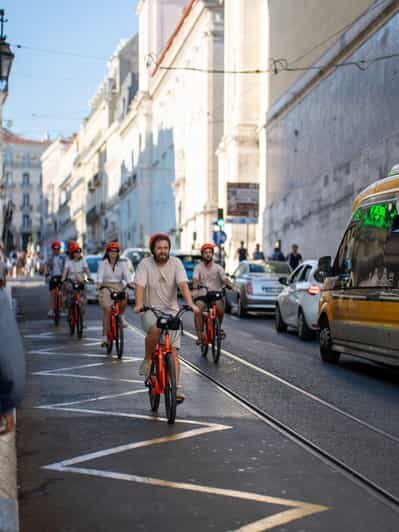
The route mixes sightseeing with the practical challenge of cycling in Lisbon. Riders describe steep streets, busy traffic, worn paving and tram tracks, all of which require care. Cross tram rails at a safe angle rather than letting a wheel run along the groove, and keep your eyes on the surface as well as the guide.
Some riders have felt well looked after in traffic, and guides including Igor, Vipul and Egor have been praised for clear explanations, group care and local suggestions. But tour quality can depend on the day’s guide, group size and equipment. Reports have varied: some riders found their bikes comfortable and suitable, while others encountered unstable bikes, weak brakes, loose saddles or mechanical faults.
Before setting off, check that your brakes work, the saddle stays in place and the bike feels stable. Speak up if anything seems wrong. A good fit matters on a route with hills and tram tracks, and you should not feel obliged to ride equipment that seems unsafe.
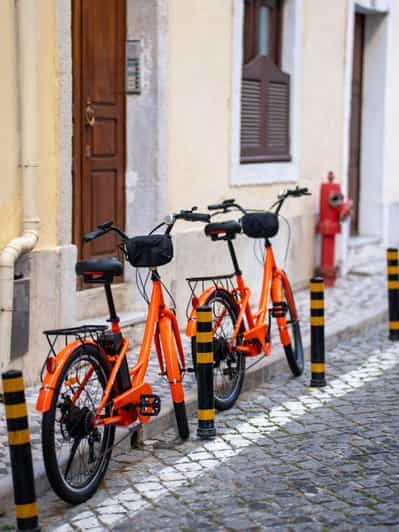
The tour is offered with a regular bike or an e-bike. Given the climbs, I would choose the e-bike unless you are comfortable cycling uphill and want the extra exercise. An e-bike does not remove the need for skill: you still need to control your speed, watch for rails and navigate traffic. If you are new to electric bikes, ask for a brief explanation before the group starts.
Guides, language and group feel
A local guide leads the ride and shares historical stories, neighborhood context and practical recommendations for cafés, restaurants and places to visit afterward. That added context is one of the tour’s strongest features. Instead of only seeing the city’s headline sights, you get help connecting the earthquake, the rebuilt squares and Lisbon’s growth into the capital it is today.
Tours are listed in Dutch, English, French, German, Italian, Portuguese, Russian and Spanish, and private or small-group options are available. However, language arrangements have not always matched what some riders booked. Confirm your preferred language in advance, and ask directly if it is essential; some participants have been offered English instead or an audio translation that did not work smoothly.
Group size can affect the ride, too. Small groups can make it easier to hear the guide and keep a comfortable pace, while a larger group may stretch out in city traffic. Private and small-group options are available, but the exact size is not specified, so check what is offered for your chosen departure.
Is $21 good value?
At $21 per person, the tour is an inexpensive way to cover a broad stretch of central Lisbon with a guide and a bike included. You see historic squares, riverfront streets, several neighborhoods and two major viewpoints in 2.5 hours. For a first day in the city, that overview can help you decide where to return on foot.
The value depends partly on your bike choice. The stated price is the starting price, and an e-bike may cost extra depending on the option you select. That additional cost can be worthwhile if the hills would otherwise slow you down or make the ride tiring. Check the final price for your selected bike before booking rather than assuming the e-bike is included at the lowest rate.
Food, drinks, hotel pickup and drop-off, and personal expenses are not included. You get local recommendations, but should plan your own stops for meals and refreshments. Bring water, sunscreen and a camera, and wear comfortable clothes.
Who should book this ride?
This tour suits you if you want a fast, guided introduction to Lisbon’s layout, enjoy cycling and are comfortable sharing streets with traffic. It is especially useful near the start of a visit: the route covers enough ground to give you a mental map, while the guide can point out areas and viewpoints worth exploring later.
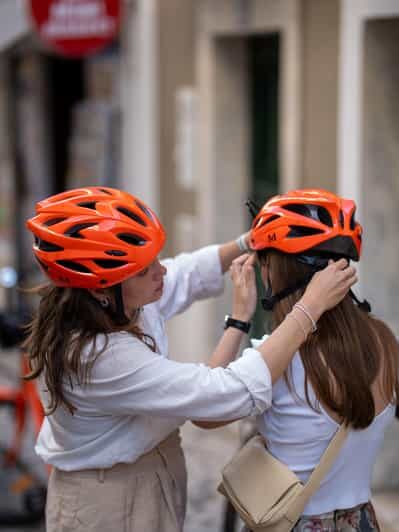
Families can also consider it if everyone can ride safely. Child seats and helmets are available on request, and children aged 11 and 12 have taken part. The tour is not suitable for people who cannot ride a bike or have mobility impairments. If you are unsure about cycling in traffic, ask about the route and group arrangements before booking.
I would skip it if you want a slow, photo-heavy tour with long stops at every landmark. The ride covers a lot, but that comes with a pace, hills and real street conditions. Choose the e-bike, check the equipment and language arrangements, and you have a practical way to see how Lisbon’s old center, riverfront and higher viewpoints fit together.
Lisbon: Guided Bike or E-Bike Tour with Viewpoints
FAQ
How long is the tour?
The tour lasts 2.5 hours. Starting times depend on availability.
Where does the ride start and finish?
It starts and ends at R. da Condessa 59, 1200-121 Lisboa.
Can I choose between a regular bike and an e-bike?
Yes. You can select a regular bike or an e-bike. The e-bike provides extra assistance on hills.
What sights and neighborhoods does the route cover?
The route includes the Carmo Convent, Chiado, Praça Luís de Camões, Pink Street, Praça do Comércio, views toward Alfama, Lisbon Cathedral, Rossio, Restauradores, Marquês de Pombal, Parque Eduardo VII, Príncipe Real, São Pedro de Alcântara and Igreja de São Roque.
Which languages are available?
The tour is offered in Dutch, English, French, German, Italian, Portuguese, Russian and Spanish. Confirm your selected language before booking, as it may not always be available on the day.
What is included in the price?
A regular bike or e-bike, depending on your selection, a local guide, the guided sightseeing tour, historical commentary, viewpoint stops and local recommendations are included. Child seats and helmets are available on request.
Are food and hotel transportation included?
No. Food, drinks, hotel pickup and drop-off, and personal expenses are not included.
What should I bring, and can I cancel?
Bring a camera, sunscreen, water and comfortable clothes. You can cancel up to 24 hours in advance for a full refund.
You can check availability for your dates here: