Leonardo’s ideas can feel startlingly modern when you see them translated from paper into working-size machines. At this small museum beneath the Basilica of Santa Maria del Popolo, you can get close to models based on his drawings, then connect his engineering to the art and science that made him a Renaissance giant.
I like two things here: the life-sized machines make Leonardo’s sketches easier to grasp, and the central location makes a short museum visit easy to pair with a walk around Rome. The main caution is scale. This is not a vast collection, and some attractions inside require a separate fee.
- Key points before you go
- Leonardo’s ideas, brought down to human scale
- A compact museum beneath a major church
- Start with the machines, then look closer
- Art, anatomy, and multimedia context
- How long to allow and what to expect
- The ticket price and what it buys
- Getting there and practical limits
- Who will enjoy this visit most
- Should you book the Leonardo da Vinci Museum?
- FAQ
- Where is the Leonardo da Vinci Museum in Rome?
- What are the museum’s opening hours?
- Is an audio guide included?
- What does the general ticket include?
- How do I use the mobile voucher?
- Do children need to be included in the passenger headcount?
- Is the museum wheelchair-accessible?
- Can I bring food or animals inside?
- The Best Of Rome!
- More Tickets in Rome
- More Tours in Rome
- More Tour Reviews in Rome
- Not for you? Here's more nearby things to do in Rome we have reviewed
Key points before you go
 1 / 5
 2 / 5
 3 / 5
 4 / 5
 5 / 5
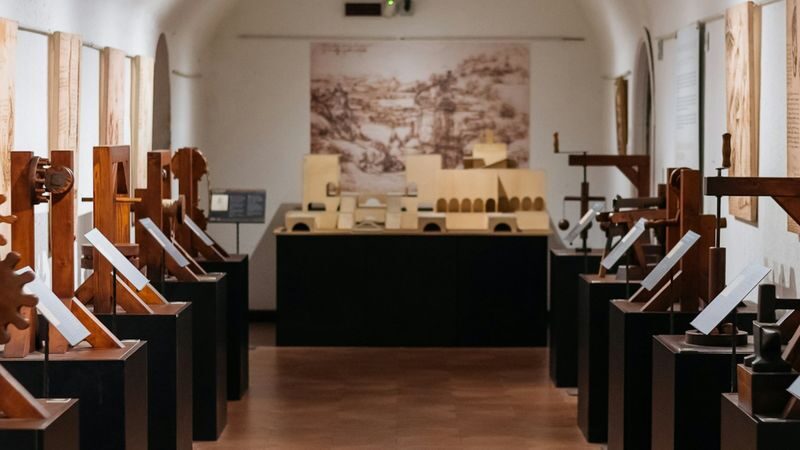
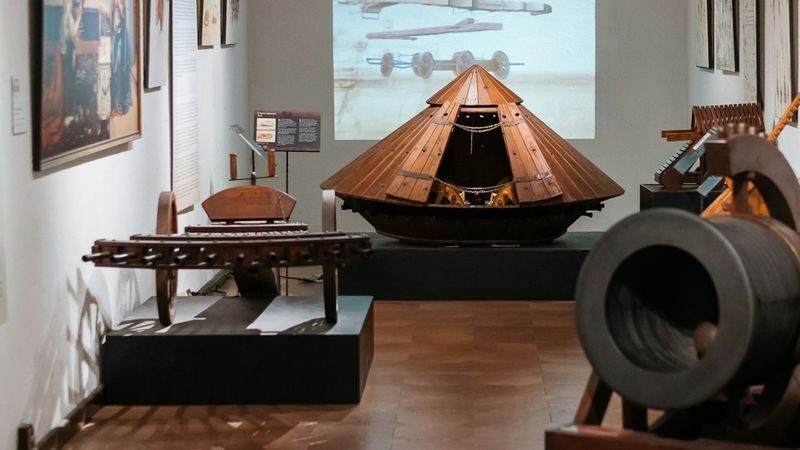
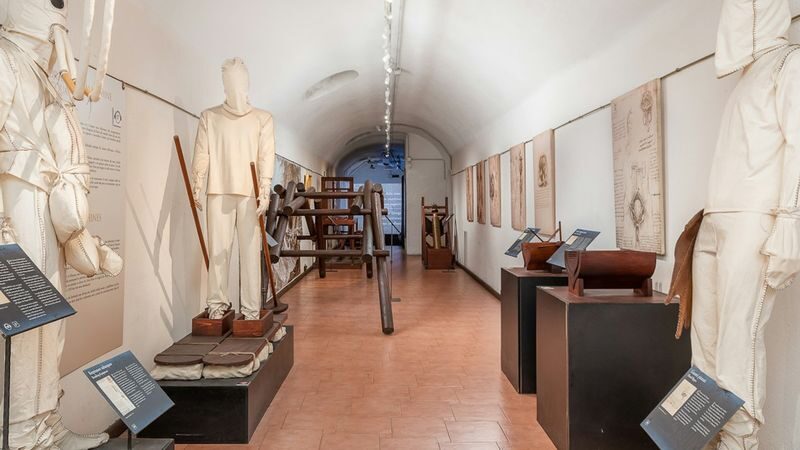
- Machines turn drawings into objects: See life-sized interpretations of inventions based on Leonardo’s manuscripts and notes.
- Art and science share the floor: The museum also covers his anatomical sketches and famous works, including The Last Supper and The Vitruvian Man.
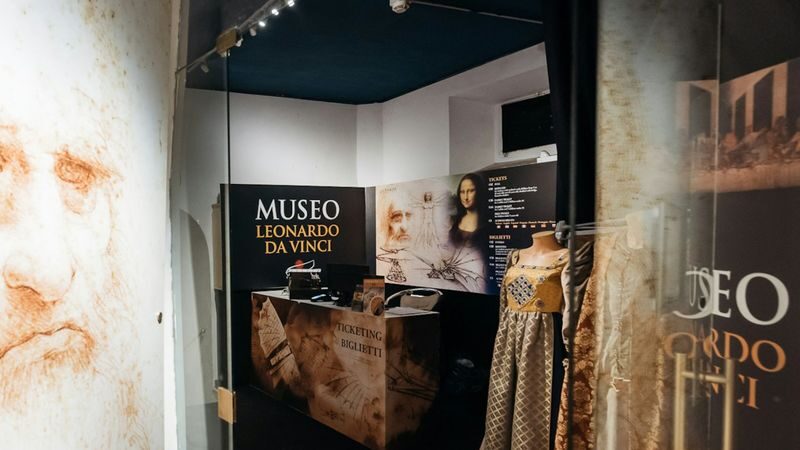
- The setting is unusually central: The entrance is at Piazza del Popolo, beneath the Basilica of Santa Maria del Popolo.
- Plan for a compact visit: The museum is smaller than some visitors expect, so it works best as one stop in a day of sightseeing.
- Audio is an extra: Guides can be bought at the museum in several languages, but they are not included with admission.
- Check access needs first: The museum is not wheelchair-accessible.
👉 See our pick of the 25 Best Guided Tours In Rome
Leonardo’s ideas, brought down to human scale
Leonardo da Vinci is easy to reduce to a short list: painter, inventor, genius. This museum offers a more hands-on way to think about him. Instead of seeing only a reproduction of a famous drawing, you encounter machines built from designs in his notebooks, giving you a sense of how a sketch might translate into a physical object.
That shift matters. Leonardo’s drawings record not just finished ideas but a mind working through problems. A machine model lets you consider what its parts might do, how they fit together, and why a design could have seemed bold in its time. The models are interpretations of drawings and notes, not original machines made by Leonardo himself.
The museum’s appeal lies in connecting several sides of his work. You move among engineering, art, anatomy, and science, rather than treating them as separate subjects. That makes this a useful stop if you know Leonardo mainly through paintings and want a clearer sense of the breadth of his interests.
The experience is also approachable for visitors who are not art specialists. You do not need to arrive with a working knowledge of Renaissance history to appreciate the basic idea: Leonardo looked closely at the world, studied how it worked, and used observation to inform both his art and his inventions.
You can also read our reviews of more tours and experiences in Rome


A compact museum beneath a major church
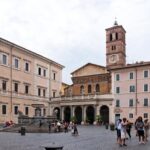
The museum is located beneath the Basilica of Santa Maria del Popolo at Piazza del Popolo, 12. That address puts it in Rome’s historic center, near the Spanish Steps and Villa Borghese, so you can fit it into a day that already includes sights in this part of town.
Its setting adds a little sense of discovery. You are not heading to a huge museum complex on the edge of the city. You are entering a focused attraction tucked below a church, where Leonardo’s machines and images provide a change of pace from Rome’s churches, piazzas, and ancient ruins.
Keep your expectations in proportion, though. The museum is not as large as its broad subject might suggest. If you are imagining hours of galleries or a vast collection of original artworks, this is likely to feel brief. It is better understood as a concentrated introduction to Leonardo’s ideas, with displays that make them more tangible.
That compact scale can be a plus on a busy Rome itinerary. You can spend time with a subject that deserves more than a quick glance without setting aside half a day. It also makes the museum easier to pair with a nearby walk, a meal, or another cultural stop.
Start with the machines, then look closer
The life-sized machines are the most concrete part of the visit. They are based on Leonardo’s drawings and notes, and their size helps you think about the practical questions behind an invention: how it might move, what purpose it might serve, and what Leonardo was trying to solve.
Do not hurry past the models just because you recognize the general idea. Take a moment to compare the physical construction with the concept you can infer from the design. The interest is not only in whether a machine would work as imagined, but in seeing how Leonardo used drawing to test and communicate ideas.
The models also help bridge the gap between Leonardo as an artist and Leonardo as an engineer. His inventions did not emerge from a separate compartment of his mind. They reflect the same habit of close observation that informs his studies of the human body and the natural world.
Some attractions in the museum are optional and carry a separate fee. Keep that in mind before you arrive, especially if you are budgeting carefully or visiting with children who may want to try everything. Admission to the museum itself is included in the general ticket, but that does not mean every additional feature is covered.
Art, anatomy, and multimedia context
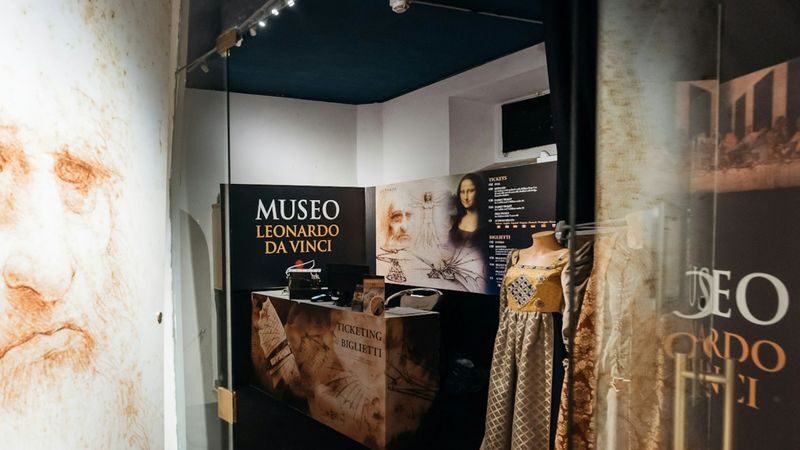
The machines are only part of the picture. The museum also presents anatomical sketches and multimedia material related to works such as The Last Supper and The Vitruvian Man. These displays widen the story beyond invention, showing how Leonardo’s interest in bodies, proportion, and visual composition connects to his broader work.
The multimedia elements can be helpful if a familiar image has become so famous that you no longer really look at it. Seeing The Vitruvian Man discussed in the context of Leonardo’s studies gives you a reason to consider the relationship between the human body and proportion. Material on The Last Supper offers another route into his artistic legacy.
This is not a substitute for seeing Leonardo’s original works in person. The museum’s value is different: it brings together images and ideas in one focused setting and gives you a clearer sense of how wide his interests ranged. If you are hoping for a gallery full of original paintings, adjust that expectation before you go.
The themed displays are also useful for families and curious first-time visitors. You can follow what catches your attention, whether that is an invention, an anatomical drawing, or a famous artwork. The museum’s format encourages a broad introduction, rather than requiring you to follow a specialist’s route through Leonardo’s life.
How long to allow and what to expect
No visit duration is specified, and the museum’s size can shape the pace. The safest plan is to treat it as a shorter stop rather than the centerpiece of a full day. If you like reading displays closely, using an audio guide, or considering each machine, allow more time than you would for a quick walk-through.
The audio guide is not included in the ticket. You can purchase one on-site in English, Spanish, Russian, Portuguese, German, French, or Italian. If context is important to you, that extra option may help make the exhibits more meaningful, especially if you want to understand the links between Leonardo’s drawings and the machines.
The ticket is for admission to the Leonardo da Vinci Museum. You present the mobile voucher at the entrance and exchange it for the official ticket. The voucher is valid only for the date you select, and the museum asks that infants and children be included in the passenger headcount, even though children aged four and under enter free.
The museum is open daily from 10:00 a.m. to 8:00 p.m., with last admission at 7:15 p.m. Hours and closure dates can change, so check current details before setting out. Arriving near closing time leaves little room to linger, especially if you want to use an audio guide or take your time with the exhibits.
You can also read our reviews of more museum experiences in Rome



The ticket price and what it buys
Admission starts at $17.29. For that price, the value depends on what you want from a museum visit. If you are curious about Leonardo’s inventions and appreciate seeing designs represented as full-size models, the ticket buys a focused experience in a very convenient location.
It is less compelling if your priority is a large collection, original masterpieces, or a long guided tour. The ticket does not include an audio guide, and some in-museum attractions cost extra. Those costs can change the total, so decide whether you want the basic museum visit or plan to pay for optional features as well.
I see the strongest value in using this museum as a compact cultural stop, not as a stand-alone reason to cross the city. Its position near Piazza del Popolo helps: you can combine it with a walk in the historic center or toward Villa Borghese, while giving your day a subject different from Rome’s ancient sites.
There is free admission for children aged zero to four. Visitors aged 65 to 99 are charged the senior rate, and participants with valid student ID are charged the student rate. Check the current ticket terms when booking, since the general ticket price is described as starting from $17.29.
Getting there and practical limits
The address is Piazza del Popolo, 12, 00187 Roma RM, inside the Basilica Parrocchiale Santa Maria del Popolo. If you are traveling by tram, the supplied directions point to tram No. 2. The location is central, but confirm your route on a map before you go, especially if you are coordinating this stop with timed plans elsewhere.
A few restrictions are worth knowing. Outside food and drinks are not allowed, medium and large animals are prohibited, and the museum is not wheelchair-accessible. If access is a concern, contact the venue before making plans rather than assuming the historic setting is easy to navigate.
Free cancellation is available if you cancel at least 24 hours before the activity date, using the destination’s local time. For a same-day visit, booking is available with instant confirmation, but remember that the ticket is date-specific.
Who will enjoy this visit most
This museum suits you if Leonardo’s inventions interest you, if you want a compact museum between larger Rome sights, or if you are looking for a way to bring Renaissance ideas to life without committing a long stretch of the day. It is also a good fit for families with curious children, provided you are comfortable with a focused visit and possible extra charges for optional attractions.
Art lovers may appreciate the references to The Last Supper and The Vitruvian Man, but the museum is not primarily a chance to view original paintings. It works best when you are interested in Leonardo’s ideas and process as much as his most famous images.
If your day is already packed, the location makes this easier to consider than a far-flung attraction. If you are choosing between this and a larger collection, think about what you want: a close look at models and multimedia about one Renaissance figure, or a broader range of art and history.
Should you book the Leonardo da Vinci Museum?
Book it if you want a manageable introduction to Leonardo’s inventions and are intrigued by the sight of his drawings translated into life-sized machines. Its central address and mix of art, anatomy, and engineering make it a practical change of pace in a Rome itinerary.
Skip it if you expect a large museum or a room full of original masterpieces, or if wheelchair access is essential. For most visitors, the smart approach is to plan a short, focused stop, decide in advance whether an audio guide or optional attractions are worth the extra cost, and pair the visit with nearby sights.
Leonardo da Vinci Museum ticket in Rome
“Became appreciative of Leonardo da Vinci's work and commitment upon going through this museum experience. Good to have with an audio guide.”
FAQ
Where is the Leonardo da Vinci Museum in Rome?
It is at Piazza del Popolo, 12, 00187 Roma RM, beneath the Basilica Parrocchiale Santa Maria del Popolo.
What are the museum’s opening hours?
The stated hours are daily from 10:00 a.m. to 8:00 p.m. Last admission is at 7:15 p.m. Hours and closure dates may change, so check before visiting.
Is an audio guide included?
No. Audio guides are available to purchase on-site in English, Spanish, Russian, Portuguese, German, French, and Italian.
What does the general ticket include?
The general ticket includes admission to the Leonardo da Vinci Museum. Some optional attractions inside the museum require a separate fee.
How do I use the mobile voucher?
Present your mobile voucher at the entrance and exchange it for the official ticket. The voucher is valid only on the selected date.
Do children need to be included in the passenger headcount?
Yes. Infants and children must be included in the passenger headcount. Admission is free for children aged zero to four.
Is the museum wheelchair-accessible?
No. The activity is listed as not wheelchair-accessible.
Can I bring food or animals inside?
Outside food and drinks are not allowed. Medium and large animals are prohibited inside the venue.