A whetstone, a blade, and your own hands: this Kyoto workshop turns Japanese knife craft into something you can feel, not just look at in a shop window. In about an hour, you’ll practice sharpening with traditional stones, learn about the craft, and take home a sharpened knife.
I like two things here: beginners get hands-on guidance, and the change in the blade’s sharpness gives you an immediate result to notice. I also like that the knife can become a useful souvenir, rather than one more object destined for the suitcase-to-shelf pipeline.
The main consideration is the short format. At about one hour, this is an introduction, not a full blacksmithing course, and the exact balance of sharpening, handle work, or engraving may vary. If your main goal is watching a blade forged from raw metal, check the session details before booking.
- Sharpen with real whetstones: You practice a traditional method used by craftspeople, with staff support for beginners.
- Feel the before-and-after difference: The sharpness change is a practical way to understand why careful sharpening matters.
- Learn beyond the technique: The session introduces Japanese knife culture and the reasons these knives are valued worldwide.
- Take home a sharpened knife: Your souvenir has a working purpose, as well as a story attached to it.
- Look for a personal touch: Past sessions have included engraving and handle attachment, but check what is included in your chosen session.
- Choose a short, focused activity: The workshop lasts one hour, with listed starts at 10:00 and 16:00.
- A hands-on hour with a whetstone
- What happens from arrival to take-home knife
- Why the sharpness lesson is worth your time
- English support and individual instruction
- What the one-hour schedule means
- Is 8.25 good value?
- Who will enjoy this Kyoto craft stop
- Practical details before you book
- Should you book this knife workshop?
- FAQ
- How long is the workshop?
- What time can I start?
- Where does the workshop take place?
- Is the workshop suitable for beginners?
- Is there an age limit?
- Is an English-speaking guide included?
- What will I learn?
- Can I take a knife home?
- Are engraving and handle attachment included?
- What is the cancellation policy?
- The Best Of Kyoto!
- More Tours in Kyoto
- More Tour Reviews in Kyoto
- Not for you? Here's more nearby things to do in Kyoto we have reviewed
A hands-on hour with a whetstone
 1 / 4
 2 / 4
 3 / 4
 4 / 4
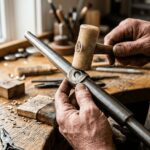
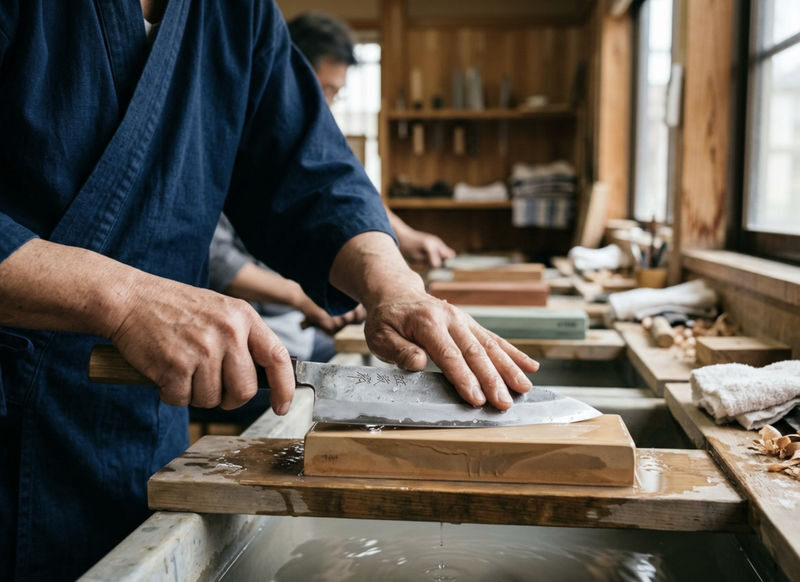
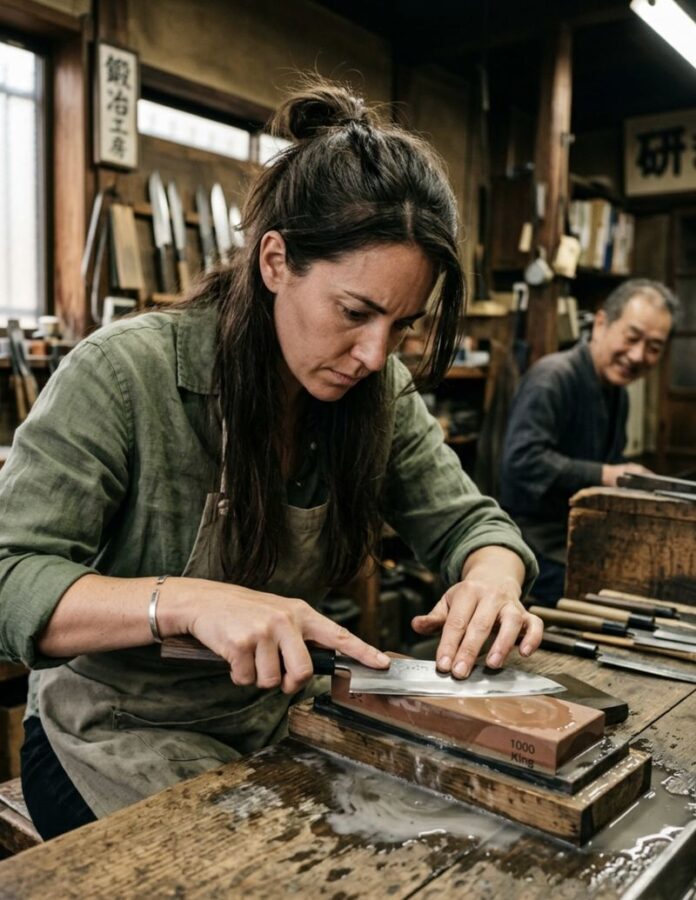
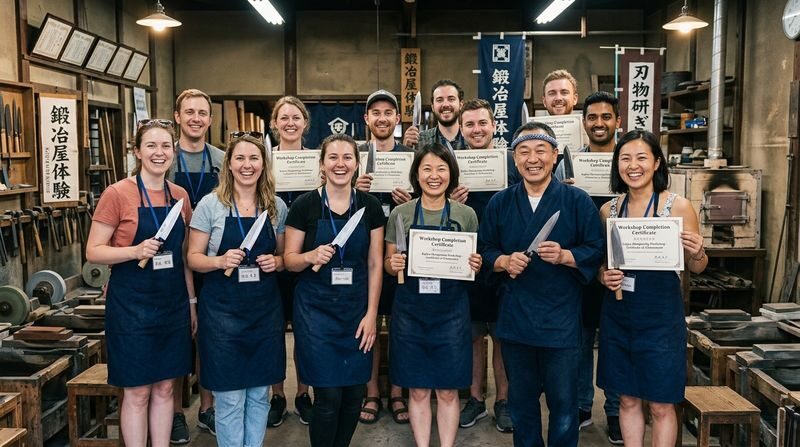
This is a compact workshop built around doing, not simply watching. You’ll use authentic whetstones and get support from staff as you practice sharpening a Japanese knife. That makes the activity approachable if you have never sharpened a blade before, while still giving you a real skill to concentrate on.
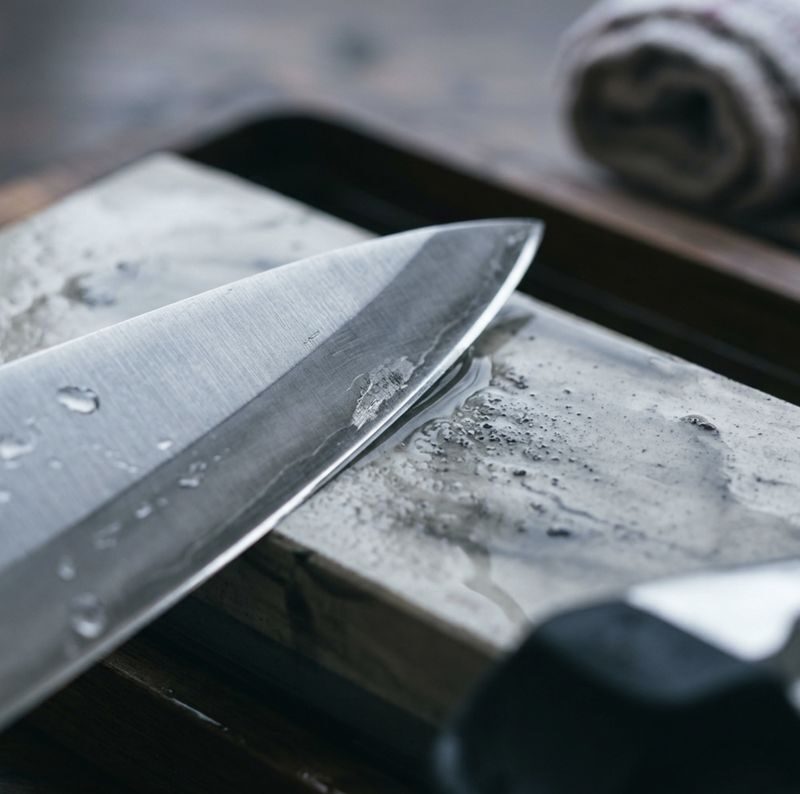
The appeal is physical and immediate. You’re not just hearing that Japanese knives are prized for their sharpness. You’re working on a blade and noticing how its edge changes as you sharpen it. That tangible result gives the cultural context a practical anchor.
The session is also described as a chance to learn about the history and craft behind Japanese knives. You should expect an introduction rather than a full technical course: one hour is enough to try the method and understand why it takes care, but not to master every detail of knife making and maintenance.

👉 See our pick of the 25 Best Workshops And Classes In Kyoto
What happens from arrival to take-home knife
The listed itinerary is simple: depart, take part in the knife-making activity, and return. There is no separate sightseeing stop or transport between attractions described, so plan on this as a single workshop rather than a tour around Kyoto.
At the workshop, the core activity is sharpening on a whetstone. Staff provide careful support, which matters because sharpening is a hands-on technique where position and pressure affect the result. Beginners can take part, and there is no age limit listed.
There are signs that some sessions may also include preparing the blade, attaching a handle, or engraving. These details appear in accounts of individual sessions, but the package description does not promise each one as a fixed feature. If engraving a name or adding a handle is important to you, ask what is included for your selected date before booking.
At the end, you can take home the sharpened knife. That makes the final step more than a photo opportunity: you leave with something you can use, though you’ll want to follow any care advice provided by the instructor.
You can also read our reviews of more tours and experiences in Kyoto.


Why the sharpness lesson is worth your time
Japanese knives have a strong reputation, but it’s easy to treat that reputation as a sales pitch unless you understand what goes into maintaining an edge. Using the whetstone yourself makes the subject clearer. You can feel the work involved and see why sharpening is a craft rather than a quick chore.
I especially like that the activity gives you a reason to pay attention to the blade’s transformation. The workshop describes a marked difference before and after sharpening. That gives the hour a clear aim and keeps the lesson grounded in what you can observe.
This is also a good cultural activity for people who want more than a temple visit or a museum display. It puts you in contact with a working tradition through its tools and technique. You do not need to be a serious cook to appreciate the process, though cooking enthusiasts will have an obvious reason to pay attention.
English support and individual instruction
An English-speaking guide is included, and the workshop is presented as suitable for beginners. That is useful for a technique-based class: clear instructions help you focus on the blade rather than guess what to do next.
Past sessions have included instructors named Cody and Lu. Names and instructors can vary, so don’t book on the assumption that you’ll meet either one. The important point is that English instruction is part of the experience, and clear explanation is especially valuable when you’re learning a physical skill in a short session.
The available information does not give a group-size limit. If you prefer a very small class or want to know how much one-to-one attention you’ll get, ask the operator before you reserve.
What the one-hour schedule means
The workshop is offered as a one-hour package, with listed departure choices at 10:00 and 16:00. Return times are listed as 11:00 and 17:00, depending on the departure you select and the session duration. The activity’s opening hours are Monday through Sunday, 10:00 to 19:00.
That tight schedule makes this easy to fit around a day in Kyoto, but it also means you should arrive ready to begin. The voucher is valid only on the date and time specified, so choose a slot that leaves you enough breathing room before your next plan. The schedule may change with traffic or weather, though the information provided does not spell out how that affects this workshop.
The meeting location is listed as En-Chopsticks & Craft Workshop in Gion, Kyoto. The full address provided is 302 Nippo Kyoto Building No. 2, Senshojicho, Shimogyo Ward, Kyoto 600-8076. Check the exact meeting instructions on your booking confirmation, since the workshop name and address are both useful when finding the venue.
Is $118.25 good value?
At a starting price of US$118.25, this is not a bargain-hour craft class. The value depends on what you want from it. You are paying for a guided, hands-on activity using authentic whetstones, an introduction to Japanese knife culture, and a sharpened knife to take home.
For someone who cooks, collects kitchen tools, or enjoys learning a practical skill, the take-home item helps justify the cost. It is also more personal than buying a knife without knowing anything about its care. If you mainly want a low-cost activity or expect to spend the hour forging a blade from raw metal, the price may feel steep for a short workshop.
The listed package is one hour, so compare it with other Kyoto craft activities on both duration and what you leave with. The provider, Kushi Base LLC, has a 98 percent good review rate across 5,394 total reviews. That broad record offers some reassurance, while the individual workshop rating is 5.0 from six ratings, a small sample that should be treated as encouraging rather than definitive.





Who will enjoy this Kyoto craft stop
I’d put this workshop high on the list for curious cooks, craft-minded visitors, and anyone who likes leaving an activity with a skill or useful object. It can also work well for a couple or family member pair: one account describes two people working on different blade types during a honeymoon visit.
You do not need prior sharpening experience, and there is no age limit stated. Still, this is a focused activity involving a blade, so it suits people who are comfortable concentrating on a practical task and following instruction. The information provided does not specify accessibility details or any age-specific guidance, so ask the operator if those points matter for your party.
If your interest is Japanese culture but you don’t cook, the historical and craft context may still make the session worthwhile. If you want a full blacksmith demonstration, a long course, or extensive sightseeing, this is not the right fit based on the one-hour format and sharpening focus.
Practical details before you book
The activity is available every day within the stated opening hours, with departures listed at 10:00 and 16:00. Your voucher is only valid for the date and time selected, so double-check both before you confirm.
The listed price starts at US$118.25 for the one-hour workshop. Admission and an English-speaking guide are included; personal expenses and tips are not. You can cancel for a full refund at least 24 hours before the activity date, using destination local time.
The workshop location is identified as En-Chopsticks making workshop in Gion, with the address at 302 Nippo Kyoto Building No. 2, Senshojicho, Shimogyo Ward. If your booking confirmation gives specific arrival instructions, use those rather than relying on the venue name alone.
Should you book this knife workshop?
Book it if you want a focused, guided introduction to Japanese knife sharpening and like the idea of taking home a practical souvenir. Its strongest points are the chance to use authentic whetstones, the beginner-friendly support, and the visible change in the blade’s sharpness.
Think twice if you expect a long blacksmithing session or need the details of engraving and handle work confirmed in advance. At one hour and from $118.25, the experience makes most sense when the craft itself interests you, not simply as a way to fill a spare slot in your Kyoto schedule.
Kyoto: Japanese Knife Making and Sharpening Experience
“Was a really engaging experience, where you get to experience sharpening a blade using the classic whetstone method. I went with my wife on our hon…”
FAQ
How long is the workshop?
The package described is a one-hour workshop.
What time can I start?
The listed departure times are 10:00 and 16:00. Available return times depend on the departure and session duration.
Where does the workshop take place?
It is listed at En-Chopsticks & Craft Workshop in Gion, Kyoto. The provided address is 302 Nippo Kyoto Building No. 2, Senshojicho, Shimogyo Ward, Kyoto 600-8076.
Is the workshop suitable for beginners?
Yes. Staff provide careful support, and beginners can participate.
Is there an age limit?
No age limit is stated for this activity.
Is an English-speaking guide included?
Yes, an English-speaking guide is included.
What will I learn?
You’ll practice Japanese knife sharpening using authentic whetstones and learn about Japanese knife culture and craftsmanship.
Can I take a knife home?
Yes. The experience includes taking home the sharpened knife.
Are engraving and handle attachment included?
Individual sessions have included handle attachment and engraving, but these details are not confirmed as part of every package. Check what is included for your chosen session.
What is the cancellation policy?
You can receive a full refund if you cancel at least 24 hours before the activity date, using destination local time.