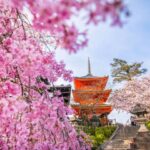
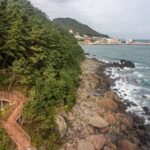
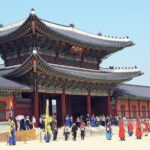
Seventeen days takes you from Seoul’s palace courtyards to a Buddhist monastery on Mount Koya, with plenty of Japan between. I like that this tour pairs famous sights, including Kyoto’s Kinkakuji and Hiroshima’s Peace Memorial Park, with places that often get less attention, such as Andong’s Hahoe Village and Shikoku’s Ritsurin Garden. You also get useful travel legs handled for you: a Seoul to Tokyo flight, bullet train, ferries and long-distance bus journeys.
Two details make the route especially appealing: the overnight at Mount Koya, with a vegetarian dinner and a chance to join meditation, and the mix of Korea and Japan, which gives you a rare chance to compare two cultures in one trip. The trade-off is pace. You change cities often, some days involve long drives, and the group can range from 2 to 72 people.
At a glance
- A full first look at Seoul: Gyeongbokgung Palace, Bukchon Hanok Village, the War Memorial of Korea and Gangnam share one guided day.
- Korea beyond the capital: Busan’s seaside temple and cable car lead into Gyeongju’s royal tombs and Andong’s historic Hahoe Village.
- A practical Japan route: Bullet trains and ferries connect major cities with islands, castle towns and rural stops.
- A night with a different rhythm: Mount Koya’s temple lodging offers simple tatami rooms, shared bathrooms, vegetarian dinner and a meditation practice.
- Some meals and major admissions are covered: Many visits and several lunches are included, while extras such as the Lotte World Tower deck cost more.
- Plan for a busy schedule: The tour is rated low intensity, but there is plenty of walking, including 785 steps at Kotohira Shrine.

👉 See our pick of the 25 Best Guided Tours In Seoul
- At a glance
- Seoul opens with palaces, lanes and big-city contrasts
- Busan brings sea air and Korea’s coastal side
- Gyeongju and Andong bring Korea’s older stories into focus
- Tokyo’s landmarks come with a guided first day
- Kyoto, Nara and Osaka balance temples with city energy
- Castles and memorials mark the route west
- Shikoku adds ferries, gardens and a serious climb
- Mount Koya trades hotel routine for temple life
- Tsumago and Matsumoto finish with rural Japan
- What the price includes, and where to check the details
- Should you book this Korea and Japan tour?
- FAQ
- How long is the tour, and where does it start and end?
- What is the starting price?
- Which countries does the tour visit?
- Is the flight from Seoul to Tokyo included?
- What languages are used on the tour?
- How large can the group be?
- What kind of accommodation is provided?
- Is the Mount Koya overnight stay a hotel night?
- Are meals included?
- How physically demanding is the tour?
- The Best Of Seoul!
- More Tours in Seoul
- More Tour Reviews in Seoul
- Not for you? Here's more nearby things to do in Seoul we have reviewed
Seoul opens with palaces, lanes and big-city contrasts
 1 / 10
 2 / 10
 3 / 10
 4 / 10
 5 / 10
 6 / 10
 7 / 10
 8 / 10
 9 / 10
 10 / 10
Day 1 is deliberately light. You arrive in Seoul, transfer to your hotel and meet the tour guide later in the afternoon for the practical run-through. Use the breathing room to rest, especially if you have crossed several time zones.
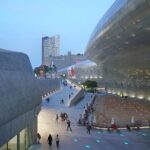
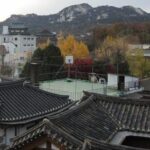
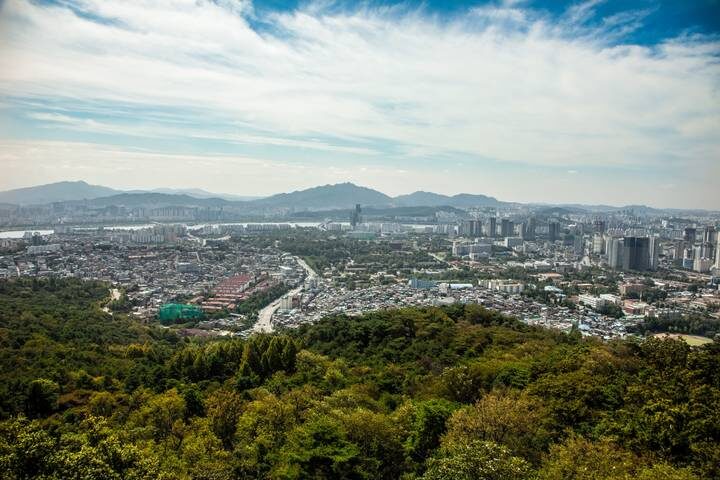
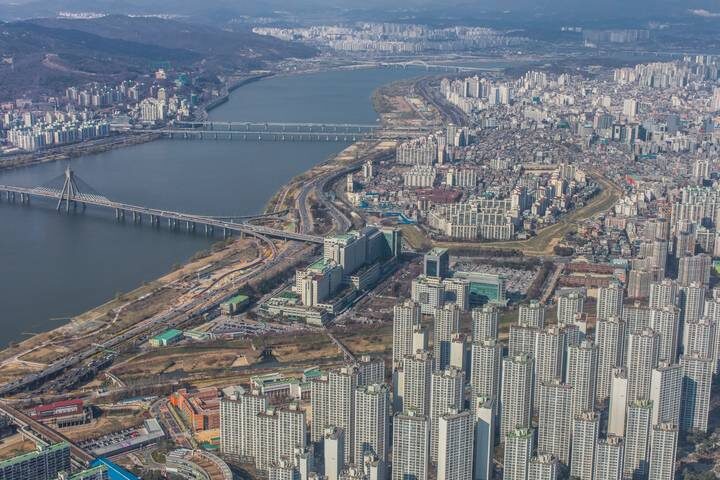
The next morning packs a lot into about five hours. Gyeongbokgung Palace gives you a first taste of Korea’s royal past, while Bukchon Hanok Village offers a more intimate look at traditional homes and narrow streets. The War Memorial of Korea adds difficult but important context about the conflicts that shaped the country.
Then the mood shifts to Gangnam, Seoul’s modern commercial district. Lotte World Tower is a useful landmark, but the observation deck is an optional extra, so you can instead spend your free time around the tower’s park and shopping areas. After the tour, you board the included high-speed train to Busan. That roughly three-hour ride saves a long road journey and makes the rapid change from capital to port city part of the experience.
You can also read our reviews of more tours and experiences in Seoul.
Busan brings sea air and Korea’s coastal side
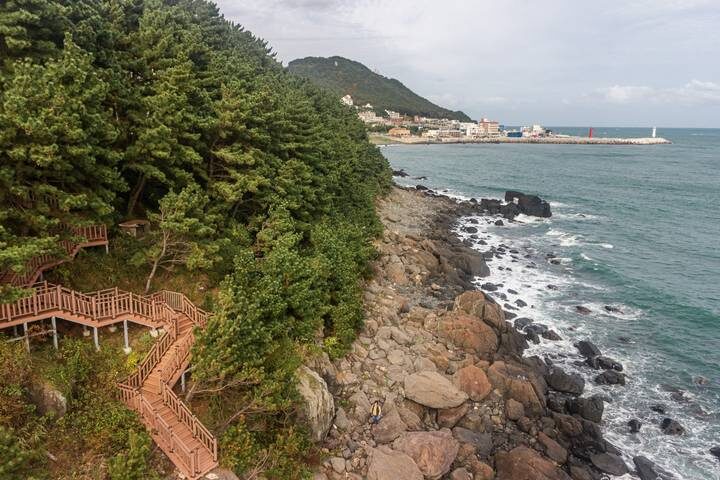
Busan’s day begins at Haedong Yonggung, a Buddhist temple by the sea. Its setting makes it feel quite different from the inland temples later in the trip. The United Nations Memorial Cemetery offers a quieter, more reflective stop, followed by Nampo’s large fish market, where you can see a working side of the city rather than only its scenic one.
After lunch, the route takes in Yongdusan Park and the marine cable car at Songdo Beach. The cable car is included, weather permitting, and gives you broad views across the bay. Gamcheon Cultural Village rounds out the day with painted buildings, tight alleyways, galleries and cafés. It is a photogenic place, but the slopes and stairs mean you will want comfortable shoes.
The schedule gives you a wide sampler of Busan, not a slow exploration of each neighborhood. That is the bargain here: you cover a lot, but may wish for more unplanned time by the water or in the market.
Gyeongju and Andong bring Korea’s older stories into focus
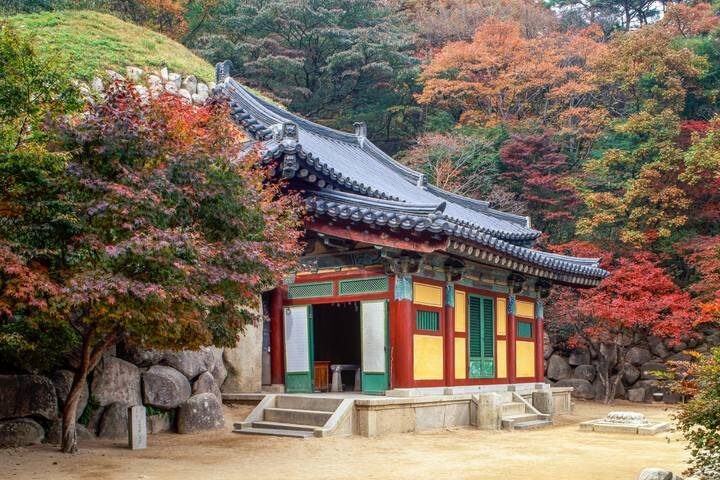
On Day 4, the bus heads toward Gyeongju, once the center of the Silla Kingdom. Seokguram Grotto and Bulguksa Temple are major Buddhist sites, both with included admission. The visit to Tumuli Park adds a striking change of scale: ancient royal burial mounds rise from the city park, and the tour includes entry to one tomb.
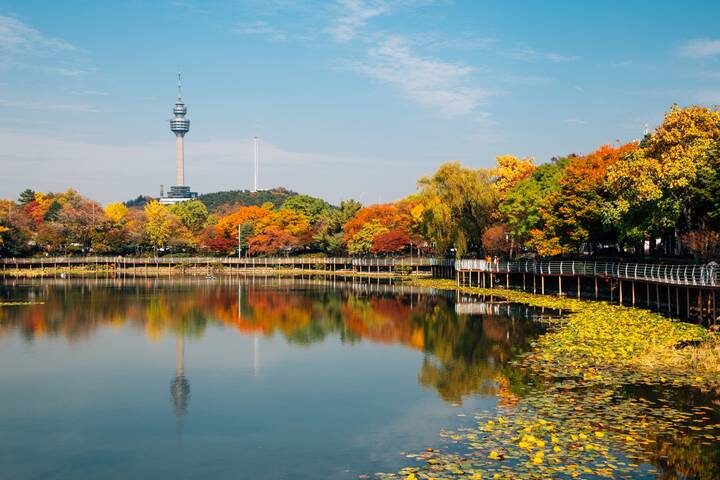
You also stop at Woljeonggyo Bridge and Cheomsongdae, an ancient astronomical observatory. The day continues to Daegu, where Dongsan Cheongna Hill, Dongseong-ro and the Yangnyeongsi Museum of Traditional Medicine give you a short introduction to the city. This is a full sightseeing day with several stops, so expect to be on and off the bus often.
Day 5 brings a different kind of heritage in Andong. Hahoe Village is a traditional settlement recognized by UNESCO, with time to wander independently. The World Mask Museum and Byeongsan Seowon, a Confucian academy beside a river, give the visit more context than a quick photo stop would. After lunch, you return to Seoul by mid-afternoon. This is one of the route’s longer road days, balanced by the chance to explore Hahoe at your own pace.
Tokyo’s landmarks come with a guided first day
Day 6 includes the flight from Seoul to Tokyo and a shared shuttle to the hotel. An assistant meets you after immigration, but the assistance is usually in Spanish and only sometimes in English. If you need English help on arrival, confirm that detail before departure rather than counting on it.
The following day is a long guided city tour, about seven hours. Zojoji Temple offers a view of Tokyo Tower, and Meiji Shrine gives you a quieter pause amid the city’s scale. You see Shibuya Crossing from the bus, then go up Tokyo Skytree to the Tembo Deck, with admission included. At Asakusa, Sensoji Temple and Nakamise Street provide a lively introduction to older Tokyo and its traditional shopping street.
The return route passes Akihabara and Ginza, but passing by is not the same as having time to explore. In the evening, you take the subway with your guide to Shinjuku, walk through the district and have dinner at a local restaurant. Subway tickets for this outing are included. If you want more time in Tokyo’s neighborhoods, keep the free time on arrival day in reserve or consider adding a night after the tour.
Kyoto, Nara and Osaka balance temples with city energy
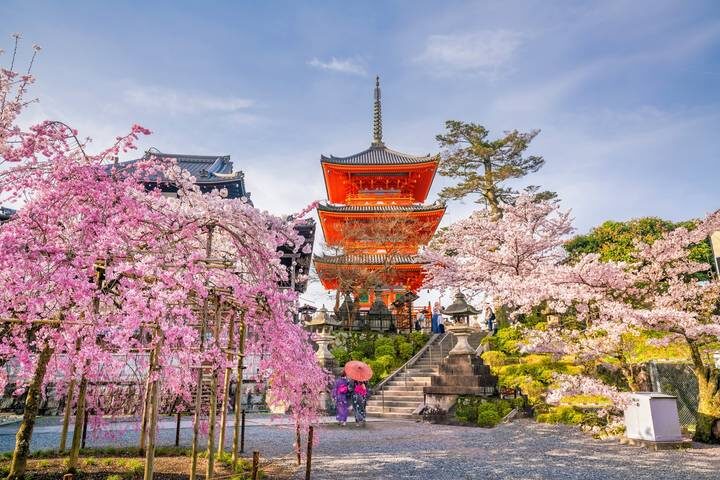
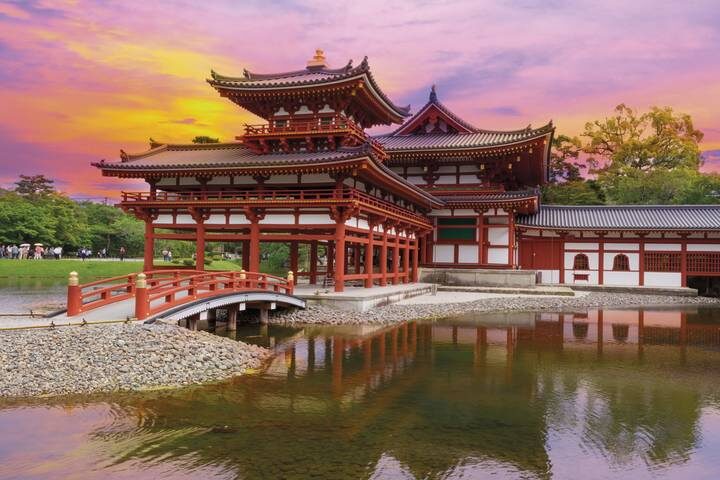
An early bullet train takes you from Tokyo to Kyoto in just over two hours. The day includes Fushimi Inari Shrine, the Imperial Palace and Kinkakuji, the Golden Pavilion, as well as time in Gion. These are some of Japan’s best-known sights, and seeing them together is efficient. It is also a packed day, so expect limited time at each place rather than an unhurried temple visit.
Day 9 starts in Nara at Todaiji, home to a large Buddha statue, and the surrounding park, where deer roam freely. Horyu-ji adds a more contemplative stop at one of Japan’s oldest Buddhist temple sites, with an ancient wooden pagoda. The day ends in Osaka, with an evening visit to Dotonbori. It is a good place to see the city’s food-and-entertainment side, though the tour does not include a meal there.



Castles and memorials mark the route west
The journey from Osaka to Okayama includes Himeji Castle, one of the most impressive castle complexes on the route. Admission is included, as is lunch. In Okayama, Korakuen Garden offers lakes, waterfalls and teahouses, followed by a walk across a pedestrian bridge to Okayama Castle. The castle’s interior is not included, so check the available free time if you want to go inside.
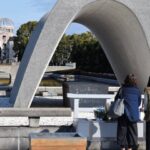
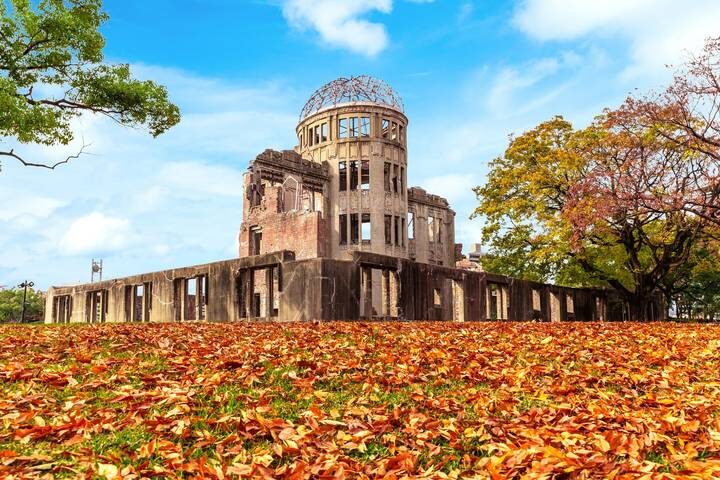
Day 11 begins in Kurashiki, whose preserved historic center is suited to a slow stroll. Hiroshima follows, with the Peace Memorial Park, Atomic Bomb Dome and Peace Memorial Museum. Give yourself room to take in the museum: this is a moving visit, not simply another stop to tick off.
Later, a ferry takes you to Itsukushima Island and its shrine, partly built over the water. You have time to see the shrine and walk through town before returning to Hiroshima for dinner. The order of the Hiroshima visits can change, but the listed stops remain part of the day.
Shikoku adds ferries, gardens and a serious climb
A ferry carries you from Hiroshima to Matsuyama on Shikoku, a pleasant change from the bus and a reminder that Japan is made up of many islands. In Matsuyama, you take a cable car to the castle, visit Ishiteji Temple and go to Dogo Onsen, a traditional bathhouse. The admission is included, but check the bathing arrangements and bring what you need for a public bath.
The next day is another broad sweep of stops. At Kotohira Shrine, the climb involves 785 steps up Mount Zosu, a real effort even though the tour’s overall activity rating is low. Ritsurin Garden in Takamatsu offers a calmer counterpoint, with carefully shaped grounds and traditional features.
In Naruto, you walk across a glass floor above the sea whirlpools, about 45 meters below. The route then crosses bridges linking islands before arriving in Kobe. The day’s variety is a strength, but there is not much time for lingering at any one stop.
Mount Koya trades hotel routine for temple life
Kobe’s Earthquake Memorial Museum recalls the devastating 1995 earthquake and the city’s recovery. On some dates, the museum visit may be replaced by the Sake Museum or a visit to Kobe Tower, so the exact stop is not guaranteed.
Then comes Mount Koya, a major center of Shingon Buddhism. You visit Okuno Mausoleum, a forest cemetery with more than 200,000 graves, and Kongobuji Temple. The overnight stay is a highlight for anyone curious about religious life, but it is not a luxury-hotel night. Rooms are simple and traditional, bathrooms are shared, and the included dinner is vegetarian. Monks lead an Ajikan meditation practice, though the session is not guaranteed on peak dates. You can also attend a morning ceremony.
The next morning starts with a traditional Japanese breakfast before the journey back to Kyoto. You have the rest of the day free, which is welcome after several tightly scheduled days. Ask your guide for recommendations that suit your interests, then choose one or two places rather than trying to cross the whole city.
Tsumago and Matsumoto finish with rural Japan
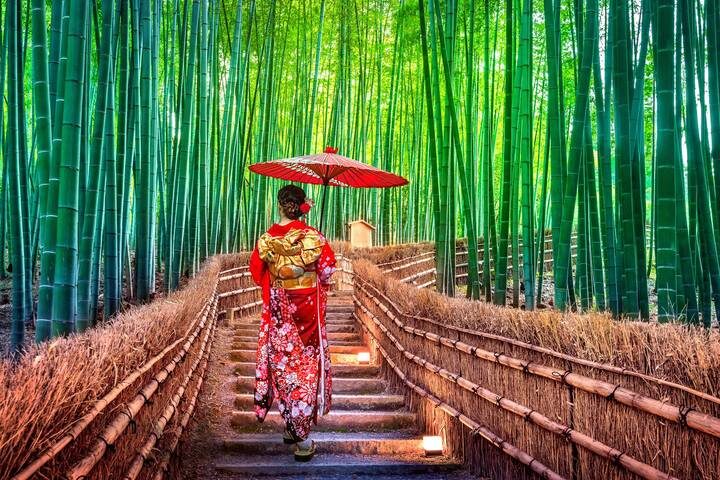
On Day 16, the bus leaves Kyoto for Tsumago, a wooden village with time to explore on foot. It is a welcome contrast to the large cities, though the stop is brief. Lunch is included before you continue to Matsumoto, where the black exterior of the 16th-century castle has earned it the nickname The Crow.
After the castle visit and some free time, you continue to Tokyo, arriving late in the day. This is a long final travel day, so treat it as a scenic transfer rather than a leisurely finish. Day 17 is simply breakfast and departure.
What the price includes, and where to check the details
The tour starts from $6,233 for the cheapest room option. That is a substantial fare, but it covers 17 days of accommodation, breakfast, the Seoul to Tokyo flight, key train and ferry legs, many admissions, a basic travel insurance policy and selected meals. Several lunches and three dinners are included, with the Tokyo dinner, Hiroshima dinner and Mount Koya vegetarian dinner among them. Check the meal schedule before budgeting for food, since many lunches and most dinners are on your own.
Hotels are generally rated three or four stars and are chosen for quality, price and access to public transport, not luxury. The exact property can vary, and room sizes and bed standards differ by city. Confirm the hotel list for your departure, especially since the accommodation options can change.
The group size is listed as 2 to 72, and the number can vary by season and by section of the tour. You will travel on one bus, which may be large or small depending on the group. Tour guides may also change during the trip, and some services may be bilingual in English and Spanish. The tour is described as partially guided: expect organized excursions and transport alongside free time, not a guide at your side every hour.
The available departure months are March, October and November. The operator has a 4.1 out of 5 rating across thousands of reviews, while this specific tour has only one public rating, a five-star score from a March 2026 departure. The accompanying comment is brief, noting that the trip covered many interesting sights. Treat that as a small positive signal, not a deep picture of how every departure runs.
Should you book this Korea and Japan tour?
Book it if you want broad coverage, help with complicated transfers and a mix of major landmarks and less familiar stops. The combination of Korean heritage sites, Japanese cities, island crossings and a temple stay makes this a particularly varied route. It suits first-time visitors who value seeing a lot over lingering in one place, and families or mixed-age groups comfortable with frequent moves.
Think twice if you want a small group, slow mornings or several free days in each city. The possible 72-person group size, long travel days and brief visits are real considerations, and the monastery has shared bathrooms. Before paying, confirm the group expectations, English-language arrangements, assigned hotels and the precise Mount Koya lodging. If those details work for you, this tour offers a well-connected introduction to two countries with very different rhythms.
Korea and the Wonders of Japan by Europamundo – 17-Day Seoul to Tokyo Tour
FAQ
How long is the tour, and where does it start and end?
It lasts 17 days. The tour starts in Seoul, South Korea, and ends in Tokyo, Japan.
What is the starting price?
The listed starting price is $6,233, based on the cheapest room option. The final price may depend on the departure and room selection.
Which countries does the tour visit?
It visits South Korea and Japan, including Seoul, Busan and Gyeongju in Korea, and Tokyo, Kyoto, Hiroshima and other Japanese destinations.
Is the flight from Seoul to Tokyo included?
Yes. The Seoul to Tokyo flight is included, along with a transfer to the Seoul airport and a shared shuttle from Tokyo airport to the hotel.
What languages are used on the tour?
The tour is listed as English-language, with English-speaking guided tours in Busan, Tokyo and Kyoto. Some services may be bilingual in English and Spanish, and the Tokyo airport assistant is usually Spanish-speaking, though sometimes English-speaking.
How large can the group be?
The listed group size is 2 to 72. The number can vary by season and by section of the tour, and the bus may be large or small depending on the group.
What kind of accommodation is provided?
The tour uses mainly three- and four-star hotels. Hotels are selected for quality, price and access to public transport, rather than luxury, and the exact property can vary.
Is the Mount Koya overnight stay a hotel night?
It is usually a stay at a Buddhist monastery, with simple traditional rooms and shared bathrooms. If monastery capacity is limited, accommodation may instead be arranged at a nearby hotel.
Are meals included?
Breakfast is included at the hotels, and selected lunches and three dinners are included. These include a local restaurant dinner in Tokyo, dinner in Hiroshima and a vegetarian dinner at Mount Koya.
How physically demanding is the tour?
It is rated low intensity, but you should expect walking and frequent stops. The climb at Kotohira Shrine involves 785 steps, and some sightseeing areas have slopes or stairs.